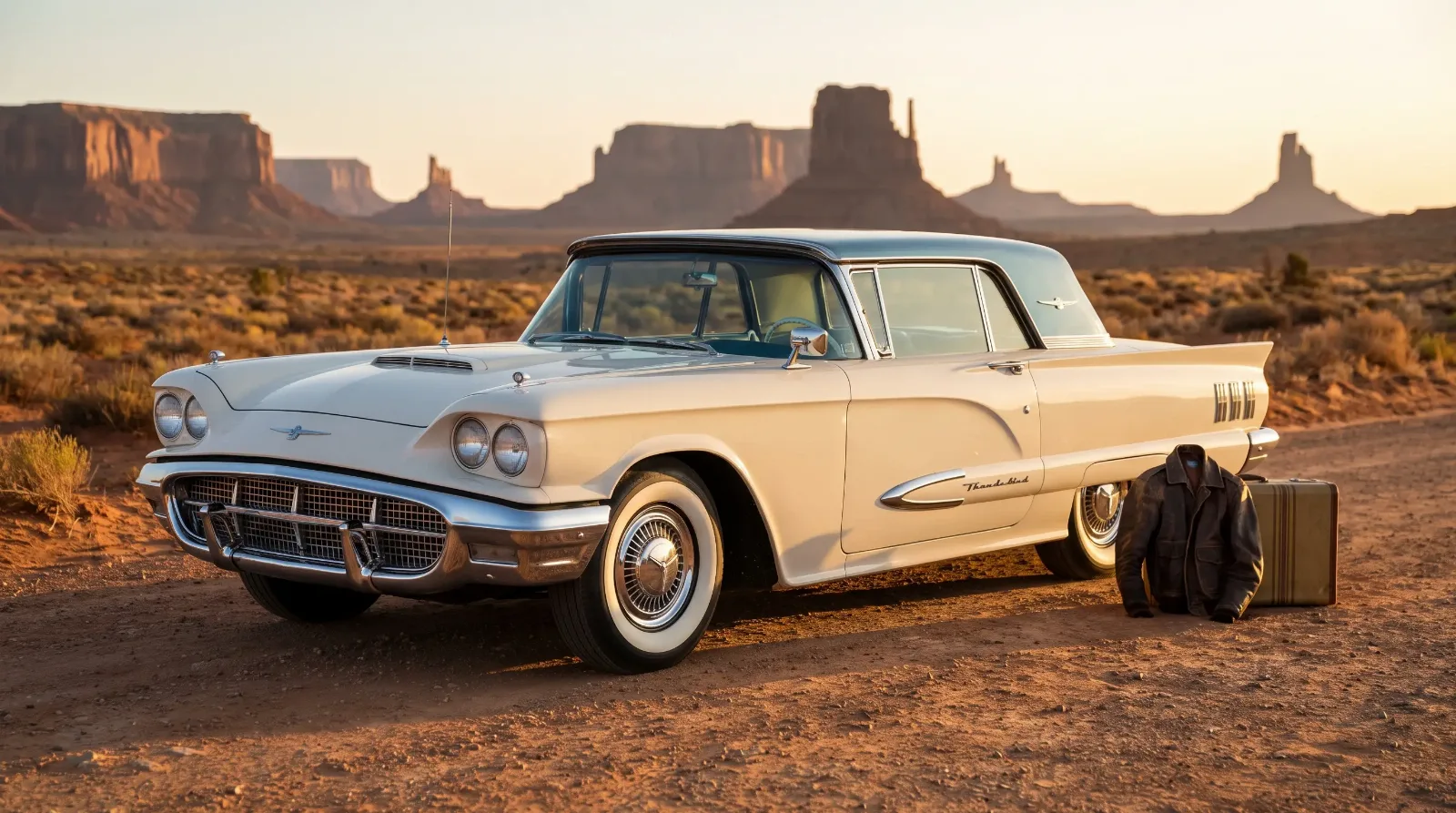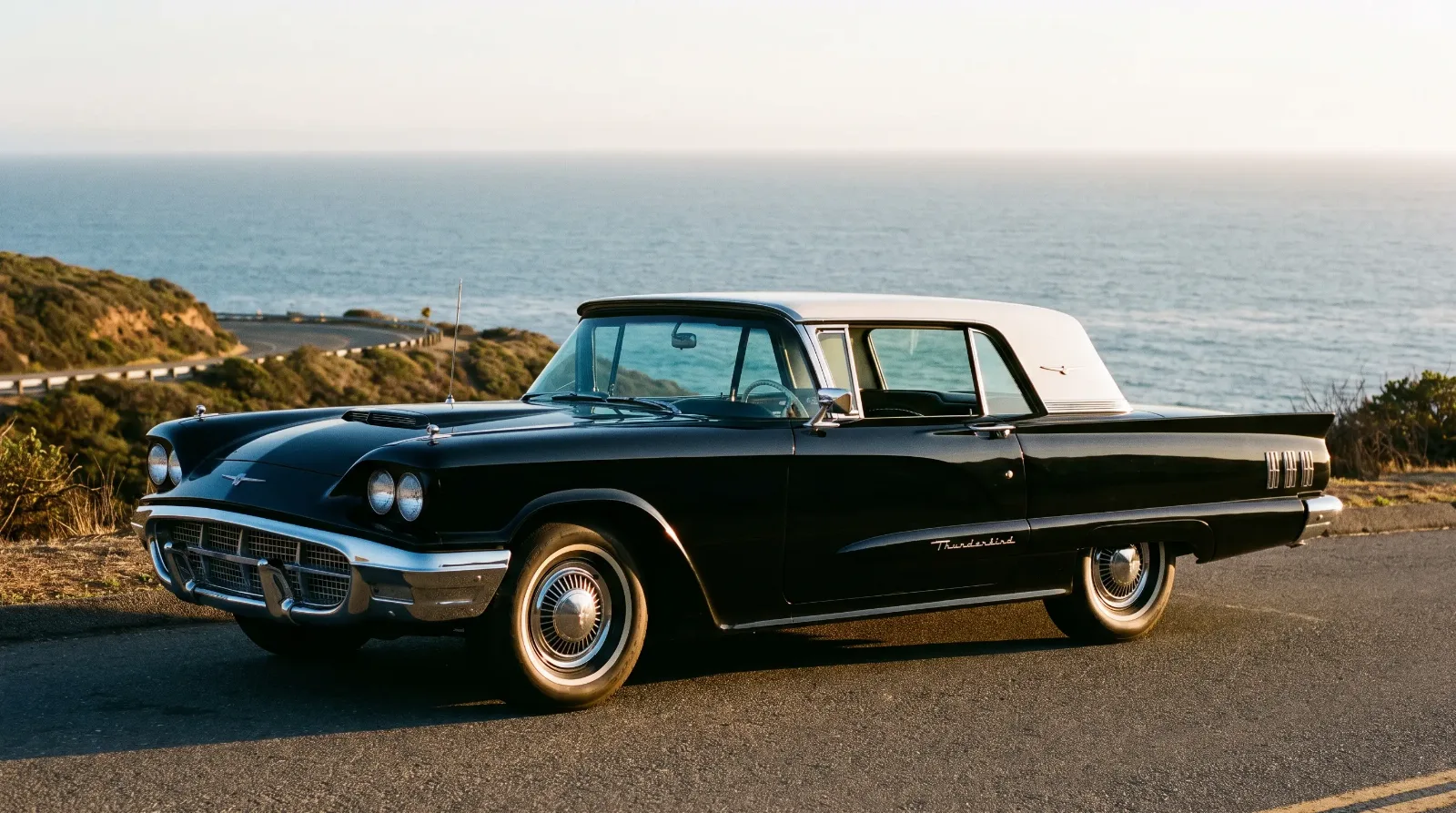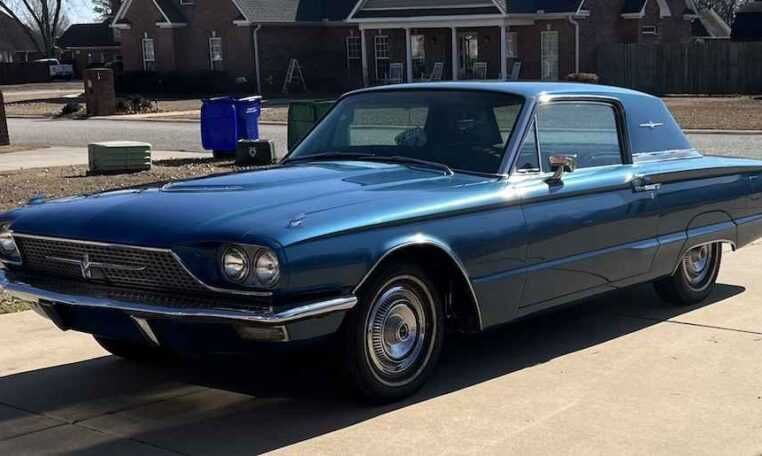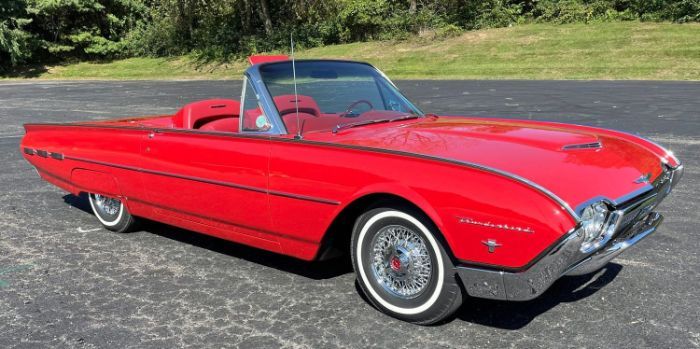
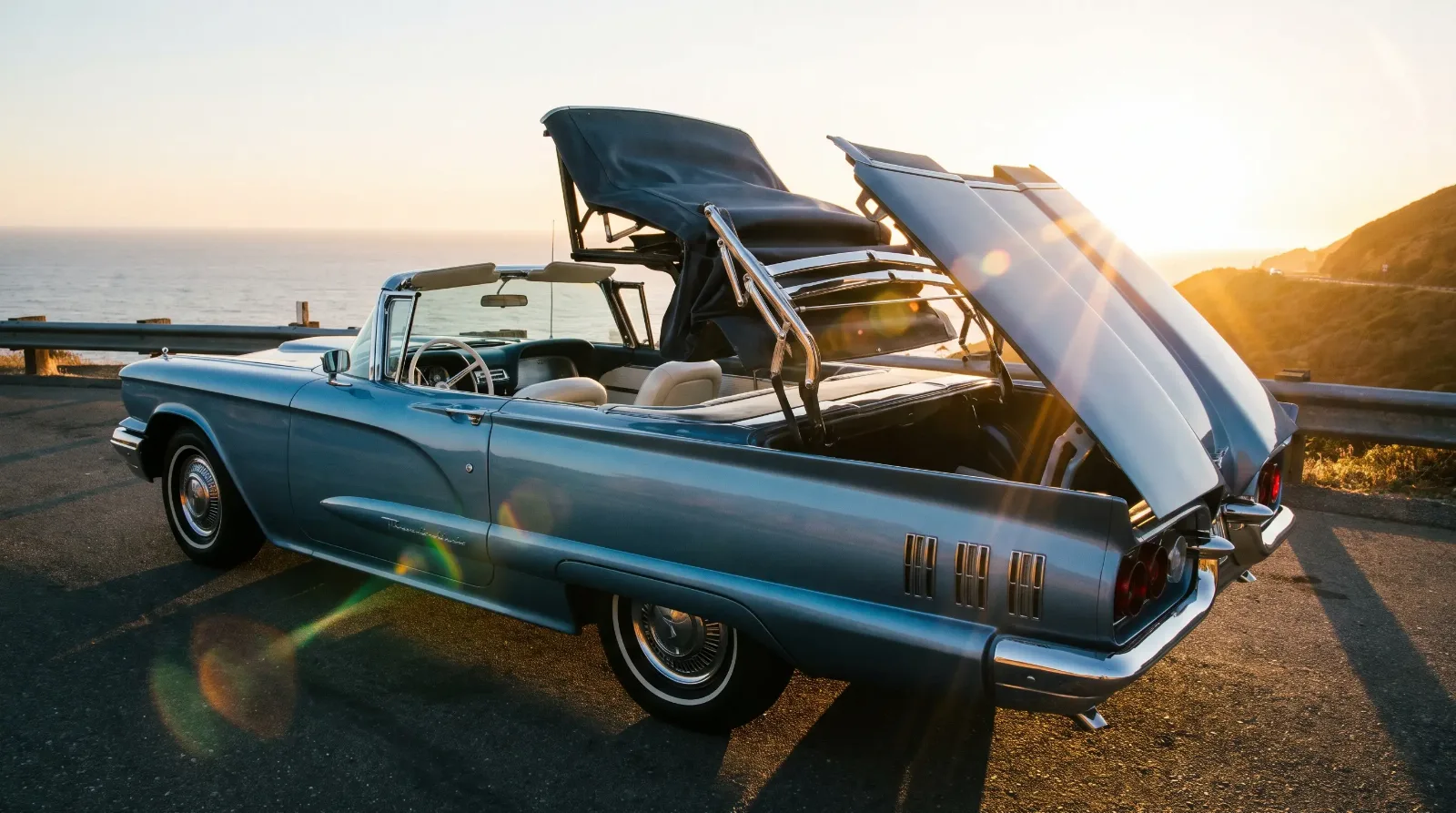
The 1960 Thunderbird convertible is remembered today mostly for one mechanical trick: a power-retracting top that folds itself into the trunk without a single hand touching fabric. That party trick was expensive to build, harder to service, and it defines how this car is bought, sold, and valued sixty-plus years later. Understanding the top is understanding the car.
A retractable idea borrowed and refined
Ford had already proven the concept with the 1957-1959 Skyliner, a full-size car whose steel roof folded into the trunk through a genuinely elaborate system of motors and relays. When the Square Bird convertible arrived for 1958, it used a simpler soft-top mechanism, cloth over a folding frame, powered by electric motors rather than a fully mechanized steel roof. The distinction matters: this was not a Skyliner successor mechanically, it borrowed the idea of powered convenience without the Skyliner's full complexity, and that made it more reliable in practice, though still far from simple.
The top and its rear deck lid opened via switch, the fabric top folded down into a well behind the rear seat, and the deck lid closed back over it, all without the driver leaving the seat. For 1958 through 1960, this was showroom theater. Salesmen demonstrated it specifically because nothing else on the lot did the same thing, and Ford knew it.
What made the mechanism failure-prone
A system built from multiple electric motors, limit switches, and a sequence of moving panels has more places to fail than a manual top with two latches. Owners across the Square Bird convertible's production run reported issues with alignment, with switches losing their timing, and with the deck lid failing to seat correctly if the sequence was interrupted partway. None of this was unique to the Thunderbird; it was the tax every automaker paid for building convenience into a mechanical age that hadn't yet solved it elegantly. Cadillac and others attempted similar systems with comparable headaches.
Owners quickly learned to never interrupt the cycle. Stopping the top halfway, whether from a dead battery or a distracted move to the wrong switch, could throw the sequence out of alignment and require a manual reset that was not intuitive for someone unfamiliar with the mechanism. This is part of why the convertible remains a car that rewards documentation. A car with service records showing the top mechanism was maintained, not just present, carries real weight with buyers who know what they're looking at.
Rarity and what it means for value
Convertibles were always the minority build within any given Thunderbird model year, and the added mechanical complexity of the powered top meant fewer buyers checked that box compared to the standard soft top offered on other convertible platforms of the era. Surviving examples with a fully functional original top mechanism are scarcer still, because decades of deferred maintenance and amateur repairs have taken a toll on cars that were complicated even when new.
This scarcity shows up directly in what collectors will pay. A 1960 Thunderbird convertible in solid original condition with a documented, working top commands a real premium over an equivalent hardtop Square Bird, sometimes a significant one depending on the auction and the buyer's specific interest in the mechanism itself as a piece of engineering history.
"The top isn't a feature you evaluate once. It's a system you either trust completely or you don't buy the car."
- Sarah Whitfield
What a careful buyer checks
Before anything else, cycle the top through a complete open and close sequence, more than once, and watch every step rather than just the beginning and end. Listen for motors that strain, watch for panels that don't seat flush, and ask specifically whether the mechanism has been rebuilt or merely patched. A rebuilt system with fresh switches and relays is worth more than an original one limping along on 1960s electrical components, regardless of what the "numbers-matching" crowd tells you about originality. On a system this failure-prone, functional reliability is its own form of correctness.
Check the trunk floor and the wheel wells for evidence of water intrusion, a common byproduct of a top that doesn't seal or seat correctly over years of use. Surface rust in the trunk well is a strong indicator that the top has spent time slightly misaligned, letting water in around the edges during storms.
Restoring the top mechanism correctly
Restoring this system properly is a specialist job, not a general upholstery shop task. The motors, relays, and switches involved were built to 1958-1960 electrical standards, and a shop that treats this like a modern power convertible top will misdiagnose problems constantly. Original wiring insulation degrades with age, connectors corrode, and a system that worked reliably when new can develop timing issues purely from six decades of component drift, nothing dramatic, just small tolerances shifting until the sequence no longer completes cleanly.
Owners who've gone through a full mechanism restoration describe it as one of the more labor-intensive parts of bringing one of these cars back to a fully functional state, more involved than most people expect walking in. The payoff, when it's done right, is a top that operates the way it did on a showroom floor in 1960, which is genuinely satisfying to demonstrate and genuinely rare among surviving cars. Plenty of Square Bird convertibles on the road today have tops that technically work but hesitate, strain, or require a helping hand at one stage of the cycle. A correctly restored mechanism stands out immediately next to those.
Comparing the convertible to the hardtop as a purchase
Buyers torn between a Square Bird hardtop and convertible should be honest with themselves about maintenance tolerance before deciding. The hardtop offers everything else this generation is known for, the formal roofline, the aircraft-inspired interior, the engine options, without the added mechanical layer that the convertible's top introduces. If your interest in this car is primarily about the styling and the era it represents, the hardtop delivers that without asking you to also become conversant in relay-based folding top systems.
The convertible earns its premium and its reputation specifically because it does something the hardtop can't, and for a certain kind of buyer that mechanical spectacle is the entire point of ownership. There's no wrong answer here, just a decision about what kind of ownership experience you actually want walking into it.
Where the convertible fits in the Square Bird story
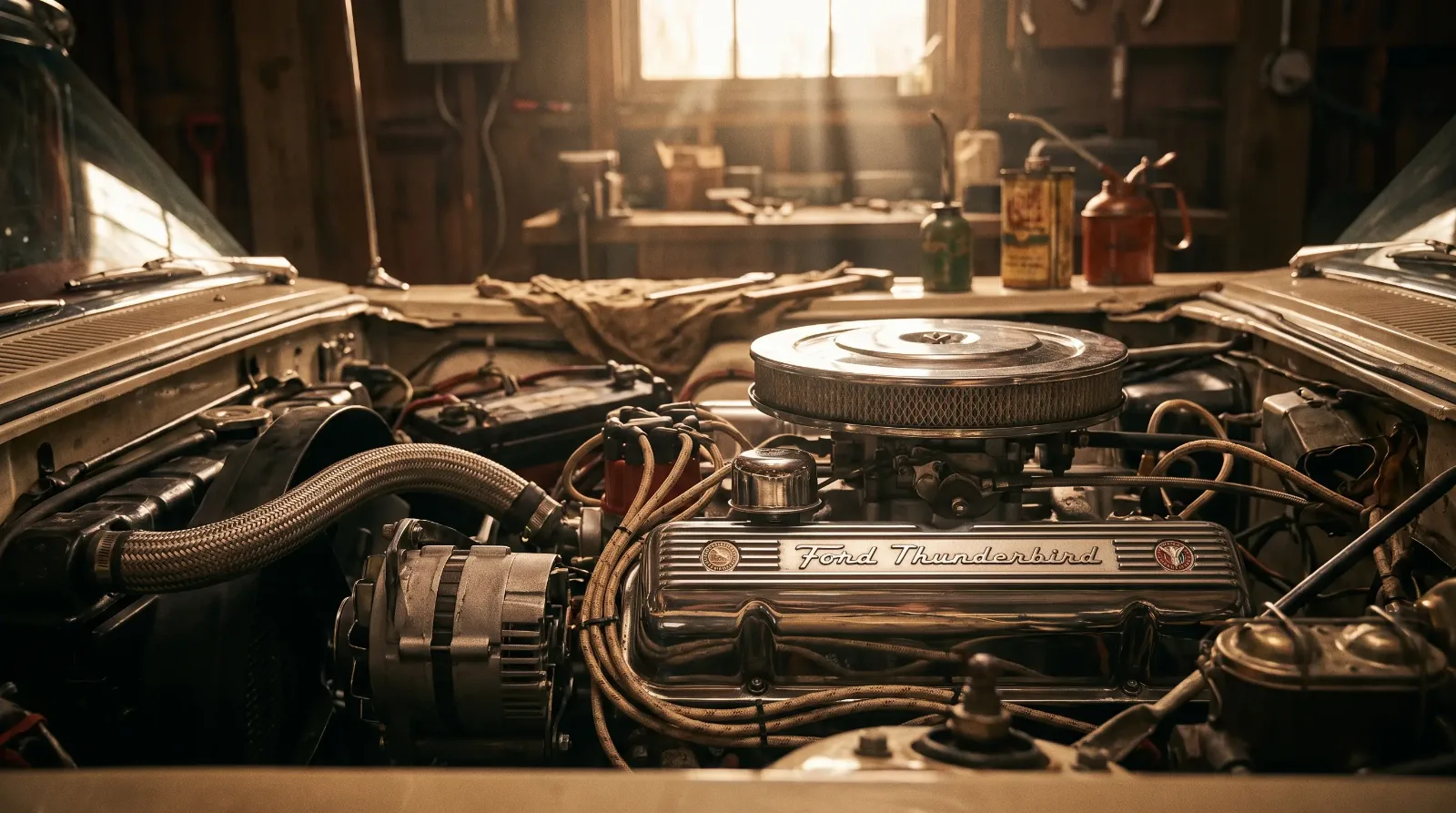
The convertible was always positioned above the hardtop, priced higher and marketed as the showpiece of the Square Bird lineup. It shared its engine options, including the standard 352 and optional 430 V8, with the rest of the range, so drivetrain performance was never the differentiator. The top was. For the broader context of how the redesigned four-passenger Thunderbird came to exist and why Ford moved away from the two-seater in the first place, read the background on the full Square Bird generation.
Anyone shopping this generation today should budget time and money specifically for the top mechanism, separate from the usual paint, chrome, and interior considerations that apply to any classic. If you want to find a classic Thunderbird, ask pointed questions about the convertible top's service history before you ask about anything else.
Sources and notes
- Ate Up With Motor: Gaudy but Glamorous, 1958-1966 Ford Thunderbird
- Convertible Top Guys: 1958-60 Ford Thunderbird Convertible Tops
- Convertible Service: 1958-1960 Lincoln and Thunderbird Convertible Top Pump Motors
- Wikipedia: Ford Thunderbird (second generation)
- Hagerty Valuation Tool: 1960 Ford Thunderbird