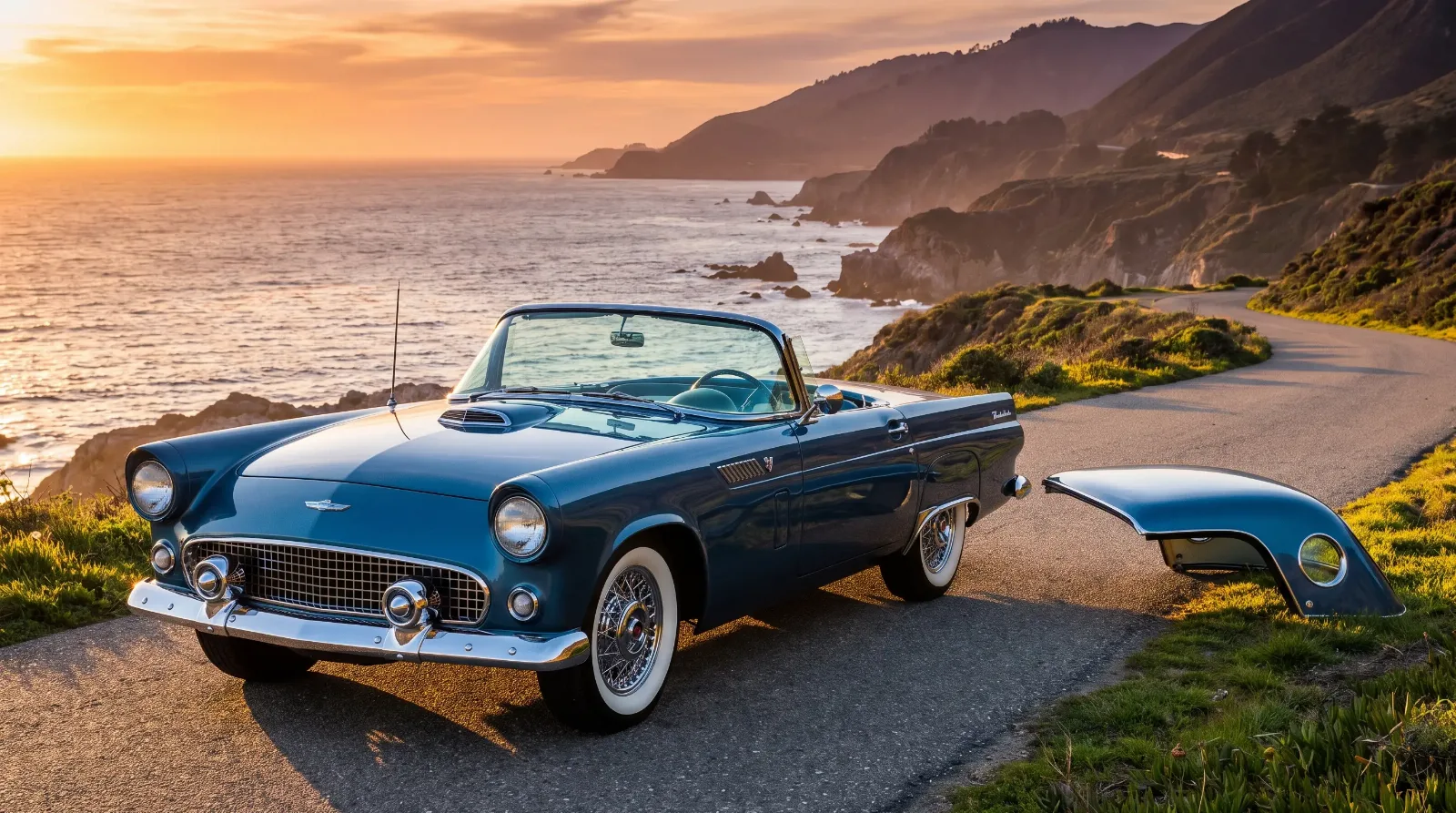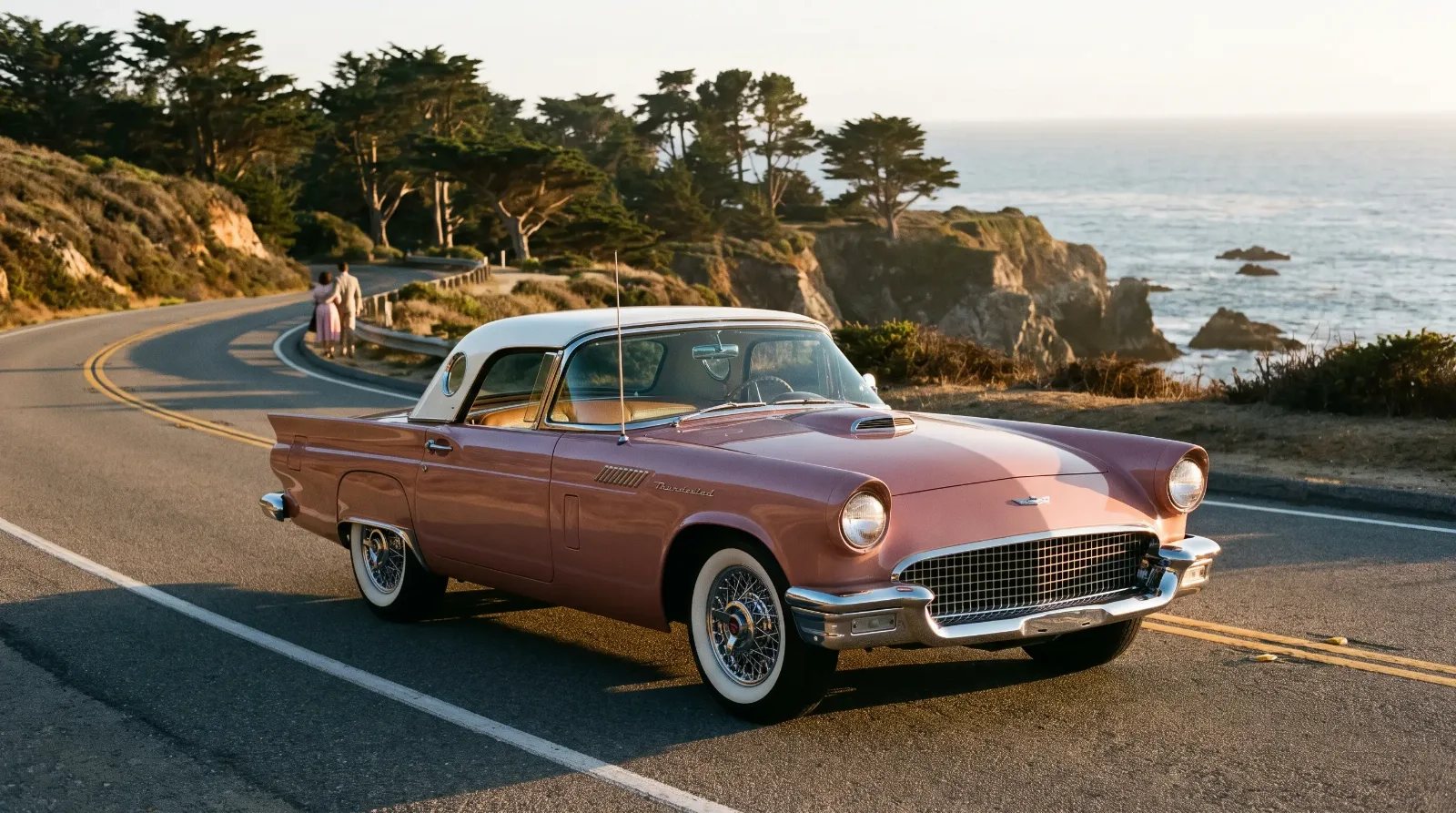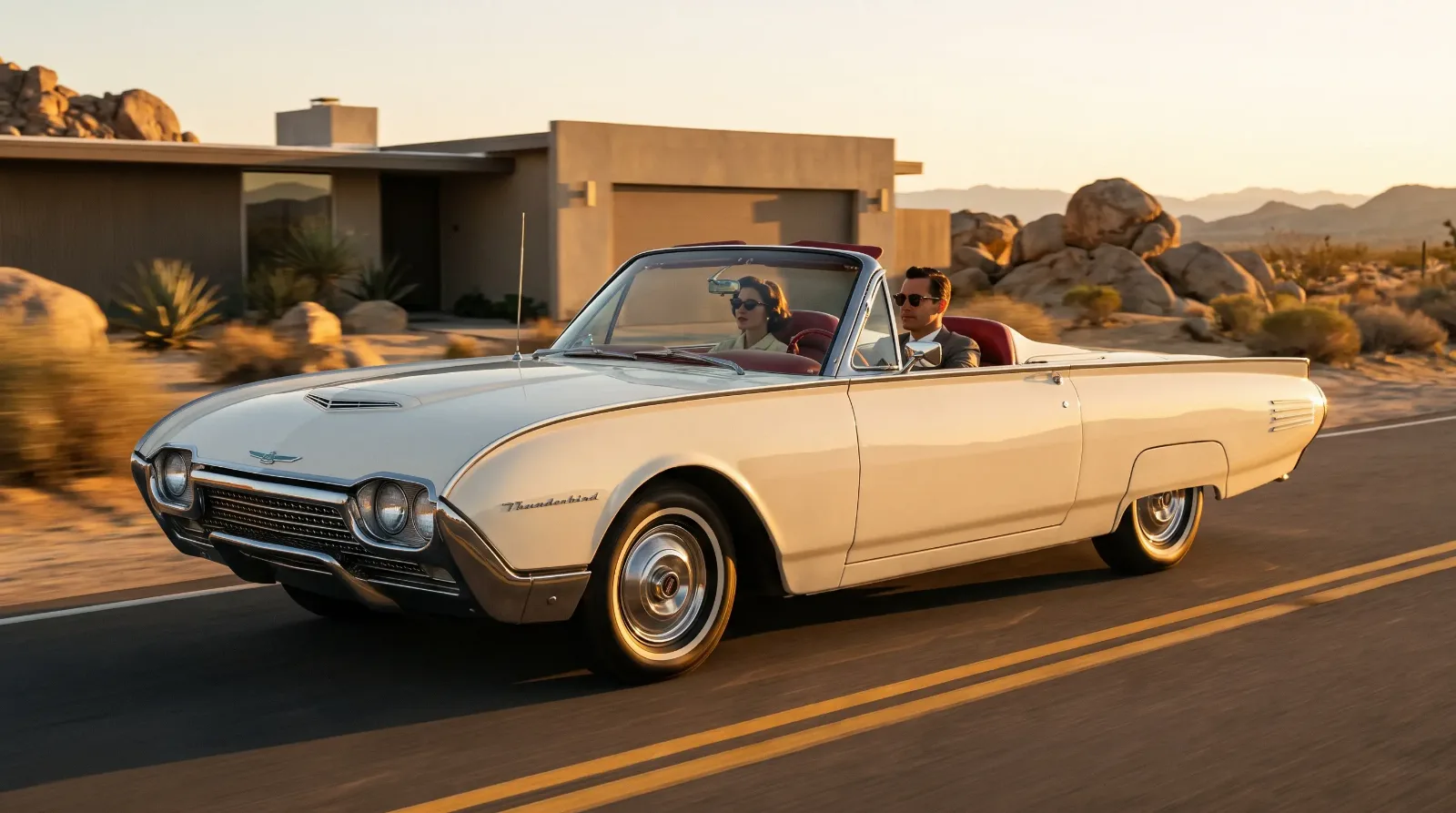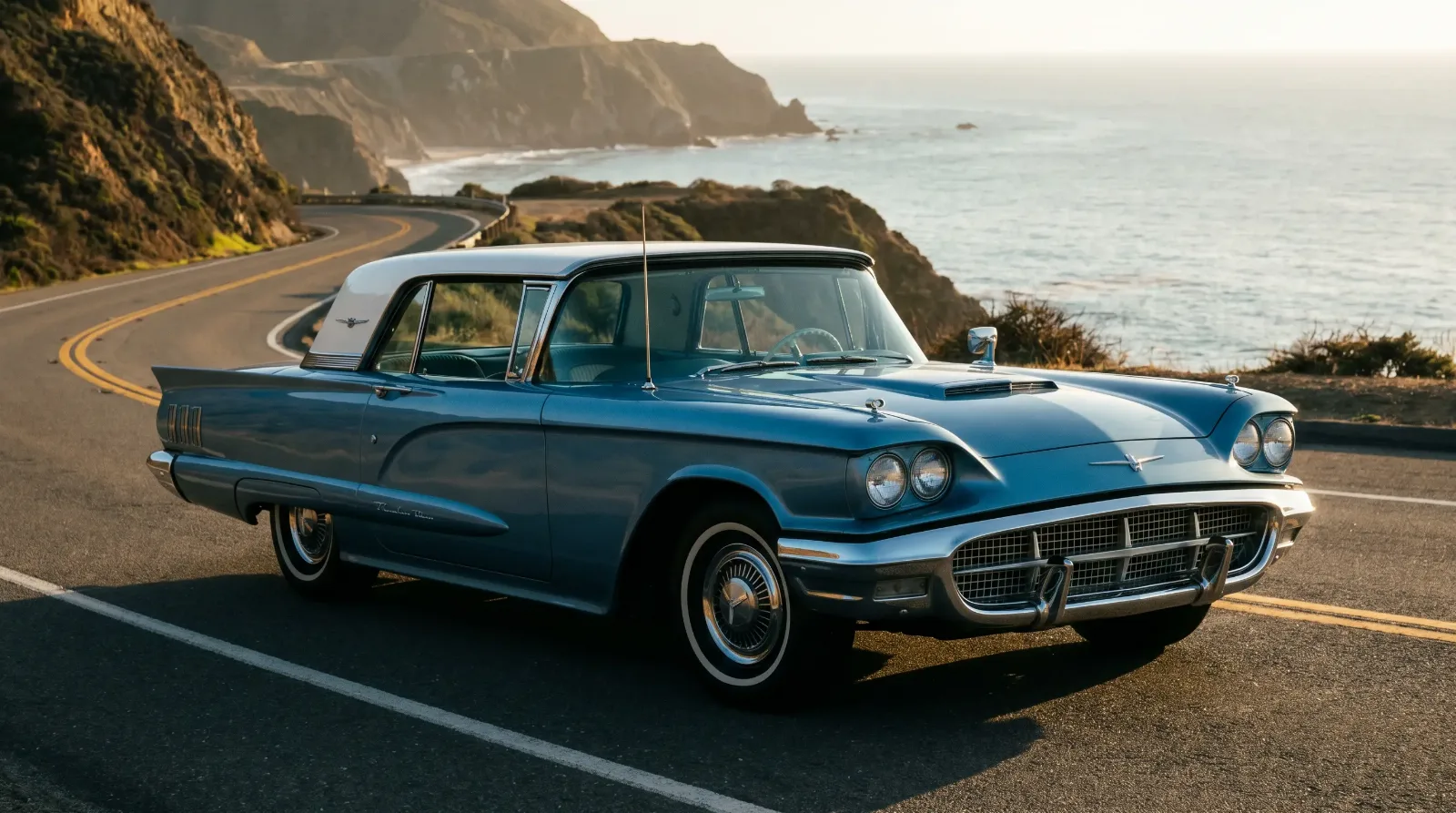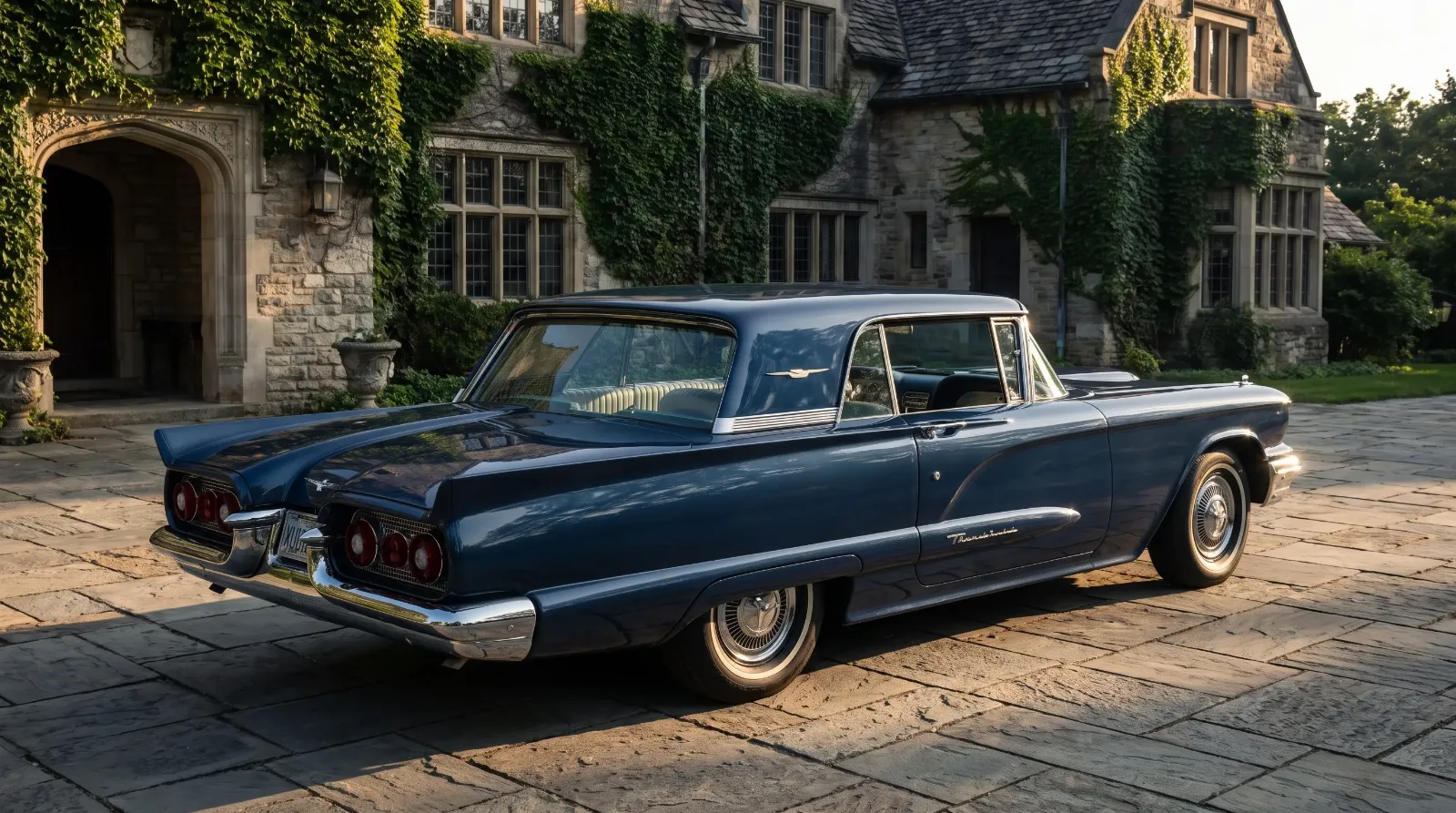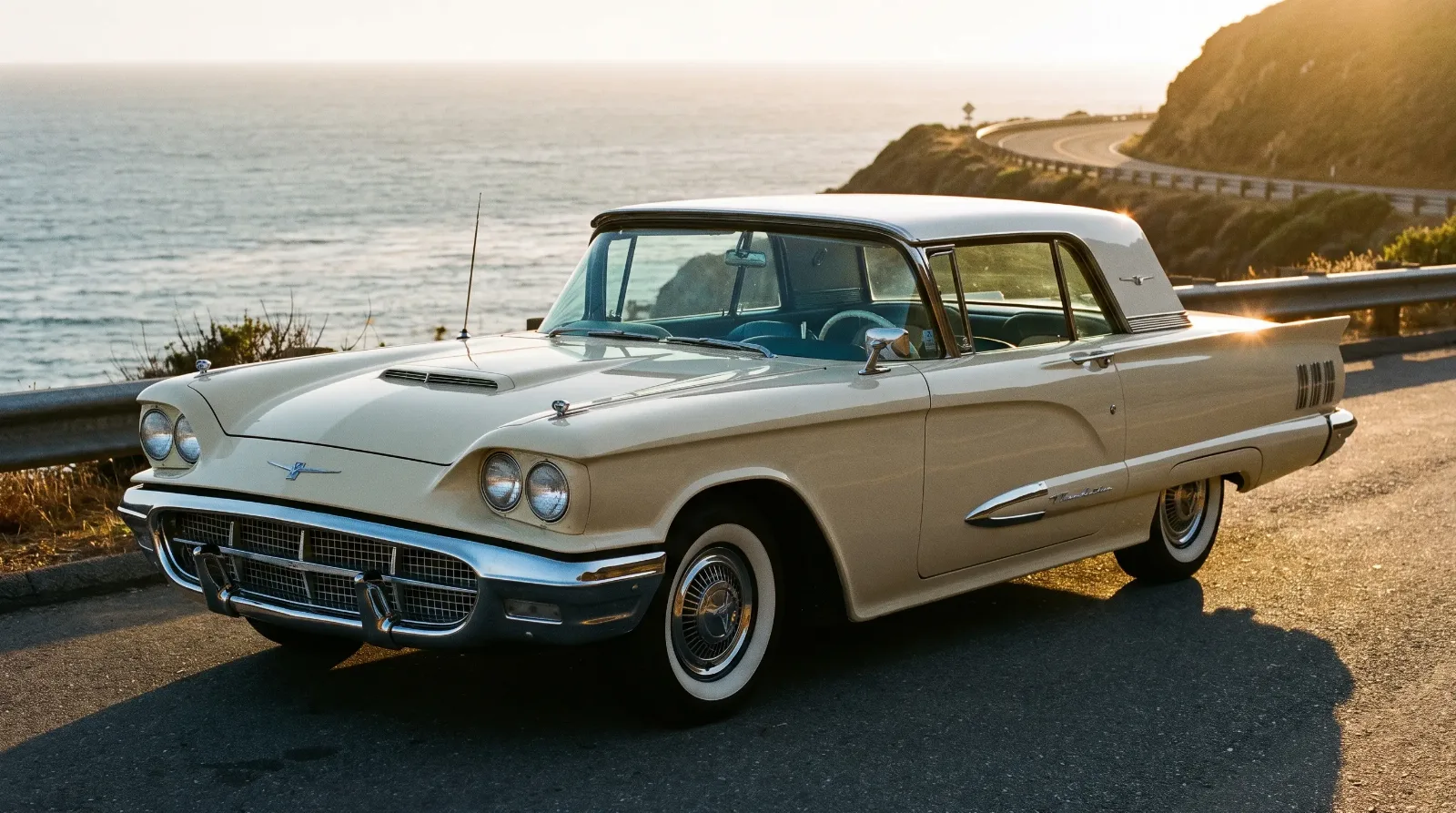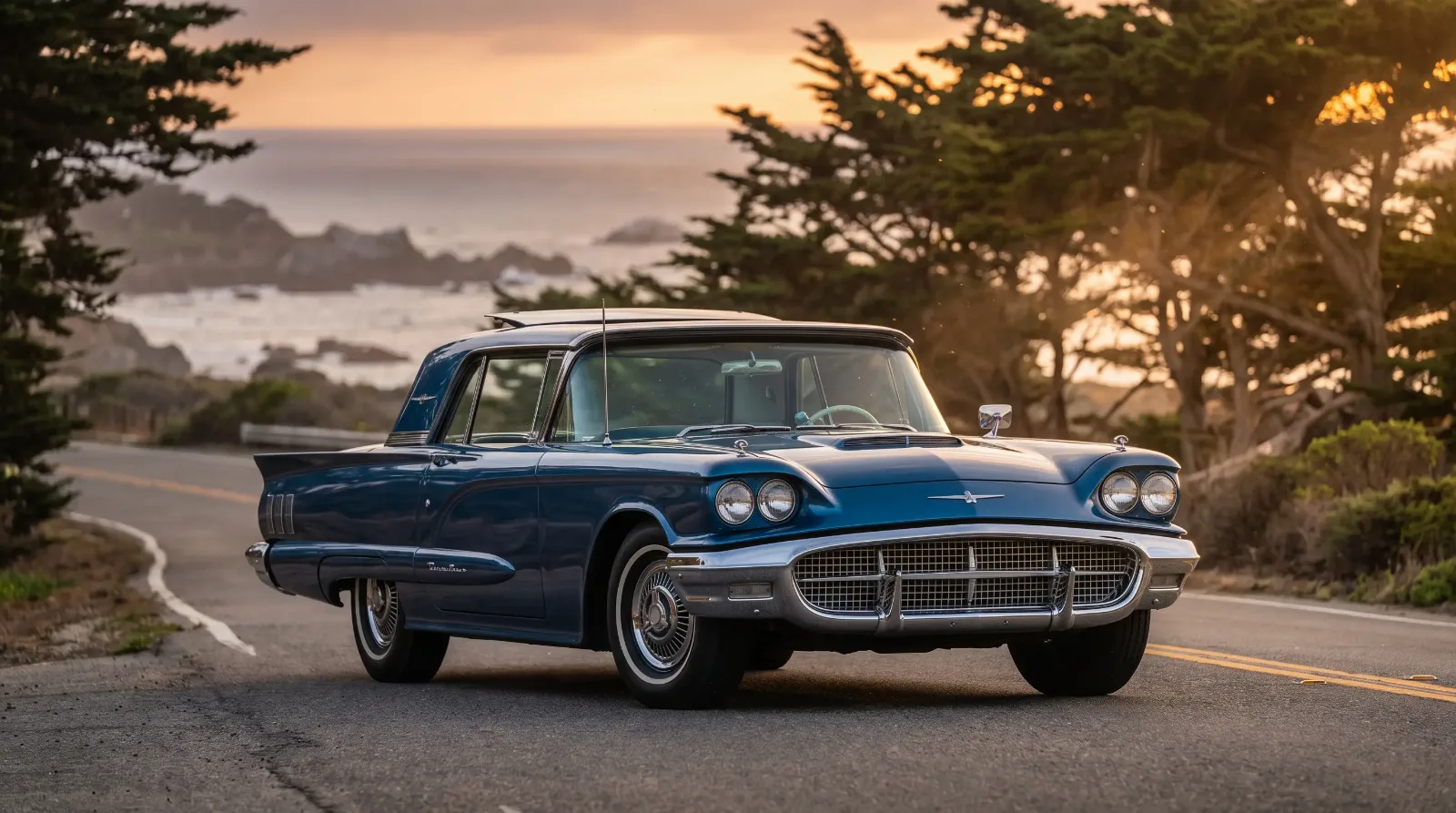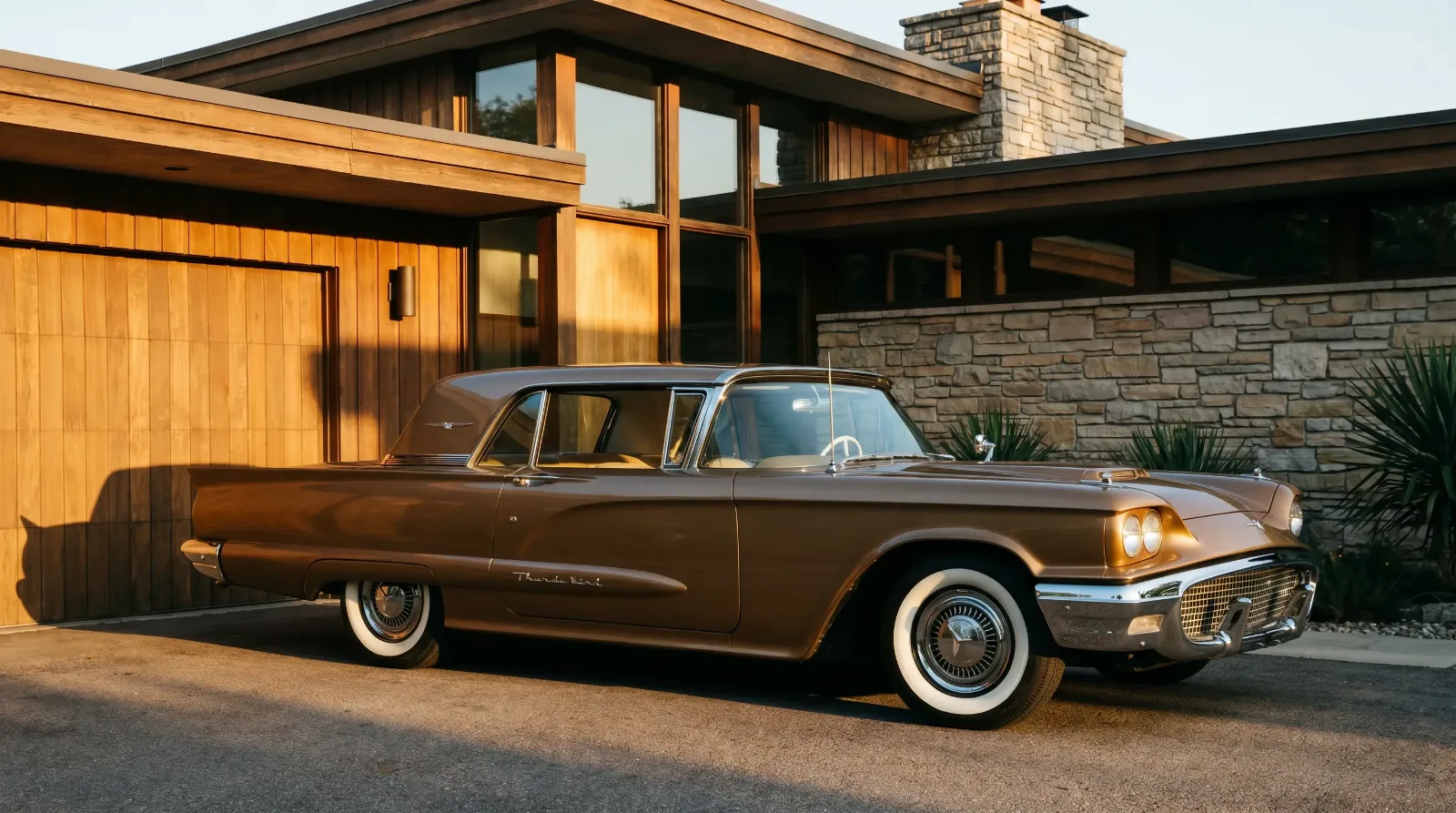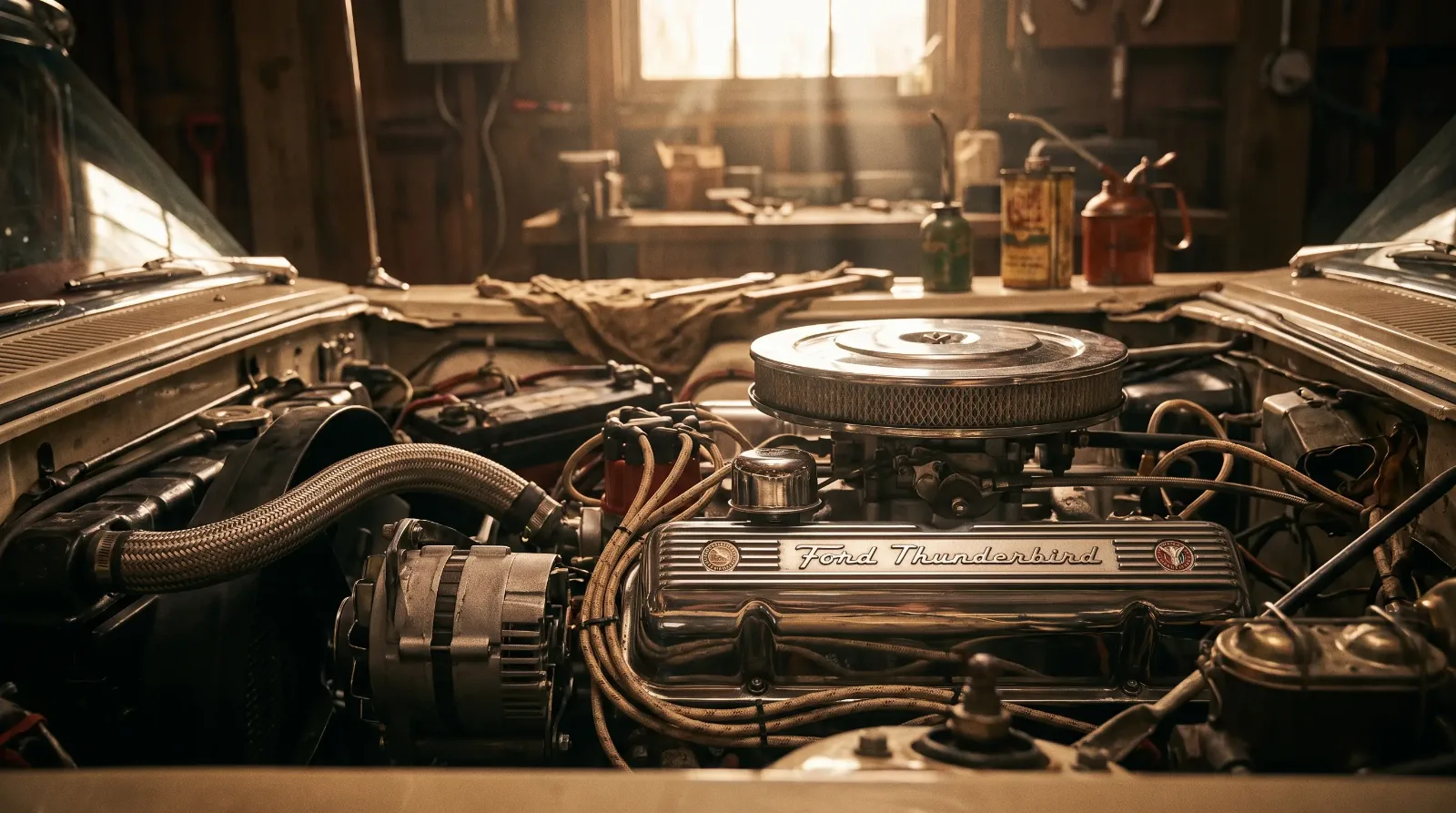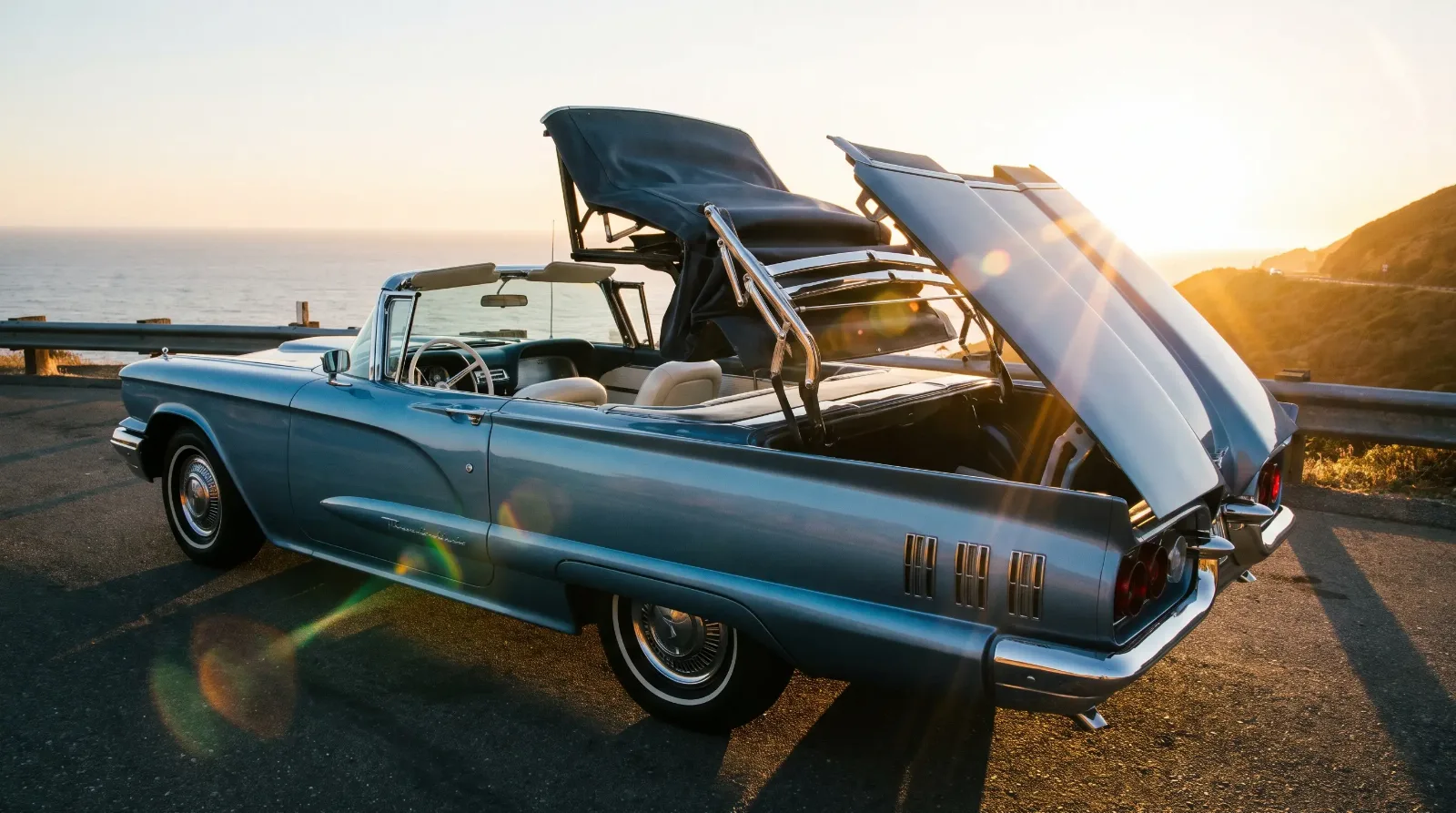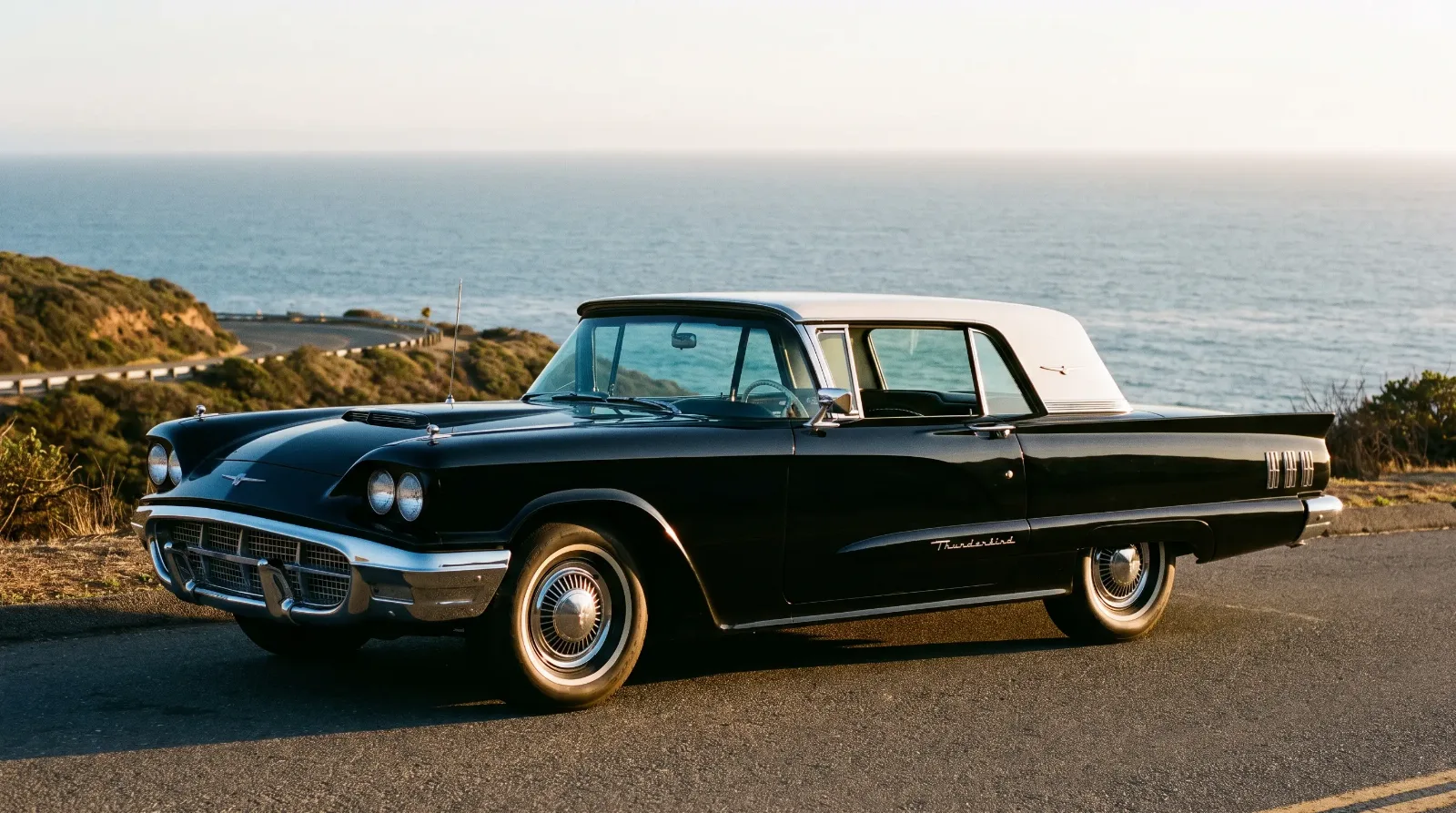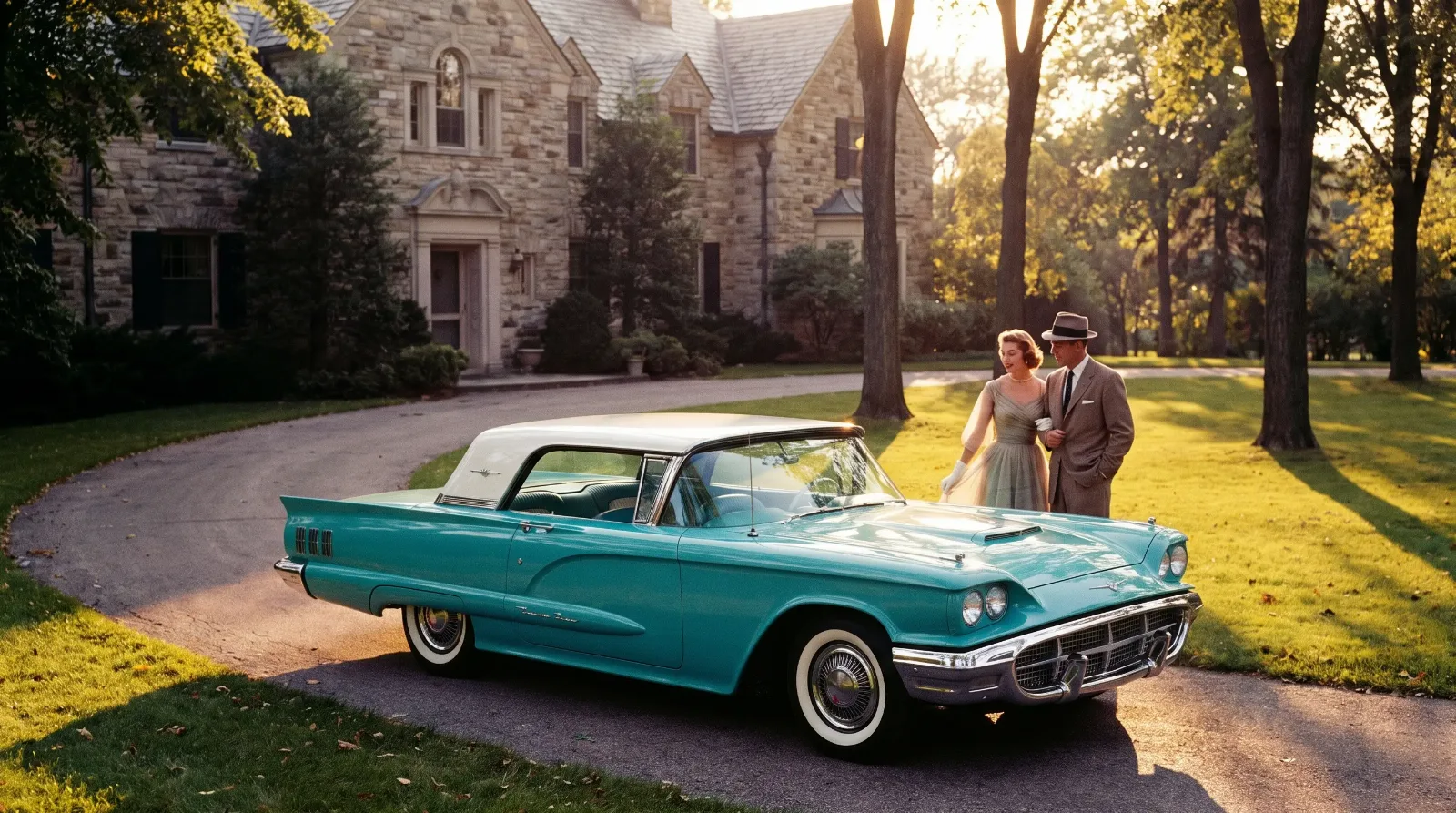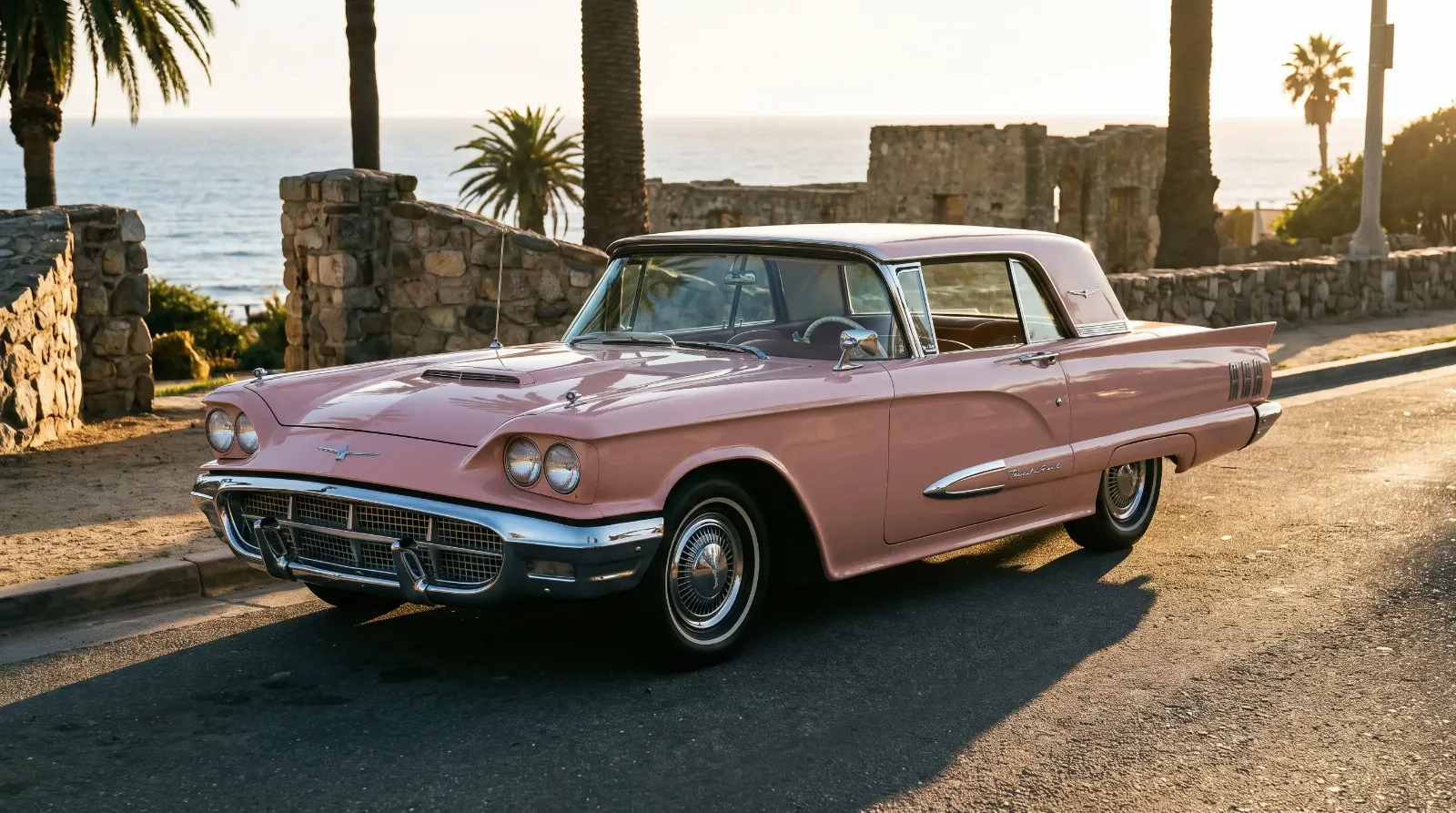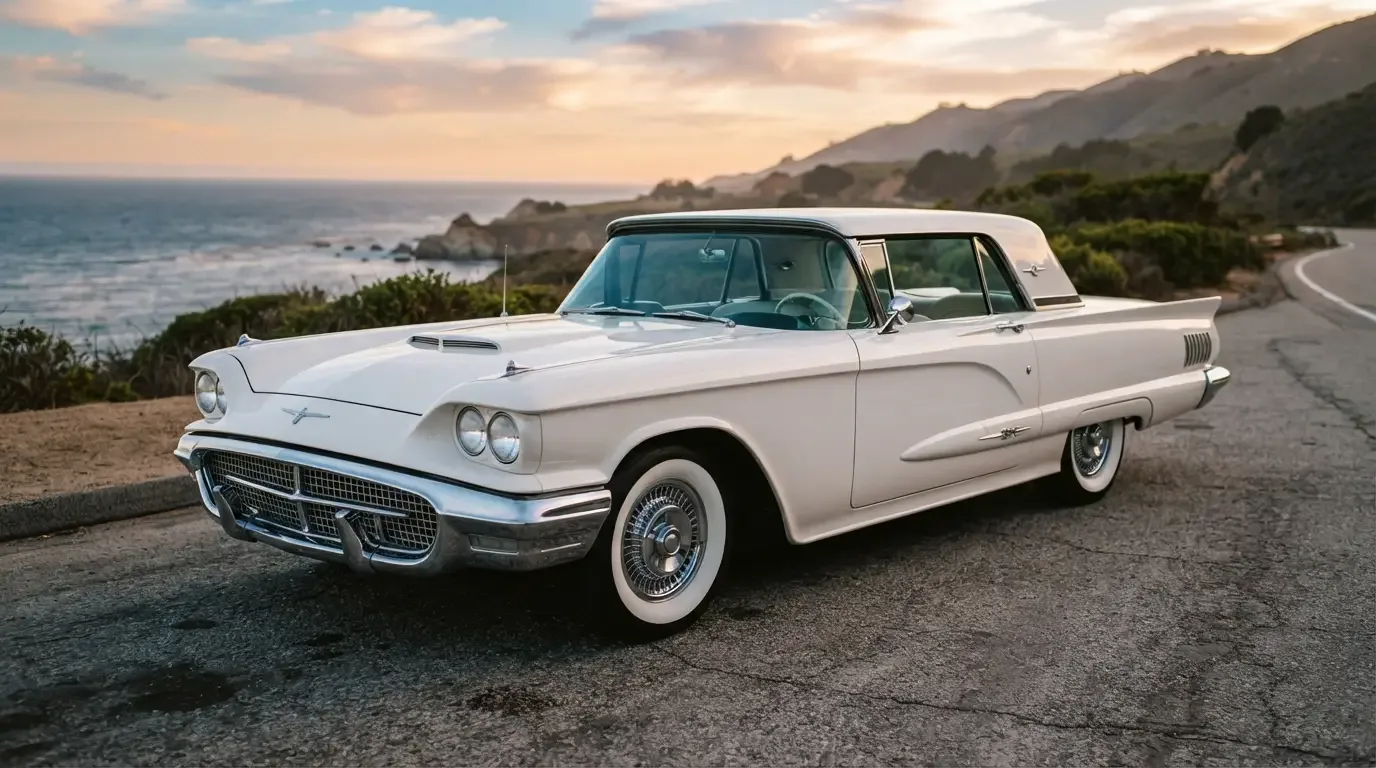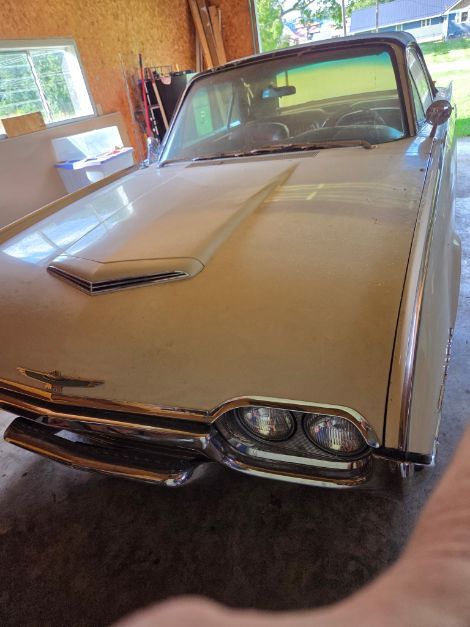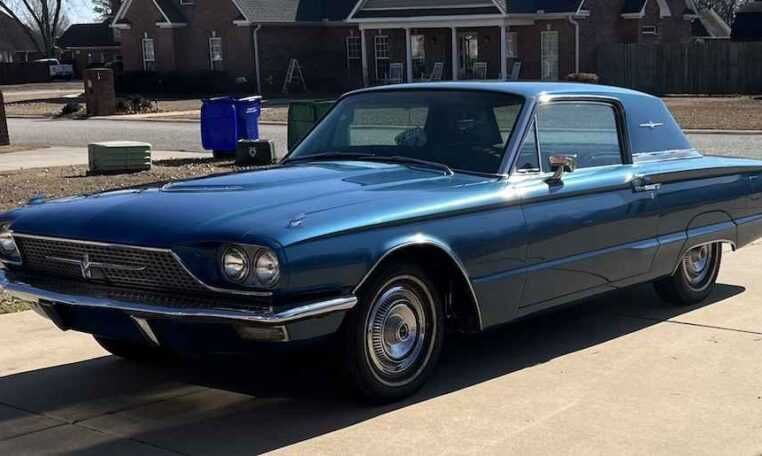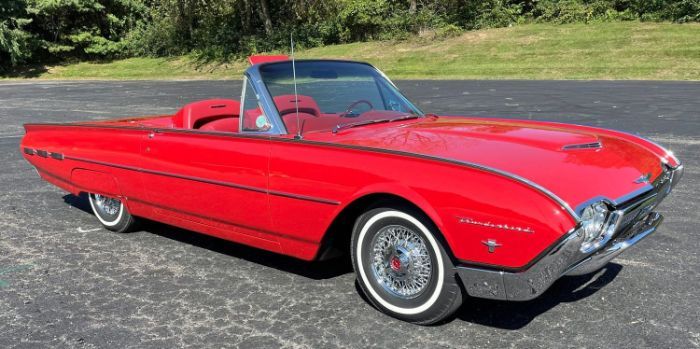
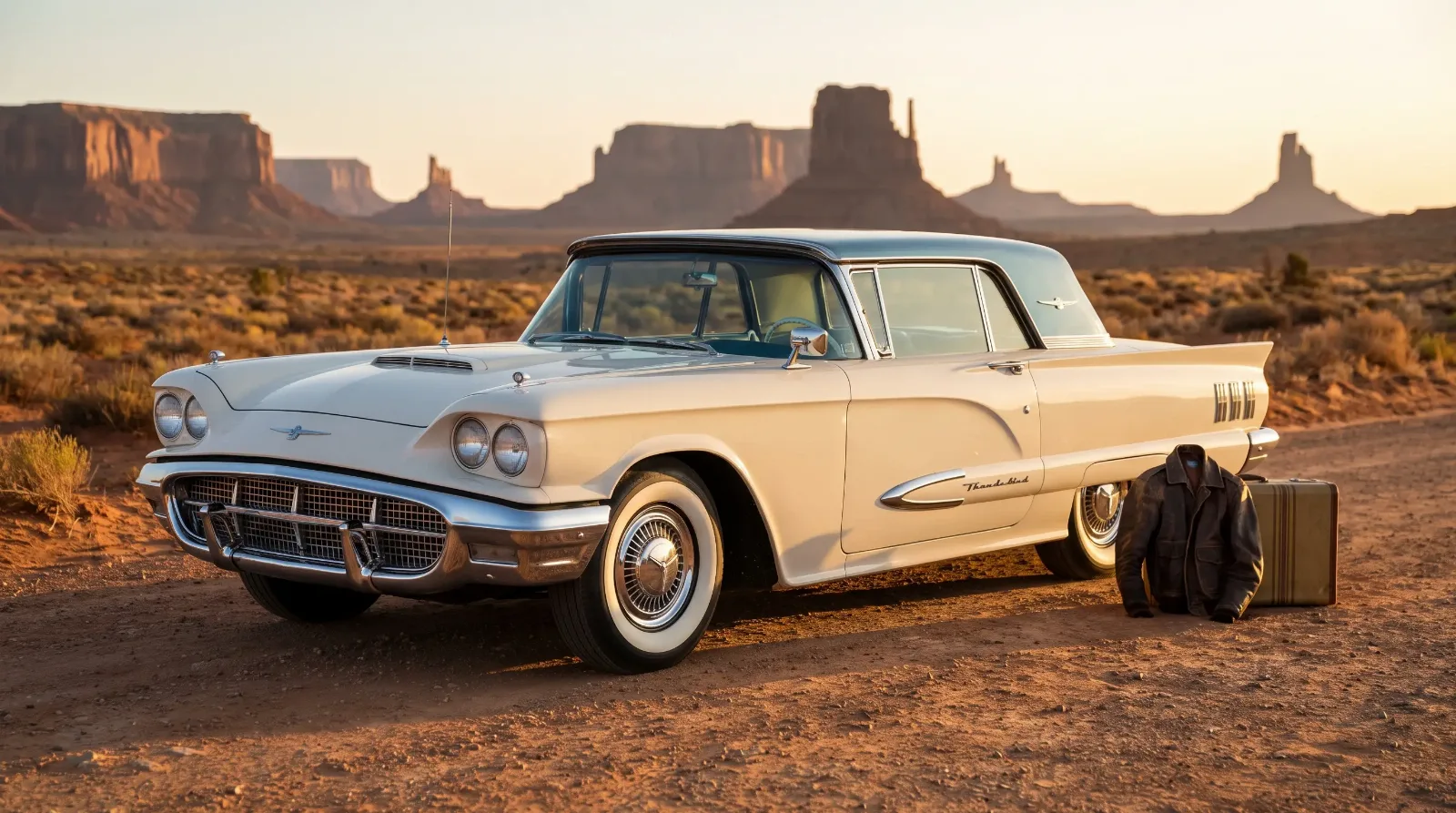
The 1958 ford thunderbird is the car that historians point to when they want to explain how a whole class of American automobile came to exist. Before it, the personal luxury car was not yet a recognized category. After it, every major manufacturer wanted one. The second-generation Thunderbird, known to enthusiasts as the Square Bird for its crisp, angular lines, arrived in the autumn of 1957 and rewrote what the nameplate meant. Ford had taken a beloved two-seat roadster and replaced it with a four-seat coupe, and by any measure a purist might use, that should have been a betrayal. Instead it became one of the most consequential design decisions in postwar Detroit.
To understand why, it helps to set aside sentiment and look at the car as an artifact of its moment, which is precisely what it was.
The decision behind the redesign
Robert McNamara, then a rising Ford executive, had studied the sales data on the original two-seat car and reached a conclusion that the enthusiast community resisted for years. A two-seater, however admired, addressed a limited audience. Adding a rear seat would not dilute the car's appeal so much as multiply the number of buyers who could justify the purchase. A couple with a child, an executive who occasionally carried colleagues, a family that wanted style without sacrifice, all of these were excluded by two seats and welcomed by four.
The gamble carried real risk. Ford was discarding a product that had beaten the Corvette in the showroom and built genuine affection among owners. Had the four-seat car failed, the decision would be remembered as an act of corporate hubris. It did not fail. The 1958 Thunderbird outsold the final two-seat year by a wide margin and took Motor Trend's Car of the Year award, validating McNamara's arithmetic in the most public way available. The complete arc from roadster to luxury coupe is worth tracing in full, and the the ford thunderbird story documents each turn of that evolution.
An engineering departure, not just a body change
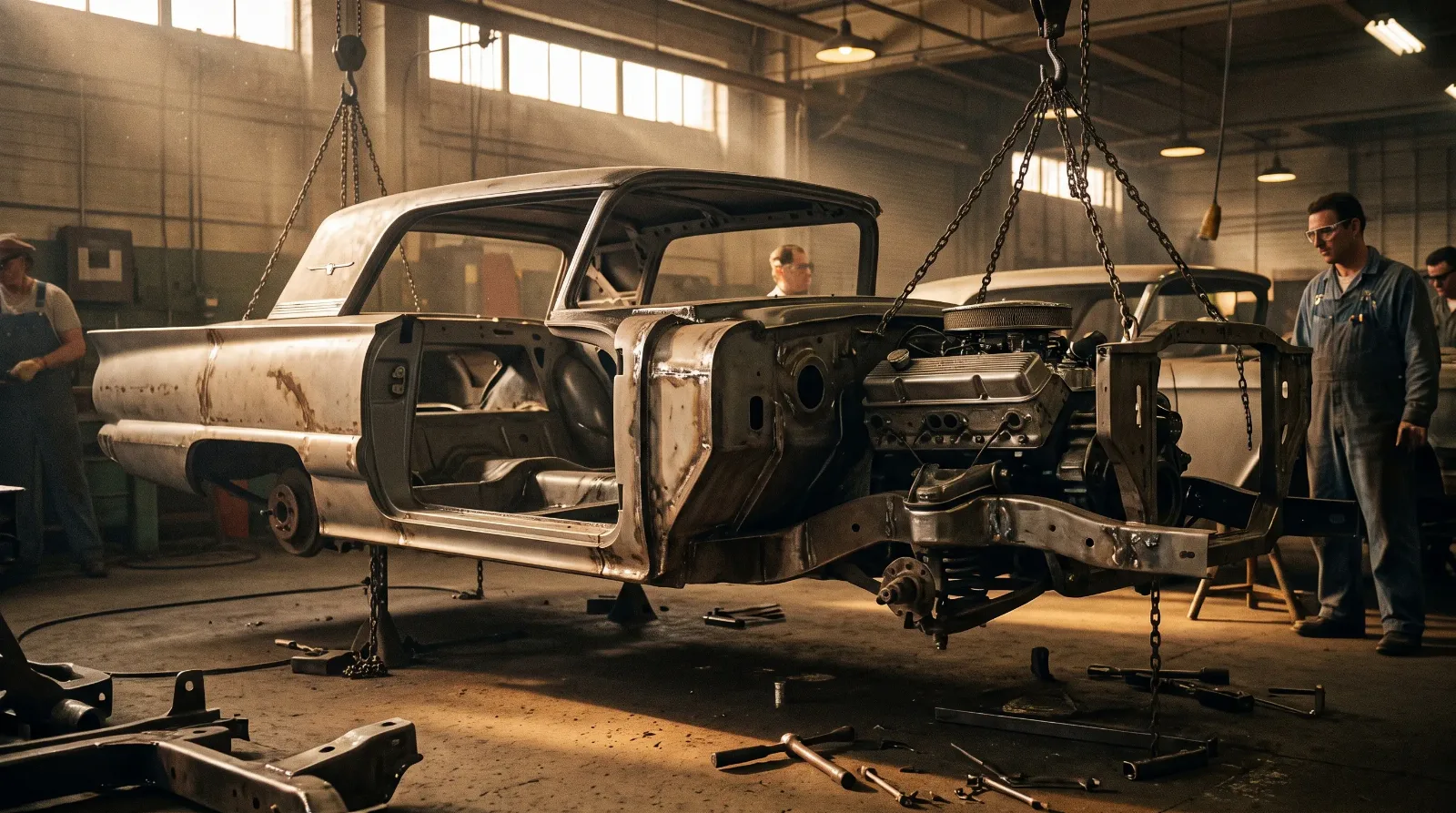
The Square Bird was not merely a longer, wider Thunderbird. It represented a fundamental shift in construction. Ford built it as a unibody, one of the earliest large American cars to abandon body-on-frame construction, and the decision shaped everything about how the car sat and drove.
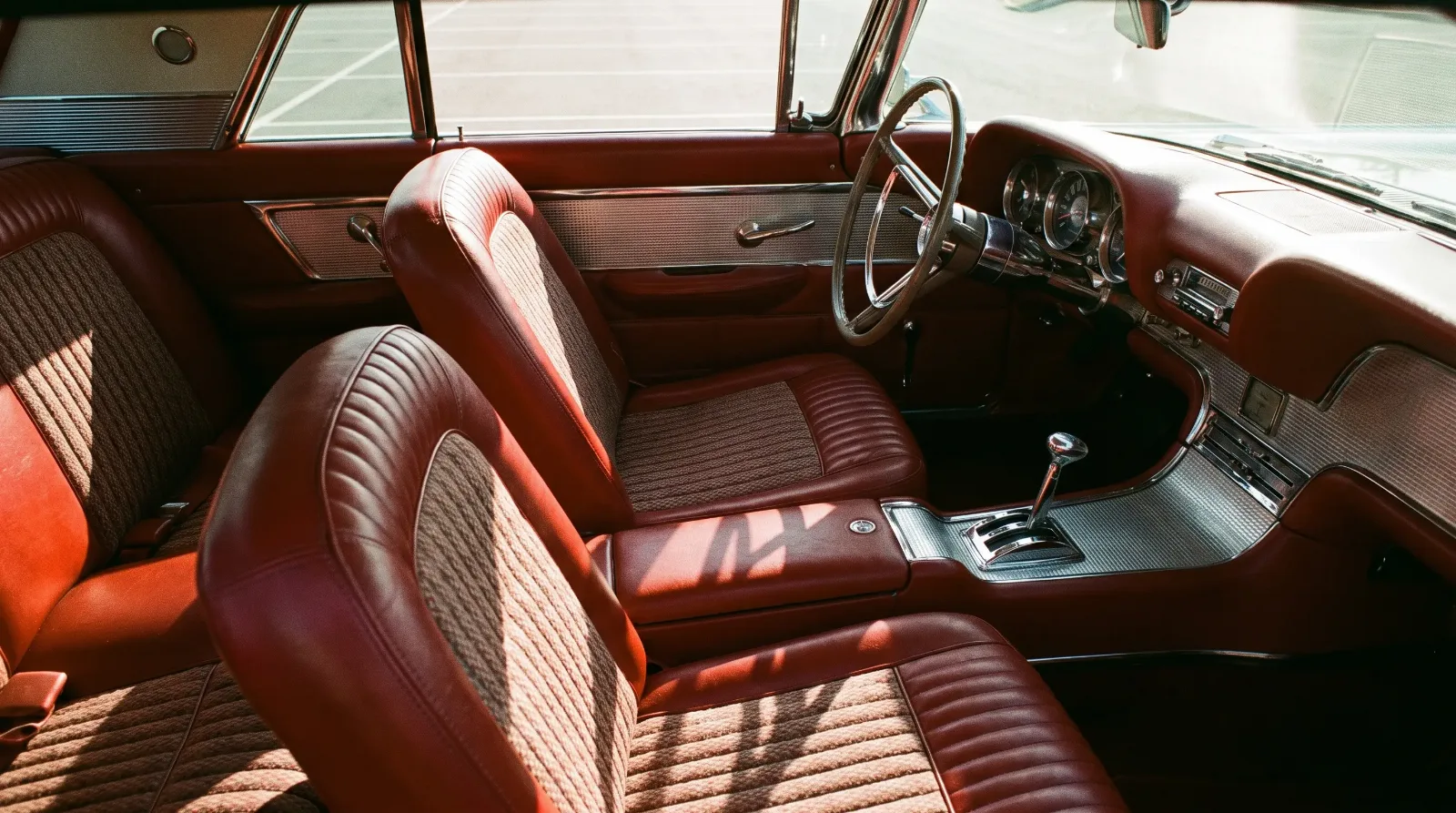
The unibody permitted a low floor, because there was no separate frame to sit above. That in turn allowed the transmission tunnel to become a design feature rather than an intrusion. Ford dressed it in a full-length console running between the seats, a console that housed controls and gave each occupant a defined space. This was novel in 1958, and it became a signature of the personal luxury genre for the next quarter century. The low, wide stance the unibody made possible is the very quality that gives the Square Bird its planted, purposeful look.
| Detail | Square Bird (1958-1960) |
|---|---|
| Production years | 1958, 1959, 1960 |
| Body styles | Two-door hardtop coupe and convertible |
| Construction | Unibody, an early large-scale American application |
| Base engine | 352 cubic inch FE-series V8 |
| Notable option (1959) | 430 cubic inch Lincoln V8, rated at 350 hp |
| Three-year production | Approximately 198,000 cars across all three years |
Reading the three model years
Concours judges and serious collectors distinguish the 1958, 1959, and 1960 cars by details that a casual observer would miss, and those details matter to originality and to value.
The 1958 car is the debut and carries the purest expression of the original design, though it was troubled by a delayed launch. Production was disrupted by construction at the new Wixom assembly plant, and early 1958 cars are consequently scarcer than the years that followed. The 1959 car brought a mild facelift, a revised grille, and the availability of the large 430 cubic inch Lincoln engine for buyers who wanted more thrust. The 1960 car, the final Square Bird year, is distinguished by a three-bar arrangement in the grille and triple taillights on each side, along with a rare sunroof option offered late in the run that is highly prized today.
These are not trivial distinctions to the people who preserve these cars. A correct 1960 sunroof coupe occupies a different tier from a standard hardtop, and originality of trim, engine, and interior appointments separates a concours contender from a pleasant driver. The habit of reading a car closely, year by year, is one every serious student of the marque develops. The Bullet Bird that followed rewards the same attention, and it is another one worth knowing for anyone tracing the design language forward.
The console and the culture it created
It is difficult, from a modern vantage point, to appreciate how much the Square Bird's interior changed expectations. The full console and the four individual seating positions communicated something specific to the buyer of 1958. This was not a bench-seat family sedan pretending to be sporting. It was a car that treated its occupants as individuals, with a cockpit-like arrangement that implied the act of driving was itself the point.
Competitors noticed. The success of this formula, luxury and personal identity combined in a four-seat coupe, prompted responses across the industry over the following decade. The category that the Square Bird effectively founded would grow to include some of the best-selling cars in America. When historians credit the Thunderbird with inventing the personal luxury segment, it is specifically this generation they mean.
"We tend to romanticize the two-seat car and treat the four-seater as a compromise, but the documentary record does not support that reading. The 1958 Thunderbird was the more ambitious car, technically and commercially, and it is the one that actually changed the industry. Preservation of these examples matters precisely because they mark a turning point, not a retreat."
- Sarah Whitfield
The Wixom plant and the industrial context
To evaluate the Square Bird as an artifact, one must understand where and how it was built, because the manufacturing story is inseparable from the car itself. Ford constructed the Thunderbird at a new assembly plant in Wixom, Michigan, a facility purpose-built for the demands of unitized construction and for the more exacting fit and finish that a premium personal car required. The plant was not fully ready when the 1958 model year opened, and the resulting delays are the direct reason early 1958 production ran behind schedule and finished the year at a lower volume than Ford had planned.
This detail matters to the historian and to the collector alike. It explains the relative scarcity of clean, early 1958 cars, and it locates the Square Bird within a broader shift in how Ford approached its more expensive products. The company was investing in a dedicated facility for a car it clearly regarded as strategically important, not treating the Thunderbird as an afterthought bolted onto an existing line. The Wixom plant would remain the home of the Thunderbird and the Lincoln for the better part of half a century, a continuity that speaks to the confidence Ford placed in the personal luxury formula the Square Bird established.
The unibody construction that the plant was built to accommodate also carried consequences that owners live with today. Because the body and structure are one, quality of assembly and resistance to corrosion were more critical than on a conventional separate-frame car, where a rotten frame can simply be replaced. Ford understood this and engineered accordingly, but time and road salt are patient adversaries, and the surviving population reflects how well each individual car was cared for across the decades.
Color, trim, and the language of 1958 luxury
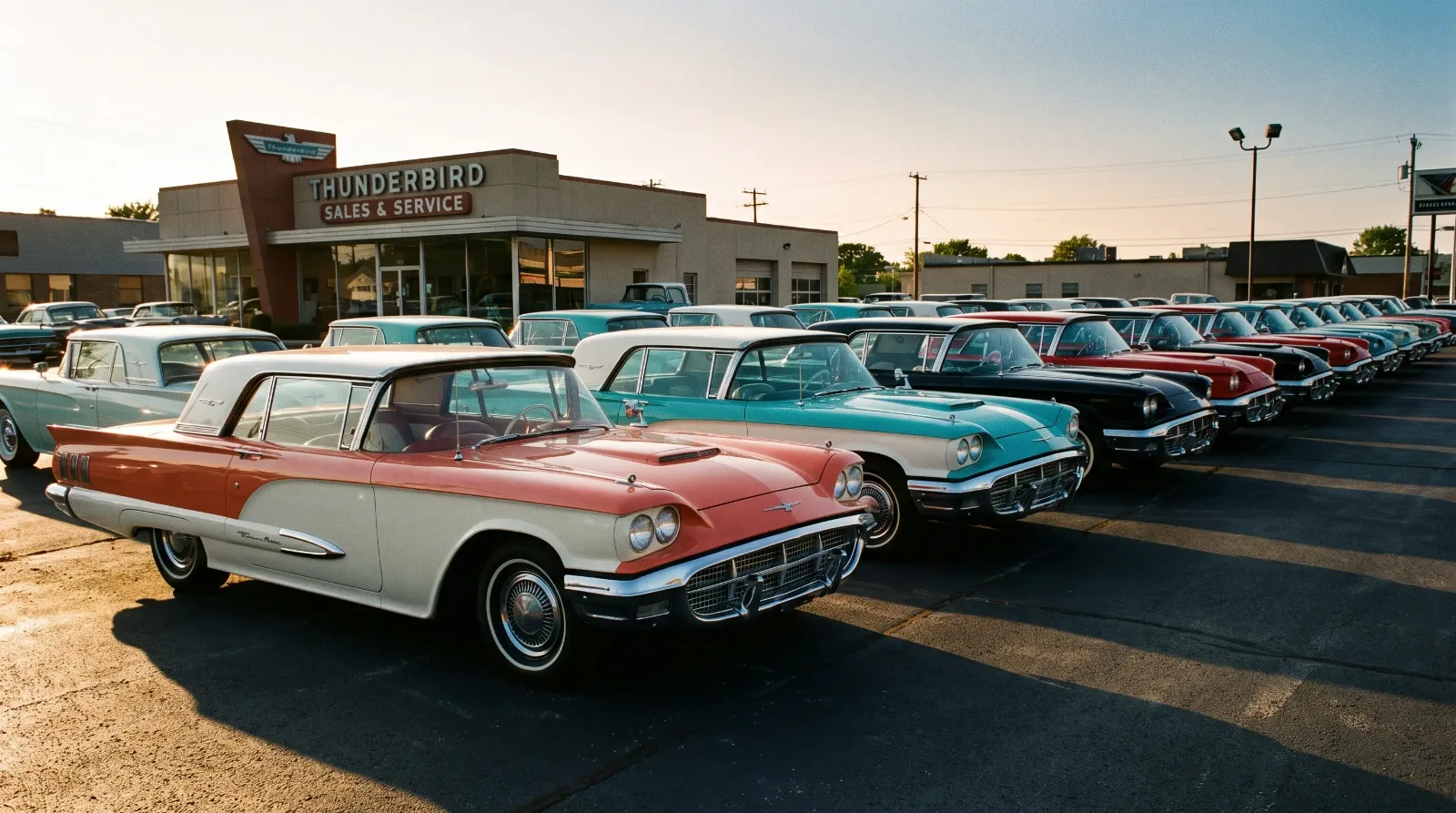
A serious study of the Square Bird has to account for how it was presented to buyers, because the color and trim choices were central to its appeal and are central now to how originality is judged. Ford offered these cars in the full palette of late-1950s taste, two-tone combinations, soft metallics, and interior appointments that emphasized comfort and a sense of occasion. The colors were not incidental decoration. They were part of how the car communicated its position above an ordinary Ford, and a period-correct color combination in good condition is a meaningful factor in a car's desirability today.
The interior deserves particular attention. The full-length console, the individually contoured seats, and the instrumentation were designed to feel special, and the materials and patterns Ford selected are specific to the model years and difficult to reproduce faithfully. A cabin that retains its correct upholstery, console trim, and instrument details is increasingly rare and is one of the clearest indicators of a well-preserved car. For the concours-minded owner, matching these details to factory specification is the difference between a car that presents well and a car that documents its own history accurately.
This is why provenance and originality carry such weight in the second-generation market. The mechanical simplicity of these cars means almost anything can be restored, but restoration and preservation are not the same thing. A car that has kept its original finishes and appointments tells a truer story than one that has been returned to showroom condition through replacement, and for the collector who values the Square Bird as a historical document, that distinction is the whole point.
Collecting the Square Bird today
The second-generation cars have long lived in the shadow of the two-seat Thunderbirds, and that has kept them comparatively accessible. For the collector who values historical significance over scarcity-driven pricing, this is an opportunity rather than a drawback. The Square Bird is arguably the most important Thunderbird ever built, and it can still be acquired for a fraction of what its predecessor commands.
Condition and originality drive the market here more than raw performance. Convertibles trade above hardtops, as they generally do across the era, and the sought-after configurations, an early 1958, a 430-powered 1959, a 1960 sunroof coupe, sit at the top of the range. Rust is the enemy on unibody cars in a way it is not on separate-frame vehicles, because structural corrosion cannot simply be addressed by replacing a bolted-on frame. A careful inspection of the floor structure and rockers is essential before any purchase.
Why the gamble still matters
The Square Bird's legacy is not measured only in its own sales figures, impressive as they were. It is measured in everything that followed. The four-seat personal luxury coupe became a defining American automotive form of the 1960s and 1970s, and the template was drawn here, in these crisp, angular lines built at Wixom between 1958 and 1960.
For the collector or the historian, that significance is the reason to care. These cars marked the moment Ford proved that a personal car did not need to be small or impractical to be desirable, and that a rear seat could expand a market rather than compromise a vision. The examples that survive in original condition are documents of that decision, and they reward close study. Anyone drawn to the era can browse classic Thunderbird listings and see for themselves how the Square Bird's proportions still read as deliberate and confident nearly seventy years on.
Sources and notes
- Ford Thunderbird (second generation) - Wikipedia
- 1959 Ford Thunderbird Specifications - Squarebirds.org
- 1959 Ford Thunderbird 430 Special V-8 specs - Automobile Catalog
- 1958-1960 Ford Thunderbird, the Square Bird - Old Car Memories
- Hip to be Square: The 1958-1960 Ford Thunderbird - Old Cars Weekly
- Squarebird Line Production Information - Squarebirds.org