On a spring morning in 1964, a Plymouth dealer in the Midwest rolled a strange little fastback onto his showroom floor and waited for the crowd that never quite came. The car was the Plymouth Barracuda, and it had beaten a certain pony car to market by about two weeks. History remembers the other one. That is the cruel comedy at the heart of this story, and it is also why the Barracuda is one of the most rewarding cars a collector can fall for today. It was early, it was odd, and by the end of its run it had turned into one of the most feared machines Detroit ever built.
The Barracuda arrived on April 1, 1964. It left in 1974, a decade later, having reinvented itself twice and gone from economy-car curiosity to Hemi-powered legend. The arc of that decade is the whole muscle-car era in miniature, told through one nameplate that started as a fish joke and ended as a six-figure auction star.
A fish named in a hurry
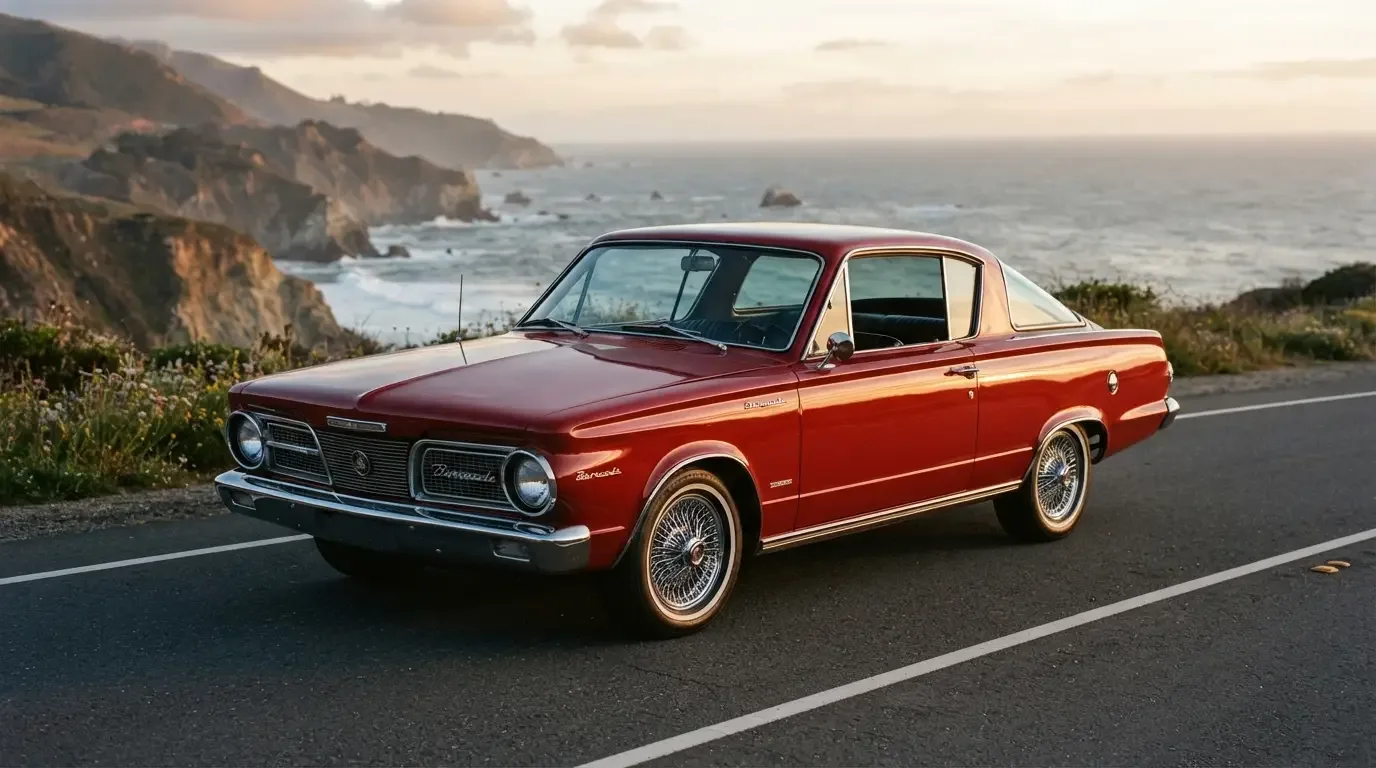
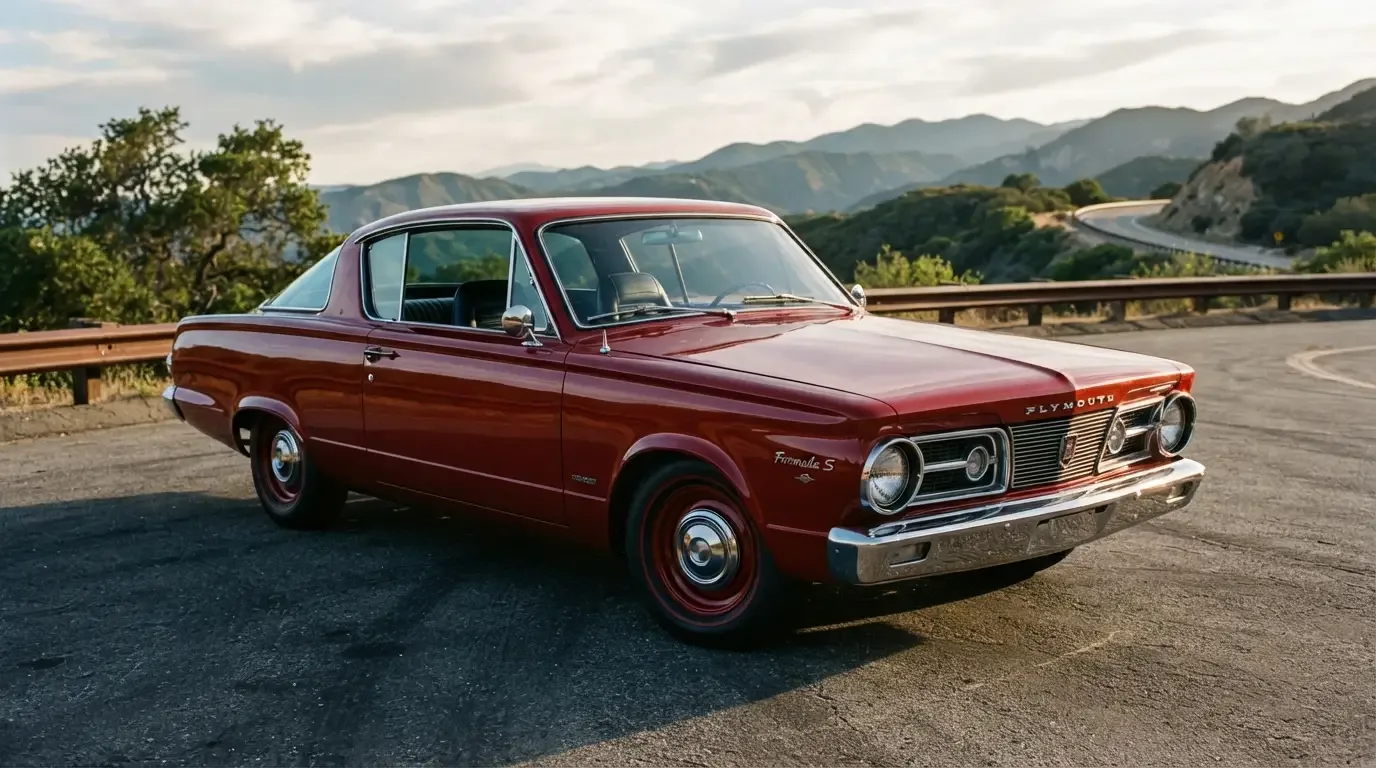
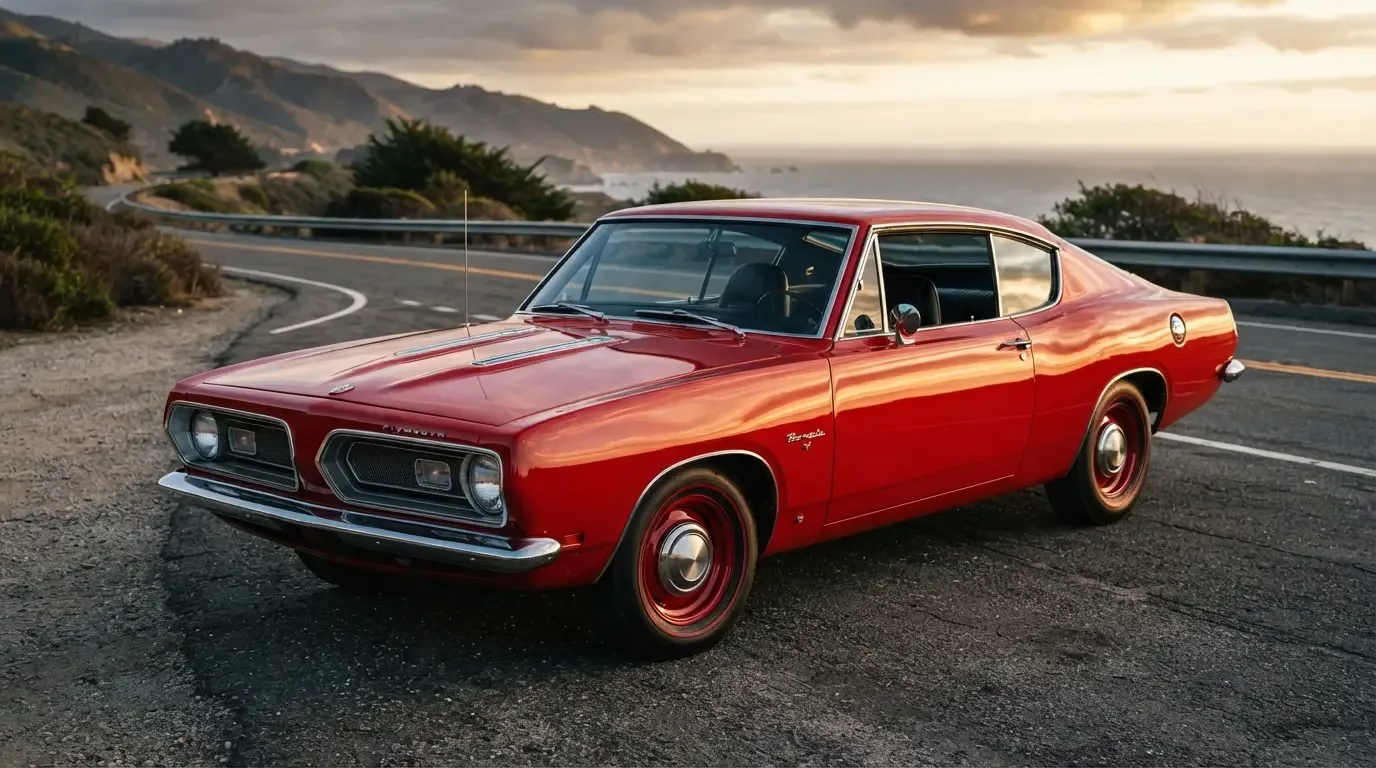
The origin of the Barracuda begins with a problem. Plymouth needed something young and sporty, and it needed it fast, and it did not have the budget to build a car from scratch. So the engineers did what engineers do when the clock is against them. They took the Valiant, a sensible compact A-body sedan, and gave it a dramatic new roof. The result was a fastback with an enormous curved rear window, a piece of glass so large it became the car's calling card. At the time it was the biggest single piece of automotive glass ever fitted to a production car. Fold the rear seat down and you had a carpeted cargo area running back under that glass canopy, part sports car and part greenhouse.
The name almost did not happen. Internal proposals reportedly included calling the car the Panda, a suggestion that horrified the people who had to sell it. Cooler heads won, the marketing team reached for something with teeth, and the Barracuda got its name from the predatory fish. There is a lesson buried in that decision. Plymouth wanted this car to feel dangerous even when it was, in those first months, powered by a modest slant-six. The badge promised more than the drivetrain could deliver, and the company spent the next ten years making good on the promise.
Timing was everything and Plymouth got it exactly wrong. The Barracuda reached dealers roughly two weeks before Ford unveiled the Mustang, and the Mustang landed like a cultural event while the Barracuda landed like a footnote. Ford sold hundreds of thousands of Mustangs in the first year. Plymouth sold a fraction of that. The first-generation Barracuda, built from 1964 through 1966, has spent its whole life being described as the car that got to the party first and still missed it.
The first generation finds its teeth
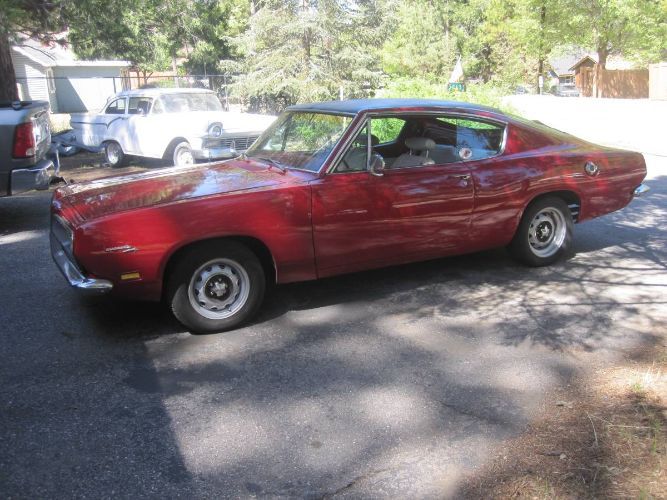
Being a rebodied Valiant was not the insult it sounds like. The A-body platform was tough and honest, and once Plymouth started offering real engines the Barracuda began to make sense as something more than a commuter with a fancy roof. The pivotal option was the Formula S package, which brought the 273 cubic inch V8 in a higher-output tune, stiffer suspension, and a tachometer. Suddenly the fish had a bite. A Formula S Barracuda was never going to embarrass a big-block anything, but it handled tidily and it looked like nothing else on the road.
Those early cars have aged into genuine charm. The 1964 to 1966 Barracudas are affordable next to their later siblings, they are simple to live with, and that glass roof still stops people in parking lots sixty years on. For a collector who cares more about character than quarter-mile times, a first-generation car is one of the smartest ways into the hobby. It carries the whole story in it, the compromise and the ambition both, and it asks very little in return.
The second generation grows up
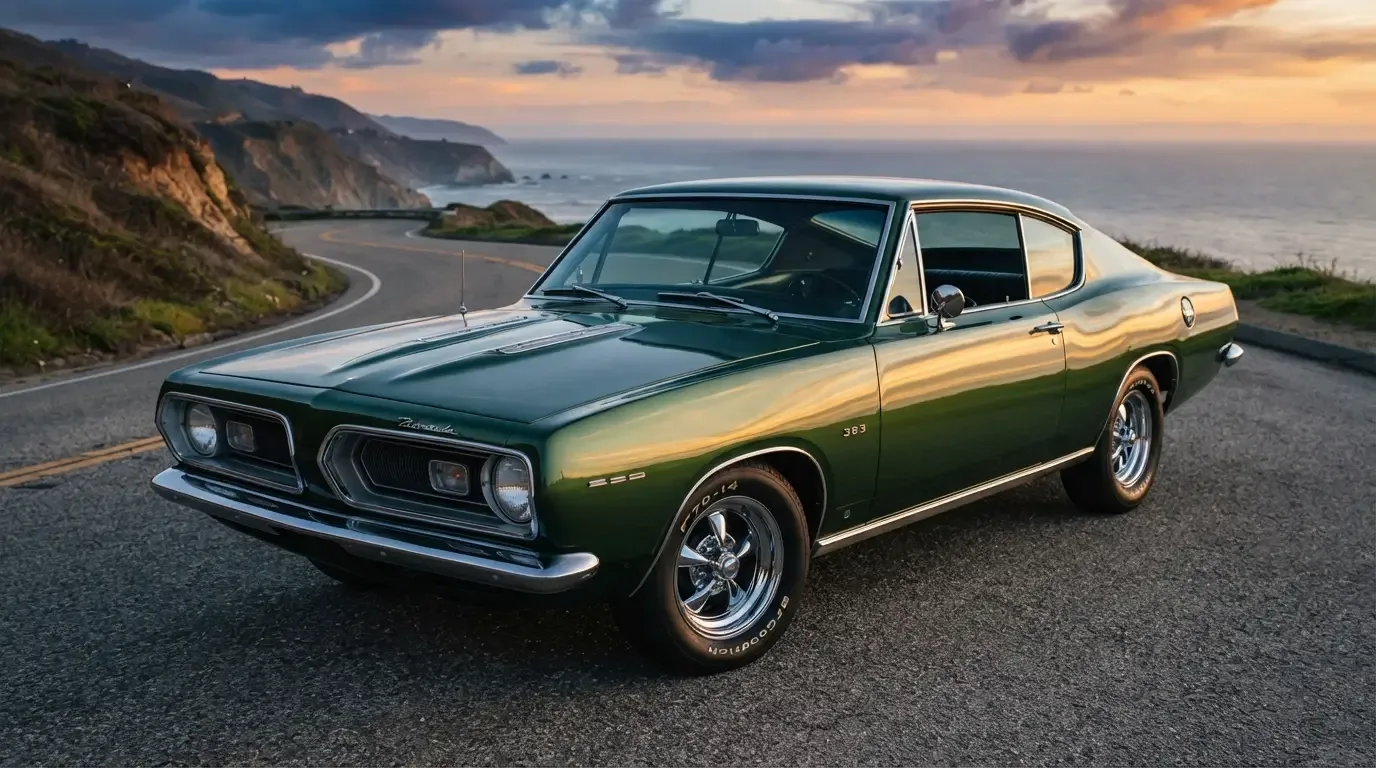
For 1967 Plymouth gave the Barracuda a proper redesign. It was still an A-body underneath, still related to the Valiant, but now it looked like it meant business. Better still, it came in three shapes. There was the fastback that everyone pictures, a notchback hardtop coupe with a formal roofline, and for the first time a convertible. Three body styles gave buyers real choice, and it gave the Barracuda a range it had never had before, from tidy open-top cruiser to serious street machine.
Under the hood the story got much louder. The second-generation cars could be ordered with the 383 cubic inch big-block V8, a fitment so tight that early big-block cars famously had no room for power steering. This was the moment the Barracuda stopped being a compact with a sporty roof and started becoming a muscle car. The 383 was heavy, it made the nose plow, and enthusiasts of the day did not care one bit. The point was the noise and the shove, and the 1967 to 1969 Barracuda delivered both.
These middle-era cars are the connoisseur's Barracuda. They are not as valuable as the E-body monsters that followed, which means a well-sorted 1968 fastback or a Formula S convertible still lives in the realm of the merely expensive rather than the absurd. If you want a Barracuda that drives like the sixties, looks like the sixties, and does not require a bank loan, this is the generation collectors quietly recommend to each other.
The E-body and the birth of the 'Cuda
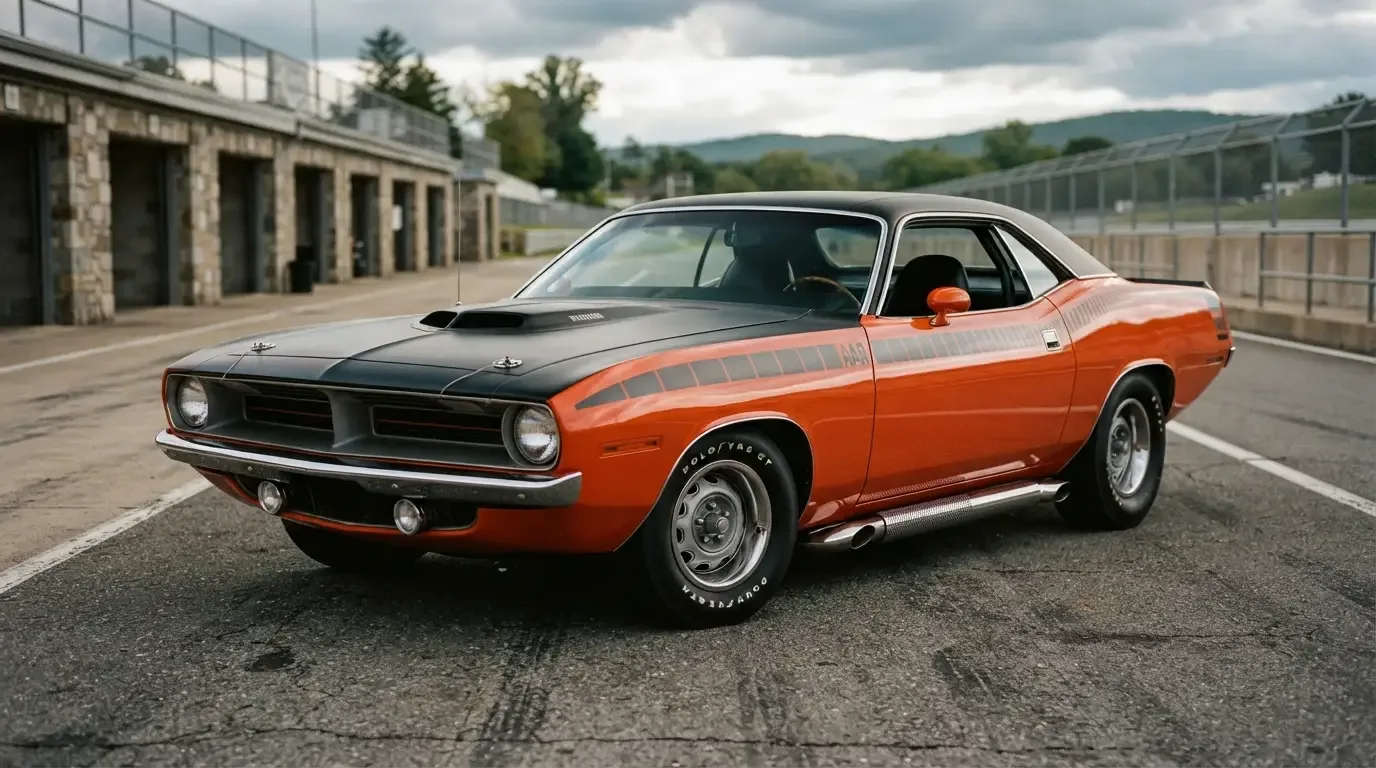
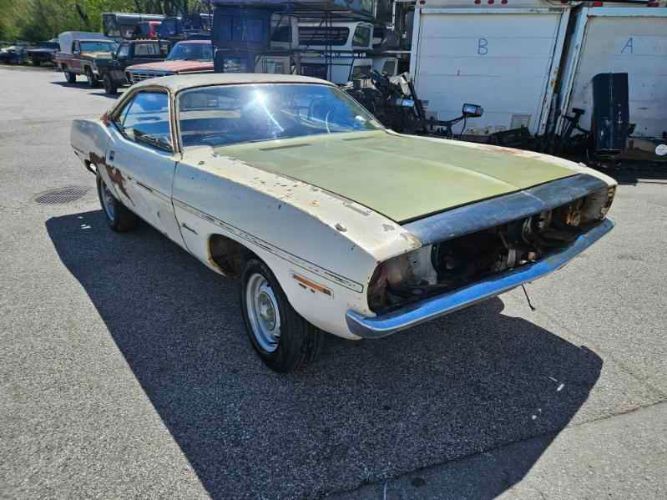
Everything the Barracuda had been building toward arrived in 1970. Plymouth cut the umbilical cord to the Valiant and put the car on the new E-body platform, a chassis shared with the Dodge Challenger and designed from the start to swallow the biggest engines Chrysler made. The third-generation Barracuda was wider, lower, meaner, and finally free of its economy-car past. This was no longer a compact with pretensions. This was a purpose-built muscle car, and Plymouth split it into two personalities.
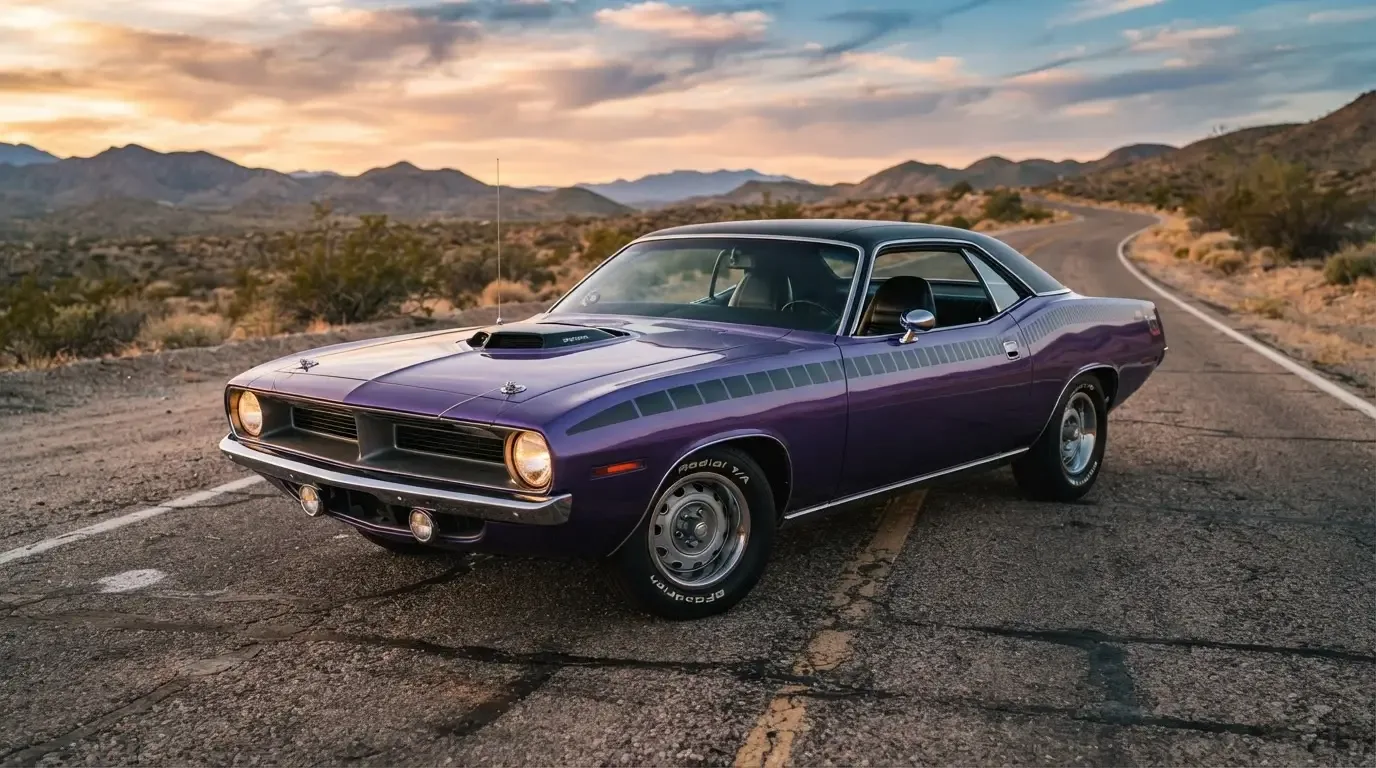
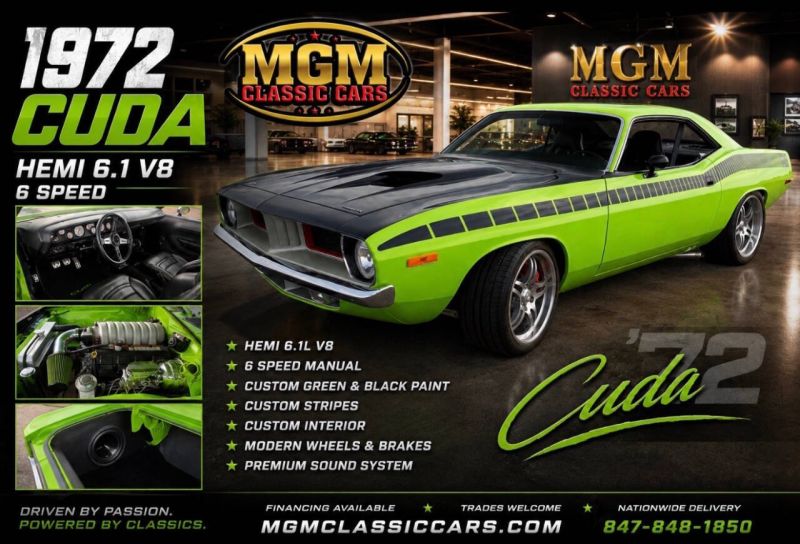
The base Barracuda and the mid-level Gran Coupe covered the civilized end. The performance end wore a different badge. It was called the 'Cuda, spelled with the apostrophe, and it was the version that mattered. A 'Cuda could be ordered with the 340, the 383, the 440, the 440 with three two-barrel carburetors known as the Six Barrel, and at the very top of the mountain the 426 Hemi. That engine roster reads like a menu written by someone who had stopped listening to the insurance industry entirely.
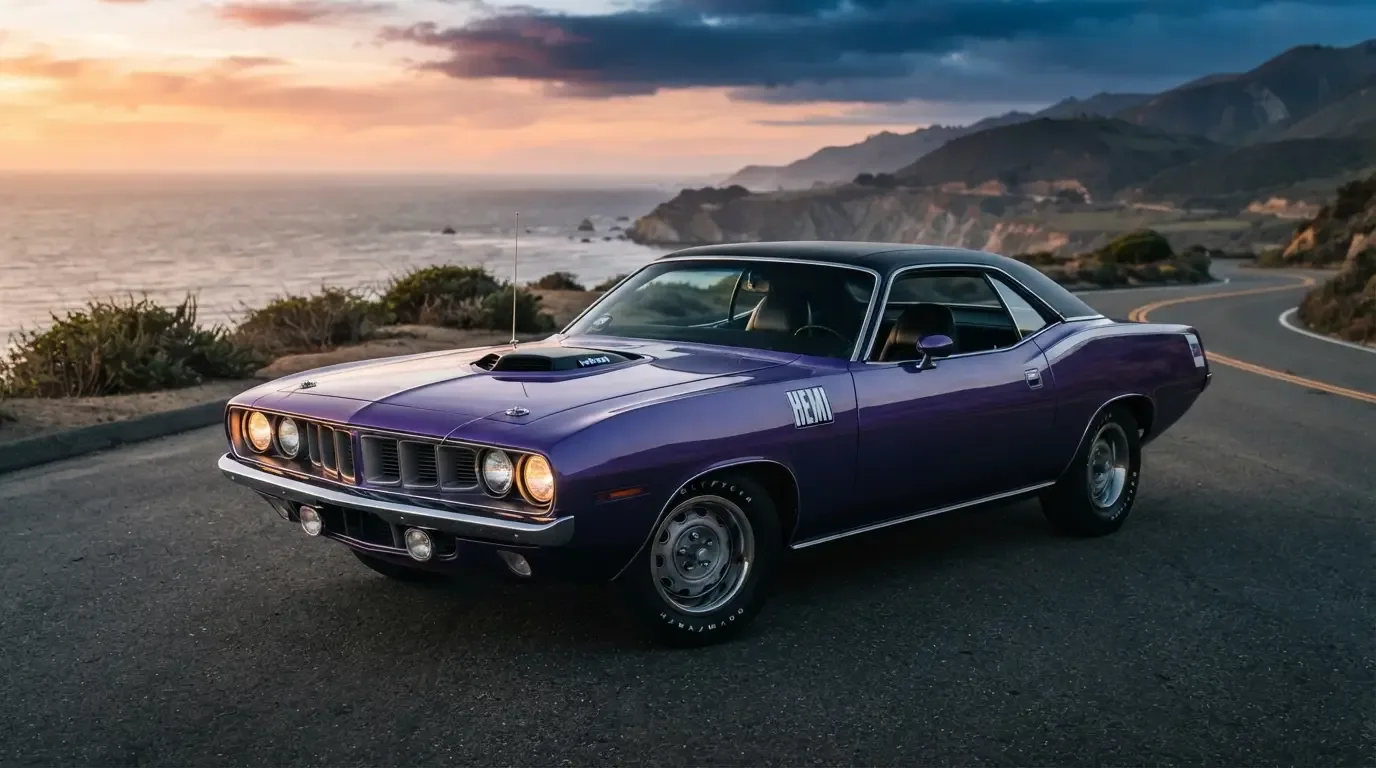
The Hemi 'Cuda is the car that made the whole nameplate immortal. With its 426 cubic inch elephant engine, it was brutal in a way that is hard to explain to anyone who has not stood next to one at idle. Chrysler officially rated the Hemi at 425 horsepower, a figure most enthusiasts and dyno tests over the years have argued was conservative, likely to keep insurance surcharges from climbing even higher than they already were. It was expensive when new, it was hard to insure, and it terrified a generation of stoplight challengers. Today it is the most coveted muscle car of its era, full stop.
The colors that told the truth
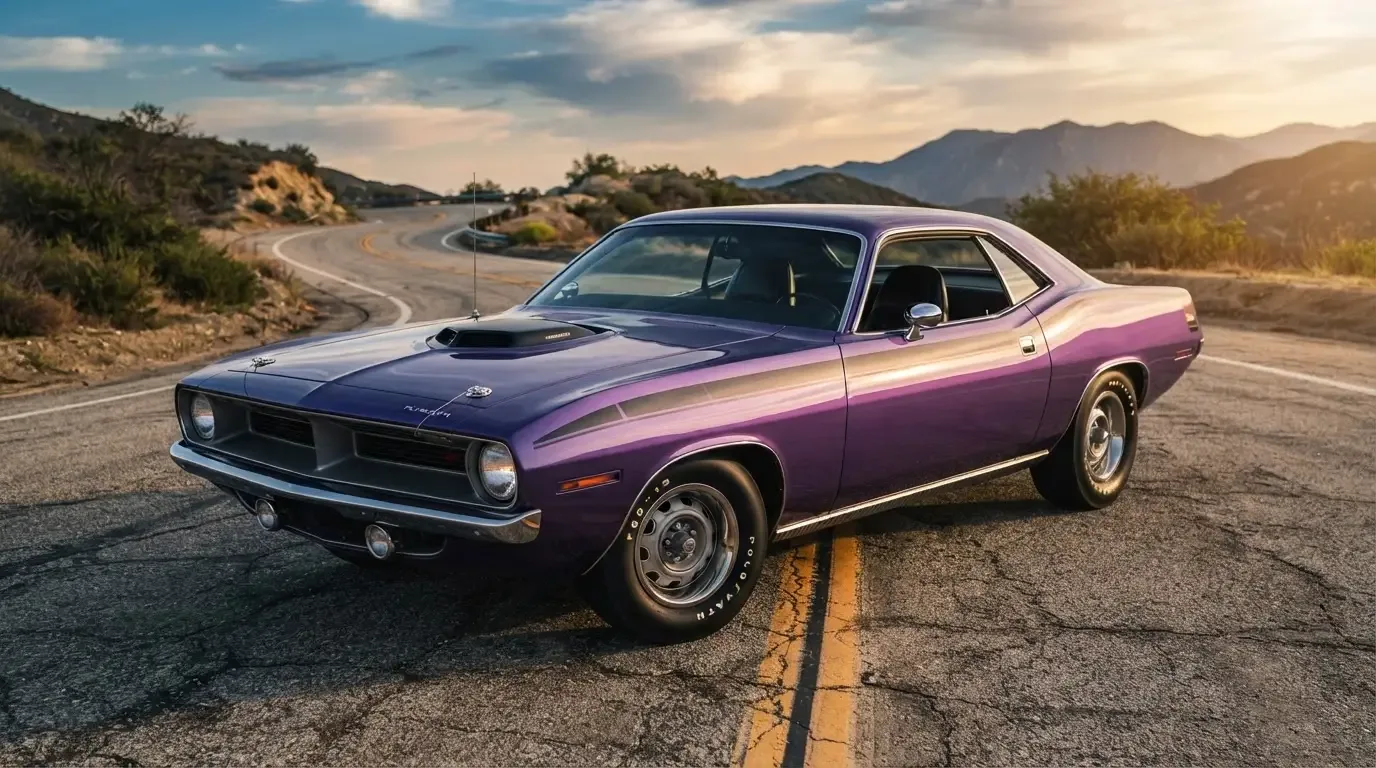
Chrysler understood that a car this loud needed paint to match, and for 1970 and 1971 the corporation reached for a palette that has never really been equaled. These were the High Impact colors, and Plymouth gave them names that were half joke and half dare. Panther Pink. Plum Crazy, a screaming purple. Lemon Twist. Sublime green. Tor-Red. Vitamin C orange. A 'Cuda in Plum Crazy was not trying to blend into traffic. It was trying to start something.
Those colors are a huge part of why the third-generation cars command the money they do. A rare drivetrain matters, but a rare drivetrain wearing a factory High Impact color is the combination that sends bidders into a frenzy. The paint was culture as much as chemistry. It marked these cars as products of a specific, brief, gloriously reckless moment when Detroit believed the party would never end. The Barracuda wore that moment better than almost anything else on the road, which is one of the reasons the search for a genuine classic Plymouth Barracuda for sale so often comes down to arguments about paint codes and originality rather than horsepower alone.
"You do not forget the first Plum Crazy 'Cuda you see in person. The color is aggressive in a way a photograph cannot carry. It is the sound of the car made visible before the engine ever turns over."
- Patrick Walsh
1971 and the last real year
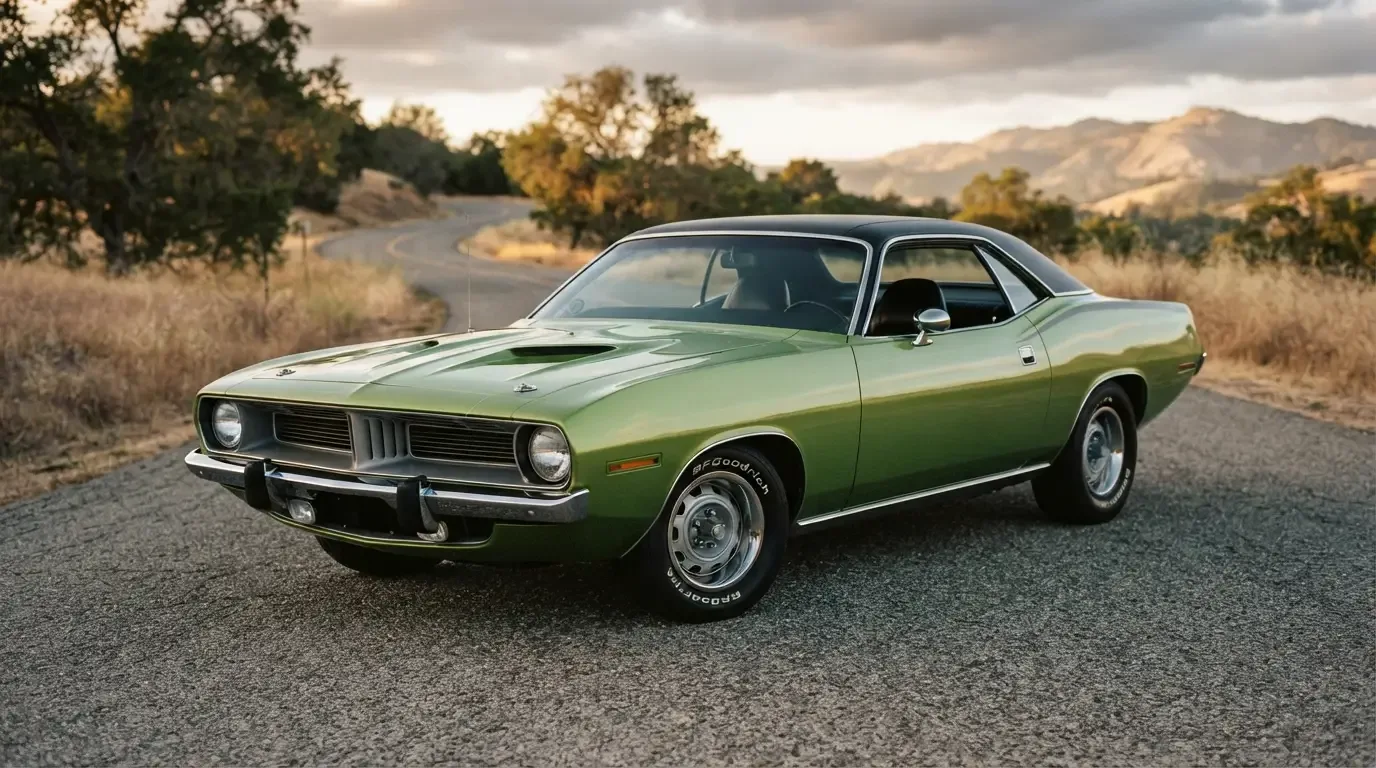
The 1971 model year is where the Barracuda story reaches both its peak and its cliff edge. The 1971 'Cuda got a facelift that enthusiasts either love or argue about, with four headlights and a set of chrome fender vents that everyone calls the gills. It is the most distinctive-looking Barracuda ever made, and because 1971 was the final year for the biggest engines, it is also the most collectible year on the calendar.
The reason is simple math. The muscle-car economy was collapsing under the weight of insurance surcharges, rising fuel worries, and tightening emissions rules. The 426 Hemi and the 440 Six Barrel did not survive past 1971 in the Barracuda. So the 1971 cars are the last of the true fire-breathers, and among them the rarest are the stuff of legend. The most famous is the 1971 Hemi 'Cuda convertible. Chrysler built only a tiny handful of them, a number most often given as eleven or twelve, with only a handful of those built with a four-speed manual transmission; even Chrysler's own historians have never nailed the count down precisely. When one of those cars crosses an auction block, it stops the room. Genuine examples have changed hands at prices that would have bought a city block when the car was new.
Legend on the strip and on the screen
A reputation like the Barracuda's is not built by showroom brochures. It is built at the drag strip and in the places where enthusiasts gather to argue, and the Barracuda earned its stripes in both. The car became a fixture of Super Stock drag racing, where Chrysler's factory-backed teams turned the little fastback into a giant killer. The most famous of those campaigns put the Barracuda name on the lips of every teenager who read the racing pages, and it did more to sell the car's danger than any advertisement ever could.
Then there was the wheelstander. Hurst built a Barracuda that carried its Hemi engine amidships, behind the driver, and it existed for one glorious purpose, which was to lift its front wheels off the ground and drive down the strip balanced on its tail. It was called the Hemi Under Glass, and it toured exhibition events for years, a rolling advertisement for the idea that a Barracuda was not a sensible economy car but a barely contained explosion. Kids who never saw a real Hemi 'Cuda in their neighborhood saw that wheelstander smoking its tires at a local track, and the legend grew.
The car's grip on popular imagination outlived its production run by decades. Long after the last one left the factory, the Barracuda kept turning up wherever writers and filmmakers wanted a shorthand for menace and muscle. A purple 'Cuda parked at the curb tells an audience everything it needs to know about the person who drives it. Few cars carry that kind of instant meaning, and the Barracuda earned its share the hard way, one quarter-mile and one stoplight at a time.
The quiet ending
The Barracuda did not go out with a bang. It went out with a whimper, which is somehow more fitting for a car that always seemed to be fighting the calendar. The 1972 through 1974 models soldiered on with smaller, choked-down engines as the performance era died around them. The Hemi was gone, the wild colors faded from the order sheets, and the 'Cuda name lingered on cars that could not back it up the way the 1970 and 1971 versions had. Sales fell. In 1974 Plymouth quietly ended production, and the Barracuda was finished after a single unbroken decade.
There is no dramatic final edition, no farewell model, no press release worth quoting. The car that had arrived two weeks too early left more or less on schedule, overtaken by the same forces that killed every other muscle car of the age. And yet the ending does nothing to dim the legend. If anything it sharpens it, because the Barracuda burned brightest in exactly the years it had the least time left.
Why the Barracuda matters now
Look at the whole ten years at once and the appeal becomes obvious. The Barracuda is the rare nameplate that contains its entire era. You can trace the muscle-car story from the cautious, glass-roofed optimism of 1964 to the unhinged Hemi excess of 1971 to the emissions-strangled retreat of 1974, and you never have to leave the badge to do it. No single Barracuda tells that story. The three generations together tell all of it.
That is why the collector market treats these cars the way it does. A first-generation fastback is an affordable, characterful entry point that carries real history. A second-generation big-block is the driver's choice, muscle-era feel without the mania of the top-tier prices. And the E-body 'Cuda, especially a 1970 or 1971 in the right color with the right engine, sits at the absolute summit of American muscle collecting. The spread between the cheapest Barracuda and the most expensive one is measured not in multiples but in orders of magnitude, and every rung on that ladder has its devotees.
"The Barracuda's whole life is a lesson in timing. It was too early to beat the Mustang and too late to escape the emissions men. In between it built one of the great legends in American performance, and it did it in a hurry, because a hurry was all it ever had."
- Patrick Walsh
The fish that started as a marketing scramble and a borrowed body became, in the space of a decade, one of the most desirable machines Detroit ever produced. That is the Plymouth Barracuda story. It got to the party first, got overlooked, and had the last laugh anyway. Sixty years on, the crowd that did not show up in 1964 is lining up now, and the little fastback with the big glass window has finally got the room it deserves.
Barracuda at a glance
| Generation | Years | Platform | Signature engine | Collector note |
|---|---|---|---|---|
| First | 1964-1966 | A-body (Valiant based) | 273 V8 (Formula S) | Affordable, huge wraparound glass, the charming underdog |
| Second | 1967-1969 | A-body | 383 big-block V8 | Three body styles, driver's-choice value |
| Third | 1970-1974 | E-body (Challenger shared) | 426 Hemi / 440 Six Barrel | The 'Cuda, High Impact colors, top of the market |
Sources and notes
- Plymouth Barracuda - Wikipedia
- Beating Mustang to the Gate: The 1964 Plymouth Barracuda - Mac's Motor City Garage
- Plymouth's Rarest Muscle Car Was Too Powerful For Its Own Body - HotCars
- How Many "Real" Horsepower Did the 1971 426 Hemi Really Make - Curbside Classic
- The Unicorns of Auburn Hills: 1970 & 1971 Hemi 'Cuda Convertibles - Classic Industries
- Hurst Hemi Under Glass - Wikipedia