
Dodge Ram / D-Series Buyer's Guide (1972–1993)
The Dodge D-series and its Ram successor are the most underappreciated American work trucks of the muscle era — available with the 440 big-block and, from 1989, the first-generation Cummins 6BT diesel that changed the pickup truck world. Find a solid one and you've got a truck that'll outlast everything around it.

I've owned Dodge trucks most of my adult life, and I'll tell you what I tell everybody who asks: the D-series and early Ram are tougher than their reputation suggests and cheaper than they deserve to be. The Cummins 12-valve especially — there's a reason those engines are still running hard at 400,000 miles. The sheet metal rusts like everything else from that era, but the mechanicals underneath are honest and proven. Buy the best body you can find and the rest takes care of itself.
History: D-Series to Ram
Dodge introduced the D-series (two-wheel-drive) and W-series (four-wheel-drive) full-size pickups for the 1972 model year with a completely new body style — lower, wider, and more cab-forward than its predecessor. The "Power Wagon" name continued on the W-series four-wheel-drive models. The Ram name, which had been used as a hood ornament since the 1930s, became the official model designation in 1981 when Dodge reorganized its truck lineup.
1972–1980: The Square-Body Era
The 1972 redesign gave Dodge a genuinely competitive full-size truck for the first time in years. The cab was roomier, the ride was improved, and the engine lineup — 318, 360, 400, and 440 V8s, plus an inline six — covered every application from light-duty work to serious hauling. The 440 cubic inch big-block in a half-ton D-150 produced a truck that could move quickly and pull hard simultaneously. These early trucks have a strong following among builders who want maximum engine options in the pre-emissions-era body.
1981–1988: The Ram Years
The official Ram nameplate arrived with modest styling updates in 1981. The big-block 440 had already left the light-duty lineup after 1978; the 318 and 360 LA small-blocks became the primary engines. The 5.9-liter 360 in these trucks is a reliable, torquey engine that responds well to maintenance. Four-wheel-drive W-series trucks from this era are increasingly collectible as interest in the classic American 4x4 market grows.
1989–1993: The Cummins Era
Dodge changed the truck world in 1989 by installing the Cummins 6BT 5.9-liter inline six diesel in the Ram 3/4-ton and one-ton models. The 6BT produced 160 horsepower and 400 lb-ft of torque in initial trim — numbers that made it the strongest diesel option in any domestic pickup. The 12-valve 6BT (1989–1993) is now one of the most sought-after engines in the truck market, valued for its mechanical simplicity, legendary durability, and tuning potential. Low-mileage first-gen Cummins trucks routinely sell for $30,000–$50,000.
Engine Guide
- 225 ci Slant Six: The indestructible base engine. Will run forever; no performance pretensions.
- 318 LA small-block: 150–230 hp. Reliable daily-driver engine, plentiful parts.
- 360 LA small-block: 175–245 hp. The performance sweet spot in the gas lineup — good torque, strong aftermarket.
- 400 B-block: 1972–1978 only. Big-block torque with manageable fuel consumption.
- 440 RB big-block: 1972–1978 only. The legend. 350 hp, massive torque, turns a work truck into a statement.
- Cummins 6BT 5.9 diesel: 1989–1993. 160–175 hp, 400–420 lb-ft. The 12-valve. The reason people still pay serious money for these trucks.
Rust Inspection
Rear wheel arches are the primary external rust zone — moisture packs behind the inner fender and corrodes outward. Cab corners at the lower rear of the cab are the secondary cosmetic zone. Frame rails at the rear spring hanger brackets are the critical structural zone — inspect from underneath. Bed floor and bed sides rust through on working trucks that carried loads without a mat or liner. Floor pans inside the cab deteriorate from moisture coming through deteriorated door seals and floor plugs.
| Era | Best Engine Option | Key Appeal |
|---|---|---|
| 1972–1978 | 440 big-block | Maximum displacement, raw power |
| 1979–1988 | 360 small-block | Reliable, good torque, maintainable |
| 1989–1993 | Cummins 6BT 12-valve | The diesel legend — 400,000-mile engines |
"A first-gen Cummins with clean frame rails and solid cab corners is one of the best buys left in the classic truck market. Those 12-valve engines don't wear out — they just accumulate miles. I've seen them run past half a million with nothing but oil changes and injectors. The body is what you're gambling on, not the engine. Get under it with a flashlight before you write a check."
— Robert Halloran
Pricing
Driver-quality 1972–1988 gas D/W-series: $8,000–$16,000. Show-quality: $18,000–$28,000. 440-powered 1972–1978 trucks add a meaningful premium — driver-quality $15,000–$22,000. First-gen Cummins 1989–1993 driver quality: $18,000–$30,000; low-mileage clean examples: $35,000–$50,000+. The Cummins market has moved dramatically in the last five years and continues to appreciate.
Browse Dodge Ram listings
 Dealer
 United States
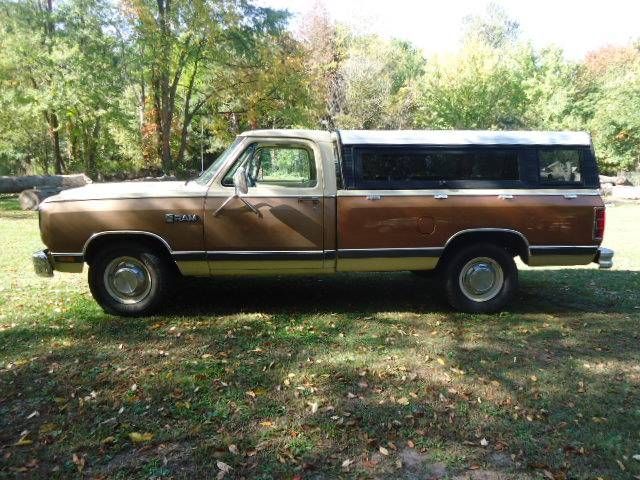
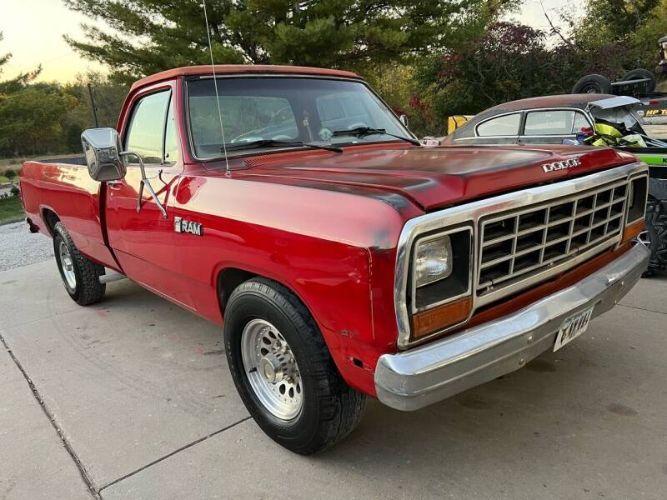
1986 Dodge Ram
 Dealer
United States
Dealer
United States
1985 Dodge Ram
What to Look For
Rear wheel arch rust — probe at the top of the arch where it meets the cab. Frame rails at rear spring hanger brackets — inspect from underneath with a hammer tap test. Cab corners and lower cab rear for cosmetic rust condition. Bed floor and sides on working trucks. Floor pans inside cab. On 440 trucks: verify cooling system adequacy (big-blocks run warm in a truck). On Cummins trucks: check injection pump for unauthorized boost modifications; inspect for coolant in oil (head gasket) and oil in coolant; verify intercooler hoses on later models. Check transfer case operation on W-series 4WD trucks.Pre-Purchase Checklist
-
Rear wheel arch probe
Probe inside arch at cab junction — primary external rust zone -
Frame spring hanger inspection
Get under truck, tap frame at rear spring mounts — structural rust zone -
Cab corner condition
Inspect lower rear cab corners — condition reflects overall storage quality -
Bed floor and sides
Check bed floor for rust-through, especially on working trucks -
Floor pan interior
Lift floor mat inside cab and probe pans -
Cummins lift pump
On diesel: verify lift pump function — failure damages injection pump -
Cummins coolant check
On diesel: check coolant for oil contamination and correct DCA additive levels -
440 cooling system
On big-block gas: verify radiator sizing and hose condition -
4WD transfer case
Engage 4WD and verify smooth transfer case engagement and no leaks -
Injection pump condition (Cummins)
Ask about any boost modifications — stock VE pump has limits
Common Issues
Rear wheel arch rust from packed debris behind inner fender is the signature failure on these trucks. Frame corrosion at spring hanger brackets is structural. Cab corner rust is cosmetic but indicates overall storage and maintenance quality. Floor pan rust from failed door seals. On 440 gas trucks: carburetor rebuilds needed on most unrestored examples; overheating from neglected cooling systems damages the B/RB block gaskets. On Cummins trucks: the 12-valve 6BT itself is extremely reliable, but lift pump failure starves the injection pump causing wear; coolant system maintenance is critical (iron block + aluminum head requires correct coolant chemistry). Transfer case seals leak with age on W-series 4WD.More Ram for sale
 Dealer
United States
Dealer
United States
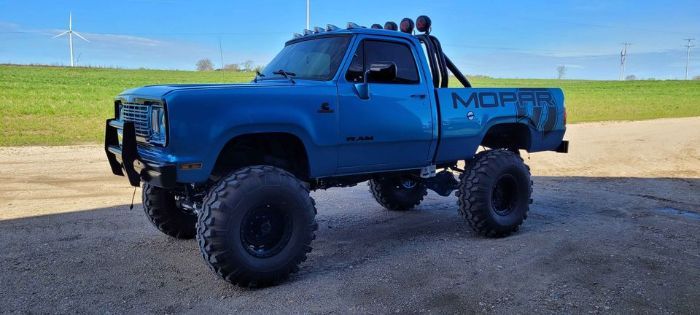
1978 Dodge Ram
 Dealer
United States
Dealer
United States
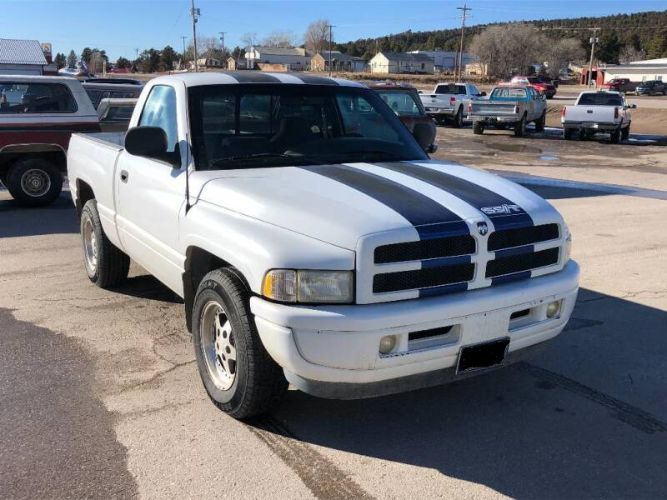
1998 Dodge Ram
Pricing Guide
Driver-quality 1972–1988 gas D/W-series: $8,000–$16,000. Show quality: $18,000–$28,000. 440-powered trucks: driver $15,000–$22,000. First-gen Cummins (1989–1993) driver: $18,000–$30,000; low-mileage: $35,000–$50,000+. The Cummins premium over equivalent gas trucks is 50–100% and growing. A W-series 4WD commands 15–25% over equivalent 2WD D-series at every condition level.Fun Facts
The Dodge Power Wagon name dates to 1945 — one of the oldest continuous truck nameplates in American history. The 1989 Ram was the first domestic pickup sold new with a diesel engine as a standard (not special-order) option. Cummins 12-valve engines have been documented at over 1 million miles in commercial service without internal rebuilds. The 440 cubic inch big-block V8 in a half-ton D-150 made it one of the fastest-accelerating domestic pickups of the 1970s by a wide margin.Frequently Asked Questions