
Classic Dodge Dart Buyer's Guide
Definitive buyer's guide for classic Dodge Dart 1960-1976. A-body authentication, GTS and Demon variants, 340 small-block identification, current market pricing.

The Dodge Dart launched for the 1960 model year as Chrysler's full-size entry-level model, and across seventeen model years of classic-era production it became one of the most successful Mopar nameplates ever produced. The 1960-1962 cars were full-size; from 1963 forward, Dart moved to the new compact A-body platform shared with the Plymouth Valiant. The A-body Dart became the foundation of Chrysler's small-car lineup throughout the 1960s and early 1970s — and the muscle-era Dart GTS (1968-1969) and Dart Demon (1971-1972) variants represent some of the most desirable affordable A-body Mopar muscle cars ever produced. The legendary slant-six engine (offered through the entire production run) made the Dart famously durable. This guide covers what every buyer should verify before paying premium money for any Dart variant.
Overview
The Dart ran for seventeen years across two distinct platform generations. The 1960-1962 full-size cars are an entirely different vehicle than the 1963+ A-body compact cars. From 1963 forward, the Dart became one of the most popular Mopar A-body cars — sharing platform with the Plymouth Valiant but offering different styling and trim. The 1968-1969 Dart GTS and 1971-1972 Dart Demon represent the high-performance variants of the line.
Generations Worth Knowing
Full-Size Dart (1960-1962)
The original full-size Dart shared platform with the Plymouth Fury. Three trim levels (Seneca, Pioneer, Phoenix) with engine options spanning the 225 slant-six through the 413 wedge-head V8. The 1962 Dart 413 (with the dual-quad Max Wedge engine option) is the rarest desirable full-size Dart variant — driver-quality examples run $35,000-$65,000. The full-size Dart was discontinued for 1963 when the nameplate moved to the new A-body compact platform.
A-Body Dart (1963-1976)
The 1963 redesign moved the Dart to the new A-body compact platform. Across fourteen years of A-body production, the Dart was offered in numerous body styles — sedan, hardtop, convertible (1963-1969), station wagon (1963-1966), and fastback (1971-1972 Demon, 1973-1976 Dart Sport). Engine options spanned from the 170 and 225 slant-six through the 273, 318, 340, 383, and 440 V8s.
What to Look For (in person)
Body Style and Trim Verification
Verify the body style code on the firewall dataplate against the actual configuration. The Dart was offered in numerous trim levels: base, 270, GT, GTS, Custom, Swinger, Demon, Sport. Each has its own collector trajectory. For GTS and Demon claims specifically, demand fender tag verification and Galen Govier inspection.
A-Body Structural Inspection
The A-body Dart uses unibody construction with torsion bar front suspension and leaf-spring rear suspension. Critical structural areas include the front torsion bar mounting points (visible from underneath), the rear leaf spring mounting points, the floor pans, the rocker panels, and the rear frame rails. Probe with a flashlight and screwdriver.
Engine Verification
Cross-reference the VIN engine code (5th digit of VIN on 1968+ cars) with the actual block casting and partial VIN. The most desirable engines: 340 V8 (1968-1973, in GTS and Demon cars), 383 V8 (1968-1969 GTS), and the rare 440 V8 (only in dealer-installed Hurst Hemi Dart drag-race packages). The slant-six (170 and 225 cubic inch) is the bulletproof base engine.
Pricing Tiers
| Tier | Description | Price Range (2024) |
|---|---|---|
| Driver | 1963-1976 base or GT trim Dart with slant-six or 318 V8, decent paint, original interior | $12,000-$25,000 |
| Survivor | 1968-1969 Dart GTS or 1971-1972 Dart Demon 340 with original drivetrain, documented mileage | $32,000-$55,000 |
| Concours | Documented 1968-1969 GTS 383 or rare Hurst Hemi Dart drag package, frame-off restoration | $70,000-$200,000+ |
Common Pitfalls
The biggest pitfall in Dart buying is paying GTS or Demon money for a base Dart with performance trim added. Probably 40% of cars listed as Dart GTS or Demon are clones — base Darts with 340 V8 swapped in. Fender tag verification and Galen Govier inspection are essential.
The second pitfall is unibody rust hidden under fresh undercoating. The A-body unibody rusts at the torsion bar mounts, leaf spring mounts, and floor pans. Demand a thorough underside inspection on a lift before purchase.
"The Dart market is full of clone GTS and Demon cars — base Darts with 340 V8 swapped in and performance trim added. The market premium for a documented original GTS versus a cosmetic clone with the same drivetrain is $15,000-$25,000, and that's real money worth verifying. Spend the $200-$500 on a Galen Govier inspection before you spend $50,000 on the car. The fender tag doesn't lie."
— Mike Sullivan
Final Verdict
The Dart market rewards documentation, structural integrity, and patience. Documented GTS, Demon 340, and rare Hurst Hemi Dart cars are blue-chip A-body Mopar investments. Driver-quality slant-six and 318 V8 Darts remain the smart-money entry into A-body Mopar ownership at attainable prices.
For new buyers, start with a 1968-1972 Dart GT or base hardtop with the 318 V8 and the Torqueflite automatic. They're the most affordable proper A-body Mopar, parts support is excellent, and the cars serve as honest collector entry into Dodge muscle ownership. From there, the upgrade path is clear: 1971-1972 Demon 340, then 1968-1969 GTS, then GTS 383, then rare Hurst Hemi Dart. Patience and fender tag verification beat impulse buys every time in this market.
Browse Dodge Dart listings
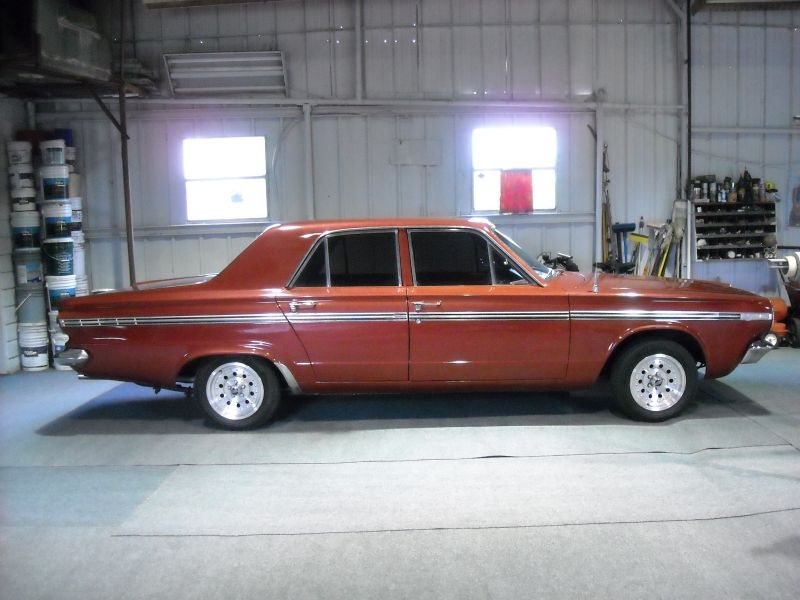
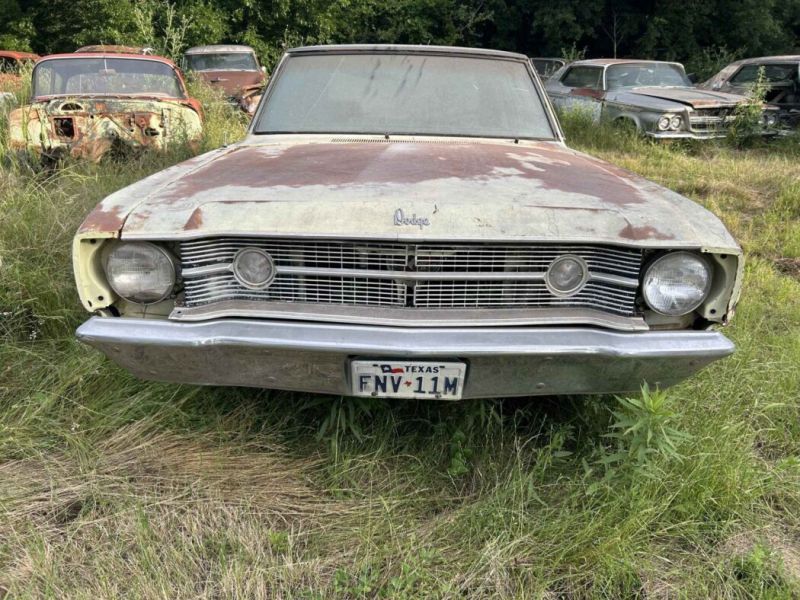
What to Look For
Body style and trim verification is the first stop. Verify the body style code on the firewall dataplate against the actual configuration. The Dart was offered in numerous trim levels and body styles across seventeen years of production. For GTS and Demon claims specifically, demand fender tag verification — the GTS package (1968-1969) and Demon package (1971-1972) had specific RPO codes that identify the original equipment.Fender tag verification is essential for any Dart priced over $25,000. The fender tag is the riveted aluminum plate on the driver-side inner fender. Original 1968-1976 tags use specific dome-headed rivets and stamping fonts. Cross-reference fender tag against the dashboard VIN and the trim tag.
For 340 V8 claims (the most desirable Dart engine), verify the engine casting number. The 340 small-block has specific casting numbers (3577130, 2843675, others depending on year). The two-letter stamp code on the front of the block (just below the cylinder head, on a flat pad) identifies the specific engine type. Replacement engines reduce value 15-25%.
For 1969 GTS 383 claims (the rarest GTS variant), demand specialist authentication. Only a small percentage of 1969 GTS cars were equipped with the 383 V8 — the 340 was the standard high-performance engine.
Galen Govier inspection is recommended for any premium-trim Dart priced over $50,000. The Mopar authentication expert can verify fender tag authenticity, broadcast sheet (if present), engine partial VIN, and overall originality.
Structural inspection is the second non-negotiable. The A-body unibody construction means rust at the torsion bar mounts, leaf spring mounts, and floor pans is structural. Lift the carpet, pull door cards, and inspect with strong light. Probe with a screwdriver. Solid steel resists; rotten metal flakes.
Document the car. Photograph every panel, every fender tag, every engine bay component, every chassis number stamping, and every identifying tag. Build a comprehensive case file before purchase.
Pre-Purchase Checklist
-
Verify body style code on dataplate
Dart was offered in numerous body styles — sedan, hardtop, convertible, station wagon. Verify original equipment. -
Cross-reference VIN engine code with block partial VIN
5th digit of VIN identifies engine. Partial VIN stamped on front pad below cylinder head. -
For GTS and Demon claims, verify fender tag
GTS (1968-1969) and Demon (1971-1972) high-performance variants. Specific RPO codes on fender tag. -
For 340 V8 claims, verify engine casting number
340 small-block has specific casting numbers. Replacement engines reduce value 15-25%. -
Inspect A-body unibody at torsion bar mounts
Front torsion bar mounting points and rear leaf spring mounting points are critical structural areas. -
Pull carpet and check floor pans
Both driver and passenger sides. Floor pans rot from underneath; standard rust point. -
Magnet test rear quarters and rocker panels
Body filler is non-magnetic. Driver-quality cars universally have filler. -
Check rear window channel rust on hardtops
Water gets trapped under rear glass. Invisible rust until glass is removed. -
Verify Galen Govier inspection for $50K+ Demons
Mopar authentication expert. $200-$500 inspection mandatory for premium-trim claims. -
Compression test all six or eight cylinders
Slant-six should read 130-160 PSI. V8s should read 145-185 PSI uniformly.
Common Issues
Dart rust patterns vary by generation. The 1960-1962 full-size cars rust at the rear quarter panels, the rocker panels, the floor pans, the trunk pan, and the cowl seam. The 1963-1976 A-body cars use unibody construction and rust at the torsion bar mounts (front), leaf spring mounts (rear), floor pans, rocker panels, and rear frame rails. The convertible bodies (1963-1969) add structural concerns at the rear corners where the top mechanism mounts.Mechanically, the Mopar slant-six (170 and 225 cubic inch, 1960-1976) is exceptionally durable — commonly exceeding 250,000 miles with proper service. The small-block V8s (273, 318, 340) are similarly robust. The 340 small-block (1968-1973) is the desirable performance engine. The big-block 383 V8 (in 1968-1969 GTS) is robust but heavy — broken motor mounts are a known issue.
The Torqueflite 904 (slant-six) and 727 (V8) automatic transmissions are essentially indestructible. The A833 four-speed manual is robust. Common issues include leaky transmission seals on neglected cars and tired carburetor settings on gas engines.
Electrical issues are universal classic-car concerns. The original wiring harnesses are 50+ years old and prone to chafing. The voltage regulators on 1970-1972 cars commonly fail. The ammeter wiring on dashboards has caused fires in some cars — always check the back of the gauge cluster for heat damage and consider a voltmeter conversion.
For 1971-1972 Demon cars, the original Demon hood graphic commonly fades or is damaged. Reproduction decals are available but reduce concours value 5-10% versus original undamaged graphics.
More Dart for sale
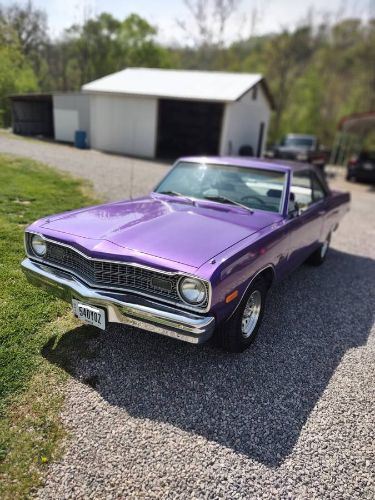 Dealer
 United States
1973 Dodge Dart
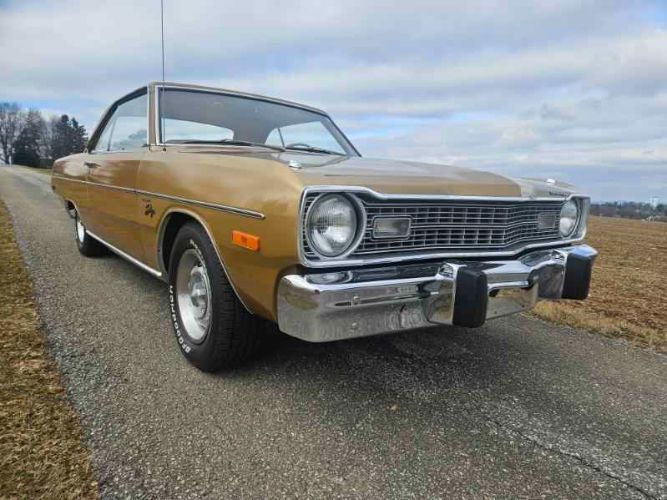 Dealer
United States
Dealer
United States
1973 Dodge Dart
Pricing Guide
1960-1962 full-size Darts: driver-quality cars run $18,000-$35,000. Documented 1962 Dart 413 Max Wedge (the rarest variant): $50,000-$95,000+. The full-size Dart represents a niche market with limited collector interest beyond Max Wedge variants.1963-1969 A-body Darts (slant-six and 273/318 V8): driver-quality cars run $12,000-$22,000. Documented original-paint cars: $20,000-$32,000. The 1968-1969 Dart GT (with the 273 or 340 V8) commands modest premium over base cars.
1968-1969 Dart GTS: driver-quality 340 V8 cars run $35,000-$55,000. Documented original-paint cars: $42,000-$70,000. GTS 383 V8 cars (rare): $50,000-$80,000 documented. Convertible GTS cars (1968-1969): add 25-35% premium over equivalent hardtops.
1970 Dart Swinger: driver-quality cars run $15,000-$28,000. The 1970 Swinger 340 (the renamed GTS for 1970) commands $30,000-$48,000.
1971-1972 Dart Demon: driver-quality 318 cars run $18,000-$32,000. Documented Demon 340 cars: $35,000-$55,000. Documented original-paint, low-mileage Demon 340 cars: $45,000-$70,000+.
1973-1976 Dart Sport: driver-quality cars run $14,000-$25,000. The 1973-1974 Dart Sport 340 represents the smart-money entry into 340 V8 A-body ownership.
The legendary Hurst Hemi Dart drag-race package (1968 only, 80 produced as dealer-installed kits): $200,000-$400,000+ for documented examples. These are not really collectible passenger cars but historic drag-race specials.
Project Darts start around $5,000-$15,000 across most generations. Stripped roller candidates: $2,500-$7,000.
Fun Facts
The Dodge Dart name was originally a 1957 Chrysler concept car (the 1957 Chrysler Dart Diablo) before being adopted as a production model name for 1960. Chrysler's product planners chose the name to evoke speed and agility — the Dart positioning was as Chrysler's entry-level full-size offering competing against the Chevrolet Biscayne and Ford Custom.The 1968 Hurst Hemi Dart was Chrysler's officially-sanctioned drag racing package, built by Hurst Performance Products on Dodge-supplied gliders (cars without engines or transmissions). The Hurst Hemi Dart received the 426 Hemi V8, lightweight fiberglass body panels, fiberglass front bumper, and minimal interior trim — pure drag racing specials with no factory warranty for street use. Only 80 Hurst Hemi Darts were built across 1968 production. Documented original cars now command $200,000-$400,000+ at specialist auctions.
The 225 cubic inch slant-six engine in the Dart became one of the most legendary engines in American automotive history. Nicknamed the "Leaning Tower of Power," the slant-six commonly exceeded 300,000 miles with basic maintenance. Chrysler continued slant-six production through 1991 (in trucks and industrial applications), making it one of the longest-produced single-engine designs in American manufacturing history. The engine's remarkable durability is the reason Dart slant-six cars remain so common in surviving examples.
Frequently Asked Questions
Ready to find your Dart?
Browse 6+ active Dodge Dart listings on Classic Cars Arena.
View Listings →