
Ford Custom / Custom Deluxe Buyer's Guide (1949–1956)
The postwar "shoebox" Ford is one of the most beloved American cars of the early 1950s — clean styling that aged gracefully, a flathead V8 through 1953, and the new overhead-valve Y-block from 1954. The Custom and Custom Deluxe trims were the volume-sellers of the generation. Honest, plentiful, and still reasonably priced.

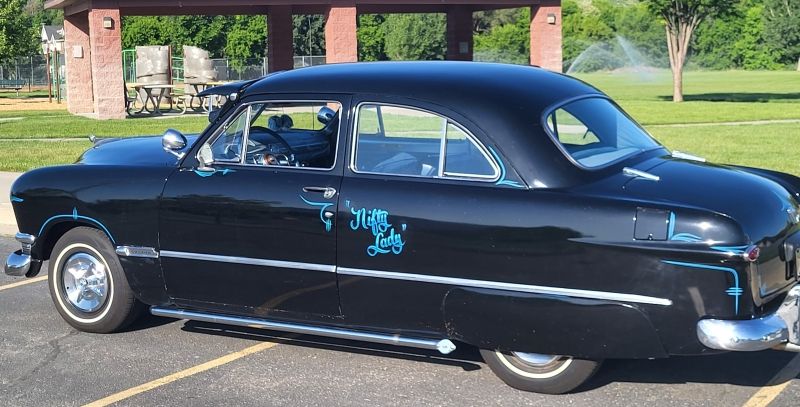
The 1949 Ford was a genuine revolution. After years of wartime design freezes and prewar styling, Ford unveiled a completely new low, wide, integrated body that made every competitor look old overnight. The Custom Deluxe was the top trim of that generation — the car that most buyers stretched to afford. What I appreciate about these cars is that they're still findable at prices that make sense. You can buy a good driver-quality 1950 or 1951 Ford for what you'd spend on a mediocre late-model used car, and it'll be worth every bit of that and more in ten years.
The Shoebox Ford — Three Generations
Ford's postwar lineup went through three significant design cycles between 1949 and 1956, with the Custom / Custom Deluxe designation evolving across them.
1949–1951: The Original Shoebox
The 1949 design — low, wide, integrated fenders, slab sides — was styled under George Walker and represented a complete break from prewar design language. The engine was the 239 cubic inch flathead V8 producing 100 horsepower. The Custom trim added interior and exterior upgrades over the base Standard. The 1951 Victoria hardtop introduced the pillarless hardtop body style to the Ford lineup — one of the most desirable body styles of the generation.
1952–1954: The Crestline and Customline Era
Ford reorganized its trim hierarchy in 1952: Mainline (base), Customline (mid), Crestline (top). The Custom Deluxe designation appears in this era as a variant designation within the Customline tier. The flathead V8 continued through 1953 — the last year of the engine that had powered Fords since 1932. The 1954 model brought the new 239 ci overhead-valve Y-block V8, a significant modernization.
1955–1956: The Fairlane Era
Ford redesigned again for 1955 with the two-tier Mainline/Customline/Fairlane structure. The 1955–1956 cars are the most chromed and stylistically elaborate of the postwar generation. The 272 and 292 ci Y-block V8s were available, along with the 312 ci Thunderbird V8 option in 1956. These are good-looking cars with strong parts support.
Flathead vs Y-Block: The Engine Decision
The flathead V8 (1949–1953) is the more emotionally resonant engine — it's what powered the great postwar hot rods and has a long tradition of performance modification. The 239 ci unit produces 100 hp stock and responds well to triple carbs, headers, and cam work. Parts support through the flathead community is excellent.
The Y-block OHV V8 (1954–1956) is the more modern and arguably more reliable design — overhead valves, better breathing, stronger bottom end. The 239, 272, and 292 variants are all well-supported. It's less romantically charged than the flathead but a better daily driver engine.
Rust Pattern
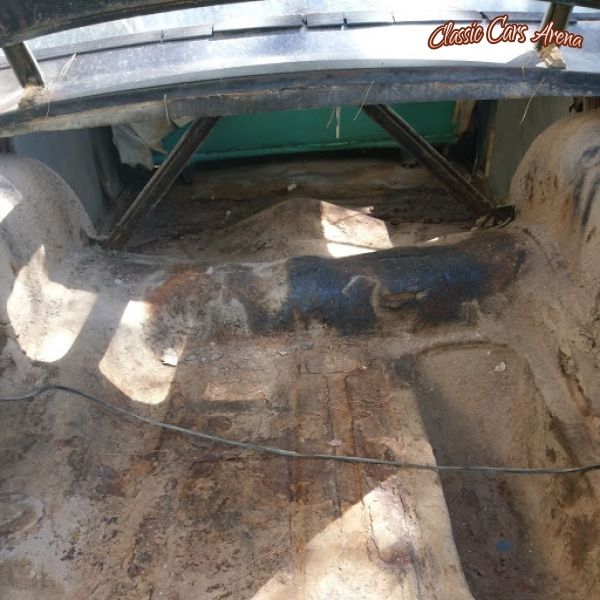
Lower rear quarters and trunk floor corners are the primary rust zones — same pattern as most early-1950s American cars. The floor pans under the front seat are the secondary zone. Cowl channel rust is less severe than on 1940s Chevrolets but still present — probe the windshield base area on any unrestored example. The lower door skins rust at the seam along the bottom edge.
| Years | Engine | Power | Key Feature |
|---|---|---|---|
| 1949–1953 | 239 ci flathead V8 | 100 hp | Last Ford flatheads |
| 1954 | 239 ci Y-block OHV V8 | 130 hp | First OHV Ford V8 |
| 1955–1956 | 272/292/312 ci Y-block | 162–215 hp | Modern V8 range |
"The 1949–1953 Fords are where I see the best value right now in postwar American cars. They're honest, well-built cars with good parts support and a style that hasn't dated. The flathead cars especially — a clean 1951 Ford Custom with a healthy 239 and no rust is a genuinely rewarding car to own. And they're still priced like used cars, not collector pieces. That window is closing."
— Mike Sullivan
Pricing
Driver-quality 1949–1953 Custom/Custom Deluxe sedans and coupes: $12,000–$20,000. Show quality: $25,000–$38,000. The 1951 Victoria hardtop adds a 20–25% premium. The 1955–1956 cars trade similarly or slightly higher due to chrome content and later styling appeal. Flathead-powered cars carry a modest premium in the flathead community over Y-block versions at equivalent condition.
Browse Ford Custom Deluxe listings
What to Look For
Lower rear quarters at the bottom of the fender panel — primary rust zone. Trunk floor corners — probe after removing mat. Floor pans under front seat. Lower door skin seams along the bottom edge. Cowl channel at the windshield base — probe through vent slots. On flathead V8 cars: check coolant for oily sheen and oil for milky appearance indicating head gasket failure. On Y-block cars: check for oil leaks at the rear main and timing cover. Verify the 1951 Victoria hardtop window seals are intact — the pillarless design leaks at the window frames when seals are deteriorated. Test all body trim for completeness — 1950s chrome trim is expensive to restore.Pre-Purchase Checklist
-
Lower rear quarters
Inspect bottom of rear fender panels — primary rust zone on these cars -
Trunk floor corners
Remove mat and probe all four trunk corners for rust penetration -
Floor pans
Lift front seat carpet and check for rust or patch repairs -
Lower door seams
Check bottom edge of door skins for seam rust -
Cowl channel
Probe windshield base area for rust in drainage channel -
Flathead head gasket check
Inspect coolant for oily film and oil for milky appearance -
Cold start
Start from cold, verify stable idle and no knocking -
Victoria seal check
On 1951 hardtop: inspect window seal condition at sill for water intrusion -
Chrome trim inventory
Document all trim pieces — 1950s chrome is expensive to restore -
Electrical grounds
Test all lights and gauges on 6-volt cars — issues trace to grounds
Common Issues
Lower rear quarter rust and trunk floor corner deterioration are the defining issues on unrestored examples. Floor pan rust from trapped moisture is common. Flathead V8 head gasket failure between cylinders and coolant passages is the classic flathead problem — caused by overheating and age-hardened gaskets; compression test and fluid inspection are essential. Y-block engines are generally more robust but leak at the rear main seal when O-rings harden. The 6-volt electrical system on pre-1956 cars requires correct grounds throughout. Hardtop window seal deterioration on 1951 Victoria cars causes water intrusion at the windowsill. Chrome trim on 1955–1956 cars is expensive to replate when pitted.More Custom Deluxe for sale
 Dealer
 United States
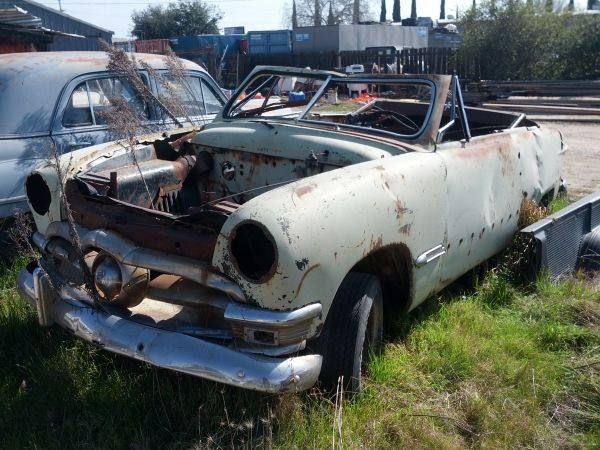
1950 Ford Custom Deluxe
 Dealer
United States
Dealer
United States
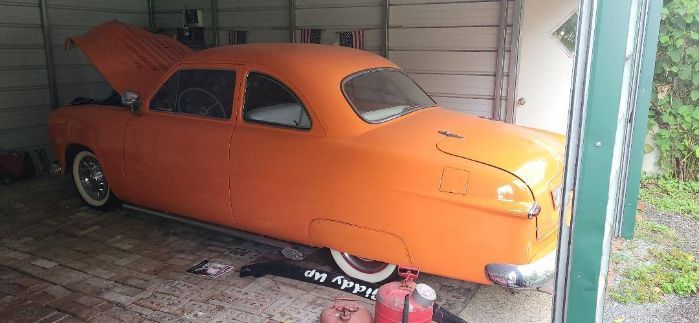
1949 Ford Custom Deluxe
Pricing Guide
Driver-quality 1949–1953 sedans/coupes: $12,000–$20,000. Show quality: $25,000–$38,000. 1951 Victoria hardtop adds 20–25% at any condition level. 1955–1956 cars trade at similar prices with strong chrome content. Last-year flathead (1953) carries a modest premium among flathead enthusiasts. Hot rod–built shoebox Fords price on build quality, not year — a quality flathead build on clean steel commands $30,000–$60,000.Fun Facts
The 1949 Ford design was so successful that it is credited with saving Ford Motor Company from near-bankruptcy following the troubled postwar years. The 239 ci flathead V8 in the 1949–1953 Fords was fundamentally the same engine Henry Ford had introduced in 1932 — continuously refined but architecturally unchanged for over 20 years. The 1955 Ford outsold Chevrolet for the first time in years, triggering the heated annual sales battle of the late 1950s that gave us some of the best-looking American cars ever built.Frequently Asked Questions
Ready to find your Custom Deluxe?
Browse 6+ active Ford Custom Deluxe listings on Classic Cars Arena.
View Listings →