
Ford Fairlane Buyer's Guide
Before the Fairlane became a mid-size platform, it was the crown jewel of Ford's full-size lineup — a large, chrome-laden car named after Henry Ford's estate that outsold every competitor and defined what an American family car could look like in the 1950s.

Mike Sullivan here. The Ford Fairlane is a name that means different things depending on which decade you're talking about. Most enthusiasts think of the mid-size 1962–1969 Fairlane — the performance platform we've covered separately. But the name started as a full-size prestige designation in 1955, and the original full-size Fairlane of 1955–1961 is a genuinely great car that deserves its own guide.
The full-size Fairlane was Ford's answer to a simple question: what does the buyer who can't quite afford a Mercury want? The answer was chrome, color, and a sense of occasion — and Ford delivered all three in abundance. Named after Fair Lane, Henry Ford's personal estate in Dearborn, the Fairlane carried prestige alongside its specification sheet.
The Fairlane as a Full-Size Top Trim (1955–1959)
Ford introduced the Fairlane name as a trim designation in 1955, positioned at the top of the full-size Ford lineup alongside the companion Fairlane Crown Victoria. These were among the most stylistically adventurous American cars of the decade: two-tone paint schemes, stainless steel trim inserts in the roof, and the iconic "Crown Vic" wraparound clear plexiglass roof bar that let light flood the interior. The 1955 Ford styling — clean, modern, and uncluttered compared to GM products of the same year — caught the market completely off guard.
The 1956 Fairlane received safety-focused updates (padded dashboard, deep-dish steering wheel) while retaining the clean styling. The 1957 model brought a complete redesign that kept dual headlamps (Ford adopted quad headlights for 1958) and genuine fins — Ford was now playing the styling game as aggressively as anyone. The 1957 Fairlane is one of the most dramatic-looking cars of the decade, and a well-preserved example in two-tone paint is a genuine show-stopper.
The 1958 Fairlane grew even more lavishly styled, following the industry-wide trend toward maximum chrome and maximum length. These are the cars that define the "land yacht" aesthetic: massive, confident, and utterly impractical by any modern standard. That's rather the point — they were status symbols when new and they're historical artifacts today.
The T-Bird Inspired Special (1957–1959)
Ford offered a performance engine option in the Fairlane: the 312ci "Thunderbird Special" V8, available in supercharged form producing 300 horsepower. This option transformed the full-size Fairlane from a boulevard cruiser into a genuine performance car, and Fairlanes equipped with the supercharged 312 were among the fastest production cars in America in 1957. These are rare, valuable, and well-documented — the paperwork trail for a supercharged 312 Fairlane is extensive, which helps both authentication and valuation.
The Transition Years (1960–1961)
The 1960–1961 Ford full-size cars represented a design reset after the excess of 1957–1959. The fins were toned down, the chrome was reduced, and the overall silhouette became cleaner and more restrained. The 1960 Starliner hardtop is particularly admired for its smooth, almost European roofline that anticipated the clean styling revolution of the mid-1960s. These are undervalued transition cars that offer excellent styling at accessible prices.
The 1961 Fairlane was the last of the full-size designation — in 1962, Fairlane became a mid-size platform and the full-size Fords were marketed simply as "Ford." For collectors focused on the full-size era, 1961 represents the final chapter of the original Fairlane story.
What Makes These Worthwhile
The full-size Fairlane of 1955–1961 offers something increasingly rare: genuine 1950s American automotive excess at accessible prices. A well-preserved 1957 Fairlane 500 in a correct two-tone color with the period-correct interior is a museum-quality piece of American culture history. The market hasn't fully caught up to these cars, which means buyers who do their research can still find them at prices that would be unthinkable for equivalent 1967–1970 muscle cars.
Browse Ford Fairlane listings
 Dealer
 United States
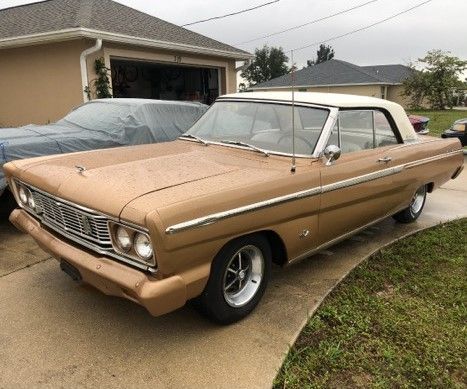
1965 Ford Fairlane
 Dealer
United States
Dealer
United States
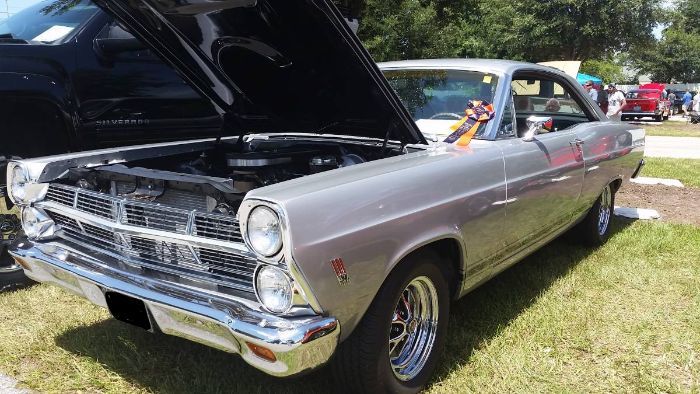
1967 Ford Fairlane
What to Look For
Inspect lower rear quarter panels and door bottoms for rust — these are the structural concern areas on full-size Fords of this era. Check the floor pans from underneath, particularly at the sill welds. On 1957–1959 models, inspect the fin area carefully — water collects in the horizontal fin joins and rusts through from inside. Verify the Y-block or FE engine runs without excessive oil consumption. On supercharged 312 cars, verify the McCulloch supercharger is original and functional — these are rare and the blower adds significant value.Pre-Purchase Checklist
-
Fin Area Rust (1957–1959)
Probe the rear fin areas where horizontal chrome joins — water collects here and rusts from inside out. -
Lower Quarter Rust
Check lower rear quarters and door bottoms — probe with a pick, not just visual inspection. -
Floor Pan Condition
Inspect floor pans from underneath and inside — sill welds are the most common perforation point. -
Y-Block Oil Consumption
Test drive at highway speed and watch for blue exhaust smoke — manageable but important to know. -
Supercharger (if equipped)
On supercharged 312 cars, verify the McCulloch blower is original and builds boost — seal replacement is available. -
Two-Tone Paint Documentation
Verify the paint scheme matches factory records — body tag should confirm original color combination. -
Skyliner Mechanism (if applicable)
On Skyliner retractable models, cycle the roof through full open and close — all 10 motors must function. -
Chrome Completeness
Inventory all exterior chrome — 1957–1959 cars have extensive trim that is expensive to reproduce correctly.
Common Issues
Rear fin rust on 1957–1959 models from water accumulation in the chrome join areas. Lower quarter and door bottom rust on northern-state cars. Y-block V8 oil consumption from worn valve stem seals — manageable but should be known. FE engine oil leaks from rear main seal on high-mileage cars. Correct two-tone paint documentation can be difficult to verify on repainted cars. Supercharged 312 blower maintenance and seal replacement.More Fairlane for sale
 Dealer
United States
Dealer
United States
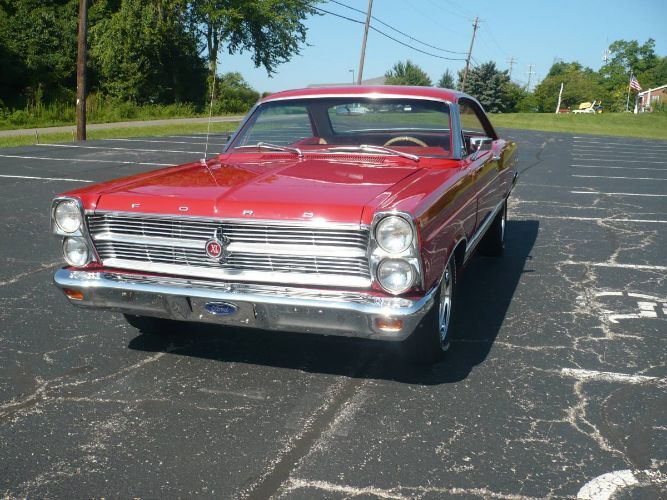
1966 Ford Fairlane
 Dealer
United States
Dealer
United States
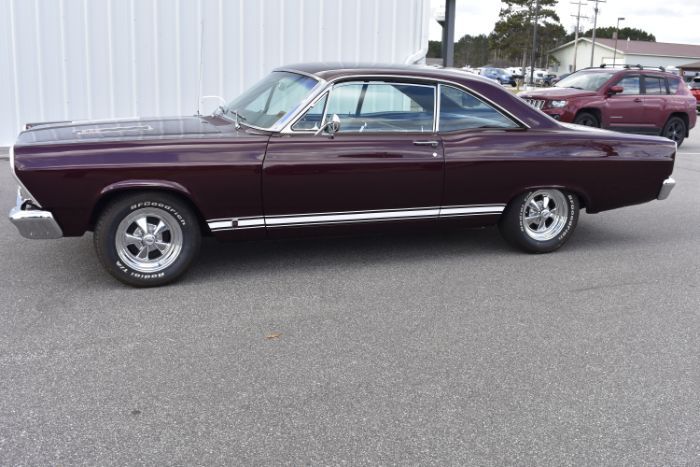
1966 Ford Fairlane
Pricing Guide
1955–1956 Fairlane sedans and Victoria hardtops: $12,000–$28,000. 1957–1958 Fairlane two-door hardtops: $15,000–$35,000. 1957–1958 Skyliner retractable hardtop: $40,000–$80,000+. Supercharged 312 cars (documented): $35,000–$65,000. 1959–1961 Fairlane hardtops: $12,000–$25,000. 1960 Starliner: $18,000–$38,000. Convertibles add 25–40% across all years.Fun Facts
The "Fair Lane" name came directly from Henry Ford's 1915 estate in Dearborn, Michigan — a property now listed on the National Register of Historic Places. The 1957 Ford Skyliner was the world's first (and only) production car with a fully retractable hardtop that folded into the trunk — an engineering feat that required 10 electric motors, four power switches, and a mechanism that weighed 800 pounds. The Crown Victoria trim name first appeared on the 1955 Fairlane and remains in Ford's commercial vehicle lineup today, making it one of the longest-lived automotive names in American history.Frequently Asked Questions
Ready to find your Fairlane?
Browse 6+ active Ford Fairlane listings on Classic Cars Arena.
View Listings →