
Ford Model 40 Buyer's Guide
The 1933–34 Ford Model 40 is the first generation of Ford's V8-powered full body line after the transitional 1932 Model 18 Deuce — refined proportions, improved flathead reliability, and the same foundational hot rod DNA that makes every prewar Ford V8 a legitimate classic.

Jim Vasquez here. People always talk about the Deuce — the 1932 Ford Model 18. And it deserves everything said about it. But the 1933 and 1934 Fords are where the flathead V8 program actually matured. The 1932 was an engineering debut that had its rough edges. By 1933, Ford had two years of production data and the engine was significantly more reliable. The body was updated into a cleaner, more streamlined form. These are better cars than the Deuce in most practical ways, and they cost considerably less — which means more of them are available for people who want to actually build something rather than just own something.
The 1933–34 Ford culture is tight. Goodguys, GNRS, SEMA show circuit — these cars show up with serious builds and nobody looks twice at the non-Deuce status. They're legitimate hot rod material and they always have been.
The Model 40 in Ford's Evolution
Ford's annual model designations in the early 1930s followed a numbering system: the Model 18 was 1932, the Model 40 was 1933, and the Model 40 covered 1934 (the Model 40B was the four-cylinder version). All shared the flathead V8 that Ford had introduced as an industry-changing innovation in 1932 — the first V8 engine available to ordinary American buyers at an ordinary price.
The 1933 update was significant. The body was completely redesigned with a longer, lower profile, the headlights were positioned at the leading edge of the fenders rather than on separate stanchions, and the general appearance moved toward the streamlined direction that was dominating American industrial design in the early 1930s. The engine received reliability improvements that addressed the overheating and oil consumption issues that had plagued the first-year 1932 production.
The Flathead V8: Year Two and Three
The 221ci flathead V8 in the 1933–34 Model 40 produced 75 horsepower, an increase over the 1932's 65 hp claim, which was understood to be conservative, and officially corrected in 1933 to 75 hp. The more significant changes were internal: better water passages, improved valve guides, stronger connecting rods, and a revised cylinder head casting that addressed the propensity for warping under heat stress that had caused 1932 owners difficulties.
This was still a young engine, and problems remained. But the 1933–34 flathead was substantially more reliable than the 1932 unit, and two additional years of engineering experience by 1934 produced an engine that could be trusted for extended driving rather than just short trips.
Body Styles
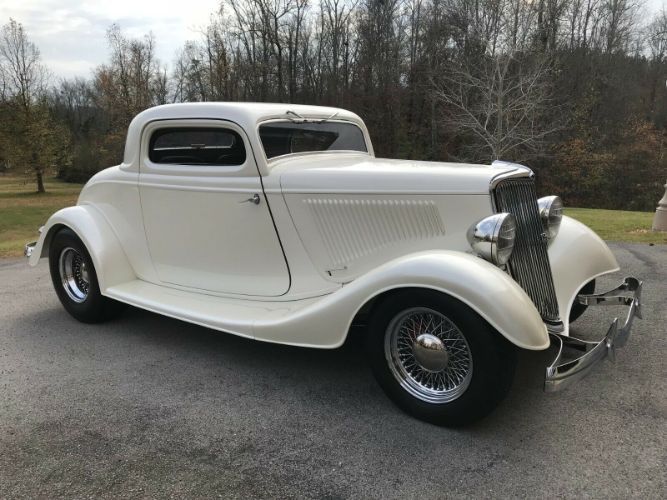
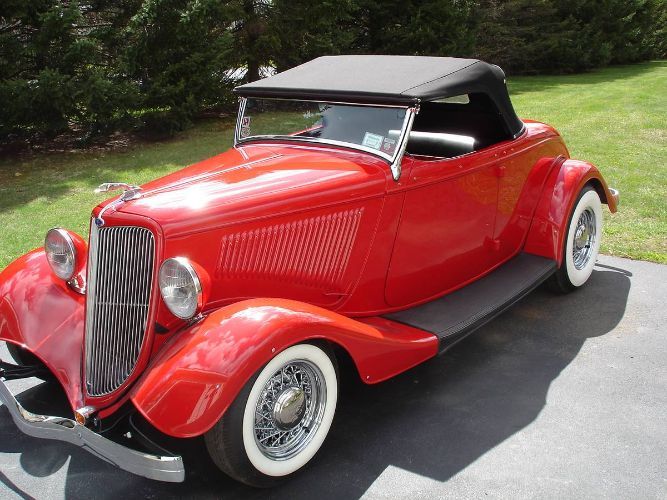
The Model 40 was available in more body styles than the 1932 Deuce — Ford expanded the lineup to serve a broader market. The two-door coupe, the three-window coupe, the roadster, the phaeton, the fordor sedan, and the tudor sedan were all offered. For the hot rod and custom builder, the three-window coupe and the five-window coupe are the primary targets; the roadster is valuable for open-car builds; the tudor sedan offers more interior space at lower prices.
| Body Style | Availability | Builder Appeal | Market Premium |
|---|---|---|---|
| 3-Window Coupe | Good survival rate | Primary hot rod canvas | Highest |
| Roadster | Less common | Open car builds | High |
| Fordor Sedan | Most available | Lower; full-size build | Low |
| Tudor Sedan | Available | Moderate; chop candidate | Moderate |
| Phaeton | Rare | Show car; 4-door open | High |
Building on the Model 40
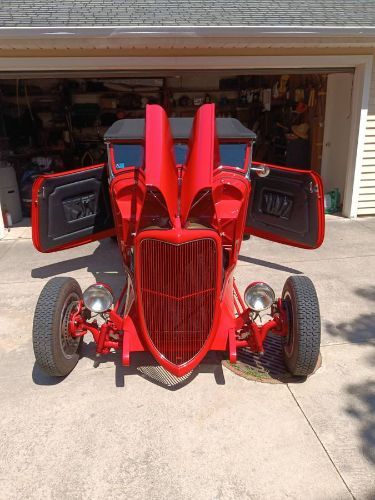
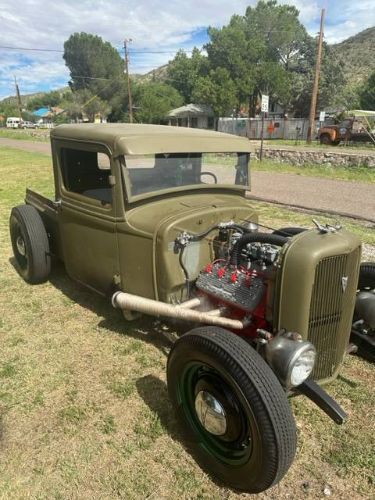
The 1933–34 builds I see at Goodguys and GNRS are serious work. The flathead V8 gets the Edelbrock high-compression heads, the triple-carb manifold, the Evans or Spalding ignition. The suspension gets dropped spindles and the front buggy spring geometry that puts the car on the pavement the right way. The body gets channeled or sectioned depending on the builder's taste — the 1933–34 proportions respond differently than the 1932 to these treatments, and the results are distinctly their own aesthetic.
The 1934 grille is one of the most beautiful prewar Ford elements — a chrome V-shaped grille with horizontal bars that is clean enough to leave unmodified. Many 1933–34 builds retain the stock grille precisely because it works. The 1933 grille is slightly more vertical and less refined; the 1934 is the one to have for visual correctness.
"The 1934 Ford is the one I'd build. The grille is right, the proportions are right, and it's a genuine connection to the early hot rod tradition without paying Deuce prices. Chop the top four inches, channel the body two inches over the rails, build the flathead with period-correct Edelbrock heads and a two-carb manifold — that's a car that belongs at the GNRS and nobody's going to question it."
— Jim Vasquez
Browse Ford Model 40 listings
 Dealer
 United States
1934 Ford Model 40
 Dealer
United States
Dealer
United States
1934 Ford Model 40
What to Look For
The body condition is paramount — inspect for rust in the lower door skins, the sill areas, and the cowl. These are 90-year-old cars and rust is the primary structural concern regardless of where the car lived. On claimed original flathead V8 cars, verify the engine casting date and casting number against production records — the 1933–34 engine should have specific casting identifications. The three-speed transmission is non-synchronized on first gear (double-clutch required) but second and third should engage cleanly without grinding. The mechanical brake system (no hydraulics until 1939 Ford) requires proper adjustment and all four drums must function correctly — test carefully before any road driving. Original glass completeness matters for valuation on preserved cars.Pre-Purchase Checklist
-
Lower Door Rust
Probe lower door skins and sills — universal rust location on 90-year-old steel regardless of storage. -
Cowl and Firewall
Inspect cowl and firewall for rust — water accumulates in these areas over decades. -
Flathead Cooling System
Warm to operating temperature — overheating from blocked scale means serious engine work. -
Engine Casting Numbers
Verify casting date and numbers against 1933–34 production records for matching-engine premium. -
Mechanical Brake Function
Test all four brakes — mechanical brakes require balanced adjustment for safe stopping. -
Transmission Engagement
Test second and third gear synchronization — first is non-synchronized (correct condition). -
Body Panel Condition
Assess all steel body panels for rust, pitting, and prior repair — metal work is expensive on this vintage. -
Glass Completeness
Verify all glass is intact — period-correct 1933–34 glass profiles are difficult to source.
Common Issues
Lower door skin and sill rust — universal on unrestored examples regardless of climate. Cowl and firewall rust from age. Flathead V8 overheating from 90-year-old cooling system scale buildup. Engine casting cracks from prior overheating — visible with magnetic-particle testing. Mechanical brake adjustment drift — four-wheel mechanical brakes require regular adjustment for balanced stopping. Three-speed non-synchronized first gear requires double-clutching — not a defect but requires technique. Original glass sourcing for period-correct profiles is difficult. Body trim piece sourcing increasingly challenging.More Model 40 for sale
 Dealer
United States
Dealer
United States
1934 Ford Model 40
 Dealer
United States
Dealer
United States
1934 Ford Model 40
Pricing Guide
1933 Model 40 tudor/fordor sedan: $12,000–$25,000. 1934 Model 40 tudor/fordor sedan: $13,000–$28,000. 1933–34 three-window coupe (original): $28,000–$55,000. 1933–34 roadster: $22,000–$45,000. Show-quality period-correct hot rod build: $45,000–$120,000+ depending on build quality and provenance. 1934 phaeton (rare): $25,000–$50,000.Fun Facts
Ford produced the Model 40 (1933) and Model 40B/730 (1934) at a time when the Great Depression had reduced American car sales to their lowest levels since 1918. The flathead V8's relatively low price point — Ford insisted on keeping the V8 available in their mainstream cars rather than relegating it to expensive models — made it accessible to working-class buyers and created the supply of affordable V8-powered cars that the hot rod movement would later rely on. The 1934 Ford's distinctive V-shaped chrome grille is considered by many car designers to be one of the finest prewar American grille designs — clean, modern, and perfectly proportioned.Frequently Asked Questions
Ready to find your Model 40?
Browse 6+ active Ford Model 40 listings on Classic Cars Arena.
View Listings →