
Ford Model 48 Buyer's Guide
The Ford Model 48 is pre-war hot rodding distilled to its purest form — the car that Bonnie and Clyde chose for their getaways, that California speed shops chose as the ultimate platform, and that still commands attention at every show it attends.

Jim Vasquez here. If you want to understand where the hot rod movement actually started, the conversation eventually leads back to the 1934–1936 Ford V8 — what Ford called the Model 48 internally. The Model 18 (1932) gets all the Deuce glory, but the 48 is the car that built California car culture. Speed shops from Burbank to Bakersfield built their businesses on these cars. The flathead V8, the pontoon fenders, the sloped tail — everything about the Model 48 says "customize me."
Bonnie Parker wrote a letter to Henry Ford praising the V8 for its performance. That story might be embellished, but the 1934 Ford really was the preferred getaway car of the era, which tells you something genuine about how fast these machines were relative to the period. What it tells me is that even criminals had taste.
The Car That Built California Custom Culture
Ford introduced the flathead V8 in 1932 with the Model 18, but the 1934 Model 48 refined everything the 18 established. The engine grew to 221ci, the chassis got stiffer, and the body styling took a significant leap forward — the pontoon fenders were more fully integrated, the roofline was lower, and the overall silhouette had a motion to it that the squarer 1932–1933 cars lacked. The 1934 Ford is, by any measure, a beautiful machine.
The flathead V8 in Model 48 state of tune produced 85 horsepower — modest by modern standards but extraordinary for a $500 car in 1934. More important than the output number was what the engine responded to. The aftermarket understood the flathead's architecture almost immediately, and by the late 1930s a complete cottage industry of speed equipment had developed: high-compression heads from Edelbrock and Sharp, multiple carburetor setups, and better ignition systems that together could push output well past 150 horsepower.
Why the 1934–1936 Window Matters
The 1934, 1935, and 1936 Fords are closely related but each has its own character. The 1934 is the most popular among purists for its "cleaner" nose treatment and the Bonnie-and-Clyde cultural association. The 1935 received a revised grille that many consider the handsomest of the three years. The 1936 was the last of the pontoon-fender design before the more streamlined 1937 arrived, and it has a slightly more modern feel that some builders prefer.
All three years share the same fundamental platform, and parts interchange freely across them. The decision of which year to pursue is as much about aesthetics as anything else — stand the three side by side and pick the nose you like best. The mechanicals will take care of themselves.
Body Styles and Their Values
The 1934–1936 Ford was available in a broad range of body styles: the Tudor sedan (two-door), the Fordor sedan (four-door), the three-window coupe, the five-window coupe, the cabriolet (convertible), the roadster, the Victoria, and a phaeton. The three-window coupe is the classic hot rod body — its proportions are essentially perfect, and every major custom builder of the postwar era has built at least one. These command the strongest premiums and are the most scrutinized for authenticity.
The Tudor sedan is the second most popular platform, particularly for the "leadsled" style of customizing that emerged in the late 1940s. A chopped, channeled, lowered Tudor is one of the defining images of American custom culture. If you want a driver rather than a show piece, the four-door Fordor represents real value — the mechanical package is identical, the body is roomier, and the price reflects less collector competition.
The Art of Buying One Right
The honest truth about Model 48 buying is that finding a completely original, unmodified car is increasingly rare and increasingly valuable. The cars that weren't modified over the past 90 years are the exception. Most examples you encounter will have been "improved" at some point — different engine, updated brakes, added accessories. This isn't necessarily bad; period-correct modifications from the 1940s–1960s are often considered part of the car's history and can add to its story rather than subtract from its originality.
What you want to avoid is deceptive restoration — cars presented as original when they're not, or clones assembled from parts with fabricated provenance. The pre-war Ford market has its share of composites. Pay for an inspection by someone who knows specifically what original 1934–1936 Fords look like — the stampings, the assembly marks, the original hardware. This expertise pays for itself many times over on a significant purchase.
Rust and Structural Concerns
These cars are 88–90 years old. Rust is not a question of whether, but where and how severe. The most common structural rust appears in the floor pans, the lower door skins, the cowl area, and the lower rear body panels. The separate-body-on-frame construction actually helps here — a rust-compromised body can be separated from a sound frame (or vice versa), allowing selective restoration rather than wholesale replacement.
The frame itself should be inspected for cracks at the cross-member welds and around the body mount points. These were working vehicles in their early lives, and accumulated stress fractures are not uncommon on frames that haven't been maintained or reinforced. A cracked frame is repairable but adds significantly to restoration budgets.
Browse Ford Model 48 listings
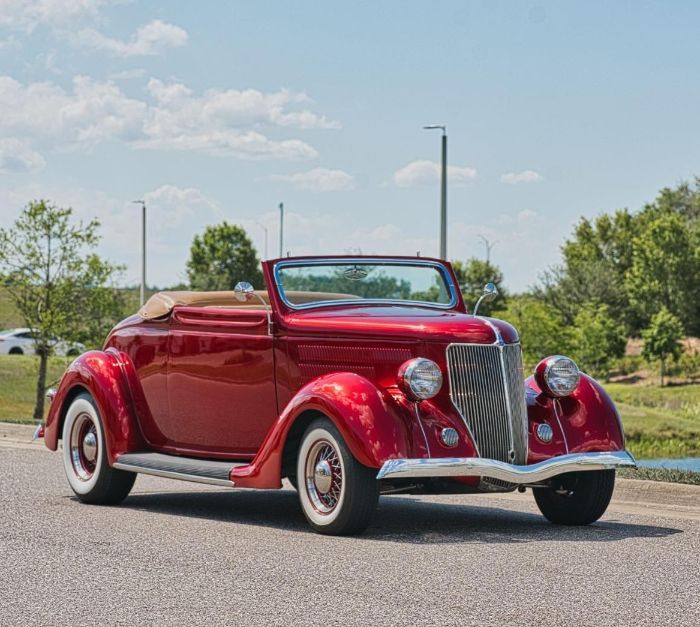 Dealer
 United States
1936 Ford Model 48
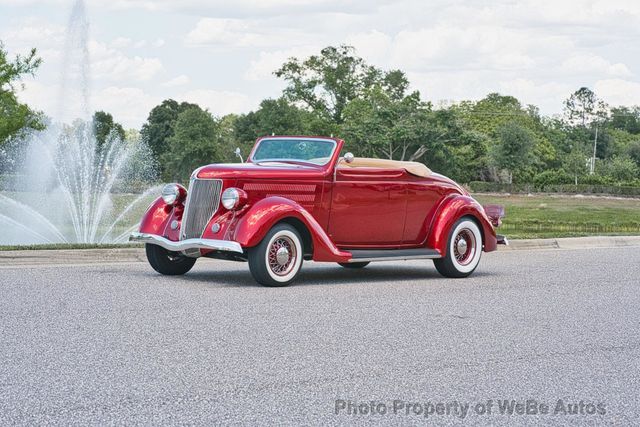 Dealer
United States
Dealer
United States
1936 Ford Model 48
What to Look For
Inspect the floor pans and lower body panels thoroughly — 90-year-old cars will have rust, the question is how structural. Verify body style authenticity: three-window coupes attract counterfeits built from lesser body styles. Check the frame rails for cracks at cross-member welds. Confirm originality of the flathead V8 (engine numbers should match the car's production period). Period-correct modifications from the 1940s–1960s are acceptable to most buyers; modern swaps devalue the car for purists. Verify the steering and brake systems are functional — original mechanical brakes require careful attention.Pre-Purchase Checklist
-
Floor Pan & Cowl Rust
Probe the floor pans and cowl area — these are the most structurally significant rust locations on pre-war Fords. -
Body Authenticity
Verify body style with a pre-war Ford expert — three-window coupes attract clone builds from less-valuable bodies. -
Frame Inspection
Check frame rails and cross-member welds for cracks, especially at the body mount points. -
Engine Numbers
Record and verify the engine number — original flathead engines should match the production year of the car. -
Cooling System
Run the engine to temperature and monitor for overheating — corroded water passages are common. -
Brake System
Verify whether original mechanical or upgraded hydraulic brakes are fitted — either is acceptable if functional. -
Body Seams & Panel Gaps
Check door gaps and body panel alignment — uneven gaps on a pre-war car suggest composite assembly. -
Glass Completeness
Inspect all glass — curved glass for these cars can be expensive or impossible to source in original form. -
Trim & Hardware
Verify trim and hardware completeness — correct reproduction quality varies widely by year and part.
Common Issues
Floor pan and lower body rust on essentially all unrestored examples. Cracked frame rails from accumulated stress and age. Flathead V8 cooling system failures from corroded water passages. Composite cars assembled from parts of multiple vehicles. Worn-out or non-functional mechanical brakes — upgrading to hydraulic is common and accepted. Unavailable body panels for rare body styles (roadsters, phaetons). Missing or incorrect trim and glass.More Model 48 for sale
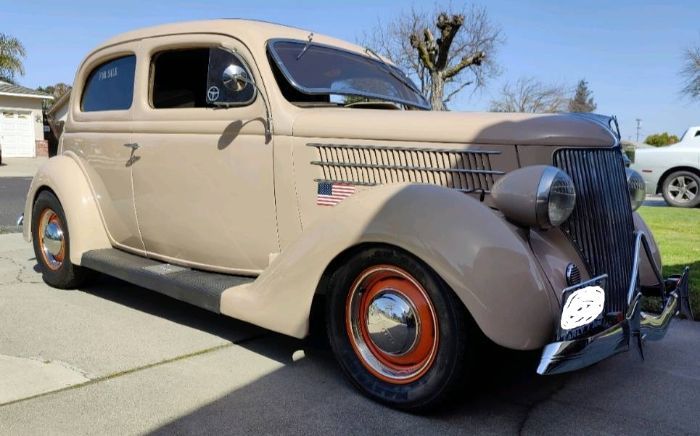 Dealer
United States
Dealer
United States
1936 Ford Model 48
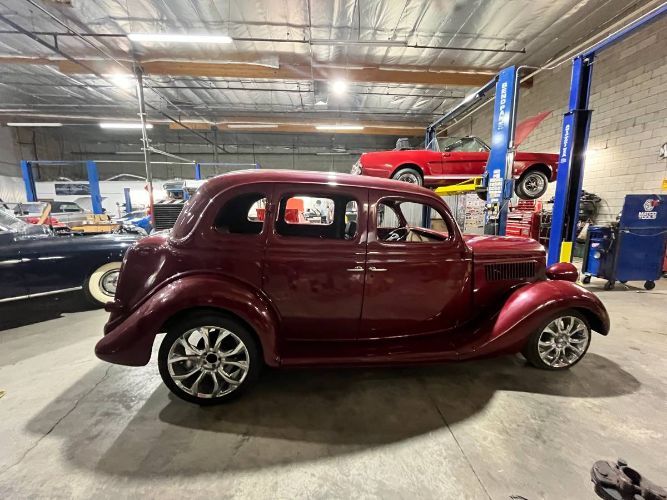 Dealer
United States
Dealer
United States
1935 Ford Model 48
Pricing Guide
Three-window coupe, driver condition: $30,000–$55,000. Show-quality original three-window: $70,000–$120,000+. Period-correct custom/hot rod three-window: $45,000–$150,000 depending on build quality. Tudor sedan driver: $18,000–$35,000. Fordor sedan: $12,000–$25,000. Cabriolet/convertible: $35,000–$75,000. Roadster: $40,000–$80,000. Custom/show-quality builds across all styles can reach $200,000+.Fun Facts
Bonnie Parker reportedly wrote Henry Ford a letter praising his V8, which became one of the most famous unsolicited endorsements in automotive history — though historians debate its authenticity. The three-window coupe body style earned its name from the three side windows: one in each door and one small quarter window. The five-window coupe added a second small window per side. The flathead V8 was used in various forms through 1953 in American Fords, spanning nearly 22 years of continuous production.Frequently Asked Questions
Ready to find your Model 48?
Browse 6+ active Ford Model 48 listings on Classic Cars Arena.
View Listings →