
Classic Ford Ranchero Buyer's Guide
Definitive buyer's guide for classic Ford Ranchero 1957-1979. Generation breakdown, frame and bed inspection, Falcon and Fairlane platform variants, current market pricing.

The Ford Ranchero launched in 1957 as the original American car-pickup hybrid — predating the Chevrolet El Camino by two years and establishing an entirely new automotive niche. Across twenty-three years of production (1957-1979) and four distinct platform generations, the Ranchero served as Ford's response to demand for combined utility-and-passenger-comfort vehicles that could handle light hauling without sacrificing daily-driver ergonomics. The Ranchero saw real working duty for real owners, and the surviving examples that haven't been worked to death command genuine respect — and increasingly genuine money. Don't buy somebody else's project. The frame, the cab, and the bed are non-negotiable.
Overview
The Ranchero ran for twenty-three years across four distinct platform generations, each with its own buyer profile and its own collector trajectory. The 1957-1959 first-generation full-size cars are the most desirable from a styling standpoint. The 1960-1965 Falcon-based cars are the bargain segment with unique compact-pickup character. The 1966-1971 Fairlane/Torino-based cars are the muscle-era Rancheros (with the legendary 1968 Ranchero Cobra Jet 428 representing the high-water mark). The 1972-1979 Torino/LTD II-based cars are the bargain entry into Ranchero ownership today.
Generations Worth Knowing
First Generation (1957-1959)
The original. Built on the full-size Ford Custom platform, the 1957-1959 Rancheros were the first car-pickup hybrids in American automotive history. Engine options included the 223 cubic inch inline-six and the Y-block 272/292/312 V8s. The 1957 launch year is the most desirable. Driver-quality first-generation Rancheros run $22,000-$42,000 today.
Second Generation (1960-1965)
The 1960 redesign moved the Ranchero to the new compact Falcon platform — significantly smaller, lighter, and more fuel-efficient than the first-generation cars. Engine options were initially limited to the 144 and 170 inline-six, with the 260 V8 added in 1963 and the 289 V8 in 1965. Falcon-based Rancheros remain the bargain entry into early Ranchero ownership at $14,000-$28,000 for driver-quality cars.
Third Generation (1966-1971)
The 1966 redesign moved the Ranchero to the mid-size Fairlane platform (later renamed Torino). This is the muscle-car era of Ranchero production. Engine options expanded dramatically: 200 inline-six, 289 V8, 302 V8, 351 Windsor V8, 390 V8, 428 Cobra Jet V8, and 429 Cobra Jet V8. The 1968 Ranchero with the 428 Cobra Jet is the high-water mark of Ranchero performance. Driver-quality cars from this era run $18,000-$38,000.
Fourth Generation (1972-1979)
The 1972 redesign brought larger, heavier proportions and federal 5-mph bumpers. The 1972-1976 Torino-based Rancheros and 1977-1979 LTD II-based Rancheros remain the bargain entry into Ranchero ownership. Engine options included the 351 Cleveland, 351 Modified, 400, and 460 V8s. Driver-quality cars run $14,000-$28,000.
What to Look For (in person)
Frame and Cab Inspection
The frame, the cab, and the bed are non-negotiable on any Ranchero. Crawl under the truck with a flashlight. Probe the perimeter frame at the body mount points and the rear cross-member. Pull the floor mats and inspect floor pans. Look at the cab corners from outside and from inside through the kick panels.
Bed Inspection
Lift the bed mat or any bed liner installed and inspect the bed floor with strong light. Rust through is universal on cars used as actual working trucks. Cars used as cruisers tend to have better-preserved beds. Tailgate hinges commonly rust through, and the tailgate seal allows water into the bed cargo area.
Engine Verification
Cross-reference the VIN engine code (5th digit of VIN on 1968+ cars) with the actual block casting and stamping. The most desirable engines for collector Rancheros: 428 Cobra Jet (1968-1970), 429 Cobra Jet (1970-1971), and 351 Cobra Jet (1971-1973). Original numbers add value but aren't critical for working-truck-spec Rancheros.
Pricing Tiers
| Tier | Description | Price Range (2024) |
|---|---|---|
| Driver | 1972-1979 Ranchero or 1960-1965 Falcon-based, decent paint, runs and drives | $14,000-$28,000 |
| Survivor | 1957-1959 first-generation or 1966-1971 Fairlane/Torino-based with original drivetrain | $25,000-$48,000 |
| Concours | Documented 1968-1970 Ranchero Cobra Jet or 1970-1971 Ranchero GT 429, frame-off restoration | $55,000-$140,000+ |
Common Pitfalls
The biggest pitfall in Ranchero buying is paying premium money for a truck with hidden frame, cab, or bed rust. Don't buy somebody else's project. Demand a thorough underside inspection on a lift before purchase. Run a strong magnet over cab corners and rocker panels — body filler is non-magnetic.
The second pitfall is paying Cobra Jet money for a base Ranchero with a 428 swapped in. The 428 Cobra Jet engine has specific casting numbers and date codes that verify originality — a Marti Report (for 1967+ cars) instantly resolves the question.
"The best advice I can give a first-time Ranchero buyer is the same I give for any classic truck purchase: don't buy somebody else's project. The frame, the cab, and the bed are non-negotiable. Either buy a finished truck where the work is documented and verified, or buy a clean rust-free truck and build it yourself. The middle ground — a half-finished build with parts in boxes — is where most first-time buyers lose serious money in this market."
— Robert Halloran
Final Verdict
The Ranchero market rewards documentation, frame integrity, and patience. Documented 1968-1971 Cobra Jet and 429 Cobra Jet cars are blue-chip investments. 1957-1959 first-generation Rancheros are increasingly collected for their pioneering significance. 1972-1979 cars remain the bargain entry into proper Ranchero ownership.
For new buyers, start with a 1972-1976 Torino-based Ranchero with the 351 Cleveland or 351 Modified V8 and the C6 automatic. They're the most affordable proper Ranchero, parts support is excellent, and the cars serve as comfortable weekend cruisers or fair-weather daily drivers. From there, the upgrade path is clear: 1966-1971 Fairlane/Torino, then 1957-1959 first-generation, then 1968 Cobra Jet documented cars. Patience and frame inspection beat impulse buys every time in this market.
Browse Ford Ranchero listings
 Dealer
 United States
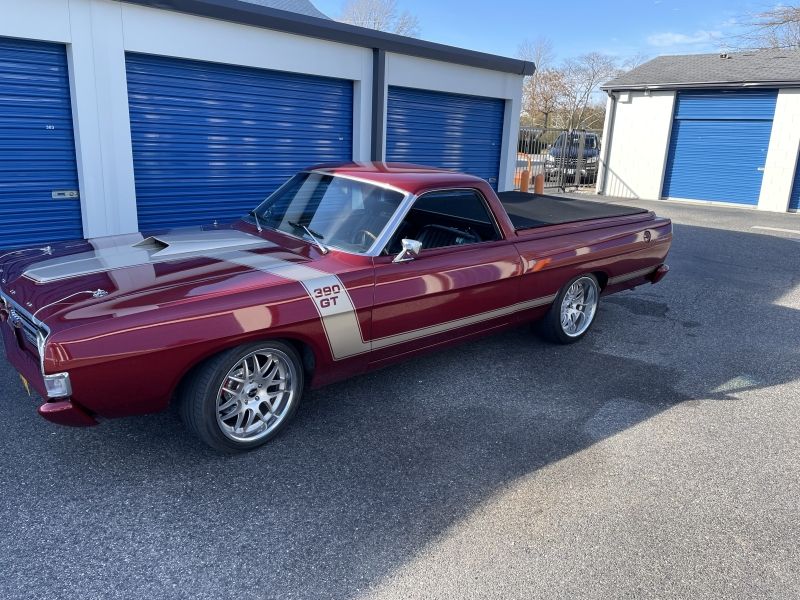
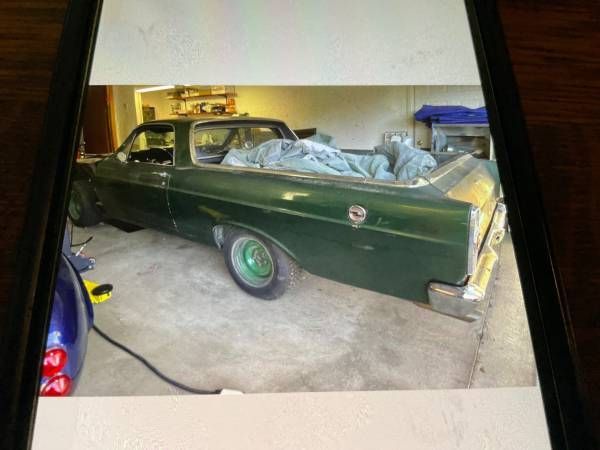
1966 Ford Ranchero
What to Look For
Frame inspection is the first non-negotiable on any Ranchero. The 1957-1959 first-generation cars use a full-size perimeter frame; the 1960-1965 Falcon-based cars use unibody construction; the 1966-1971 Fairlane/Torino-based cars use a perimeter frame; and the 1972-1979 cars use the same Torino and LTD II frame. Crawl under the truck with a flashlight. Probe the perimeter frame at the rear cross-member, the body mount points, and the front horns. Solid steel resists; rotten metal flakes.Bed inspection is the second non-negotiable. Lift the bed mat or bed liner and inspect the bed floor with strong light. The bed floor on a Ranchero is a stamped steel pan that rusts from above (cargo wear) and below (water intrusion). Rust through means $1,800-$4,500 in proper sheet metal repair. Cars used as cruisers tend to have better-preserved beds than cars used as actual working trucks.
For 1967-and-later Rancheros priced over $25,000, demand the Marti Report. Marti Auto Works has Ford original production records and the report ($25 basic, more for elite) confirms original engine code, transmission code, axle ratio, paint code, and options. Without Marti documentation for premium-engine claims (Cobra Jet 428, 429 Cobra Jet, 351 Cobra Jet), treat all such claims as base Rancheros with engines swapped in.
For 1957-1959 first-generation Rancheros, verify the body style code on the firewall data plate. Ranchero-specific styling features distinguish them from full-size Custom Sedans of the same era. The 1958 model is the rarest first-generation Ranchero (recession year reduced production significantly).
Body and trim verification: Ranchero GT and Squire packages add value when documented. The Squire package (with woodgrain trim panels on the bedside) was offered on 1972-1979 cars and adds 5-15% premium when present and original.
Document the truck. Photograph every panel, every frame rail, every cab mount, every engine bay component, and every identifying tag/stamp. Build the case before you wire money.
Pre-Purchase Checklist
-
Inspect frame at body mount points
Frame rust here = $1,500-$4,000 minimum repair. Probe with screwdriver from underneath. -
Lift bed mat and check bed floor
Universal rust point on working trucks. Rust through = $1,800-$4,500 sheet metal repair. -
Examine cab corners and rocker panels
Cab corner rust universal on driver-quality Rancheros. Repair requires skilled bodywork. -
Pull floor mats and inspect floor pans
Both driver and passenger sides. Floor pans rot from underneath. -
Cross-reference VIN engine code with block casting
5th digit of VIN (1968+) = engine code. Verify Y-block, FE-series, or 351 W/C originality. -
Verify body style code on dataplate
1957-1959 full-size, 1960-1965 Falcon-based, 1966-1971 Fairlane/Torino-based, 1972-1979 Torino/LTD II-based. -
For GT and Squire claims, demand documentation
Trim packages add value when verified. Marti Report confirms original equipment for 1967+ cars. -
Test all electrical and gauges
Original wiring harnesses brittle 50+ years on. Tail light circuit and dashboard cluster commonly fail. -
Check tailgate hinges and seal
Tailgate hinges rust through and tailgate seal allows water into bed cargo area. -
Compression test all eight cylinders
Should read 145-180 PSI uniformly. Variance over 15% = head gasket or worn rings.
Common Issues
Ranchero rust patterns vary by generation but follow predictable patterns. The 1957-1959 first-generation cars (full-size) rust at the rear quarters, the rocker panels, the floor pans, and the cab mount points to the frame. The 1960-1965 Falcon-based cars (compact unibody) rust at the cab corners, the floor pans, the front strut towers, and the bed-to-cab seam (unibody construction means structural rust here is critical). The 1966-1971 Fairlane/Torino-based cars rust at the cab corners, the lower fenders, the floor pans, and the rear cargo area floor. The 1972-1979 cars share rust patterns with the Torino and LTD II.The bed floor is a universal Ranchero rust point across all generations. Stamped steel pan welded to the body structure, water and cargo wear accelerate rust significantly. Lift the bed mat or any bed liner installed and inspect the bed floor with strong light. Rust through is universal on cars used as actual working trucks.
Mechanically, Rancheros used the same engine families as Ford passenger cars and trucks. The 223 inline-six (1957-1960), 144/170/200 inline-sixes (1960-1979), Y-block 272/292/312 V8 (1957-1962), 260 V8 (1963-1964), 289 V8 (1965-1968), 302 V8 (1968-1979), 351 Windsor (1969-1979), 351 Cleveland (1970-1979), 390 V8 (1966-1971), 428 Cobra Jet (1968-1970), 429 V8 (1970-1971), and 460 V8 (1973-1979) are all robust when maintained. Common issues include broken motor mounts, worn timing chains, leaky valve covers and oil pan gaskets, and tired carburetor settings.
The C4 and C6 automatic transmissions are essentially indestructible. The Toploader four-speed manuals are equally robust. Common issues include worn front pump seals on automatics and tired clutches on manual cars.
More Ranchero for sale
 Dealer
United States
Dealer
United States
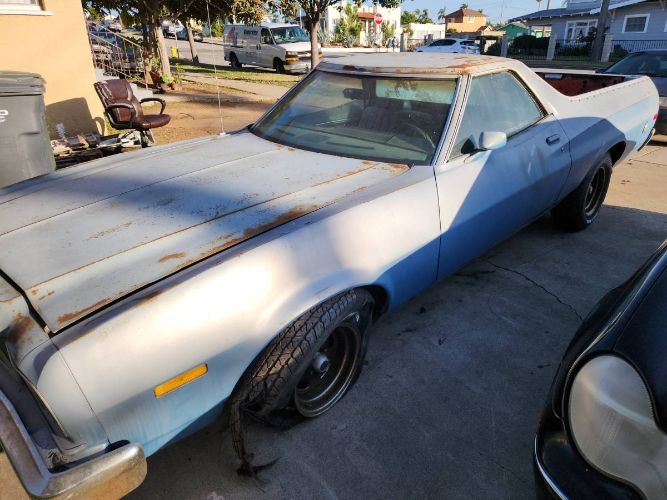
1973 Ford Ranchero
 Dealer
United States
Dealer
United States
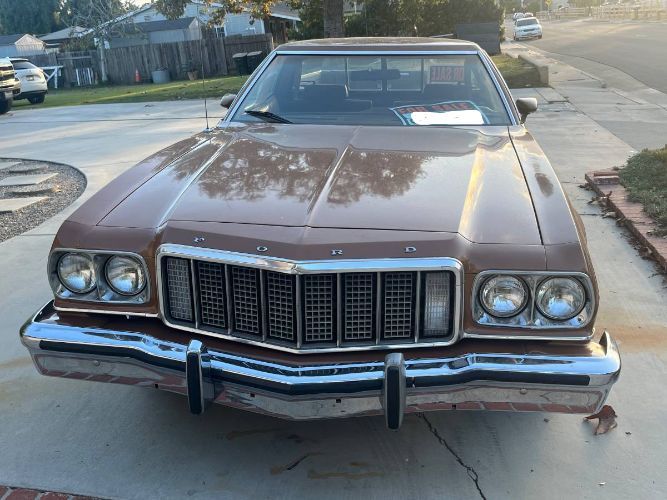
1974 Ford Ranchero
Pricing Guide
1957-1959 first-generation Rancheros: driver-quality cars run $22,000-$42,000 today. The 1957 launch year is most desirable. Documented original-paint cars: $40,000-$70,000.1960-1965 Falcon-based Rancheros: driver-quality cars run $14,000-$28,000. The 1960 launch year is most desirable. The rare 1965 Ranchero with the 289 V8 represents good value for buyers wanting Falcon-era styling with V8 power.
1966-1971 Fairlane/Torino-based Rancheros: driver-quality cars run $18,000-$38,000. The 1968 Ranchero Cobra Jet 428 V8 is the high-water mark — documented Cobra Jet cars trade for $55,000-$110,000. The 1970-1971 Ranchero GT 429 cars run $35,000-$65,000 documented.
1972-1979 Torino/LTD II-based Rancheros: driver-quality cars run $14,000-$28,000. The 1979 final-production-year cars are increasingly collected. The 1973 Ranchero GT 351 Cobra Jet is the most desirable variant of this era at $25,000-$48,000.
Documented original-paint, low-mileage cars across all generations command 20-30% premium over equivalent restorations.
Project Rancheros start around $7,000-$15,000 across most generations. Stripped roller candidates: $3,000-$7,500. Bed and frame restoration alone runs $10,000-$25,000 in most cases.
Fun Facts
The 1957 Ford Ranchero was developed to fill an unmet market demand identified through dealer surveys: customers who wanted a single vehicle for both daily transportation and light hauling duty without committing to a full pickup truck. Ford's product planners had data showing that small-business owners, ranchers, and tradesmen often used pickup trucks for daily driving and disliked the working-truck-only character of the F-100. The Ranchero offered passenger-car comfort with pickup utility — a formula that defined the entire car-pickup category for decades.The 1968 Ranchero with the 428 Cobra Jet was Ford's most powerful Ranchero ever — producing 335 horsepower (gross) and capable of mid-13-second quarter-mile times despite its working-truck configuration. Documented original 1968 Ranchero Cobra Jet cars are extraordinarily rare; only a few hundred were built across 1968-1970 production combined, making them among the rarest factory muscle cars Ford ever produced.
The Ranchero was discontinued in 1979 alongside the Ford LTD II, and the entire car-pickup category effectively died with it (Chevrolet El Camino production continued through 1987). Ford has occasionally floated revival concepts (most recently as a Maverick-based concept), but no modern Ranchero has reached production. The 1979 Ranchero remains the final classic-era American car-pickup ever produced.
Frequently Asked Questions
Ready to find your Ranchero?
Browse 6+ active Ford Ranchero listings on Classic Cars Arena.
View Listings →