
Ford T-Bucket Buyer's Guide
The T-Bucket isn't a factory car — it's a build style, an attitude, and a direct line back to the origins of hot rodding. No two are the same. Buying one means buying someone else's fabrication choices, and knowing the difference between quality work and dangerous shortcuts is the entire skill set you need.

I grew up around T-Buckets. My uncle had one in his garage in Torrance when I was twelve — flathead V8 with three carbs, no windshield, nothing between you and the road except a set of vintage Halibrand knockoffs. That car taught me more about what a hot rod actually is than any book ever could. The T-Bucket is the purest expression of the form: take a Ford Model T roadster body, strip everything non-essential, add power, drop it on a custom frame, and drive it. Simple in concept. Wildly variable in execution. Buying one smart means understanding the execution before you fall in love with the stance.
What Is a T-Bucket?
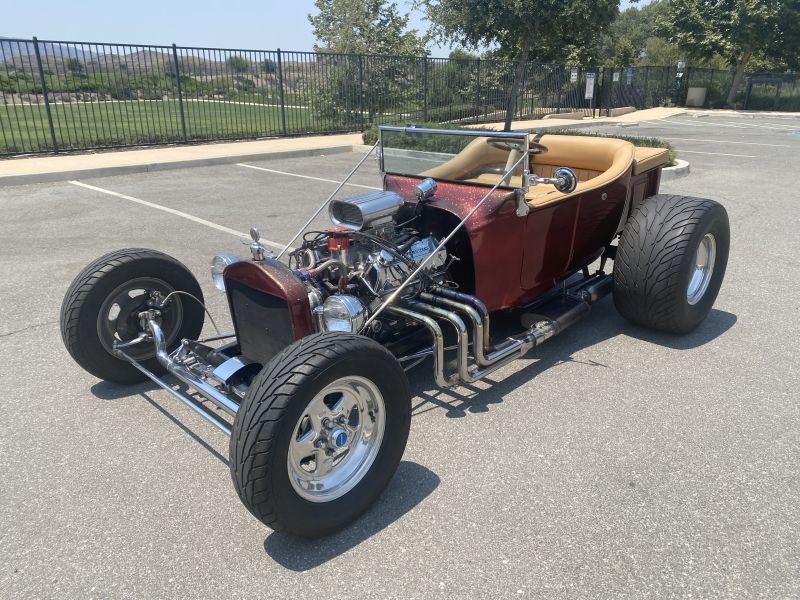
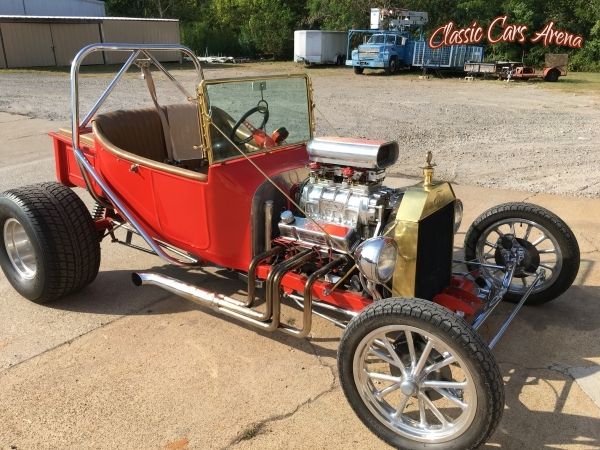
The T-Bucket is not a production vehicle. It is a hot rod build style based on the open roadster body of the Ford Model T — typically the 1923–1927 touring or roadster body, which is small, light, and aerodynamically irrelevant. The defining characteristics are: no doors, a dramatically shortened or absent windshield, a custom-fabricated frame (often a Model A-length or completely custom tube frame), and an engine swap that has nothing to do with the original four-cylinder Model T powerplant.
The style was born on the dry lakes of Southern California in the 1940s and codified through the 1950s and 1960s as purpose-built hot rods rather than stripped Model T transportation. The fiberglass reproduction T-Bucket body industry — Deuce Factory, Speedway Motors, Total Performance, and others — emerged in the 1970s and made T-Bucket construction accessible to builders who couldn't source an original steel body. The vast majority of T-Buckets on the market today use fiberglass reproduction bodies on custom-fabricated or kit frames.
Engine Options
There is no correct engine for a T-Bucket — there is only what the builder chose and how well they chose it. The spectrum runs from traditional to modern:
- Flathead V8 (1932–1953 Ford/Mercury): The period-correct choice. 239 ci in stock form, buildable to 300+ ci with stroked cranks. A well-built flathead T-Bucket is the highest expression of traditional hot rod culture.
- Small-block Chevy (283–350 ci): The most common swap. Bulletproof reliability, unlimited parts, and plenty of period-correct SBC builds from the 1960s–1980s are still running.
- Big-block Chevy (396–454): In a car weighing 1,800 pounds, a big-block is an event. Build quality and braking must match the power level.
- LS-series: Modern T-Bucket builds with LS1/LS3 swaps produce 400–500+ horsepower. These are fast, reliable, and divisive in traditional circles.
What You Are Actually Buying
When you buy a T-Bucket, you are buying the sum of every decision its builder made. A T-Bucket has no factory engineering behind it — no crash testing, no compliance review, no engineering safety validation. The frame was welded by someone. The steering geometry was set by someone. The brake system was specified by someone. Your inspection is not about finding rust. It is about evaluating the quality of those decisions.
Body: Steel vs. Fiberglass
Original 1923–1927 Ford Model T roadster bodies in steel are rare and expensive — $3,000–$12,000 for a rough original body, considerably more for a clean one. Fiberglass reproduction bodies from Deuce Factory or Total Performance cost $800–$2,500 and are the practical choice for a driver T-Bucket. From ten feet away, a good fiberglass body is visually indistinguishable from steel. The collector premium for steel bodies is real — a T-Bucket built on original steel will always price above an equivalent fiberglass car.
| Engine Choice | Character | Collector Appeal |
|---|---|---|
| Flathead V8 | Period-correct traditional hot rod | Highest — traditional purist market |
| Small-block Chevy | Reliable, plentiful, versatile | Strong — broad buyer appeal |
| Big-block Chevy | Serious power, requires solid build quality | Moderate — appeals to performance buyers |
| LS-series | Modern performance, polarizing aesthetics | Lower among traditional collectors |
"Every T-Bucket is somebody's vision of what a hot rod should be. The flathead cars I grew up around at Goodguys and GNRS — those builders understood the whole picture. They sweated the chassis geometry, they got the brakes right, they thought about what happens when you're doing seventy. The ones I've seen at SEMA Battle of the Builders that win, they're not just beautiful — they're engineered. A T-Bucket that was built to be looked at is very different from one that was built to be driven. Figure out which one you're buying."
— Jim Vasquez
Pricing
T-Bucket pricing is entirely build-quality dependent. At the low end, basic fiberglass-body T-Buckets with small-block Chevy power and functional but basic fabrication trade for $8,000–$15,000. Mid-tier builds with quality chassis work, a period-correct flathead or well-executed SBC, and presentable bodywork run $18,000–$35,000. High-end builds — documented professional chassis work, show-quality paint and interior, correct flathead or period-correct drivetrain — justify $40,000–$60,000+. SEMA or Goodguys award-winning cars have sold above $80,000.
Browse Ford T Bucket listings
What to Look For
This is a build quality inspection, not a rust inspection. Examine all welds: frame rails, crossmembers, motor mounts, suspension pickup points, steering rack/box mounts. Look for consistent penetration, no cold-lap, no porosity. Check steering geometry and test for wobble — incorrect caster and kingpin geometry causes dangerous front-end shake at speed. Inspect brake system completeness and condition — verify it matches the power level of the engine. Check all suspension components for wear: king pins, tie rod ends, ball joints (if applicable). Verify the engine and drivetrain are properly secured and all safety-critical fasteners are present. On flathead builds: check for oil leaks at head gaskets, timing cover, and rear main. Ask for any build documentation — photos, receipts, notes. Verify the frame has not been repaired or cracked — look for evidence of re-welding on frame rails.Pre-Purchase Checklist
-
Frame weld inspection
Examine all frame welds for consistent penetration, no cold-lap or porosity -
Motor mount welds
Check motor mounts under load — verify fully fused and not cracked -
Suspension pickup points
Inspect all suspension-to-frame weld joints for integrity -
Steering geometry check
Test for front-end wobble at speed — incorrect caster causes death wobble -
King pins and tie rods
Check for wear in king pins, tie rod ends, and drag link -
Brake system adequacy
Verify braking system matches power level — test stopping distance before purchase -
Flathead head gaskets
Check coolant for oil contamination and exhaust for coolant — head gasket failure indicator -
Body mount integrity
Inspect fiberglass body at all mounting points for cracks from frame flex -
Electrical safety
Check wiring for bare conductors, improper fusing, fire risk areas near exhaust -
Build documentation
Ask for any build photos, receipts, or notes — documents quality of unknown work -
Engine oil leaks
Check for leaks at rear main, timing cover, and valve covers -
Frame crack inspection
Look for evidence of re-welding or crack repairs on frame rails
Common Issues
Front-end geometry problems causing death wobble are the most common and dangerous issue — incorrect caster, worn king pins, or improperly set toe causes front-end shimmy that can become uncontrollable. Poor-quality welds on structural members are a safety issue unique to hand-built vehicles; cold-lap or incomplete fusion on motor mounts or suspension pickups is a failure waiting to happen. Undersized or inadequate braking systems on powerful builds — a small-block in a 1,800-pound car needs properly engineered brakes. Electrical issues are universal on custom builds — non-standard wiring from multiple builders over the car's life can create reliability and fire hazards. On flathead V8 builds: head gasket failure between cylinders is the classic flathead failure mode; overheating accelerates it. Fiberglass bodies can crack at mounting points if the underlying frame flexes — look for cracks around body mount locations.More T Bucket for sale
 Dealer
 United States
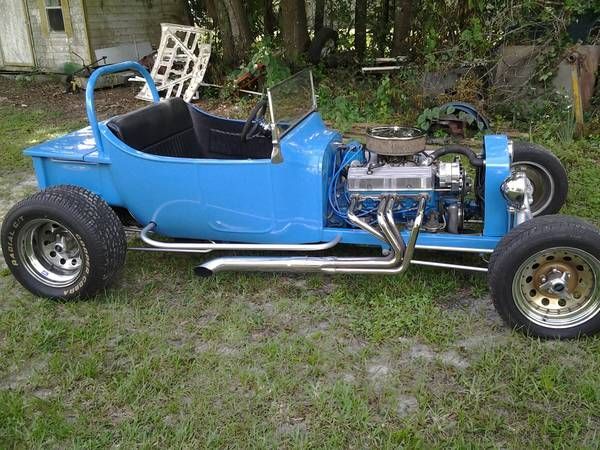
1923 Ford T Bucket
 Dealer
United States
Dealer
United States
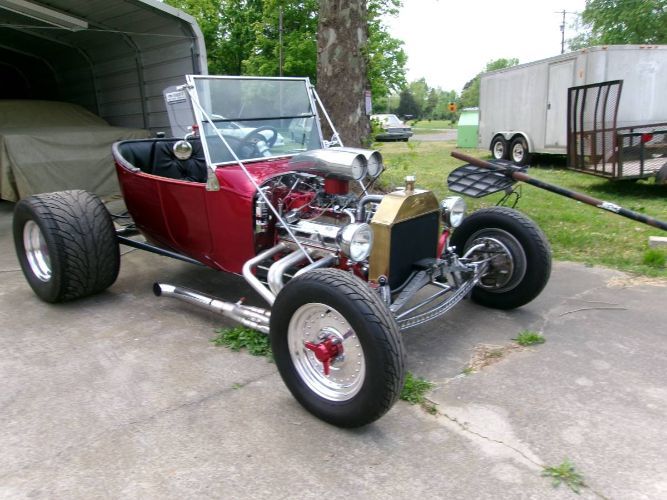
1923 Ford T Bucket
Pricing Guide
Pricing is entirely build-quality dependent — no other classic car has this wide a range. Basic fiberglass/SBC driver builds: $8,000–$15,000. Mid-tier with quality chassis work: $18,000–$35,000. High-end builds with professional fabrication and period-correct drivetrain: $40,000–$60,000+. Award-winning documented builds: up to $80,000+. A T-Bucket is worth exactly what its build quality justifies — there is no blue book. Have any T-Bucket over $20,000 inspected by someone with custom chassis knowledge before buying.Fun Facts
The T-Bucket style takes its name from the T-shaped appearance of the shortened Model T roadster body mated to a long hood. Norm Grabowski's 1952 "Kookie Car" — TV-famous on 77 Sunset Strip — is credited with triggering the nationwide T-Bucket craze. The first Goodguys Rod & Custom show in 1983 featured more T-Buckets than any other hot rod style. Modern kit manufacturers like Speedway Motors have sold tens of thousands of T-Bucket frame kits since the 1970s, making it one of the most-built hot rod styles in history.Frequently Asked Questions
Ready to find your T Bucket?
Browse 6+ active Ford T Bucket listings on Classic Cars Arena.
View Listings →