
GMC 2500 Buyer's Guide
The GMC 2500 three-quarter-ton pickup was the working truck that the C10 half-ton buyers couldn't afford to rely on — heavier springs, stronger axles, and the kind of payload capacity that meant something to buyers who actually needed to haul, not just look good doing it.

Robert Halloran here. When I work on a ranch or a farm, everybody knows the difference between a half-ton truck and a three-quarter-ton truck. The three-quarter-ton is the one you hook up to the trailer. The half-ton is what the ranch owner drives to town. The GMC 2500 — the three-quarter-ton variant of the C/K series — is a working truck first, and everything about it reflects that purpose.
The square-body era 1973–1987 GMC 2500 has been discovered by the restomod community in recent years, but the honest truck market has always known these were the right trucks to have if you were actually going to use them. Better springs, heavier axle, stiffer frame — the 2500 is the 1500's older, more serious sibling.
GMC 2500 in the C/K Lineup
The GMC 2500 designation covers the three-quarter-ton variant of GMC's C-series (2WD) and K-series (4WD) trucks across the 1967–1987 square-body era. In terms of production and mechanical engineering, the GMC 2500 and the Chevrolet K20/C20 are the same truck — same frame, same axles, same engines, same suspension geometry. The GMC designation brought slightly different grille treatments and trim options, but buyers who want a GMC rather than a Chevrolet are paying for a nameplate, not a different vehicle.
The 2500 differs from the 1500 half-ton in meaningful ways: heavier leaf springs front and rear, a stronger Dana 44 or Dana 60 rear axle (versus the 10-bolt on most half-tons), a stiffer ladder frame, and a GVW rating that allows serious payload. These aren't marketing differences — they're engineering differences that matter in use.
1967–1972: The Action Line Era
The 1967–1972 trucks — often called "Action Line" trucks — introduced the styling that defined the square-body generation. The cab design was cleaner and more car-like than previous trucks, and the available comfort options (air conditioning, AM/FM radio, captain's chairs) began the process of making the full-size pickup a passenger vehicle rather than a utility vehicle. The 2500 in this era is a particularly capable truck — the heavier specifications work well with the long-stroke torque of the available V8 engines.
1973–1987: The Square Body
The 1973 redesign introduced the "square body" that became the definitive American pickup truck silhouette. The flatter hood, squared fenders, and revised proportions that arrived in 1973 are what most buyers picture when they think "classic pickup truck." The 2500 in this era is the backbone of the collector market for working-truck buyers: available in Fleetside or Stepside, in 2WD or 4WD, with a range of V8 and V6 engine options.
| Engine | Displacement | Output | Era |
|---|---|---|---|
| 292ci inline-6 | 4.8L | 115 hp | 1967–1987; durable, economical |
| 307ci V8 | 5.0L | 200 hp | 1967–1973; base V8 |
| 350ci V8 | 5.7L | 145–215 hp | Most available; right choice |
| 400ci V8 | 6.6L | 150–175 hp | 1970–1980; torquey for towing |
| 454ci V8 | 7.4L | 230–270 hp | Big-block option; serious towing |
| 6.2L diesel | 6.2L | 130 hp | 1982–1987; durable but slow |
The 4WD K2500
The K2500 — the 4WD variant — is the most sought-after configuration for collectors and working-truck buyers alike. The 4WD system uses traditional part-time engagement (manual hubs on most years, later automatic-locking), and the combination of the 2500's heavier running gear with 4WD capability makes it one of the most capable traditional trucks in the classic market. Clean K2500s are significantly harder to find than C2500 two-wheel-drives because they were more often kept in service and driven harder.
"The 2500 is the right truck for buyers who want something they can actually use. The heavier axle, the stiffer springs, the stronger frame — these aren't unnecessary additions. They're what make the difference when you're pulling a loaded trailer on a hot day. The frame and the cab are non-negotiable. Find a clean 2500 that hasn't been abused and it'll work for you as long as you maintain it."
— Robert Halloran
Browse GMC 2500 listings
 Dealer
 United States
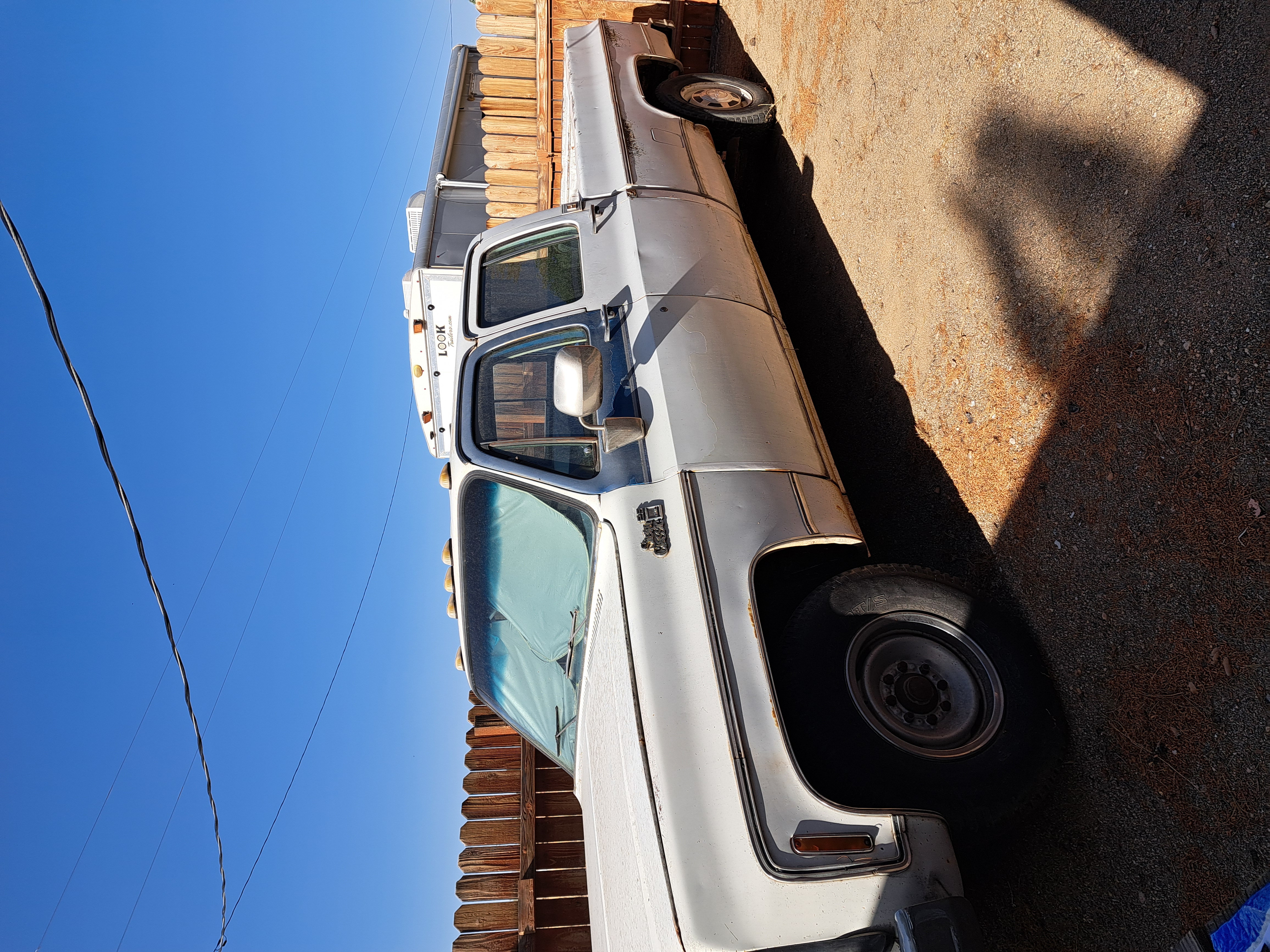
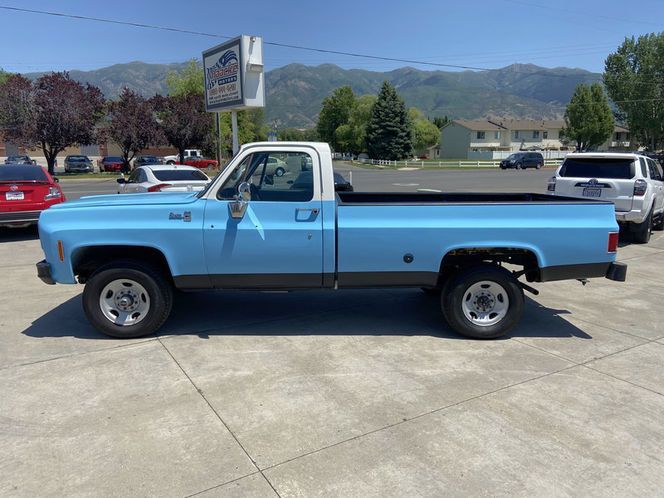
1978 GMC 2500
What to Look For
Front cab corners are the primary rust location on any square-body truck — probe thoroughly before anything else. The lower rear cab behind the doors is the second location. On K2500 4WD trucks, verify the front axle engagement (test 4H and 4L), inspect the front differential for leaks, and check the transfer case operation. The front axle U-joints on 4WD trucks see heavy use and wear — listen for clicking or vibration when turning. On V8 trucks, verify the engine doesn't have the common small-block oil leak at the rear main seal. The TH350/TH400 transmission is durable but check for slipping in any gear. Inspect the frame rails for any bending or cracking at the cab mount points — heavy-use 2500s are occasionally overloaded.Pre-Purchase Checklist
-
Cab Corner Rust
Probe front cab corners — the primary rust location on all square-body trucks. -
Rear Cab Lower Section
Check lower rear cab behind doors — second most common rust location. -
Frame Rails
Inspect full frame length for bends and rust at cab mount points — overloaded 2500s can show frame stress. -
K2500 4WD Function
Test 4H and 4L engagement on K2500 trucks — listen for grinding or failure to engage. -
Front Axle U-Joints
Listen for clicking when turning on 4WD trucks — U-joint wear is common from heavy use. -
Transfer Case Leaks
Inspect transfer case output seals — leaks are common on older 4WD trucks. -
Small-Block Rear Main Seal
Check under the engine for V8 rear main seal oil leaks — common on high-mileage small blocks. -
Transmission Function
Test TH350/TH400 through all ranges — smooth shifts with no slipping. -
Bed Floor Condition
Inspect bed floor planks and metal floor structure — working trucks often have bed damage.
Common Issues
Cab corner rust — the most common structural issue on any square-body truck. Frame rust at cab mount points on heavily used 2500s. Front axle U-joint wear on K2500 4WD trucks — clicking in turns. Transfer case oil seal leaks. Small-block V8 rear main seal oil leaks. TH400 band adjustment needed on high-mileage examples. Brake system rubber components deterioration on unrestored examples. Rust in the bed floor from working use. 6.2L diesel injection pump failures on diesel variants.More 2500 for sale
 Dealer
United States
Dealer
United States
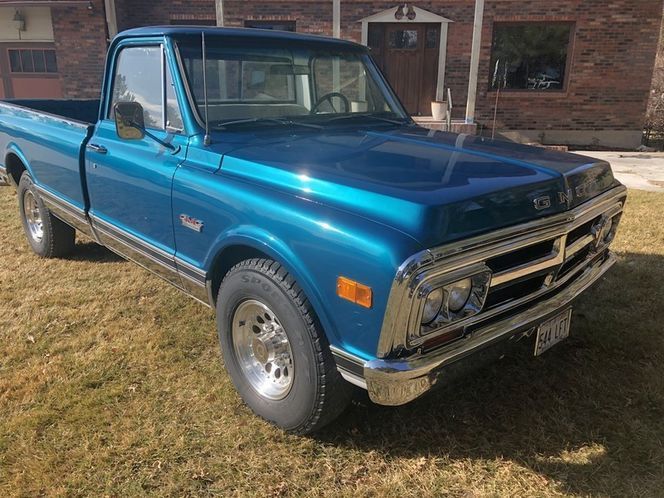
1970 GMC 2500
 Dealer
United States
Dealer
United States
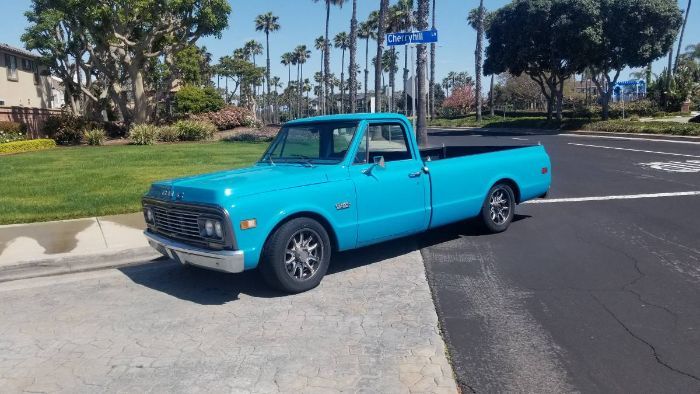
1972 GMC 2500
Pricing Guide
1967–1972 GMC 2500 C (2WD): $14,000–$30,000. 1967–1972 GMC K2500 (4WD): $20,000–$42,000. 1973–1980 GMC 2500 C (2WD): $12,000–$26,000. 1973–1980 GMC K2500 (4WD): $18,000–$38,000. 1981–1987 GMC 2500/K2500: $10,000–$28,000. Sun Belt rust-free examples: 30–45% premium over equivalent northern trucks. Show-quality restorations: $35,000–$60,000.Fun Facts
The GMC 2500 and the Chevrolet K20/C20 are mechanically identical — the same frame, chassis, engine options, and drivetrain components. The two marques existed as separate distribution channels serving different regional dealer networks, with slightly different styling details (grille, badging, some trim) to justify the name difference. The 1973–1987 square-body design was produced for 15 consecutive years because it was so functionally successful — longer than any other single American truck design of the era.Frequently Asked Questions