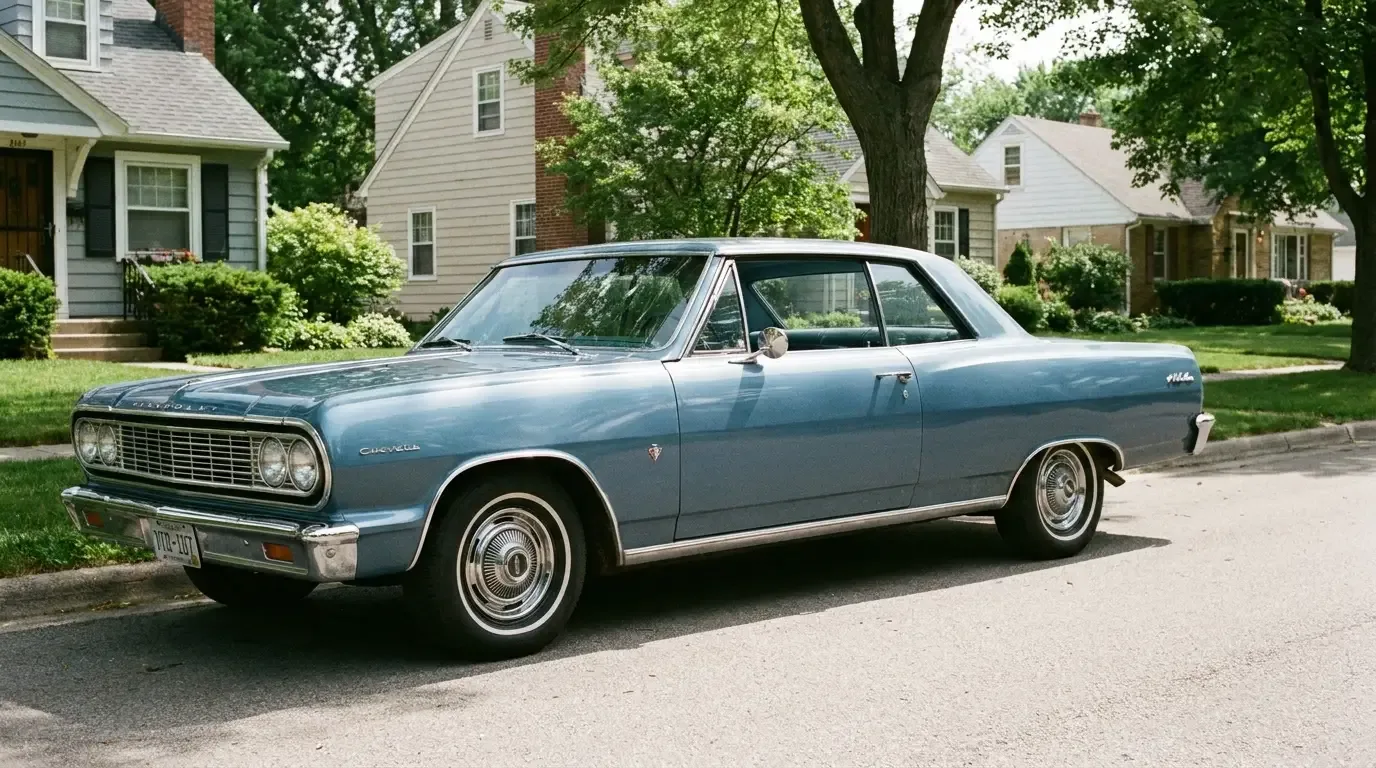
The first Chevelle didn't try to shout. In a showroom full of cars still carrying leftover fins and chrome from the late 1950s, the 1964 Chevelle showed up with flat door skins, a straight beltline, and almost no ornamentation below the greenhouse. That restraint was the whole point. Chevrolet needed a mid-size car that looked modern without looking like it was trying too hard, and the design studio delivered exactly that.
I've looked at a lot of bodies from this era up close, and what strikes me about the '64-'65 cars is how much confidence it takes to leave a panel alone. Any studio can dress up a slab side with extra trim and hope it reads as detail. Chevrolet's team did the harder thing: they cut the ornamentation down to a few clean lines and let the proportions carry the car.
A clean sheet after the finned era
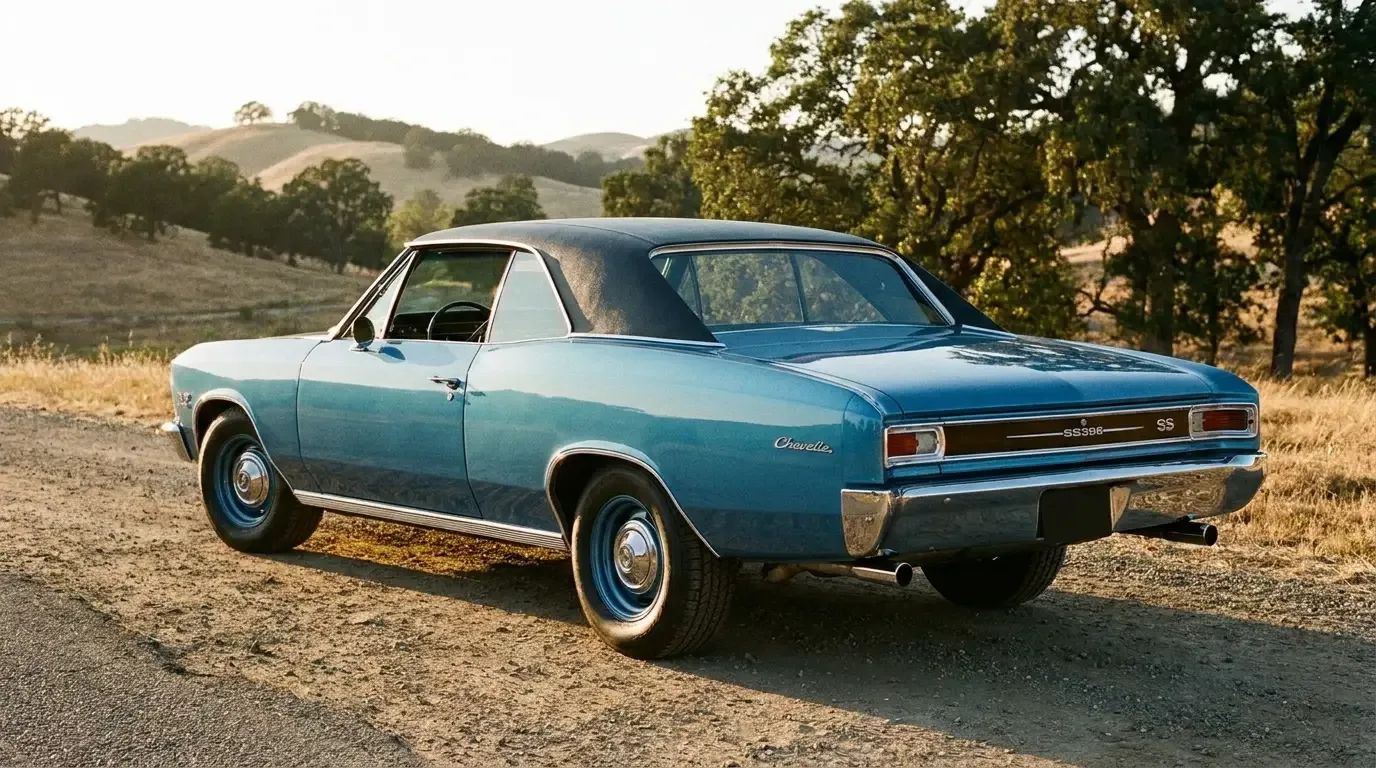
By the early 1960s, GM's full-size cars were still working through the tail end of the chrome-and-fin period, but the corporation's new intermediate class, built to slot between the compact Chevy II and the full-size Impala, gave the studios a chance to start fresh. The Chevelle's basic architecture borrowed body-on-frame construction similar to the full-size cars, but the sheetmetal above the frame rails was drawn without any obligation to match the older car's visual habits. The result is a body with a flat hood, a straight beltline running nose to tail, and quarter panels that stay simple compared to what came just a few years later.
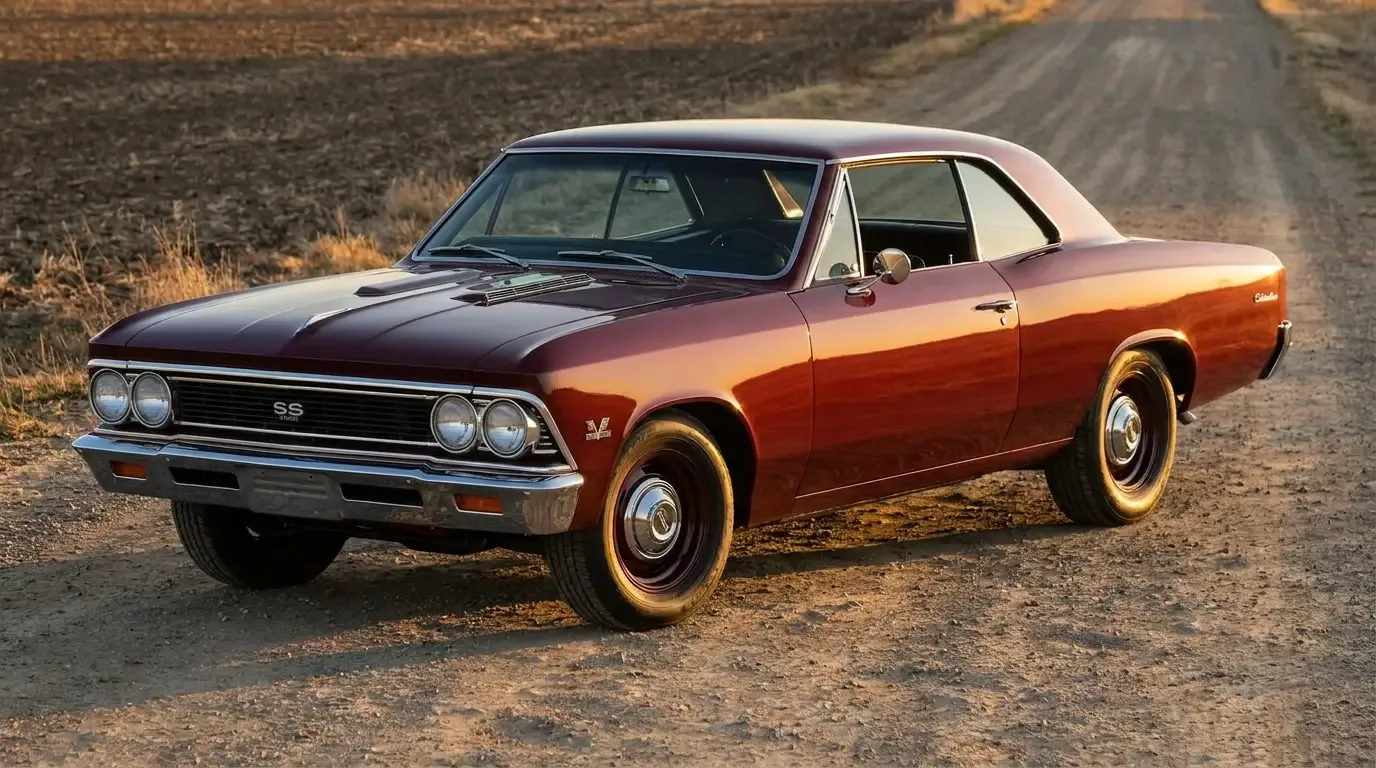
Quad headlights sit in a fairly plain grille opening, the front bumper wraps cleanly without a lot of add-on brightwork, and the roofline on the hardtop coupe is thin-pillared and light in a way that makes the whole car look smaller than its actual footprint. It's a body designed to be read from across a parking lot in under two seconds, which was exactly the job an intermediate car needed to do in a market getting crowded with new mid-size competitors.
What "clean" actually means on the sheetmetal
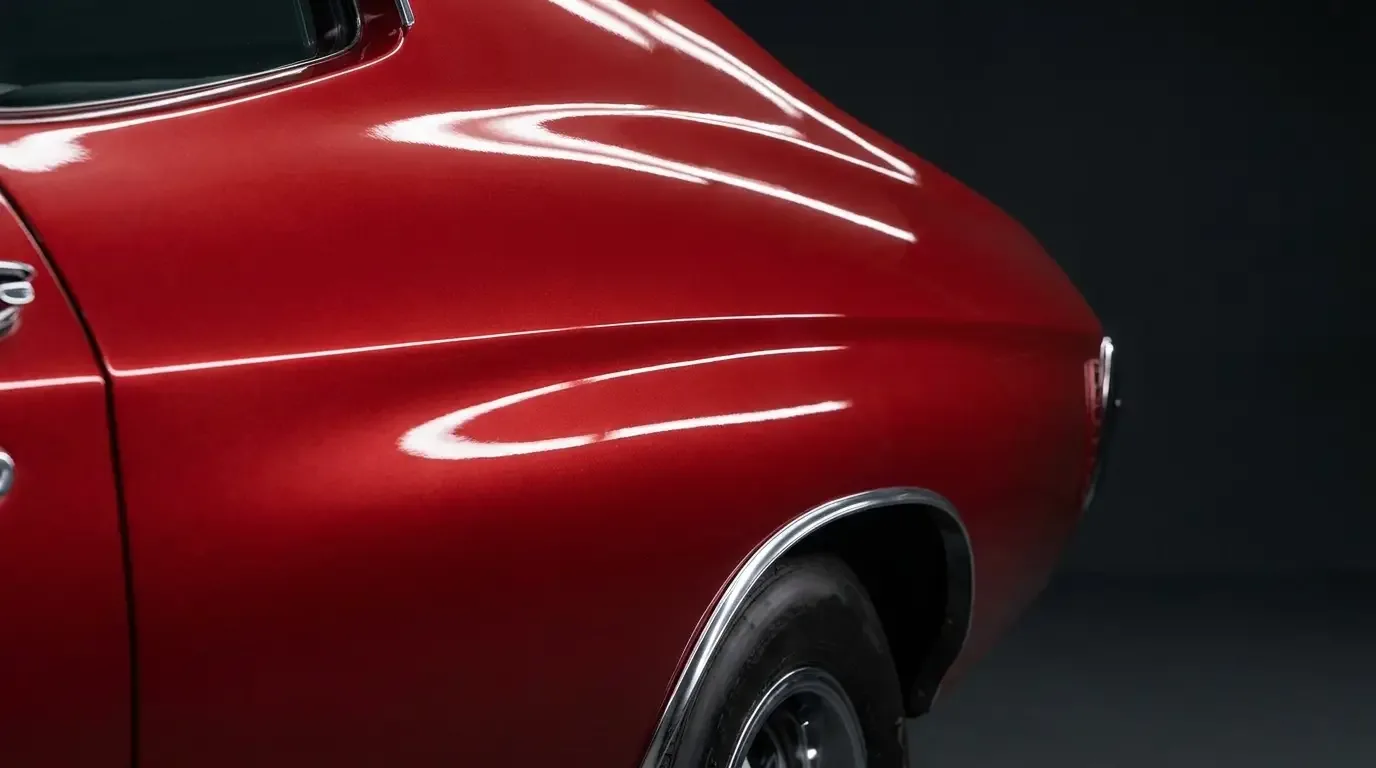
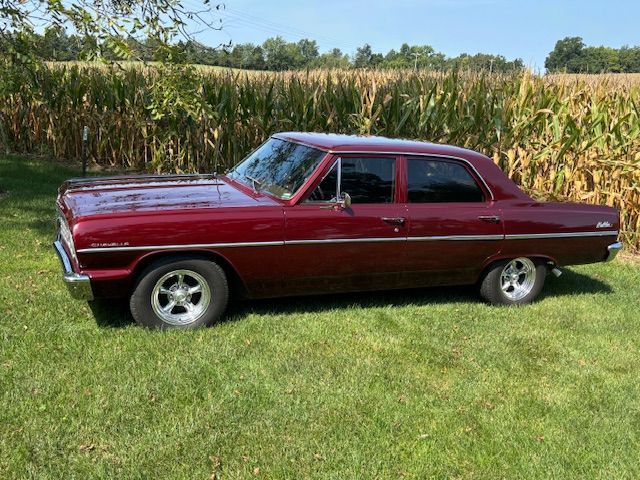
Clean doesn't mean featureless. Run your eye down the side of a '64 Chevelle and there's a single crisp character line at belt height, a modest crease that catches light without demanding attention. That's a deliberate choice, and it's a different approach than the more aggressive sculpting that would show up on the car within just a couple of model years, detailed in next: The 1966-67 Restyle. The '64-'65 cars are almost architectural in how flat and planar the door skins read, more in line with the era's Bel Air and Impala than with what muscle car styling would become by decade's end.
The 1965 model year brought subtle updates rather than a redesign, mostly around trim and grille detailing, but the fundamental slab-sided honesty of the shape held through both years. That consistency matters for anyone trying to date a car by eye or by parts, since the structural sheetmetal carries over almost entirely between the two model years with only minor trim differences separating them.
The proportions doing the quiet work
Take the greenhouse off a '64-'65 hardtop and look at just the glass area against the body. The window frames are thin, the roof pillars are narrow, and the whole upper structure sits fairly high relative to the beltline compared to what would come later in the decade. That's not an accident and it's not a limitation of the era's engineering either. A lighter-looking greenhouse over a longer, lower-looking body was the formula the whole industry was chasing at the time, and the Chevelle's execution of it is unusually clean because nothing above the beltline is fighting for attention against anything below it.
The front end reinforces the same idea. The hood is flat with a very slight forward rake, the grille opening is a simple horizontal rectangle, and the bumper doesn't try to sculpt itself into the fender the way later designs would. Every one of these choices removes a potential distraction, which is exactly why the character line at belt height reads as strongly as it does. When you strip away everything else a body could be doing, the one line you leave in gets all the attention.
SS trim and the first hint of aggression
Even inside this restrained shape, Chevrolet gave the Super Sport package enough visual weight to stand apart. Bright rocker moldings, a blacked-out grille insert, and SS badging on the front fenders and deck lid gave the performance model a slightly harder edge without ever breaking from the base car's simple body lines. That's a genuinely different design approach than later years, when the SS treatment would start pulling stripes, scoops, and spoilers onto the body itself. In 1964 and 1965, the SS was still a trim package layered onto an unchanged shape, not a shape built around the trim.
The interior followed the same logic. Bucket seats, a center console, and simple round gauges dressed up the cabin without cluttering it. The whole car, inside and out, reads like a design team that understood restraint as a feature, not a limitation.
| Model year | Body change from prior year | Notable styling detail |
|---|---|---|
| 1964 | All-new A-body platform | Flat door skins, single belt-height crease |
| 1965 | Trim and grille revisions only | Updated grille insert, minor badge changes |
"People walk right past a '64 Chevelle in a parking lot full of restomods and think it's plain. It's not plain, it's disciplined. There's a difference between a body that has nothing on it because nobody thought about it, and a body that has nothing on it because the guys drawing it knew when to stop."
— Jim Vasquez
Why this era still matters to the eye
The '64-'65 cars are worth understanding on their own terms rather than just as a warm-up act for the more aggressive Chevelles that followed. This body proved that an intermediate car could look confident without leaning on ornamentation, and that lesson carried forward into every Chevelle generation after it, even as the surface treatment got more dramatic. If you want to see how the whole design language evolved from here forward, Chevelle styling history walks the shape through every subsequent year. For a car this age, originality in the sheetmetal is everything, since there's so little applied trim to distract from a poorly repaired panel or a mismatched replacement quarter.