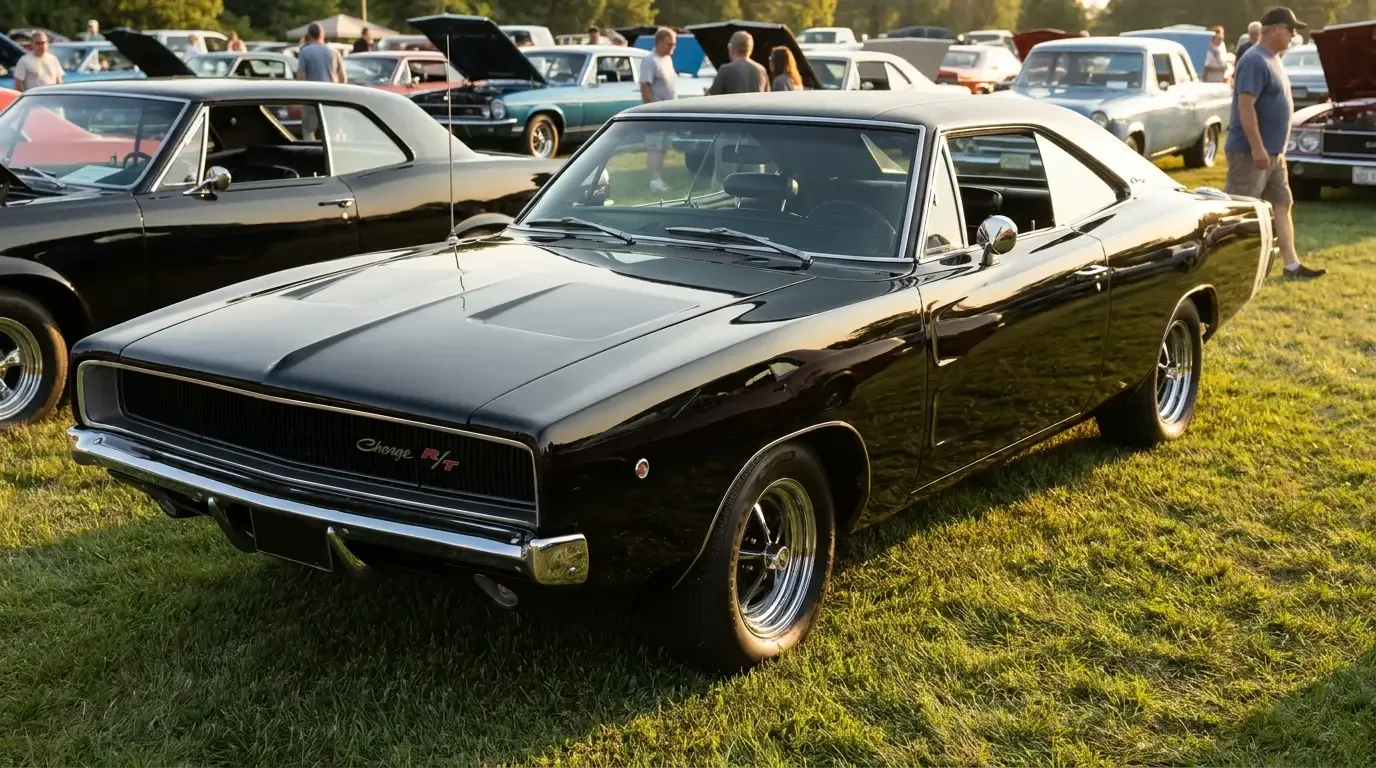
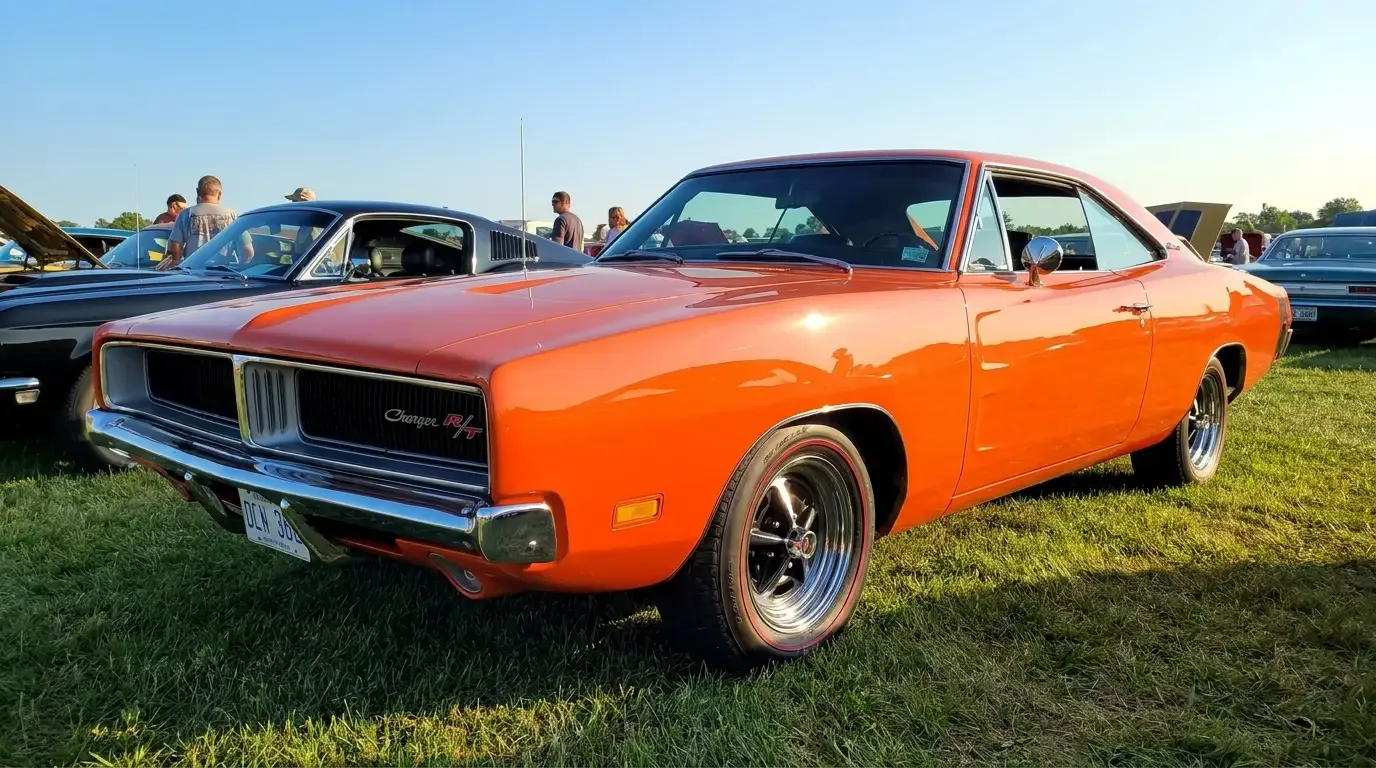
I've had more than one guy bring a 1969 Charger into the shop convinced his car was repainted the wrong color. Most of the time it wasn't. It was just a High Impact color he'd never seen in person, and thirty-five years of fading, oxidizing, and bad respray jobs had him second-guessing what left the factory in the first place.
The 1969 model year is where Dodge started getting loud about paint. Not immediately, and not across the whole lineup, but the groundwork got laid that year for the full High Impact palette that hit in 1970. If you're chasing a numbers-matching 1969 Charger, or you're trying to figure out whether the orange sitting in your driveway is factory correct, you need to know what Dodge actually offered and what came later. People mix the two up constantly.
What "factory colors" meant in 1969
The 1969 Charger color chart was more restrained than what came after. You had your standard exterior colors: Bright White, Black, Silver Metallic, a handful of blues, greens, and golds that read as conservative next to what was coming. Dodge hadn't gone all in on the shock-value paint yet. That was a 1970 story, mostly, when Hemi Orange, Plum Crazy, and the rest of the High Impact line got their own factory code letters and started showing up on build sheets in real numbers.
Here's where it gets messy for buyers today. Some 1969 cars did get late-run High Impact colors as running changes, and Dodge's paint code system carried some of that color language over. If you're evaluating a car and the seller says "factory High Impact," ask for the paint code off the fender tag and cross-reference it against a 1969-specific chart, not a 1970 one. The codes shifted between years: Chrysler used short two-character codes in 1969 and moved to three-character codes for 1970, so Black went from X9 to TX9, and a designation off a 1970 chart won't line up cleanly with a 1969 car.
| Color | Common Name | Availability Note |
|---|---|---|
| W1 | Bright White | Full-year standard color |
| X9 | Black | Full-year standard color |
| A4 | Silver Metallic | Full-year standard color |
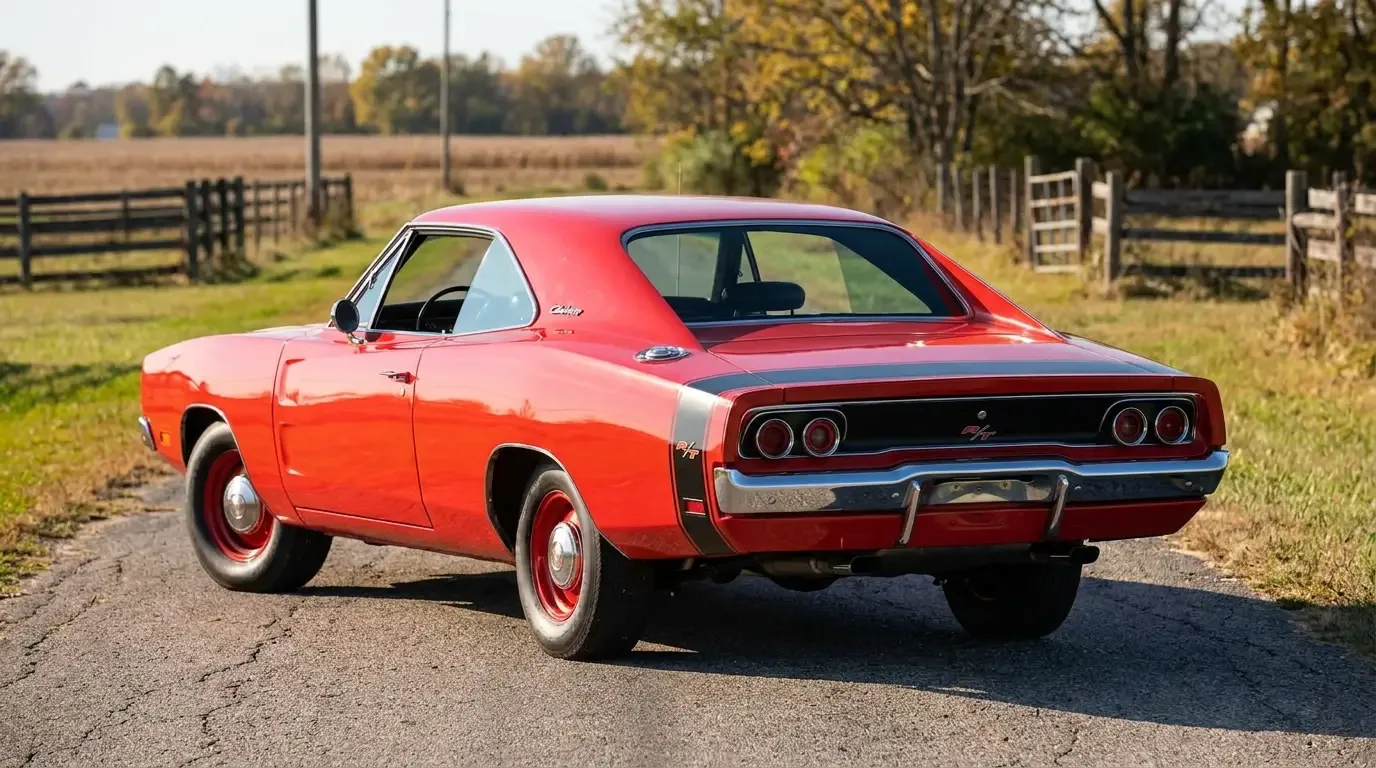
| EV2 | Hemi Orange (Tor-Red) | High Impact color introduced spring 1969 as a running change; limited 1969 availability, expanded for 1970 |
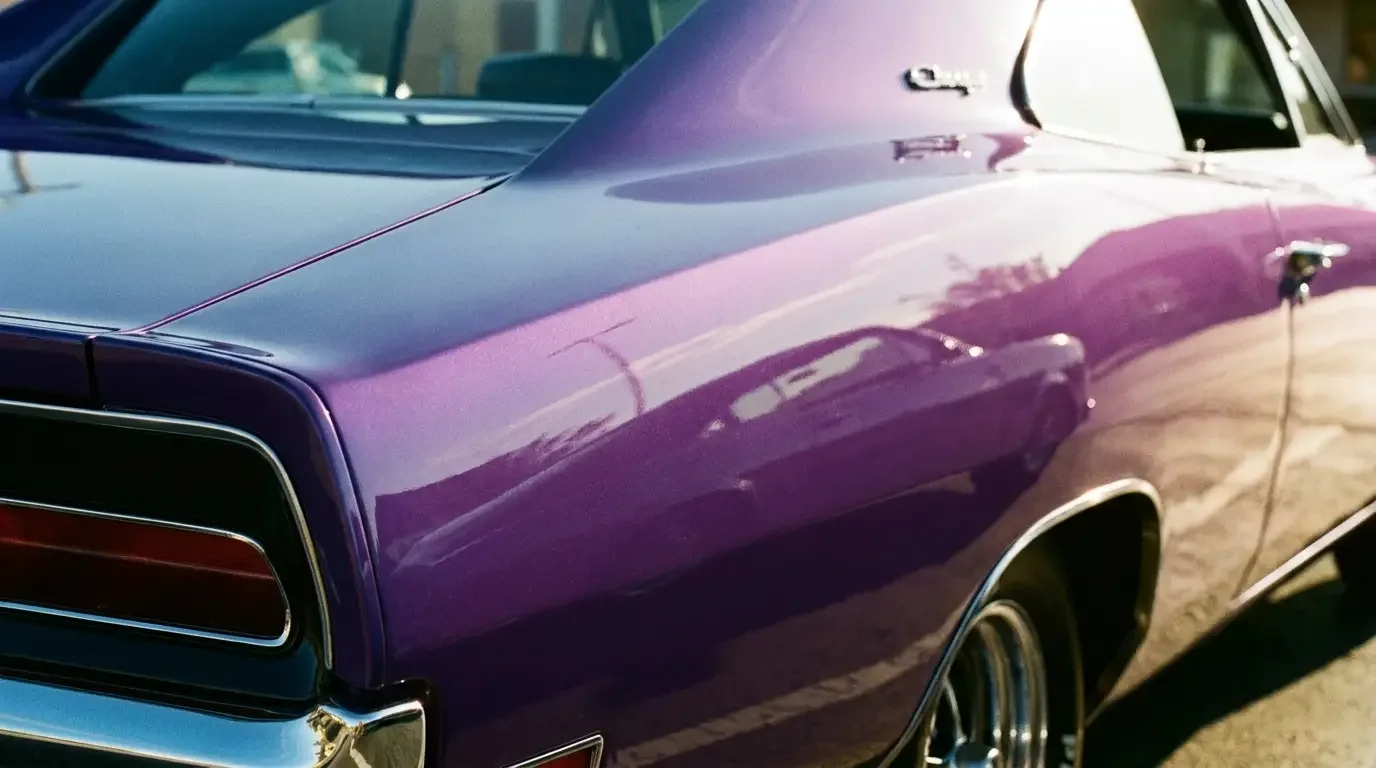
| FC7 | Plum Crazy | Primarily a 1970 color, essentially absent from 1969 build sheets |
I'd treat that Plum Crazy row with some skepticism if you see it on a car titled as a 1969. It's not impossible a dealer-applied repaint happened before delivery, but a factory-original 1969 wearing a color that's mostly associated with the following model year is exactly the kind of thing that needs paperwork, not a story.
Reading the fender tag instead of trusting your eyes
Every 1969 Charger has a fender tag with the paint code stamped on it, usually a letter-number combination near the top of the tag. That's your source of truth. Not the color you see today, because lacquer and enamel from 1969 does not look the same in 2026 as it did rolling off the Hamtramck line. UV exposure alone will shift a bright orange toward a duller rust tone over five decades, and a bad repaint from the seventies or eighties can leave you looking at a color that's close but not exact to anything Dodge offered.
I've pulled apart enough of these cars to tell you the tag doesn't lie, but it can be hard to read. Corrosion, prior bodywork, and sloppy stamping all get in the way. If the tag's illegible or missing, you're relying on build sheet documentation, broadcast sheets found under seats or in trunk wells, or a Chrysler Historical Services report to confirm the original color. Don't take a "trust me" from a seller who can't produce any of that.
For anyone digging deeper into how the second generation Charger came together as a whole car, not just the color chart, you can read more here. It covers the sheet metal changes and engineering decisions that made 1968 through 1970 its own distinct era for the model.
Repaints, respray shortcuts, and what to check underneath
If you're looking at a car claiming an original High Impact color, or even a more common shade, pop the doors and look at the jambs, the trunk floor, and the underside of the hood. Factory paint application left overspray patterns and masking lines that a full repaint rarely replicates correctly. A shop doing a quick respray for a sale is thinking about the parts a buyer will see standing three feet away, not the parts that get inspected on a lift.
I've had customers insist their car was "never touched" because the paint looked perfect. Perfect paint on a fifty-five-year-old muscle car is itself a red flag half the time. Original lacquer from this era has texture, minor waviness in the panels, and usually some fade consistency across body sections that a modern basecoat clearcoat job doesn't match. If everything's uniformly glossy and flawless, ask when the last repaint happened and get it in writing.
- Check the fender tag paint code against a 1969-specific reference chart, not a 1970 chart.
- Ask for broadcast sheets, build sheets, or a Chrysler Historical Services report if the tag is unreadable.
- Inspect door jambs and trunk floor for original overspray patterns.
- Be skeptical of any 1969 car claiming a color more strongly associated with 1970, like Plum Crazy.
- Remember that paint fades and shifts hue over decades, so trust the code, not your memory of what the color "should" look like.
Why this matters for value, not just accuracy
A documented factory-correct color, even a plain one like Silver Metallic or Black, holds value better than an undocumented repaint in a flashier shade. Buyers chasing a specific High Impact color for its rarity or visual punch need the paperwork to back it up, because the premium those colors command only exists if the color is verifiably original. A gorgeous respray in a color the car never wore from the factory is still just a respray. It might look better in photos, but it's not the same car in the eyes of anyone doing real diligence.
This is also where the stripe and badging package on these cars gets tangled up with paint questions, since a lot of buyers conflate the two. The charger bumblebee stripe was its own separate factory option, applied over whatever base color the car left the plant wearing, and it has its own documentation quirks that are worth understanding before you assume a car's exterior package is complete or original.
Bottom line: don't buy a 1969 Charger on color alone, and don't dismiss a plain-colored car as less desirable without checking what the tag says first. The paperwork tells you more than the paint ever will, and after fifty-plus years, that paperwork is often the only thing standing between an honest car and a good story.
Sources and notes
- TPOCR 1969 Dodge Body Plate Data - confirmed the 1969 two-character paint codes (X9 Black, W1 White, A4 Silver Metallic) used on the fender tag.
- Auto Paint HQ: Hemi Orange (EV2) - verified EV2 Hemi Orange / Tor-Red debuted in 1969 and ran through 1972.
- Hagerty: High-Impact Colors - confirmed the High Impact palette was launched in spring 1969 and expanded for 1970.
- Autoevolution: Mopar High-Impact Colors Guide - cross-checked Plum Crazy (FC7) as a 1970 color and the naming split with Plymouth.
- DodgeGarage: High Impact Colors - background on the marketing names versus the codes stamped on build sheets.