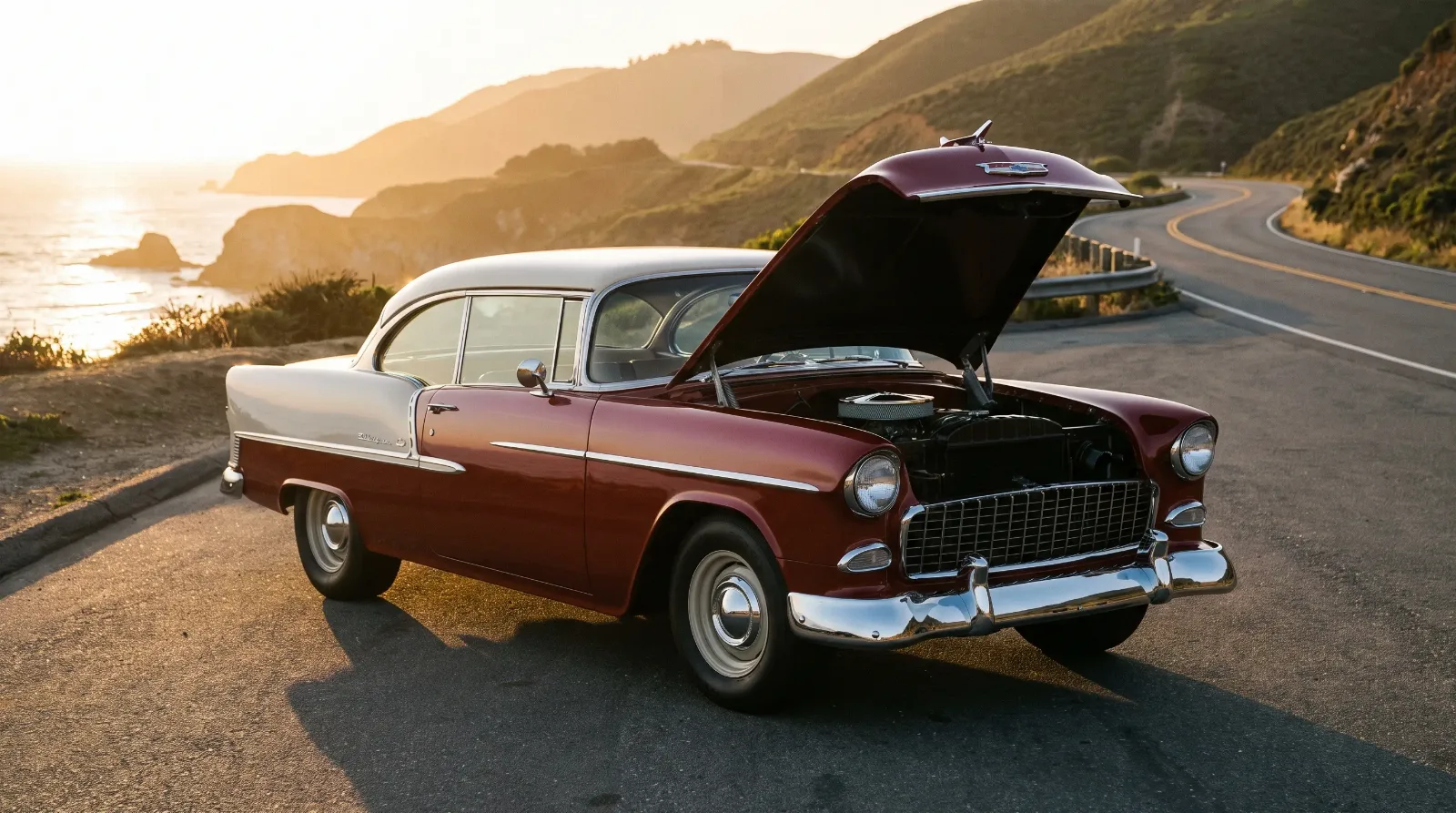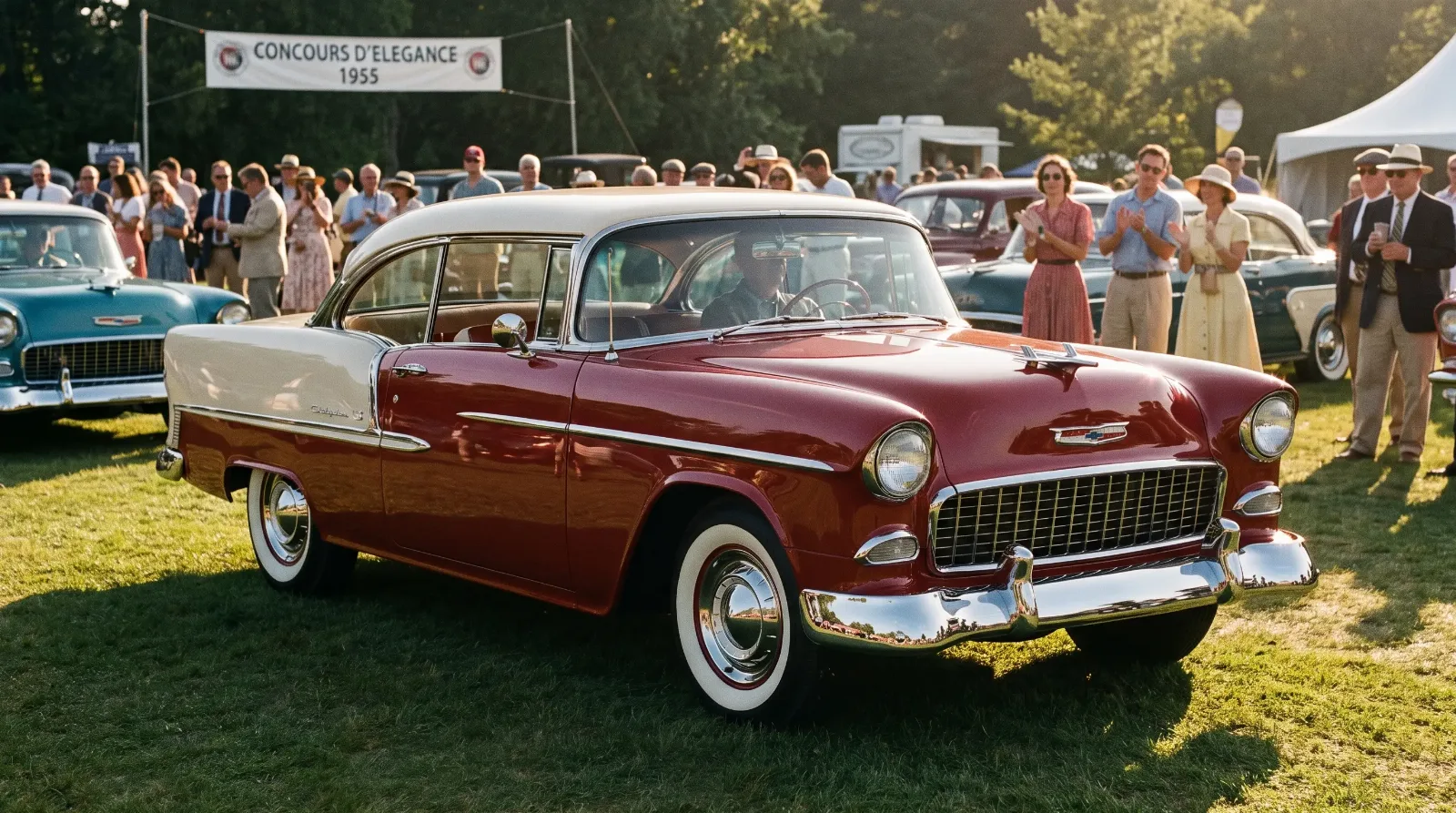
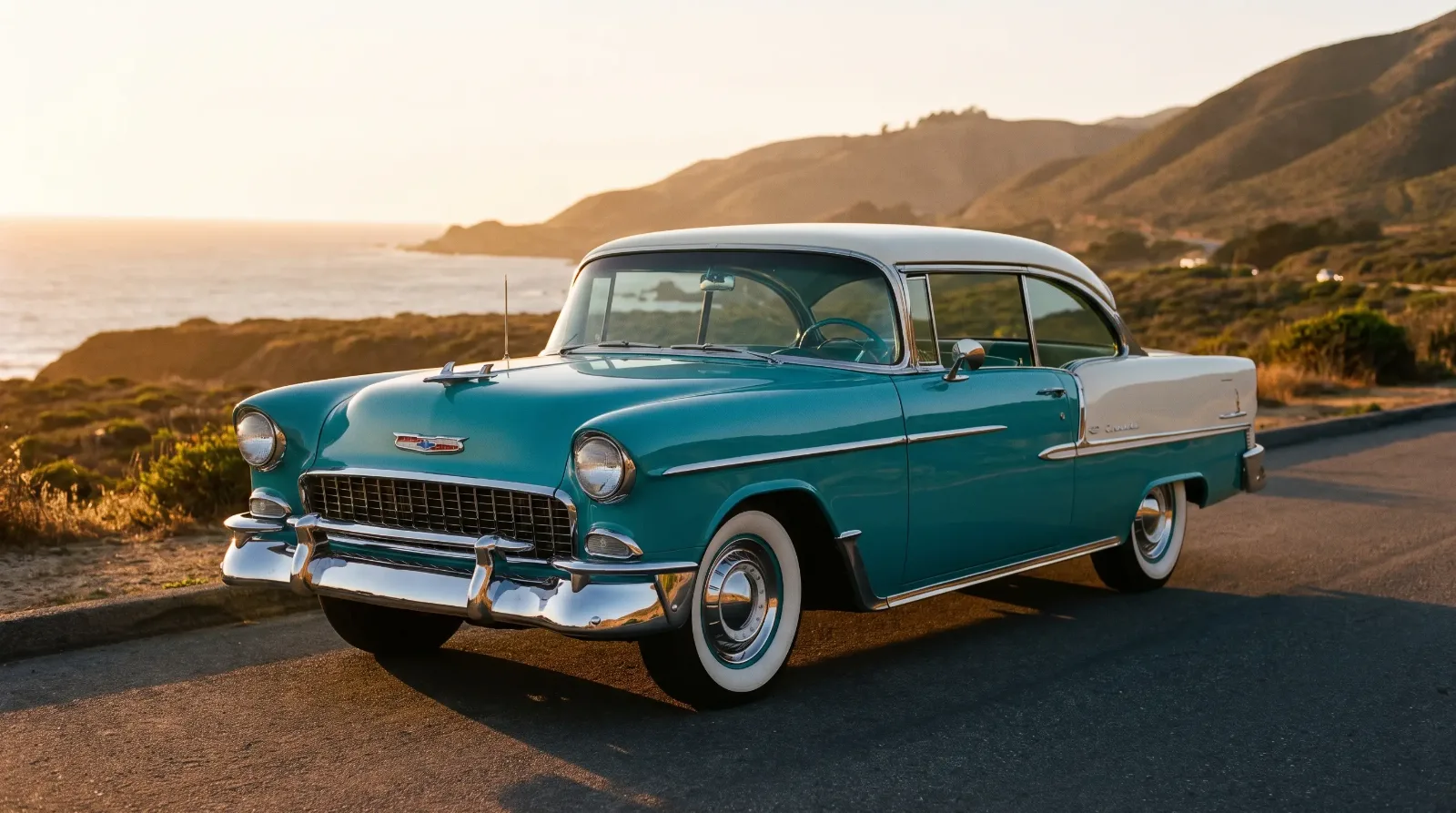
Chevrolet's own advertising department coined the phrase, and for once the marketing copy actually matched the engineering underneath it. The 1955 bel air hot one campaign was not empty hype. It described a car that had genuinely earned a new reputation almost overnight, after a full decade of Chevrolet being the sensible, unexciting choice next to Ford and the independents.
What "the hot one" actually referred to
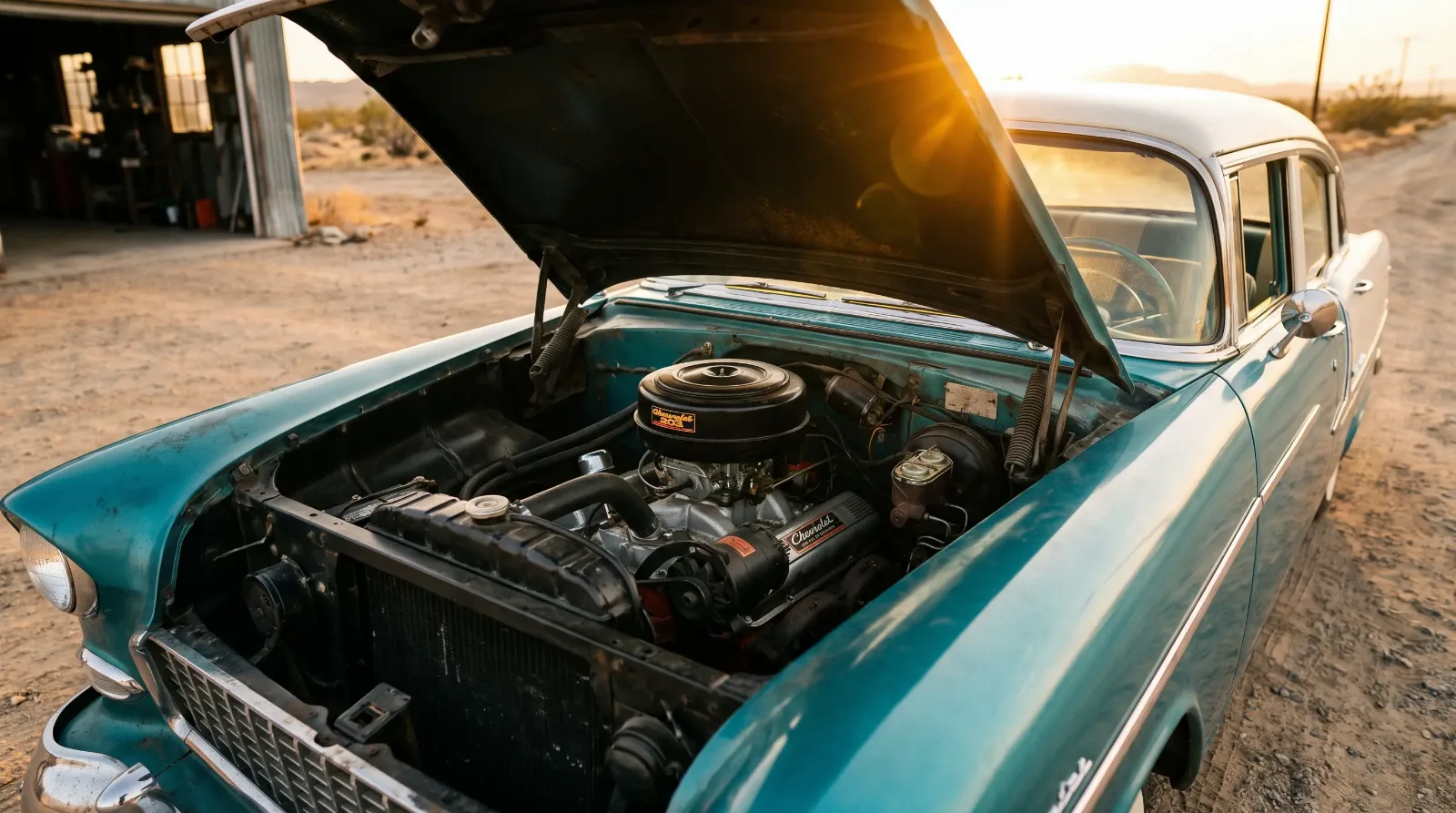
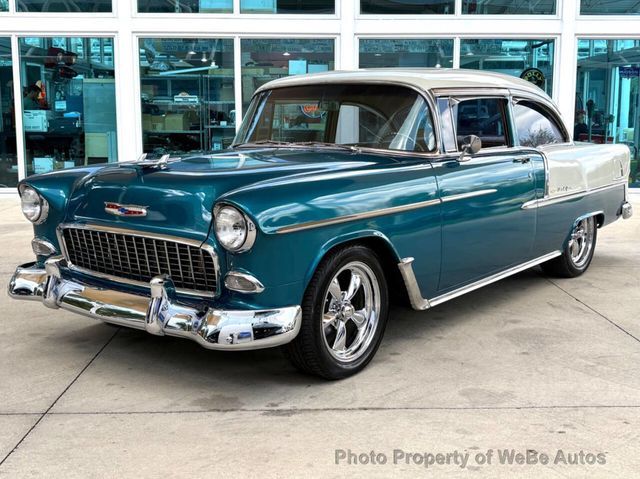
The 1955 Chevrolet full-size lineup, Bel Air included, arrived with an all-new body on a new chassis and, most importantly, an available V8 engine for the first time in the division's modern history. Chevrolet's print ads ran the tagline across national magazines, positioning the redesigned car directly against the notion that Chevrolet only built practical, unexciting transportation. The phrase stuck because the car backed it up. A Bel Air ordered with the new V8 and a manual transmission could out-accelerate cars that cost considerably more, a genuine surprise to buyers who had spent years assuming performance meant paying for a Ford flathead V8 or stepping up to an Oldsmobile or Buick.
For full context on how the styling and trim came together that year, read 1955 chevy bel air history, which covers the redesign beyond just the engine story told here.
Styling did real work alongside the engine
The 1955 body was lower, wider, and considerably more modern looking than the car it replaced, with a new wraparound windshield, a simplified grille, and clean side trim that aged better than a lot of mid-1950s Detroit styling. Chevrolet's design team, working under Ed Cole and with styling direction that drew on GM's broader design language of the period, gave the Bel Air a look that read as expensive without actually being expensive to build. That combination, a genuinely quick car wearing a genuinely handsome body at a price point most working families could stretch to reach, is what made the hot one campaign land rather than ring hollow.
"Every division claims their new model changed everything. Most of the time that is marketing talk. In 1955, Chevrolet actually meant it, and the sales figures backed the claim within the first year."
- Tom Ramirez
The sales numbers tell the real story
1955 was a record year for Chevrolet, with total production reaching 1,713,478 units, a roughly 50 percent jump over 1954 and enough to put Chevrolet ahead of Ford for the model year. The Bel Air series alone accounted for 773,238 of those units. The Bel Air specifically captured a larger share of that volume than it had in prior years, benefiting directly from the V8 option and the redesigned body pulling buyers upward from the cheaper 150 and 210 trims. Dealers who had struggled to differentiate the Bel Air from lesser Chevrolets in years past suddenly had a genuinely compelling upsell, a car that looked better, drove better, and carried real bragging rights among neighbors and coworkers.
This is the year the flagship marketing strategy Chevrolet had been building since the early 1950s finally had the mechanical substance to match the showroom presentation. For more on the engineering side specifically, a related story covers the 265 cubic inch V8 in detail, since the engine deserves its own full accounting beyond what fits here.
The chassis and suspension quietly did as much as the engine
Discussions of the 1955 hot one usually center on the V8, and rightly so, but the new box-section frame and revised front suspension geometry deserve more credit than they usually get. Chevrolet engineers reworked the ball-joint front suspension for 1955, replacing the older kingpin design, which improved steering feel and reduced maintenance compared to the outgoing setup. Combined with a lower center of gravity from the new body, the 1955 Bel Air simply handled better than the car it replaced, not dramatically by later standards, but enough that period road testers noted the improvement specifically rather than treating it as a footnote to the engine story.
That chassis work matters historically because it shows the 1955 redesign was not a single headline feature wrapped around an otherwise unchanged car. Chevrolet updated the frame, the suspension, the body, and the engine lineup together, which is part of why the car held up as a benchmark for so long rather than being remembered as a one-trick showroom draw.
Why 1955 remains the reference point for the whole nameplate
Ask most collectors to picture a Bel Air and they picture the 1955 or 1956 body, not the earlier hardtop-only cars from 1950 through 1952. That is a direct result of how thoroughly the hot one campaign and the car behind it reshaped public perception of the model. Everything Chevrolet had built toward with the Bel Air name across the early 1950s, the two-tone paint, the trim hierarchy, the flagship positioning, found its full expression in 1955, when the mechanical package finally matched the marketing promise the nameplate had been making for years.
That is also why 1955 through 1957 Bel Airs command a premium over the earlier cars in most collector markets today. The redesign was not incremental, it was the moment the Bel Air stopped being a dressed-up Chevrolet and became a genuine object of desire in its own right.
How rivals responded, and why they could not catch up fast
Ford answered with its own V8 option and a facelifted Fairlane the same year, and the two brands ran neck and neck in total sales for 1955, close enough that the annual production race became a genuine talking point in the trade press. But Chevrolet had an advantage Ford could not immediately match: the small-block V8 architecture Chevrolet introduced that year was lighter, simpler to manufacture, and more tunable than what Ford was offering, and that architectural advantage compounded over the following decades in ways that went well beyond the 1955 sales figures alone. Plymouth, meanwhile, was still working through the Hy-Fire V8 rollout and did not have a comparably compelling full package of style, price, and power to counter the Bel Air that year.
What this meant in the showroom was straightforward. A buyer cross-shopping the low-priced three in 1955 was choosing between a Ford with a competent but heavier V8, a Plymouth still finding its footing, and a Chevrolet Bel Air that combined the lightest V8 of the group with arguably the cleanest new styling. That combination is a large part of why the 1955 Bel Air specifically, more than its Ford or Plymouth equivalents, became the car later generations of enthusiasts kept coming back to.
What this means if you are researching or buying a 1955 car
Anyone researching a specific 1955 Bel Air should pay close attention to which engine the car left the factory with, since the base six-cylinder and the new V8 were both available that year and carried genuinely different reputations even at the time. A V8 car with documentation backing its original configuration carries more weight with serious collectors than a car where the engine cannot be confirmed against the original build, precisely because the V8 is what made 1955 the hot one in the first place. If you want to see what is currently on the market, there are Airs for sale now from this exact model year worth comparing directly against the documented production history above.