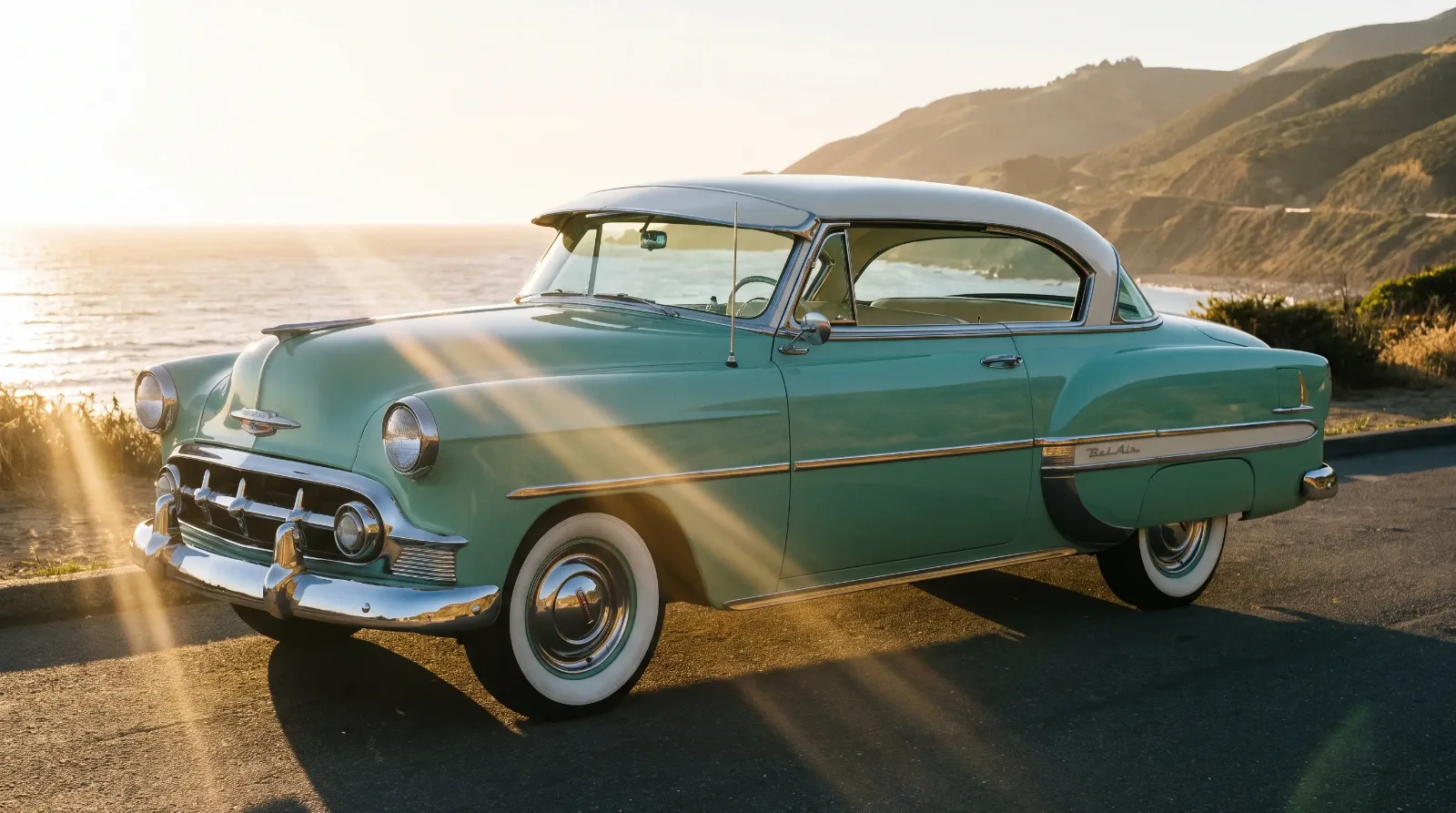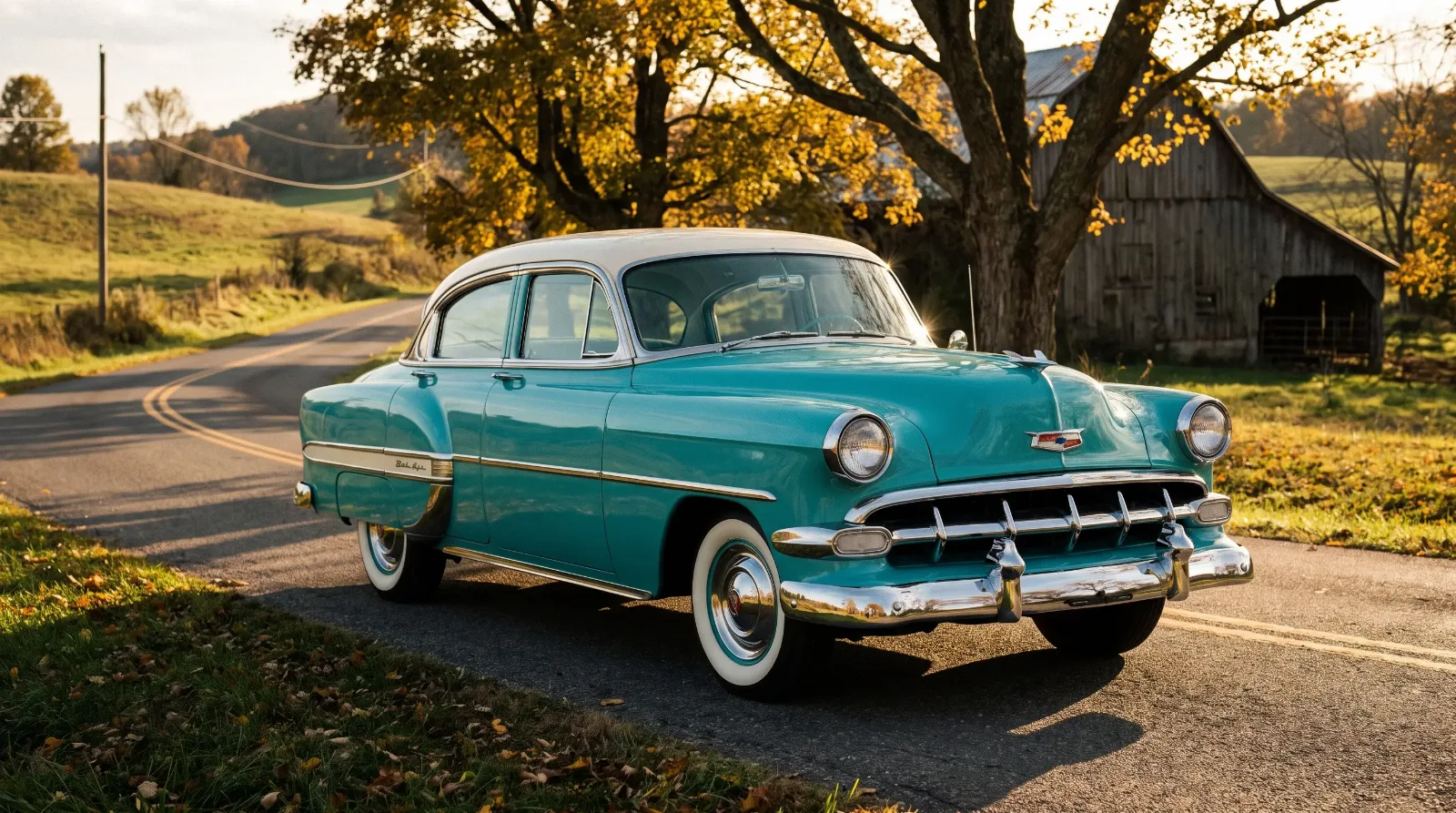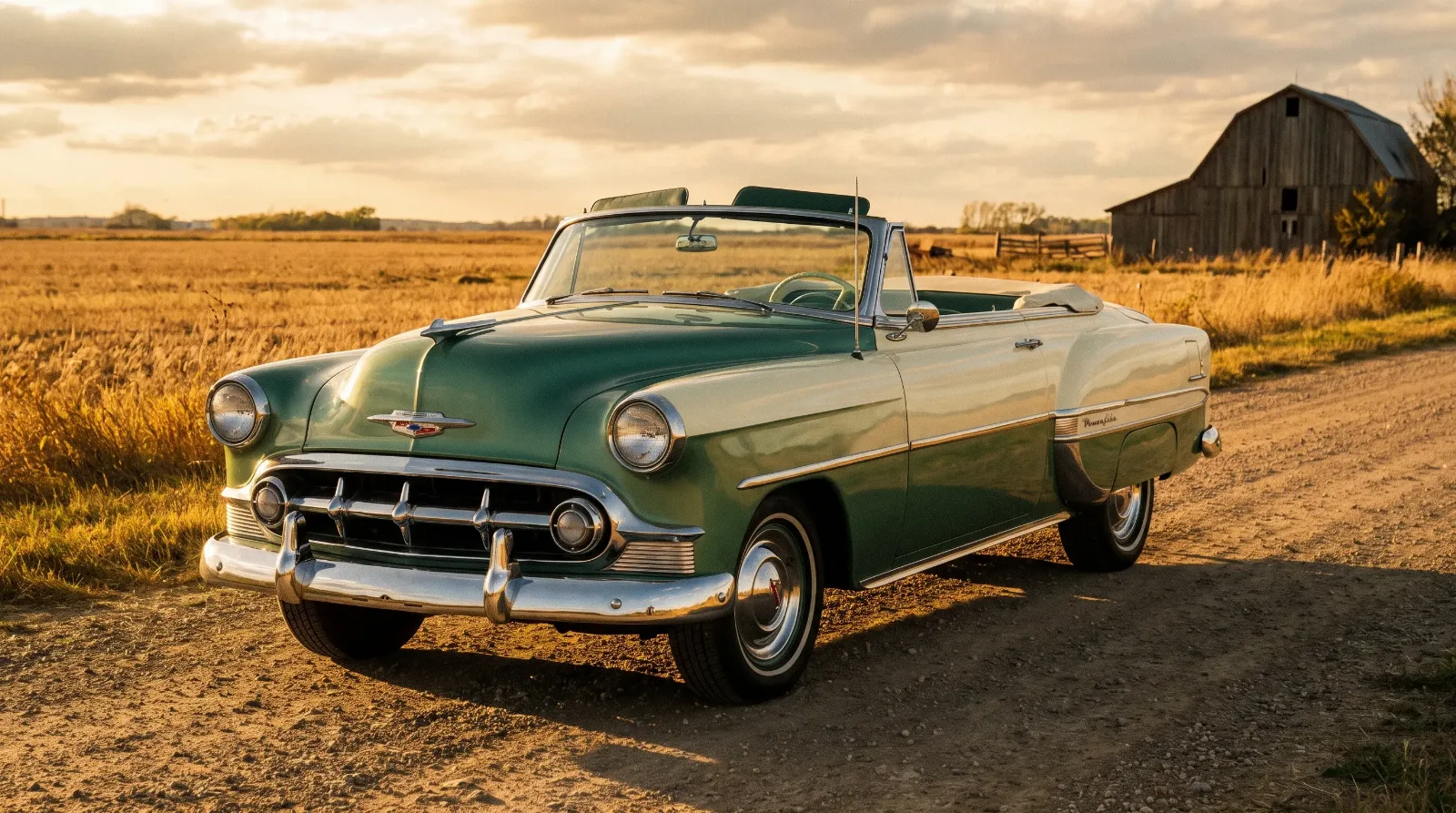
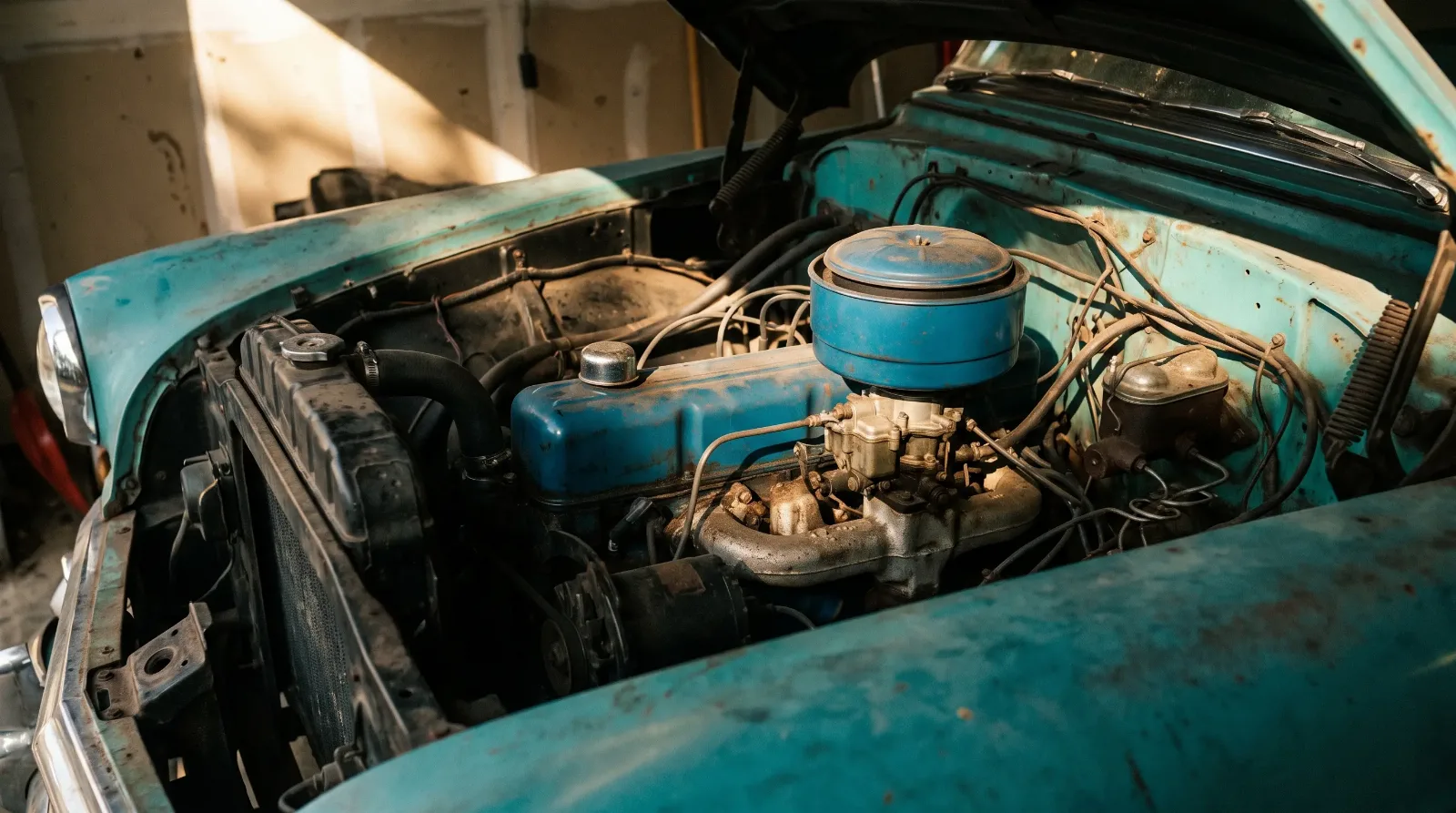
The chevy blue flame six is one of those engines that never gets the credit its longevity deserves. It powered early Bel Airs through the entire pre-V8 era, it made Chevrolet's first automatic transmission viable, and it eventually became the surprise heart of the original Corvette, a role nobody could have predicted when it was just doing duty in a family sedan. Before any of that, though, it was simply the engine every early Bel Air buyer got, whether they thought about it or not.
What "Blue Flame" actually referred to
Chevrolet's inline six had been around in various forms since the late 1930s, gradually revised and improved across two decades of production, and the larger 235.5 cubic inch version arrived alongside Powerglide for the 1950 model year. The Blue Flame name itself did not apply to every version of this engine, and it was not yet in use during the earliest Powerglide years. Chevrolet officially attached the Blue Flame name starting with the 1953 model year, using it for the higher compression, hydraulic lifter tune of the 235.5 six built for the Powerglide automatic. That same 1953 model year, the standard three-speed manual cars ran a separate, lower compression 235.5 tune, marketed as the Thrift King rather than Blue Flame. By 1954 Chevrolet extended the Blue Flame name to the manual-transmission engine as well, so both versions carried the branding.
This distinction matters for anyone trying to understand period Chevrolet literature, since dealer brochures and factory documentation from the early 1950s treated the Blue Flame as a specific, named variant rather than a generic description of the six-cylinder engine family. Getting the terminology right also helps when cross-referencing engine codes on cars from this era, since a Powerglide car and a manual car from the same model year carried genuinely different tunes under nominally the same displacement.
Why Powerglide needed a different engine calibration
Automatic transmissions in the early 1950s were mechanically simple compared to modern units, and Powerglide in particular relied heavily on the engine to make up for what the transmission itself could not do. A torque converter automatic without multiple gear ratios needs an engine tuned to deliver usable power across a wider range of engine speeds, since the transmission is not going to compensate with aggressive downshifts the way a manual driver would with the clutch and shifter.
Chevrolet's engineers addressed this by raising compression on the Blue Flame version of the 235.5 six, roughly 7.5:1 versus the lower compression used on manual-transmission cars, netting a modest horsepower increase. In 1953, the Blue Flame Powerglide engine made 115 hp against 105 hp for the manual-transmission Thrift King six; by 1954, once Chevrolet extended Blue Flame branding to the manual engine too, the figures rose to 115 hp manual and 125 hp Powerglide. The gap looks small by later standards, but it made a real difference in how a Powerglide-equipped Bel Air actually drove.
Where the Blue Flame name actually came from
Chevrolet's naming pattern for engines in this era tended toward evocative, energy-suggesting language rather than plain technical designations, and Blue Flame fits that pattern closely. The name gestures at combustion efficiency and a hint of performance without making any specific numerical claim, which suited an engine that was, by any objective measure, a modest performer. It let Chevrolet's marketing department frame a mainstream six-cylinder engine as something with a bit of personality, a strategy the company used elsewhere in its lineup during the same period.
Engineering tradeoffs Chevrolet accepted
Running two different engine calibrations across the same model line added complexity to Chevrolet's production process, and it is worth asking why the company accepted that cost. The answer comes down to a straightforward engineering tradeoff. Chevrolet could either build one compromise calibration that worked adequately with both transmissions, or build two purpose-tuned versions that each performed better within their specific application. Chevrolet chose the second path, which tells you something about how seriously the company took the early Powerglide rollout. The automatic transmission was a genuine differentiator against Ford and Plymouth in the low-price field, and Chevrolet was not willing to let a mismatched engine calibration undercut that advantage.
The full context for how this all fits into the broader Bel Air story, including how the car itself evolved around this engine family, is worth reading in the full story if the mechanical side has you curious about the bigger picture.
| Spec | Blue Flame Six (Powerglide) | Standard Six (Manual) |
|---|---|---|
| Displacement | 235.5 cid | 235.5 cid |
| Compression ratio | Approx. 7.5:1 | Lower compression tune |
| Horsepower | 115 hp (1953), 125 hp (1954) | 105 hp (1953, Thrift King), 115 hp (1954, Blue Flame) |
| Transmission pairing | Powerglide automatic | Three-speed manual |
Servicing and identifying a period-correct engine today
Owners and appraisers trying to confirm whether a surviving Bel Air carries its original Blue Flame or standard six generally start with casting numbers on the block and head, cross-referenced against the transmission the car left the factory with. A Powerglide car with a low compression head, or a manual car with a high compression Blue Flame head, is a mismatch that usually points to a replacement engine swapped in sometime during the car's decades of ownership rather than a factory error, since Chevrolet's assembly process paired engine and transmission at the plant with reasonable consistency.
This kind of detail matters more to concours judges and serious collectors than it does to a casual buyer, but it is worth knowing before a purchase if originality affects the price a seller is asking. A numbers-matching Blue Flame engine in a Powerglide car carries more value among purists than a later replacement six, even one that runs perfectly well and looks correct from a glance under the hood.
Why this engine matters more than its numbers suggest
By modern standards, the Blue Flame six is unremarkable on paper. A little over a hundred horsepower from nearly four liters of displacement is not an impressive ratio by any measure available today. What made the engine significant was its reliability and its role in making Powerglide a workable product, which in turn made automatic transmissions a mainstream expectation rather than a novelty. Every Bel Air buyer who chose the automatic over the manual in the early 1950s was trusting this specific engine calibration to make that choice practical, and it generally did not let them down.
"People assume the interesting engineering in early Chevrolets was all in the V8 that came later. The real story is how much work Chevrolet put into making a modest six-cylinder engine behave correctly with an automatic transmission nobody else in this price range had figured out yet."
- Emily Chen
If you are shopping for an early Bel Air today, knowing which engine calibration a given car originally carried matters for authenticity and for understanding how it will actually drive. Sellers and dealers with inventory to browse classic Air listings can usually tell you whether a specific car left the factory with the Blue Flame tune or the standard manual calibration, which is worth confirming before you commit to a purchase.
Sources and notes
- Wikipedia: Chevrolet Stovebolt engine
- Jalopnik: Everything You Should Know About The Corvette Blue Flame Six Engine
- CorvSport: 1953-55 Stovebolt Inline 6 Cylinder Engine Guide
- National Corvette Museum: 1953 Corvette Specs
- Mac's Motor City Garage: The Chevrolet Class of 1953
- Wikipedia: Powerglide transmission