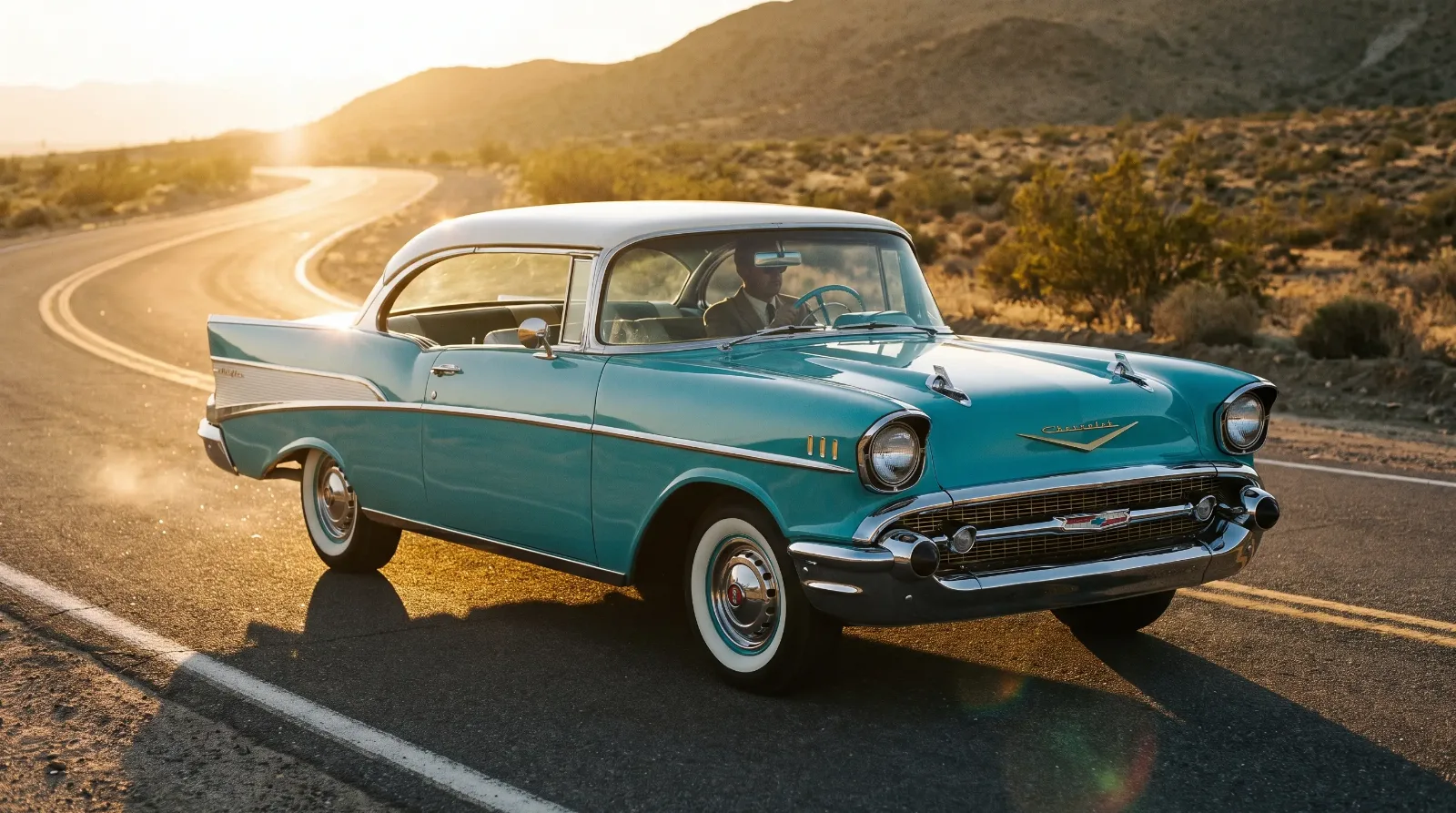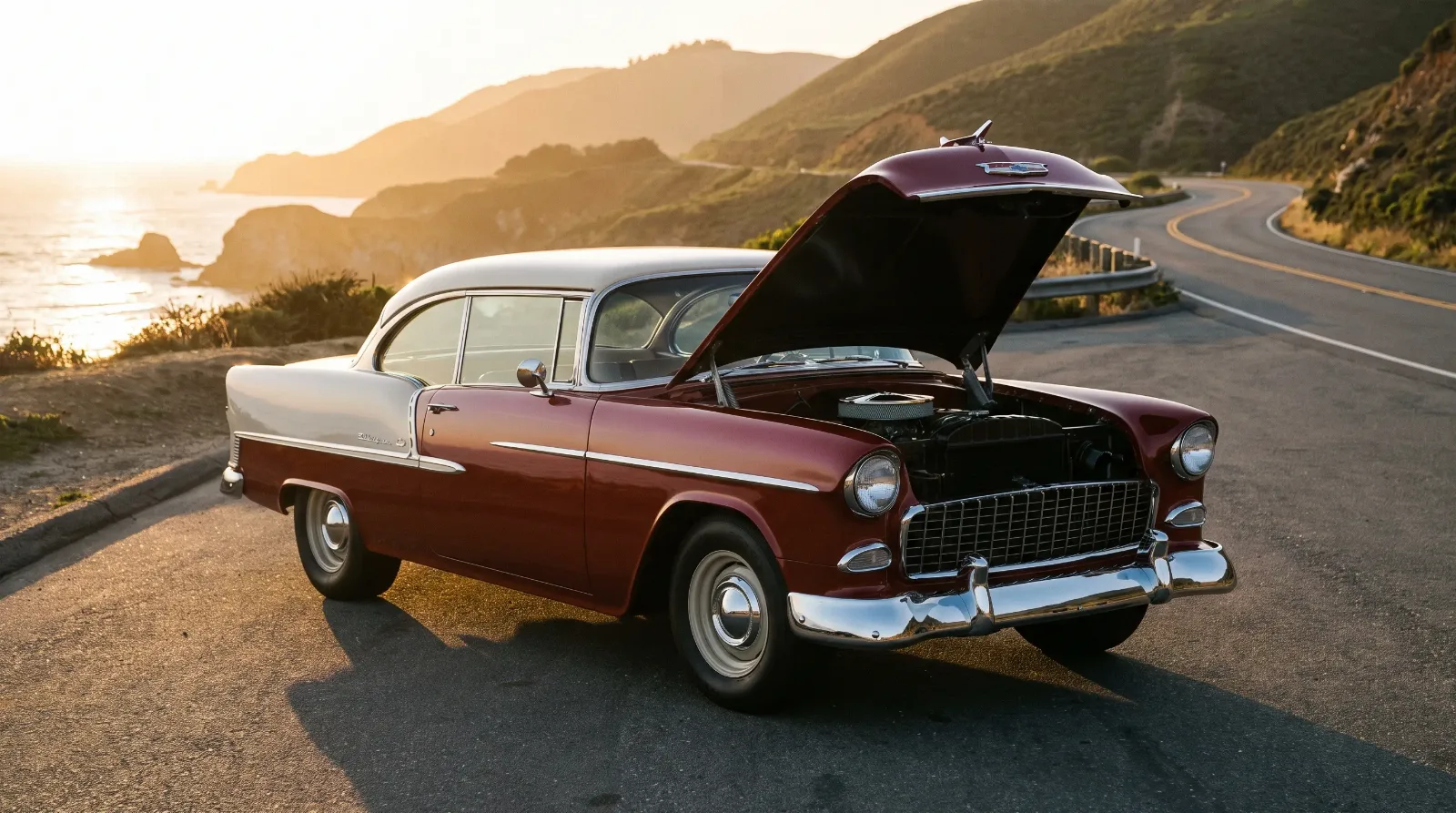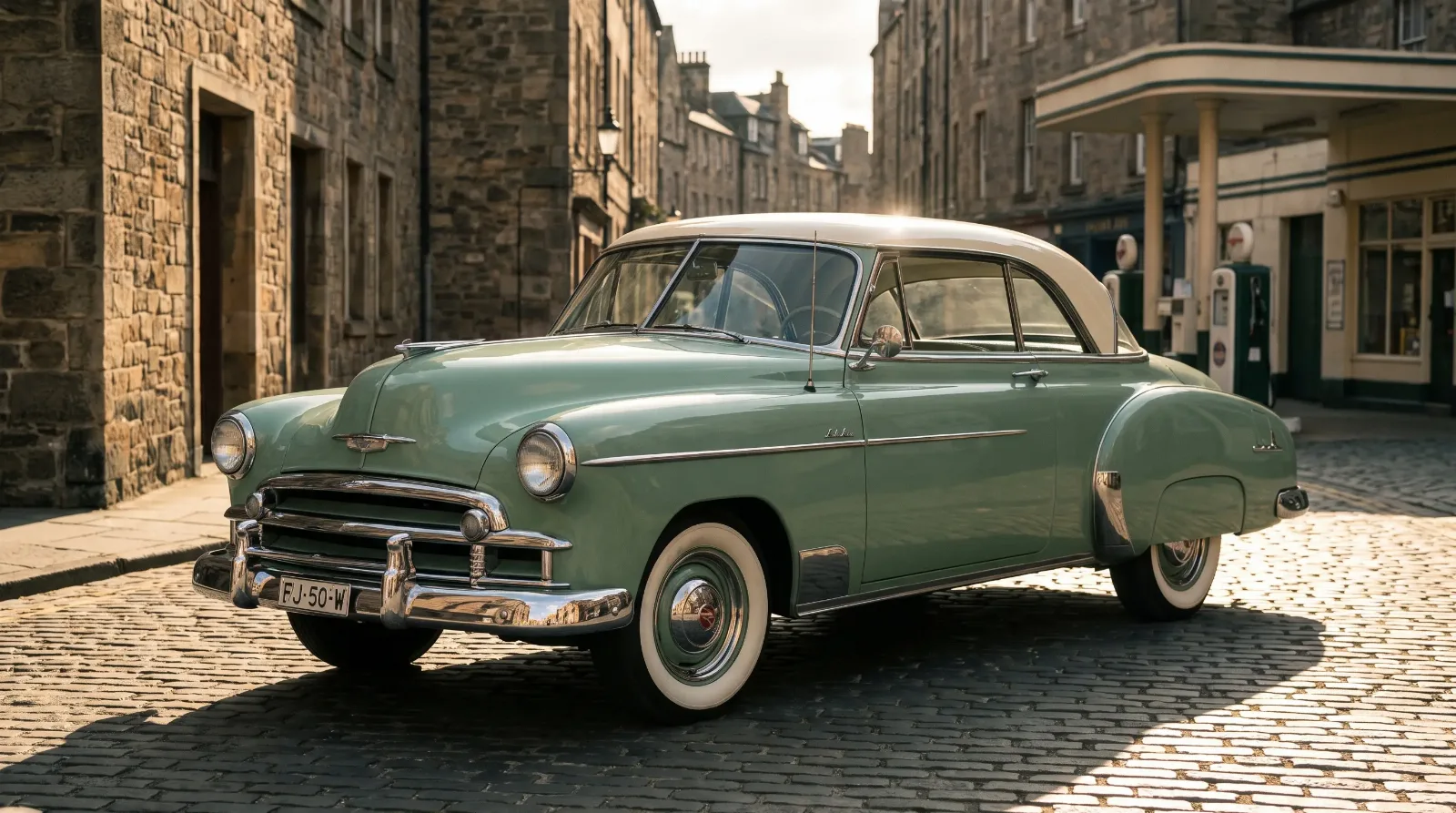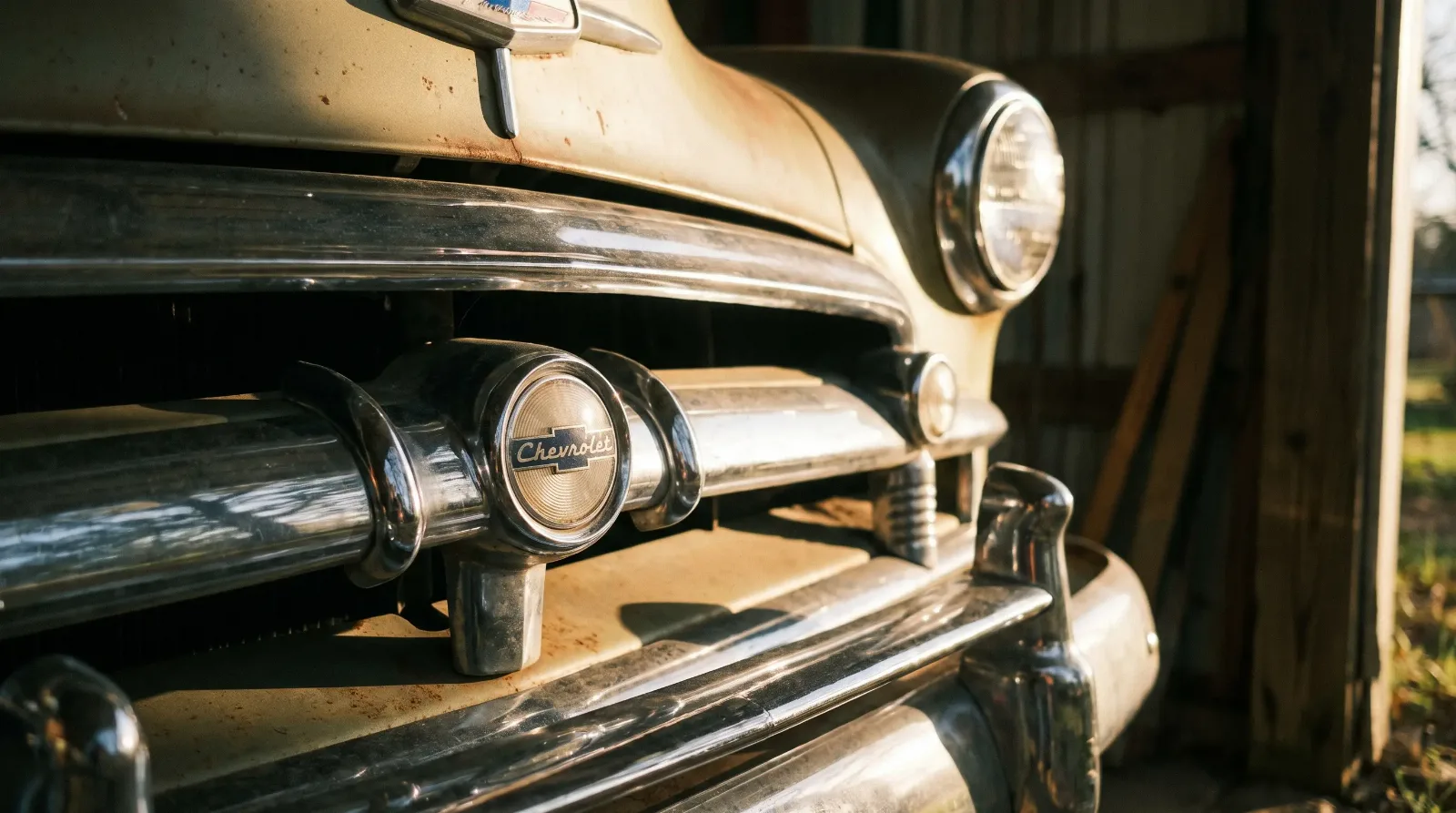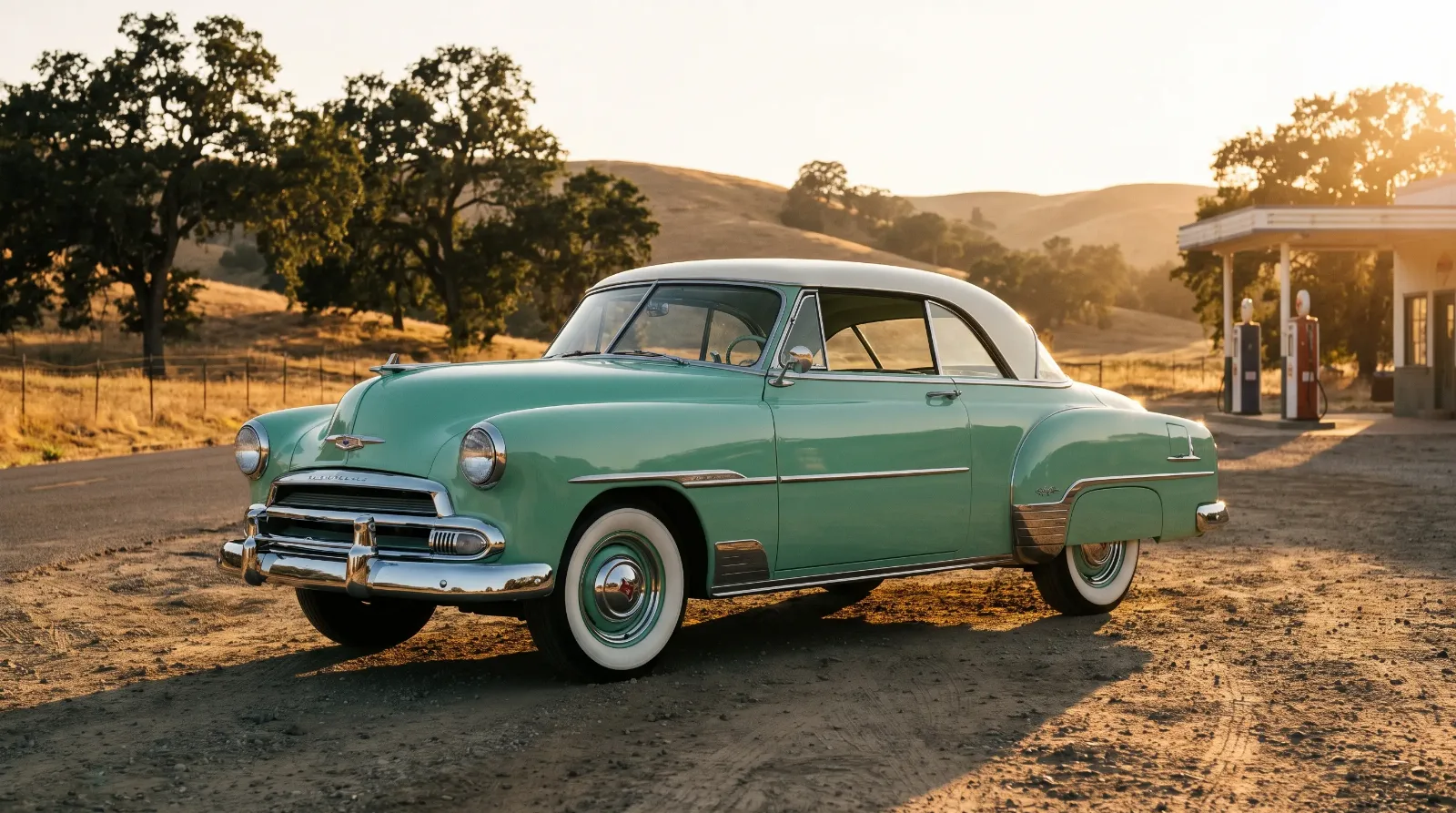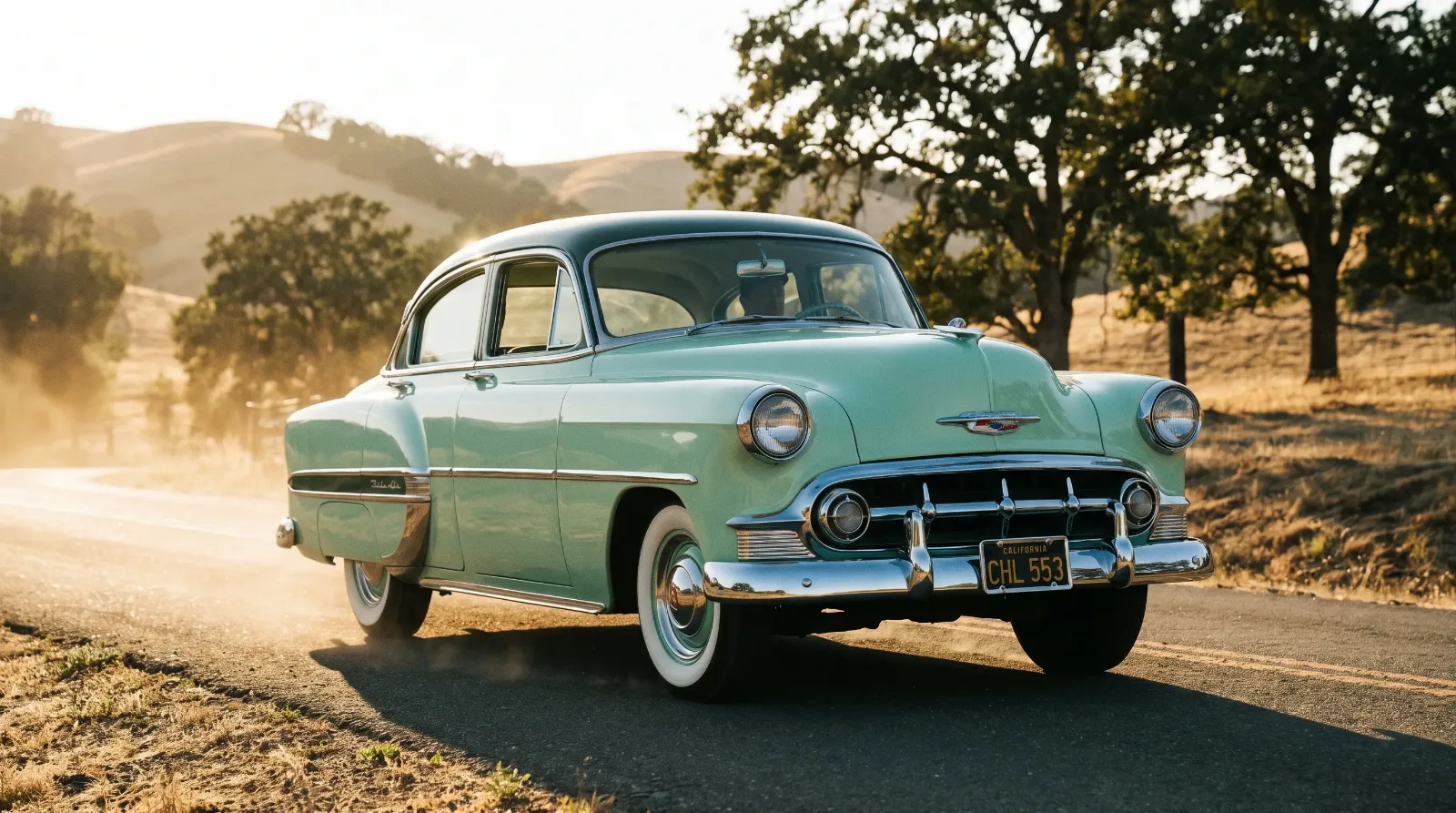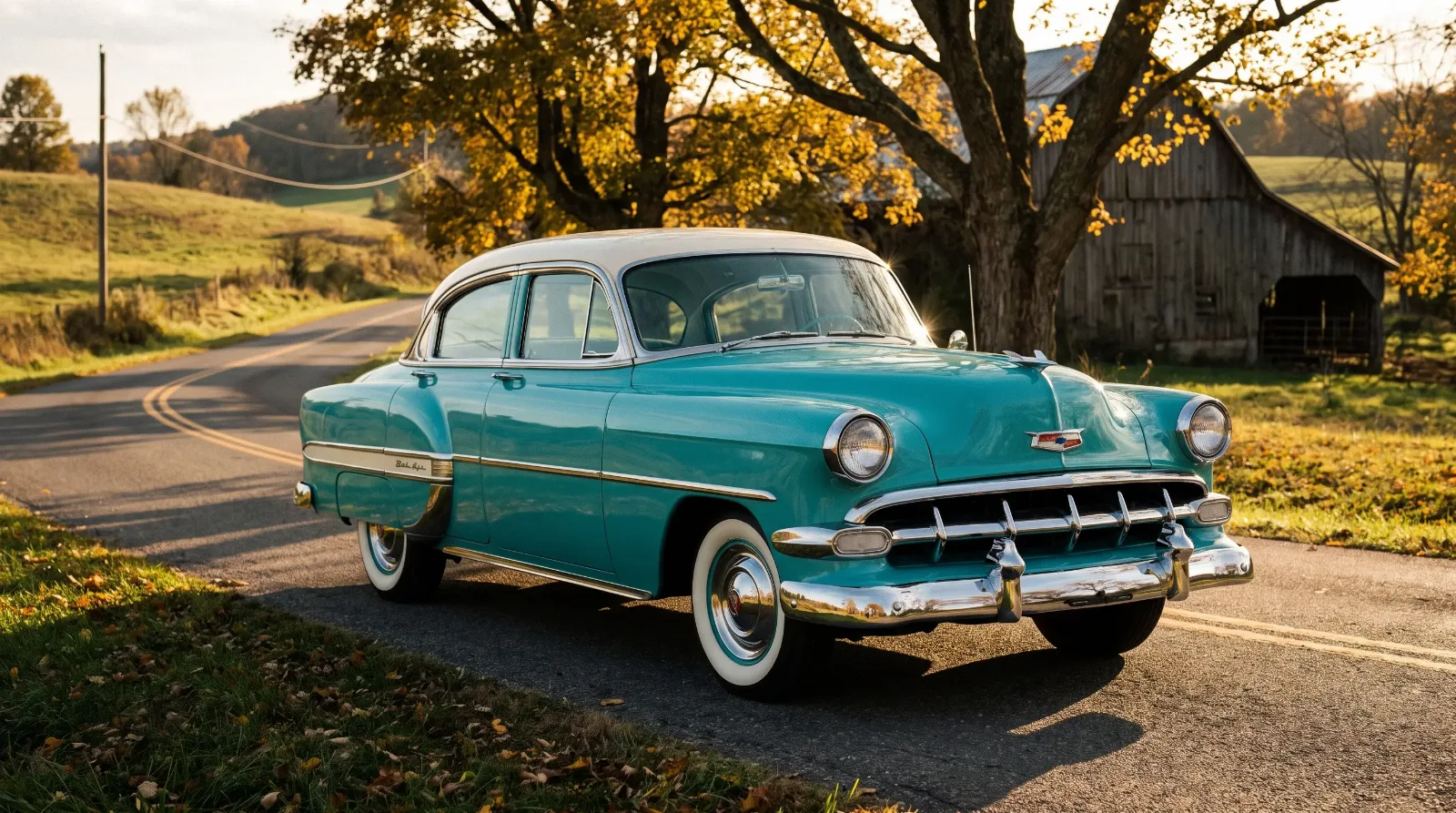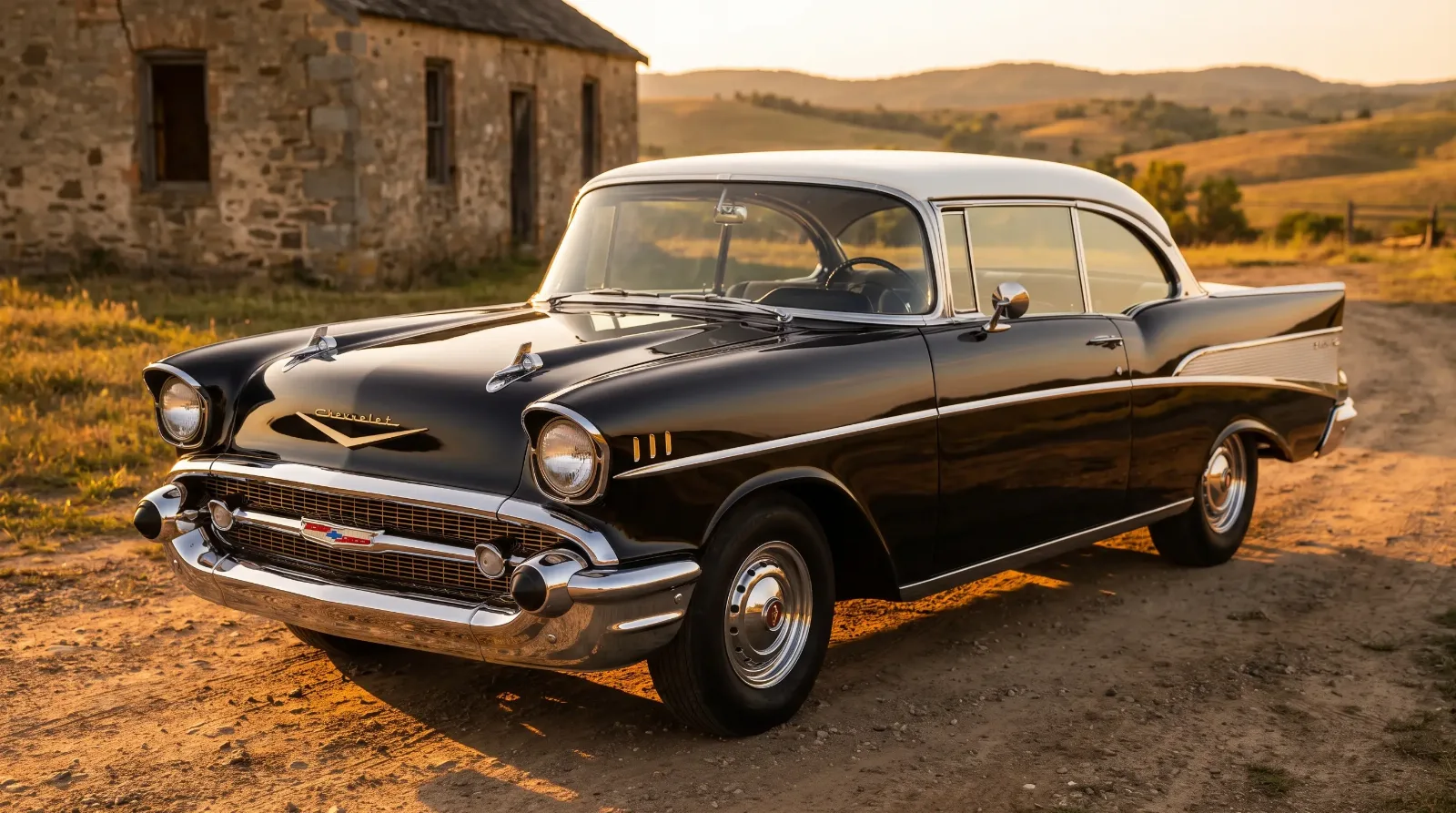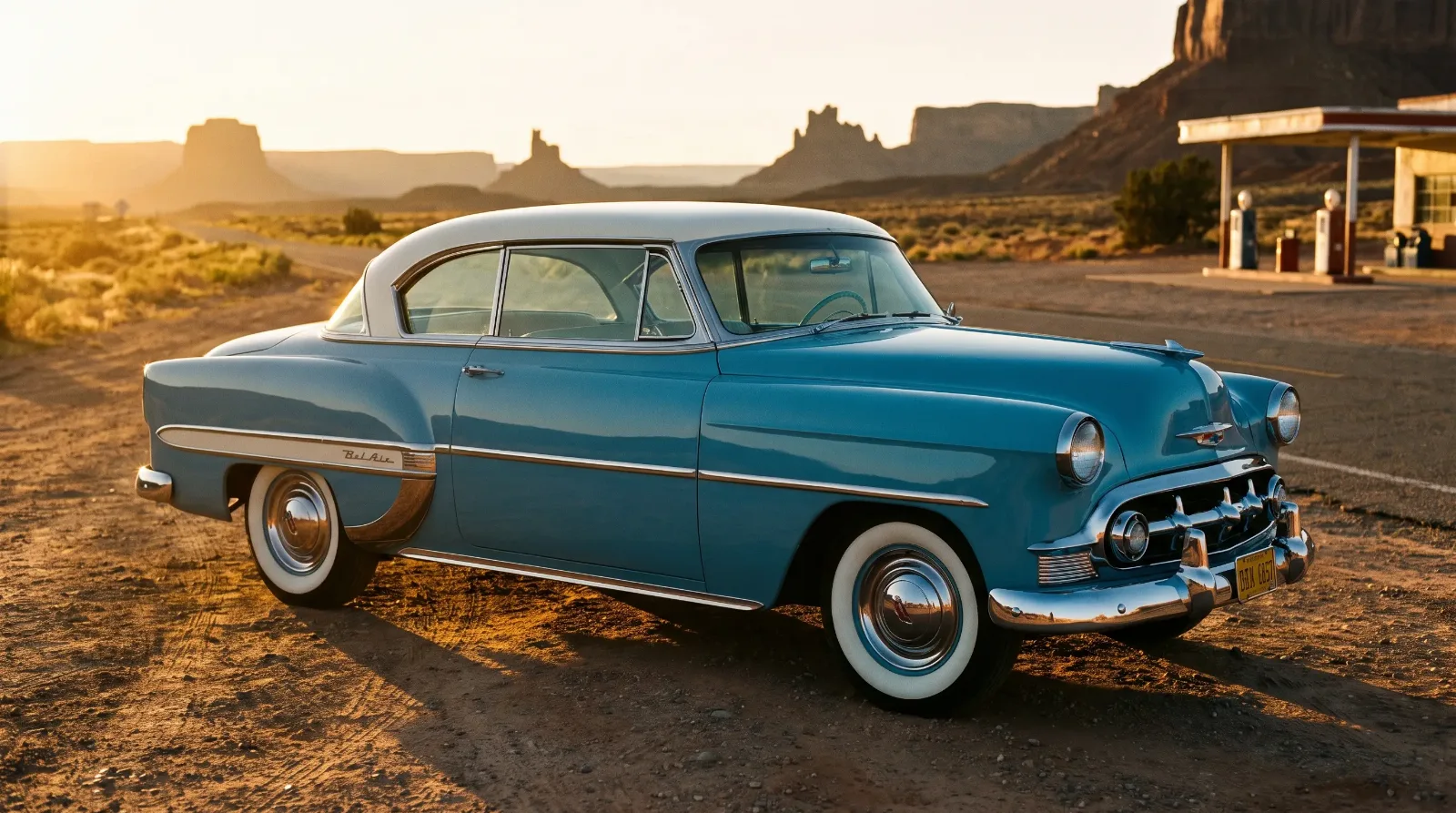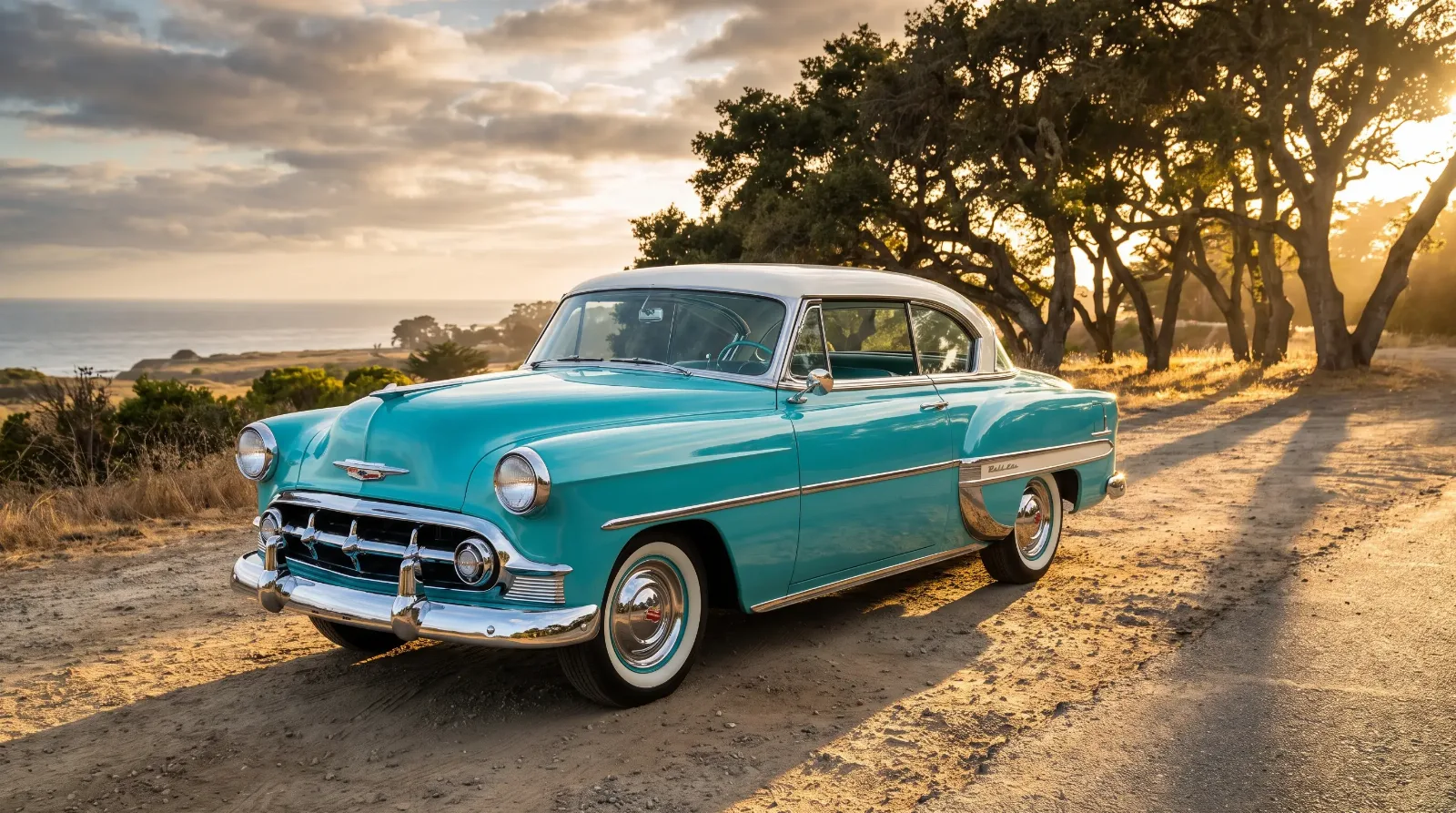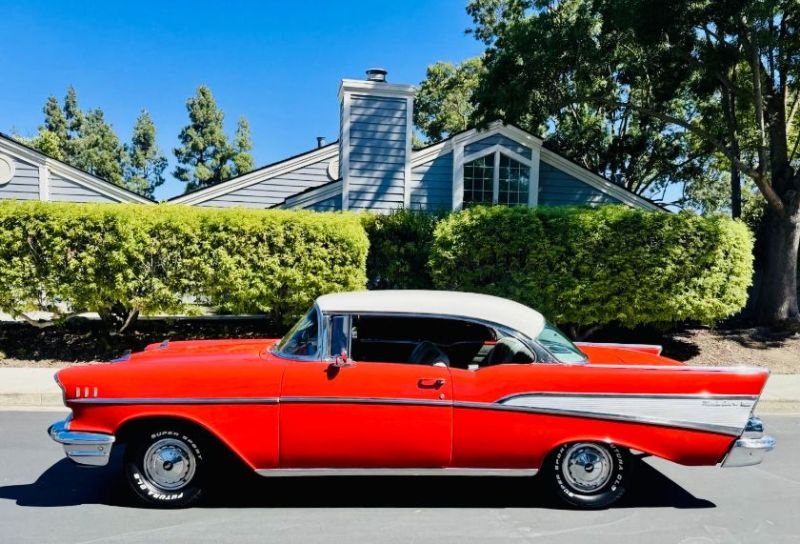
When Chevrolet fixed the Bel Air name to a car for the first time in 1950, it did not name a whole model. It named a roofline. The original Bel Air was a body style, a two-door hardtop grafted onto the top of the Styleline DeLuxe range, and understanding that distinction is the key to reading the earliest cars correctly. The car most collectors picture when they think of a 1953 chevy bel air arrived only after three years of quiet evolution, and the story of those first five model years is the story of a name climbing from an option on a fender to a series of its own.
A hardtop before there was a series
The postwar hardtop was a genuine novelty, and Chevrolet was not first to it. General Motors introduced the pillarless hardtop across its 1949 lines through Buick, Oldsmobile, and Cadillac, and the idea reached the low-priced field for 1950. The Bel Air of that first year gave a buyer the look of a convertible with its top raised, no fixed post between the front and rear side glass, but with the security and weather sealing of a steel roof. It was, in the language of the period, a hardtop convertible.
That first Bel Air rode the same 115 inch wheelbase as the rest of the Chevrolet range and shared its running gear with the Styleline DeLuxe. What it offered was style and a sense of occasion. The interior trim was richer, the headliner followed the contour of the roof with chrome bows exposed inside the cabin, and the whole car read as the aspirational choice in a showroom otherwise full of sensible sedans. For a division that sold more cars than anyone else in America, the Bel Air was the halo.
The Blue Flame six and Powerglide
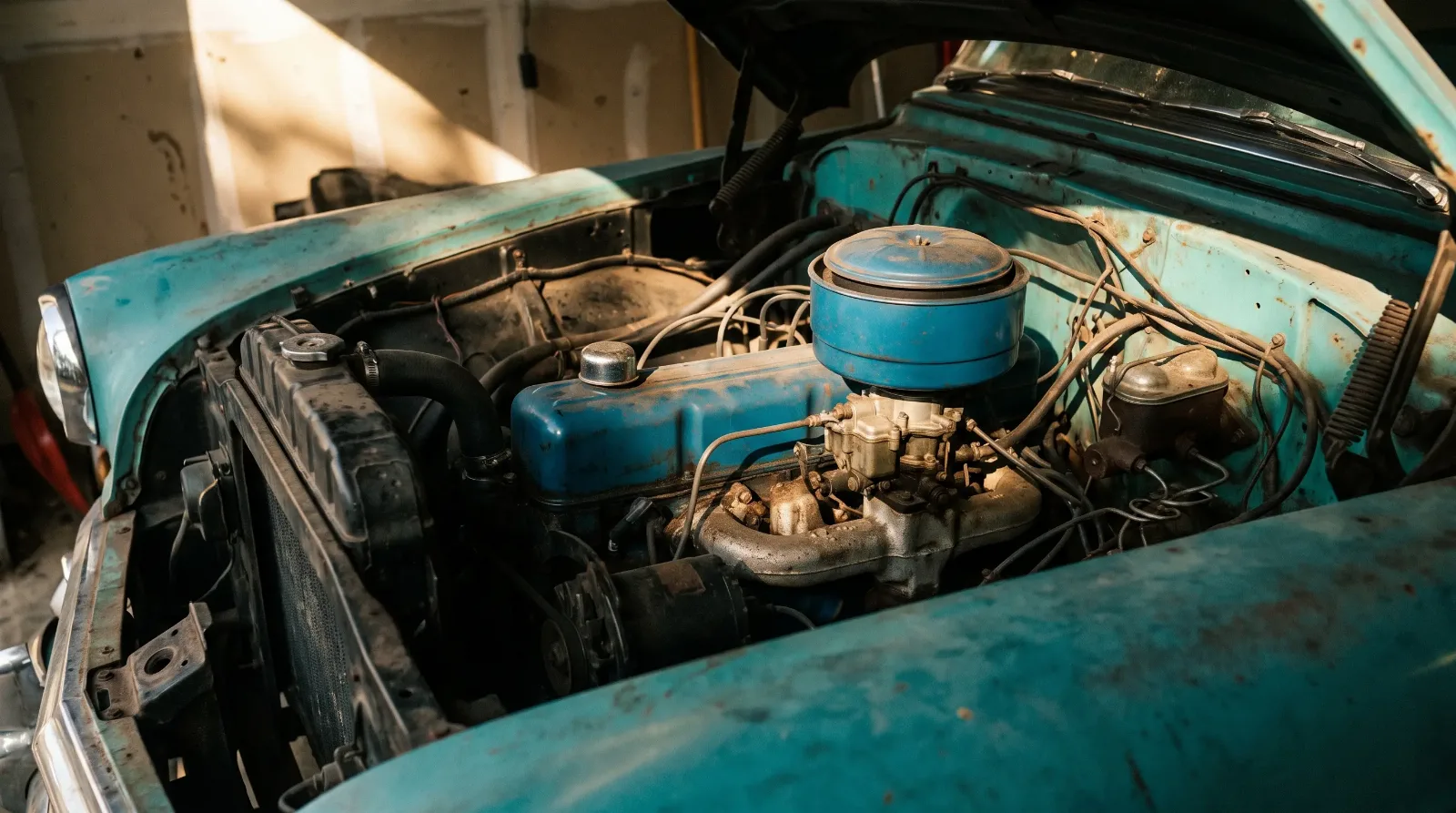
Under the hood of these early cars sat the engine family that defined Chevrolet before the V8 changed everything. Through 1952, manual-transmission cars used the 216 cubic inch overhead-valve six, while Powerglide-equipped cars received a stronger 235 cubic inch version with hydraulic lifters and higher compression to offset the automatic's losses. In 1953 the 216 was retired and the 235 became the sole engine across the range, at which point Chevrolet officially gave it the Blue Flame name. Neither version was fast. Both were durable, cheap to run, and utterly conventional, which is precisely what most buyers of a 1950 to 1954 Chevrolet wanted.
The more consequential mechanical news was the transmission. Chevrolet introduced Powerglide, a two-speed automatic, for 1950, and it arrived first on the DeLuxe line that included the Bel Air. This was the first automatic transmission offered in the low-priced field, and it mattered enormously. A buyer who found the clutch tiresome could now step up to a Chevrolet and drive without one. The Bel Air, sitting at the top of the range, became the natural home for that convenience. Early Powerglide cars used that higher-output 235 cubic inch six to compensate for the automatic's losses.
1953: the name becomes a series
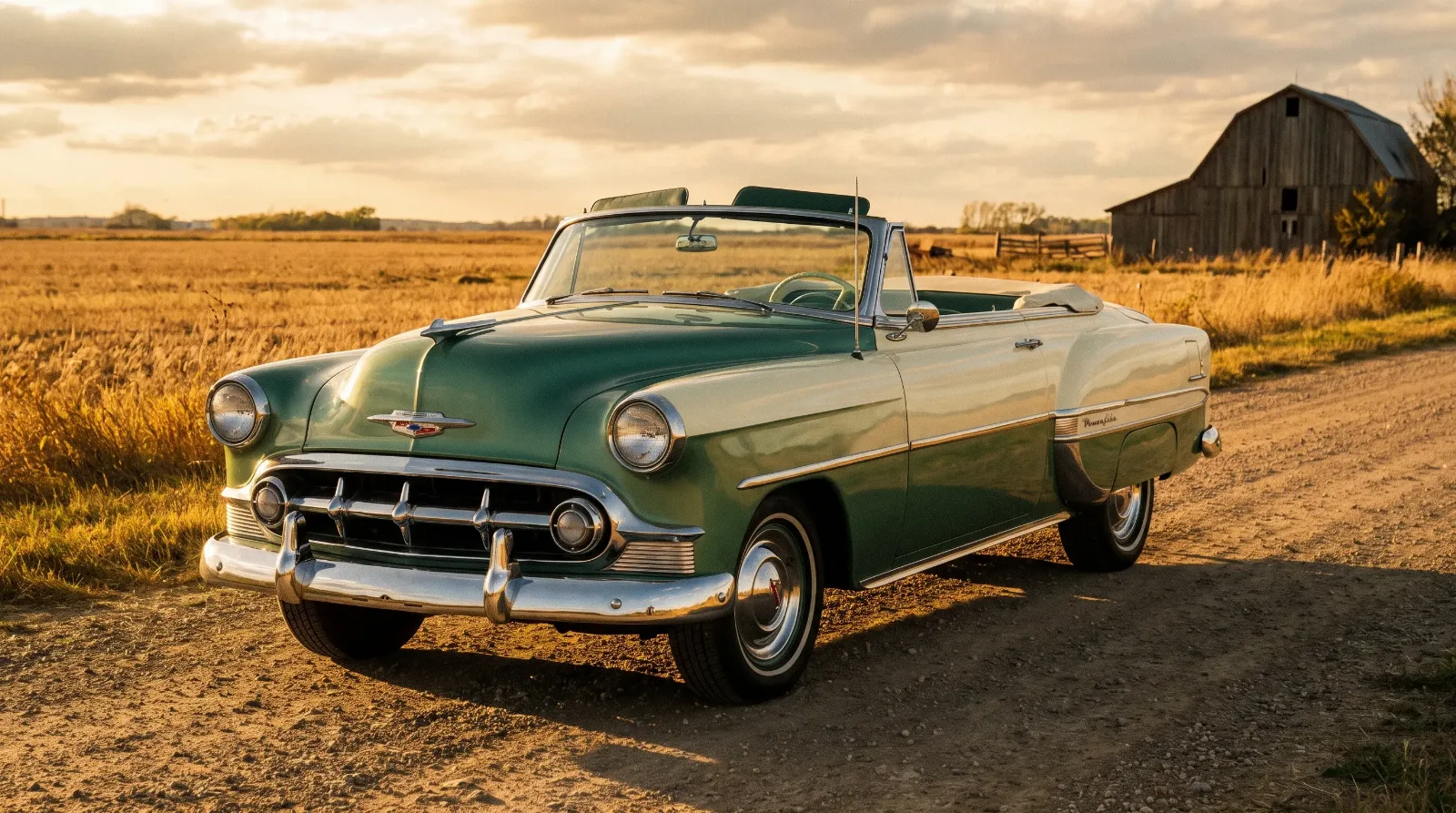
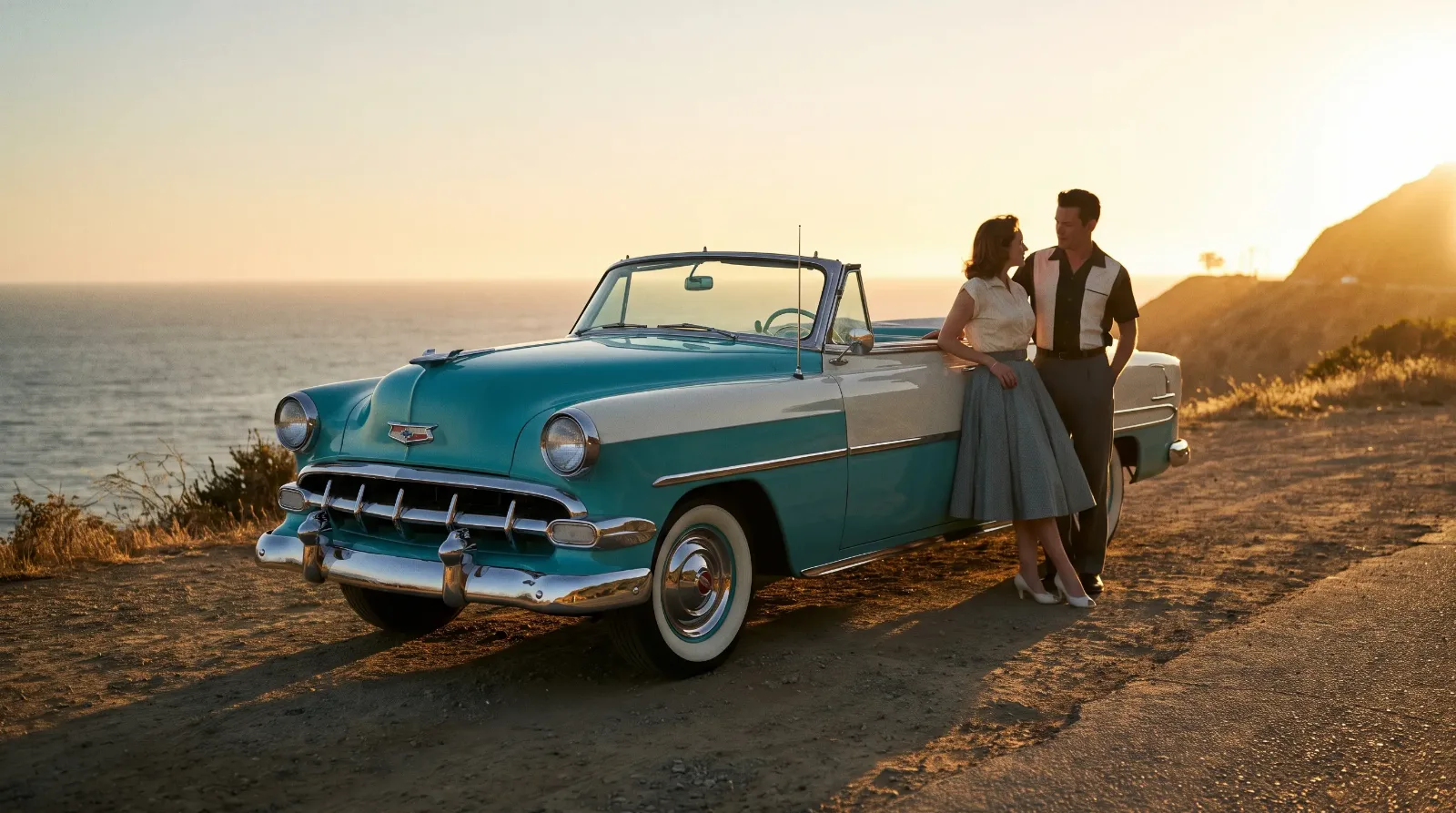
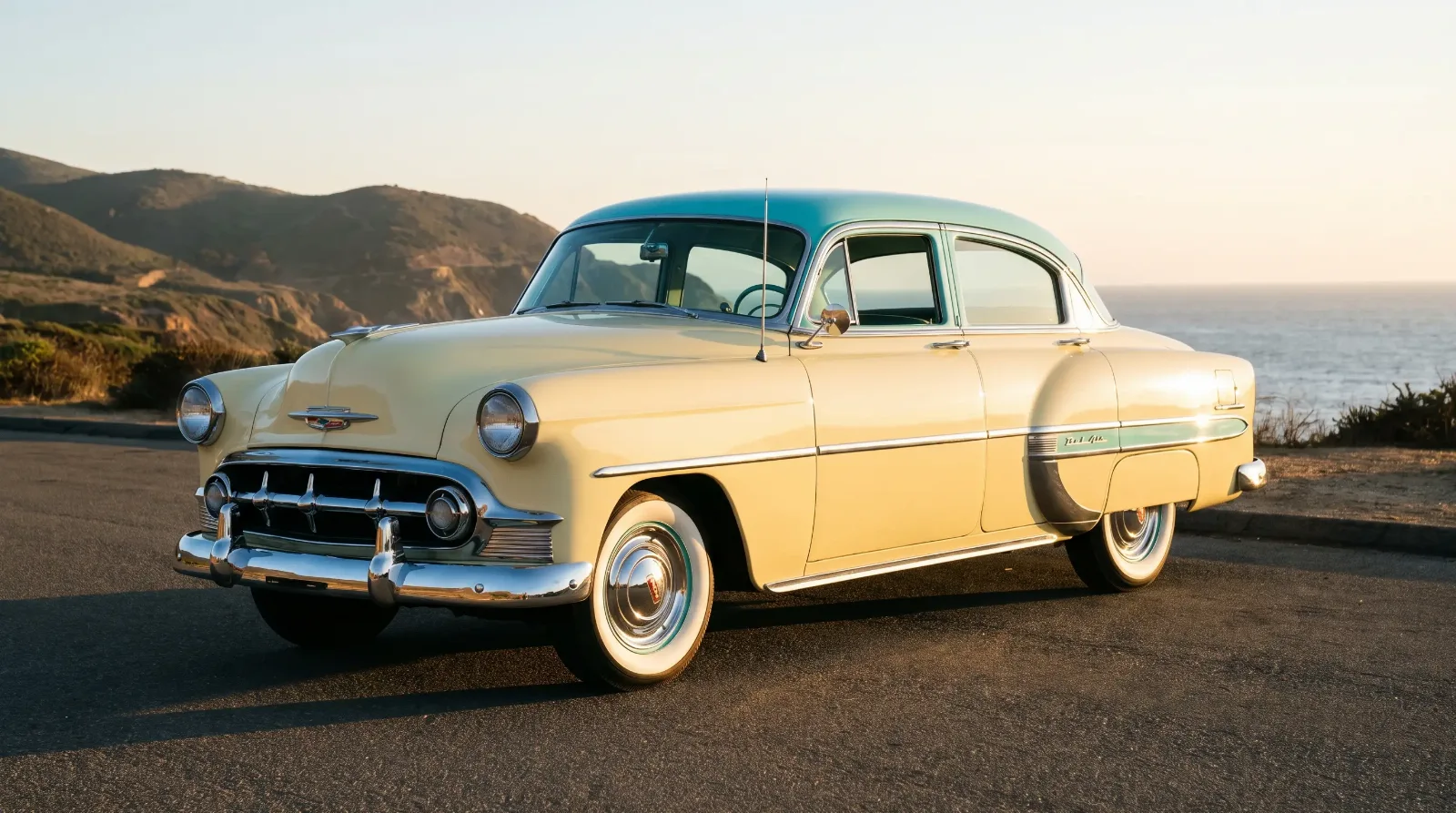
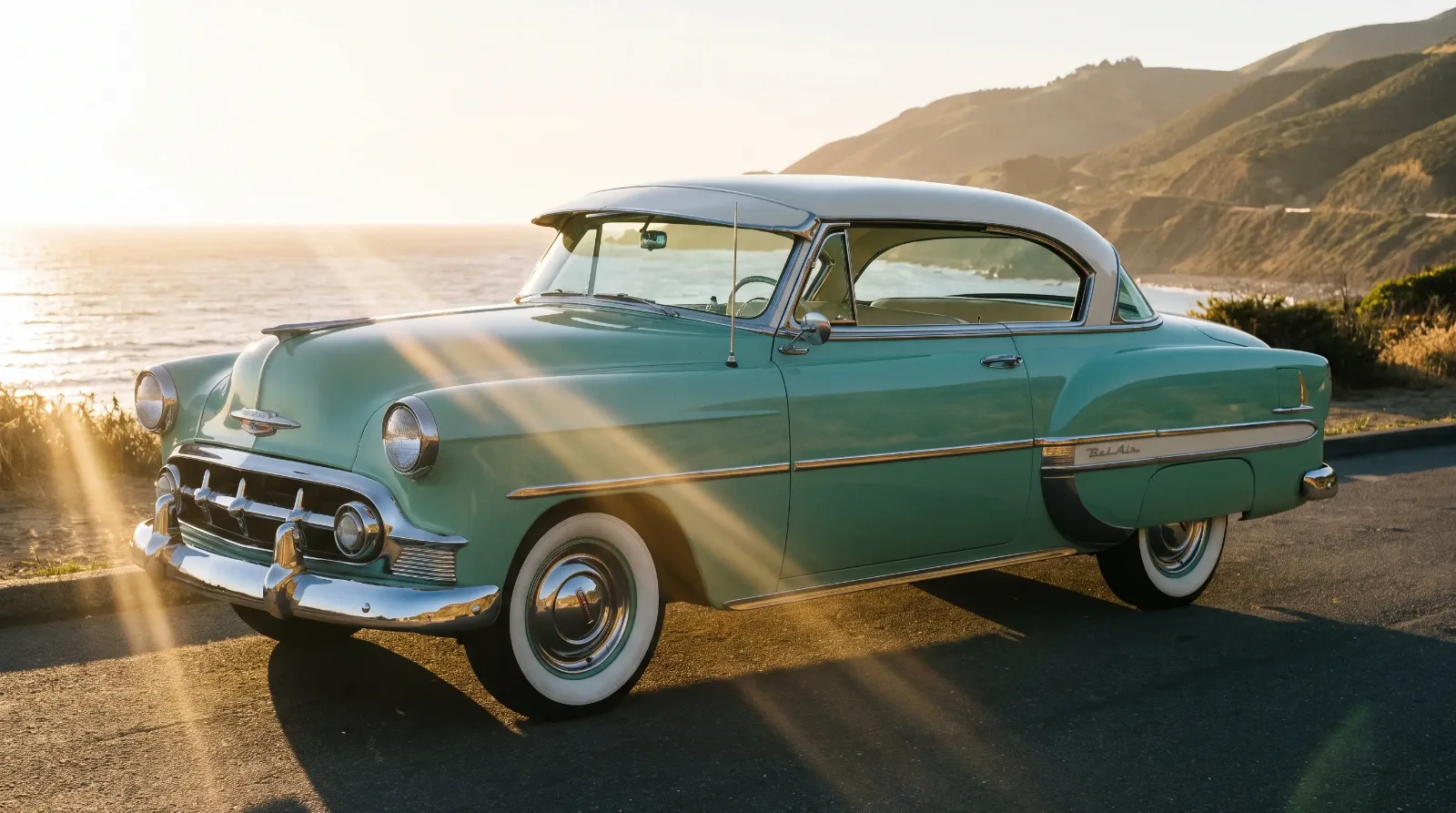
The pivotal model year for anyone tracing this history is 1953, because that is when Chevrolet reorganized its entire passenger range and the Bel Air stopped being a body style and became a series. For 1953 the lineup split into three named tiers. The One-Fifty was the plain entry car, the Two-Ten filled the middle, and the Bel Air sat at the top with the most brightwork, the richest interiors, and the widest choice of body styles. The 1953 chevy bel air could be had as a sport coupe hardtop, a convertible, a two-door or four-door sedan, and later a wagon, all wearing the top-line trim.
Visually the 1953 cars carried a heavier chrome treatment, a full-width grille, and the distinctive Bel Air script and spears along the rear fenders that identified the series at a glance. Inside, the differences were real rather than cosmetic. Bel Air buyers got carpeting, a deluxe steering wheel, additional chrome around the windows, and upholstery grades the cheaper series did not offer. It was the first time a shopper could walk in and ask for a Bel Air as a distinct car rather than a trim upgrade, and that shift in how the car was sold is why 1953 reads as the true founding year of the nameplate as an identity. Readers who want the full arc of the model across the decades will find it in our chevy bel air history, which picks up where the early cars leave off.
| Attribute | Early Bel Air (1950-1954) |
|---|---|
| Introduced | 1950 (as a hardtop body style) |
| Became a series | 1953 |
| Standard engine | 216 cu in six (manual) through 1952; 235 cu in six standard from 1953, named Blue Flame |
| Transmission options | Three-speed manual or Powerglide two-speed automatic |
| Wheelbase | 115 in |
| Body styles by 1953 | Hardtop, convertible, sedans, wagon |
Coachwork and the growing body range
One reason the early Bel Air rewards study is that its body offerings expanded steadily across the five years, and reading those changes tells you how Chevrolet's thinking evolved. In 1950 the name meant one thing only, the pillarless hardtop. By the time the Bel Air became a full series in 1953, a buyer could order it as a two-door or four-door sedan, the sport coupe hardtop, or a convertible, and the wagon body soon joined the top-line trim as well. That widening range reflected a deliberate decision to make the Bel Air the aspirational choice across the whole showroom rather than a single specialty model.
The hardtop remained the emotional center of the series, and it is worth remembering why the style felt so fresh in period. Before the pillarless roof, a closed car always carried a visible post between the door glass and the rear window. Removing it gave the side of the car an uninterrupted sweep of glass when the windows dropped, a look that read as modern and expensive. Chevrolet trimmed these cars to match the impression, with chrome roof bows left exposed inside the cabin as a design feature rather than hidden away. Buyers noticed, and the hardtop's popularity across the industry through the decade proves the instinct was right. The early Bel Air, plain as its mechanicals were, sat on the leading edge of a body-style shift that would define the era.
1954: the end of the six-cylinder era
The 1954 Bel Air was a refinement of the 1953 car rather than a redesign. The grille and trim were revised, the interiors grew slightly more elaborate, and power steering and power brakes appeared on the options list for buyers who wanted them. Under the hood the Blue Flame six was mildly reworked for a little more output, but the fundamental character of the car did not change. It remained a comfortable, well-finished, unhurried automobile.
What gives 1954 its weight in hindsight is what came next. This was the last model year before the small-block V8 and the Tri-Five styling arrived and rewrote the Bel Air's reputation entirely. The 1954 cars are the closing chapter of the first-generation story, the last Bel Airs built around a six-cylinder engine and prewar-rooted engineering. Collectors who prize originality often single them out precisely because they represent the end of an era rather than the celebrated beginning of the next one.
"The early Bel Air is routinely undervalued because people compare it to the 1957 car and find it slow. That is the wrong measurement. Judged as an artifact of 1953, it is a beautifully resolved object, and its rarity in honest, unrestored condition is only now being taken seriously."
- Sarah Whitfield
Appointments that justified the name
To grasp what separated a Bel Air from the Two-Ten parked beside it, you have to look at the details rather than the silhouette, because the two shared a body shell. The difference lived in the finishing. A Bel Air buyer received full carpeting where cheaper cars made do with rubber mats, chrome window surrounds inside the cabin, a deluxe steering wheel, and upholstery in grades and patterns the lesser series never offered. The dashboard carried more brightwork, and the exterior wore the additional trim, the fender scripts, and the polished spears that told the neighbors which Chevrolet had come home.
These were not trivial distinctions in the period. A car was a major purchase for a working family, and the choice to reach past the sensible Two-Ten for the Bel Air was a statement about ambition and self-image. Chevrolet understood this precisely and priced the series to be attainable while keeping it visibly a step above. The strategy worked because it let a buyer feel a real difference every time they climbed in, from the softer seat material to the extra chrome catching the light on the dash. For collectors documenting an early car today, these appointments are the evidence that matters. An interior stripped and re-trimmed in the wrong grade of material erases part of what made the car a Bel Air in the first place, which is why originality of the cabin carries as much weight as the sheet metal around it.
Why the first cars still matter
The temptation with any long-lived nameplate is to skip to the famous years, and with the Bel Air that means jumping straight to 1955. Doing so misreads the car. The Bel Air earned its place at the top of Chevrolet's range during these first five years, when it established what the name meant: the best-trimmed, best-appointed Chevrolet a normal family could buy. The hardware underneath was ordinary, but the positioning was not, and that positioning is what the later, faster cars inherited.
These are also the years that explain Chevrolet's confidence going into the Tri-Five era. The division had already proven that buyers in the low-priced field would pay for style and a name. The Powerglide automatic had normalized the idea of a Chevrolet as an easy car to live with. When the V8 arrived, it landed on a nameplate that already carried prestige, and that head start is a large part of why the 1955 car succeeded so completely. If you want to follow the thread forward, keep exploring the moment the name met its most famous engine in our account of keep exploring.
Buying into the early years
For collectors, the first-generation Bel Airs occupy a quieter corner of the market than the Tri-Fives that followed, and that is part of their appeal. Values have historically trailed the 1955 to 1957 cars by a wide margin, which means a well-kept convertible or hardtop from 1953 or 1954 can still be an accessible entry into the nameplate. Condition and documentation matter more than raw specification here, because the cars were never about horsepower.
The convertibles and the hardtop sport coupes hold the strongest interest, followed by the wagons, with the four-door sedans trailing as they do across almost every era of American collecting. What a buyer is really acquiring is the origin point of a legend, the car as it existed before fame. Anyone weighing that decision can compare surviving examples through the current classic Air for sale listings and see how the early cars are priced against their more celebrated descendants. For a nameplate this heavily mythologized, the beginning is often the most honest place to start.