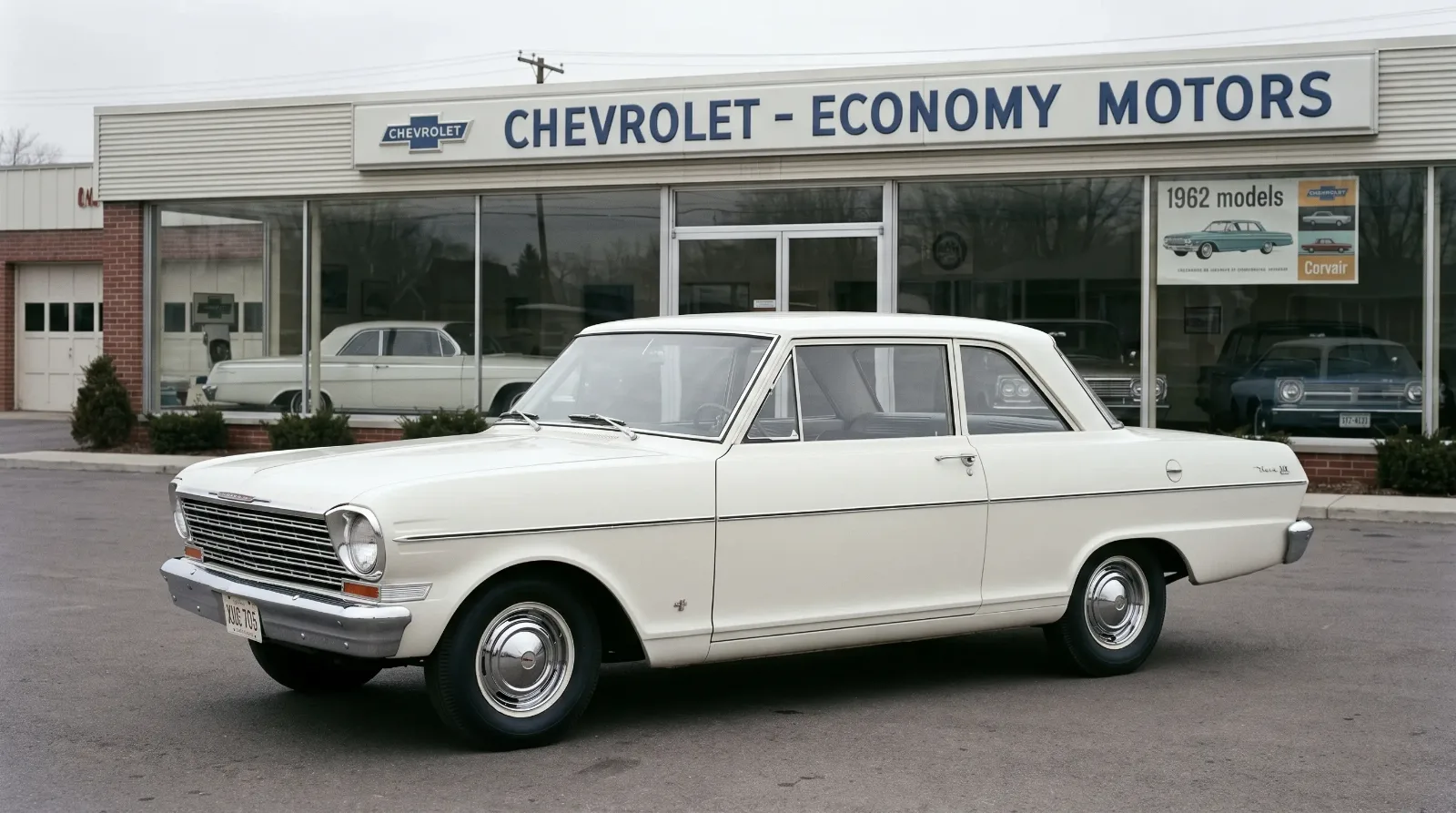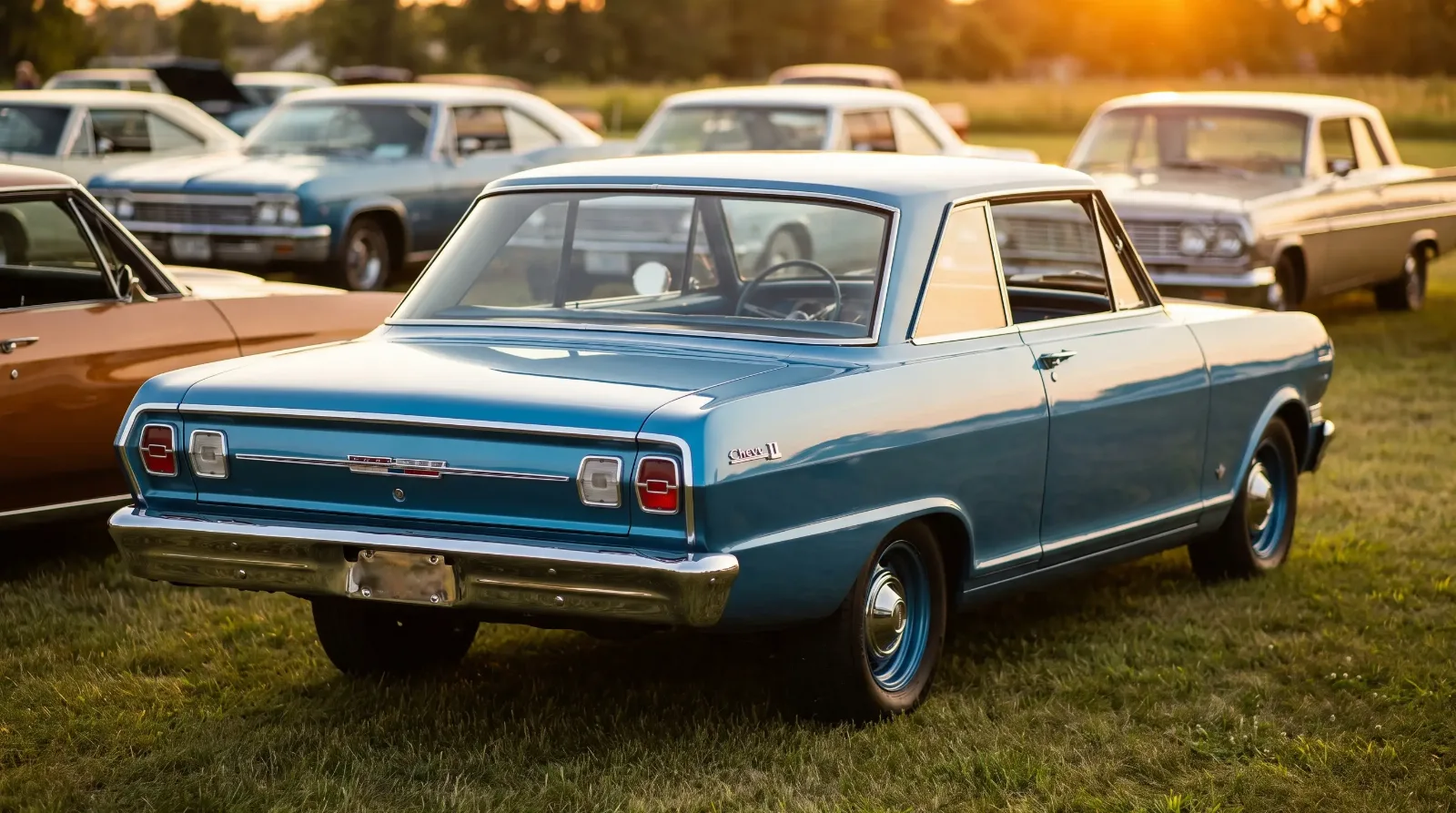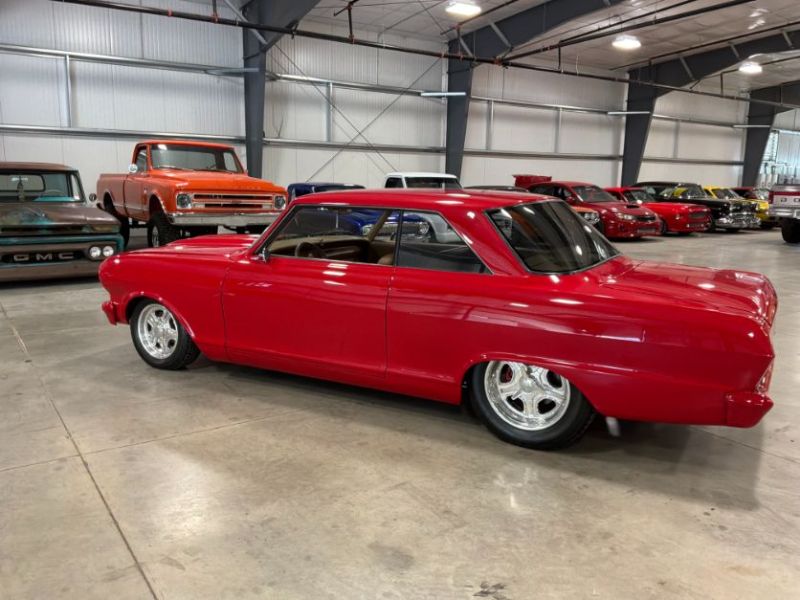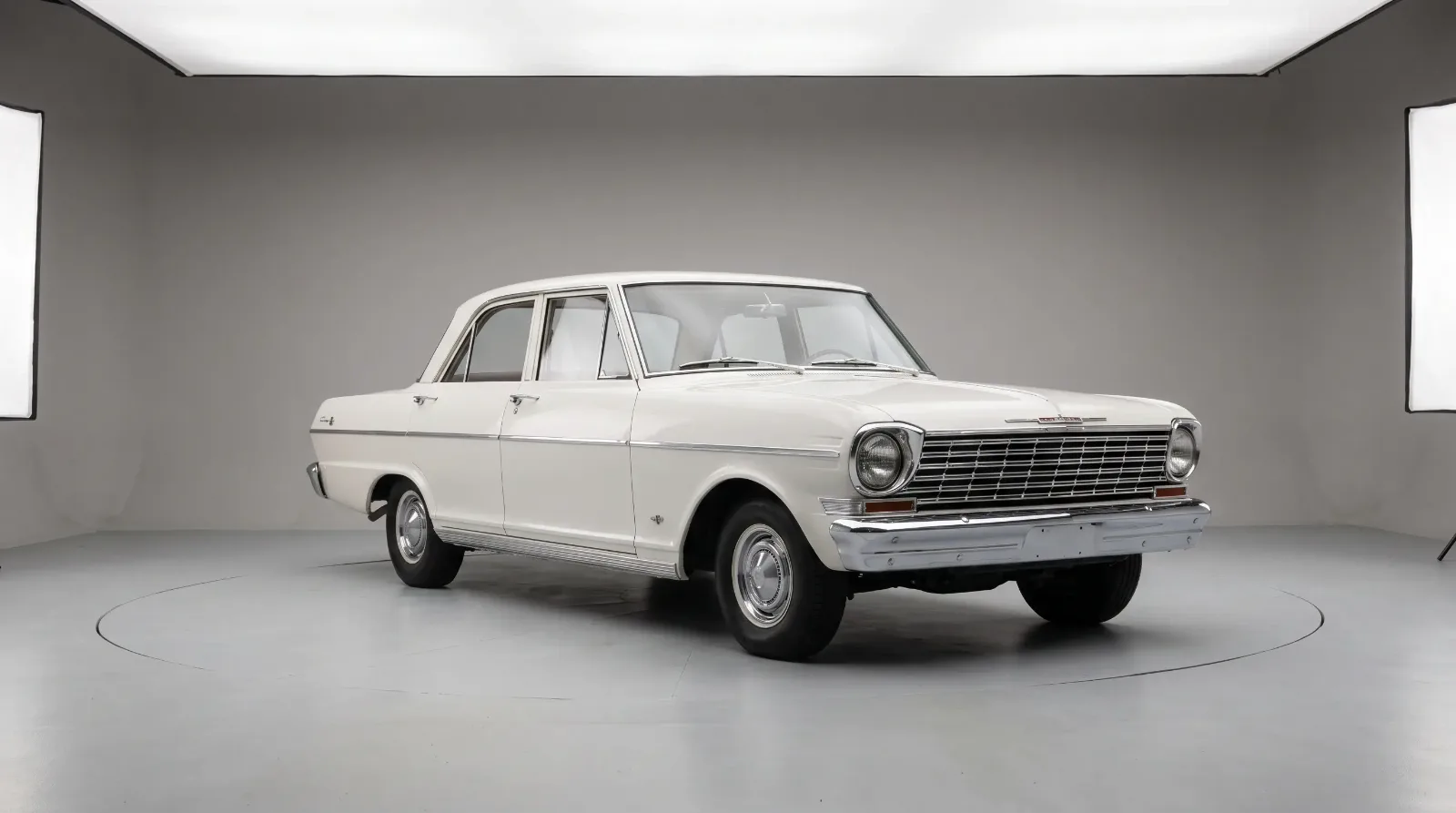
Chevrolet's 1962 Chevy II is usually filed under "reaction car," the compact GM built because the Corvair scared off buyers who wanted something ordinary. That story is true as far as it goes, but the design brief behind the Chevy II tells a more specific story, one that shows up in factory correspondence, engineering releases, and the finished sheet metal itself: this was a car built to be simple, cheap to produce, and unremarkable in exactly the ways Chevrolet needed it to be unremarkable.
The chevy ii design process ran on a short clock. Ford had the Falcon on sale since 1960, Plymouth had the Valiant, and Chevrolet's compact answer, the rear-engine Corvair, was drawing complaints about handling and losing sales to buyers who wanted a car that behaved like every other car they had owned. Chevrolet Central Office authorized a conventional front-engine, rear-drive compact in 1959, and engineering had a production car ready for the 1962 model year. That is a fast turnaround for a full platform, and the compressed schedule shows up in how conservative the finished design turned out to be.
A body built to save money, not win awards
The Chevy II used unitized body construction, welding the body structure and frame into a single unit rather than bolting a body onto a separate ladder frame the way full-size Chevrolets and Chevy trucks were built. Unibody construction was lighter and cheaper to tool than a traditional body-on-frame design, and it was the same basic approach Ford had already proven out on the Falcon. Some engineers inside GM preferred keeping a separate frame for durability and ease of repair, and that argument did not fully settle at Chevrolet. It resurfaced across the compact-car programs for years, with different divisions landing on different answers depending on cost targets and expected service life.
For the Chevy II, unit construction won because the car needed to be built down to a price. Body panels were flat and simple, chrome trim was minimal on lower trims, and the greenhouse used a straightforward three-box shape with none of the Corvair's unconventional details. Styling chief Clare MacKichan's studio kept the car close to a scaled-down full-size Chevrolet in profile, which was intentional. Buyers walking away from Corvair showrooms needed to recognize the new car as a Chevrolet without having to think about it.
Interior packaging and the Nova trim question
Three series launched for 1962: the base 100, the mid-level 300, and the top Nova 400, which added better trim, chrome exterior brightwork, and nicer upholstery. Nova began life as a trim designation rather than a model in its own right, a fact that gets lost once the Chevy II name faded from use later in the decade. The packaging underneath all three was identical: a compact unibody structure sized to compete directly with the Falcon and Valiant on wheelbase and interior room, with a trunk and rear seat that prioritized practicality over style.
Convertibles, two-door sedans, four-door sedans, a station wagon, and the Nova 400 convertible rounded out the body styles for the first year, which is a wide spread for a car rushed to market in roughly two years.
| 1962 series | Positioning | Notable trim |
|---|---|---|
| Chevy II 100 | Base fleet and economy buyer | Rubber floor mats, painted trim |
| Chevy II 300 | Mid-range family buyer | Upgraded upholstery, more brightwork |
| Chevy II Nova 400 | Top trim, image leader | Full chrome trim, convertible available |
Engine bay proportions built for a four-cylinder
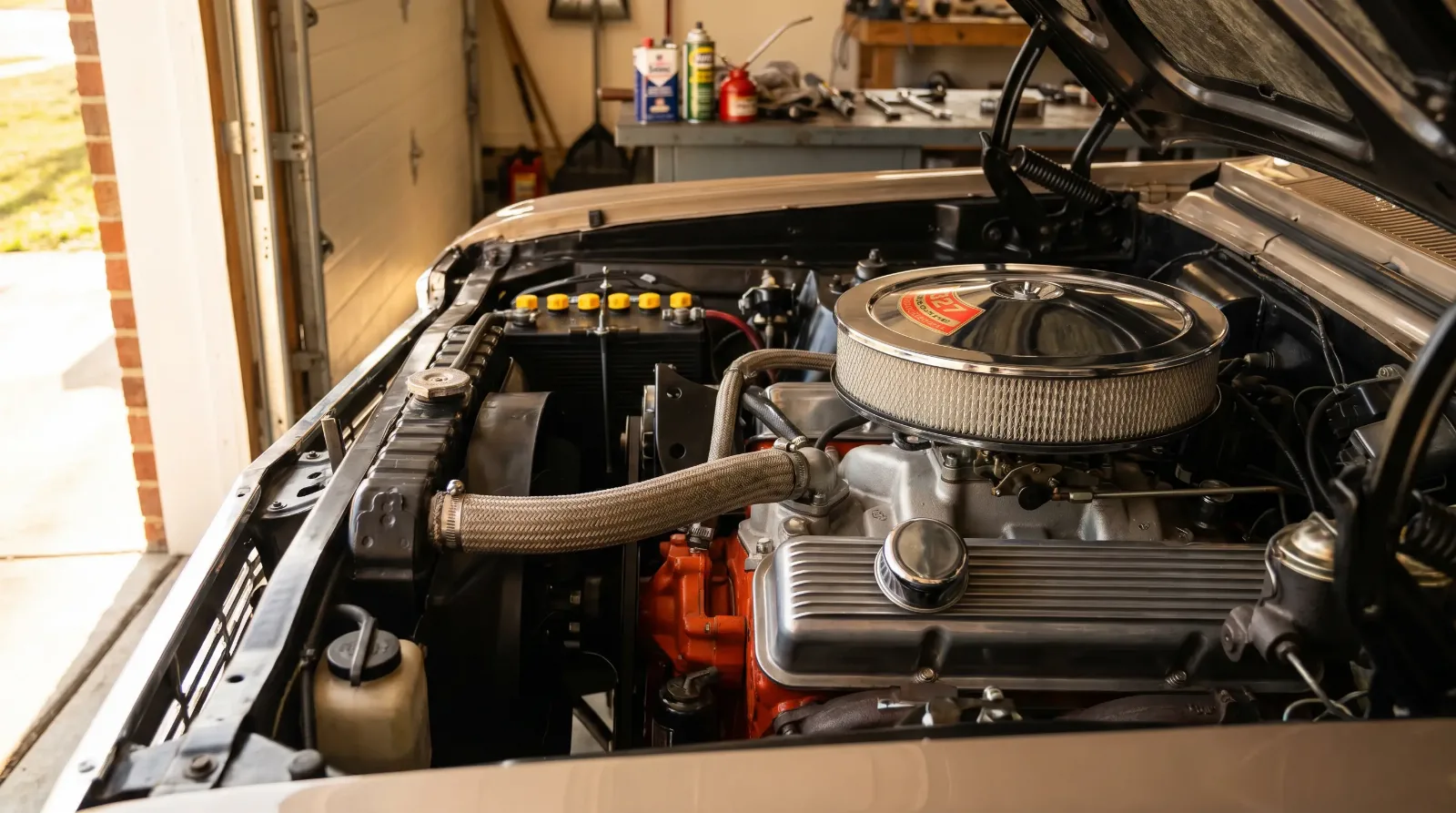
The engine bay was sized around a new 153 cubic inch four-cylinder rated at 90 hp, with a 194 cubic inch six as the step-up option. Chevrolet did not design the Chevy II's engine compartment with a small-block V8 in mind, which is why the later arrival of V8 power required real engineering work rather than a simple parts swap. That decision, made early in the design phase to keep the car light and the base engine cheap to produce, shaped every performance variant that followed.
"Read the factory drawings and you can see exactly what problem the stylists were solving. Nothing about the 1962 Chevy II was designed to be exciting. It was designed to be recognizable, affordable, and fast to build, and on those terms the studio got it right."
— Tom Ramirez
How the unibody debate played out over time
The construction question did not disappear once the 1962 Chevy II reached showrooms. As Chevrolet added heavier engines through the 1960s, unit-body cars had to be reinforced around the front subframe area to handle the added weight and torque, adding cost that a body-on-frame design would have avoided by simply beefing up the existing frame rails. Chevrolet stuck with the unibody approach through the entire first generation, and the tradeoff mostly worked in the car's favor: lighter weight helped acceleration and fuel economy, and the structure proved rigid enough for the sedans and coupes it was built around.
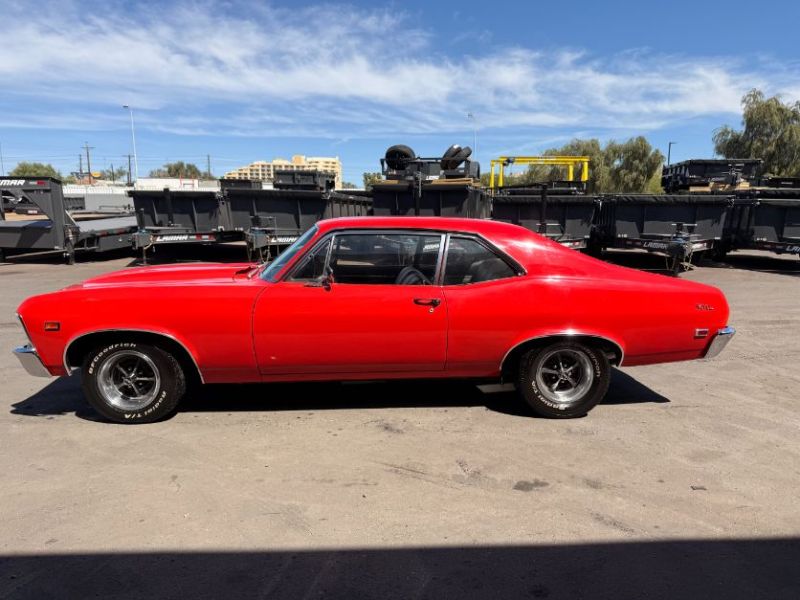
The bigger test came later, once the Nova SS and V8 power arrived and buyers started asking this platform to do a job the 1962 design brief never anticipated. For the story of what happened when Chevrolet dropped a 327 into that engine bay, keep reading the series. And for the full arc of how the Nova name grew out of a trim package into a car in its own right, Chevrolet's Nova history lays out every generation in order.
Why the conservative approach mattered
Chevrolet's design team never intended the 1962 Chevy II to be a styling statement, and that restraint is exactly why the car succeeded where it needed to. It looked like a Chevrolet, it drove like a conventional front-engine car, and it gave nervous compact buyers nothing unfamiliar to worry about. Understanding that context matters for anyone reading the rest of this platform's story, because every later chapter, from the 327 option to the survivor cars still on the road, traces back to a body and chassis built around a simple, cost-conscious brief rather than a bold one. If you have not already, how the Nova began covers the program from the top and is the right starting point before the deeper chapters.
Sources and notes
- Chevrolet Chevy II / Nova, Wikipedia
- Size Doesn't Matter: The Chevy II/Nova 153 Inline-4, Chevy Hardcore
- Emergency-Room Engineering: The 1962 Chevy II, Mac's Motor City Garage
- Curbside Classic: 1962-1965 Chevy II, Curbside Classic
- Introduction to the 1962-1967 Chevrolet Chevy II, HowStuffWorks
- Chevrolet 153 4-cylinder engine, Wikipedia