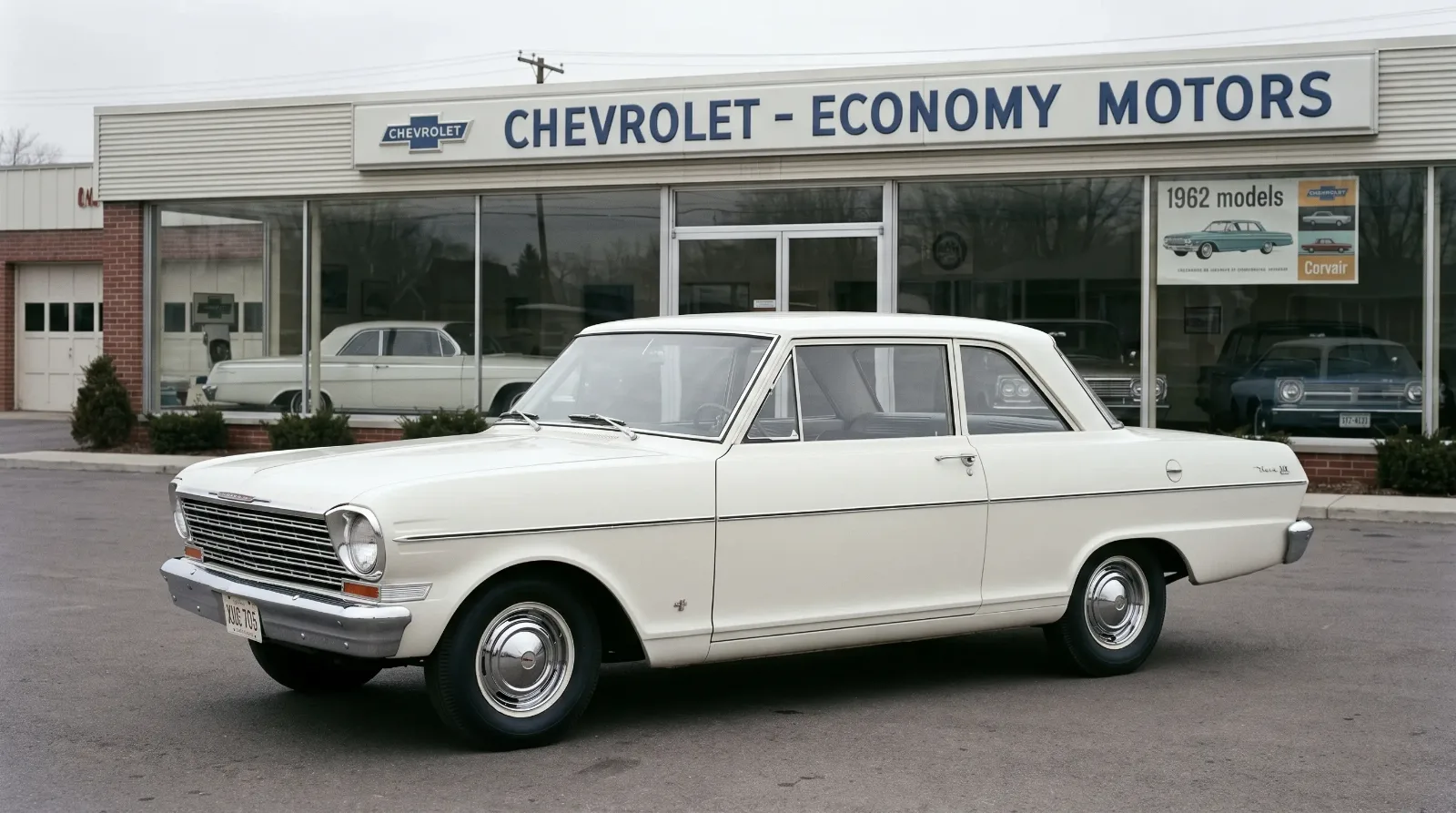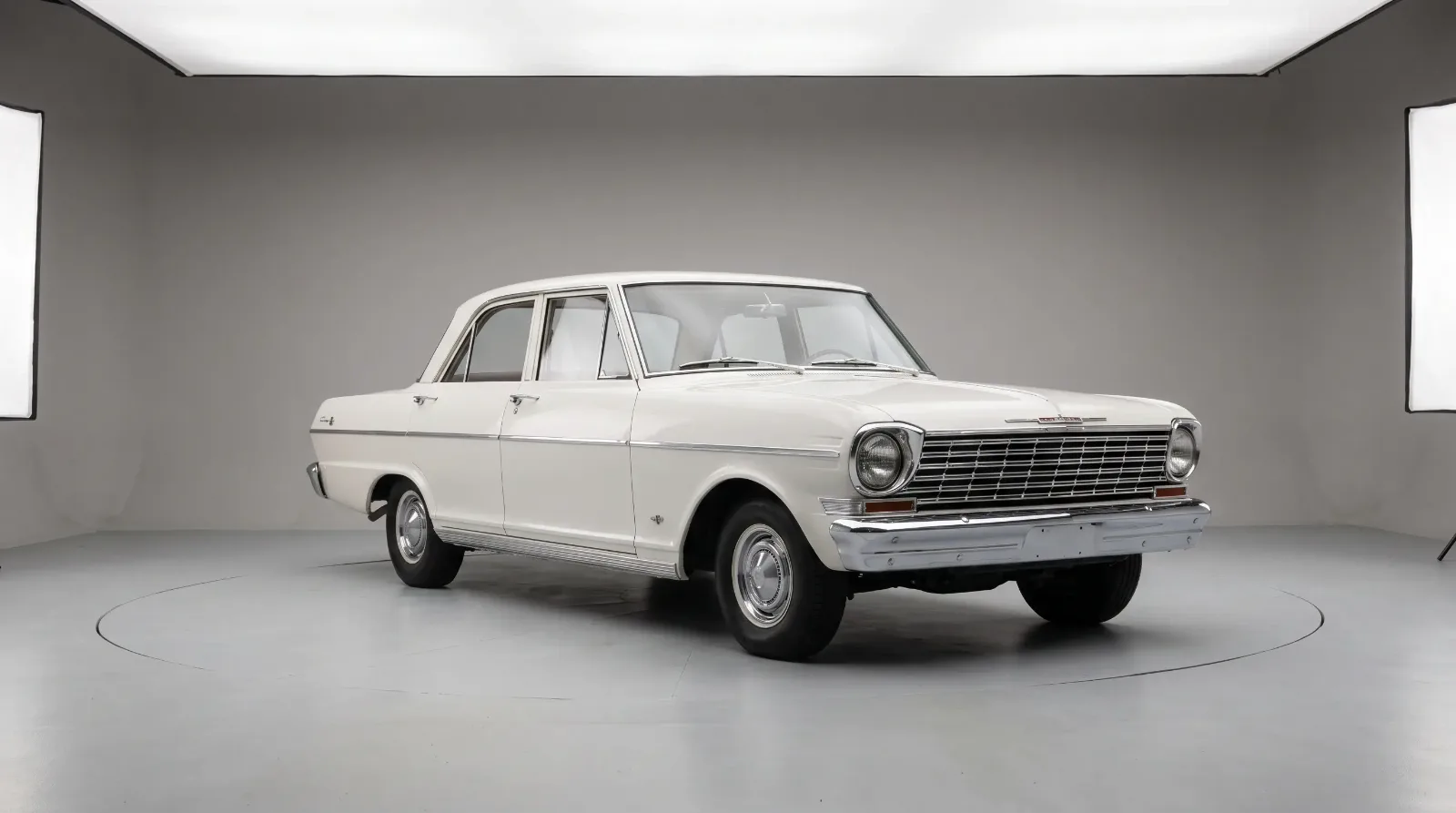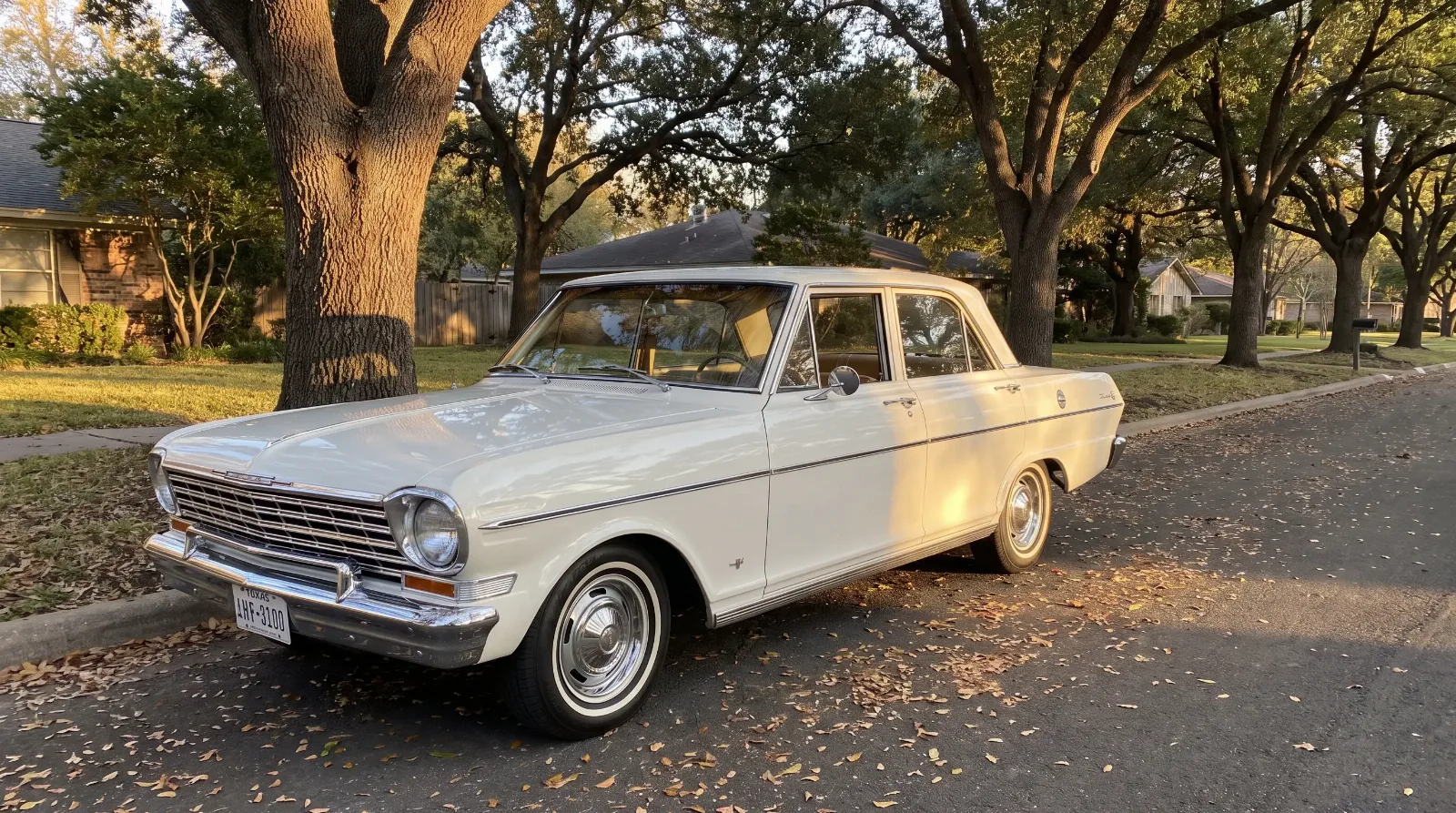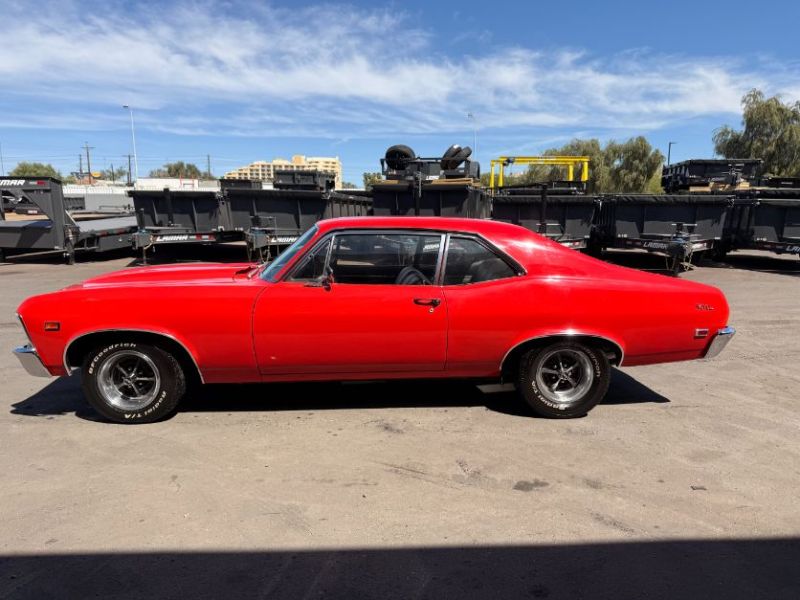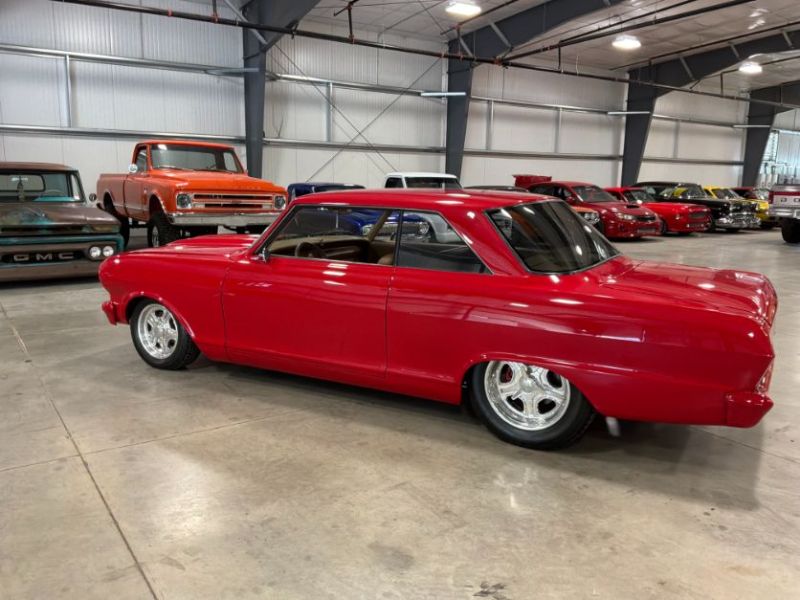
The chevy ii 327 option did not exist when the Chevy II launched in 1962, and it should not have been an easy fit when Chevrolet finally added it. The engine bay had been drawn around a 153 cubic inch four-cylinder, not a small-block V8, and getting a 327 into that space took real reengineering rather than a simple option-code change on the build sheet. That the Nova SS 327 arrived at all, and arrived running well, says something about how quickly Chevrolet was willing to move once the compact-performance market proved itself.
V8 power arrives late to the Chevy II
Chevrolet added the small-block 283 V8 as a Chevy II option partway through the 1964 model year, the first V8 offered in the platform. That step alone required stiffer front subframe structure and a wider engine cradle than the four-cylinder and six-cylinder cars used, because the unibody Chevy II had none of the built-in strength a full-frame car could lean on. Once the 283 proved the platform could handle V8 torque without falling apart, the door opened for something larger.
The 327 cubic inch small-block followed for the 1965 model year, offered specifically through the Nova SS package rather than as a standalone option across the lineup. Buyers could order the L30 version, rated at 250 hp, or step up to a higher-output 327 rated at 300 hp depending on carburetion and compression. Chevrolet did not build the Chevy II chassis around these numbers from day one, and the fact that the car absorbed them without a redesign of the whole platform is the more interesting engineering story than the horsepower figures themselves.
What changed under the skin
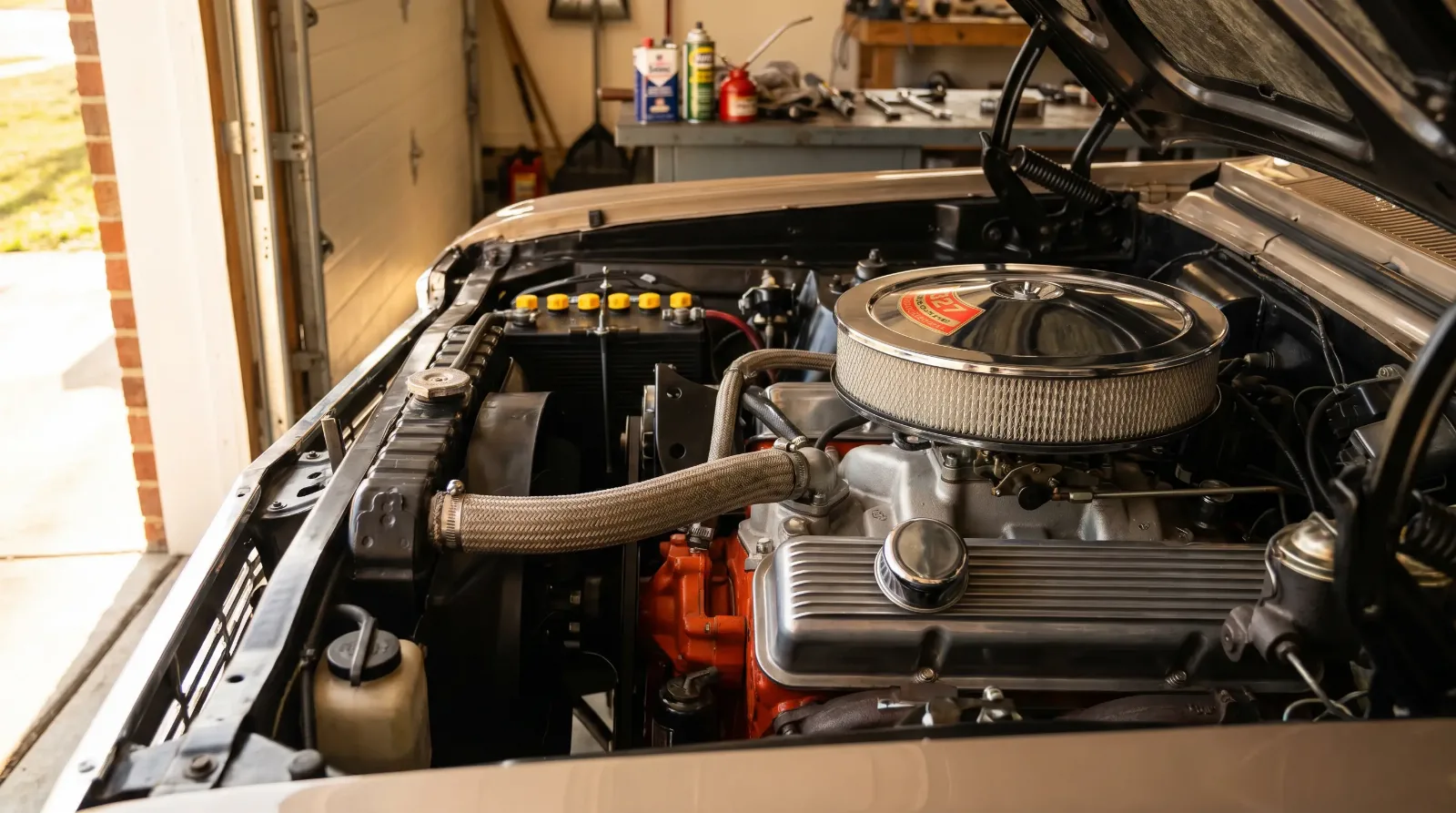
Fitting the 327 meant revised motor mounts, a stronger front crossmember, and in most cases a bigger radiator and revised cooling shroud to keep a small-block that was never part of the original design brief from cooking itself in traffic. Manual-transmission Nova SS 327 cars used a heavier-duty clutch and driveshaft than the six-cylinder cars, and power steering and power front disc brakes became meaningful options rather than curiosities, because a 327 with any real compression needed more stopping power than the base drum brakes were built to provide.
None of this transformed the Chevy II into a purpose-built muscle car the way the Chevelle SS 396 was purpose-built a year later. The Nova SS 327 was a compact car that had been given a genuinely quick engine, and the chassis underneath still rode and handled like the economy car it started life as. That gap between straight-line performance and everything-else is part of what makes the early Nova SS 327 an honest, if imperfect, performance car rather than a marketing exercise.
Transmission choices tracked what Chevrolet offered elsewhere in the small-block lineup that year: a three-speed manual as standard, a wide-ratio four-speed manual for buyers who wanted to row their own gears, and a two-speed Powerglide automatic for buyers who did not. Rear axle ratios ran numerically higher on 327 cars than on the six-cylinder Chevy II, which sharpened acceleration at some cost to highway cruising manners, a tradeoff period road testers noted without much complaint given what the car was being asked to do.
| Engine | Approx. output | Notes |
|---|---|---|
| 283 cubic inch V8 | 195 hp | First V8 offered, mid-1964 |
| 327 cubic inch V8 (L30) | 250 hp | Nova SS option, 1965 |
| 327 cubic inch V8 (high-output) | 300 hp | Nova SS option, 1965, higher compression |
"The build sheets on these cars tell a clearer story than the sales brochures ever did. Chevrolet was reinforcing a chassis on the fly to keep up with an engine option nobody had planned for when the Chevy II was drawn up three years earlier."
— Tom Ramirez
Why documentation matters more on these cars
Because the 327 was a mid-cycle addition rather than a launch engine, correct documentation carries real weight for anyone buying one today. A Nova SS with a 327 should have a build sheet, cowl tag information, and where available a Protect-O-Plate that lines up with the RPO codes for the engine, transmission, and rear axle ratio actually installed. Given how many small-block Chevrolet V8s from this era have been swapped in and out of compact cars over six decades, matching the paperwork to the car is the difference between a documented Nova SS 327 and a Chevy II wearing 327 badges it was never born with.
Anyone assembling the full picture of this platform should also read the Chevy II chapter, which covers the design and launch that came before the 327 ever entered the picture. On the production side, a companion piece works through exactly how many first-generation Chevy IIs and Novas actually left the factory, engine by engine.
The 327's place in Nova history
The Nova SS 327 matters less for its raw numbers, which more expensive muscle cars from the same era beat easily, and more for what it proved: that Chevrolet's compact platform, drawn up in 1959 and 1960 around a four-cylinder economy car, had enough structural margin to absorb a genuine small-block V8 without a ground-up redesign. That margin gave Chevrolet room to keep pushing the Nova SS package through the rest of the decade, and it set up the reputation the nameplate still carries with collectors who look past the bigger-block muscle cars for something closer to the ground and, in most years, considerably cheaper to buy today.
It also explains why the 327-powered Nova SS occupies its own space in the muscle car conversation rather than getting lumped in with the big-block intermediates. Buyers who wanted the small-block's better weight distribution and lighter overall curb weight, without the size or the insurance premium of a Chevelle SS 396, had exactly one place to look in 1965, and Chevrolet had just finished proving the compact chassis could deliver it without falling apart underneath them.
Sources and notes
- Nova Engine Options: 1965, Chevy Hardcore
- Nova Engine Options: 1964, Chevy Hardcore
- 1965 Chevy II Nova SS 327 250-hp spec sheet, Automobile Catalog
- 1965 Chevy II Nova SS 327 300-hp performance data, Automobile Catalog
- Chevrolet Chevy II / Nova, Wikipedia
- 1964 Chevrolet Chevy II Fact Sheet, Over-Drive Magazine