
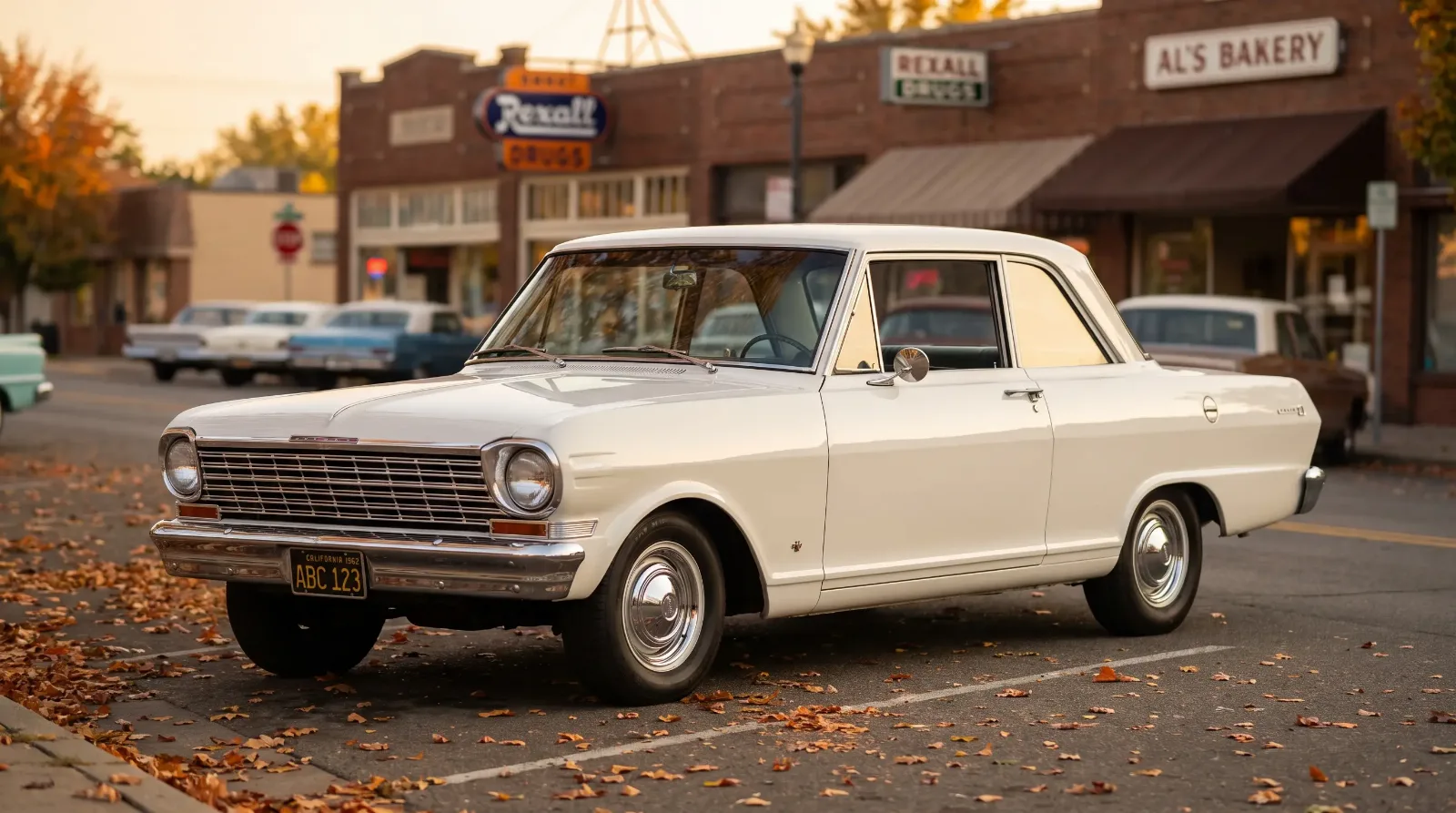
The 1962 Chevy Nova did not arrive as a Nova at all. It arrived as the Chevy II, a compact Chevrolet built in a hurry to answer a car from Dearborn that was outselling everyone's expectations. Nova was a trim designation inside that line, the top-of-the-range 400 series, and for the first few years most buyers called the whole thing a Chevy II. The name confusion is baked into the car's history, and it starts with why the car existed in the first place.
Car Features
8 min read
First-Generation Chevy II (1962-1965): Where It Began
The 1962 Chevy Nova started life as the Chevy II, Chevrolet's rushed answer to the Ford Falcon. Here is how the humble compact that started it all came to be.
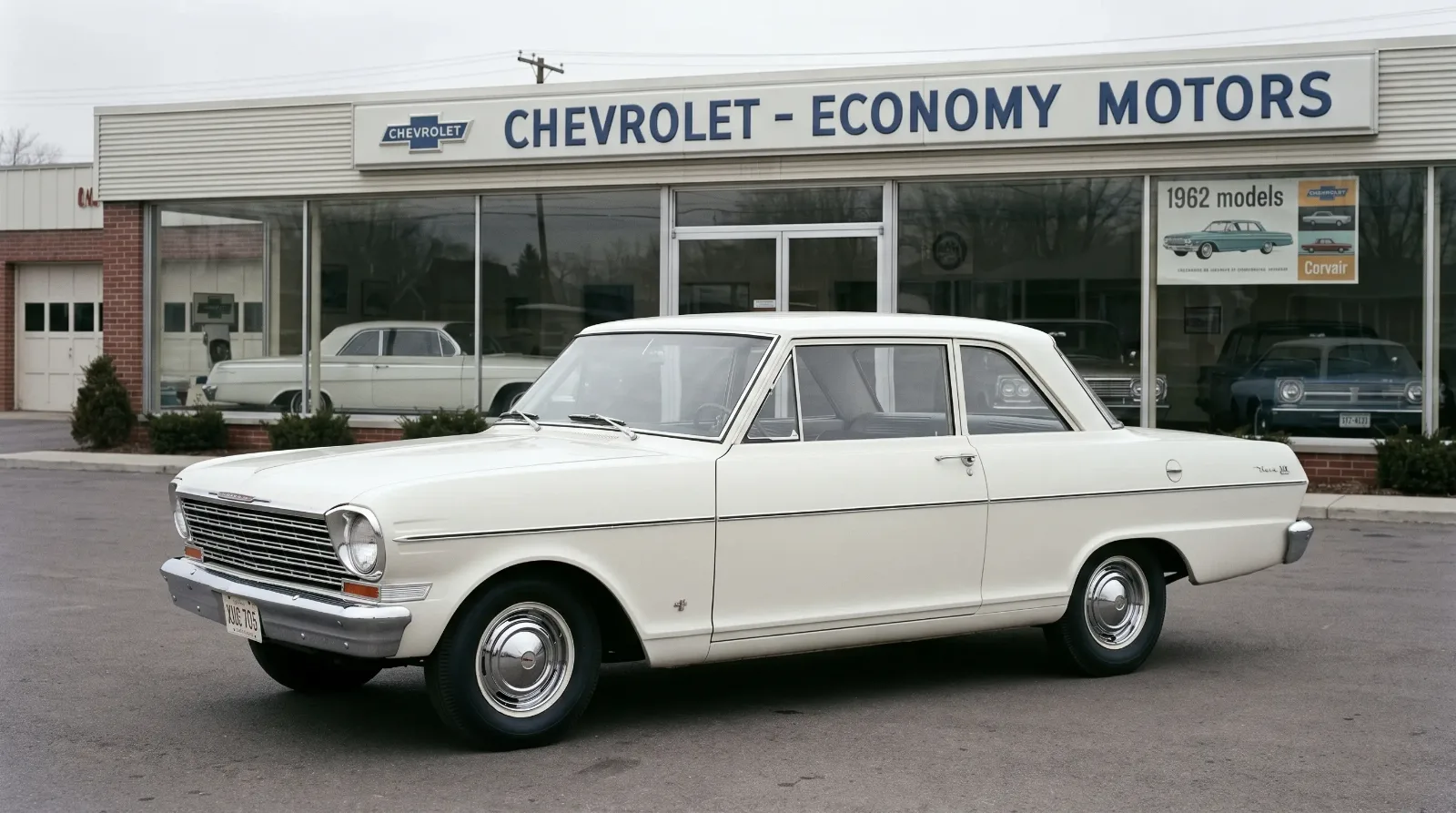
Chevrolet had gambled on the rear-engine, air-cooled Corvair for 1960 and watched Ford take the conventional route with the Falcon. The Falcon sold in enormous numbers. Chevrolet needed a plain, front-engine, water-cooled compact with a solid rear axle and a low price, and it needed one fast. The Chevy II was the result, and the first generation ran from 1962 through 1965. This is where the Nova story begins.
Why Chevrolet built the Chevy II in a hurry
The Corvair was clever engineering. It was also not what the mainstream compact buyer of 1960 wanted. Ford's Falcon was simple, cheap to build, cheap to run, and it moved off dealer lots at a pace that embarrassed Chevrolet's own compact numbers. Company records point to a development program measured in roughly 18 months, which was short even by the standards of the era.
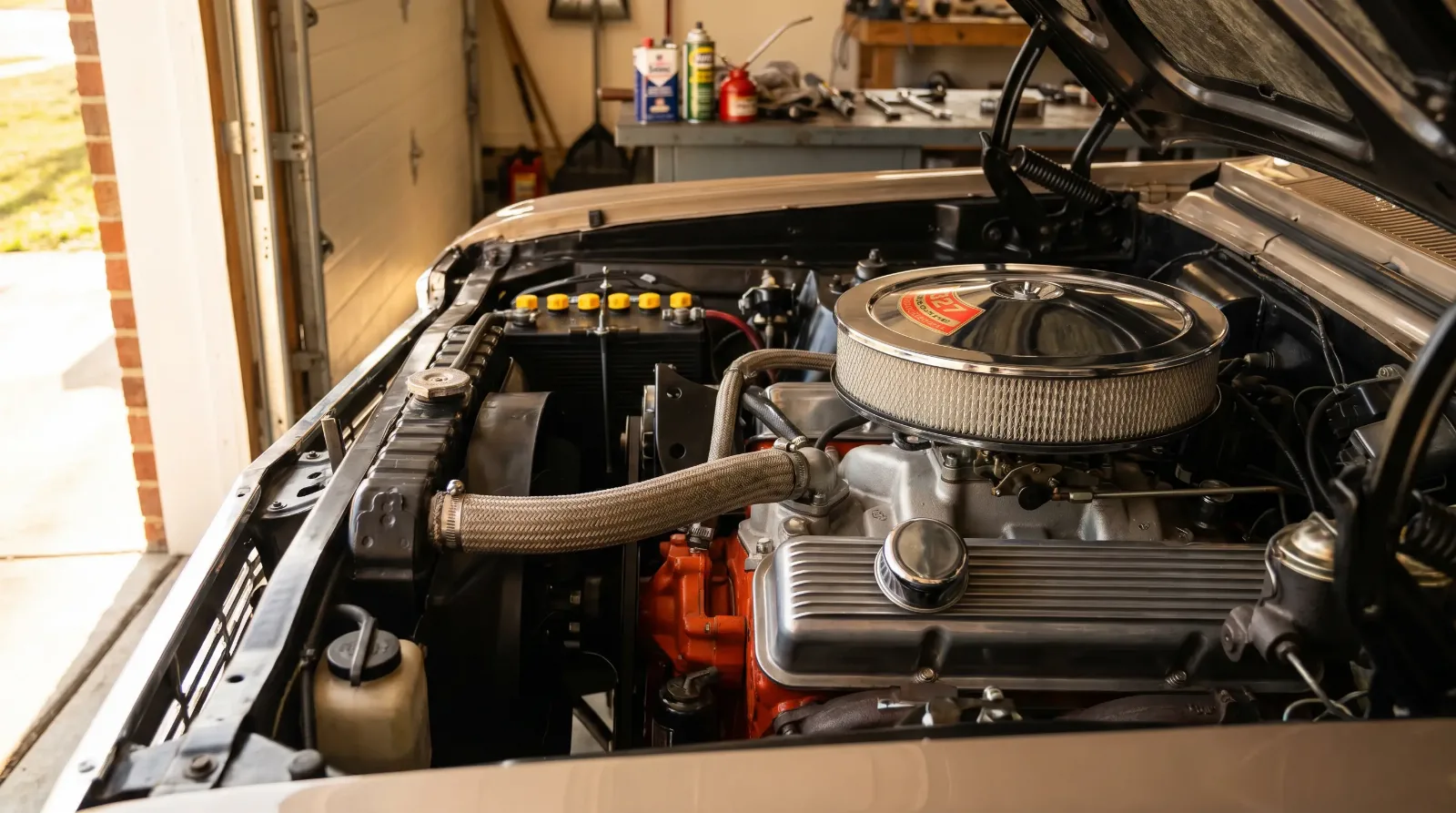
The brief given to the engineering team was conservative on purpose. No air cooling, no swing axles, no aluminum experiments. The Chevy II used a unitized body with a bolt-on front subframe, a live rear axle on leaf springs, and a front suspension simple enough that a dealer mechanic could service it without special training. It was a car built to be understood. For a fuller account of how the model grew from this point, see our Nova retrospective.
The design was carried out under Chevrolet general manager Ed Cole, who described the new car to the press as built for "maximum functionalism with thrift." That phrase describes the whole first generation well. Nothing on the early Chevy II is there to impress you. Everything is there to work.
The payoff of that conservatism showed up on the sales floor. Where the Corvair asked buyers to accept an unfamiliar layout, the Chevy II asked them to accept nothing new at all. A shopper who had owned a full-size Chevrolet understood this car on sight, and so did the mechanic who would later service it. That familiarity, more than any single feature, is what let the Chevy II recover the ground Chevrolet had lost to the Falcon in the compact class.
The Chevy II name and where Nova fits
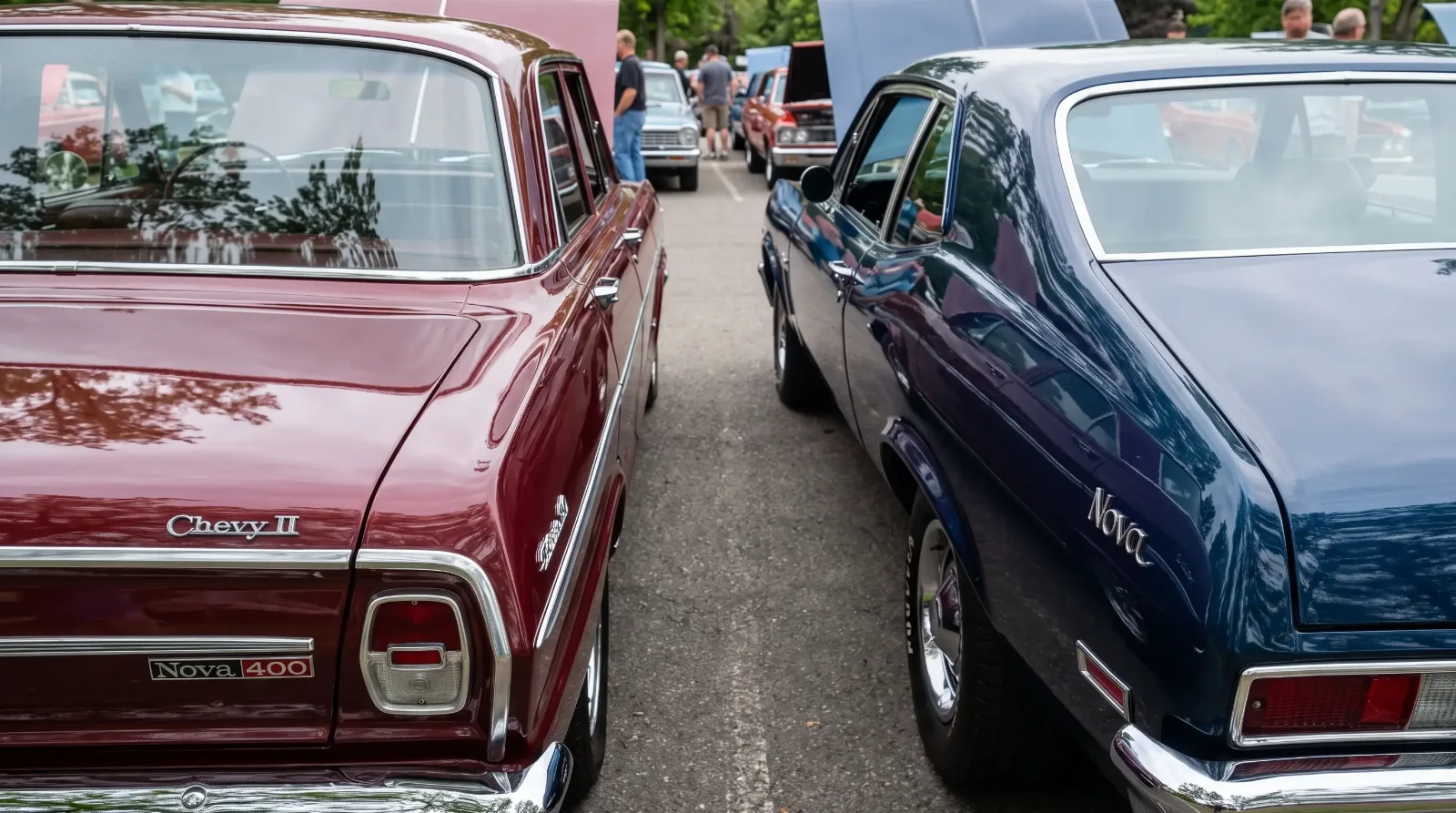
Here is the misconception worth correcting. In 1962 you could not walk into a dealership and buy a car badged simply "Nova." The line was the Chevy II, offered in three series: the base 100, the mid-level 300, and the top 400. The 400 series carried the Nova name, so the full designation was Chevy II Nova 400.
The reason Nova was not the name of the entire line comes down to internal General Motors naming habits. Chevrolet's product names of the period leaned on the letter C, from Corvair to Corvette to the Chevelle that followed. "Nova" did not fit that pattern, so it was kept as a series name rather than promoted to the top of the marketing. A nova is a star that suddenly brightens, which was a fitting image for a new compact, but the badge sat one rung down the ladder for now. Only later did Nova climb to become the name everyone used, and eventually the official one.
Four, six, and eventually V8: the engine choices
The engine lineup at launch was deliberately modest, and it tells you exactly who the car was for. The base engine was a 153 cubic inch inline-four rated at 90 horsepower, the first four-cylinder Chevrolet had built for a production car since 1928. Above it sat a 194 cubic inch inline-six rated at 120 horsepower, a smooth and durable unit that became the volume choice.
Neither engine was fast. Both were cheap to buy and cheap to keep running, which was the point. The four-cylinder in particular was aimed at the buyer who wanted the lowest possible sticker price and the lowest possible fuel bill, and it did that job honestly.
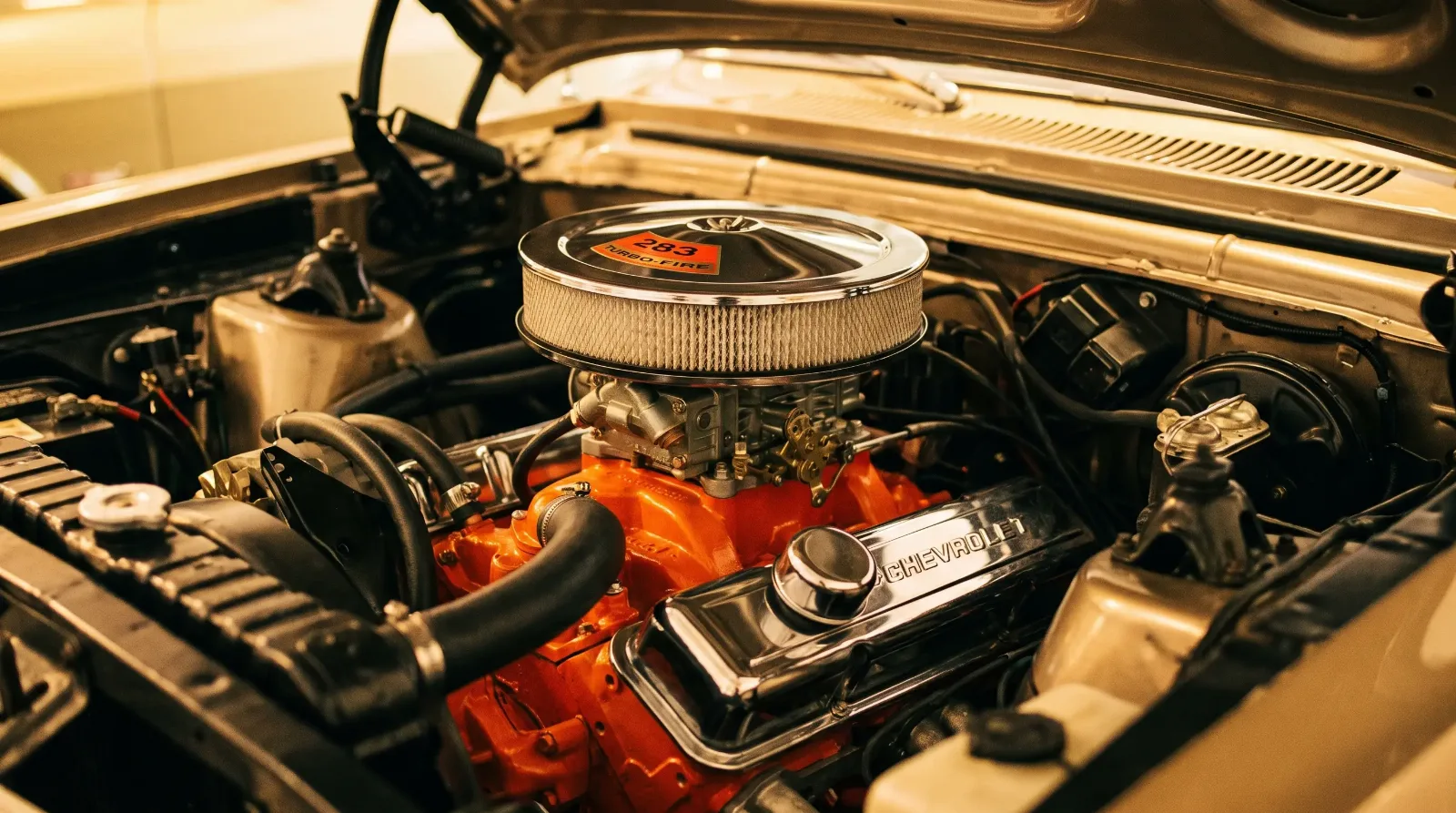
The bigger change came for 1964, when Chevrolet made a small-block V8 available. The 283 cubic inch V8, rated at 195 horsepower in two-barrel form, turned the light Chevy II into a genuinely quick car for its class. That factory V8 option is a large part of why first-generation cars became popular with builders later on, since the engine bay was already sized for it. If you want to see how the platform matured once the V8 became central to the car's identity, that is a related chapter in the Nova story.
| Detail | First-Generation Chevy II Nova (1962-1965) |
|---|---|
| Series | Chevy II 100, 300, and Nova 400 |
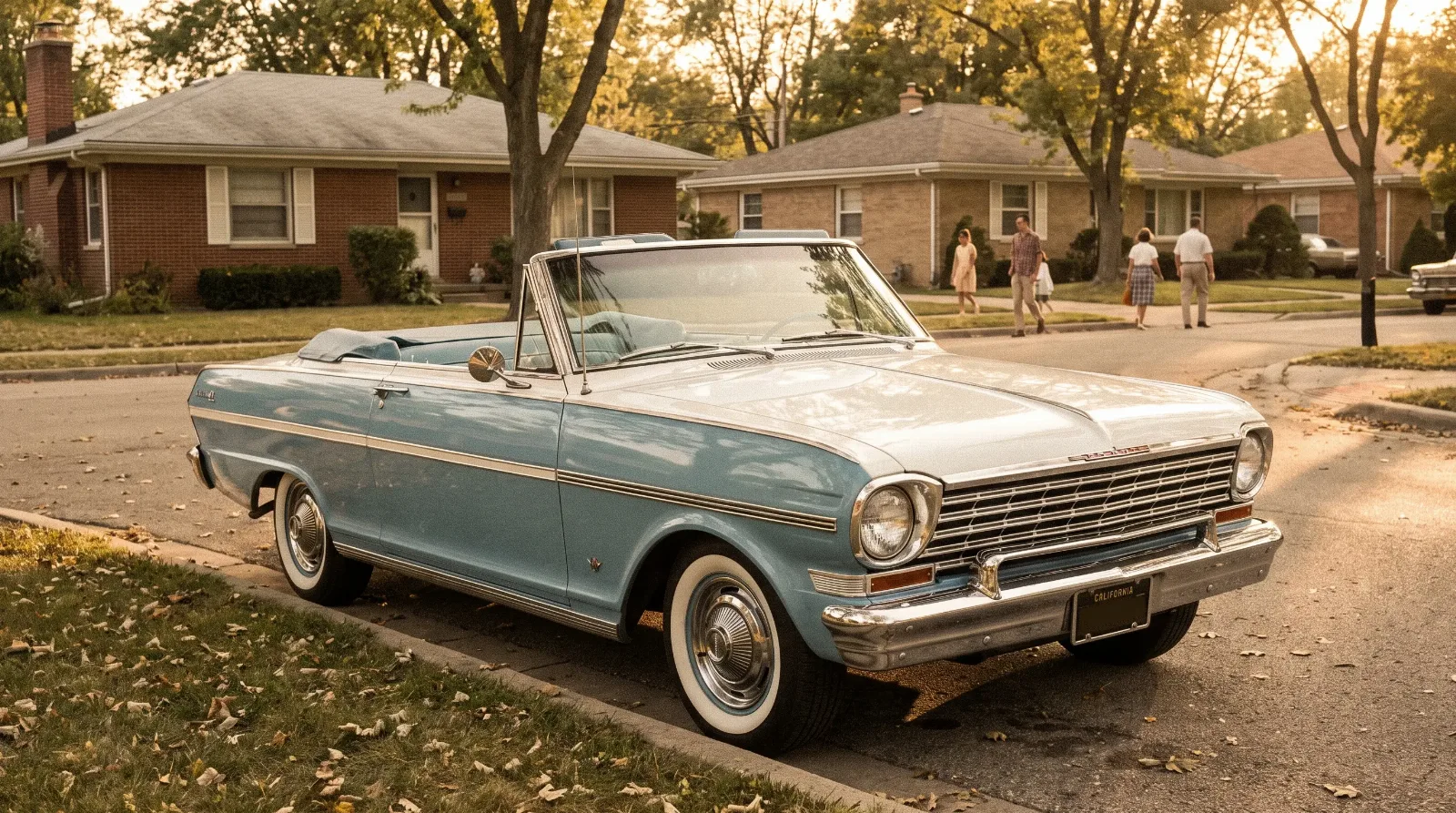
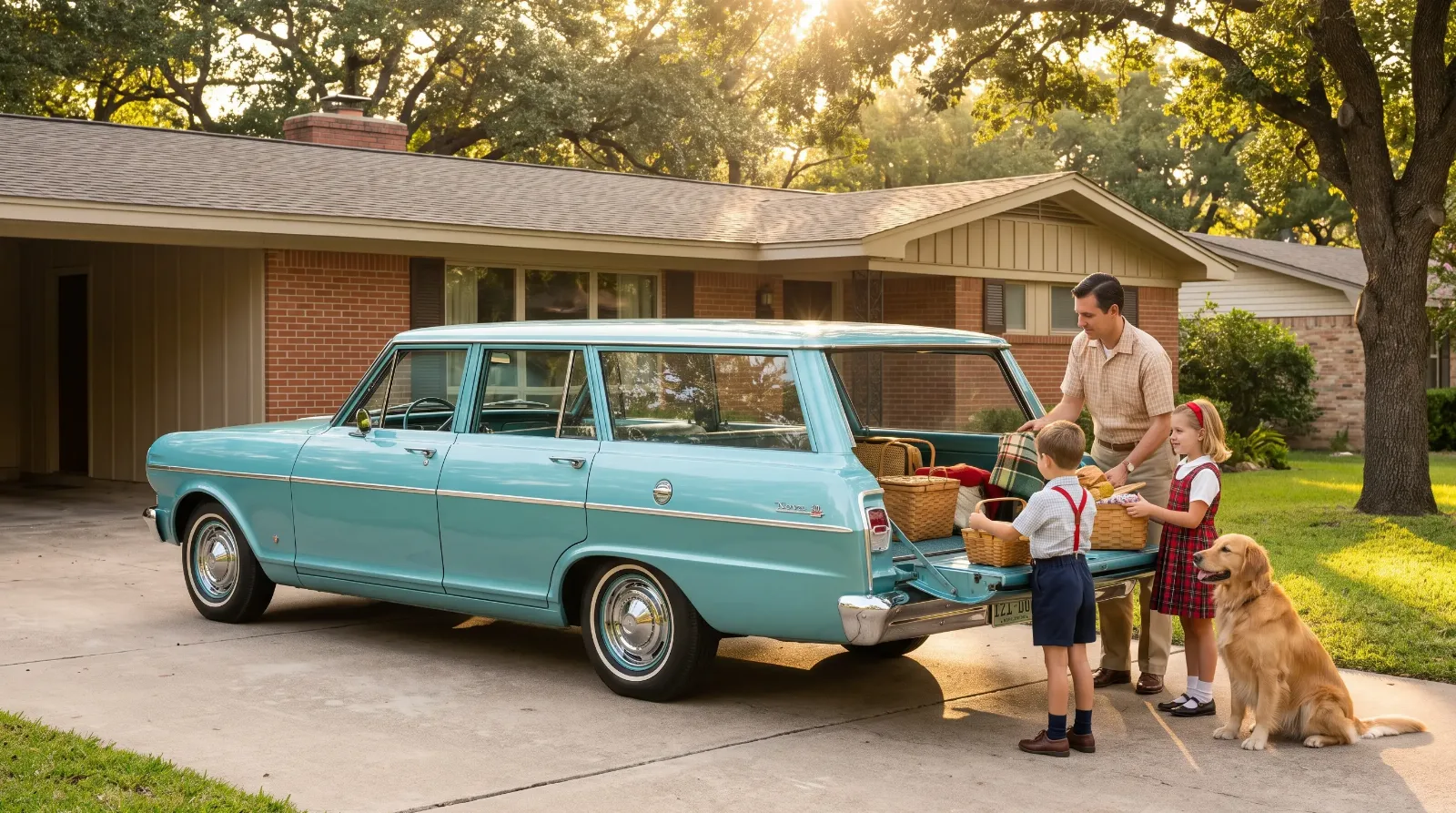
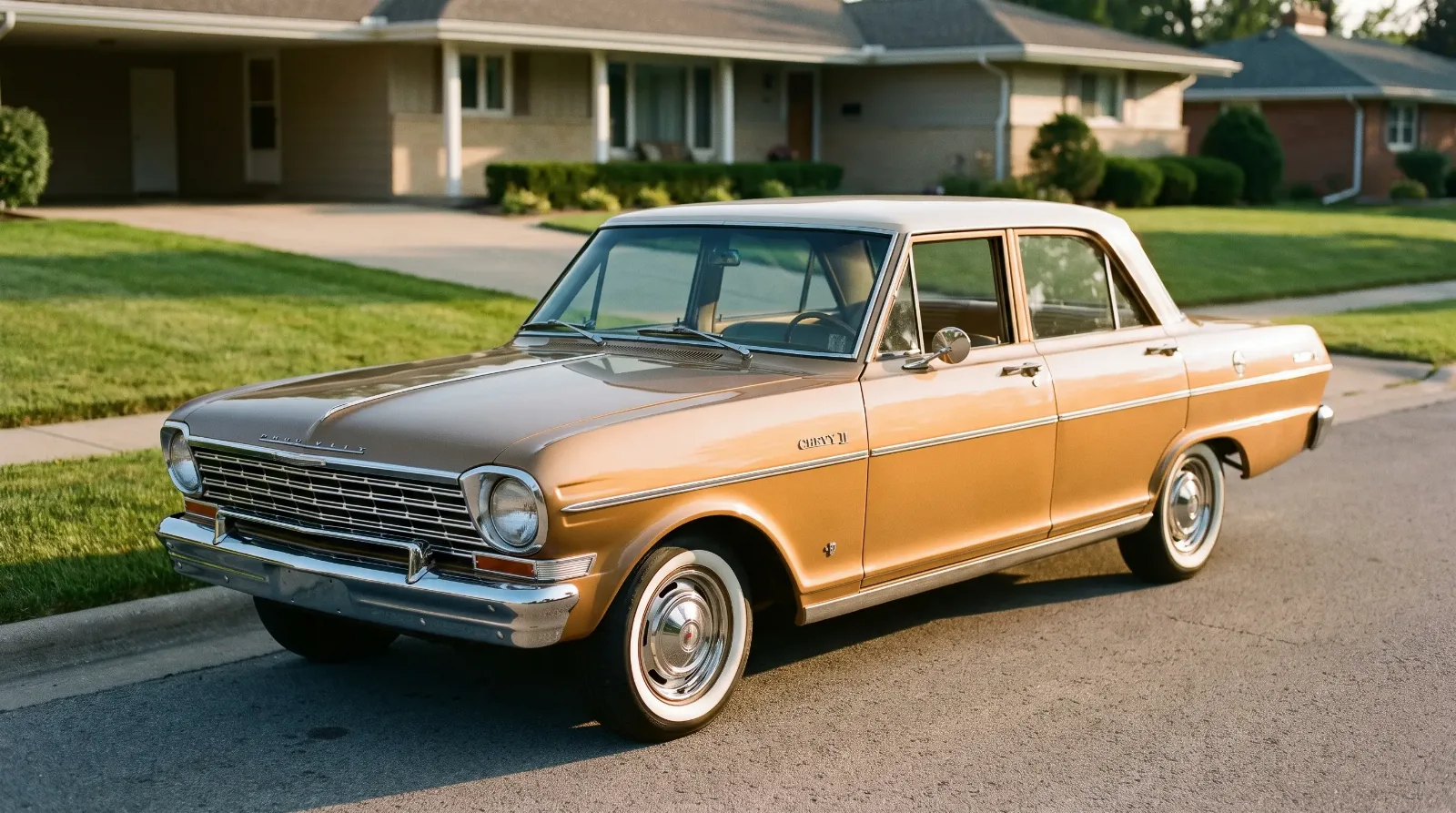
| Body styles | 2-door sedan, 4-door sedan, Sport Coupe, convertible, station wagon |
| Base engine | 153 cu in inline-four, 90 hp |
| Six-cylinder | 194 cu in inline-six, 120 hp |
| V8 option | 283 cu in small-block from 1964, 195 hp |
| Construction | Unitized body with bolt-on front subframe |
| Rear suspension | Live axle on leaf springs |
| Production run | 1962 through 1965 |
The 1963 Nova SS and the first hint of performance
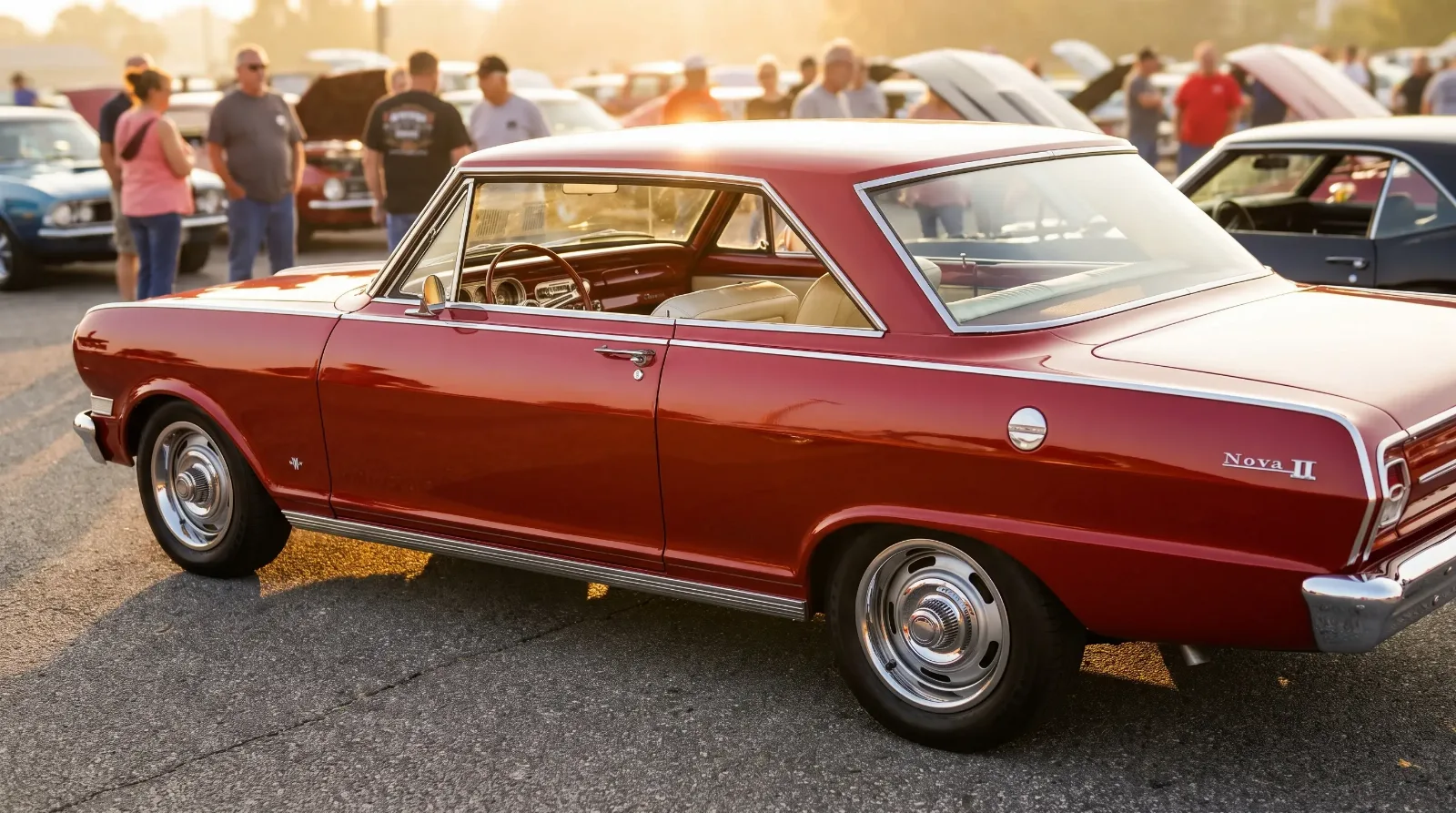
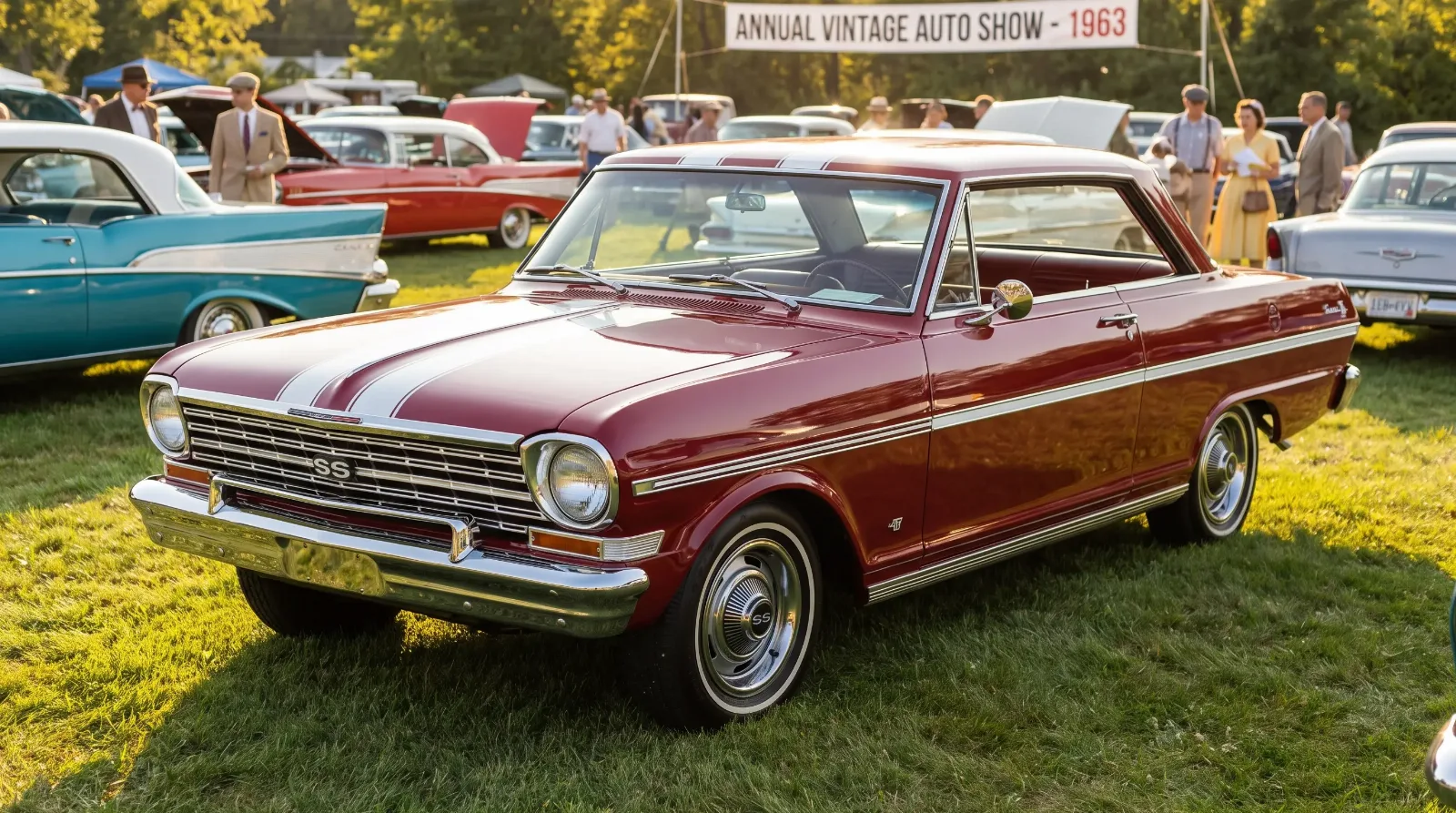
Chevrolet read its buyers quickly. Even a thrift-first compact could carry a sporty variant, and for 1963 the company introduced the Nova Super Sport, the first Nova SS. It was an appearance and trim package built on the Nova 400 Sport Coupe and convertible, with special badging, instrumentation, and interior details that set it apart from the plain sedans.
The early SS was more about presentation than raw speed, since the hottest factory engines had not yet arrived. What it did was plant a flag. It told buyers that the Chevy II could be something other than basic transportation, and it set up the direction the model would take through the rest of the decade. The 1963 SS is the ancestor of every fast Nova that followed, and collectors treat a documented early SS with real respect today.
"People remember the big-block Novas of the late sixties and forget the humble 1962 Chevy II that made them possible. Read the original sales literature and the intent is plain. This was a car built to be affordable and honest, and everything glamorous about the Nova was built on top of that foundation."
Tom Ramirez
Model-year changes across the first generation
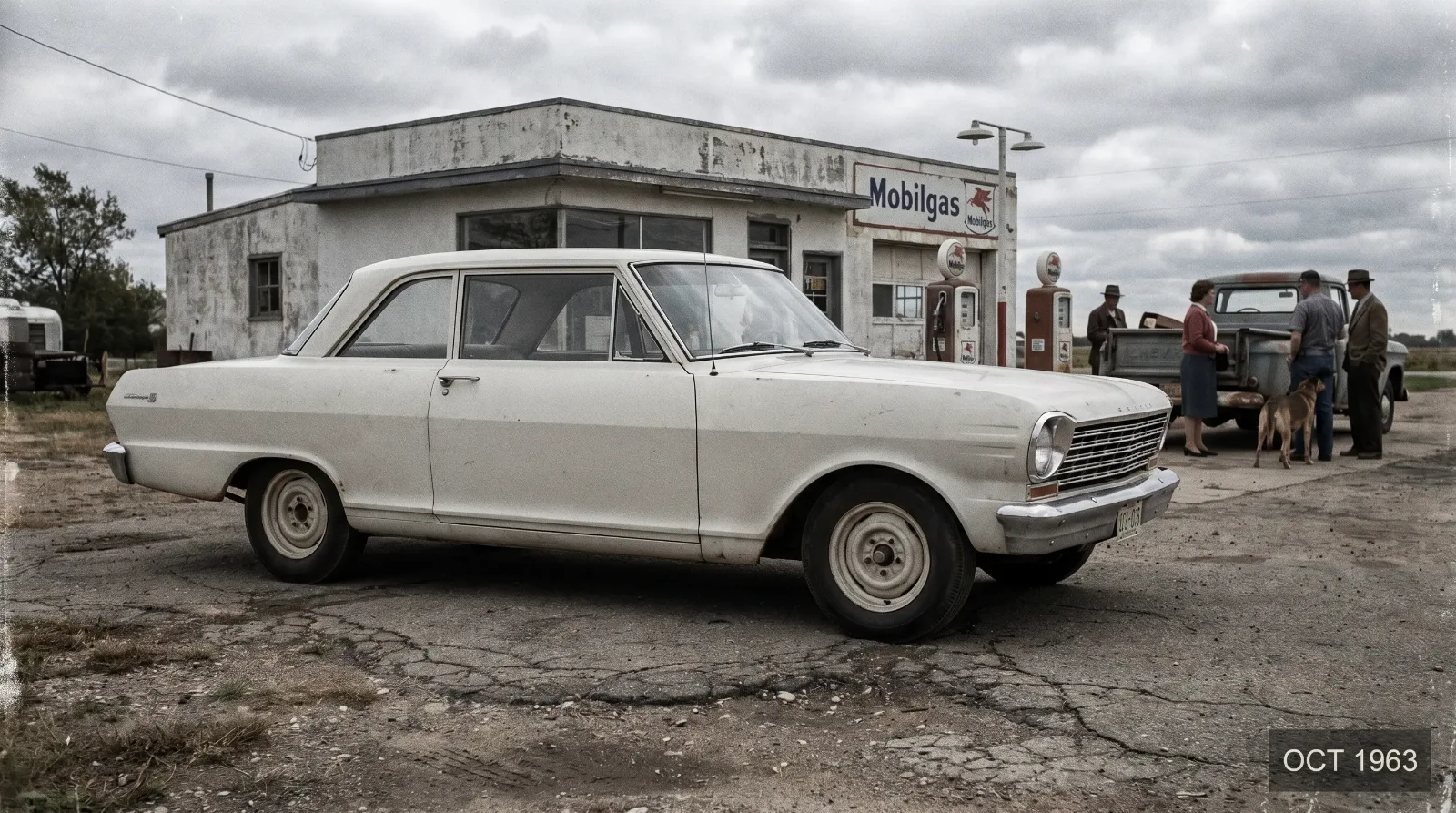
The first generation was short but not static. The 1962 cars are the purest expression of the original brief, four and six-cylinder engines only, plain styling, and the new SS still a year away. For 1963 the Nova SS arrived and the range settled into its familiar shape.
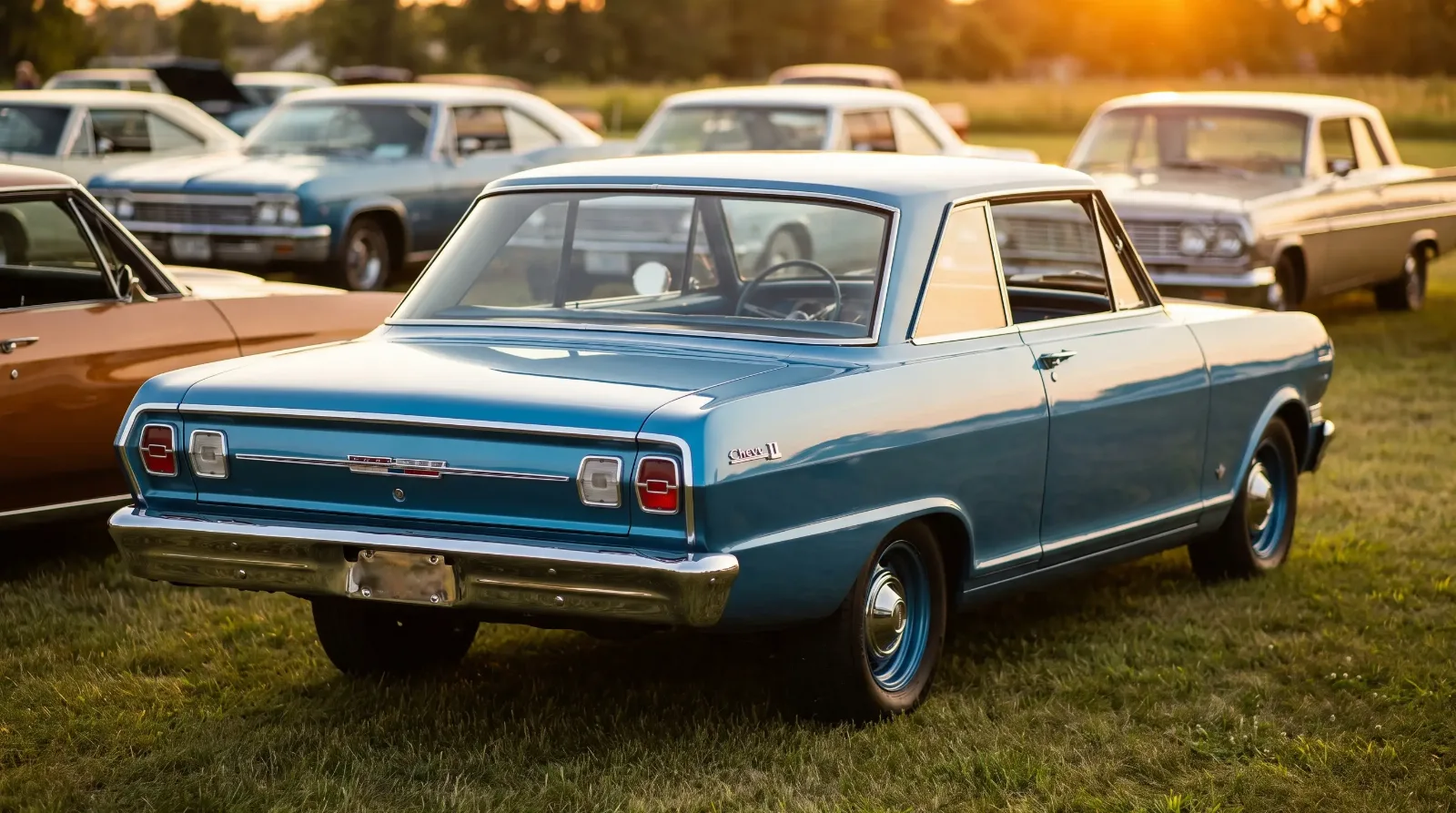
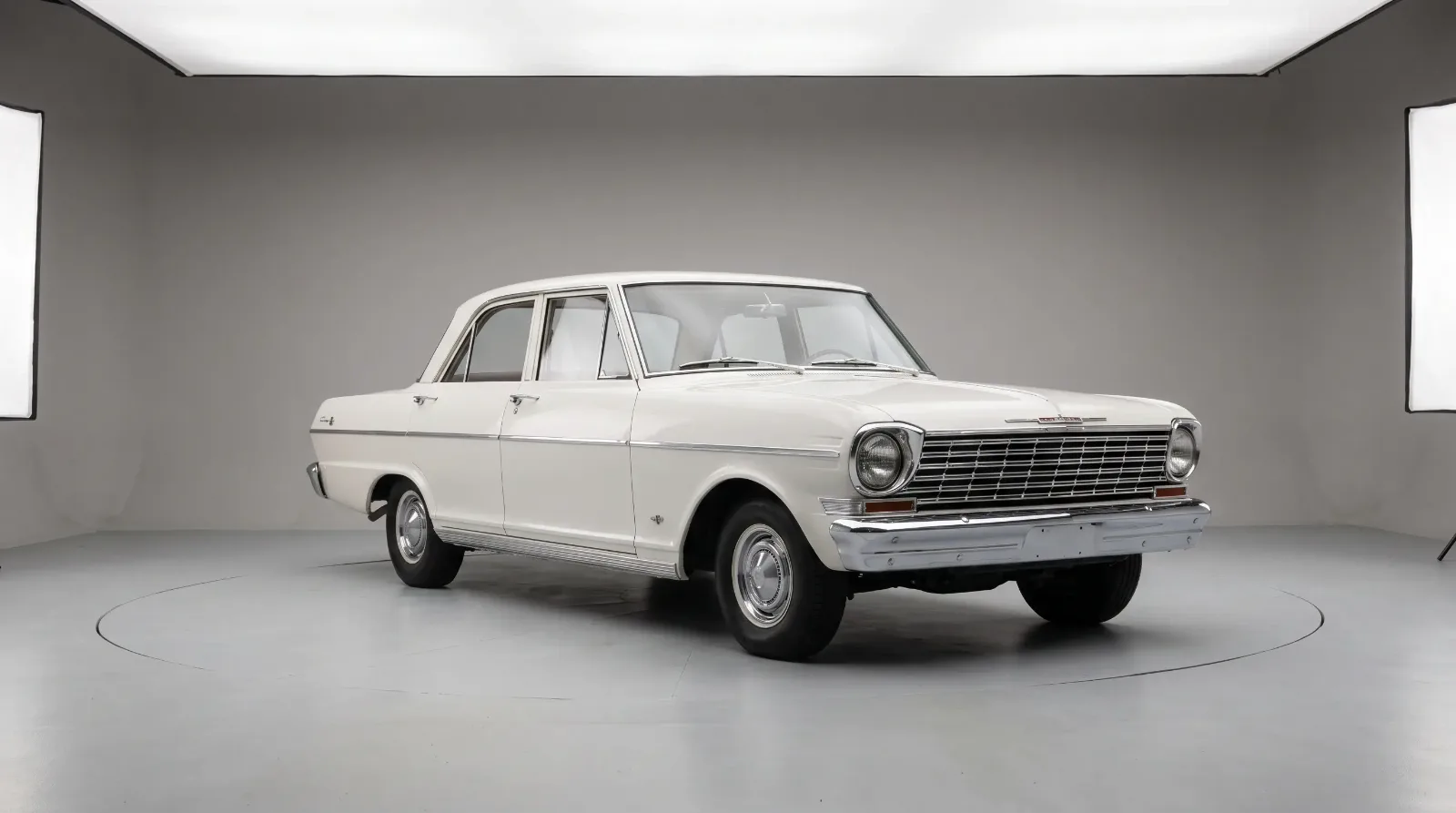
The 1964 model year brought the most important mechanical change of the run, the availability of the 283 V8, which reshaped what the car could be. For 1965, the last year of the first generation, Chevrolet revised the front-end styling and detail trim before the redesigned second-generation car took over for 1966. A 1965 Chevy II is visually the most distinct of the four years, and it closes out the original design.
Why the first-generation Nova still matters
It is easy to overlook these cars. They were built to be cheap, they were not fast at launch, and the more famous Novas came later. But the first generation is the reason the name survived at all. Chevrolet needed a conventional compact to compete with the Falcon, it built one quickly and built it honestly, and that simple, light, rear-drive package turned out to be far more capable than its 1962 mission statement suggested.
The light body, the roomy engine bay, and the factory V8 option made these cars a natural starting point for builders and drag racers, and that is where much of their later reputation came from. For a buyer today, an early Chevy II is a way into the Nova story at its source, before the badges got bigger and the engines got wilder. If you are looking, a well-kept classic Chevy II for sale represents the beginning of the whole line, and a documented 1963 SS or a 1964 V8 car is worth seeking out.
The humble compact that started it all did its job, then quietly became the platform for something much larger. That is the honest history of the 1962 Chevy Nova, and it deserves to be told straight.
Sources and notes
- Jalopnik: How Chevy Rushed The 1962 Chevy II Nova To Market In 18 Months
- Mac's Motor City Garage: Emergency-Room Engineering, The 1962 Chevy II
- HowStuffWorks: Introduction to the 1962-1967 Chevrolet Chevy II
- Wikipedia: Chevrolet Chevy II / Nova
- Conceptcarz: 1962 Chevrolet Chevy II Series Specifications
- Chevy Hardcore: Top 5 Chevy People, Edward N. Cole
Related Reading
Article
The Chevrolet Nova Story: From Compact to Muscle Legend
Article
Yenko and COPO: The 427 Super Novas
Article
Second-Generation Nova (1966-1967): The Short, Sweet Run
Article
1962 Chevy II: Chevrolet's Answer to the Falcon
Article
Why It Was Called "Chevy II" Not Nova
Article
The Nova 400: The Top Trim
Article
The Four-Cylinder Chevy II
Article
The 1963 Chevy II Super Sport
Article
The Chevy II Convertible Years
Article
The Chevy II Station Wagon
Article
The Stovebolt Six Economy Story
Article
The 1964 V8 Arrives
Article
The 1965 Chevy II Facelift
Article
Chevy II Design and the Unibody Debate
Article
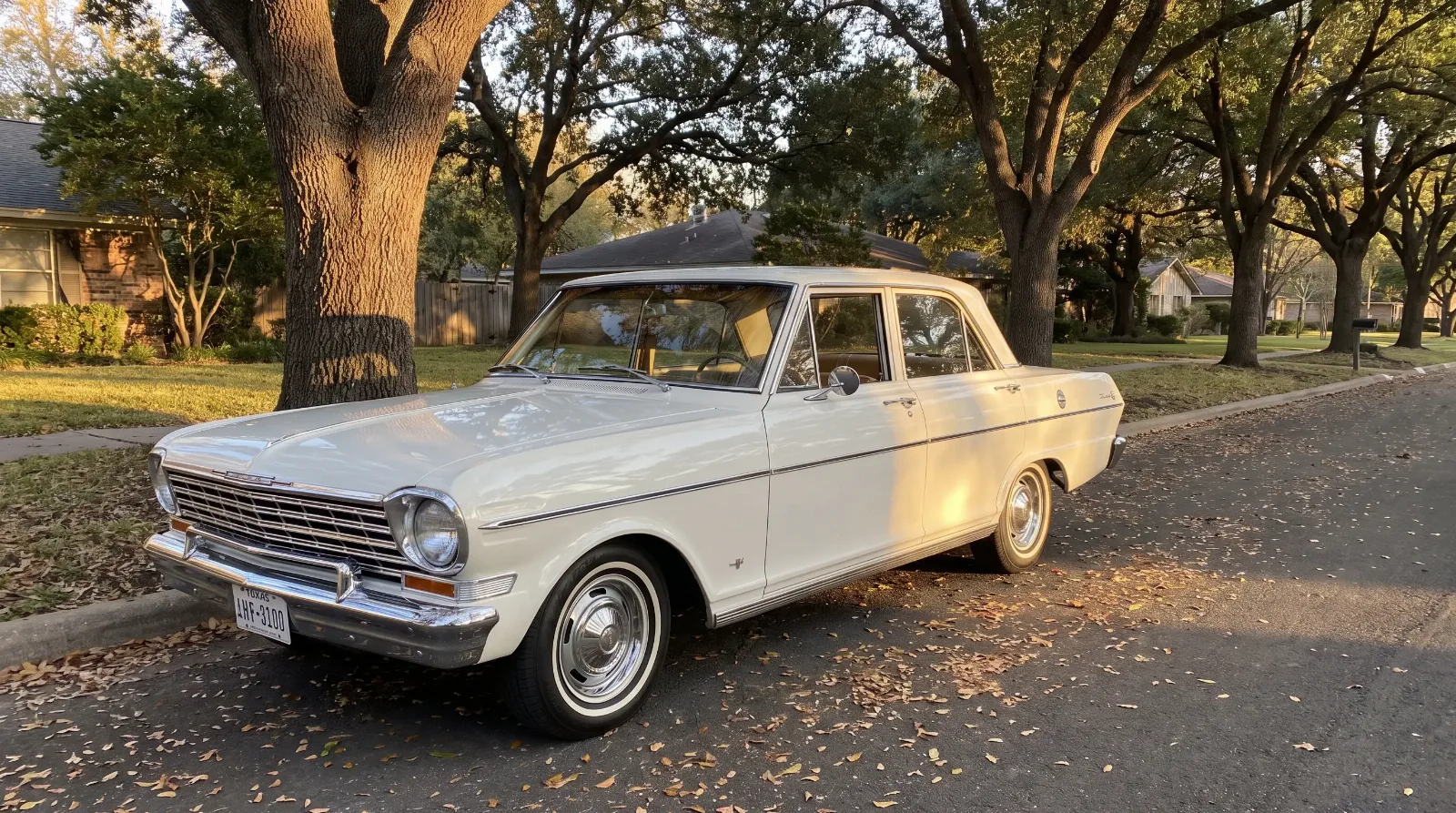
When the Nova SS 327 First Appeared
Article
First-Gen Chevy II Production Numbers
Article
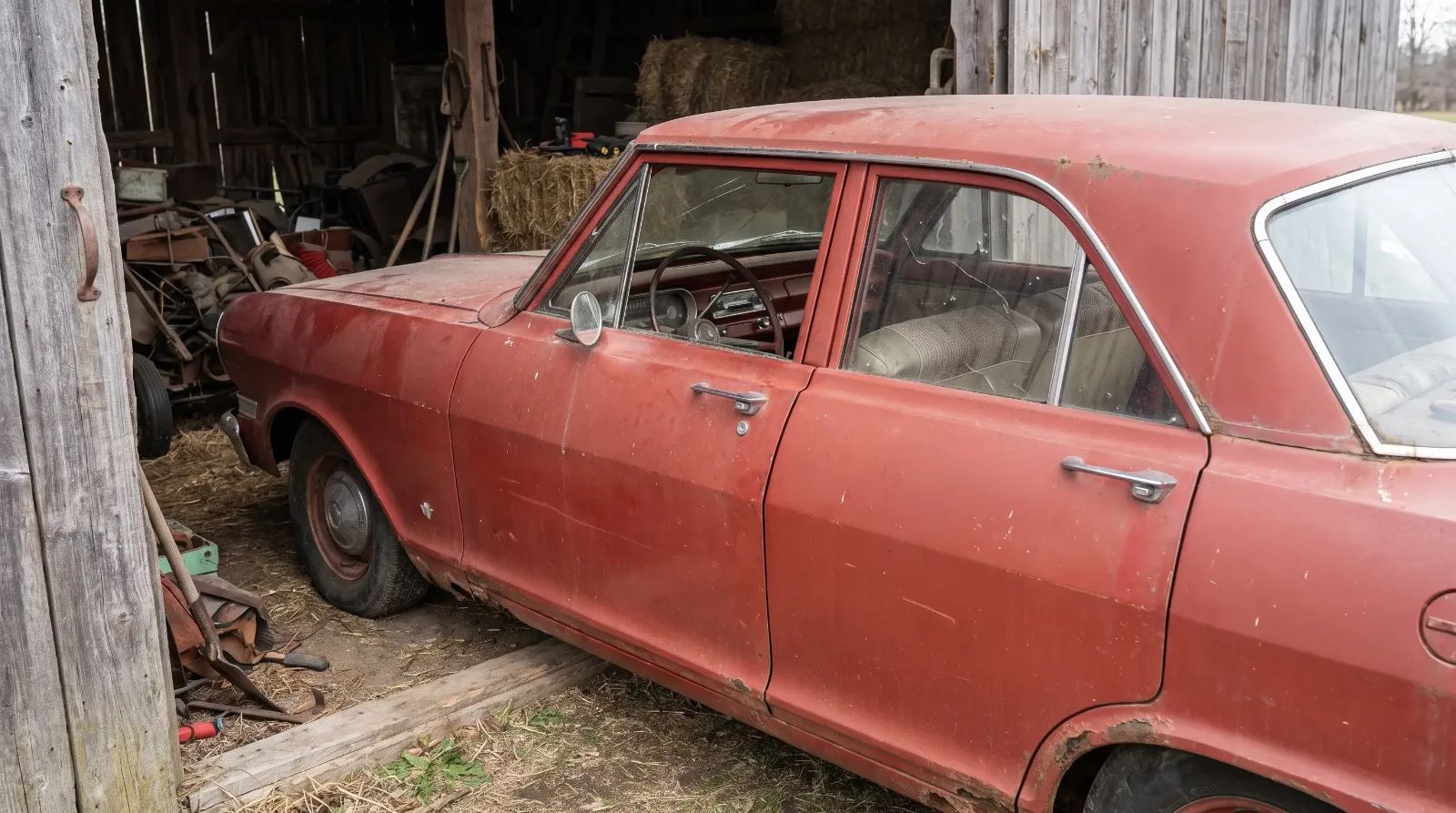
Why Early Chevy IIs Are Rare Today
Article
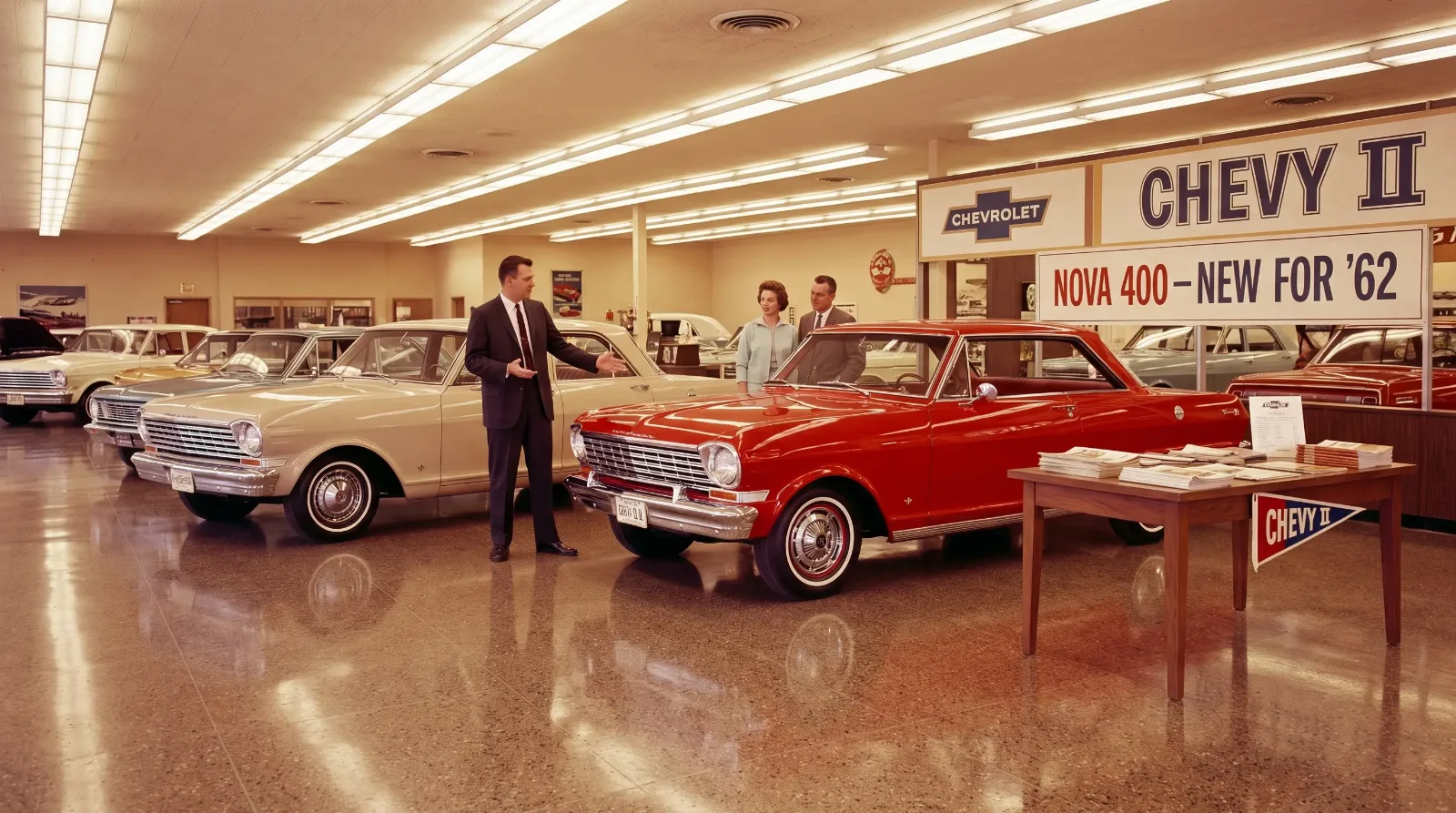
The Chevy II in Chevrolet's 1962 Lineup
Have a
Chevrolet Nova
for Sale?
Reach thousands of serious classic car collectors across the US.
Sell It Here →
Are You a Classic Car Dealer?
List your full inventory and connect with targeted classic car buyers.
Join as a Dealer →

About the author
Tom Ramirez
Corvette researcher and historian based in Bowling Green, Kentucky. Two decades documenting Corvette production history from original factory records.
Related Listings - Chevrolet Nova
Comments
Be the first to comment on this article.