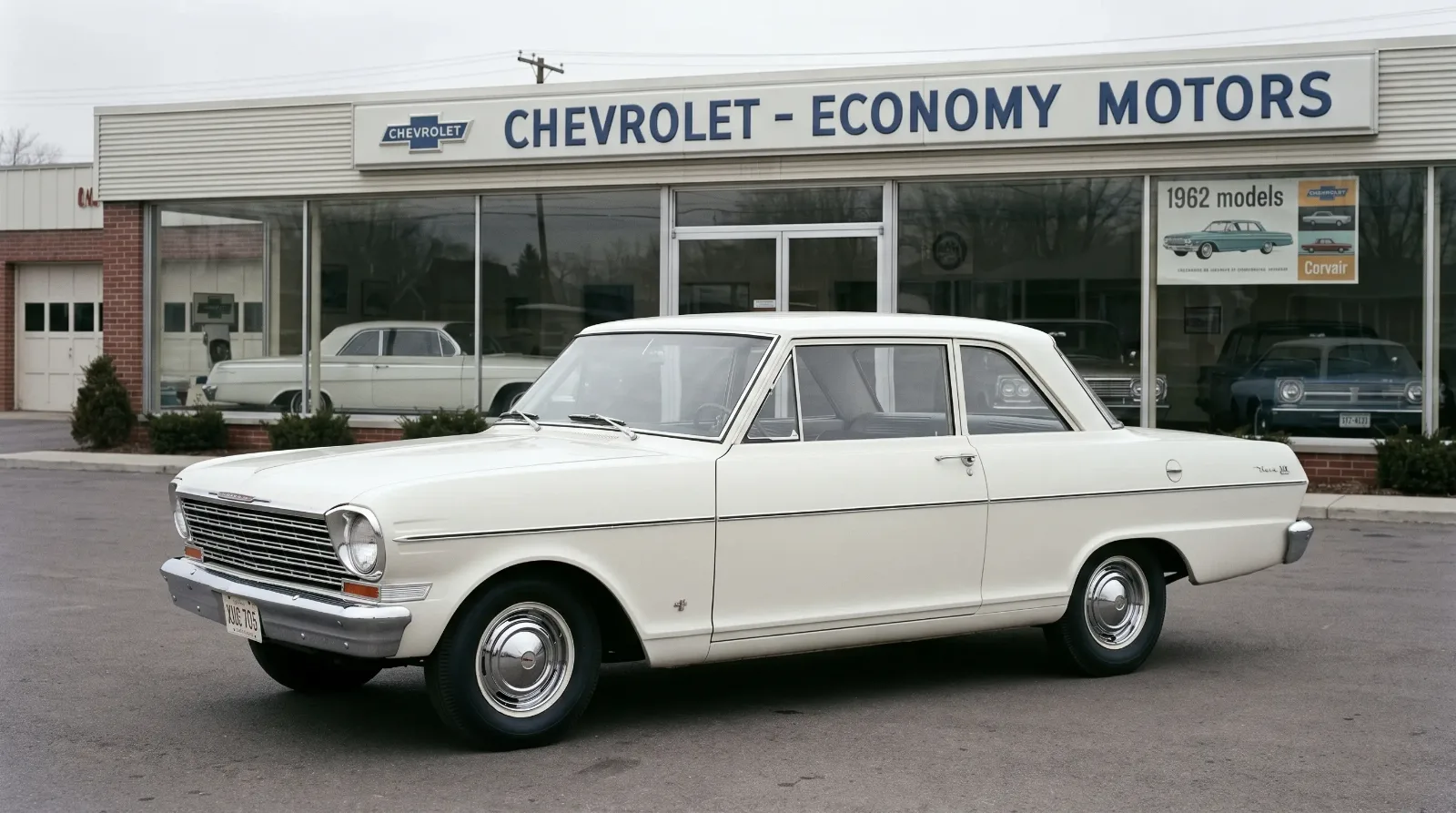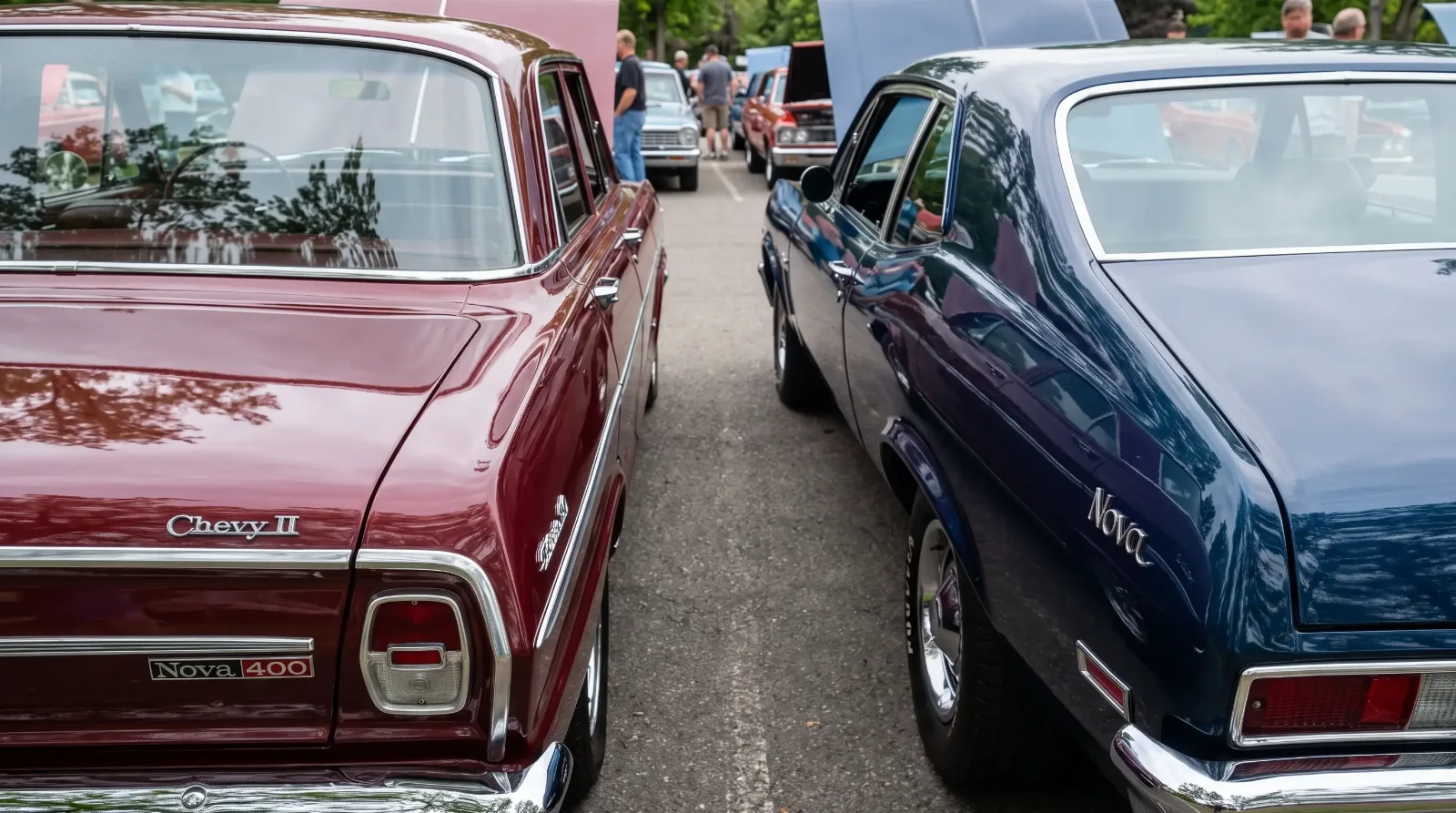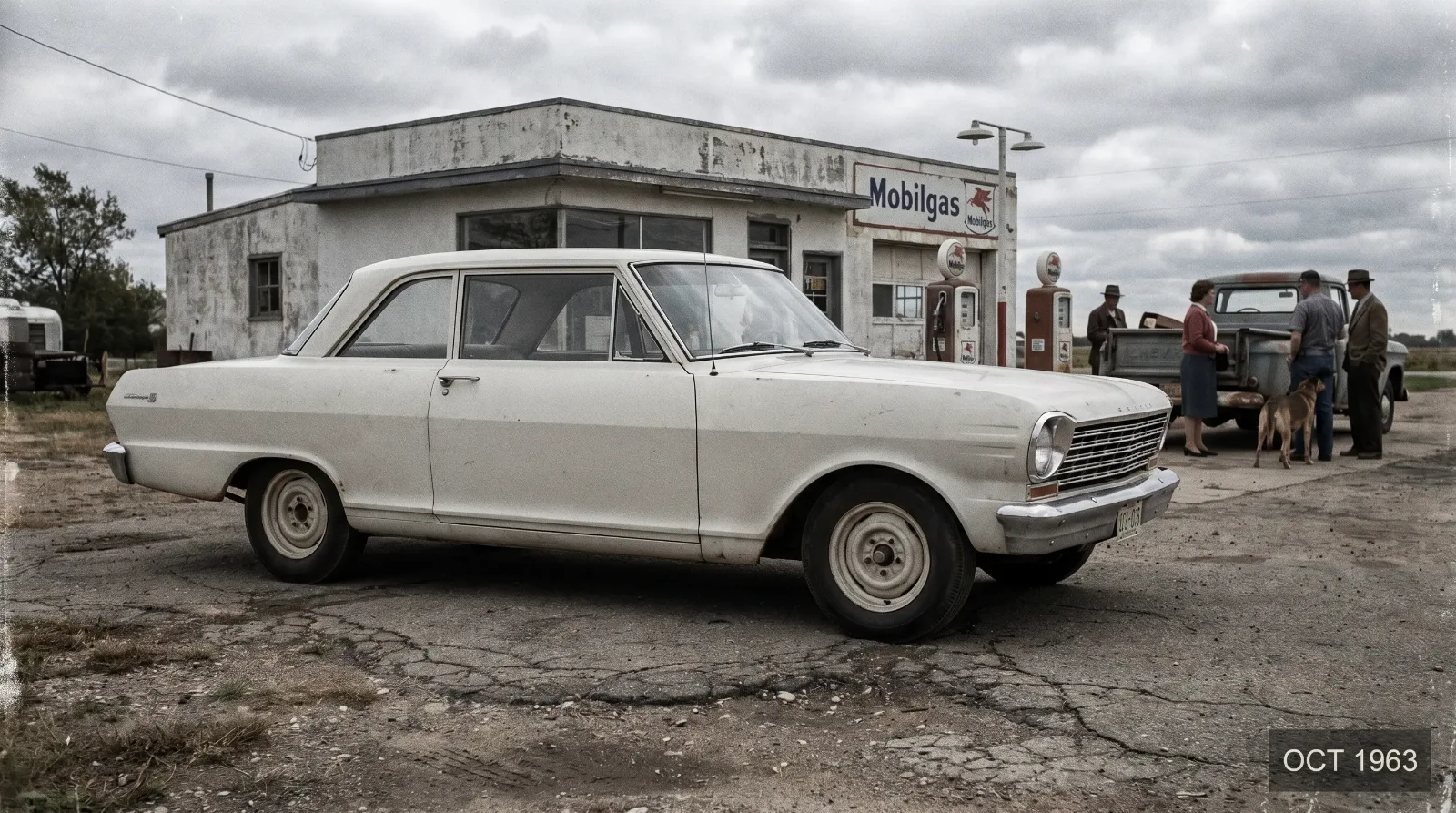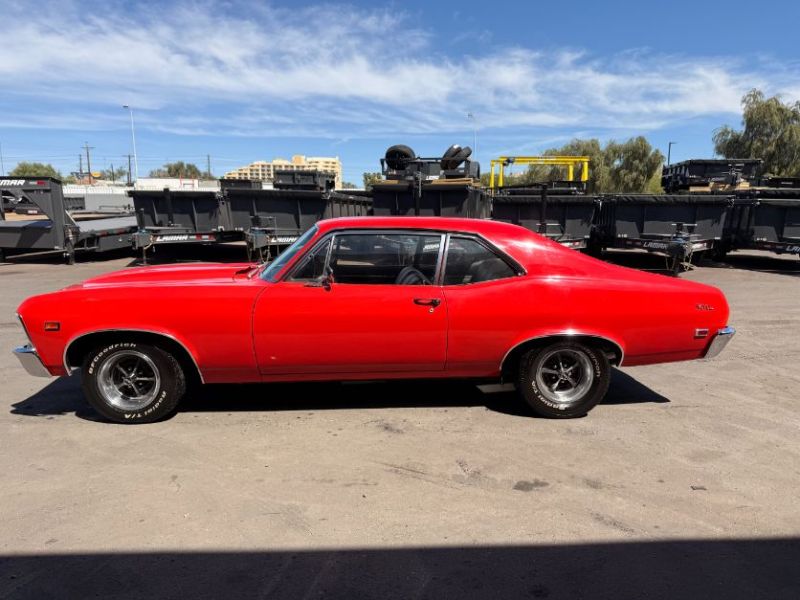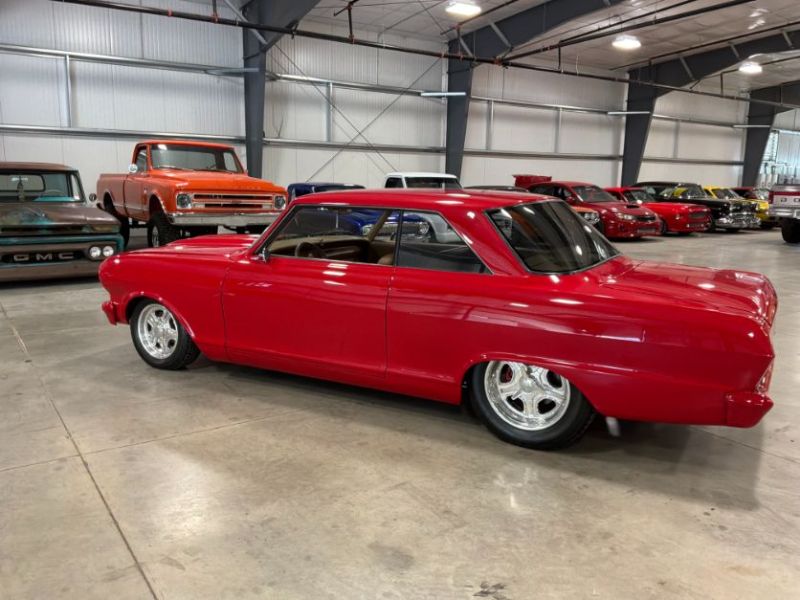
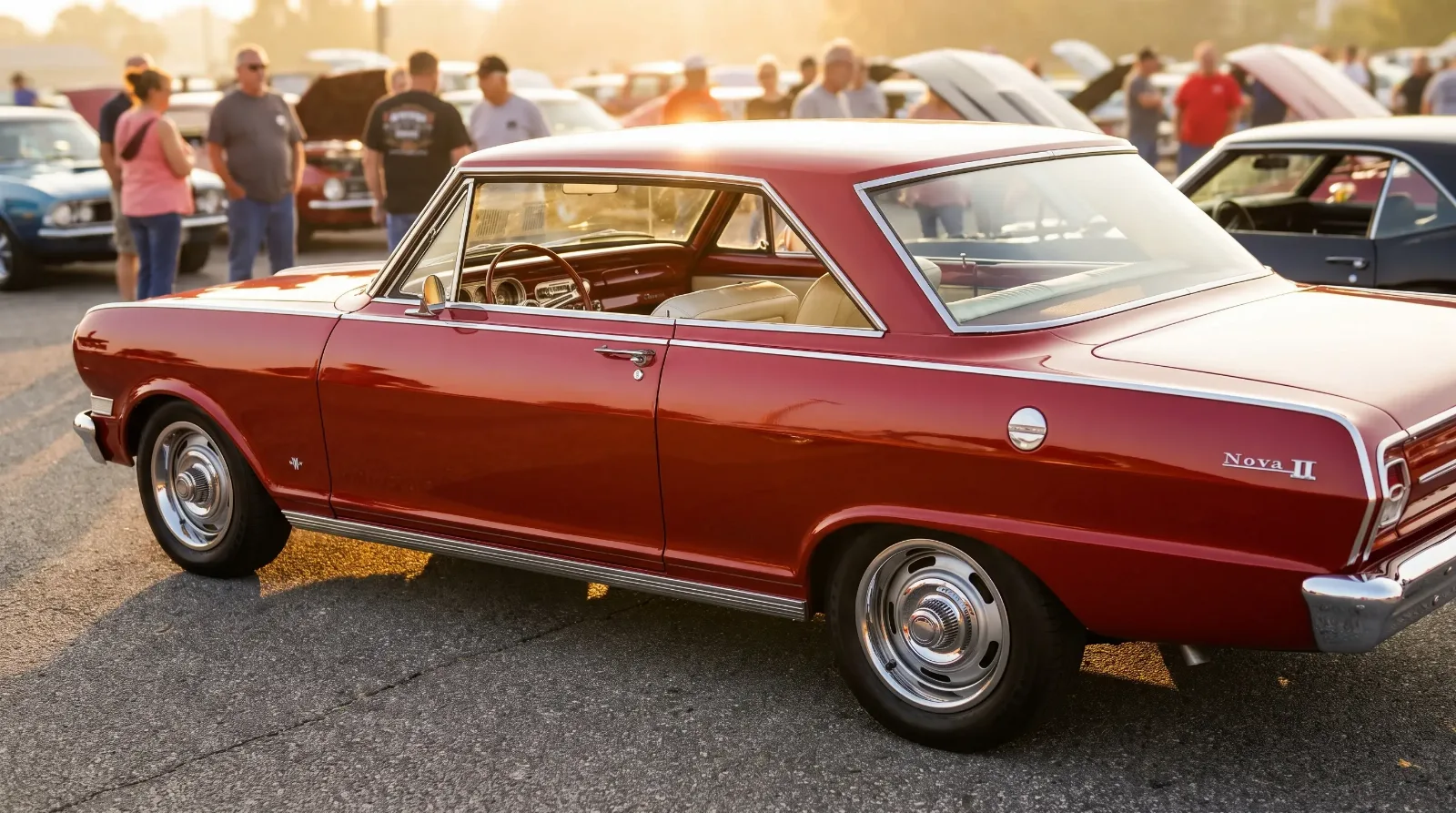
The Chevy II Nova 400 was never meant to be a performance car. It was meant to be the reason a Chevy II buyer paid more, and Chevrolet built the whole trim ladder around that idea. When the Chevy II arrived for 1962, it came in three flavors: 100, 300, and Nova 400. The first two were the volume sellers, plain and cheap. The Nova 400 sat on top, and it carried the name that would eventually swallow the entire car.
Why Chevrolet put "Nova" on the top trim only
In 1962 "Nova" was not the car's name. It was a badge reserved for the best-equipped Chevy II you could order. The 100 and 300 series were built to be sold on price, with rubber floor mats and painted trim. The Nova 400 got carpeting, more brightwork, better upholstery, and a dashboard with a few more comforts than its cheaper siblings. Chevrolet's dealers used it to trade buyers up from the base car without pushing them into a full-size Impala.
The strategy worked well enough that "Nova" started doing more selling than "Chevy II" did. By the middle of the decade, showroom signs leaned on the Nova name, and Chevrolet eventually folded the whole lineup under it. Understanding the Chevy II chapter of the story makes it clear how deliberate that renaming was. The Nova 400 was not an afterthought trim. It was the test case for a name that outlived the car it was borrowed from.
What made a Nova 400 different from a Chevy II 300
Trim differences in this era were not subtle marketing language. They were physical, countable things. A Nova 400 buyer got a padded dash, additional chrome around the windows and rocker panels, and upholstery patterns the cheaper trims never saw. Foam seat cushions replaced the thinner padding in the 300, and the interior door panels carried extra brightwork that made the cabin look more finished.
Body styles mattered too. The Nova 400 was the only Chevy II series offered as a Sport Coupe and a convertible in 1962, which meant if a buyer wanted the two-door hardtop-style roofline or open-air motoring, the Nova 400 badge came along whether they cared about trim level or not. That pairing is part of why the name stuck to the sportier cars in buyers' minds even before the SS package existed.
| Chevy II series (1962) | Position | Body styles |
|---|---|---|
| 100 | Base | Sedan, wagon |
| 300 | Mid | Sedan, coupe, wagon |
| Nova 400 | Top | Sport Coupe, convertible |
Engines under the Nova 400 hood
The standard engine across the Chevy II line, Nova 400 included, was Chevrolet's 194 cubic inch inline six, rated at 120 horsepower. That engine was built to be cheap to run, not quick. There was no V8 in the Chevy II catalog at first; buyers who wanted more had to wait until 1964, when Chevrolet added a 283 cubic inch small-block V8 rated at 195 horsepower, the engine that started pulling the Nova 400 away from being just a trim exercise and toward being an actual driver's car.
The SS package arrived on the Nova 400 body for 1963, a year before that V8 option existed, so the original Nova 400 SS was a six-cylinder-only appearance package built around bucket seats, a console, and trim rather than extra power. Chevrolet did not build a separate sporty model at first. It layered performance onto the existing top trim, and the SS did not get factory V8 muscle until the 283 joined the lineup for 1964, a pattern worth tracing if you want keep reading the series on how the Chevy II grew from economy car to something with real teeth.
How the Nova 400 changed after 1963
Once the SS package landed on the Nova 400 for 1963, the top trim stopped being purely about carpet and chrome. It became the car buyers pointed to when they wanted bucket seats, a console, and a tachometer without leaving the Chevy II showroom floor. The base Nova 400 trim kept selling alongside the SS car, and dealers used both to appeal to different customers under the same roofline.
By 1964, the Nova 400 could be ordered with Chevrolet's 283 cubic inch V8, the Chevy II's first factory V8, and by 1965 that grew into a 327 cubic inch option good for up to 300 horsepower, a jump that made the nameplate genuinely quick for a compact car of its size. That engine progression is a big part of why collectors today look past the plainer Chevy II trims and hunt specifically for Nova 400 cars with V8 build sheets. The trim tells you what the car looked like inside. The engine tells you what it actually was to drive.
"People assume Nova was always the name of the car. It wasn't. It was the name of the good seats, the extra chrome, and eventually the engine that made the rest of it worth having."
— Tom Ramirez
Why the Nova 400 still matters to collectors
Original Nova 400 cars, especially early Sport Coupes and convertibles with the V8 option, are harder to find in unrestored condition than the plainer 100 and 300 trims. Fewer were built relative to the cheaper cars, and fewer survived, because they were driven harder and modified more often once the SS association took hold. A documented Nova 400 with its original interior trim and correct engine code is a different proposition from a generic Chevy II sedan, and buyers researching Chevrolet's Nova history quickly learn to separate the two.
The lesson from the Nova 400 is a simple one. Chevrolet used a trim level to test a name, the name tested well, and eventually the test result became the product. Few cars in Chevrolet's postwar lineup have a naming story this direct, and fewer still wear it as plainly on the fender as the Chevy II did in 1962.
None of that documentation work is glamorous, but it is what separates a car worth a premium from a car that only looks like one in photographs. The Nova 400's story is really the story of Chevrolet learning that a name could sell a car by itself, and that lesson shaped every Chevy II and Nova that came after it.