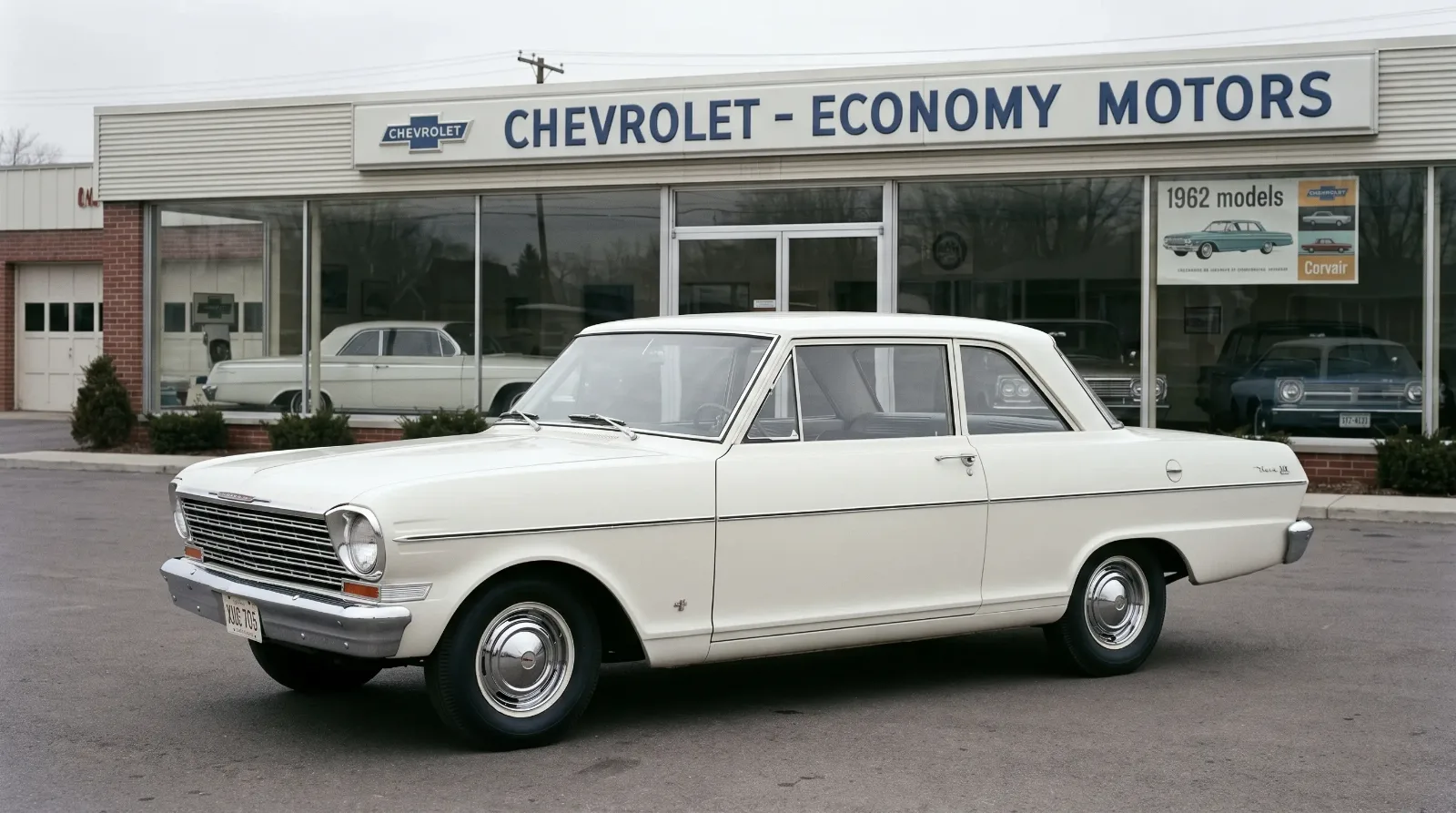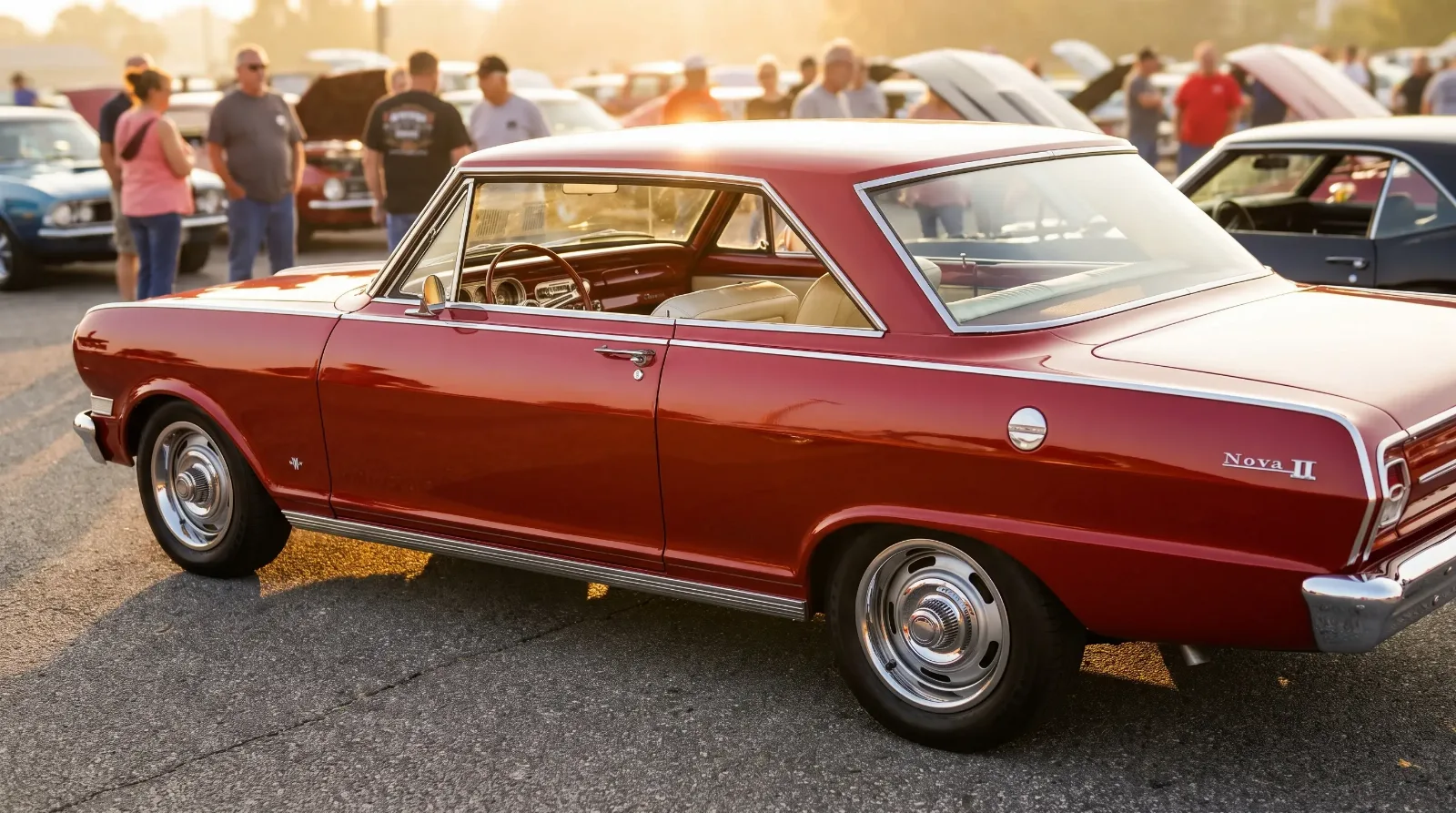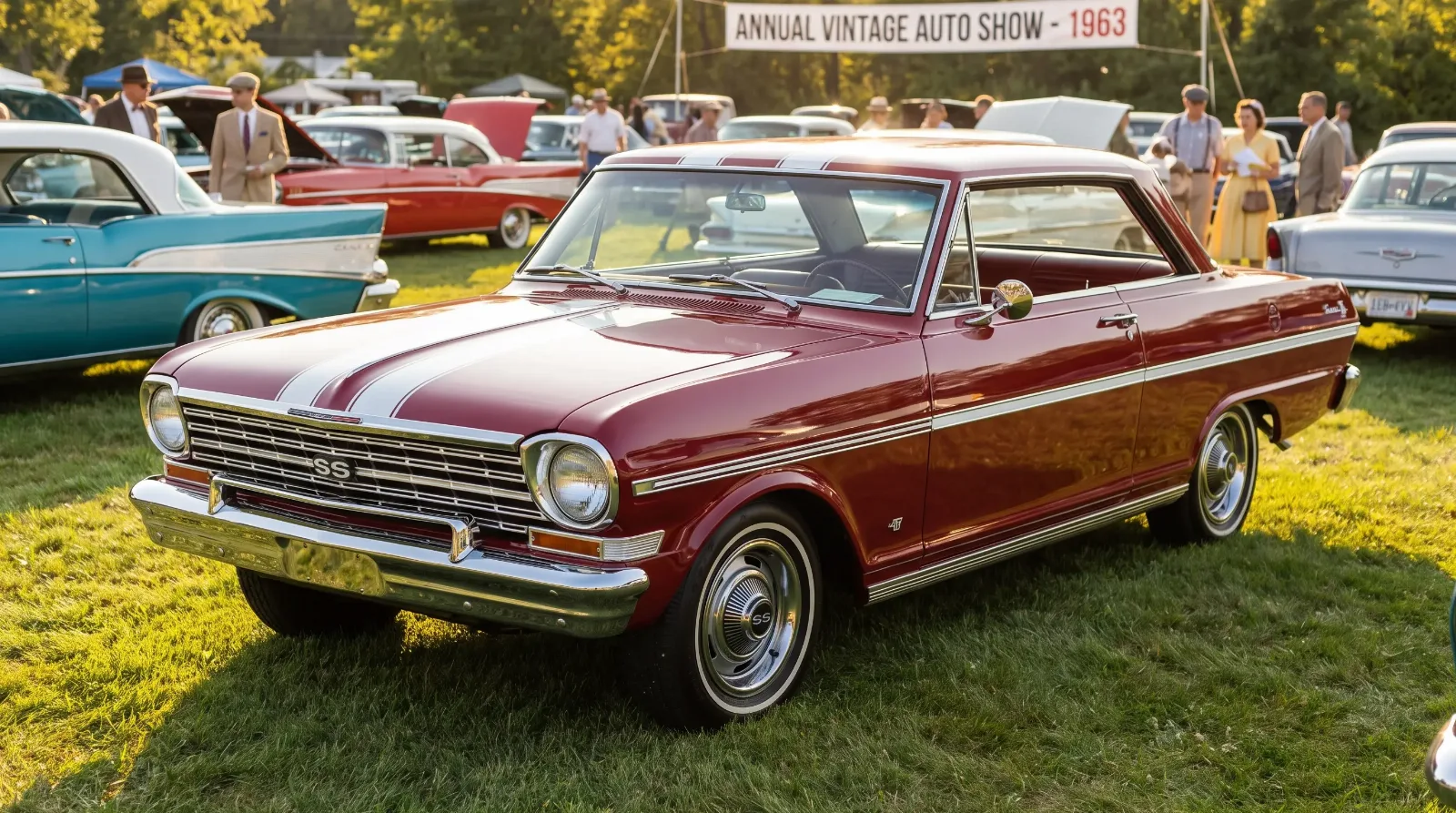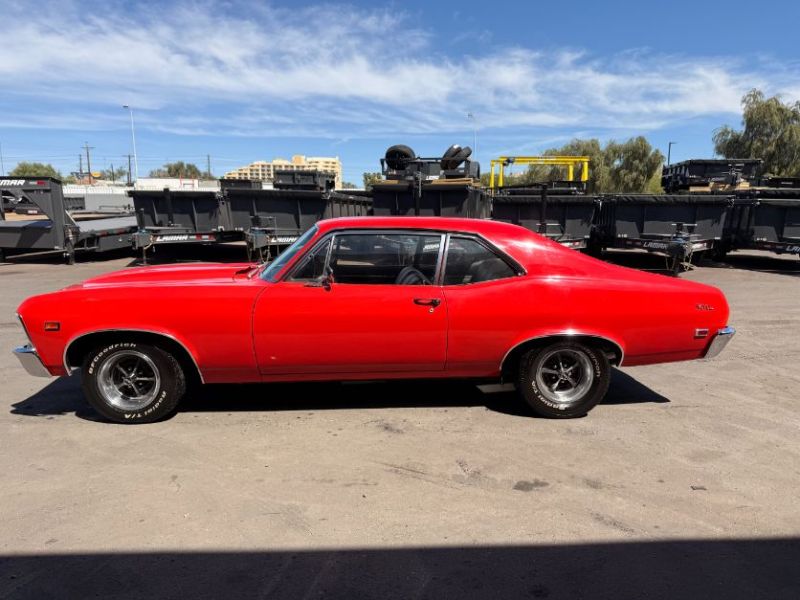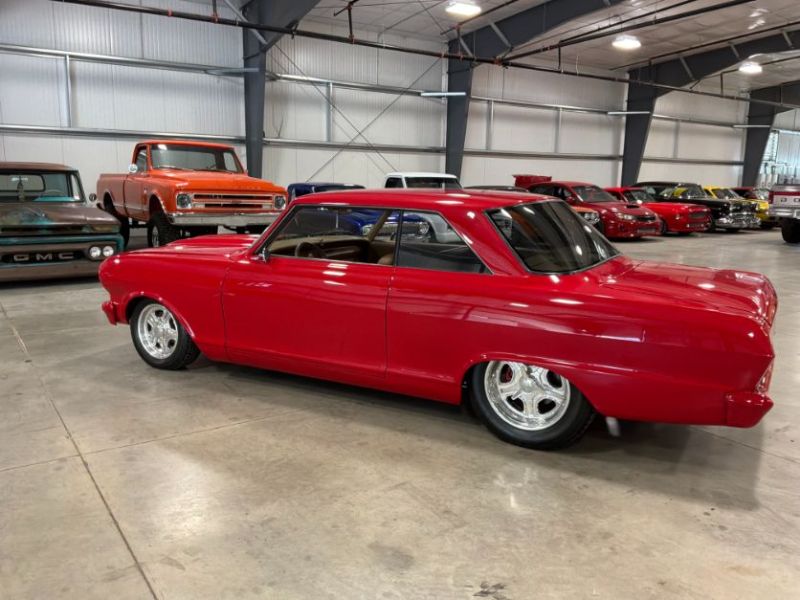
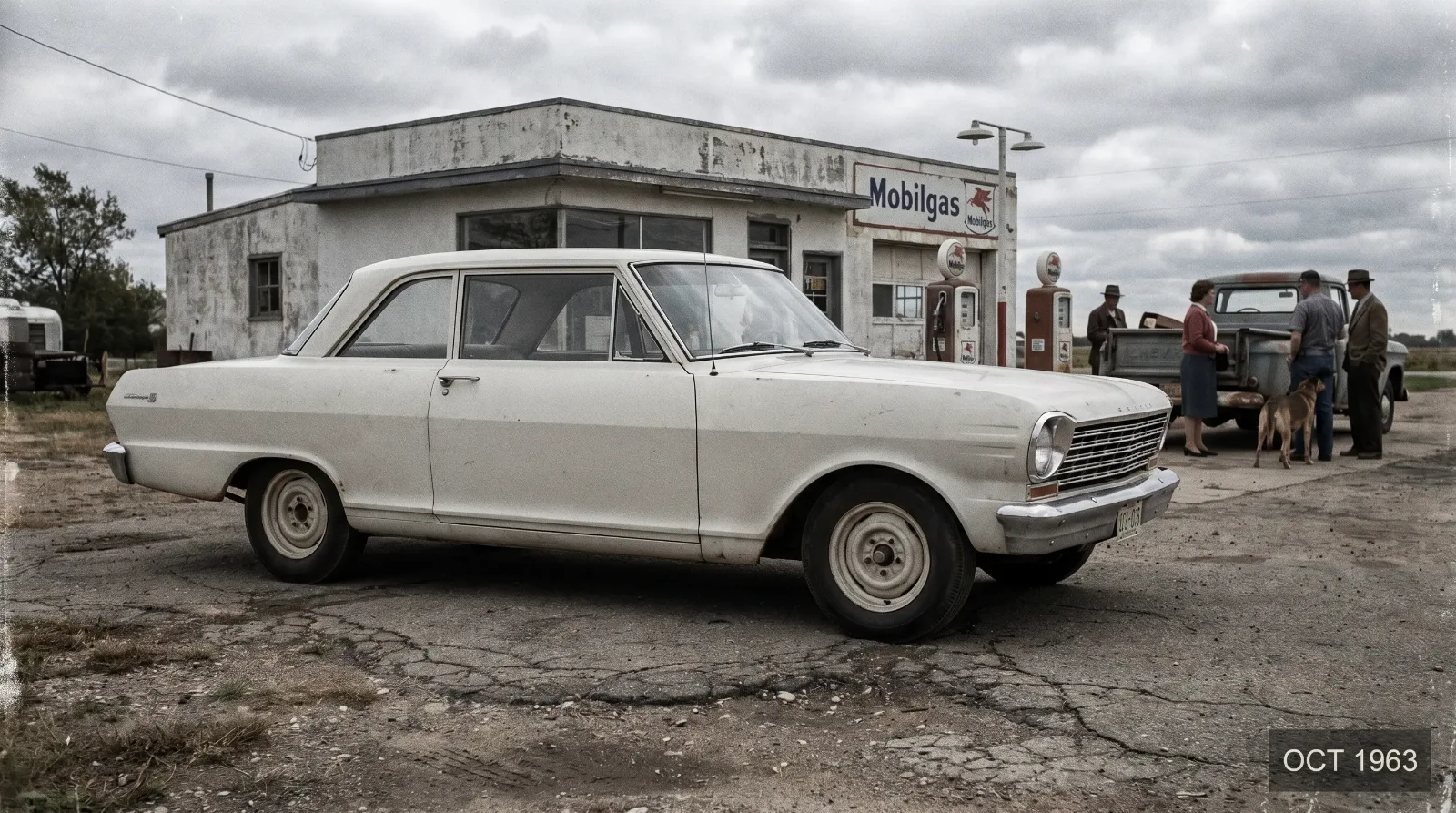
Most people who know the Chevy II at all know it as a small-block Chevrolet with a compact body wrapped around it. Fewer people remember that the car was originally sold with a four-cylinder engine, and that this engine stuck around far longer than its reputation suggests. The Chevy II four-cylinder was never meant to impress anyone. It was meant to get a family to work and back on as little gasoline as possible, and it did that job for the better part of a decade.
Why Chevrolet built a four-cylinder Chevy II at all
When Chevrolet designed the Chevy II for 1962, the target was Ford's Falcon and the growing wave of buyers who wanted a smaller, cheaper alternative to full-size cars. A four-cylinder engine fit that mission better than a six or an eight ever could. Chevrolet's engineers built the 153 cubic inch inline-four around the same basic architecture as the larger Chevy II six, sharing tooling and cutting development cost rather than starting from a clean sheet.
The result was a Chevy II you could order stripped down to its most basic form: base 100 series body, four-cylinder engine, three-speed manual, and not much else. That version of the car rarely gets discussed next to the SS package or the V8 options, but it is a bigger part of how the Nova began than most collectors give it credit for.
What the 153 four-cylinder actually offered
The 153 was rated at 90 horsepower in its early form, a modest figure even by early 1960s economy car standards. It was not designed to be quick. It was designed to be simple to service, cheap to insure, and easy on fuel for buyers who cross-shopped the Chevy II against imports as much as against other domestic compacts. Torque was similarly modest, and acceleration in a four-cylinder Chevy II sedan was leisurely at best.
Fuel economy was the entire point, and in that respect the engine did what it was built to do. Taxi fleets and delivery services took to the four-cylinder Chevy II for exactly this reason, valuing predictable running costs over any kind of performance. That utilitarian reputation is part of why so few four-cylinder cars survive today compared to their six- and eight-cylinder siblings. Cars bought to be used up got used up.
| Engine | Displacement | Horsepower (est.) | Primary buyer |
|---|---|---|---|
| Chevy II four | 153 cu in | 90 hp | Economy, fleet |
| Chevy II six | 194 cu in | 120 hp | Standard family use |
| 283 V8 (optional) | 283 cu in | 195 hp | Performance-minded |
How long the four-cylinder stuck around
What sets the Chevy II four-cylinder apart from a lot of other base engines of its era is longevity. Chevrolet kept offering a four-cylinder option well after the Chevy II line had been rebranded around the Nova name, continuing into the early 1970s on certain trims. That is a longer run than most buyers assume, and it reflects how much demand there still was for a genuinely cheap-to-run compact even as the rest of the lineup moved toward performance trims like the SS.
It also means four-cylinder cars span a wider range of Nova history than the SS story does. If you are trying to place a Chevy II by engine alone, the four-cylinder option shows up on cars built years apart, which is worth knowing before assuming an engine bay tells you the exact model year. For readers tracking the broader lineage, a related deep-dive on the SS package shows just how far the performance side of the family drifted from this base engine.
Why the four-cylinder matters to collectors now
A surviving four-cylinder Chevy II is a genuinely uncommon find today, not because it was rare when new, but because almost nobody kept one once something faster came along. Restorers who do track them down usually aren't chasing value in the traditional sense. They're chasing the honesty of the base car, the one that shows what most Chevy II buyers actually drove rather than the performance trims that get all the attention in our Nova retrospective.
Parts support for the 153 is thinner than for the 194 six or the small-block V8s, simply because fewer shops ever needed to stock rebuild kits for an engine most owners replaced rather than repaired. That scarcity cuts both ways for a buyer. A numbers-matching four-cylinder car is unusual enough to be interesting, but keeping it running correctly takes more patience than sourcing parts for a small-block swap would.
"The four-cylinder car is the one nobody saved on purpose. Every survivor left is an accident of somebody just never getting around to selling it."
— Tom Ramirez
If you are looking at a documented four-cylinder Chevy II today, whether for sale or in a collection, you are looking at the plainest version of a car whose reputation was built almost entirely on the engines that replaced it. That plainness is exactly why it is worth understanding on its own terms. Buyers hunting a classic Chevy II for sale should know that a correct four-cylinder car, however unglamorous, is a genuine piece of how this whole lineup started.
Every SS package, every 327 V8 swap, every trim upgrade that made the Nova name worth chasing started from this same basic platform, built first around an engine most people forget existed. Understanding the four-cylinder car is understanding the floor the rest of the lineup was built on top of.
Sources and notes
- Chevrolet 153 4-cylinder engine, Wikipedia
- The Little Engines That Could, Part 4: Chevy II 153 Four, Curbside Classic
- Size Doesn't Matter: The Chevy II/Nova 153 Inline-4, Chevy Hardcore
- 1962 Chevy II Nova Sedan 194 Hi-Thrift spec sheet, Automobile Catalog
- Chevrolet Turbo-Thrift engine, Wikipedia
- Introduction to the 1962-1967 Chevrolet Chevy II, HowStuffWorks