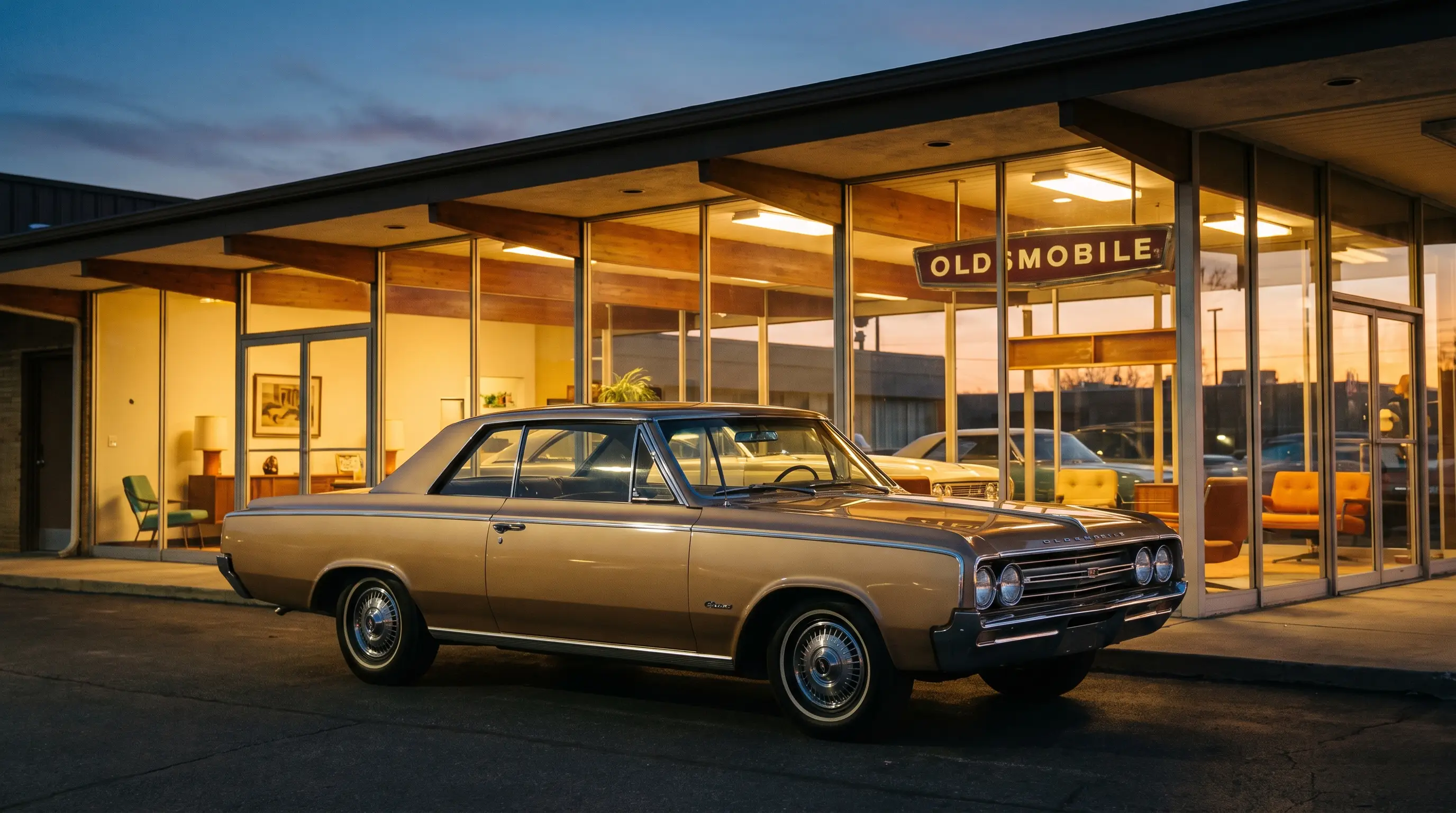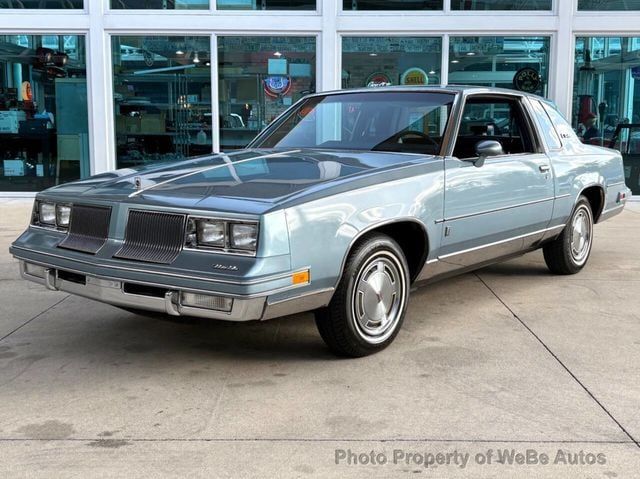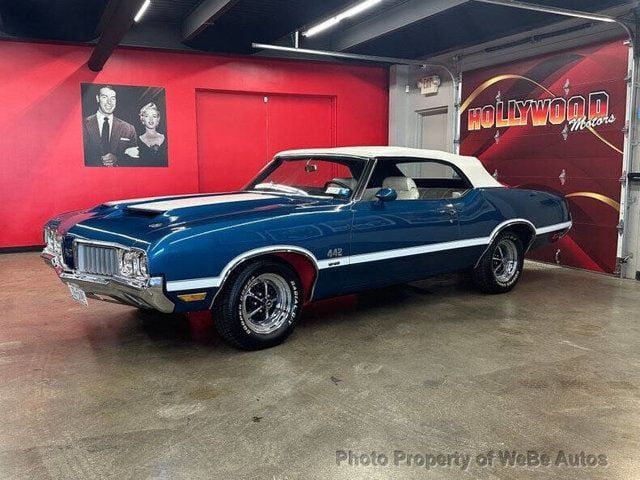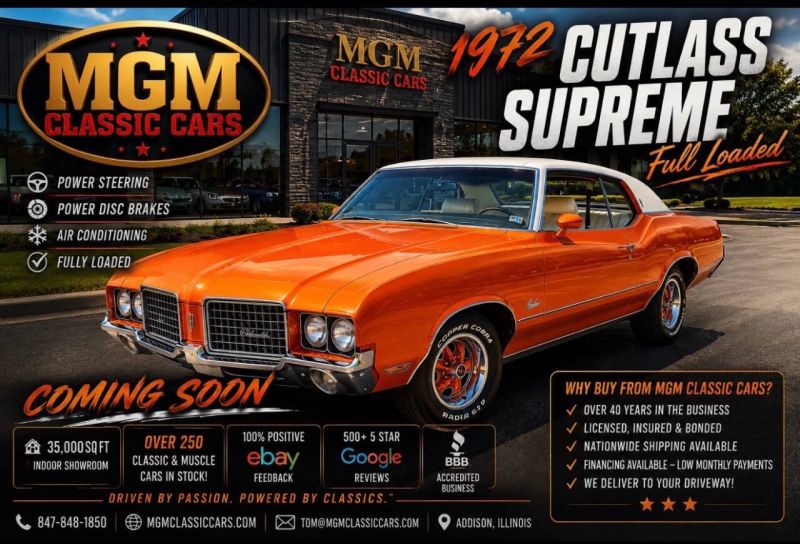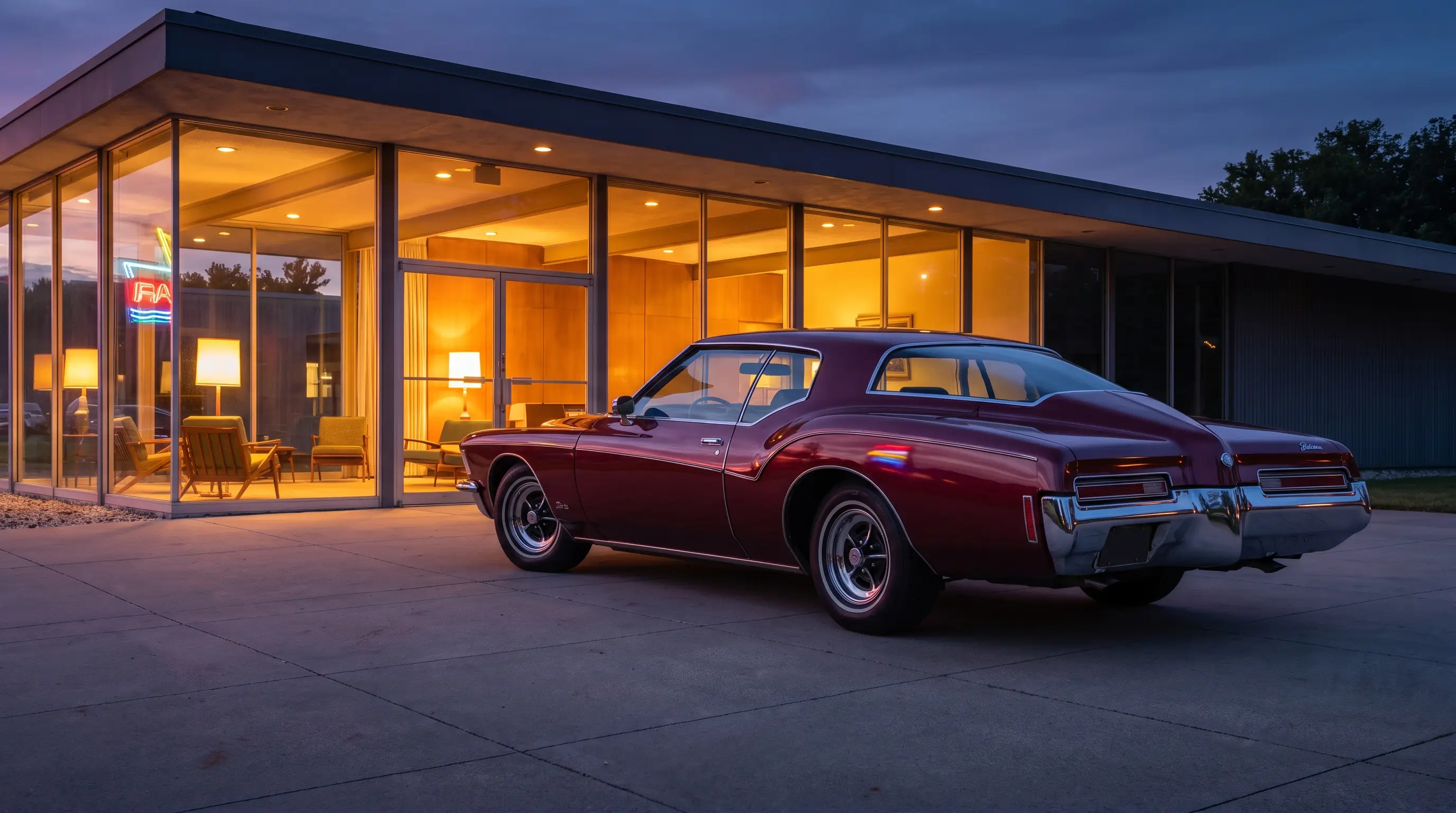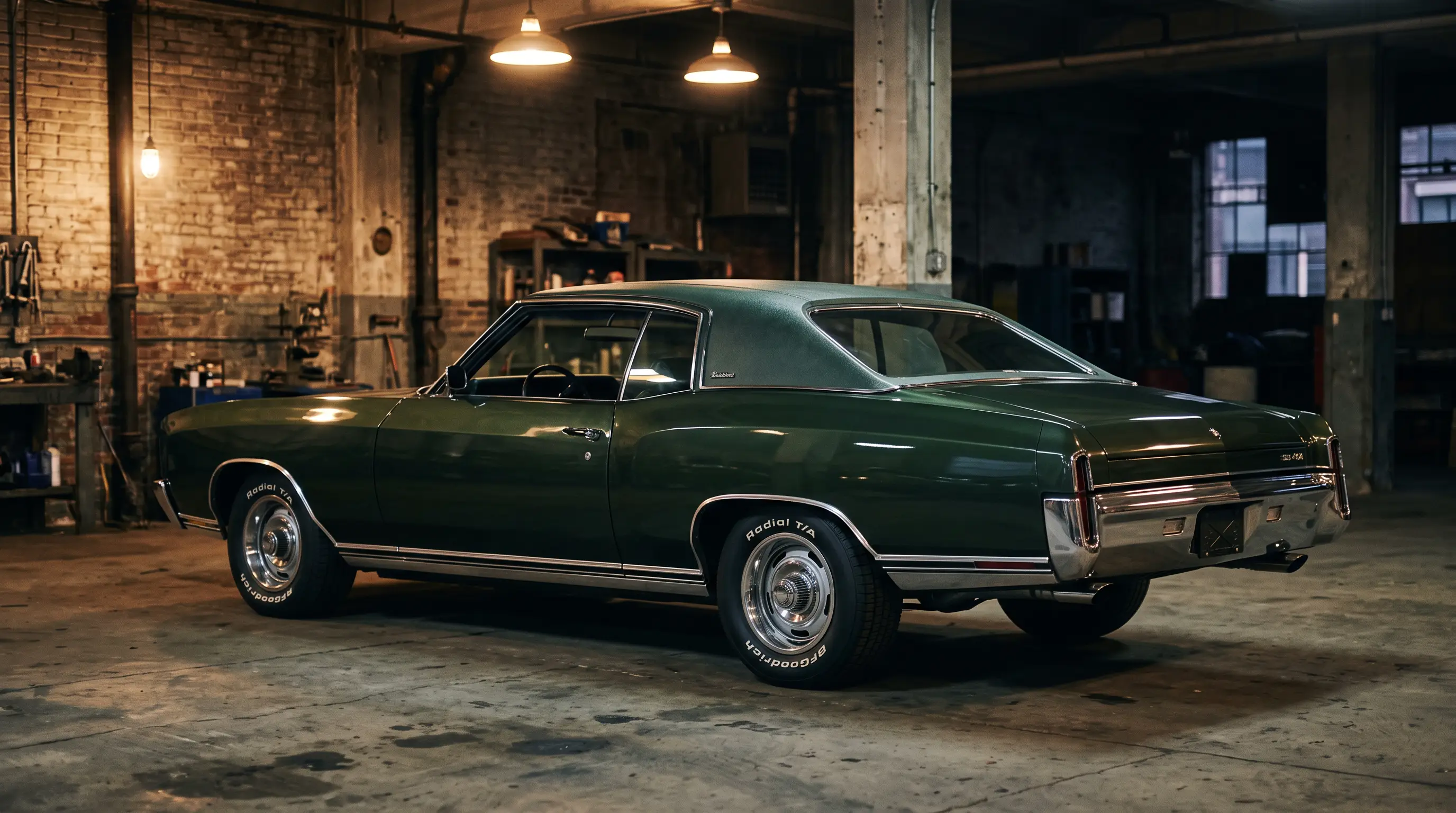
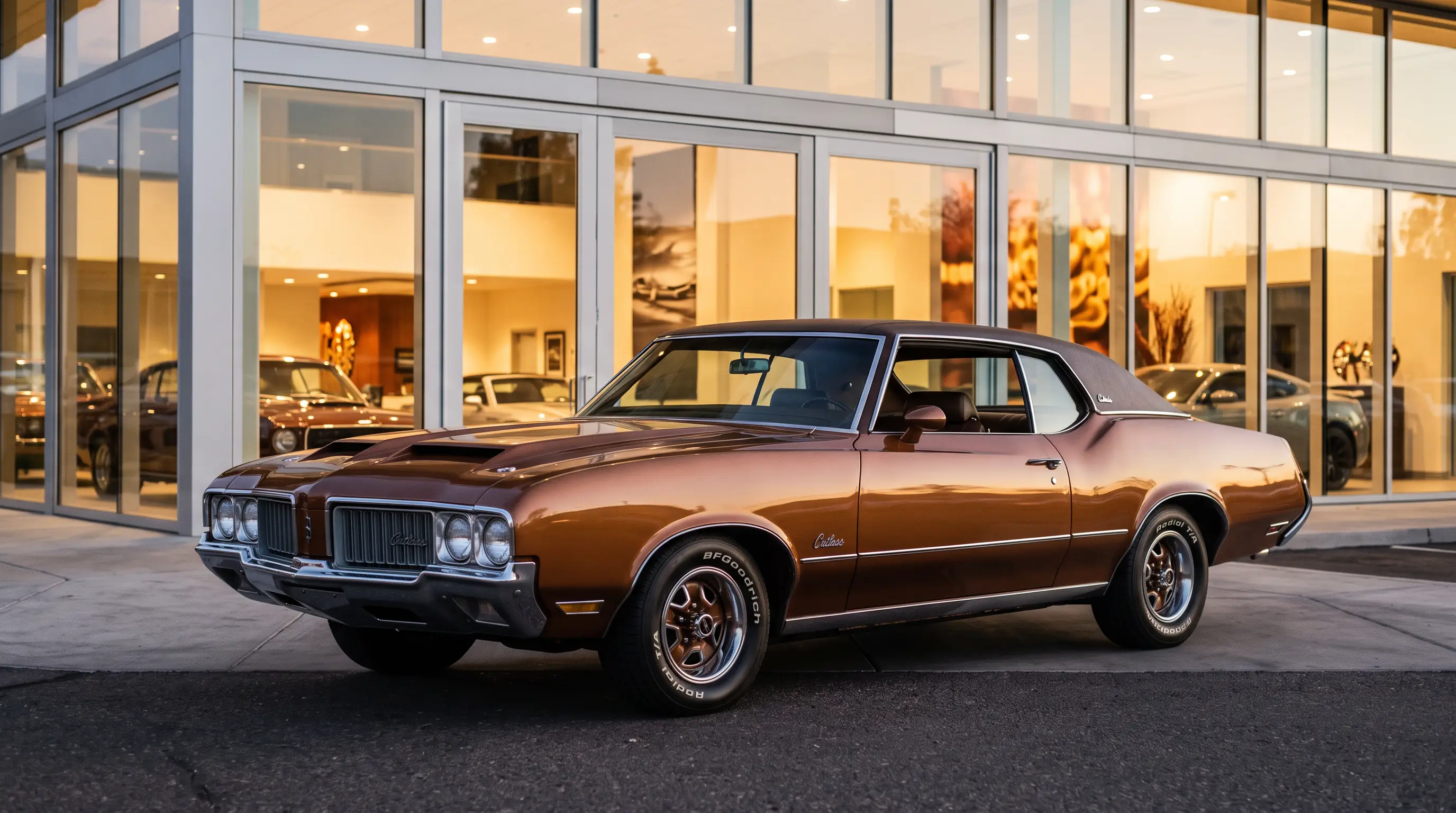
The 1970 Cutlass Supreme is the car that settled an argument Oldsmobile had been having with itself since 1966: was the Cutlass Supreme a trim level or a car in its own right. By 1970 the factory had made its choice. The Supreme got its own roofline, its own identity within the Cutlass family, and a sales pitch that no longer leaned on the base Cutlass name to do the work. This is the year the Supreme stopped being an option box and started being the reason people walked into an Oldsmobile showroom.
A notchback for a fastback family
Every other Cutlass in the 1970 lineup, the base Cutlass and the sportier Cutlass S, carried the semi-fastback roofline that had defined the A-body since the 1968 redesign. The Cutlass Supreme hardtop did not. It got a formal, notchback roof with a more upright rear window, a decision that had nothing to do with aerodynamics and everything to do with signaling that this was the dressed-up car in the range. Sit a 1970 Supreme hardtop next to a Cutlass S coupe and the difference is obvious within two seconds, even to someone who has never opened a build sheet in their life.
That roofline decision matters more than it looks like on paper. GM's other divisions were doing something similar across their A-body ranges that year, splitting sport and luxury identities into distinct silhouettes rather than trim badges alone. Oldsmobile's version of that split is, for my money, one of the cleaner executions. For how the Cutlass began, the notchback Supreme is a useful bookend, since it shows how far the nameplate had traveled from its 1961 compact-car origins.
What actually changed for 1970
The 1970 model year brought a revised grille and taillight treatment across the Cutlass range, along with the usual running changes Oldsmobile made mid-cycle on an A-body: interior trim updates, a reworked instrument cluster on higher trims, and, for the Supreme specifically, a more clearly defined options hierarchy. Buyers could order the Supreme as a two-door hardtop or a convertible, and the four-door pillared sedan carried the Supreme badge as well, aimed squarely at the family buyer who wanted Cutlass style without giving up back-seat headroom.
None of this happened in a vacuum. 1970 was also the year the 442 firmed up its own identity as a performance-first model rather than a Cutlass option package, which is part of why the Supreme could afford to lean into comfort and style. The factory was segmenting the lineup on purpose: 442 for the buyer chasing quarter-mile numbers, Supreme for the buyer who wanted a good-looking, well-trimmed intermediate that happened to still be quick with the right engine underneath it.
Engine choices under the Supreme's hood
The 1970 Cutlass Supreme could be ordered with a range of Rocket V8s, from a mild 350 for daily driving up through the big-block 455 for buyers who wanted the comfort of the Supreme body with real power behind it. The table below is a general guide to what was available. Exact horsepower ratings varied by carburetor, compression, and mid-year running changes, so treat these as the shape of the lineup rather than a single frozen spec sheet.
| Engine | Type | Approx. output | Typical buyer |
|---|---|---|---|
| 350 Rocket V8 (2bbl) | Small-block | around 250 hp | Daily driver, family sedan buyer |
| 350 Rocket V8 (4bbl) | Small-block | around 310 hp | Buyer who wanted some pep without the big-block premium |
| 455 Rocket V8 | Big-block | 320-365 hp depending on carburetor and SX-package tune | Supreme hardtop or convertible buyer chasing effortless torque |
The 455 in a Supreme is a different experience than the 455 in a 442. The 442 version was tuned and marketed around straight-line performance. The Supreme version was there to make a two-ton luxury intermediate feel unhurried at highway speed, and by most contemporary accounts it did exactly that. Readers who want the performance side of the 1970 story rather than the comfort side should look at a companion piece on the Rallye 350, which took the small-block route to a very different kind of attention.
Production and survival today
Oldsmobile built the 1970 Cutlass in substantial numbers across the whole range, with the Supreme accounting for a meaningful share of that total, particularly in hardtop form. Exact model-by-model production splits for 1970 are frequently misquoted online, often because sources conflate Cutlass, Cutlass S, and Cutlass Supreme totals into a single figure. What is not in dispute is that the four-door Supreme sedan sold in far greater numbers than the convertible, which was always the rarest body style in any A-body Cutlass year and is scarcer still today after decades of attrition, weather, and neglect.
Surviving cars split roughly into two camps: driver-quality Supremes that were used as intended and show real mileage, and a smaller number of well-documented, low-mile cars that collectors have started paying real attention to as the 442 market has gotten expensive enough to push buyers toward its more comfortable sibling.
"People forget the Supreme was never trying to be the 442. It was trying to be the car you'd actually want to drive every day, and in 1970 Oldsmobile finally gave it a body that said so without a badge doing the talking."
— Tom Ramirez
Why the notchback still matters
The 1970 Cutlass Supreme is a pivot point disguised as a mid-cycle refresh. It is the year Oldsmobile decided the Supreme deserved a shape of its own, not just a nicer grille and a longer options list. That decision carried forward into the Colonnade generation later in the decade, where the Supreme name eventually became the dominant identity for the entire mid-size Cutlass line. For a fuller look at how that lineage unfolded from 1961 onward, our Cutlass retrospective traces the whole arc. If this year's notchback hardtop is the one that caught your eye, the current listings of classic Oldsmobile Cutlass for sale are worth a look, since well-kept Supremes from this era still turn up at prices that undercut the 442 by a wide margin.
Sources and notes
- Oldsmobile Cutlass Supreme - Wikipedia
- Automobile Catalog: 1970 Cutlass Supreme Convertible Rocket 455 specs
- Oldsmobiles Forever: What is an SX
- HotCars: Oldsmobile Cutlass SX and the 455
- Over-Drive Magazine: 1970 Oldsmobile mid-size cars fact sheet
- Conceptcarz: 1970 Oldsmobile Cutlass specifications and dimensions