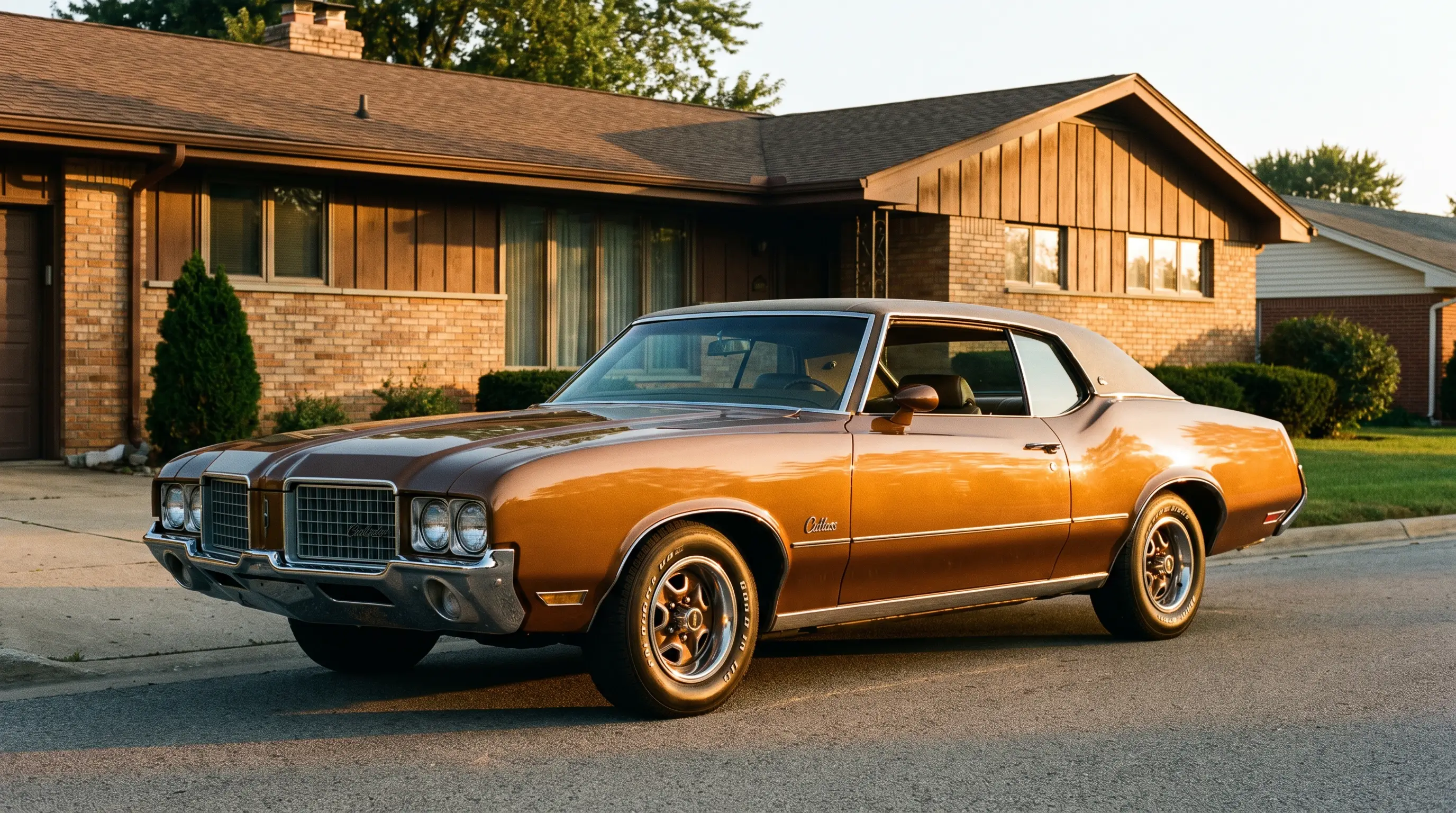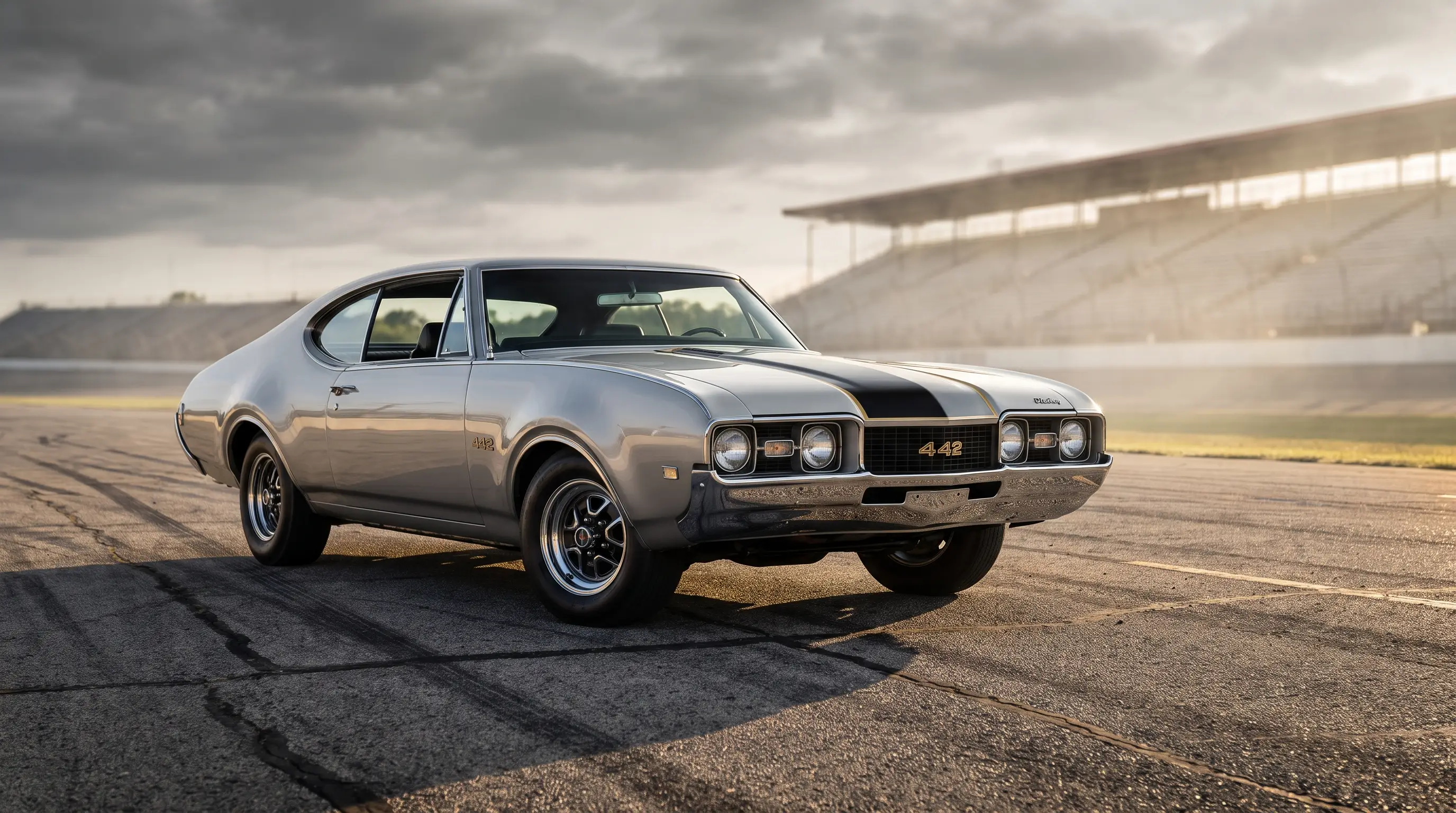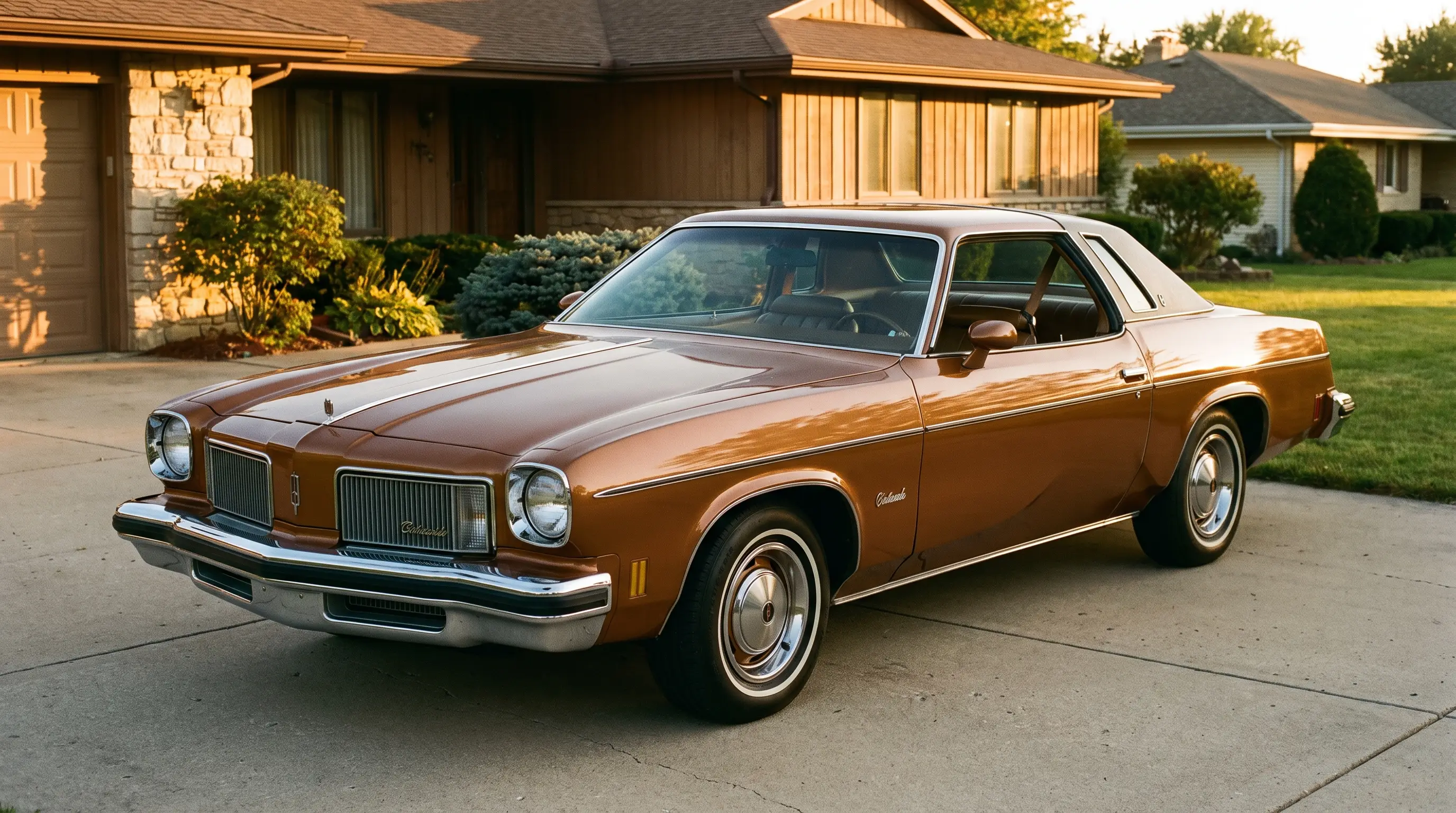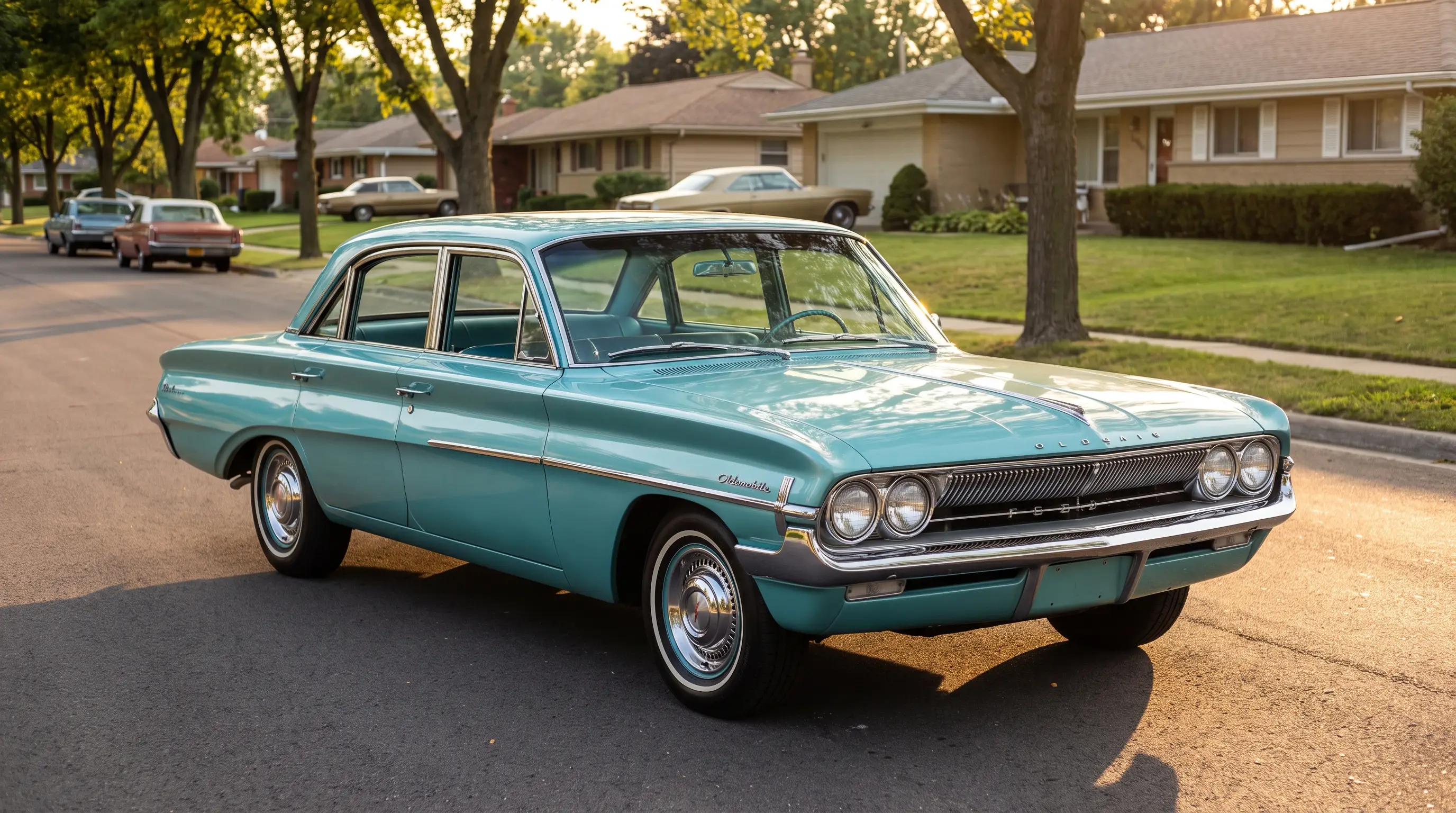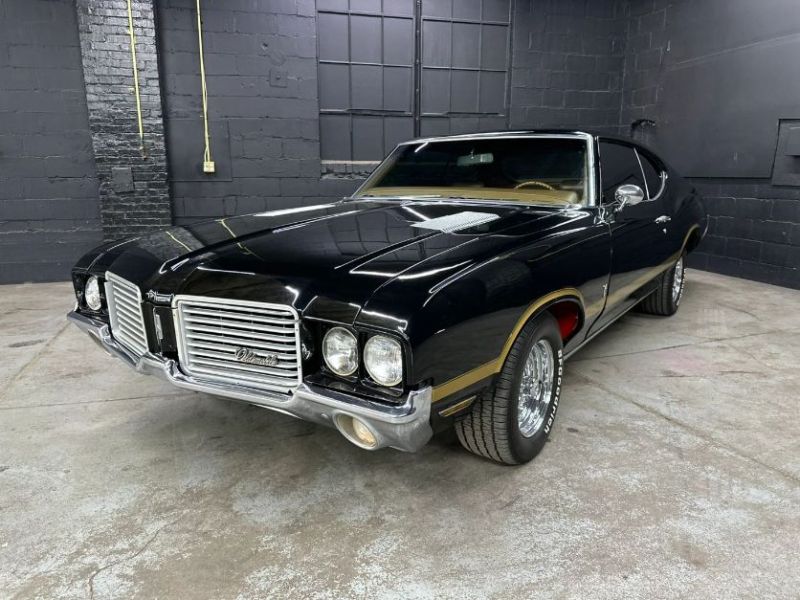
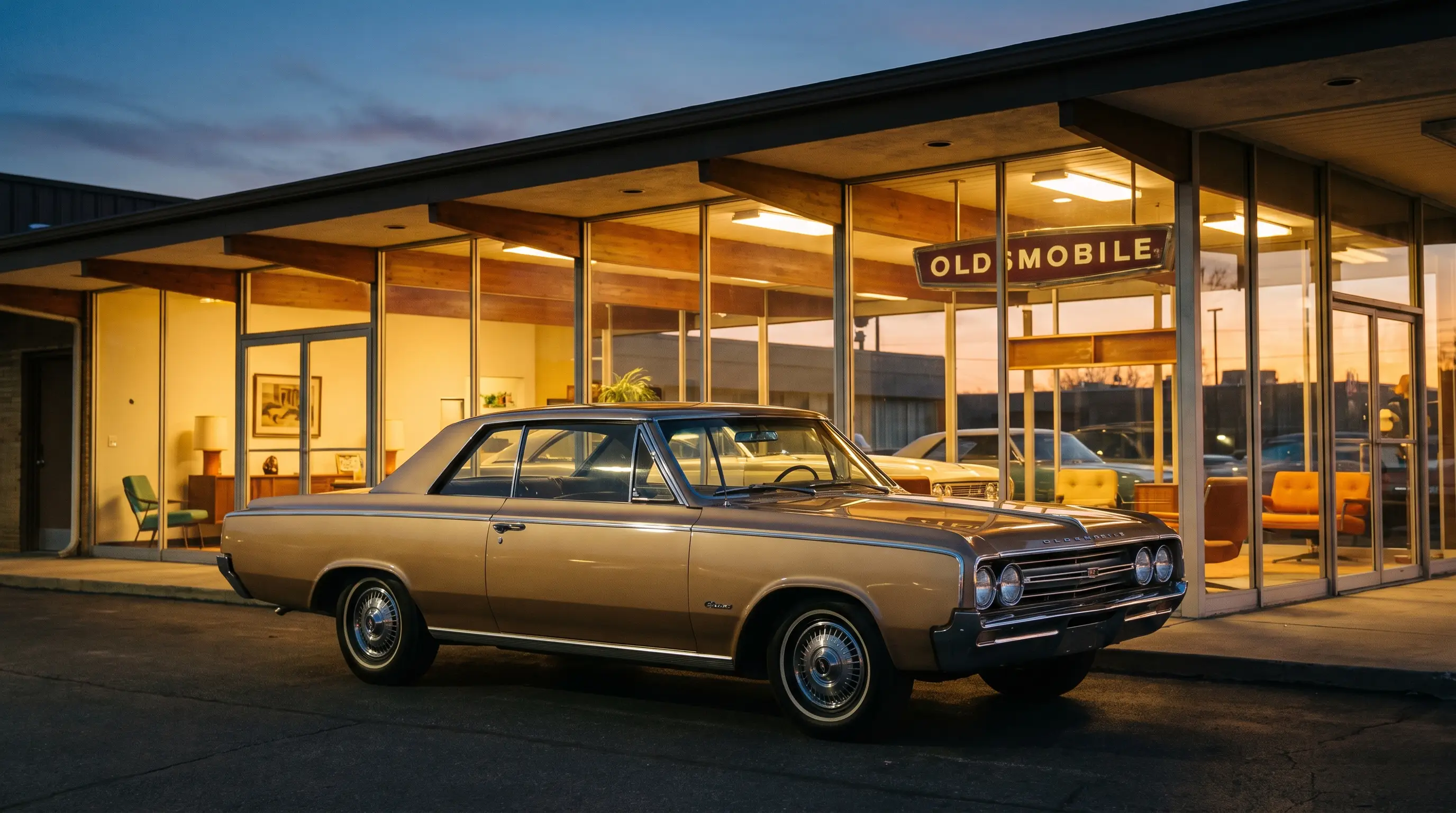
The 1964 Cutlass is where most people think the story starts, and that is only half right. The Cutlass name arrived earlier, in 1961, as a trim level on the compact F-85, not as the intermediate muscle machine collectors picture today. Getting that sequence straight matters, because the early years explain why the car turned out the way it did. Oldsmobile spent the first half of the 1960s learning what the Cutlass was supposed to be, and by 1964 it had the answer.
I work from the build records and the sales literature rather than from memory, and the records tell a cleaner story than the folklore does. If you want the full arc, our companion piece on how the Cutlass legend began covers the whole run. Here I want to walk through the compact years and the move to the A-body, because that transition is the part people most often get wrong.
The F-85 compact and the aluminum V8
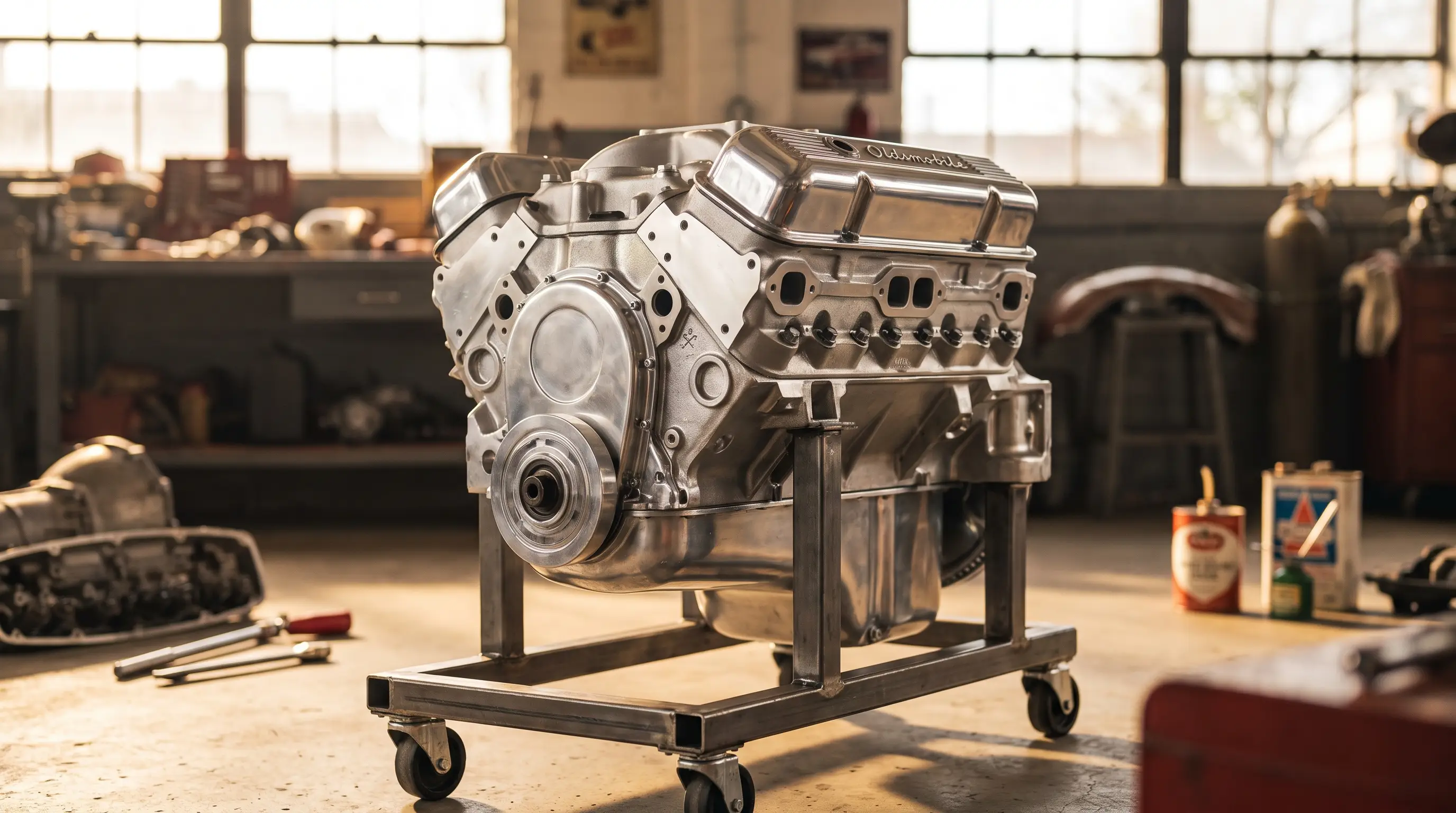
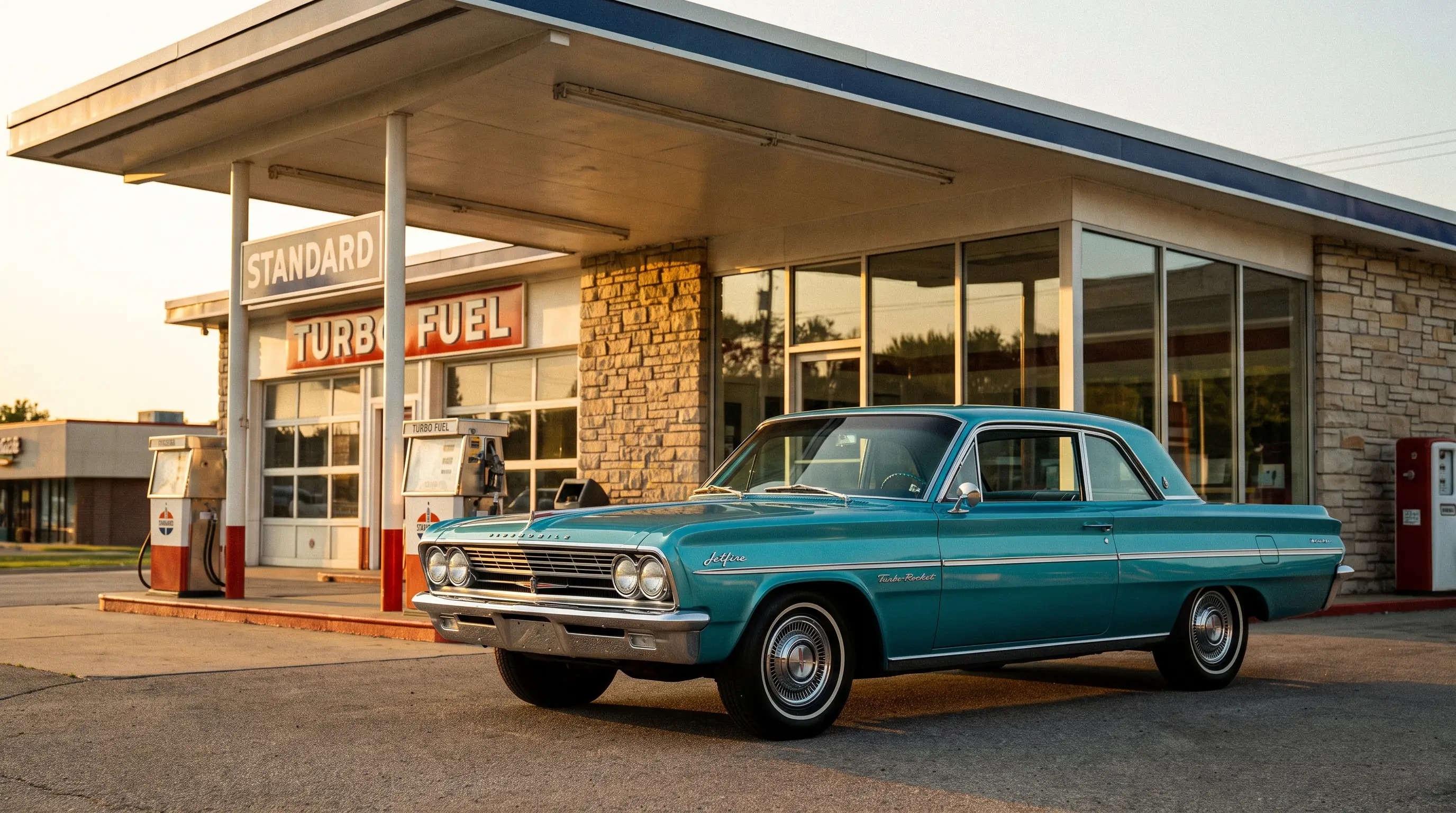
The F-85 launched for 1961 as one of General Motors' senior compacts, sharing its basic architecture with the early Buick Special and the Pontiac Tempest. Its headline feature was an aluminum 215-cubic-inch V8, unusual for its day and light for its size. The Cutlass name appeared as an upscale trim on this platform, a sportier, better-appointed F-85 rather than a separate model.
This is the first correction I have to make regularly. A 1961 or 1962 Cutlass is a compact, not an intermediate, and it does not share much with the 1964 car beyond a name. Treat them as different animals when you shop or research, because they are.
1964 and the move to the A-body
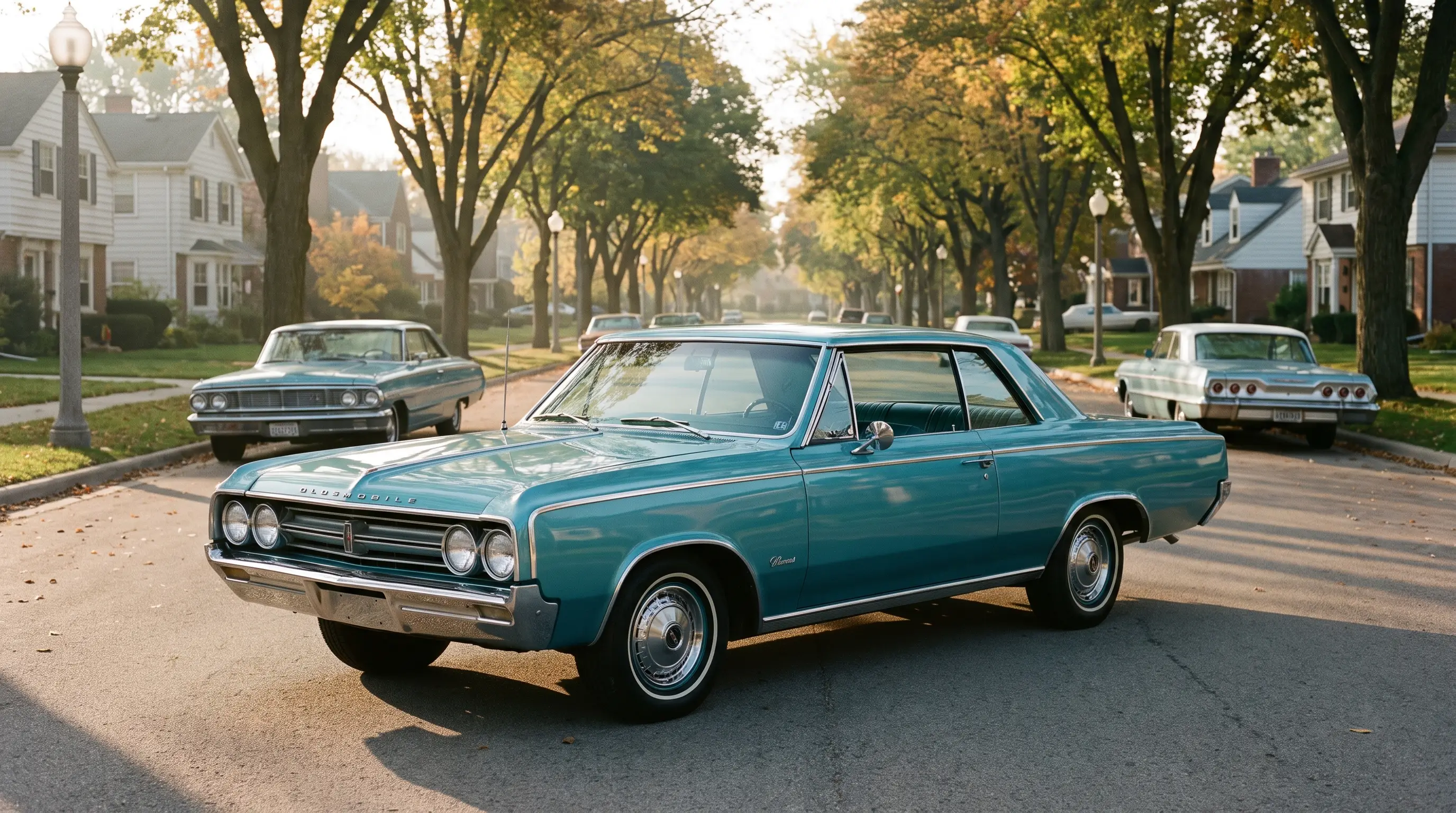
For 1964 Oldsmobile moved the F-85 and Cutlass onto GM's new intermediate A-body platform. This is the birth of the car people mean when they say Cutlass. It was larger, it rode on a conventional frame, and it made room for a proper V8. Out went the aluminum 215, and in came a cast-iron 330-cubic-inch Rocket V8 in the higher trims.
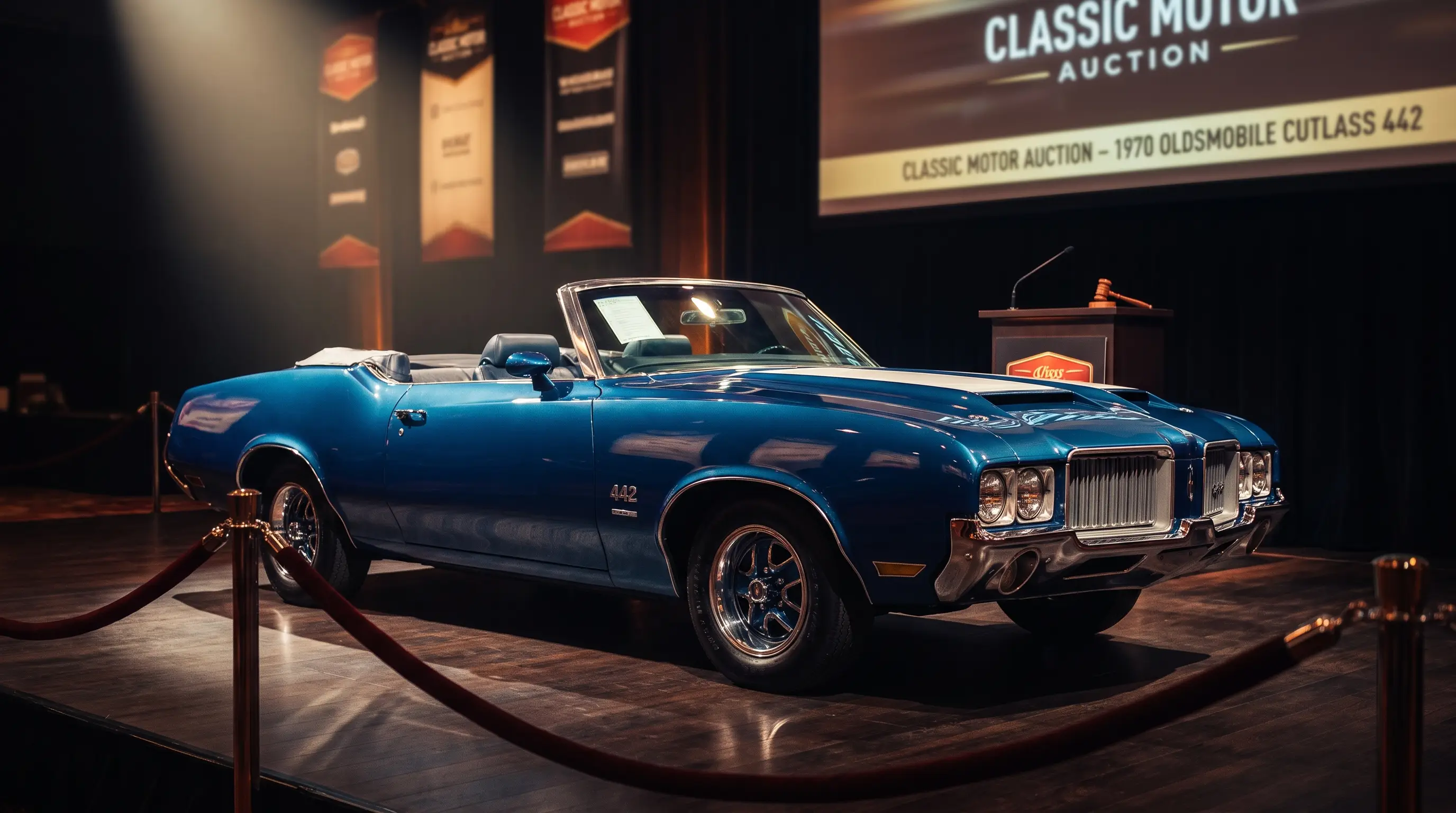
The 1964 Cutlass sat at the top of the F-85 range, the well-equipped version with the better interior and the stronger engine options. That same year Oldsmobile answered Pontiac's GTO with the original 442 package, built on this platform. So 1964 gives you two milestones at once: the A-body Cutlass as we know it, and the first 442. The records show these arriving together, which is why that model year carries so much weight with collectors.
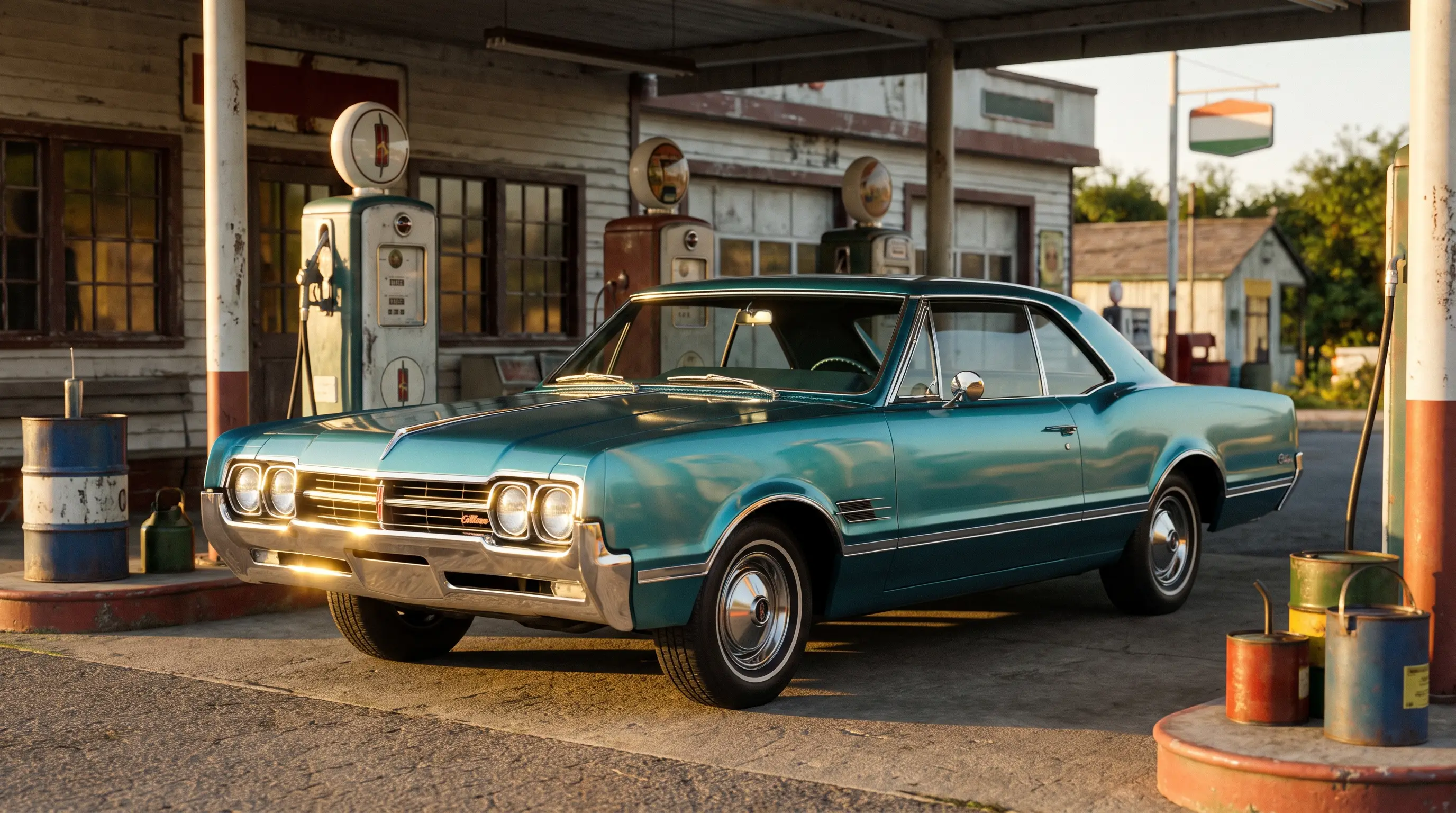
The 1965 model year is where the recipe firmed up. Oldsmobile enlarged the top engine to 400 cubic inches for the 442, and the styling gained the crisper lines that carried the car through the middle of the decade. A 1964 car is the first of the breed, and there is value in being first, but a 1965 is often the more satisfying drive because the engineering had a year to settle. Collectors who chase the earliest example sometimes overlook that the second-year car fixed small things the first one lived with.
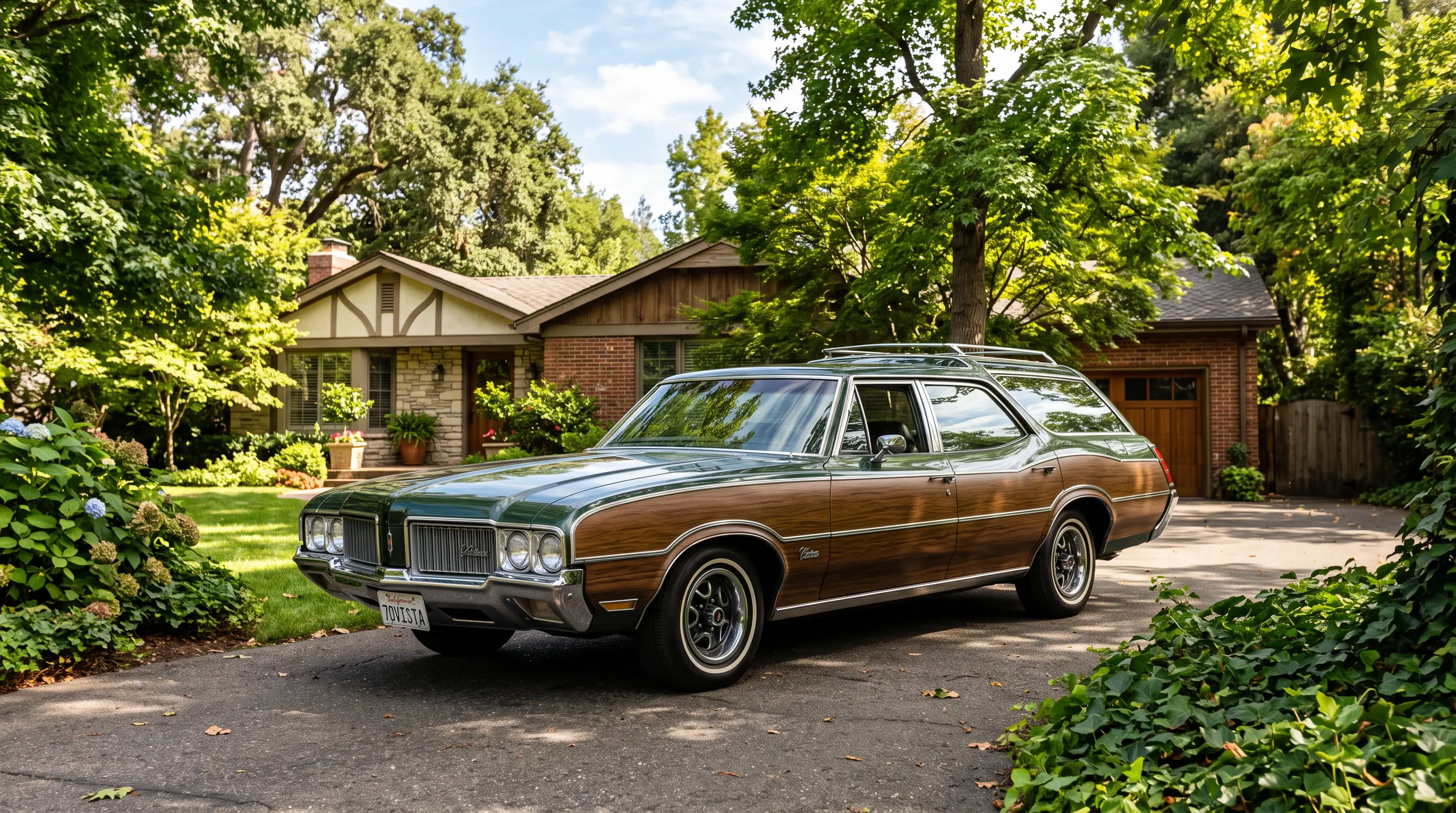
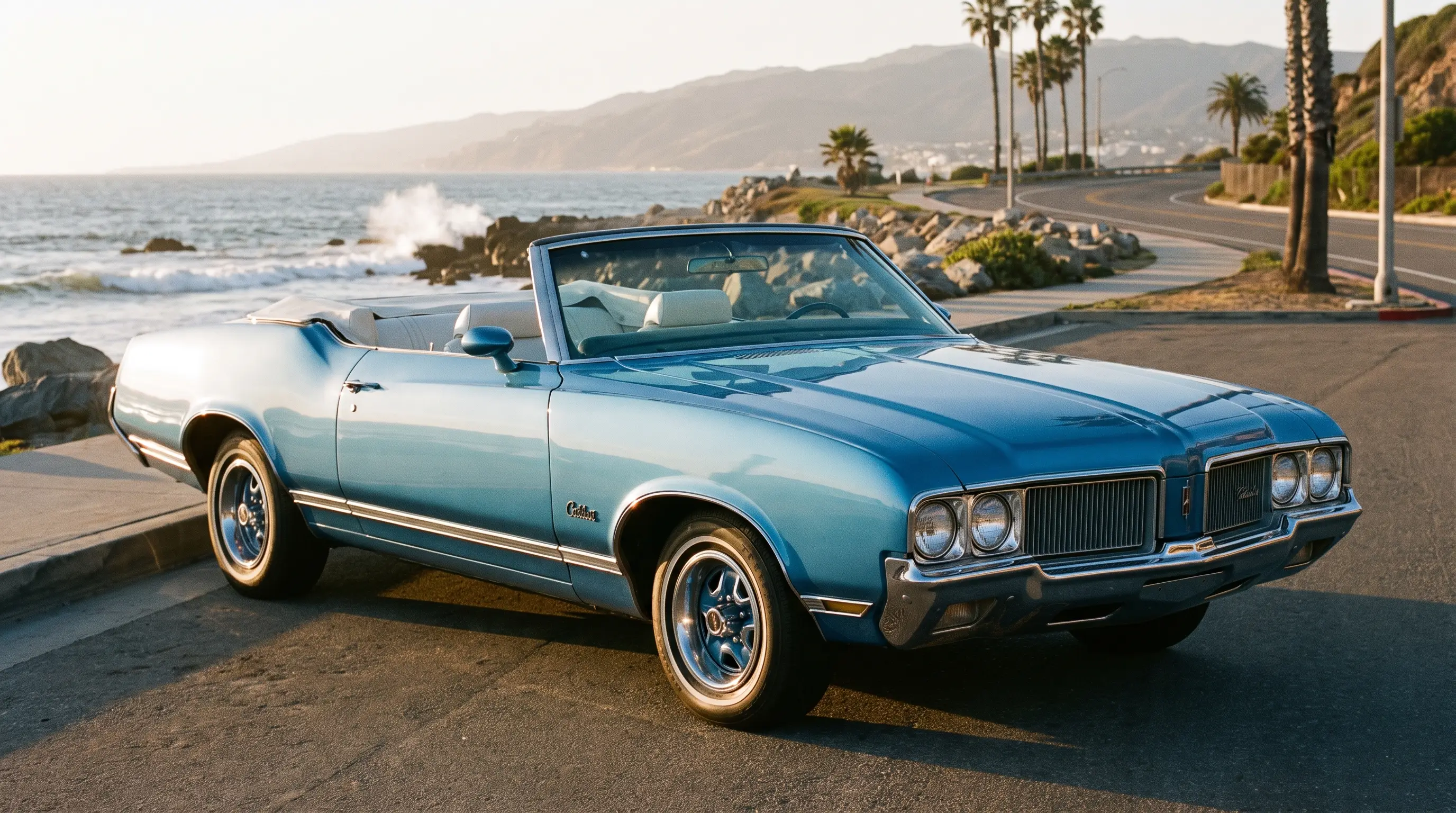
Body styles matter to value in these years, and the records let you sort them out. Oldsmobile offered the A-body as a coupe, a sedan, a convertible, and station wagons, with the sportier trims concentrated in the two-door and convertible bodies. A convertible in any given trim commands a premium over the equivalent hardtop, and the wagons, long ignored, have found their own small following. Know the body style before you talk price, because it moves the number more than most buyers expect.
Reading the trim ladder
People throw the word Cutlass around as if it meant one thing, but in these years it was a rung on a ladder. The F-85 was the base. The Cutlass was the step up. By the mid-1960s a Cutlass Supreme designation appeared above that, and the 442 sat off to the side as the performance package. Knowing where a given car falls on that ladder tells you what it left the factory with.
The reason this matters is verification. A base F-85 wearing Cutlass badges is not a Cutlass, and a Cutlass wearing 442 emblems is not a 442 unless the codes back it up. The factory documentation, the cowl tag, and the engine stampings are how you tell. I would rather read a build sheet than a seller's description any day.
What the early cars drive like
The compact-era cars are light and pleasant rather than fast, and the aluminum V8 gives them a character the later iron engines lack. The 1964 and 1965 A-body cars feel more substantial, with the torque of the 330 and a ride tuned for comfort. These were not stripped-down economy cars. Oldsmobile positioned the division a step above Chevrolet and Pontiac, and the interiors show it even in this early period.
None of them will keep up with a 455-powered car from the end of the decade, and they were never meant to. What they offer is the start of the story, the cars that established the Cutlass as a comfortable, well-built intermediate before the muscle era turned it into a legend.
The 1968 restyle is where the early period closes and the classic muscle silhouette begins. Oldsmobile gave the A-body a longer, more sculpted body that year, and the 442 graduated from an option package to its own series. If you draw a line through the records, everything before 1968 is the setup, and everything from 1968 through 1972 is the payoff. The compact F-85 years and the first A-body cars are the chapters that make the later legend legible, which is exactly why I keep steering new collectors back to them.
For originality, the early cars reward patience. Many were driven hard and modified in period, so a truly unmolested survivor is uncommon. When you find one with its original engine, correct trim, and factory documentation intact, you are looking at a piece that tells the whole early story in one car. Those are the ones worth waiting for, and the records are how you confirm you have found one.
A note on the name itself, because it causes endless confusion. Oldsmobile used Cutlass as a trim designation in the compact years and then let it grow into the identity of the whole intermediate line. That expansion is why a buyer can find the Cutlass name attached to cars that share almost nothing mechanically across a decade. When someone tells me they own a Cutlass, my first question is always the year, because the answer changes everything about what the car actually is. The records reward precision here in a way that casual conversation does not.
"The mistake I see most often is treating every early Cutlass as a muscle car in waiting. It was not. In 1964 the Cutlass was Oldsmobile's nice A-body, and the 442 was the option you added if you wanted the muscle. The documentation makes the distinction clear, if you bother to read it."
— Tom Ramirez
Specifications at a glance
| Spec | Detail |
|---|---|
| Cutlass name debut | 1961, as trim on compact F-85 |
| Early engine | Aluminum 215 cu in V8 |
| Notable variant | 1962 Jetfire, turbocharged 215 |
| Platform change | 1964, moved to intermediate A-body |
| A-body engine | Cast-iron 330 cu in Rocket V8 |
| 442 package debut | 1964 |
| Trim ladder | F-85, Cutlass, Cutlass Supreme, 442 option |
Why the early years still matter
Collectors chase the 455 cars and the W-machines, and I understand why. But the early A-body Cutlass is where the recipe was written. The comfortable ride, the Rocket V8, the step-above positioning, all of it was set between 1961 and 1965. The famous muscle cars are that formula turned up loud. Read the early cars and the later ones make more sense.
The next chapter is the redesign that carried the Cutlass to the top of the American sales charts, and it is worth understanding how the car got there. If you want to follow the line forward, keep exploring the later chapters. And if the early A-body years are where your interest sits, browse the current classic Oldsmobile Cutlass for sale listings and pay attention to which cars come with their factory paperwork. On these early cars, the documentation is what separates a real Cutlass from a badge.
Sources and notes
- Mac's Motor City Garage: Turbo Pioneer - The 1962 Oldsmobile Jetfire
- CarBuzz: The Oldsmobile Jetfire Was the First Mainstream Turbocharged Car
- Wikipedia: Oldsmobile Cutlass
- CarBuzz: The Oldsmobile 442 Had a More Powerful V8 Than the Company Claimed
- The Washington Post: Cutlass to Cap a 5-Year Sales Rise as 1976's Best-Selling Model