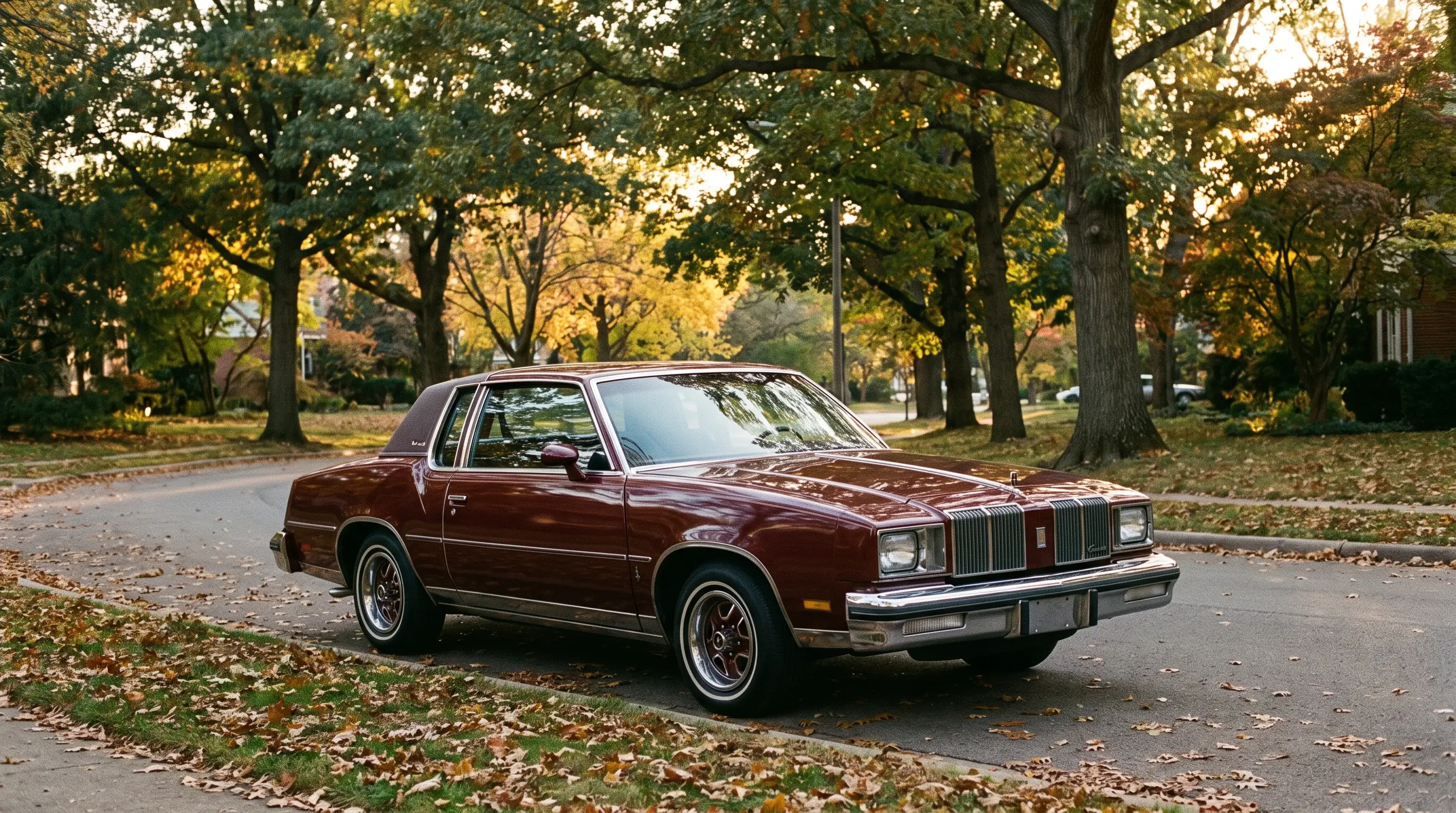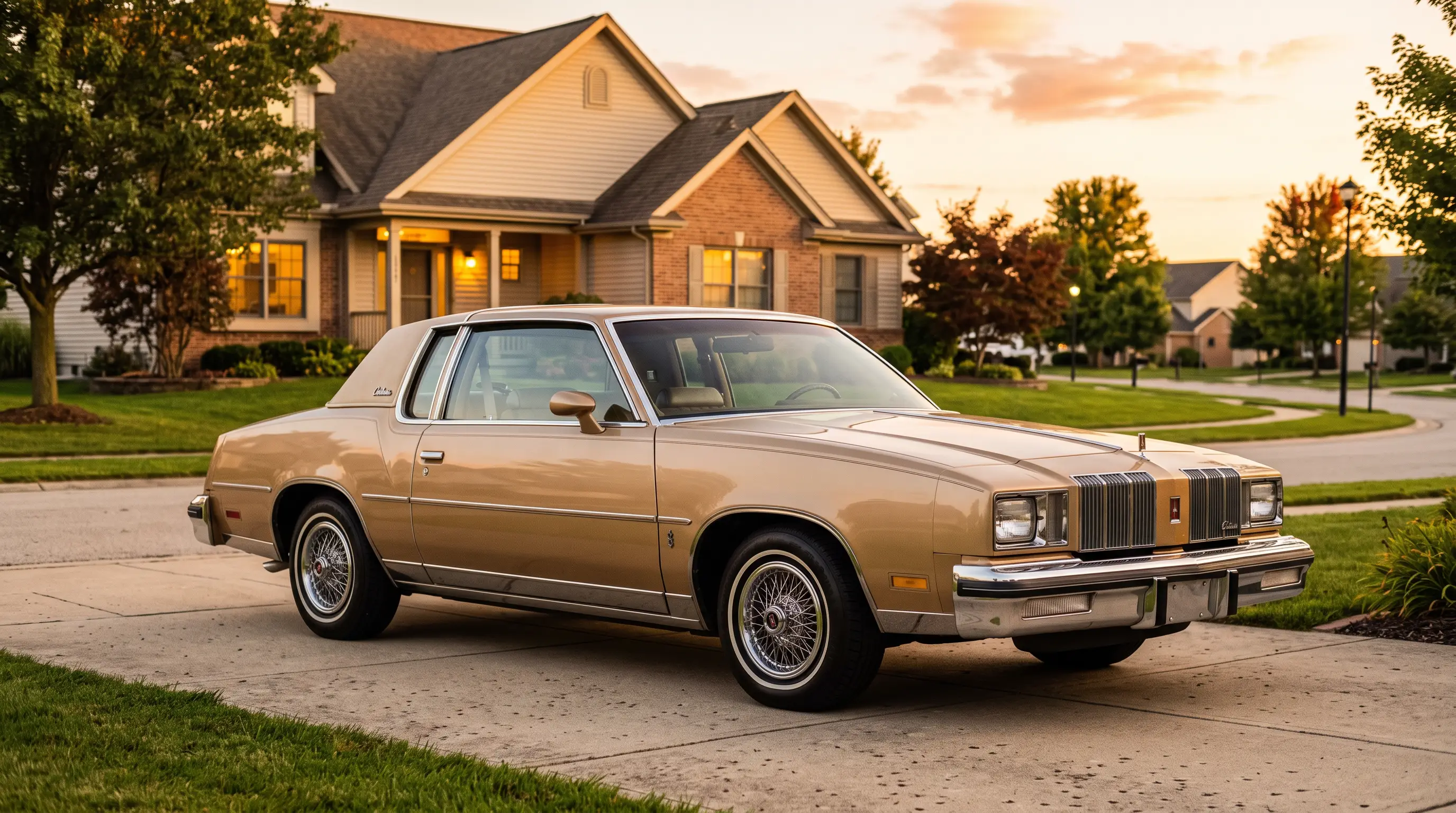
The Oldsmobile Cutlass is the car your neighbor had, your uncle had, and probably somebody on your street still has parked under a tarp. For most of the 1970s it was the best-selling car in America, and yet people still act surprised when you tell them that. I have had more Cutlasses through my shop than any other single nameplate, and I have watched buyers make the same mistakes on them for thirty years. So let me walk you through what this car actually was, where it came from, and why it went from a badge on a compact to the biggest name Lansing ever built.
The short version: the Cutlass started as trim, became a muscle car, became a personal luxury coupe, and then became a cultural fixture long after Oldsmobile stopped caring. The long version is better.
From F-85 trim level to a name of its own
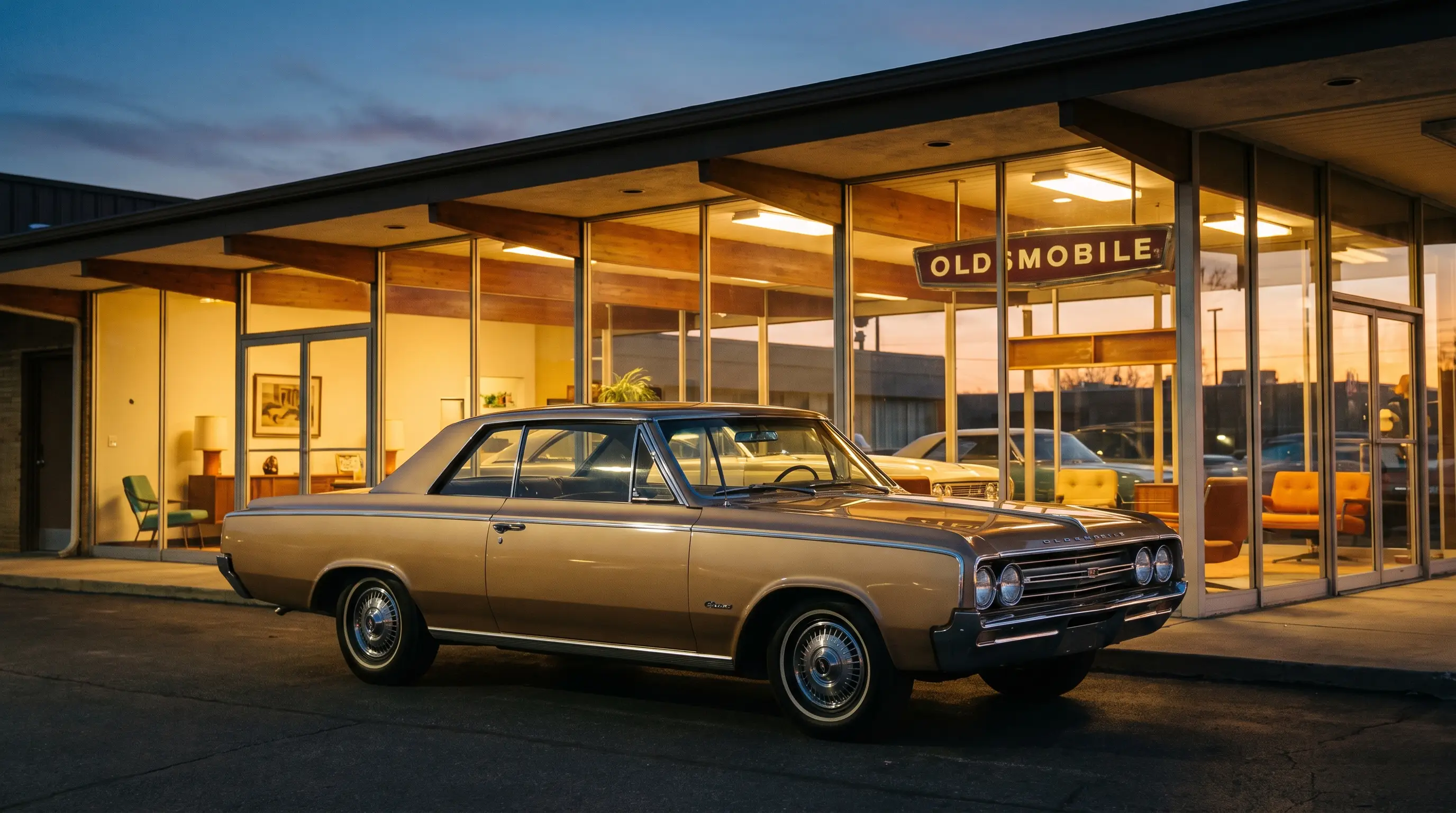
The Cutlass name showed up in 1961, and it was not a car. It was the top trim on the Oldsmobile F-85, a compact built on GM's new senior-compact platform alongside the Buick Special and the Pontiac Tempest. The F-85 had an aluminum 215-cubic-inch V8, which was a genuinely clever engine and a genuine headache to keep alive if the coolant ever got neglected. That is the first thing people forget about early Cutlasses. They were small cars with a fussy aluminum motor, not the big iron everyone pictures.
By 1962 the Cutlass was a sportier package with bucket seats and a little more attitude. There was even a turbocharged version, the Jetfire, which was one of the first turbo production cars sold in America. It was ahead of its time and cranky about it, and most got driven hard and thrown away, which is why a running one is a rare thing today. In 1964 Oldsmobile moved the F-85 and Cutlass onto the new intermediate A-body, and the car grew up. It got a cast-iron V8, more room, and the proportions that would define it for the next decade. That is also the year the badge that everybody remembers first appeared, bolted right onto the Cutlass.
A quick word on where Oldsmobile sat in the GM pecking order, because it explains everything the Cutlass did later. Olds was the step-up division, above Chevrolet and Pontiac, below Buick and Cadillac. That middle spot is exactly why the Cutlass could sell a stripped economy coupe and a leather-lined Supreme off the same showroom floor. The buyer who wanted a little more than a Chevelle but could not stretch to a Buick had one obvious answer, and it wore a Rocket badge.
The 4-4-2 and the muscle years
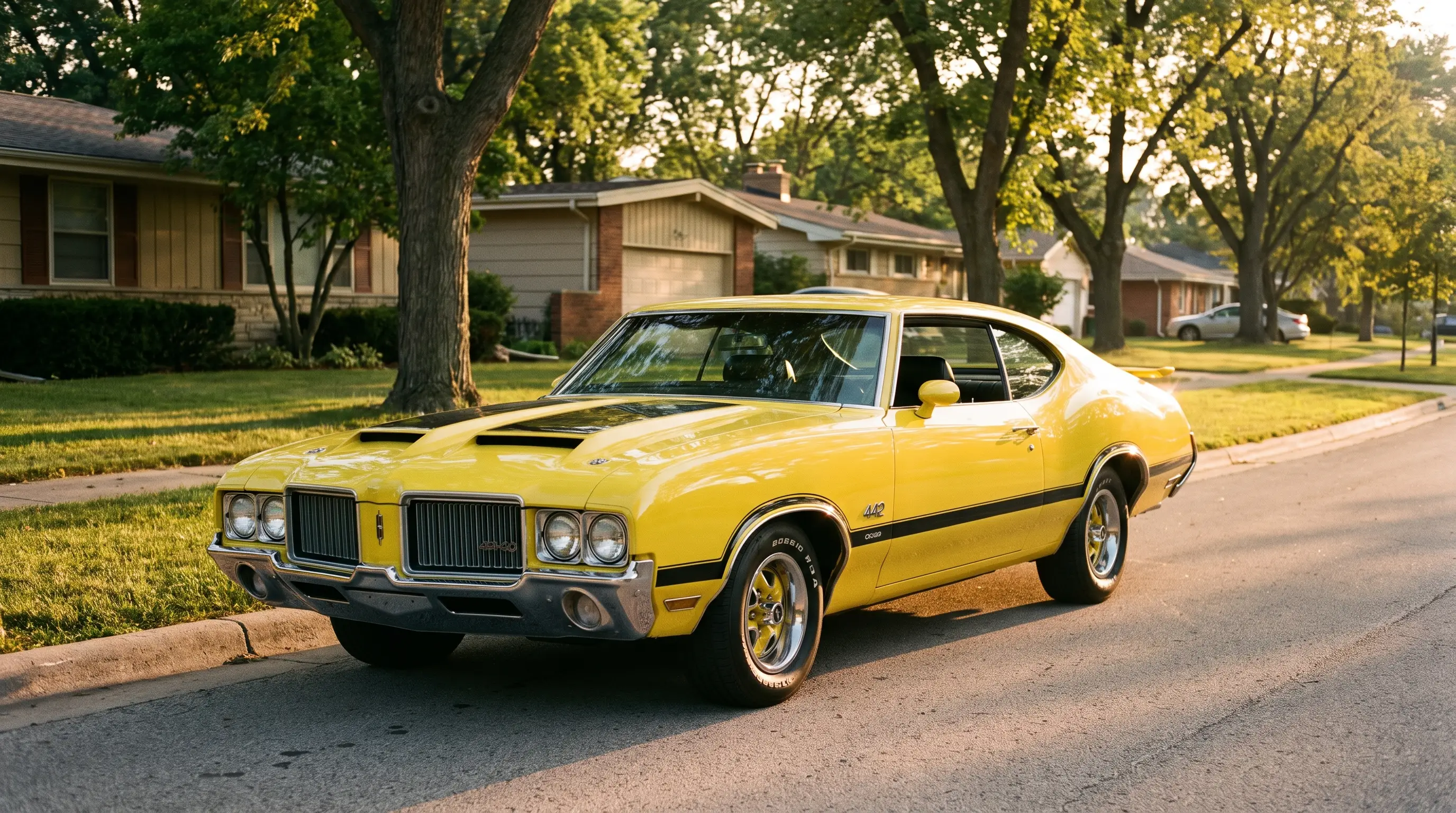
Here is where the Cutlass got interesting. In 1964 Oldsmobile answered the Pontiac GTO with an option package called the 4-4-2. The name meant four-barrel carburetor, four-speed manual, and dual exhaust. Later on people argued it stood for 400 cubic inches, four-barrel, dual exhaust, and by 1965 that was closer to the truth once the 400 V8 showed up. Either way, it was a Cutlass with the hardware turned up.
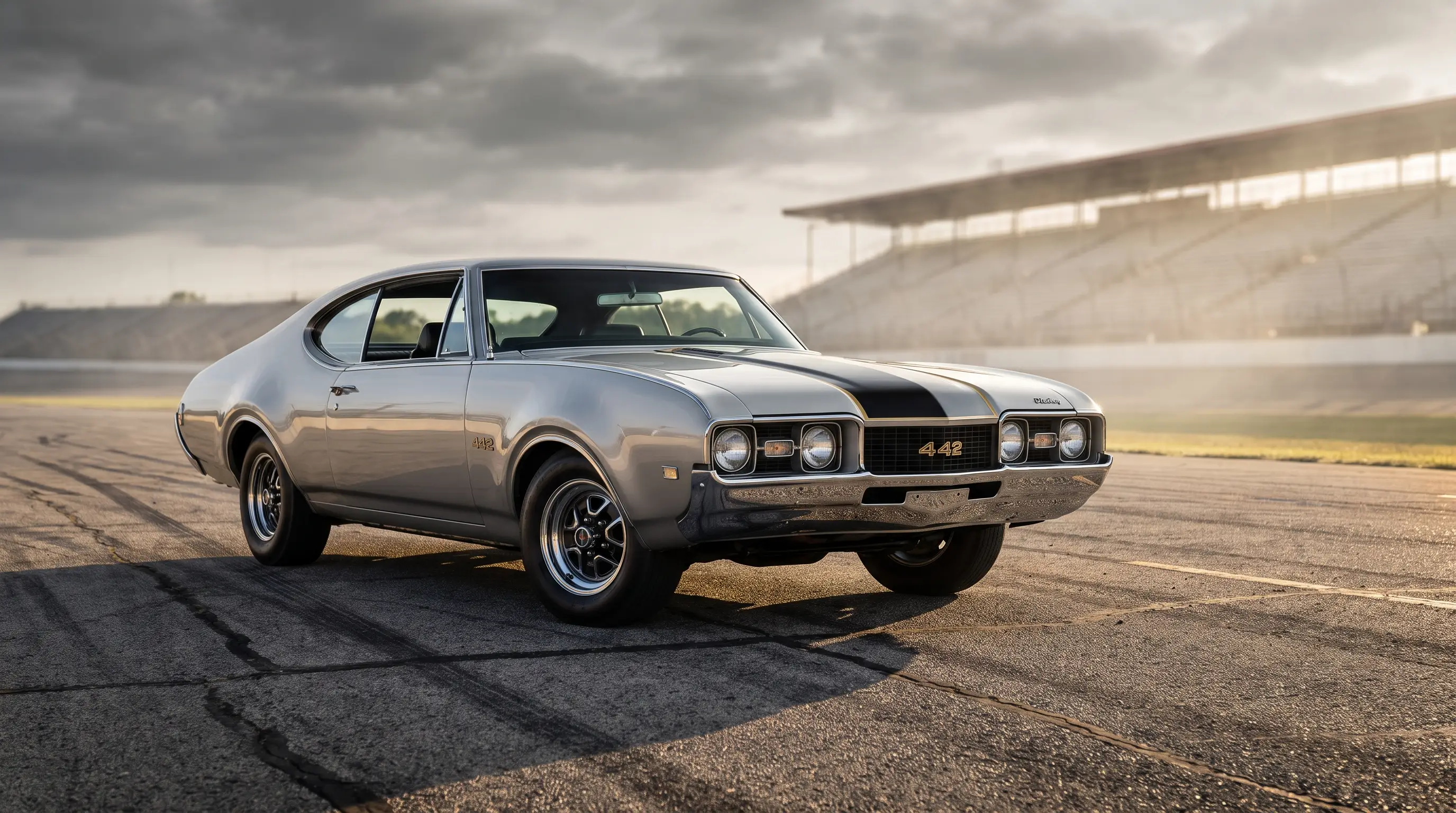
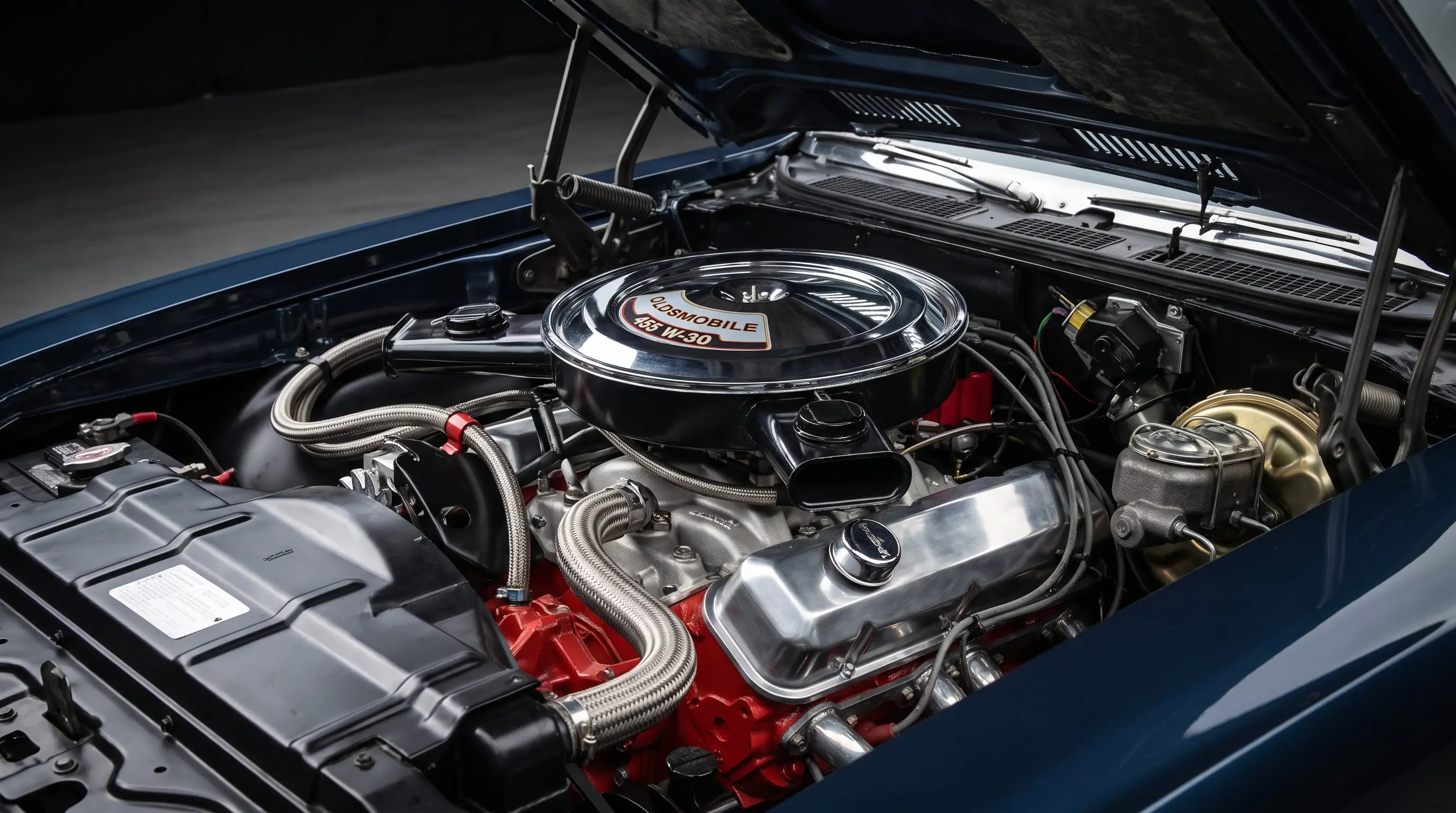
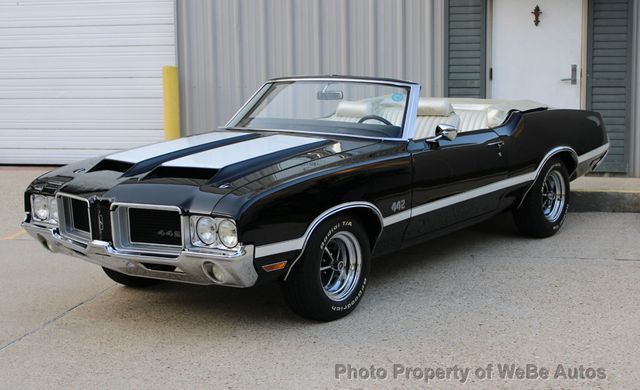
Through the late 1960s the 4-4-2 grew from an option into its own thing. The 1968 restyle gave the A-body a longer hood and those sweeping quarter panels, and the 442 became a separate model rather than a package. This is the era that made collectors care. You had the W-30 with its outside-air induction and the fiberglass hood scoops, and you had the small-block screamer, the W-31 with the 350. People treat the W-31 like a footnote. They should not. A well-sorted W-31 will embarrass a lot of big-blocks and cost you less at the pump.
Then in 1970 GM finally let the intermediates have big-inch engines without a corporate limit, and the 442 got the 455. The W-30 455, officially rated at 370 hp from the factory (most who have dyno'd one believe it made more), is the one everybody chases now, and prices reflect it. I will say the same thing I tell every buyer who walks in wanting one: the badge is easy to fake and the paperwork is not. If the documentation is thin, treat it as a clone and pay clone money.
"Everybody wants a W-30. Almost nobody wants to read the build sheet that proves it. I have turned down more fake 442s than I have bought real ones, and I have never once regretted walking away."
— Mike Sullivan
How the Cutlass was actually built
The reason the Cutlass could be a muscle car and a grocery-getter in the same showroom is the platform under it. GM's A-body was a body-on-frame intermediate that shared its bones with the Chevelle, the GTO, and the Buick Skylark. That sharing is why parts are cheap and why the car is easy to work on. It is also why so many badge swaps exist. Here is the shape of the classic-era Cutlass at a glance.
| Era | Years | Platform | Body styles | Notable engines |
|---|---|---|---|---|
| Compact | 1961-1963 | Y-body senior compact | Coupe, sedan, convertible | 215 aluminum V8 |
| Early A-body | 1964-1967 | A-body intermediate | Coupe, convertible, wagon | 330 V8, 400 V8 |
| Muscle A-body | 1968-1972 | A-body intermediate | Hardtop, convertible | 350, 400, 455 Rocket |
| Colonnade | 1973-1977 | A-body (Colonnade) | Coupe, sedan, wagon | 350, 403, 455 |
| Downsized / G-body | 1978-1988 | A-body then G-body | Coupe, sedan, wagon | 231 V6, 260, 307, 350 diesel |
Notice how the engine list gets smaller and softer as you go down the years. That is not an accident. That is the 1970s happening to the whole industry, and the Cutlass rode it out better than most.
When Colonnade styling took over
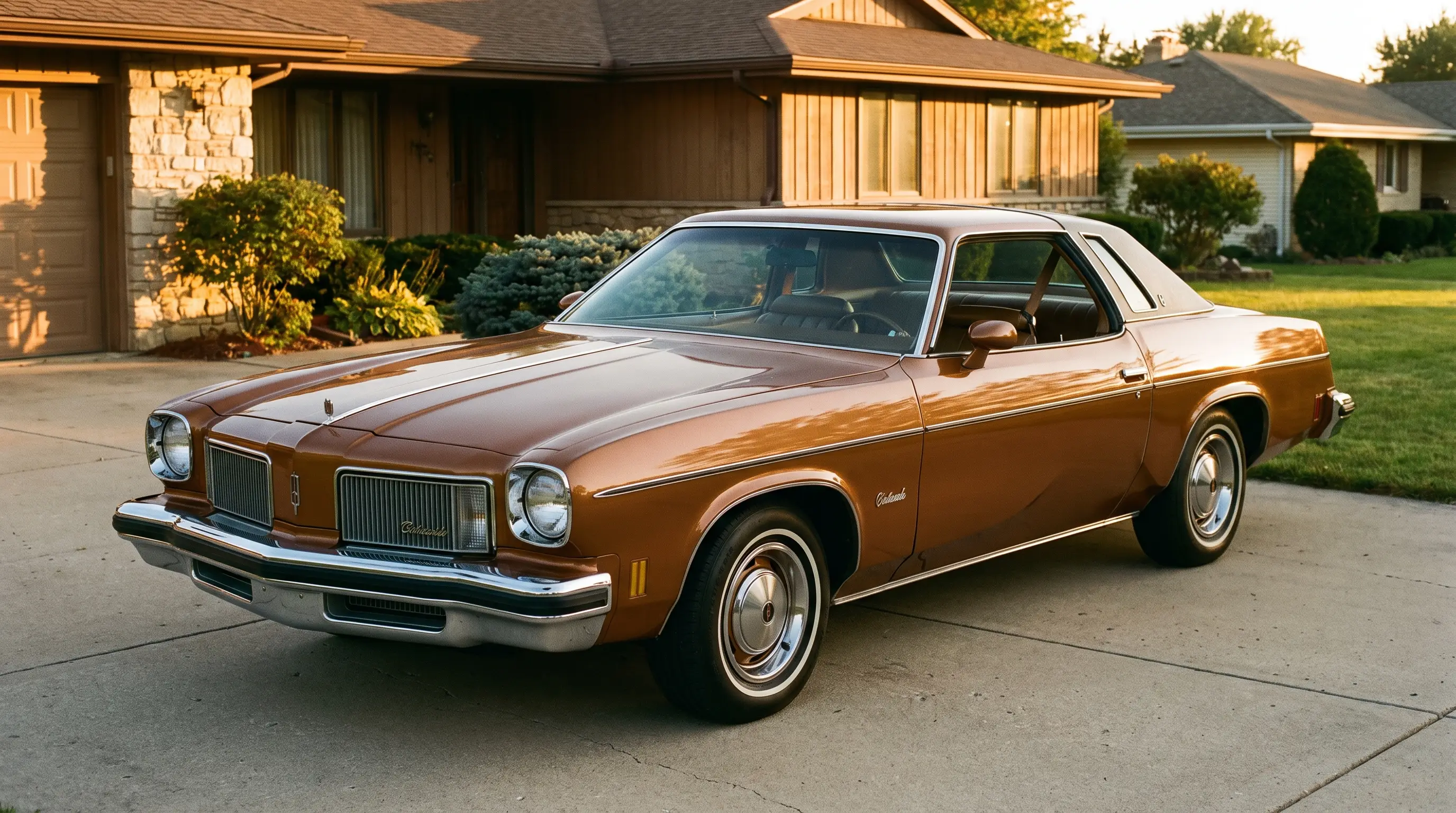
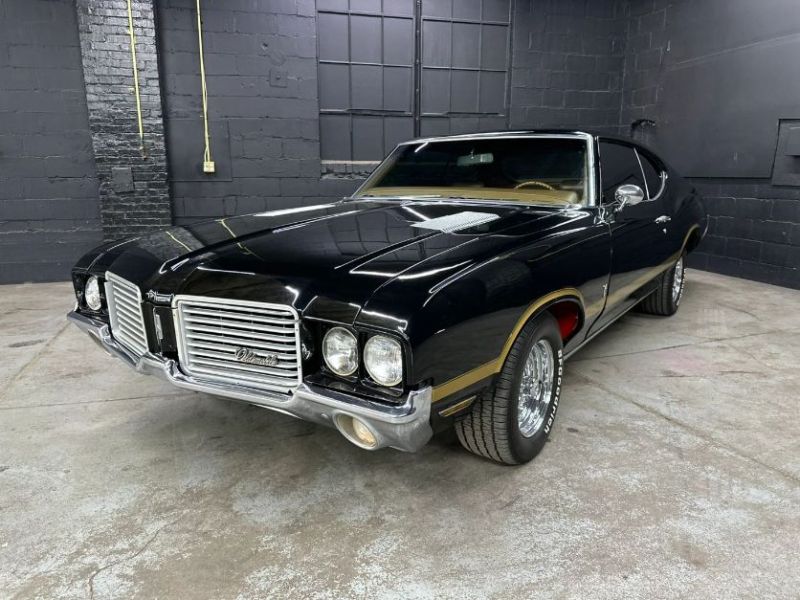
In 1973 GM redid all its intermediates in what they called Colonnade styling. No more pillarless hardtops. You got fixed window frames, heavier bumpers to meet the new federal standards, and a formal roofline. A lot of enthusiasts wrote these off for years as the boring middle. They were wrong, and the market has since agreed with me.
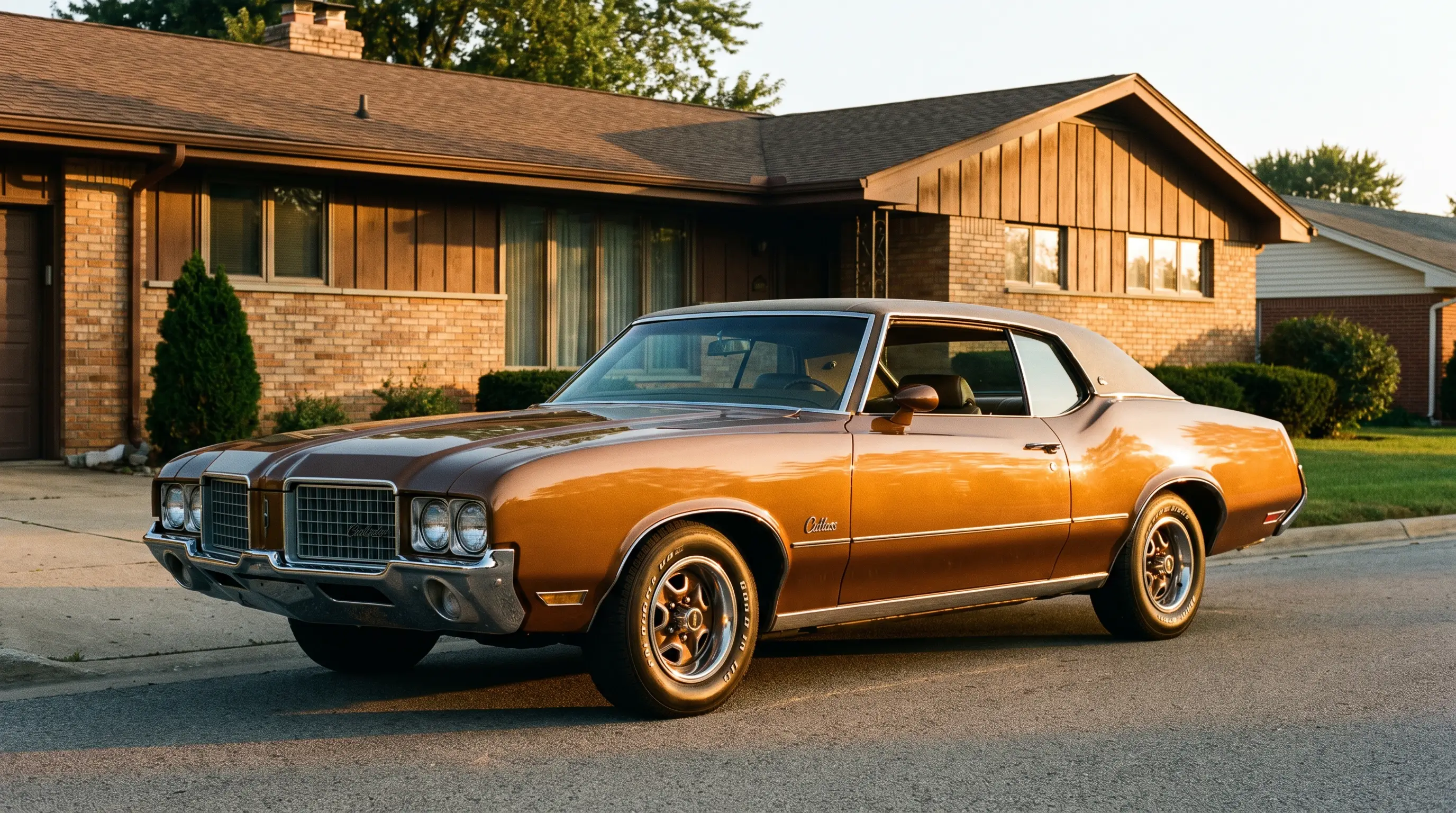
The Colonnade Cutlass Supreme with the notchback roof and the stand-up grille is the car that turned the whole model line into a phenomenon. It looked expensive without being expensive. The 442 survived as an appearance and handling package rather than a big-block bruiser, and honestly, driven back to back, a good handling-package Colonnade is more pleasant on a real road than a nose-heavy 455 car. The Hurst/Olds kept the performance flag flying through these years too, usually in black and gold or white and gold, and those are worth real money now.
America's best-seller
This is the part that still gets people. For several years in the mid-to-late 1970s the Oldsmobile Cutlass was the best-selling car in the United States. Not the best-selling Oldsmobile. The best-selling car, period, across every brand. In 1976 the Cutlass line moved just over half a million units, and it stayed at or near the top of the charts for the rest of the decade.
How does a mid-priced Oldsmobile pull that off? It hit the exact center of what America wanted. It was big enough to feel like a real car, small enough to be sensible after the fuel crisis, and dressed up enough to feel like a step above a Chevy without the price of a Ninety-Eight. Every dealer had a wall of them. Every buyer knew somebody who liked theirs. That is how a car becomes the default choice for a whole country, and the Cutlass did it three or four years running.
The downside of that success is what it did to survival rates in reverse. They built so many that people assume none are special. So the nice ones get parted out, the clean originals get modified, and now a genuinely unmolested mid-70s Supreme is harder to find than the production numbers suggest. Common when new does not mean common now. I watch buyers overlook these cars every year because they figure a survivor must be sitting on every corner. It is not. The clean, unmodified, one-owner examples dried up a decade ago, and the honest ones that remain are quietly getting more expensive. Waiting for a bargain that used to be everywhere is how you end up buying somebody else's finished project instead.
Downsizing and the G-body Supreme
In 1978 GM downsized the intermediates, and the Cutlass shrank a full size. On paper that sounds like a loss. In practice the 1978 car was lighter, roomier inside than it looked, and better balanced. This generation moved to the G-body designation as the rear-drive intermediate platform got sorted out, and the Cutlass Supreme coupe became one of the defining shapes of the 1980s.
These are the cars a lot of people my customers' age actually grew up riding in. The 307 Oldsmobile V8 was the workhorse. It was not fast. It did not pretend to be. It just ran, and ran, and ran. If you want a period-correct classic that you can drive to a show two states away without a trailer, an early-80s 307 Cutlass Supreme is one of the smartest, cheapest ways into old-car ownership. I have said that for years and the auction results have finally started to prove it.
The G-body years also gave the Cutlass its last real performance send-off. The Hurst/Olds came back in 1983 and 1984 with the Lightning Rods, that three-lever shifter setup on the console that looks like something off a dragster. Then came the 442 revival on the same platform, a factory hot rod for people who remembered the first ones. None of these were fast by 1968 standards. That is not the point. They were the last rear-drive, V8, body-on-frame Cutlasses Oldsmobile ever built, and once the nameplate went to front-wheel drive in the late 1980s, the classic Cutlass story was effectively over. The buyers knew it then and the collectors know it now.
"People laugh at the 307 until they own one for ten years and it never leaves them stranded. Slow and reliable beats fast and broken every single weekend. That is the whole Cutlass in one sentence."
— Mike Sullivan
The diesel that nearly wrecked the badge
I cannot tell the Cutlass story honestly and skip the diesel. Starting in the late 1970s Oldsmobile offered a 350 diesel V8, the LF9, in the Cutlass and across the lineup. It was GM's answer to the fuel crisis, and it was a disaster. The engine had head-bolt problems, water in the fuel wrecked injection systems, and the reputation damage spread to every diesel GM sold for a generation.
Here is my blunt advice, same as it has always been. If you find a diesel Cutlass and you love the body, budget to swap in a good gas 307 or 350 and keep the diesel in the corner as a conversation piece. Do not buy one expecting to daily-drive the original engine. Some folks have made them reliable with modern fixes, and good for them, but that is a project, not a purchase. Know which one you are signing up for.
What the Cutlass became after Lansing let go
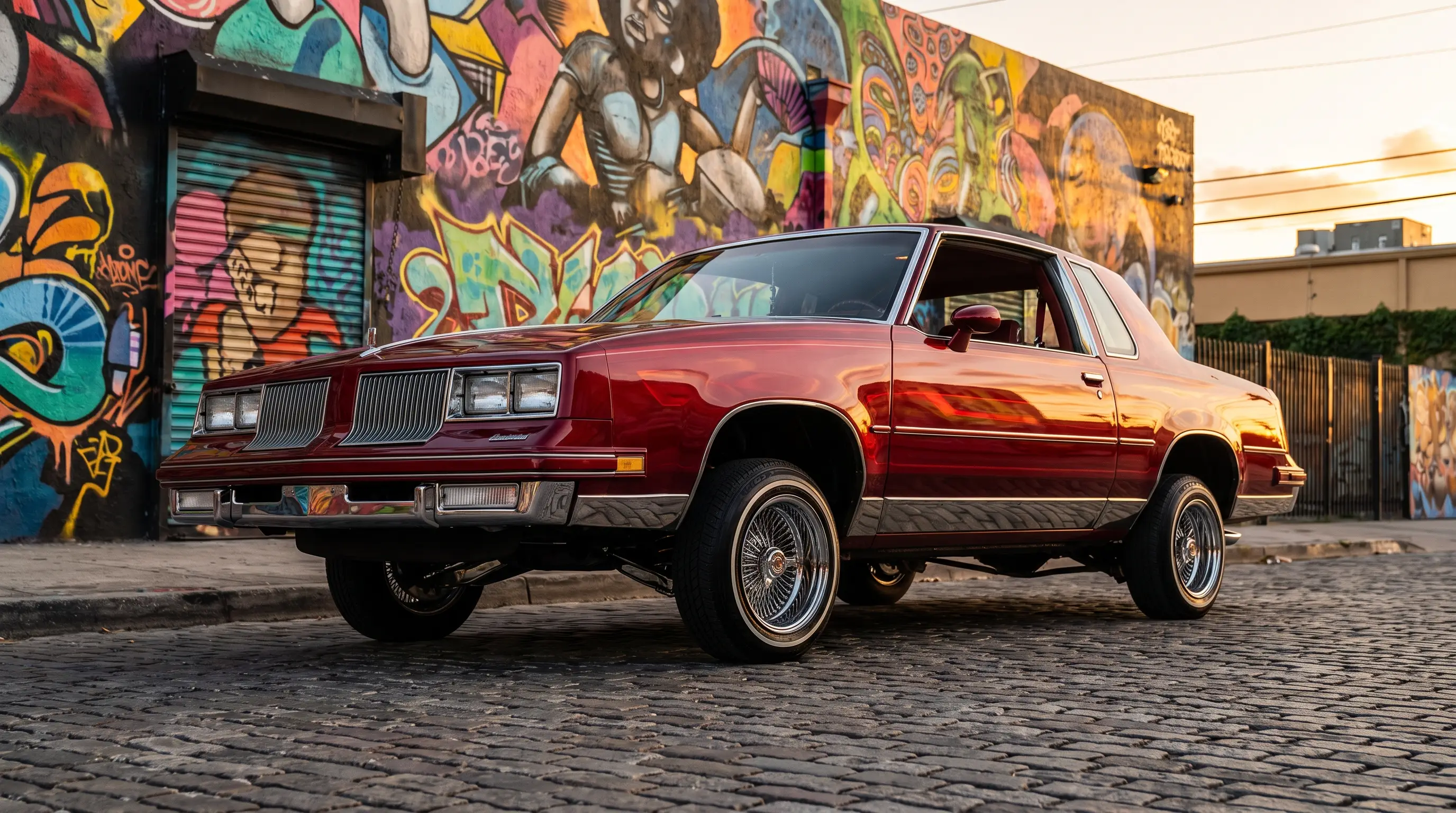
Oldsmobile the brand died in 2004, and the rear-drive Cutlass had already been gone for years before that. But the car refused to fade. The G-body Cutlass, especially the Supreme, became a foundation of lowrider and custom culture, and it still is. Cruise any West Coast car show and you will see Cutlasses on hydraulics with paint work that costs more than the car ever did new. The Cutlass earned a second life on the street that the marketing department never planned for.
It showed up in stock-car racing too. The aero Cutlass bodies ran up front in NASCAR through the late 1970s and early 1980s, and that connection still means something to the people who watched it happen. Between the racing history, the muscle-era 442s, and the custom scene, the Cutlass covers more ground than almost any other single American nameplate. Few cars can claim the drag strip, the superspeedway, and the boulevard all at once.
The hip-hop era locked the G-body Cutlass in for good. It turned up in music videos, in album art, and in the lyrics, right alongside the Regal and the Monte Carlo it shared a frame with. For a whole generation the Cutlass was not their grandpa's Oldsmobile. It was the car you built, dropped, and drove on a Sunday. That reputation kept the survivors on the road and the parts moving when every other malaise-era coupe was getting crushed. A car that people actually want to keep is a car that lasts, and the Cutlass earned that loyalty the honest way, by being cheap, tough, and easy to make your own. That is a longer résumé than most six-figure classics can show you.
That range is exactly why values have been climbing across the board, not just on the obvious 442s. Clean Supremes, honest 307 drivers, and documented Hurst/Olds cars have all moved up, and I do not see that reversing. If you have been thinking about one, the time to shop was yesterday, and the second-best time is now. When you are ready to look, browse the current classic Oldsmobile Cutlass for sale and compare a few honestly documented cars before you commit to anything.
Why the Cutlass still matters
The Oldsmobile Cutlass is not the most valuable classic and it never will be. What it is, is the most representative. It was America's default car for the better part of a decade, it wore a real muscle badge when that mattered, and it became a canvas for a custom culture that outlived the company. You can spend forty thousand on a W-30 or four thousand on a running 307, and both are legitimately the same story.
I have made a living keeping these cars on the road, and I will keep telling people the same thing. Buy the body, verify the paper, and ignore the hype. The Cutlass rewards a level head better than any car I know. That is not a small thing. That is the whole point.
Sources and notes
- Best Selling Cars Blog: USA 1976 - Oldsmobile Cutlass Still America's Favourite
- The Washington Post: Cutlass to Cap a 5-Year Sales Rise as 1976's Best-Selling Model
- Mac's Motor City Garage: Oldsmobile Reaches Peak Cutlass - The 1977 Cutlass Supreme
- CarBuzz: The Oldsmobile 442 Had a More Powerful V8 Than the Company Claimed
- Sports Car Market: 1977 Oldsmobile Cutlass NASCAR Race Car
- Wikipedia: Oldsmobile Cutlass