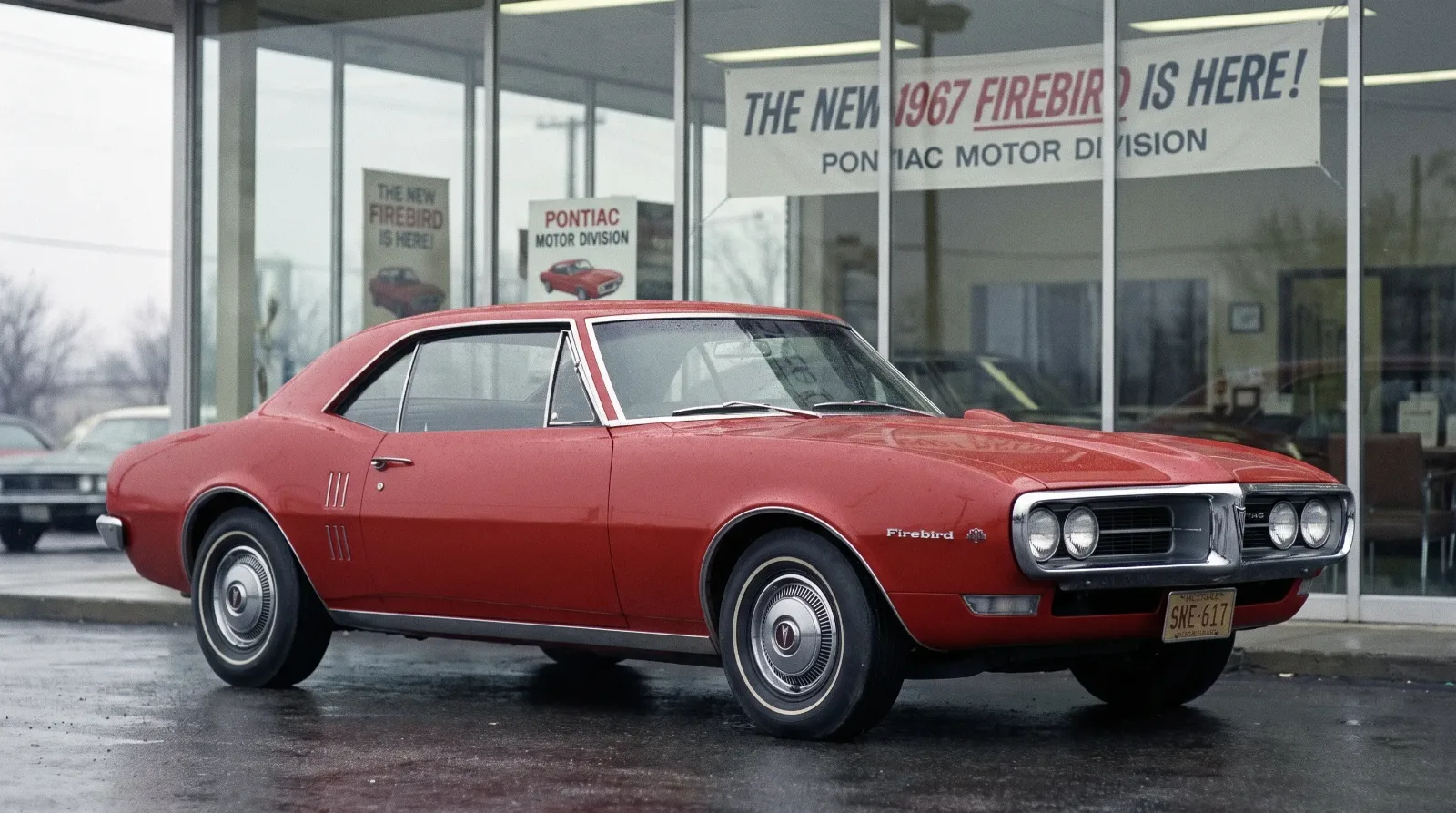
The Firebird went on sale on February 23, 1967, five months after Chevrolet's Camaro reached dealers and nearly three years after Ford proved with the Mustang that a huge audience wanted a sporty, affordable coupe instead of a family sedan. Pontiac had wanted its own two-seat sports car since the early 1960s, and general manager John DeLorean had spent years pushing a small, light two-seater codenamed XP-833, retroactively known as the Banshee once the name was applied to the surviving prototypes years later, through GM's approval process. Corporate leadership said no to a two-seater, twice, on the grounds that it would compete with the Corvette. What Pontiac got instead was a mandate to build its version of the F-body platform that Chevrolet was already developing for the Camaro, and to do it on a schedule that left the division's stylists and engineers very little room to argue.
That compressed timeline is the real story behind the 1967 Firebird debut, and it explains almost everything unusual about the car, from its shared inner structure to the specific ways Pontiac fought to make it feel like something other than a badge-engineered Camaro.
A platform Pontiac did not choose but made its own
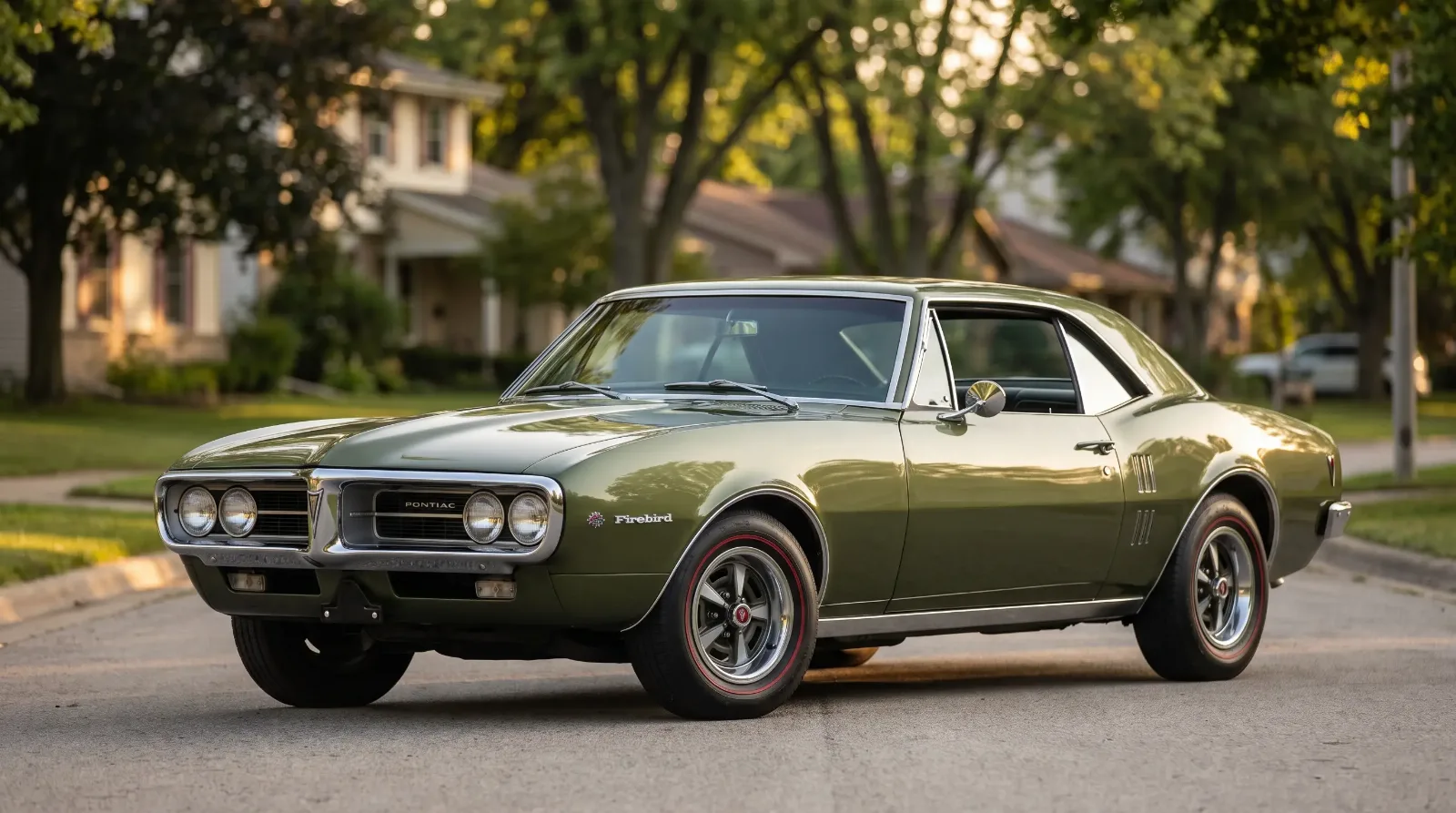
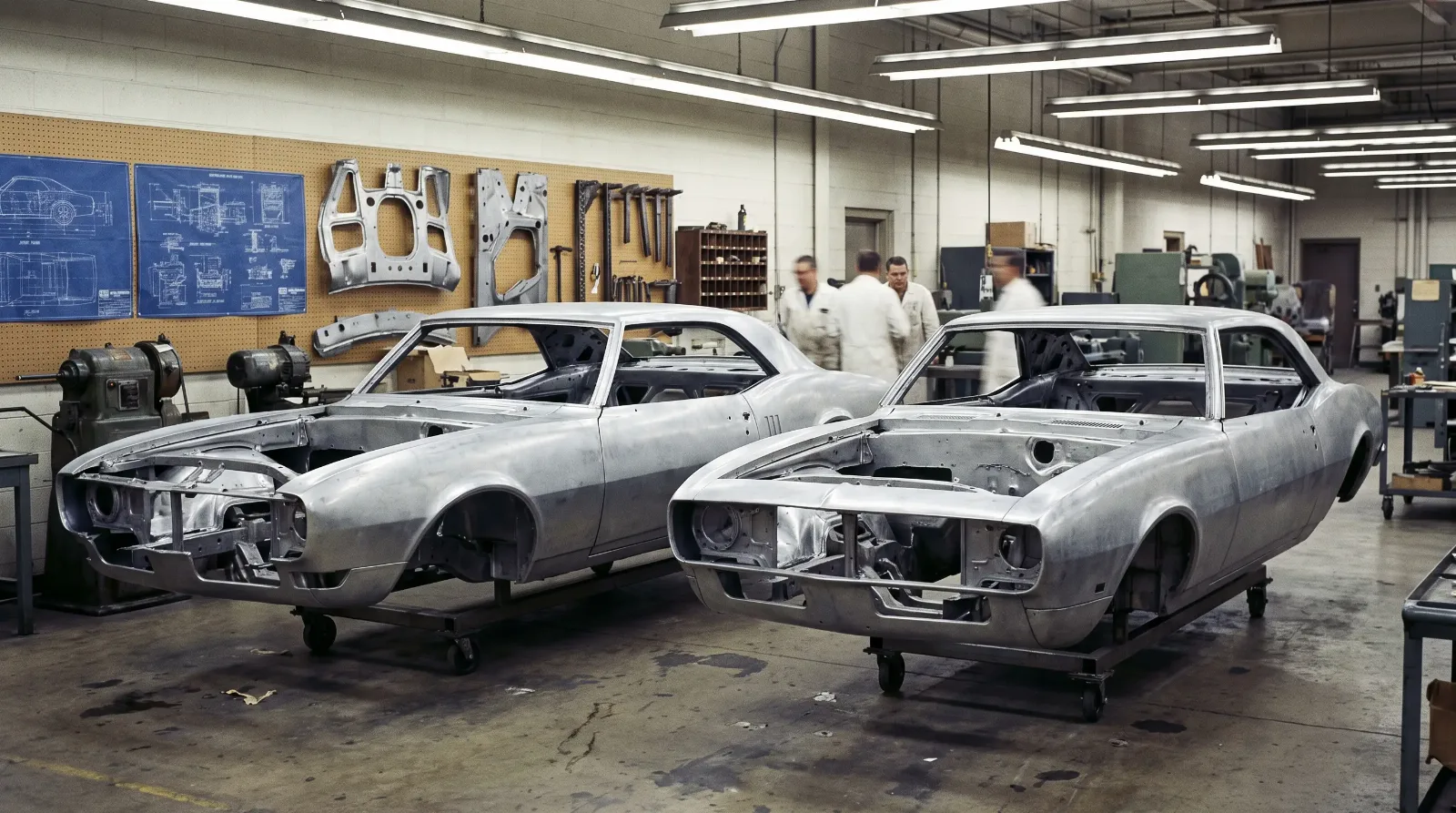
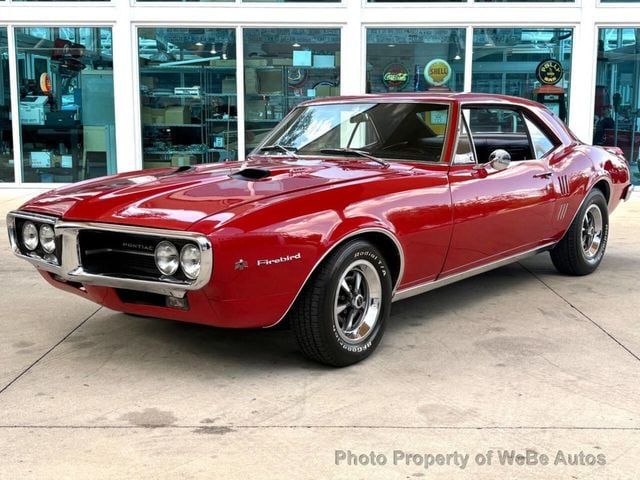
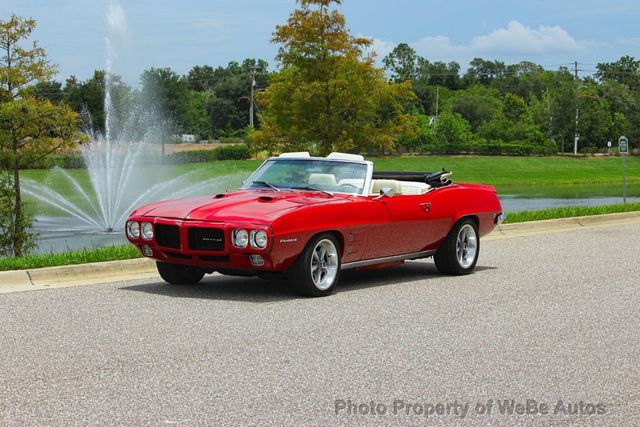
The F-body shell, floor pan, cowl, and basic greenhouse came from Chevrolet's Camaro program, and Pontiac had no say in that architecture. Where Pontiac's engineers and stylists did have latitude was the sheet metal forward of the cowl, the interior, the suspension tuning, and the engine lineup, and they used all of it. The nose was stretched roughly two inches longer than the Camaro's and topped with quad headlamps set into a divided, split-grille face that echoed the full-size Pontiac lineup of the period. The rear quarters got their own stamping too, with a subtle character line and taillamps that Pontiac designers wanted shaped like jet exhaust ports, an idea that survived into production in simplified form.
The result read as a Pontiac from thirty feet away even though a knowledgeable eye could trace the shared cowl and doors back to Chevrolet's design. For readers who want the full arc of that first generation, the 1967-69 Firebird is worth reading start to finish, since the debut year only makes sense in light of what came right after it.
Five engines, not one, at launch
Pontiac did not sell a single Firebird in 1967. It sold a lineup, and the spread of engines at launch was wide enough to cover buyers who wanted an economical commuter coupe and buyers who wanted something closer to a genuine muscle car. The base engine was Pontiac's 230 cubic inch overhead cam inline six, rated at 165 horsepower, an unusual and expensive-to-build choice covered in detail elsewhere in this series. Above it sat the Sprint version of that same six with a four barrel carburetor and 215 horsepower on paper. Two 326 cubic inch V8s followed, a two barrel version and the four barrel H.O., and at the top of the range sat the 400 cubic inch V8, borrowed from the full-size Pontiac catalog and good for 325 horsepower.
Tom Ramirez has spent years tracing these production codes back to Pontiac's own build sheets rather than relying on later magazine summaries, and the picture that emerges is one of a division hedging its bets across the entire market rather than chasing a single headline number.
"Pontiac's own build documentation shows five distinct engine codes offered from day one, which tells you the division was still figuring out who was actually going to buy this car."
— Tom Ramirez
Body styles and the options sheet
Buyers could choose a hardtop coupe or a convertible in 1967, with the convertible carrying a modest price premium and accounting for a smaller share of first year production, roughly 15,528 convertibles against 67,032 hardtop coupes, or about one in five cars built. Trim ran from a plain base coupe up through the Sprint and, once the 400 arrived, effectively a fifth trim level built around that engine. Options included power steering, power brakes, a center console, a Rally gauge cluster with tachometer, and a three speed manual as standard equipment with a four speed manual or two speed automatic available depending on engine choice. None of this was radical for 1967, but the breadth of it mattered, because it let a single nameplate serve a secretary's daily driver and a stoplight racer's weekend car without either buyer feeling shortchanged.
How the press and public actually received it
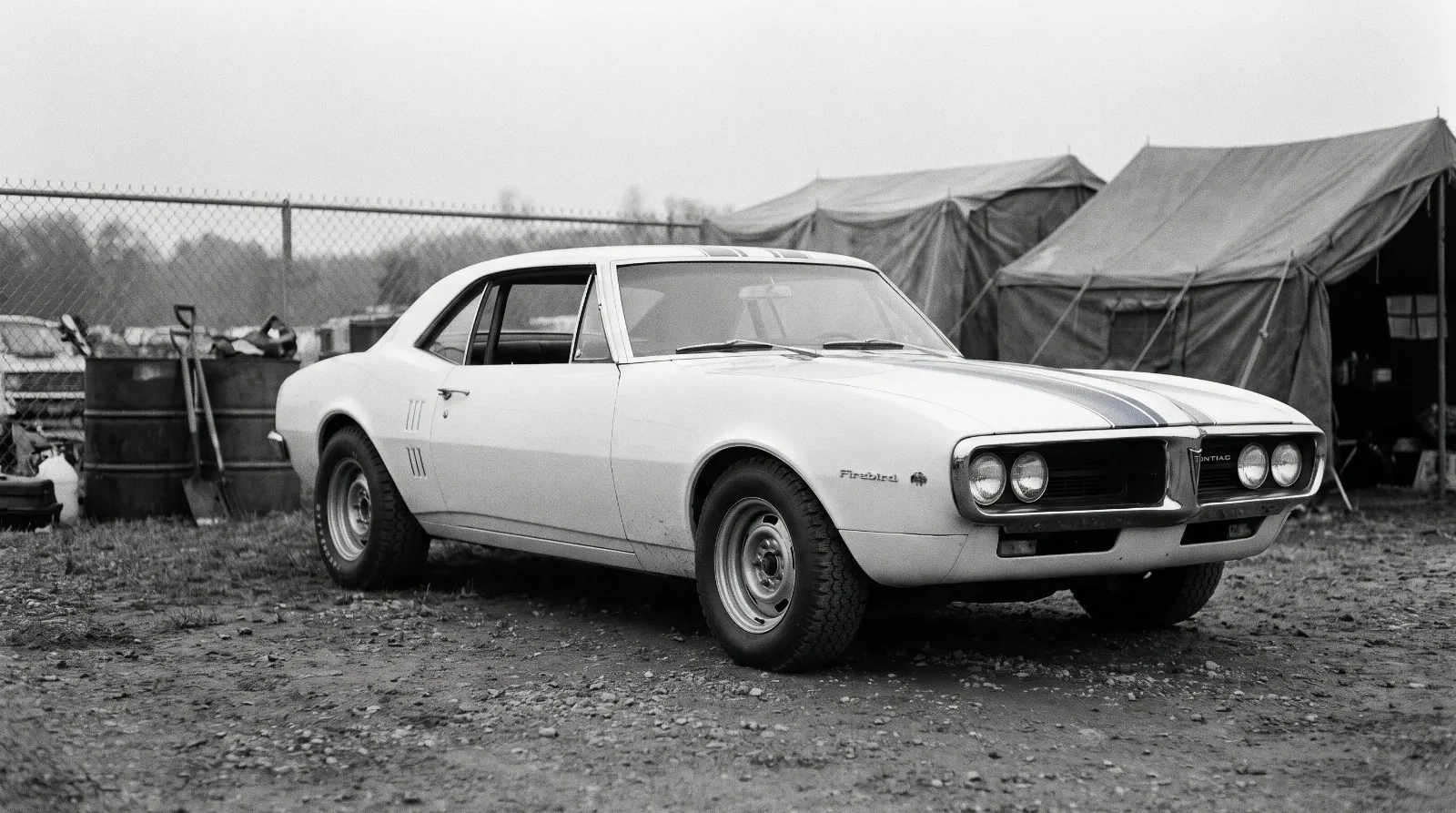
Contemporary road tests treated the Firebird as a credible rival to both the Mustang and the Camaro rather than as a copy of either, largely because of the six cylinder options and the 400's straight line performance. Sales in the partial 1967 model year landed at 82,560 units, a respectable number for a car that arrived mid-cycle and had to share tooling, dealer floor space, and advertising budget with Pontiac's established lineup. That figure gave Pontiac enough confidence to expand the lineup for 1968 rather than treat the Firebird as a stopgap, and it set the tone for how the division would keep differentiating the car from its Camaro sibling in the years that followed.
The engineering choices made under deadline pressure in 1966 and early 1967, particularly the decision to run a shared platform with genuinely different powertrain philosophy, shaped the entire first generation. If you want to see where that philosophy went next, including how Pontiac's engineers kept borrowing from and diverging from Chevrolet's parts bin, keep reading the series.
What the debut actually settled
The 1967 launch did not settle the argument about whether Pontiac needed its own sports car; DeLorean had already lost that fight when GM rejected the two-seat Banshee. What it settled was smaller and, in retrospect, more useful: that a shared platform did not have to mean a shared identity. Pontiac's stylists and engineers proved in one model year that they could take a chassis they had not designed and still produce something that buyers, dealers, and the automotive press treated as its own car rather than a badge job. That is the debut's real legacy, more than any single horsepower figure or production count.