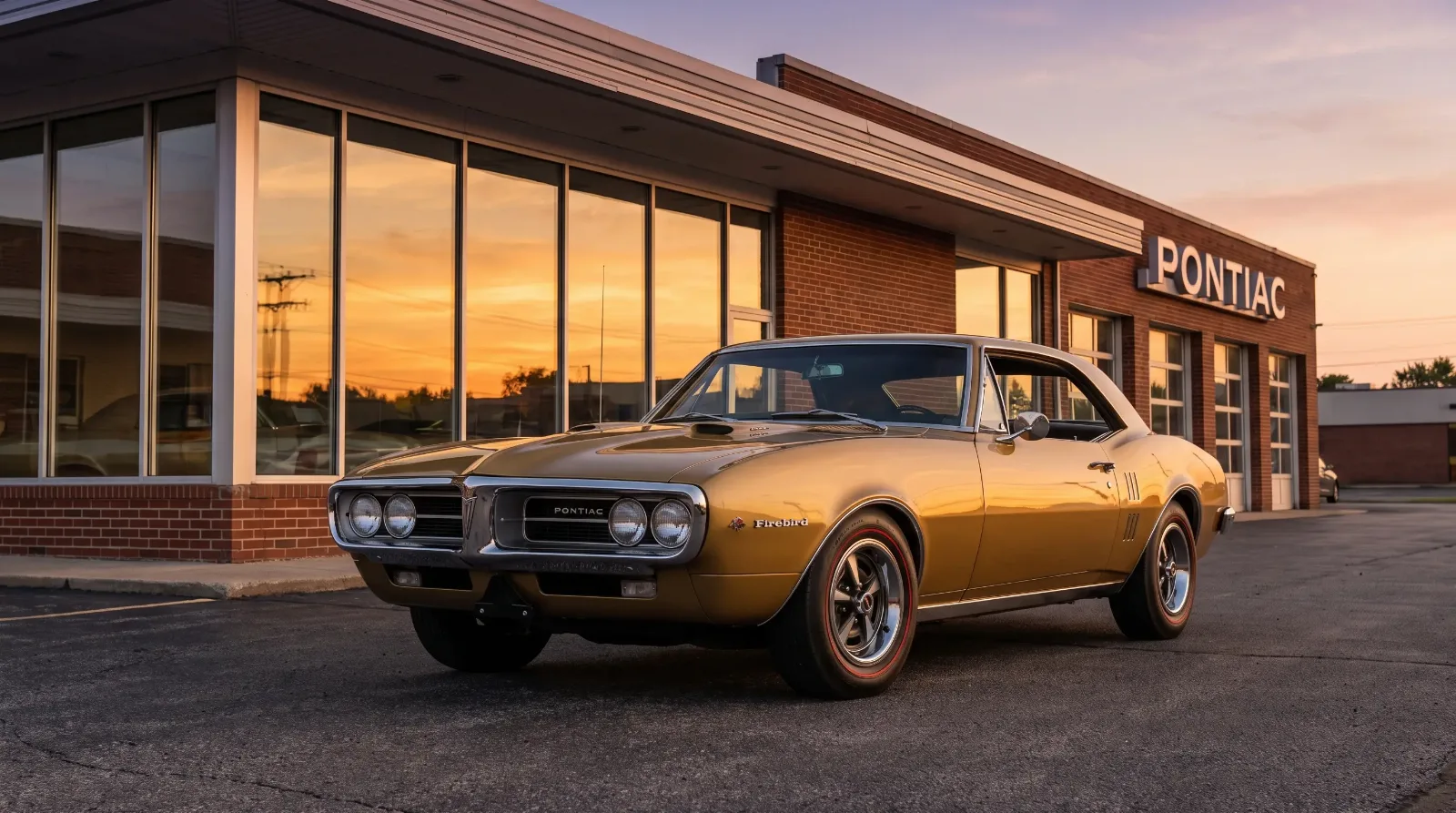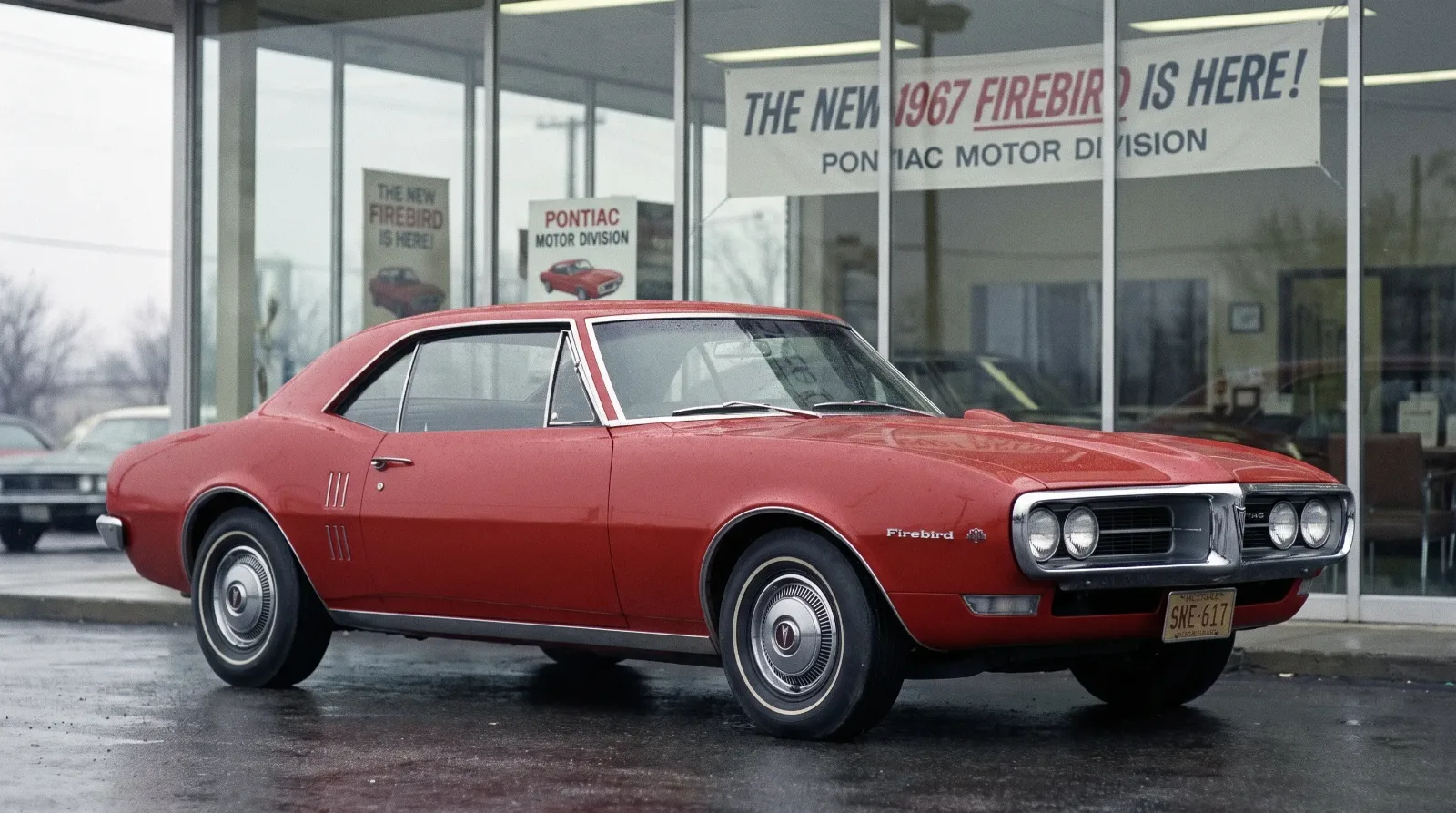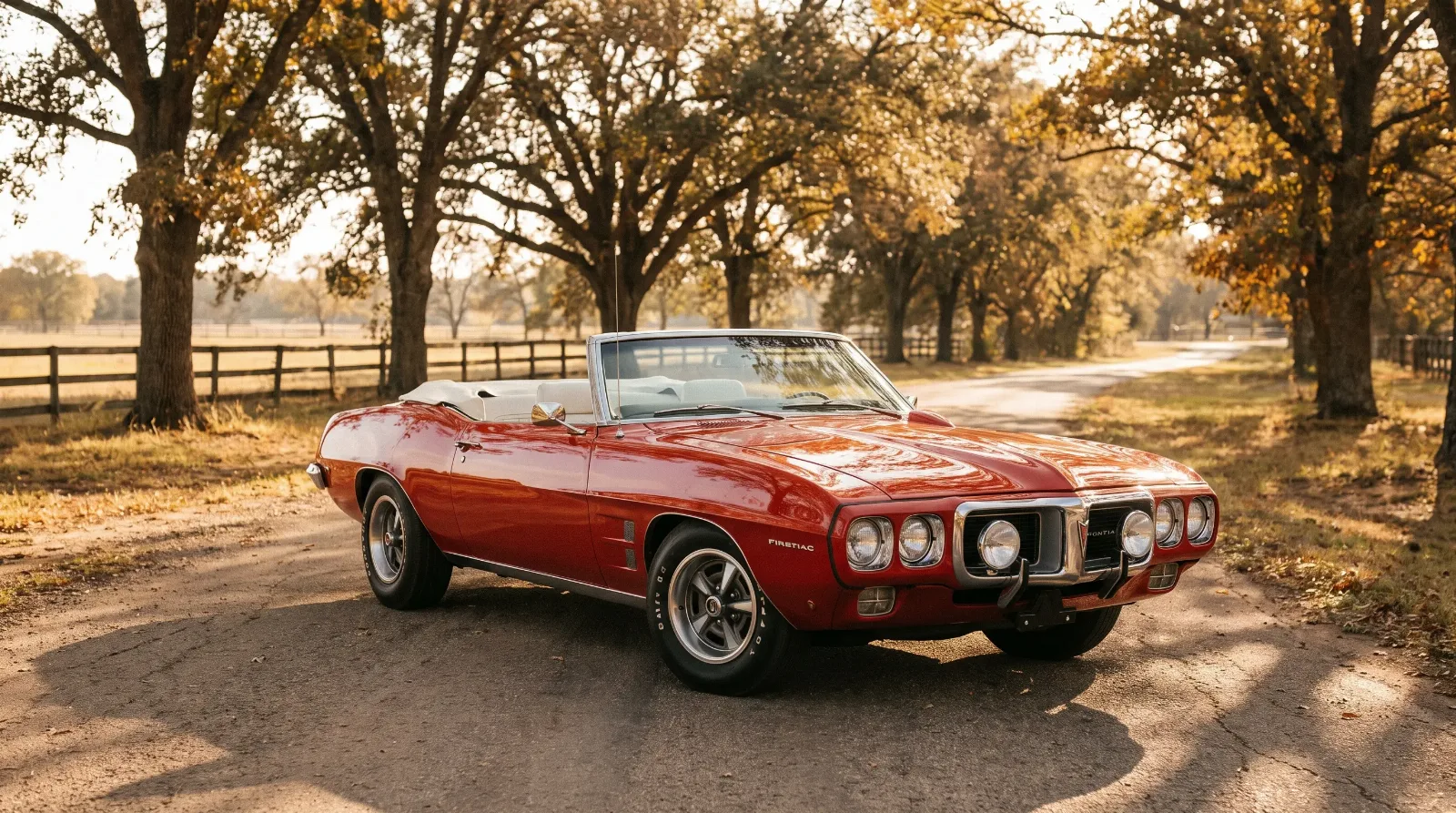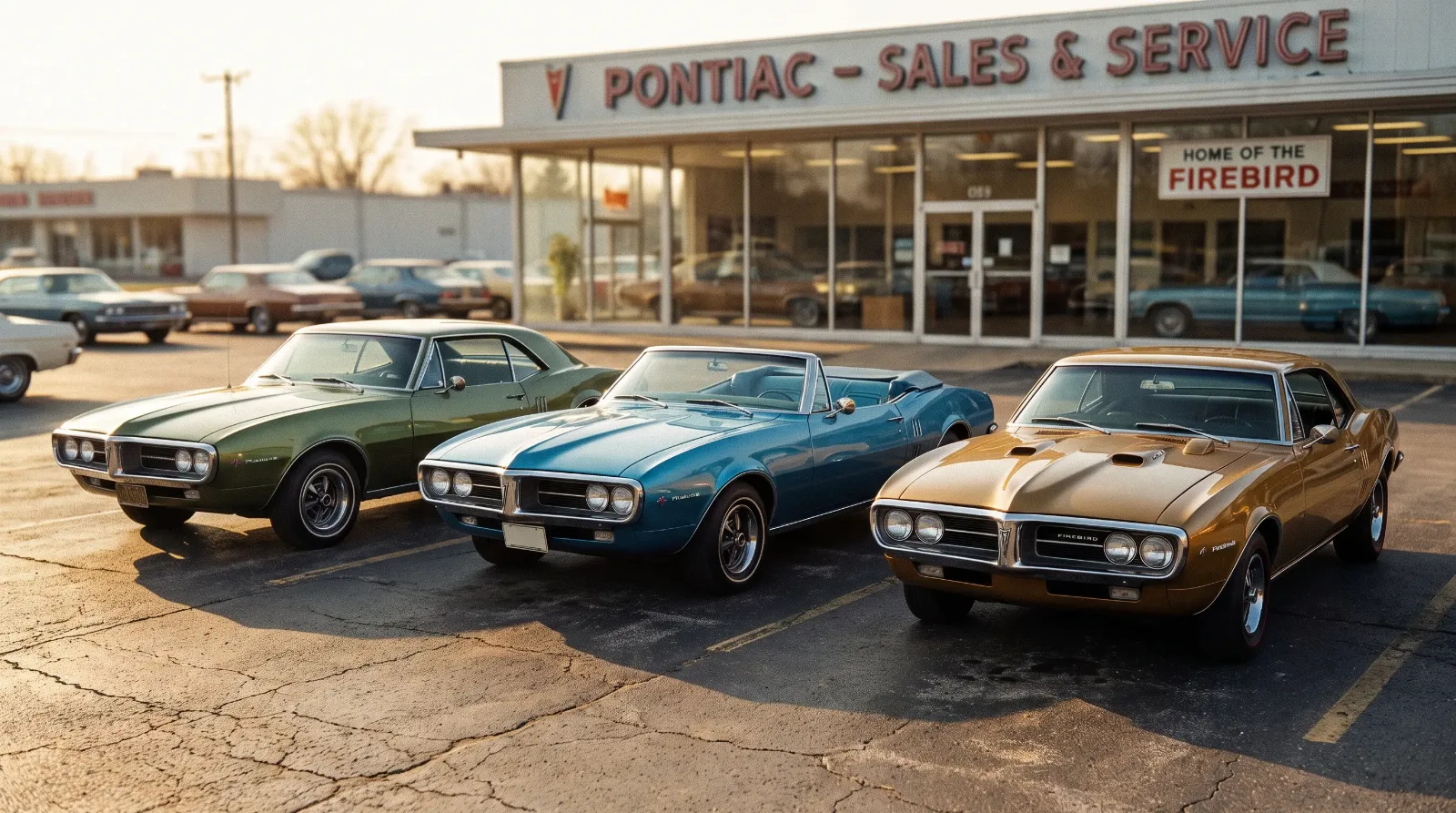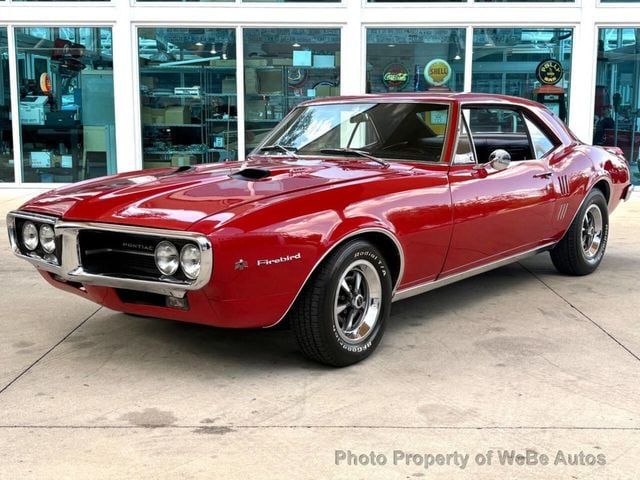
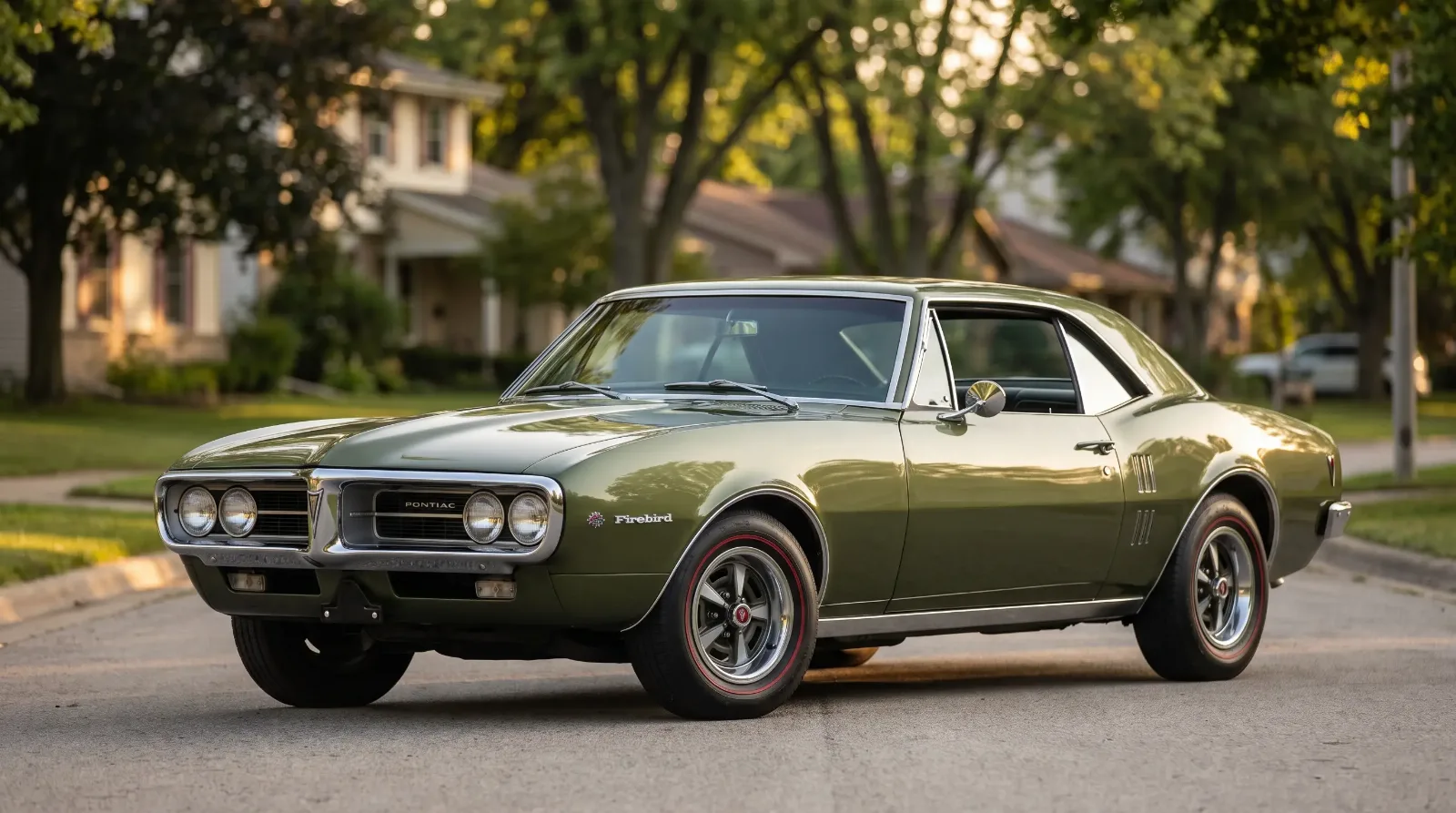
The 1967 Firebird arrived in Pontiac showrooms on February 23, 1967, roughly five months after Chevrolet had already put the Camaro on sale. That head start belongs to corporate arithmetic, not to any failure of nerve at Pontiac. General Motors handed both divisions the same new F-body platform and told them to share it, and Chevrolet got to market first. What Pontiac did with the extra months is the more interesting story, because the first-generation Firebird that ran from 1967 through 1969 was not a rebadged Camaro. It was a Pontiac, engineered and trimmed by people who wanted it to feel like one.
John DeLorean ran Pontiac at the time, and his division had spent the mid-1960s building a reputation for engines and image. The Firebird carried both into the pony car class. Five distinct versions launched at once, each built around a different powerplant, so a buyer could order anything from an economy commuter to a 400-cubic-inch bruiser off the same order sheet. That range is the thread that ties the whole first generation together, and it is where the car earns its place in the wider story. For readers who want the whole arc, this piece sits inside the full Firebird story.
Camaro bones, Pontiac skin
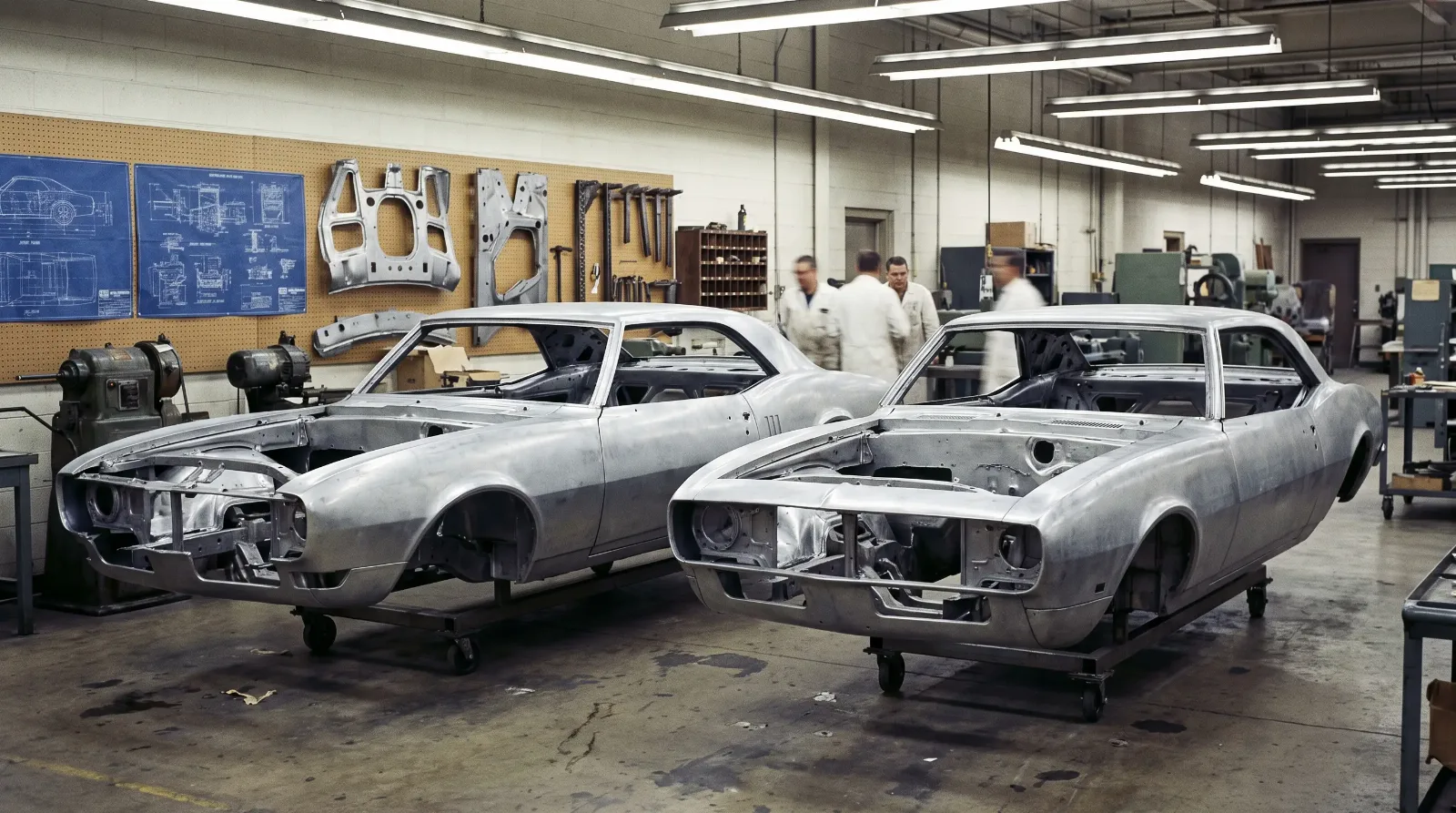
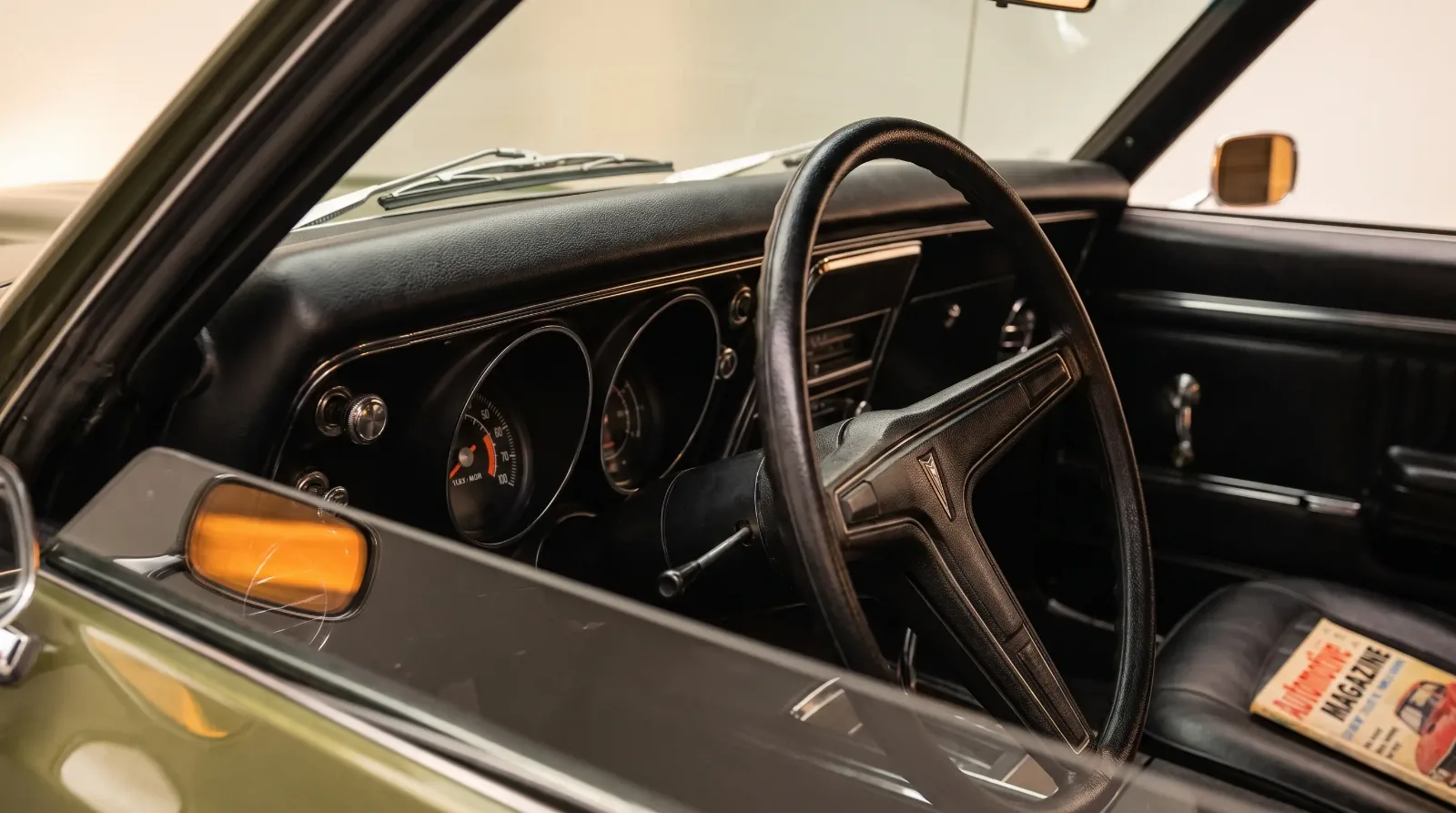
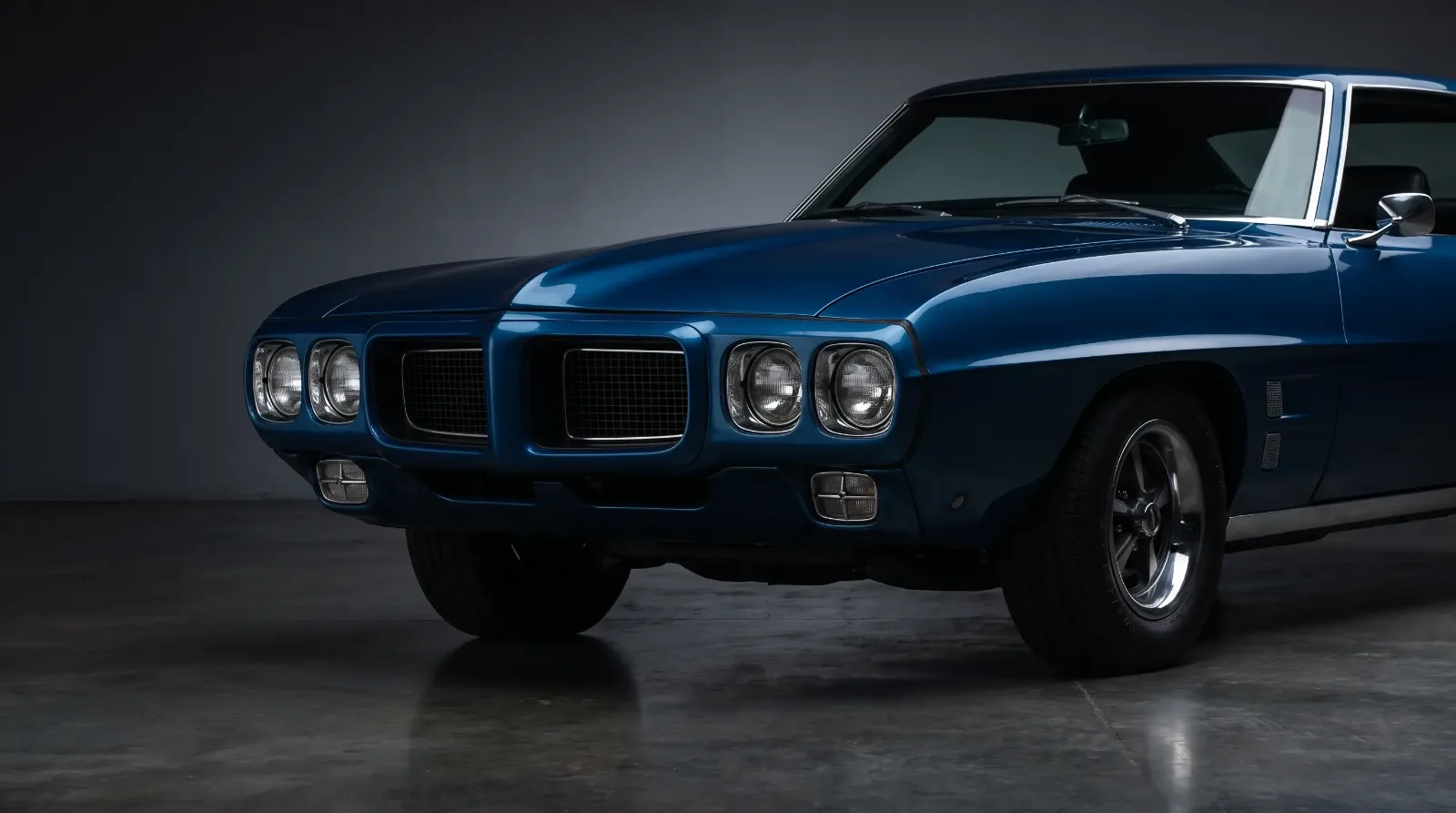
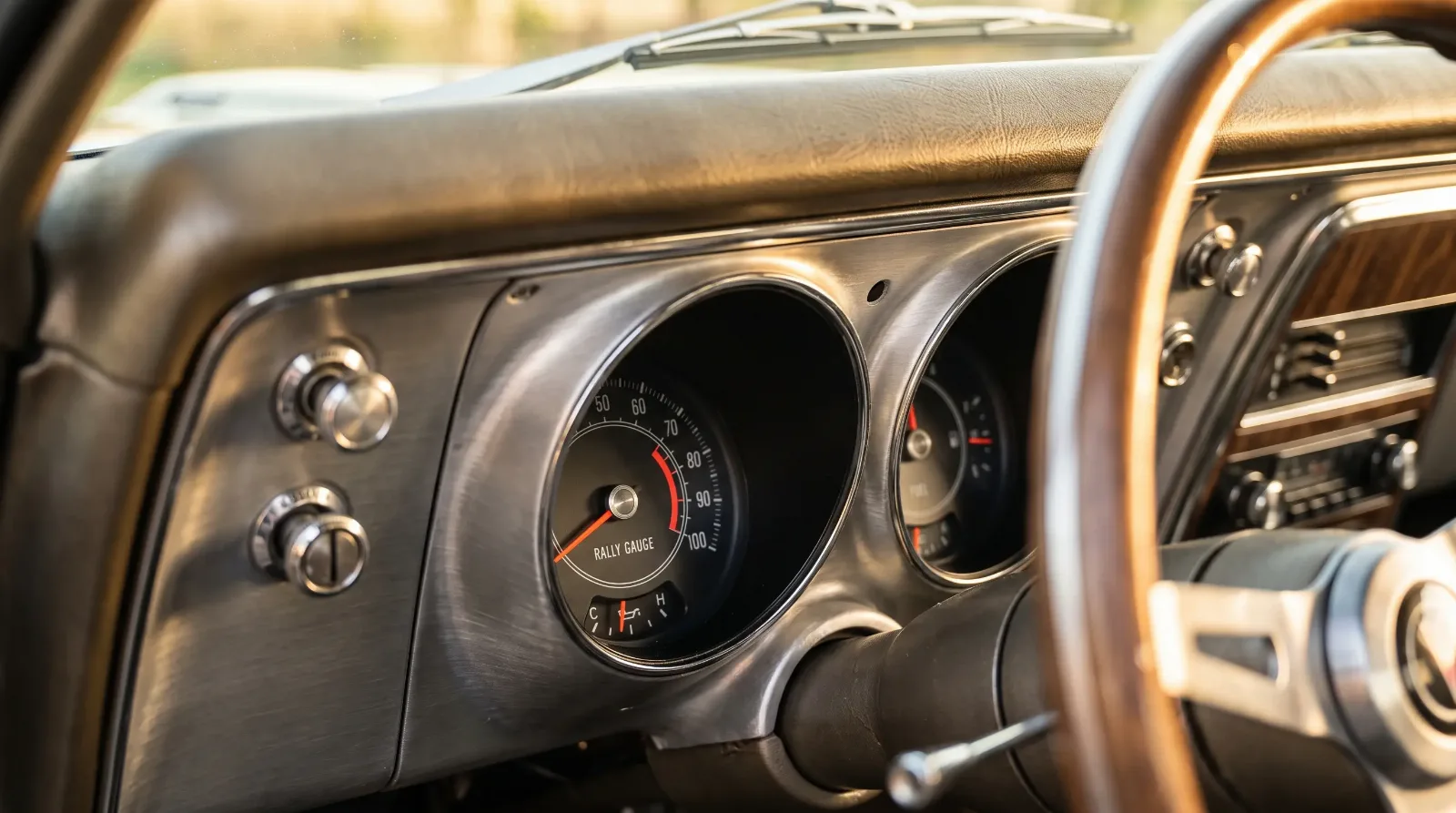
The F-body was a unibody structure with a bolt-on front subframe, shared with the Camaro down to the 108.1-inch wheelbase. Pontiac could not change the hardpoints, so it changed everything a buyer would notice. The front end got the split grille that had become a Pontiac signature, with the bumper wrapped into the nose rather than the Camaro's separate chrome bar. The tail wore slim horizontal lamps instead of Chevrolet's round units. Inside, the instruments and trim followed Pontiac practice.
The suspension is where the engineering divergence mattered most. Pontiac fitted its own spring rates and added a set of radius rods to the rear leaf-spring setup on the higher-output cars, a fix meant to control axle wind-up under hard acceleration. The multi-leaf springs were staggered, with the shock absorbers mounted ahead of the axle on one side and behind on the other. It was a period-correct solution to a real problem, and it is the kind of detail that separated the Firebird from its corporate twin for anyone who drove both back to back.
The overhead-cam six almost nobody expected
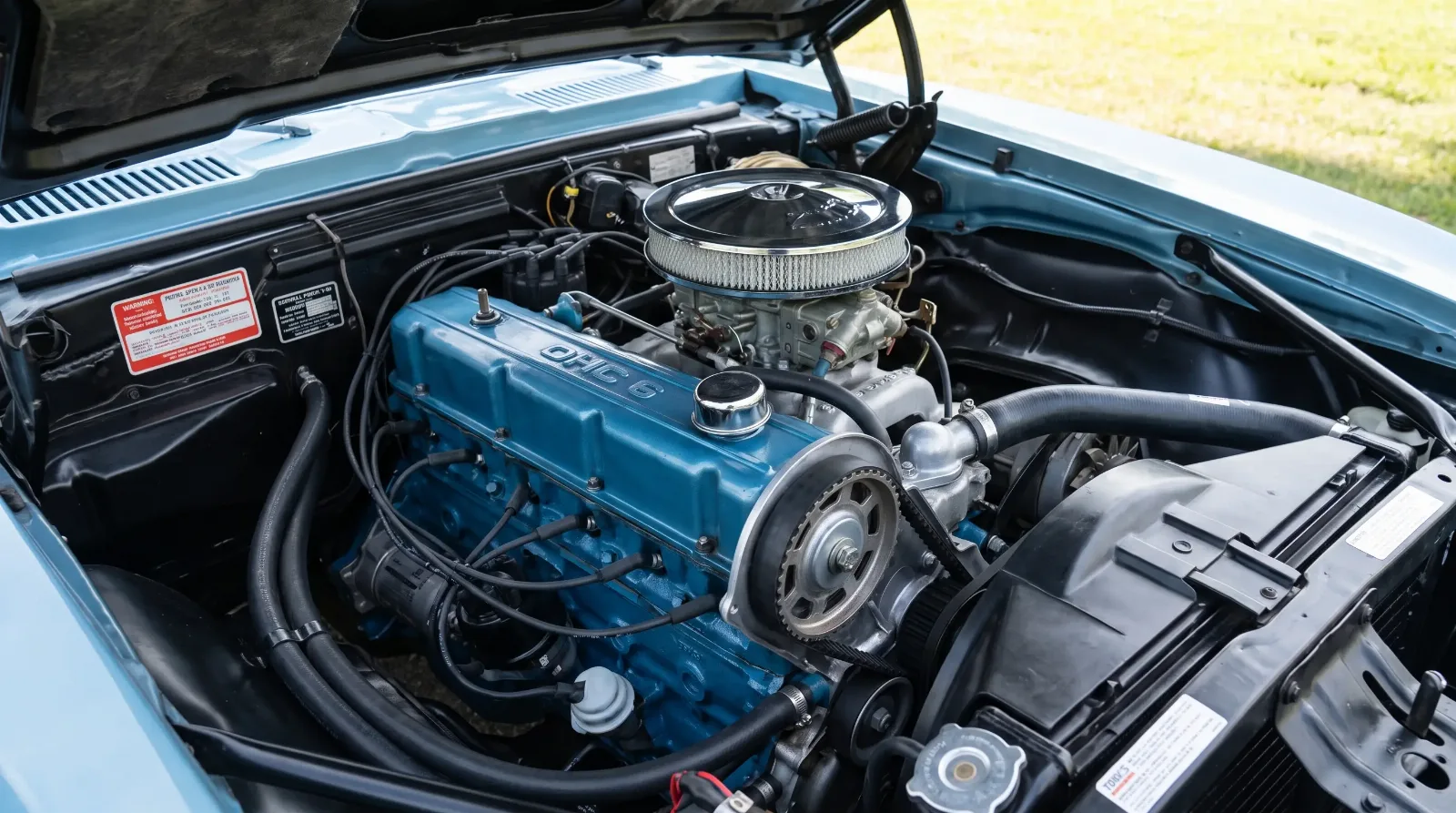
The base 1967 Firebird did not ship with a wheezy pushrod economy engine. It came with a 230-cubic-inch inline-six topped by a single overhead camshaft, driven by a fiberglass-reinforced toothed belt. Overhead-cam sixes were common in Europe and almost unheard of in a mass-market American car, and Pontiac built this one in the United States. The standard version made 165 hp with a single-barrel carburetor.
The version worth remembering is the Sprint. Order the Sprint option and the same block got a four-barrel Rochester carburetor, a hotter cam, split exhaust manifolds and a higher-lift valvetrain, lifting output to 215 hp. That was real money in a light car, and the Sprint handled better than the nose-heavy V8 cars because the six weighed far less over the front wheels. For 1968 and 1969 the OHC six grew to 250 cubic inches, keeping the Sprint tune near the same output. It never sold in the numbers the V8s did, and that scarcity is exactly why a documented Sprint draws attention at auction today.
From the 326 to the Firebird 400
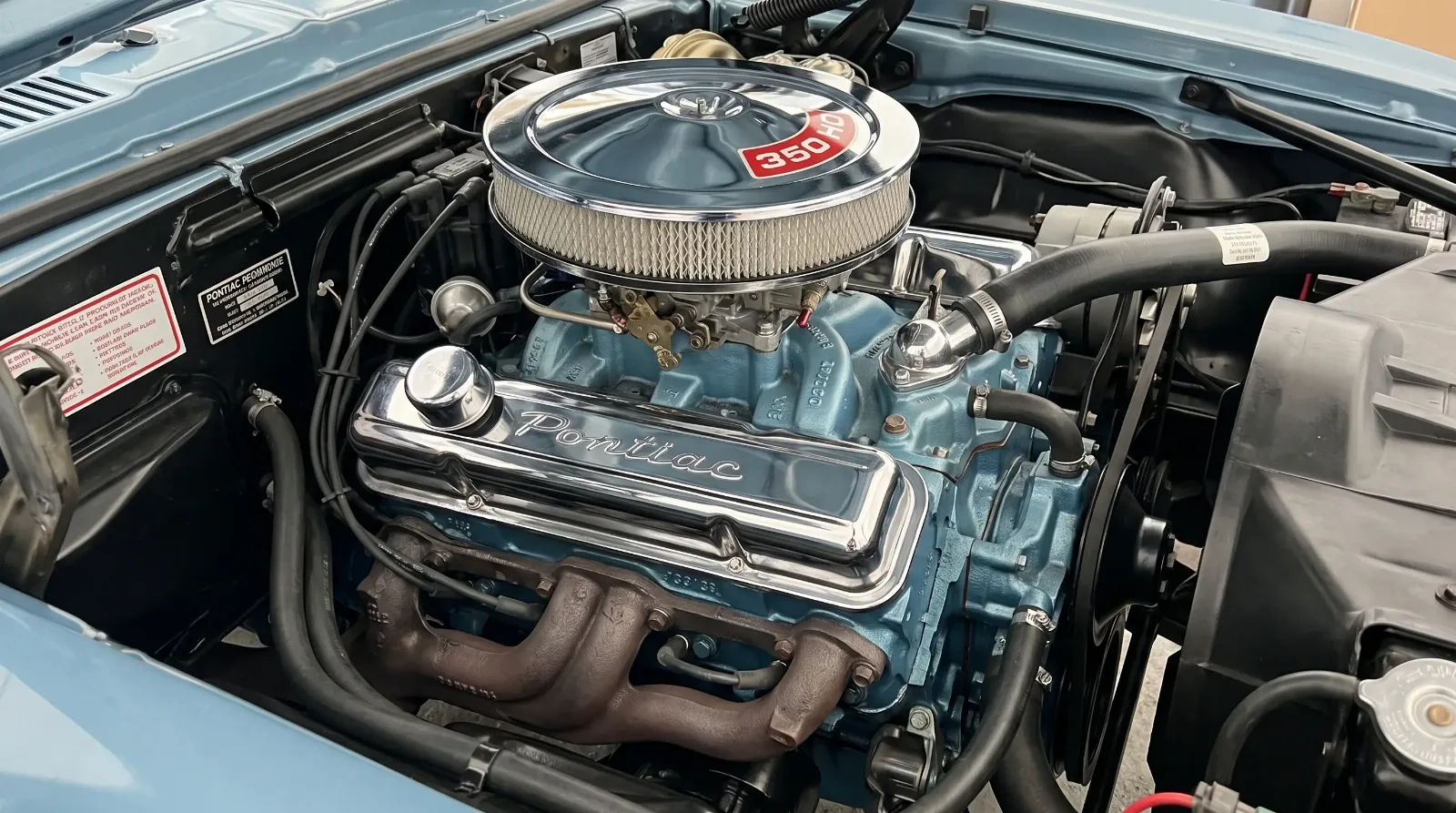
Above the six sat the V8 ladder. The 1967 cars offered a 326-cubic-inch V8 rated at 250 hp in two-barrel form, and a 326 HO with a four-barrel and dual exhausts making 285 hp. For 1968 the 326 was replaced by a 350-cubic-inch V8, since Pontiac had bored the family engine out and the displacement number changed with it.
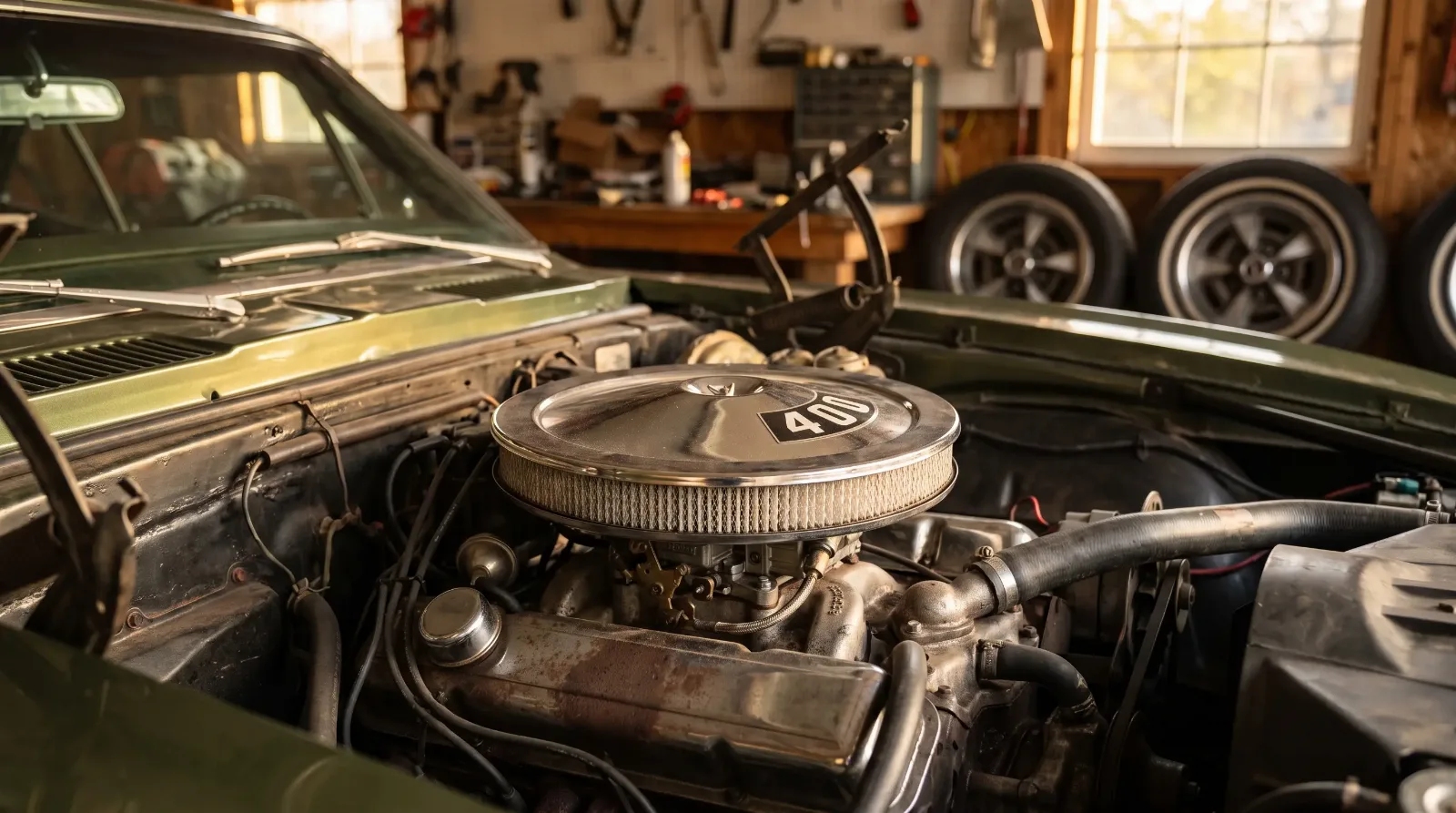
The car that gave the range its teeth was the Firebird 400. It used a 400-cubic-inch V8 rated at 325 horsepower, and it existed inside a corporate rule that shaped the whole muscle era. GM had a policy limiting intermediate and pony cars to no more than one cubic inch of engine for every ten pounds of car, which capped the Firebird at 400 cubic inches. Pontiac engineers reportedly fitted the 400 cars with a throttle stop to keep the advertised rating honest on paper, a restriction that owners removed almost immediately.
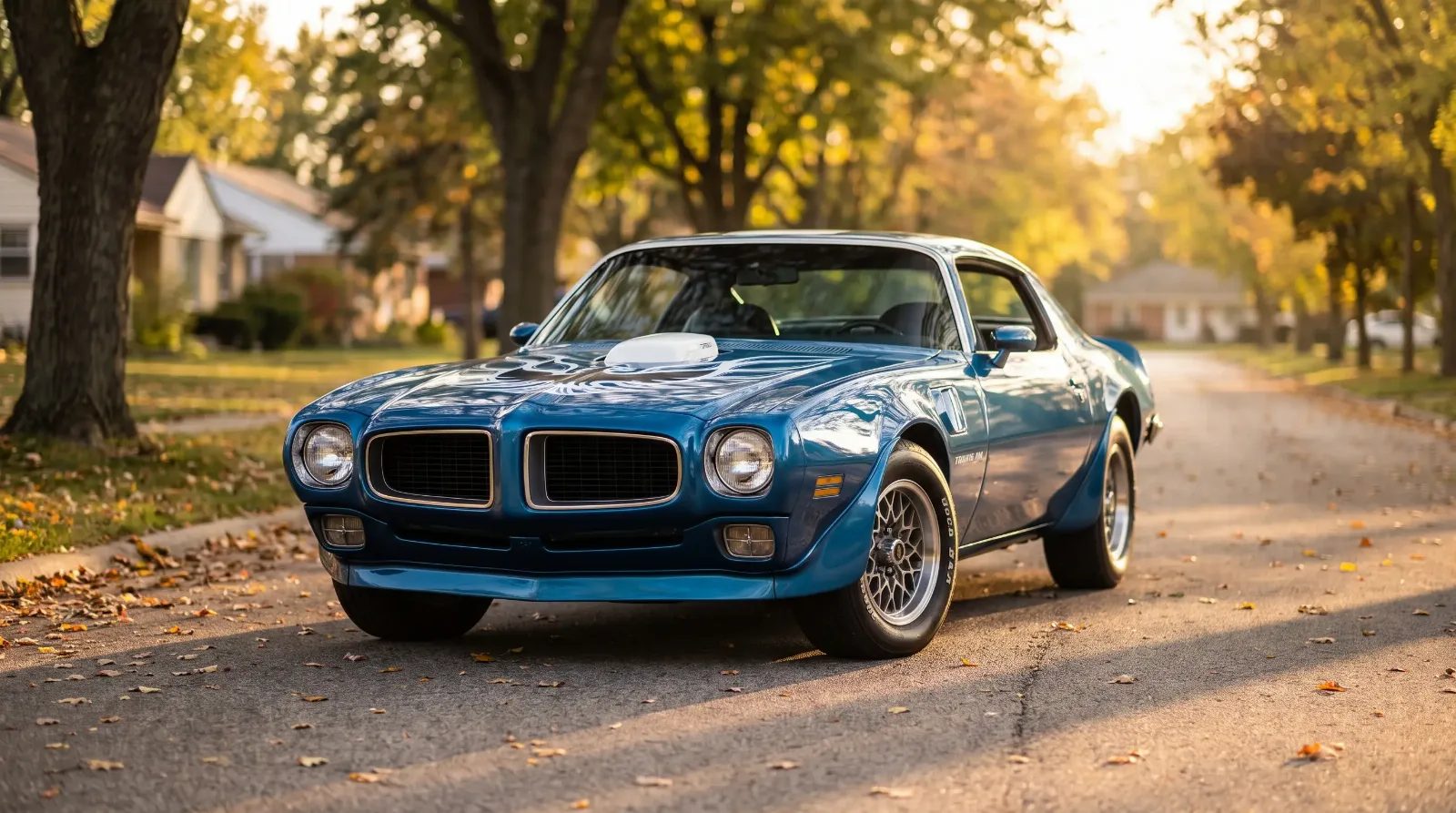
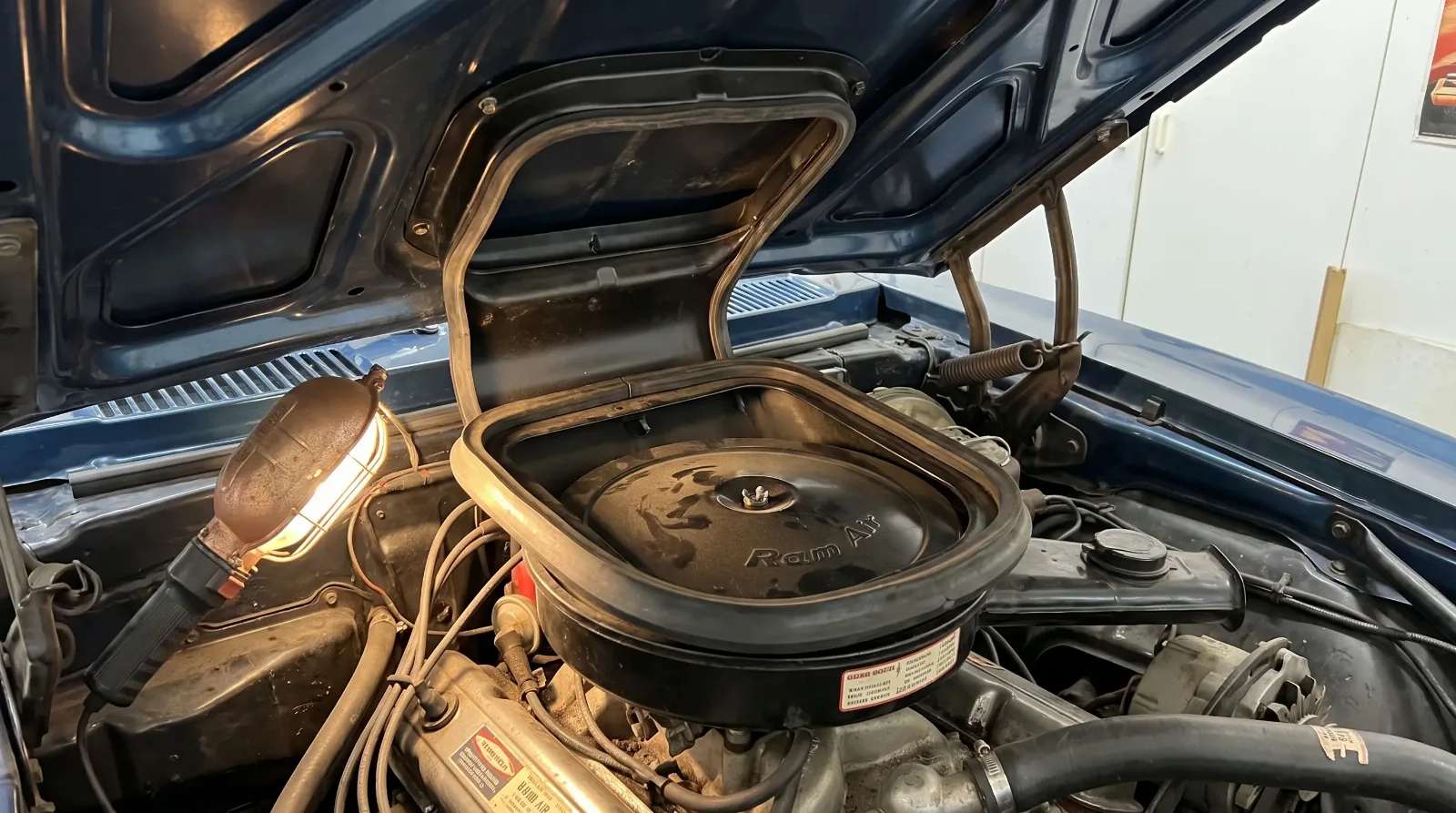
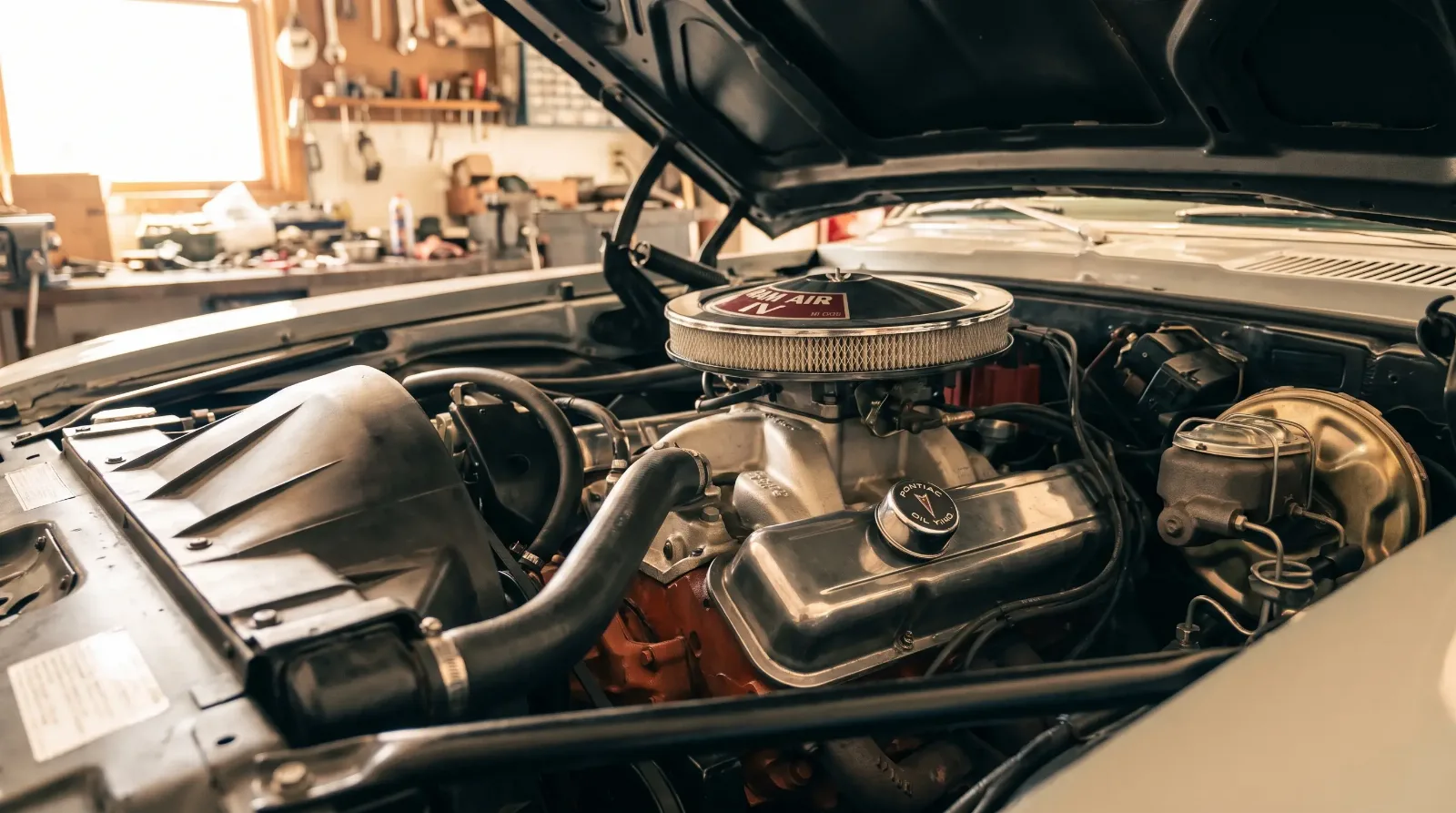
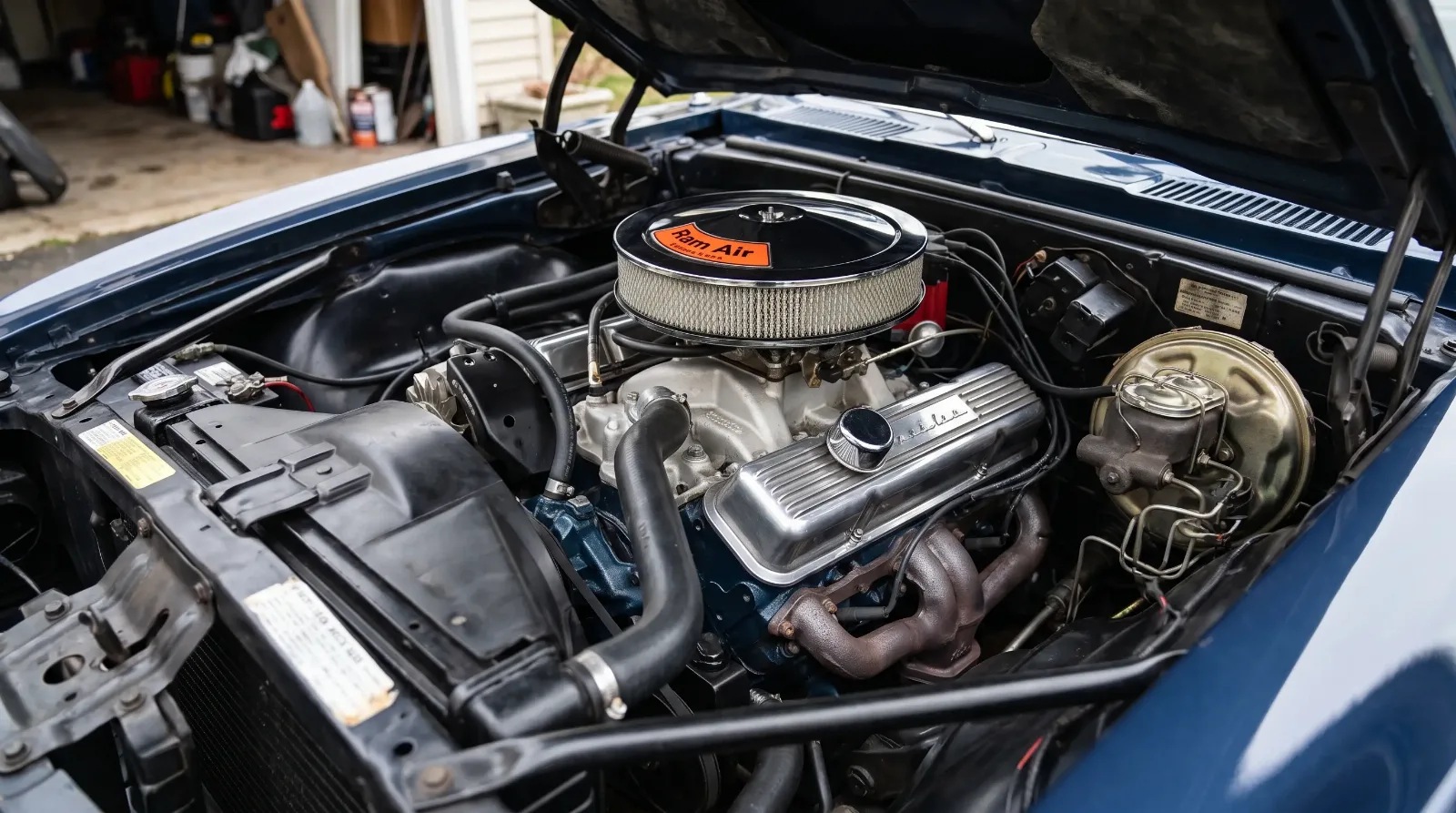
Then there was Ram Air. The Ram Air 400 fed cold air through a functional hood scoop to a revised cylinder head and cam package. Pontiac rated it at the same 325 horsepower as the standard 400, a number nobody believed. The 1969 cars brought Ram Air III and the rarer Ram Air IV, the latter carried over from the GTO program with better-breathing heads and a more aggressive cam, rated at 345 hp. The second-generation cars that followed took these engines further, and that shift is covered in a related chapter.
First-generation Firebird at a glance
| Specification | Detail (1967-1969) |
|---|---|
| Production years | 1967-1969 (first generation) |
| Platform | GM F-body, shared with Chevrolet Camaro |
| Wheelbase | 108.1 in |
| Body styles | Two-door hardtop coupe and convertible |
| Base engine | 230 cu in OHC inline-six (250 cu in for 1968-69) |
| Top engine | 400 cu in V8, Ram Air IV in 1969 |
| Power range | 165 hp to 345 hp |
| Transmissions | 3- and 4-speed manual, 2-speed and 3-speed automatic |
| 1967 production | 82,560 units |
| 1969 Trans Am production | 697 units, incl. 8 convertibles |
Those production figures are the part collectors care about most, because they set the floor under values. The 400 and Ram Air cars were always a minority of output, and the Sprint sixes were rarer still. Numbers-matching drivetrains and the original build documentation move the needle more than cosmetic condition on cars this scarce.
The 1969 restyle
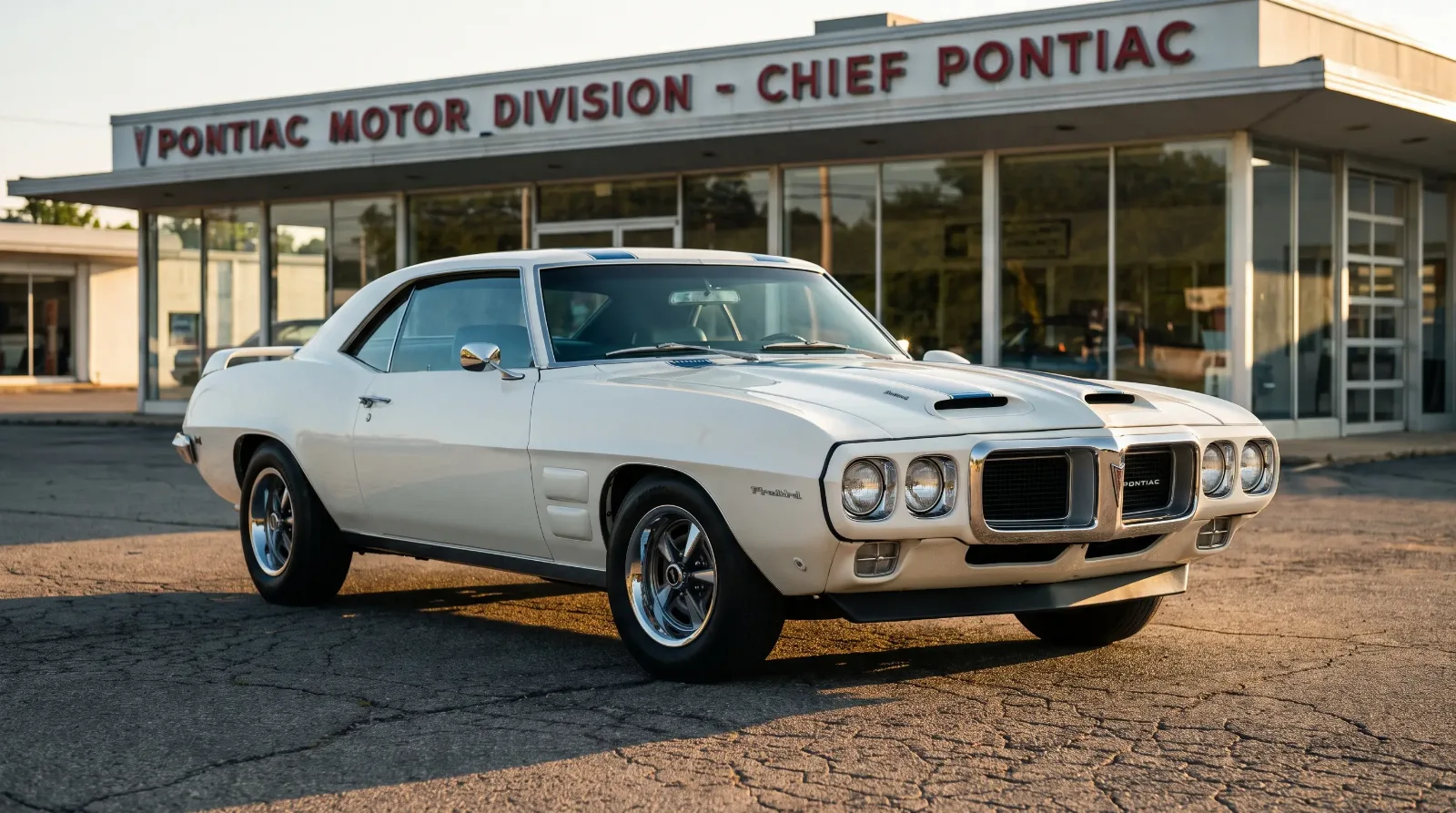
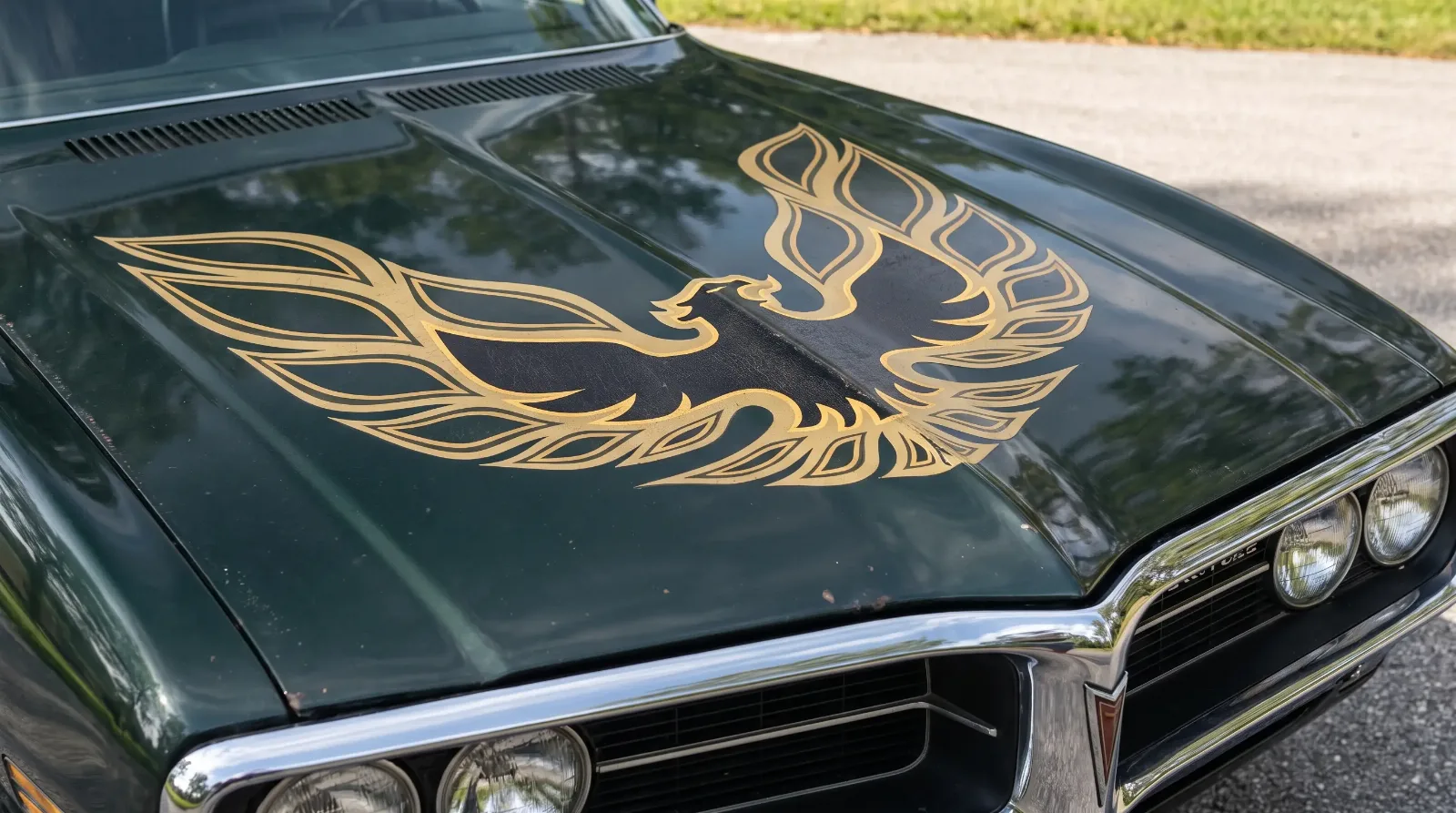
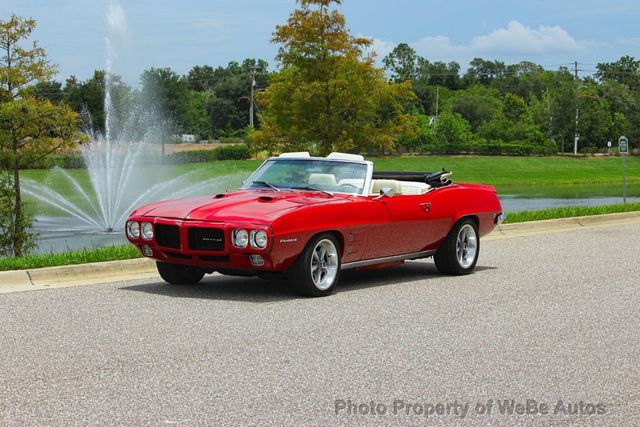
The 1967 and 1968 Firebirds shared a soft, rounded body, with 1968 dropping the side vent windows and adding federally mandated side marker lamps. For 1969 Pontiac gave the car a full sheet-metal makeover. The body gained sharp creases along the flanks, the wheel openings squared off, and a new front end with quad headlamps set into deep bezels replaced the softer 1967-68 nose. The 1969 car looks meaner in a way that photographs well, and it is the design most people picture when they imagine an early Firebird.
The restyle also stretched an unusually long model year. Production of the 1969 cars ran well into 1970 because the second-generation Firebird was delayed, so the 1969 body soldiered on longer than planned. That delay is one reason 1969 build totals can be confusing, and it is worth checking a car's trim tag and build date rather than trusting the model year alone.
The first Trans Am
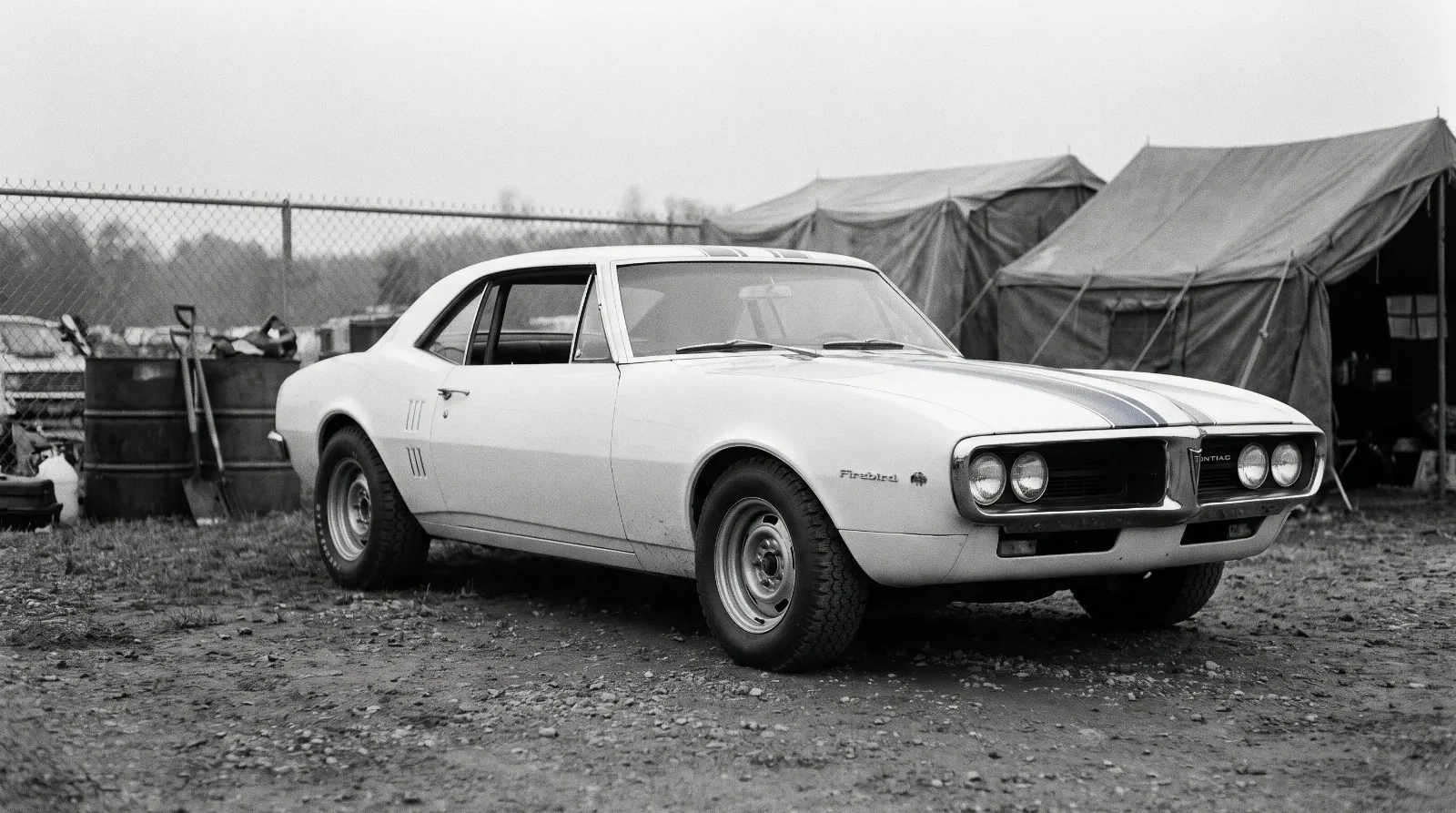
In March 1969 Pontiac introduced the Trans Am as a late addition to the first-generation lineup. It came in Polar White with blue racing stripes, front and rear spoilers, functional fender air extractors and a shaker-style hood scoop, powered by the Ram Air III 400 with the Ram Air IV available as an option. It was the most focused Firebird yet, and it laid down the visual template that the nameplate would carry for more than two decades.
What surprises people is how few were built. First-year Trans Am production was tiny, with 697 units recorded for 1969, including only 8 convertibles. That rarity, combined with the model's role as the origin point of a legend, makes an authentic 1969 Trans Am one of the most valuable first-generation Firebirds. Verifying one is a job for the documentation, since the visual package can be replicated.
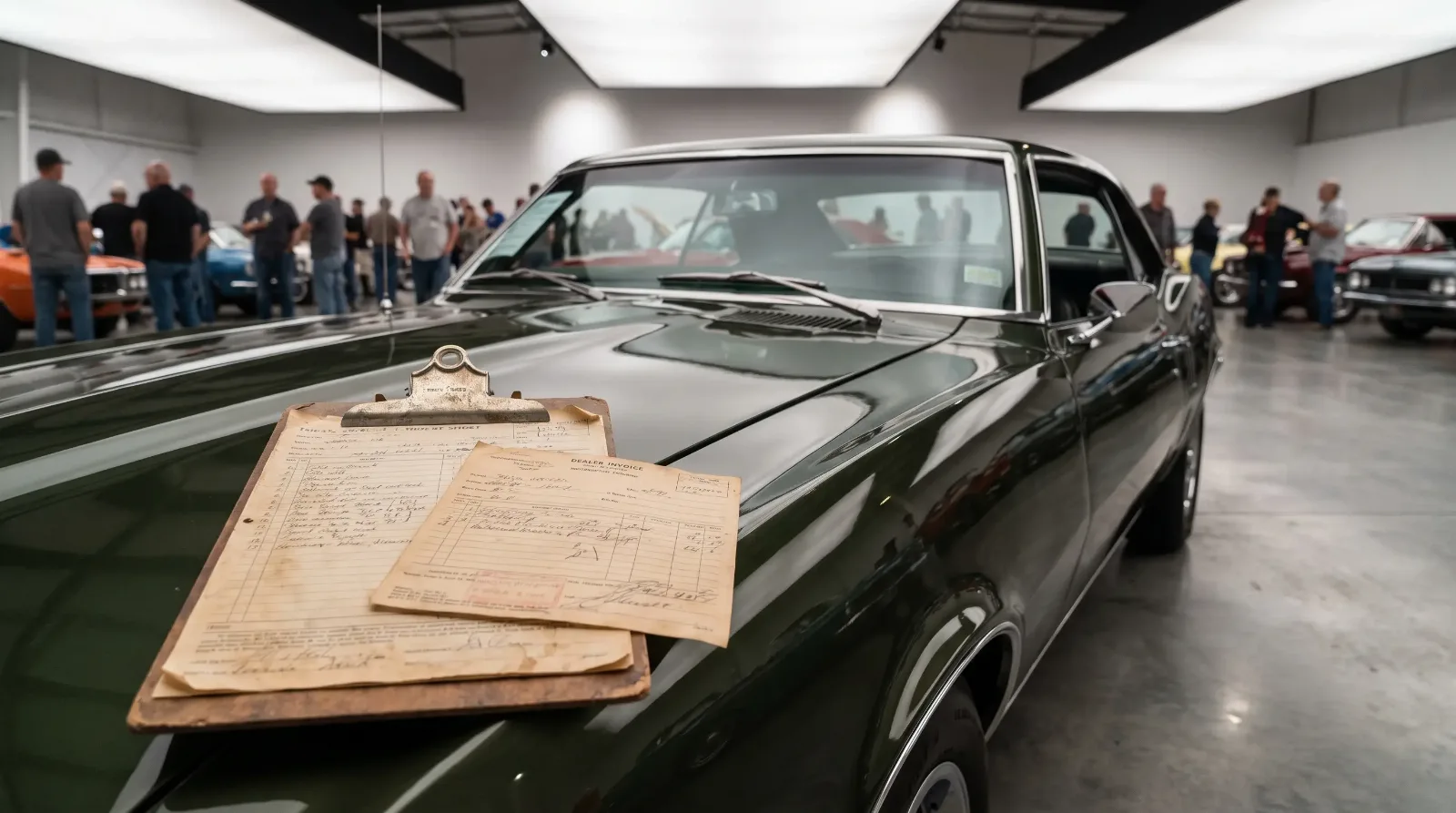
"People ask me which first-generation Firebird is the real one, and my answer is always the one with the paperwork. The trim tag, the build sheet, the original engine codes. A 1969 Trans Am with its story intact is a different object from a clone in the same paint, and the records are what tell them apart."
— Tom Ramirez
Buying a first-generation Firebird today
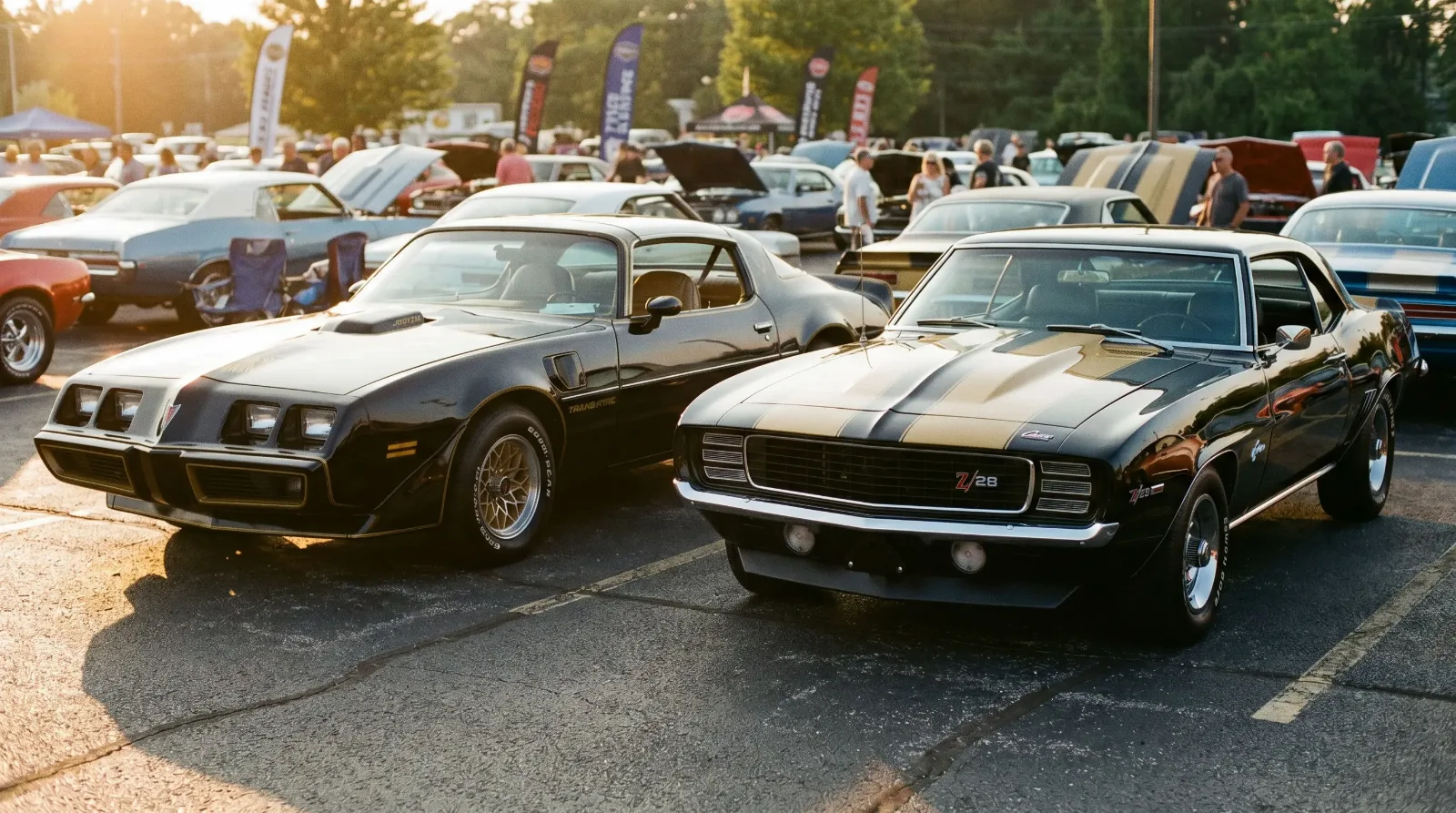
The early Firebird has climbed steadily as a collector car, and the spread between versions is wide. A driver-grade six or 350 coupe remains an accessible entry into the F-body world, while a documented 400 Ram Air or a genuine 1969 Trans Am sits at the top of the market. Because the Firebird shared so much with the Camaro, restoration parts are plentiful, which keeps ownership more practical than the production numbers might suggest.
Whether you want a Sunday driver or a documented performance car, the first generation rewards patience and homework. Browse the current first-gen Firebirds for sale and compare the paperwork as closely as the paint, because on these cars the records are what separate a good buy from an expensive lesson.
Sources and notes
- Wikipedia: Pontiac Firebird
- Hagerty Media: Is This Rare Ram Air IV Four-Speed the Finest of First-Gen Firebirds?
- Old Cars Weekly: Car of the Week, 1969 Pontiac Trans Am
- Automobile Catalog: 1967 Pontiac Firebird Sport Coupe 326 Specs
- Automobile Catalog: Pontiac Firebird First-Generation Production Numbers
- Midwest Firebirds: The Sprint 6, The Little Engine That Could