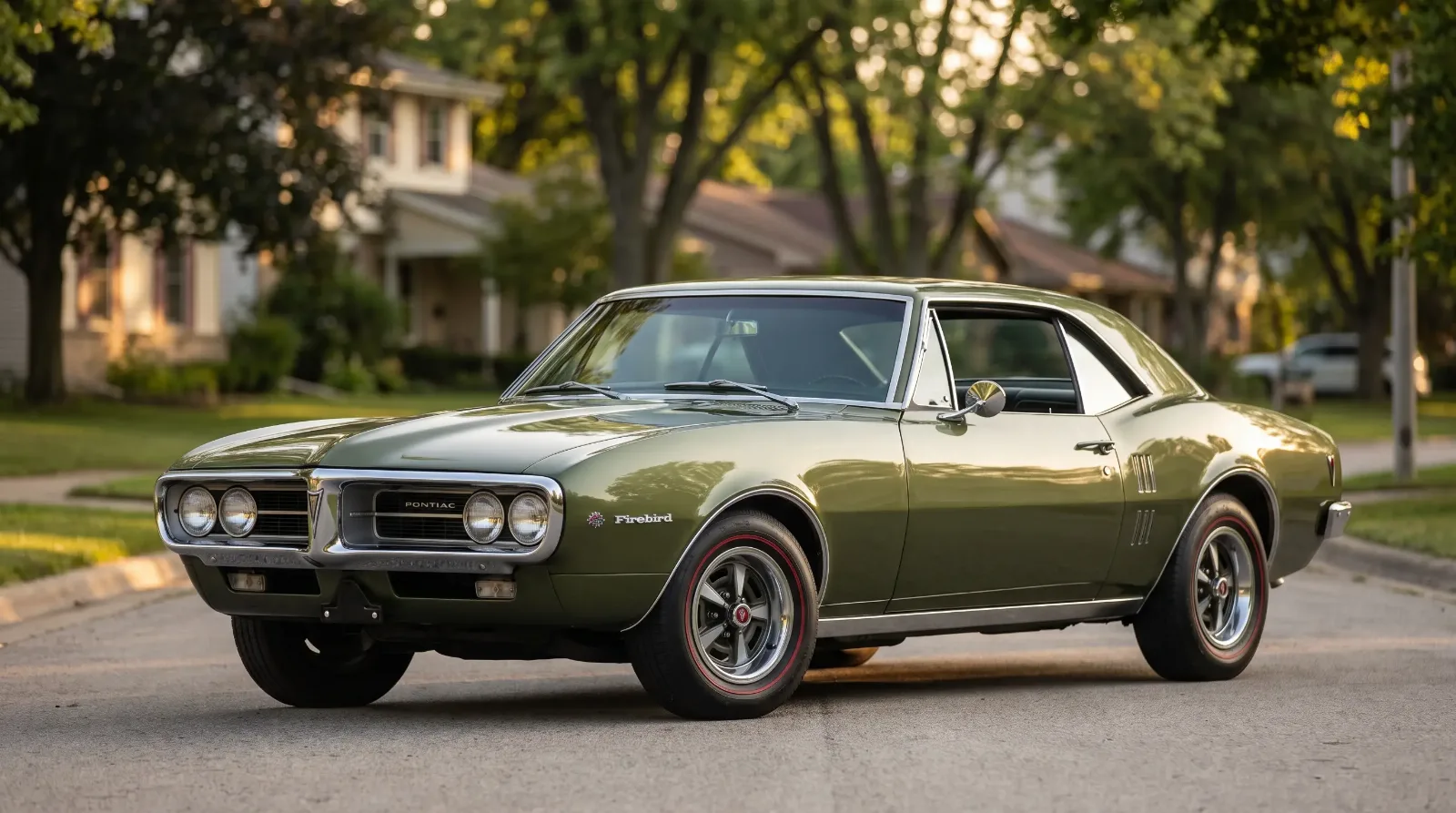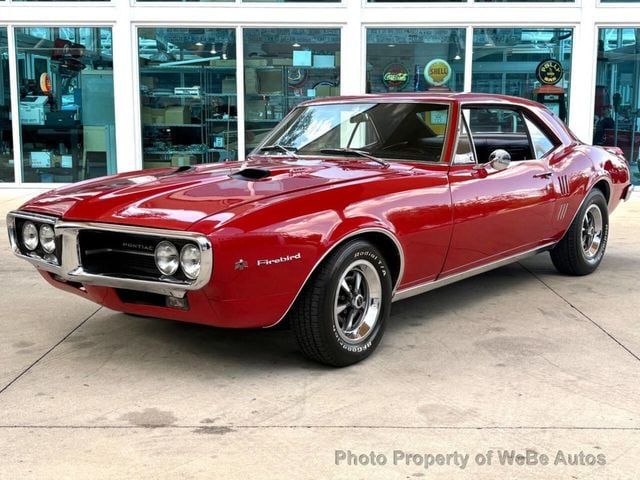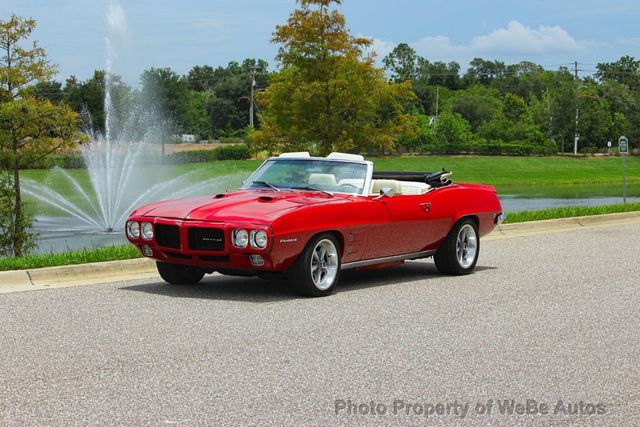
Pontiac only built one true 1969 firebird restyle year before the whole car changed shape entirely for 1970, and it shows. Rather than a full redesign, 1969 gave the first-generation Firebird a new face grafted onto a familiar body, and that face is the one most people picture when they hear the word Firebird from this era. The car kept its 1967 roofline and doors, but the front end, the grille, and a good part of the interior were new enough that dealers had something fresh to sell without Pontiac spending redesign money it hadn't budgeted for a car already scheduled to change again the following year.
One year, one new face
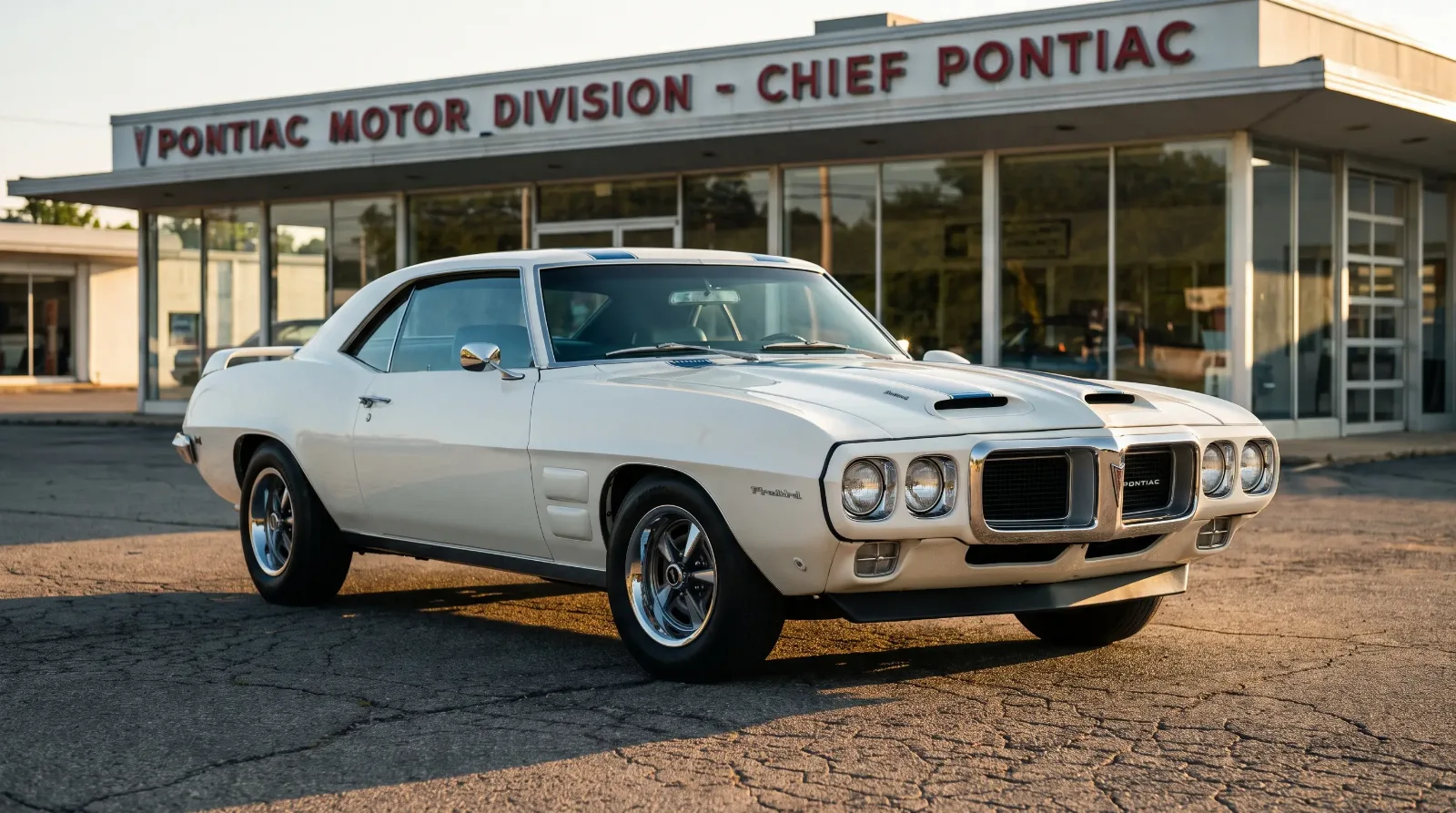
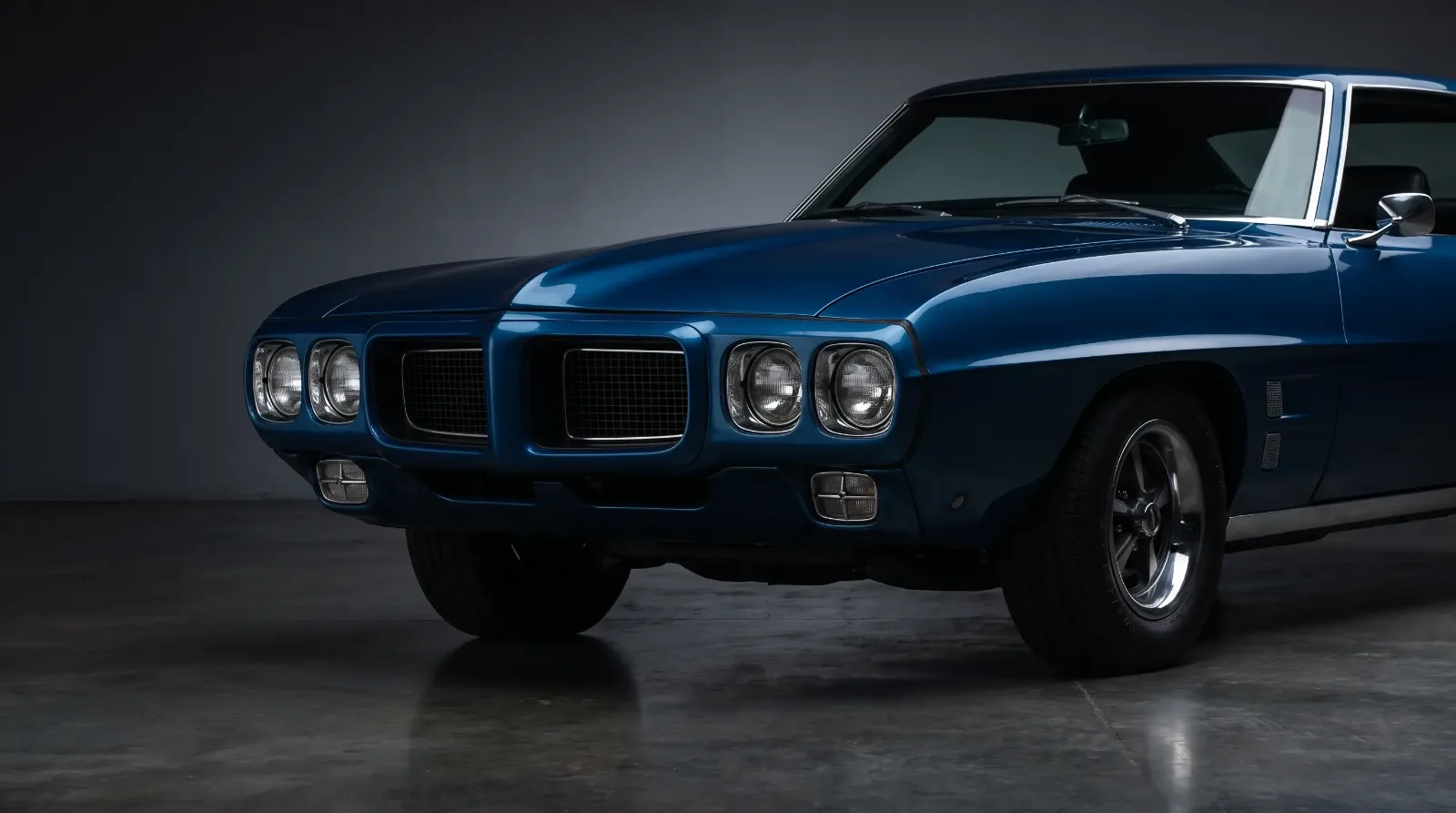
Pontiac's stylists reworked the Firebird's nose for 1969 with a twin, vertically split grille that replaced the more horizontal opening used in 1967 and 1968. Parking lamps moved, the hood gained new sculpting, and the front fenders were reshaped to meet the new nose without looking like a patch job. Because this treatment lasted a single model year before the second-generation Firebird arrived partway through 1970, the 1969 front end has become one of the more recognizable and sought-after looks in the whole first-generation run, which is covered in full across the 1967-69 Firebird.
Endura: the bumper that wasn't a bumper
The most talked-about part of the 1969 restyle wasn't paint or sheet metal, it was Endura, a semi-rigid urethane compound bonded over a steel substructure to form the front bumper and grille surround as one color-keyed piece. Pontiac had introduced Endura on the 1968 GTO, and for 1969 it extended the material to Firebird, giving the car a nose that could flex slightly on minor impact and return to shape, something a conventional chrome bumper couldn't do. The material could be painted body color, which let the front end read as a single sculpted shape instead of a chrome bar bolted onto a painted grille.
Endura wasn't without its problems. It could crack in cold weather if struck hard enough, and repairing damaged Endura required specific techniques that not every body shop had learned yet in 1969. Owners today still deal with the same material questions, since replacement Endura noses and the correct repair adhesives are far scarcer than sheet metal body panels.
Color matching Endura to the surrounding painted steel was its own separate skill. The material had to flex with temperature changes without the paint cracking along with it, which meant Pontiac and its suppliers worked out specific primers and topcoats meant for a semi-rigid urethane substrate rather than a rigid metal panel. A shop that painted an Endura nose with the wrong process in 1969, or does the same today during a restoration, ends up with a finish that looks fine on delivery day and starts crazing within a year or two once the material has gone through a normal range of seasonal temperature swings.
Cabin, trim, and options grow up
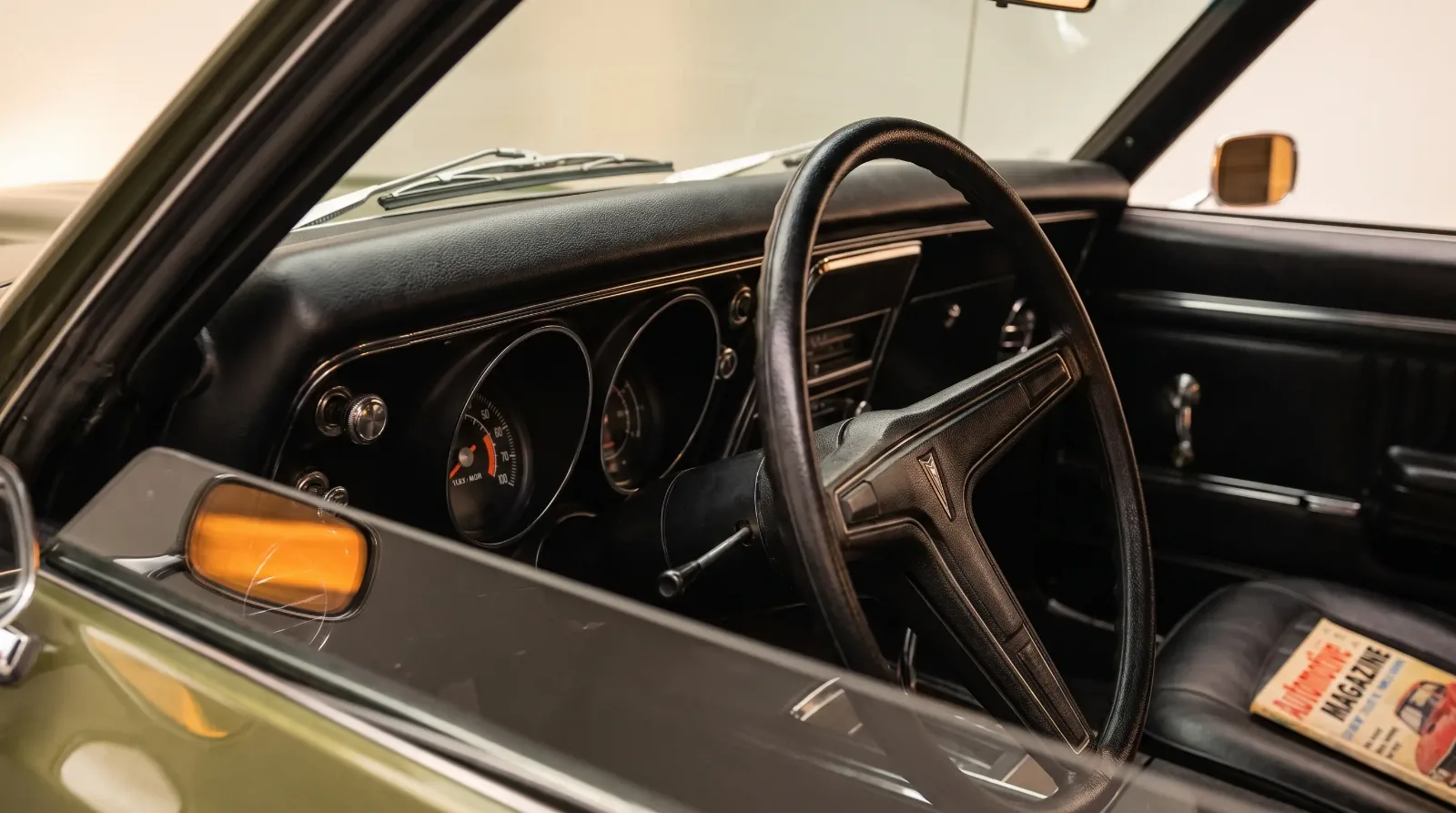
Inside, Pontiac freshened the dashboard and instrument cluster for 1969, along with revised door panels and seat trim. The options list grew as well, giving buyers more color and interior combinations than the car had offered at launch. None of this changed the Firebird's basic structure, but it gave the 1969 model a more finished, less first-year feel than the 1967 car had, and dealers used that as a selling point against Chevrolet's Camaro, which had also been refreshed for the same model year.
| Area | 1968 Firebird | 1969 Firebird |
|---|---|---|
| Front end | Horizontal grille, chrome surround | Twin vertical grille, Endura urethane surround |
| Ventilation | Astro Ventilation introduced | Carried over |
| Dashboard | 1967-style layout | New instrument cluster and trim |
| Special models | Ram Air II mid-year | Trans Am introduced as a new option package |
Engines carry over, engineering catches up
Pontiac didn't rewrite the engine lineup for 1969 the way it reworked the front sheet metal. The 250 cid six remained the base engine, the 350 cid V8 options continued, and the 400 cid V8 family, including HO and Ram Air variants, carried on with running changes rather than a clean-sheet update. What Pontiac spent its engineering effort on instead was fitting all of that hardware behind the new Endura nose without changing cooling, crash structure, or engine mounts in ways that would have complicated an already tight production schedule.
That restraint under the skin is easy to overlook next to a new front end, but it mattered to how quickly the 1969 Firebird could reach dealer lots. Pontiac's product planners had a hard deadline of their own, since the second-generation Firebird was already being tooled for a staggered 1970 launch. Spending engineering hours on a new nose was affordable. Spending them on a new radiator core support, new motor mounts, or a revised firewall to match would have pulled resources away from the bigger redesign already underway, so the drivetrain stayed largely untouched while the styling team did the work that gave 1969 its own identity.
"The 1969 Firebird gets remembered for its face and rightly so, but the more interesting story is how much Pontiac managed to change up front while touching almost nothing behind the firewall. That's a harder trick than a full redesign, and it doesn't get enough credit."
— Tom Ramirez
Setting the stage for Trans Am
The 1969 restyle mattered beyond its own model year because it became the platform Pontiac used to launch the first Trans Am. The Endura nose, the twin grille, and the revised hood all appear on that car, dressed in white with blue stripes and a functional Ram Air induction system borrowed from the same engine family already under other 1969 Firebird hoods. For the full account of how that option came together and how few were built, the next story in this set covers the numbers and the details behind Pontiac's first Trans Am.
Sources and notes
- Soft Revolution: The 1968 Pontiac GTO Endura Nose, Mac's Motor City Garage
- Pontiac Firebird, Wikipedia
- 1969 Pontiac Trans Am Ram Air III, Supercars.net
- Car of the Week: 1969 Pontiac Trans Am, Old Cars Weekly
- 1969 Pontiac Firebird Trans Am, History and Specs, Motogallery
- 1969 Pontiac Firebird History, First Generation Firebird