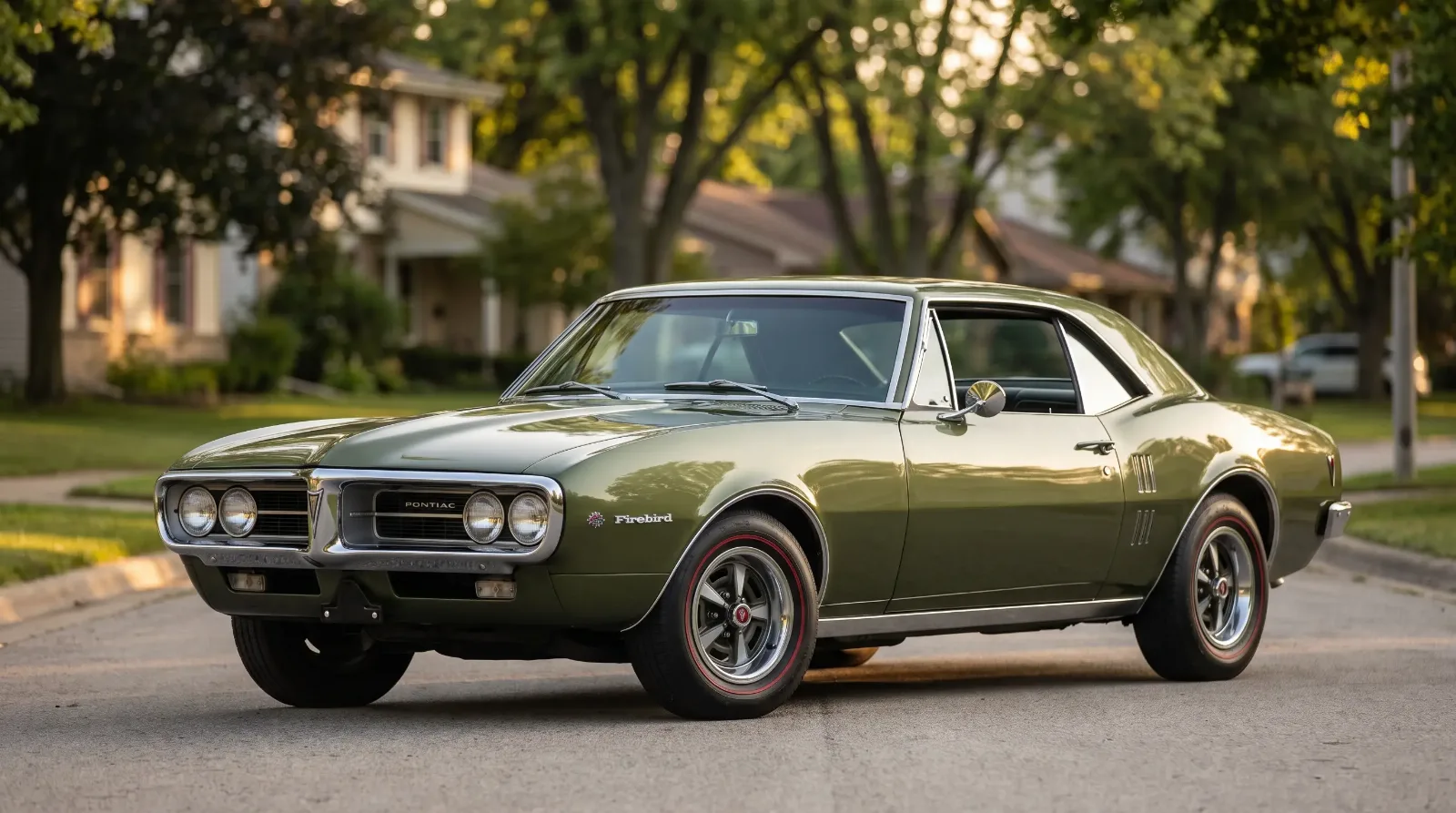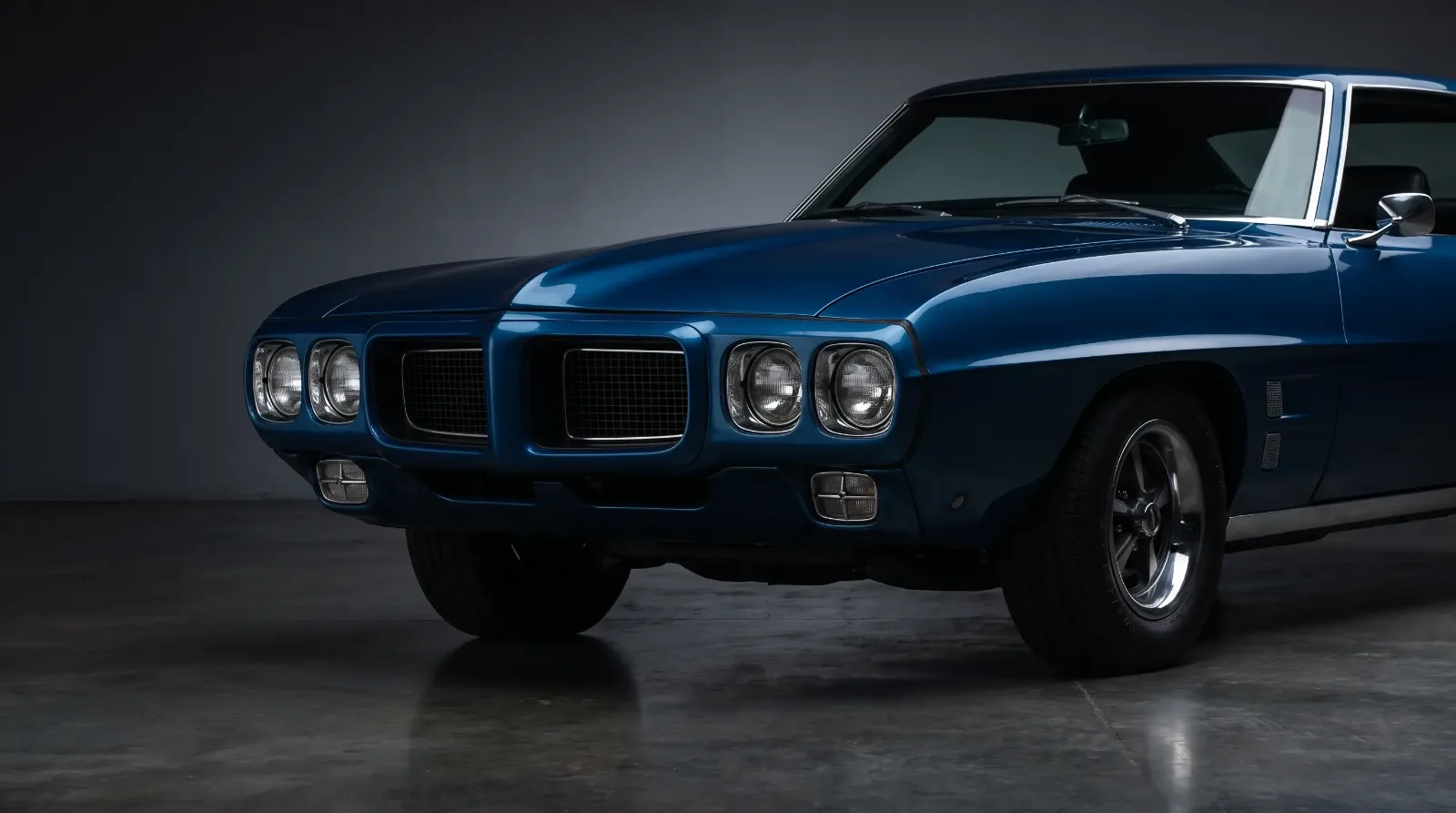
The first 1969 trans am left Pontiac's plant carrying a name the company didn't own outright. Trans Am belonged to the SCCA's Trans-American Sedan Championship, a road racing series Pontiac had no direct entry in that year, and Pontiac paid the sanctioning body a licensing fee for every car it sold under that badge, reportedly five dollars per unit. That's an unusual way to launch what became one of the most famous option packages in American performance car history, and it says something about how modest Pontiac's ambitions for the car actually were in 1969, before anyone knew what the name would grow into.
A name borrowed from a road race series
Trans-Am racing pitted showroom-based pony cars against each other on road courses, and by the late 1960s it had become a genuine marketing battleground for Ford, Chevrolet, and American Motors. Pontiac wanted a piece of that association without necessarily fielding a factory-backed racing effort to match, so it built a street option package, licensed the name from the SCCA, and let the badge do the work of connecting the car to a racing series it wasn't formally competing in that first year. It's a detail that gets lost in later Trans Am mythology, but the option started as much as a marketing move as a performance one.
Ford and Chevrolet had already staked out their own claims in the same racing series, with the Mustang and Camaro both running versions built specifically to meet Trans-Am homologation rules. Pontiac's answer wasn't a purpose-built race car sold to the public in the same sense, it was a dress-up and performance option layered onto the existing Firebird body. That difference in approach is part of why the 1969 Trans Am reads today as a street car with racing associations rather than a homologation special in the strictest sense, even though the name and the stripe treatment borrowed directly from the racing world Pontiac was courting.
What made a Trans Am a Trans Am in 1969
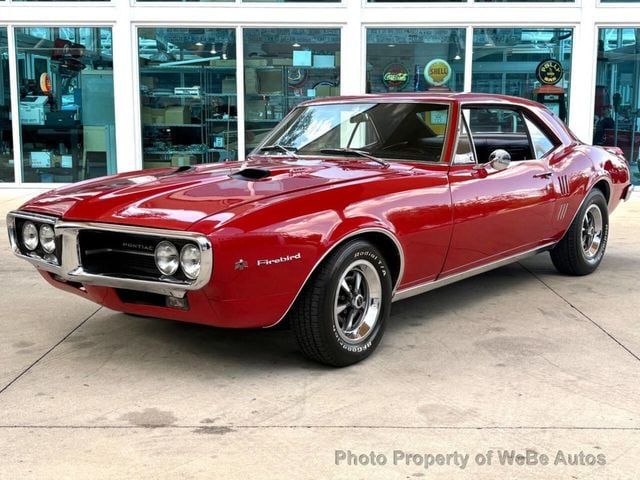
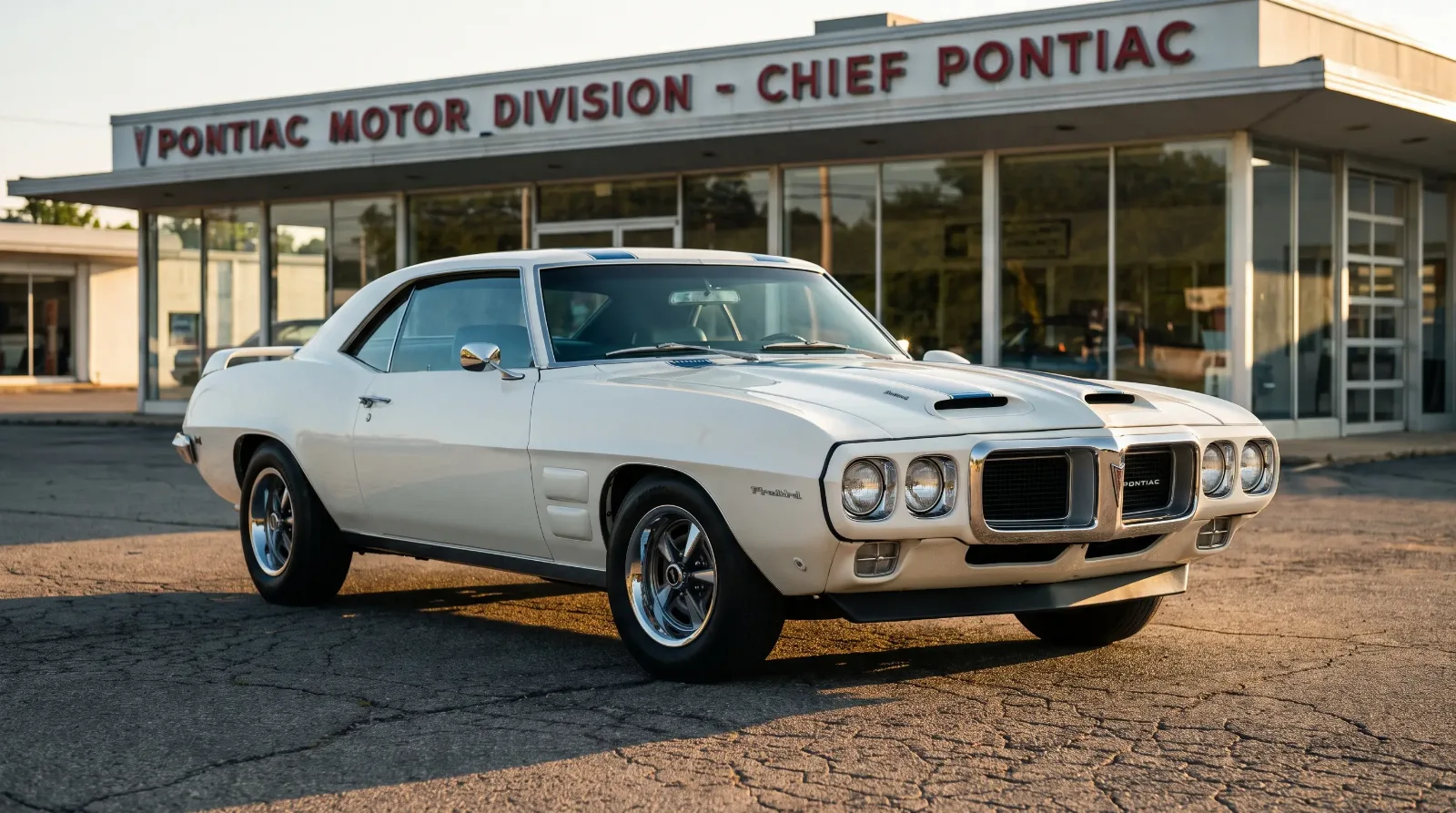
The 1969 Trans Am was built on the same Endura-nosed platform as the rest of that year's restyled Firebird, covered in the first-gen Firebird story, and added a specific set of hardware on top. It came only in Cameo White with blue racing stripes running front to back, paired with a functional hood featuring twin scoops, a front air dam, and a rear deck lid spoiler, all aimed at reinforcing the car's connection to the road racing series whose name it borrowed. None of those pieces were subtle, and that was the point. Pontiac wanted the option instantly identifiable on sight, both on the street and in dealer showrooms competing for attention against Camaro's Z/28.
The numbers behind the rarity
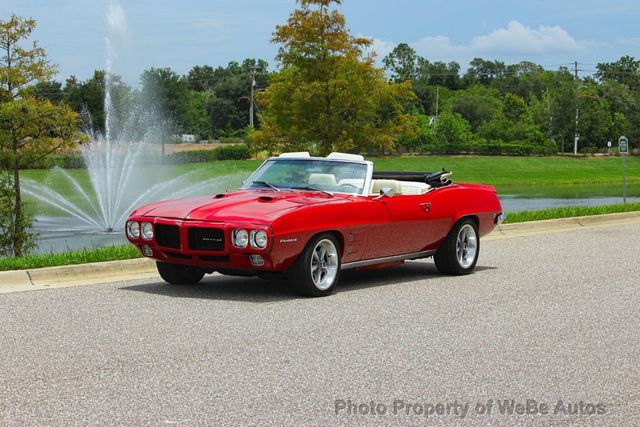
Total production for the 1969 Trans Am landed at 697 units, a small fraction of overall Firebird output for the model year, and within that figure only a handful were built as convertibles, commonly cited at 8 cars. Those production figures are why a documented, numbers-matching 1969 Trans Am commands serious attention today. The option didn't sell in meaningful volume in its debut year, and Pontiac's decision to keep building the package into 1970 and beyond is really what turned a low-volume 1969 curiosity into the foundation of a decades-long model line.
Low volume in 1969 also means the paperwork trail matters more than it does for a common Firebird 400. A dealer invoice, a PHS documentation package, or factory build sheet tied to a specific VIN is what separates a genuine Trans Am from a Firebird dressed up afterward with the right stripes and a spoiler bolted on. Given how few were built and how straightforward the visual package is to replicate, buyers evaluating a claimed 1969 Trans Am should treat documentation as a requirement rather than a nice-to-have, especially before paying a premium tied directly to that rarity.
| Detail | 1969 Trans Am |
|---|---|
| Exterior color | Cameo White with blue stripes, no other factory colors offered |
| Approximate production | 697 units total |
| Convertibles built | 8 units |
| Standard engine | Ram Air III 400 |
| Optional engine | Ram Air IV 400 |
Ram Air III and Ram Air IV under the hood
Every 1969 Trans Am left the factory with a 400 cubic inch V8 under functional Ram Air induction. The standard engine was the Ram Air III, rated at 335 hp, while buyers who wanted more could step up to the Ram Air IV, a round-port head engine rated at 345 hp and built for higher-rpm output rather than low-end torque. Both engines used the same basic hood scoop plumbing the Firebird had refined since the original Ram Air I package, only now paired with a front air dam and rear spoiler that gave the car an actual aerodynamic argument to go along with the cold air induction. For a closer technical look at the stronger of the two engines, another angle covers what separated the Ram Air IV from the standard Ram Air III in more detail.
"What people forget is that the 1969 Trans Am wasn't a sales success when it launched. It was a low-volume option most dealers barely stocked. Pontiac kept it alive anyway, and that decision is the only reason the name means what it means today."
— Tom Ramirez
The legacy after one model year
Pontiac built the Trans Am option for a single model year on the first-generation Firebird body before the car's full redesign arrived for 1970. That short run, combined with the genuinely low production numbers, is why the 1969 Trans Am occupies a different tier from later cars carrying the same name. It wasn't the biggest seller, and it wasn't the most powerful Firebird Pontiac would eventually build. It was the first car to wear a name borrowed from a racing series Pontiac didn't even compete in that year, and everything the Trans Am nameplate became afterward traces back to that modest, oddly licensed starting point.
Sources and notes
- Hotcars: The Pontiac Trans Am Convertible Rarer Than Any Hemi 'Cuda
- ThrottleXtreme: Rare Air, 1969 Trans Am Convertible
- Hotcars: The Truth Behind What Trans Am Really Stood For
- Supercars.net: 1969 Pontiac Trans Am Ram Air III
- Automobile-Catalog: 1969 Pontiac Firebird Trans Am Ram Air IV Specifications
- Wikipedia: Pontiac Firebird