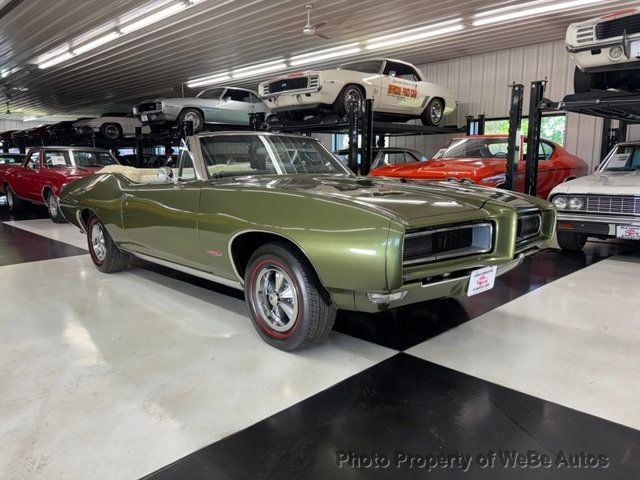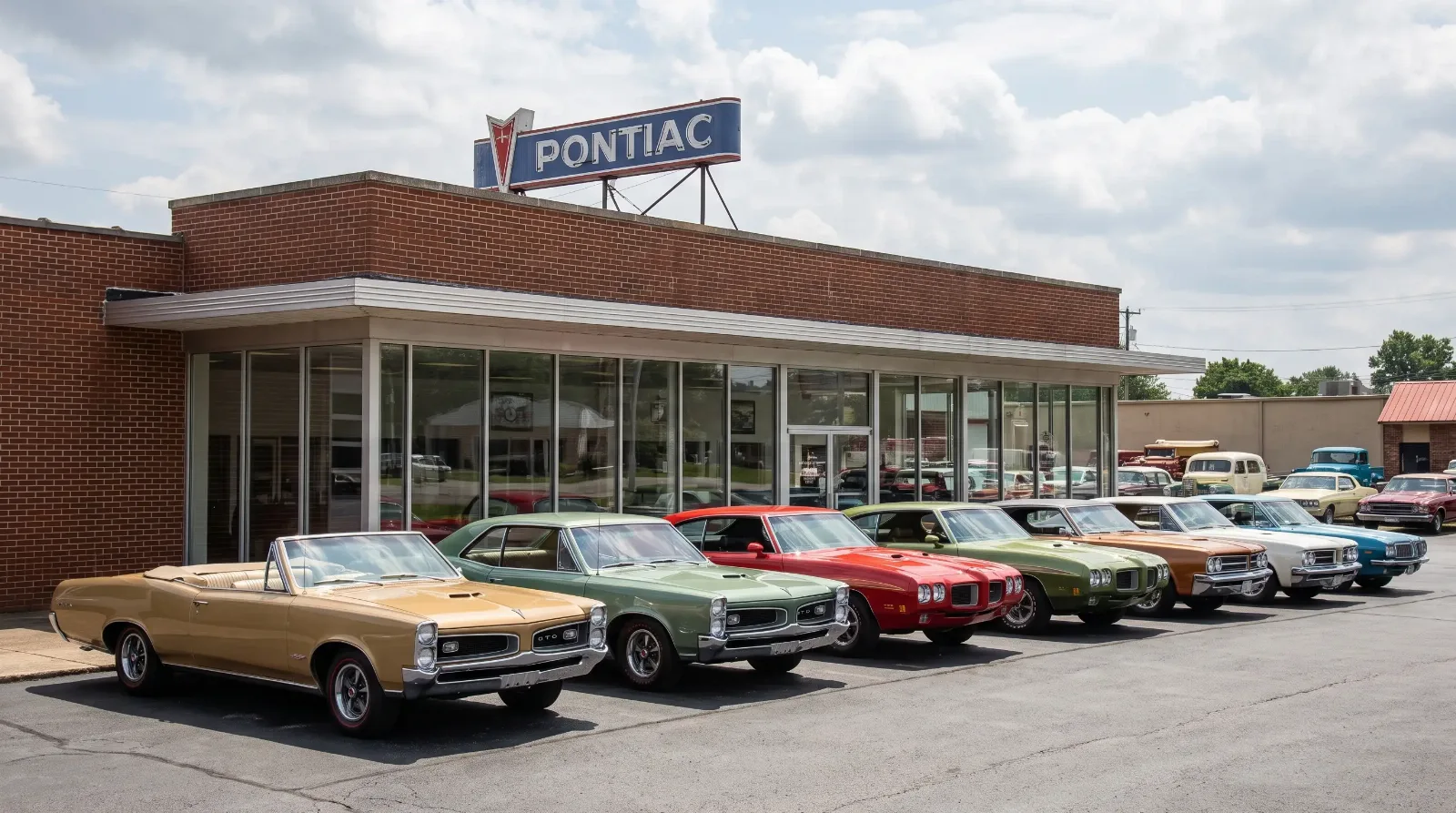
Ask ten GTO owners what horsepower their car makes and you'll get ten different answers, and most of them will be citing the factory rated figure rather than anything measured on their specific car. That's fine as a starting point, but the factory numbers themselves need context most casual conversations skip entirely. Here is what Pontiac actually rated across the GTO's classic production run, and why those numbers shift the way they do.
1964-1965: the 389 years
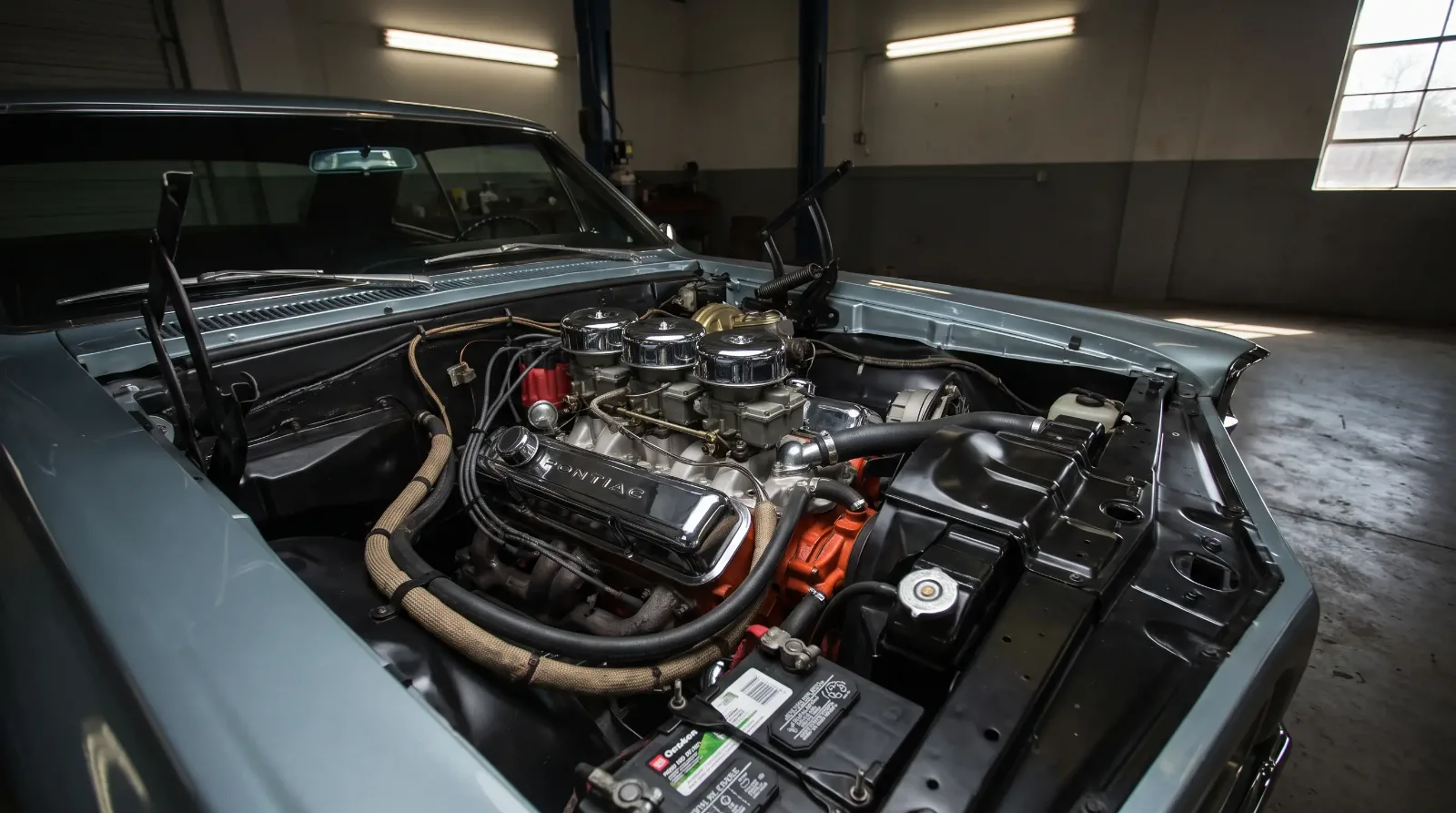
The GTO launched in 1964 as an option package on the Tempest LeMans, and the engine bay carried the 389 in a few configurations. The base engine with a single four-barrel carburetor was rated at 325 horsepower, and the Tri-Power option, three two-barrel carburetors, pushed that to 348 horsepower. Both ratings climbed for 1965, to 335 horsepower for the four-barrel and 360 horsepower for Tri-Power cars, and 1966 carried those same figures over unchanged as the GTO became its own model. That gives the earliest GTOs a consistent, well-documented power baseline that collectors still reference today.
1966-1967: the GTO becomes its own model
1966 marked the GTO's transition from an option package to a standalone model in Pontiac's lineup, and the 389 carried over largely unchanged in its power ratings at 335 horsepower for the four-barrel and 360 horsepower for Tri-Power, which remained available through the end of that model year. 1967 brought the more significant shift: displacement grew to 400 cubic inches, and GM's corporate ban on multi-carburetor setups ended Tri-Power's run on the GTO for good, replaced by a single Rochester Quadrajet four-barrel. The standard 400 in 1967 was rated around 335 horsepower, the High Output 400 was rated at 360 horsepower, and a lower-compression economy 400 was offered at 265 horsepower for buyers who wanted the displacement without the insurance surcharge.
| Year | Primary engine | Top rated horsepower |
|---|---|---|
| 1964 | 389 (Tri-Power) | 348 hp gross |
| 1965-1966 | 389 (Tri-Power) | 360 hp gross |
| 1967 | 400 HO (Quadrajet) | 360 hp gross |
| 1968-1969 | 400 (Ram Air IV) | 370 hp gross |
| 1970 | 400/455 HO | 370 hp gross (Ram Air IV), 360 hp gross (455 HO) |
| 1971 | 400/455 HO | 310 hp net (455 HO) |
| 1972 | 400/455 HO | 300 hp net (455 HO) |
| 1973 | 400/455 | 230 hp net (400), 250 hp net (455) |
| 1974 | 350 (base), 400/455 optional | net-rated, lower than 1973 across the board |
1968-1969: Ram Air enters the picture
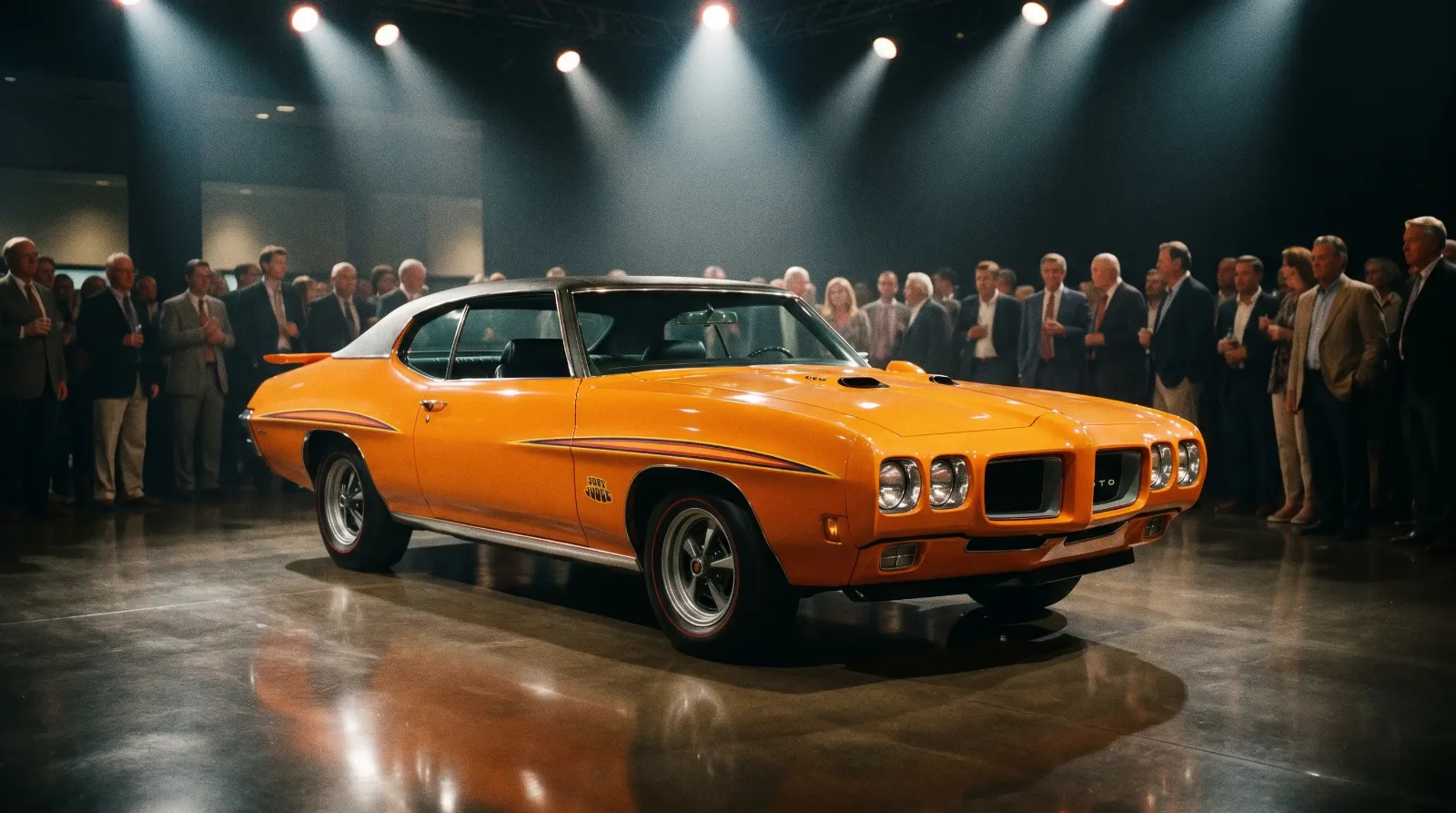
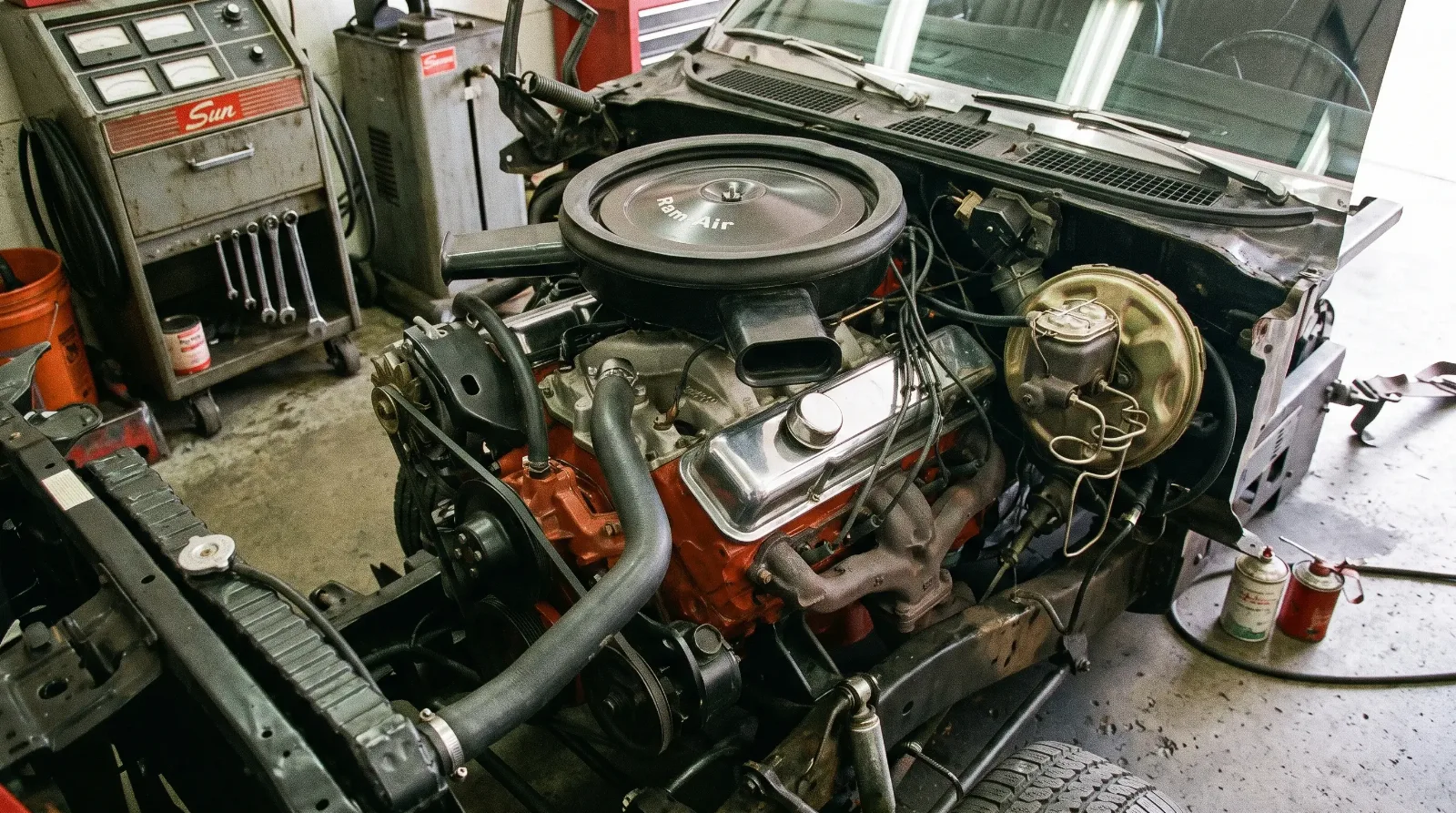
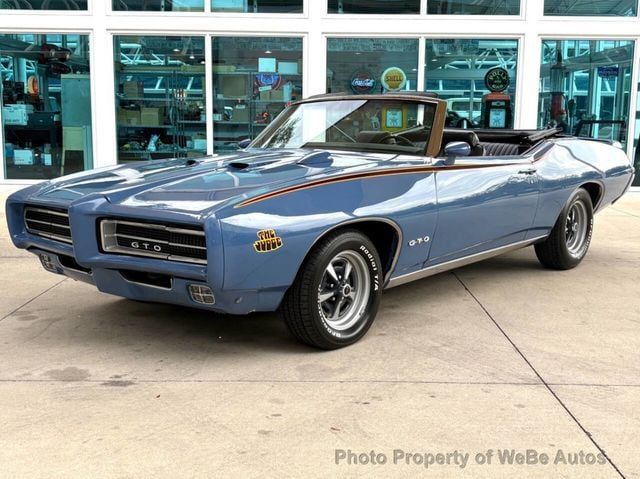
These two years represent the peak of Pontiac's factory horsepower ratings on the GTO, and it's not a coincidence that they line up with the introduction of Ram Air III and Ram Air IV, covered in depth in a companion piece on how those two engines actually differ under the hood. Rated output on Ram Air-equipped cars climbed to 366 gross horsepower for the Ram Air III and 370 gross horsepower for the Ram Air IV, the highest official figures the GTO would ever carry, at least under the old measurement standard. The Judge debuted mid-1969, adding visual drama to what was already the most aggressive period of GTO performance marketing.
1970-1971: displacement grows, ratings hold steady
1970 brought the 455 into the GTO lineup alongside the continuing 400, rated at 360 gross horsepower in HO form, while Ram Air IV production wound down over the course of the year as the 455 HO took over as Pontiac's performance flagship engine. 1971 saw compression ratios trimmed across the board, to 8.2:1 on the 400 and 8.4:1 on the 455, in response to tightening emissions rules and a shift toward lower-octane fuel, and the 455 HO's rating dropped to 310 horsepower that year. For readers comparing generations, the 389-to-455 engine guide covers how each of these engines fits into the model's full mechanical history.
"Every GTO year has its own story once you look at the actual factory documentation instead of just the round numbers people repeat at car shows. The engineering didn't stand still, and neither did the way Pontiac reported what these engines made."
— Tom Ramirez
Why option codes matter more than the model year alone
A single model year rarely tells the whole story on its own, because within nearly every year Pontiac offered more than one engine and carburetor combination, each with its own RPO code and its own rated output. Two 1968 GTOs can carry meaningfully different horsepower ratings depending on whether one left the factory with a base 400 and the other with Ram Air II hardware, even though both wear the same model year on their title. Serious buyers and researchers work from the specific option codes documented on a car's build sheet or window sticker rather than relying on the model year as shorthand for a single horsepower figure.
This is part of why PHS documentation and factory build sheets carry real weight in the GTO hobby beyond simple bragging rights. A build sheet doesn't just confirm a car is authentic. It pins down exactly which engine, which carburetor, and which rated horsepower figure applied to that specific car when it left the factory, cutting through decades of parts swaps, casual claims, and honest misremembering that can otherwise muddy a car's history.
1972-1974: the numbers that fooled a generation of buyers
This is where the story gets genuinely confusing if you don't know the context. Starting with the 1972 model year, the entire American auto industry switched from gross horsepower ratings, measured on a bare test-stand engine without accessories, to net horsepower ratings, measured with the engine installed as it would actually run in the car, complete with alternator, exhaust system, and all accessories drawing power. The 455 HO went from 310 net horsepower in 1971 to 300 net horsepower in 1972, and by 1973 the net-rated 400 sat at 230 horsepower with the 455 at 250 horsepower, not because the engines got dramatically weaker year over year but because the measurement method and continued compression cuts were both working against the numbers at once. Understanding gross versus net ratings is essential to fairly comparing early and late GTOs, and it's a topic detailed enough to deserve its own full explanation.
Net-rated horsepower figures also came with a silver lining that gets lost in the "later GTOs are weaker" narrative. Emissions and fuel economy pressure genuinely did soften some engines through the early 1970s, particularly through lower compression ratios, but the drop on paper between 1971 and 1972 is exaggerated by the rating change itself. Two engines with nearly identical real-world output on a dyno could show a 40-to-50 horsepower gap purely from switching how the number was calculated, and that gap has misled two generations of buyers into underrating early-1970s GTOs relative to what they can actually do on the road.
By 1974, the GTO had shifted to the smaller Ventura-based platform for its final classic model year, marking the practical end of the big-block GTO era covered throughout this guide. Anyone trying to make sense of what a specific model year's horsepower figure actually means owes it to themselves to understand this measurement shift before comparing numbers across years. so, read on for the full breakdown of how gross and net ratings actually worked and why it matters so much to evaluating a GTO's real performance. For the origin story that set all of this in motion, the GTO's origins traces the model back to where it began in 1964.
The lesson across all ten years of factory production is the same one that applies to most old-car research: a single headline number rarely holds up to scrutiny. Ask which measurement standard applies, ask which specific option code produced that figure, and ask for documentation before repeating any horsepower claim as settled fact.