
Ask ten people when the muscle car era started and you will get ten answers. Ask someone who actually turned wrenches on these cars in the 1960s and the answer gets simpler. It started with a Pontiac Tempest that had no business carrying the engine somebody bolted into it. The 1964 Pontiac GTO was not the fastest car ever built and it did not invent the V8. What it did was take a big engine, drop it into a mid-size body, price it so a young guy could almost afford it, and give it a name that sounded like a race car. That formula is the whole muscle car recipe. Everybody else spent the next decade copying it.
Car Features
15 min read
The Pontiac GTO Story: How One Car Invented the Muscle Car Era
The honest story of how the Pontiac GTO started the muscle car era, generation by generation, and what you are really buying today.
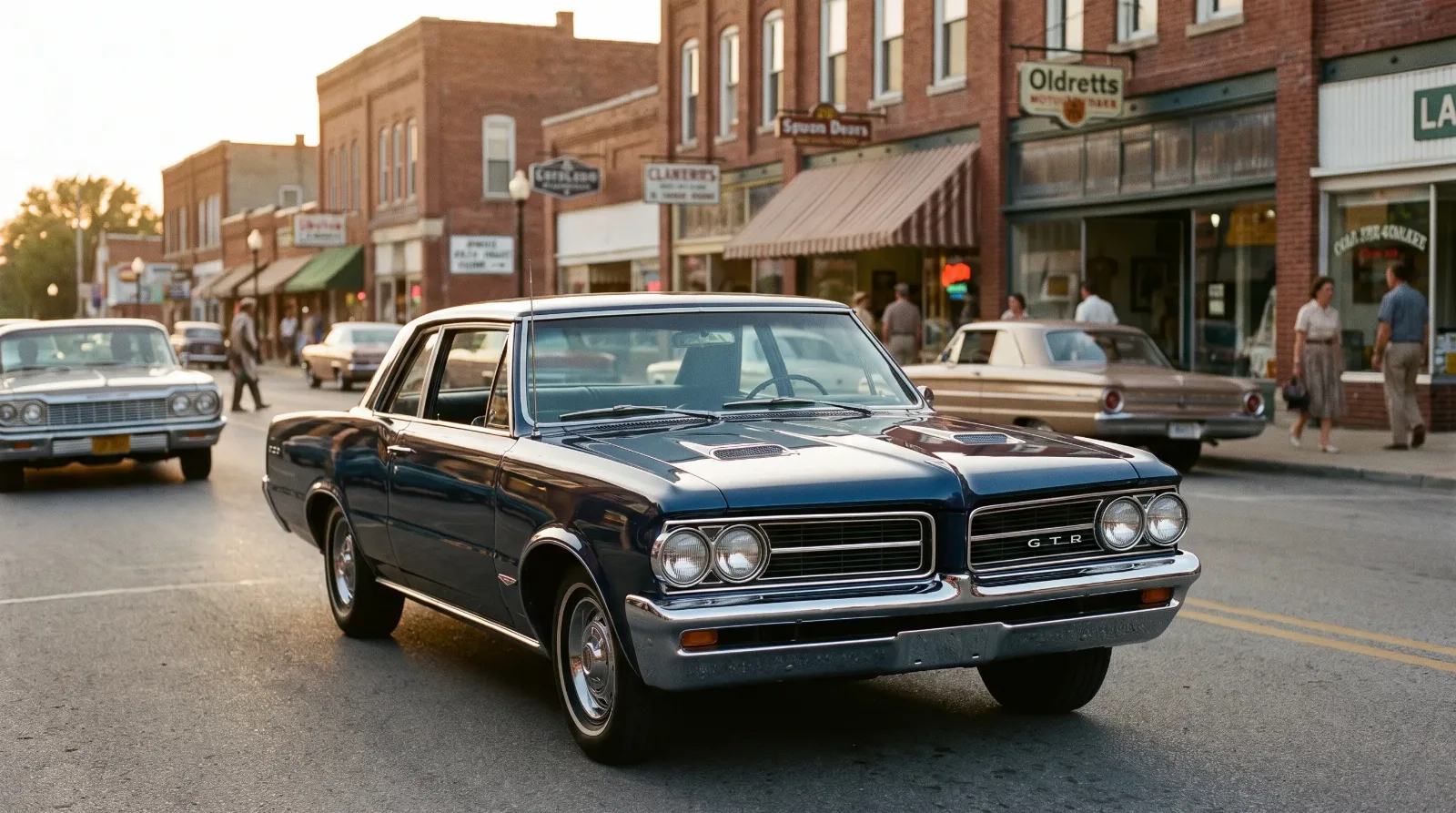
I have had a lot of these cars up on the lift over the years. The early GTO is a plain car underneath, and that is exactly why it worked. There is nothing exotic to go wrong. What follows is the honest story of how it came together, what each generation was really like, and what you are actually buying if you go looking for a classic Pontiac GTO for sale today.
How a rule against big engines created the muscle car
In the early 1960s General Motors had a corporate rule that kept intermediate cars from carrying engines over a certain size. The number people quote is 330 cubic inches. Pontiac's engineering side, with John DeLorean running the division's engineering before he ran the whole division, wanted to put the big 389 V8 into the mid-size Tempest and LeMans. The rule said no. So they did an end run. Instead of a standalone model that would need corporate sign-off, they made the GTO an option package on the 1964 LeMans. An option package did not need the same approval a new model did. That is the trick that started everything.
The name came from Ferrari. The 250 GTO was a homologated race car, and GTO stood for Gran Turismo Omologato. Pontiac borrowed it flat out, which annoyed a lot of purists then and still does. But the badge did its job. It told a 22-year-old that this Tempest was something other than his aunt's grocery car.
The package took the 389, added a hotter setup, and bundled it with stiffer suspension, better tires, and the trim that made it look the part. Pontiac's marketing man Jim Wangers pushed it hard, and the car caught fire in a way the division did not expect. They planned for a modest run and blew past it. The details of that first year are worth their own read, and you can get the whole thing in the 1964 GTO story.
"People think the GTO was some corporate master plan. It was closer to a bunch of engineers dodging their own company's rule book. The best cars usually come from somebody working around the system, not through it."
Mike Sullivan
What the 1964 and 1965 cars were really like
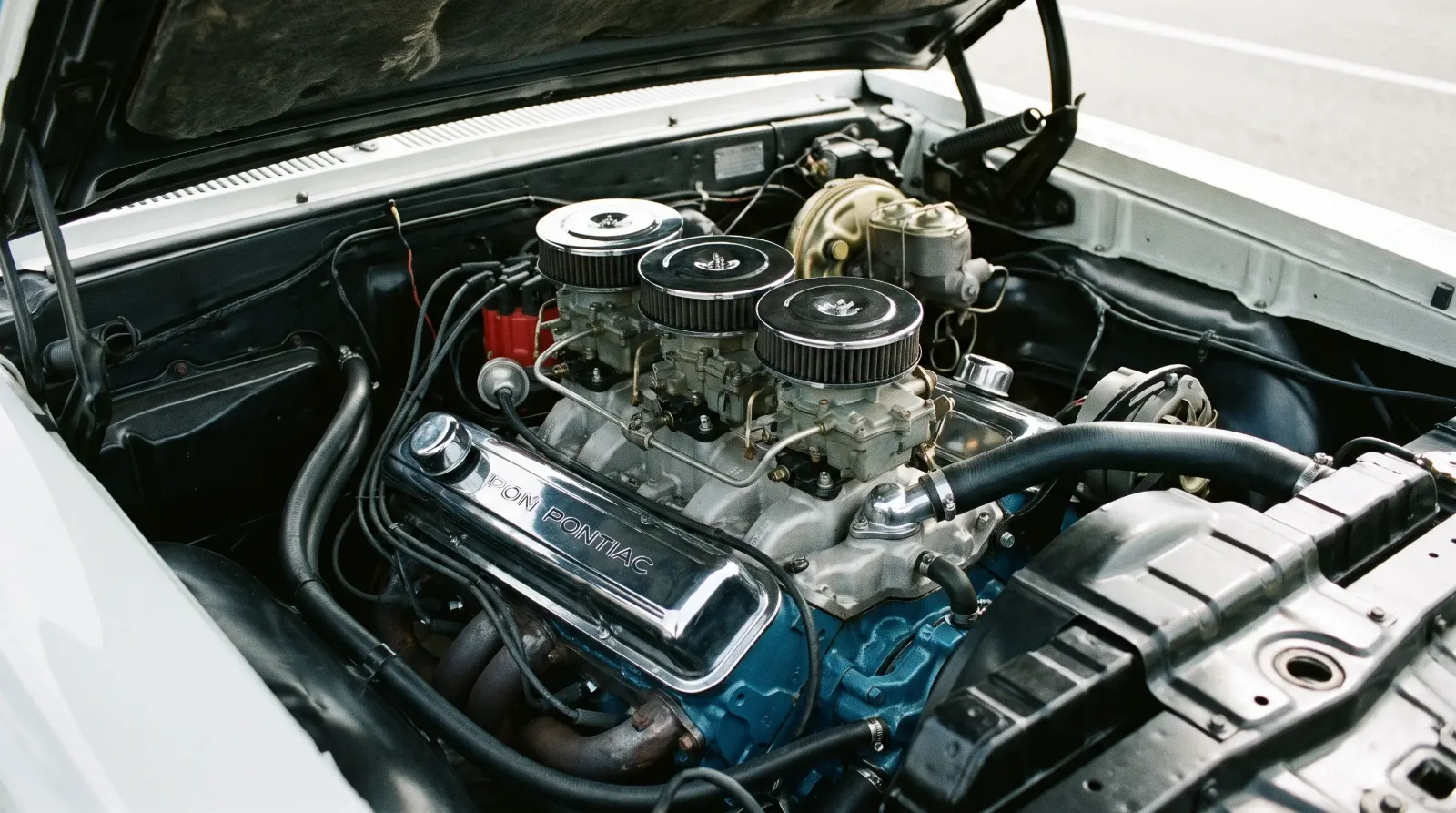
The first GTOs were stacked-headlight cars, and 1964 and 1965 are close cousins. The 389 was the heart of it, and the one everybody wanted was the Tri-Power, which ran three two-barrel carburetors instead of a single four-barrel. When it was set up right it pulled hard. When it was set up wrong, and plenty were, it was a nightmare of vacuum linkage that nobody at the corner gas station could sort out. That is worth knowing if you buy one. A Tri-Power car that runs clean has been fussed over by somebody who knew what they were doing.
Power numbers from this era get thrown around loosely. The single four-barrel 389 was rated at 325 hp and the Tri-Power at 348 hp for 1964. Treat those as period gross ratings, not what you would see on a modern dyno. Gross ratings were measured without the accessories and exhaust a real car carries, so the honest wheel number is a good bit lower.
These are simple cars to live with. Drum brakes all around on most of them, a live rear axle, and a body-on-frame chassis that flexes more than you would like. They stop poorly by modern standards and they wander at speed. None of that mattered in 1964 because the competition could not do any of it either, and the GTO would out-accelerate almost anything on the street.
The Coke-bottle restyle and the sales peak
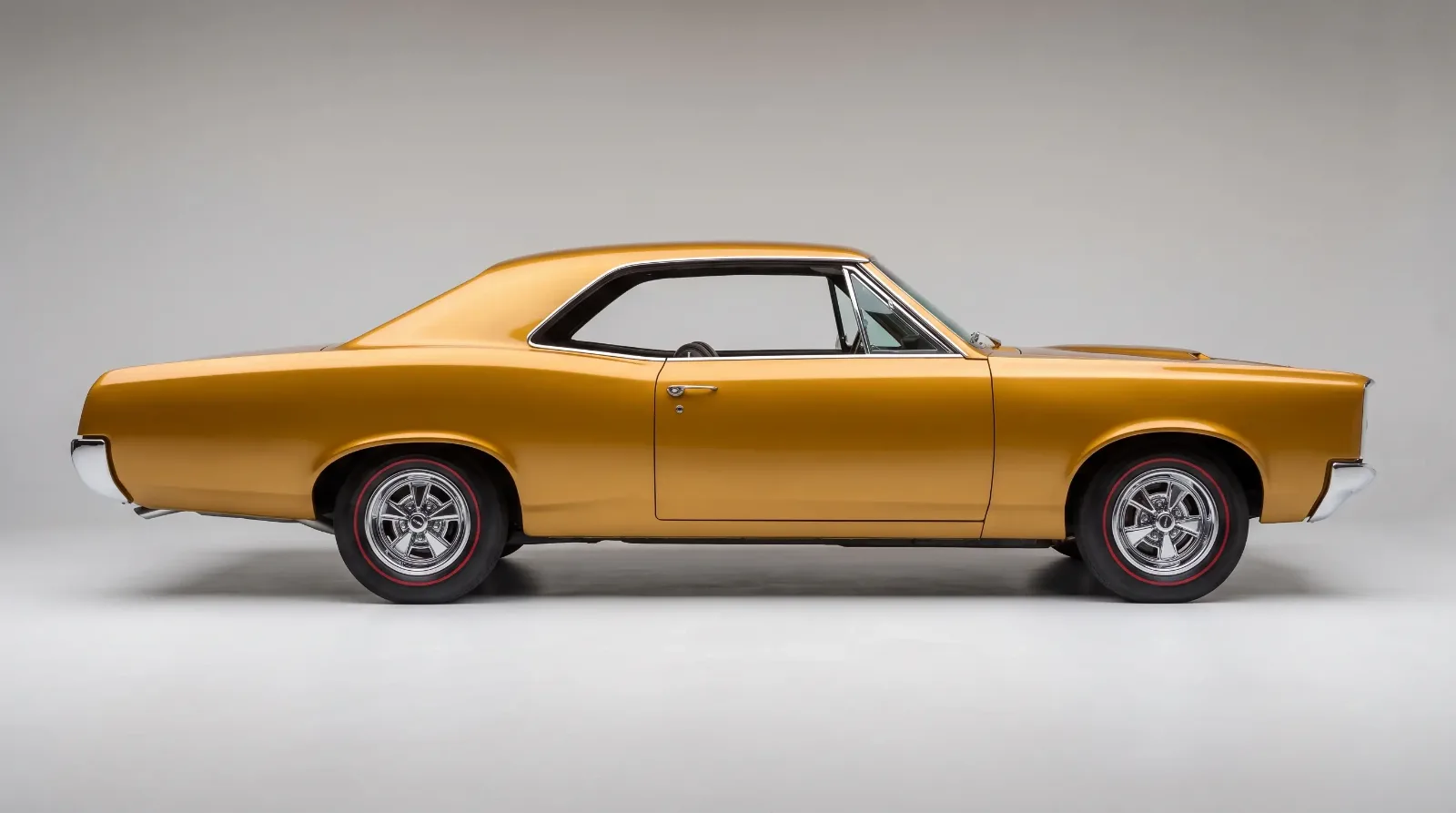
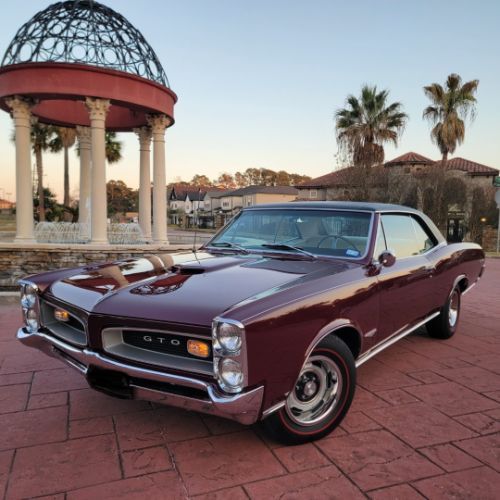
For 1966 the GTO became its own model instead of an option package, and Pontiac restyled it with the flowing "Coke-bottle" body that a lot of people think is the best looking of the whole run. The 1966 and 1967 cars are the sweet spot for many collectors: still simple, still fast, and better looking than the cars that came before. Sales hit their high point in this stretch. If you want the detail on why these years sold the way they did, I would point you to the Coke-bottle GTO years.
One important mechanical change lands here. For 1967 Pontiac bored the 389 out to 400 cubic inches, and the 400 became the standard GTO engine going forward. Tri-Power went away after 1966 due to a corporate decision to limit multi-carb setups, replaced by a single big four-barrel. Purists mourned the Tri-Power. In practice the four-barrel was easier to keep running and made comparable power.
The Endura era and the styling high point
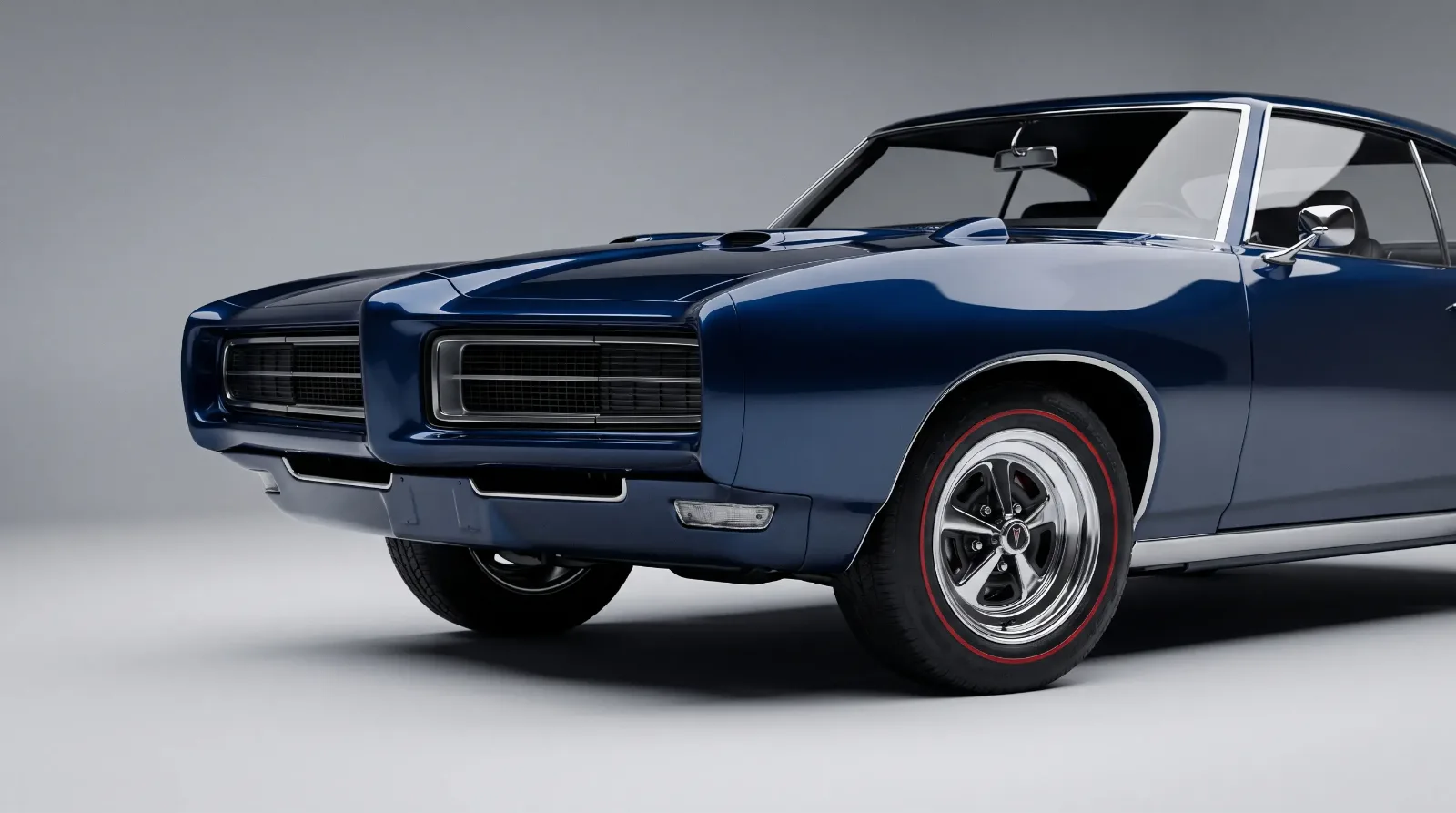
1968 brought a shorter, curvier body and the Endura front bumper, a body-color rubber nose that could take a low-speed hit and spring back. Pontiac ran ads showing a guy beating on it with a hammer. It was a genuine engineering swing and it gave the car a clean face with no chrome bumper up front. Hidden headlights were optional and they are the detail people chase now. The 1968 and 1969 cars are, to a lot of eyes including mine, the best combination of looks and muscle in the whole run. The full picture on those years is in the 1968-69 GTO.
The Endura nose was not free of trouble. The material could sag or crack with age and hard use, and a correct replacement for a car that needs one is not cheap today. It is one of the first things I check on an Endura-era car. A drooping nose or mismatched paint on the front cap tells you the car has lived a hard life or been hit.
The Judge and the peak of the attitude
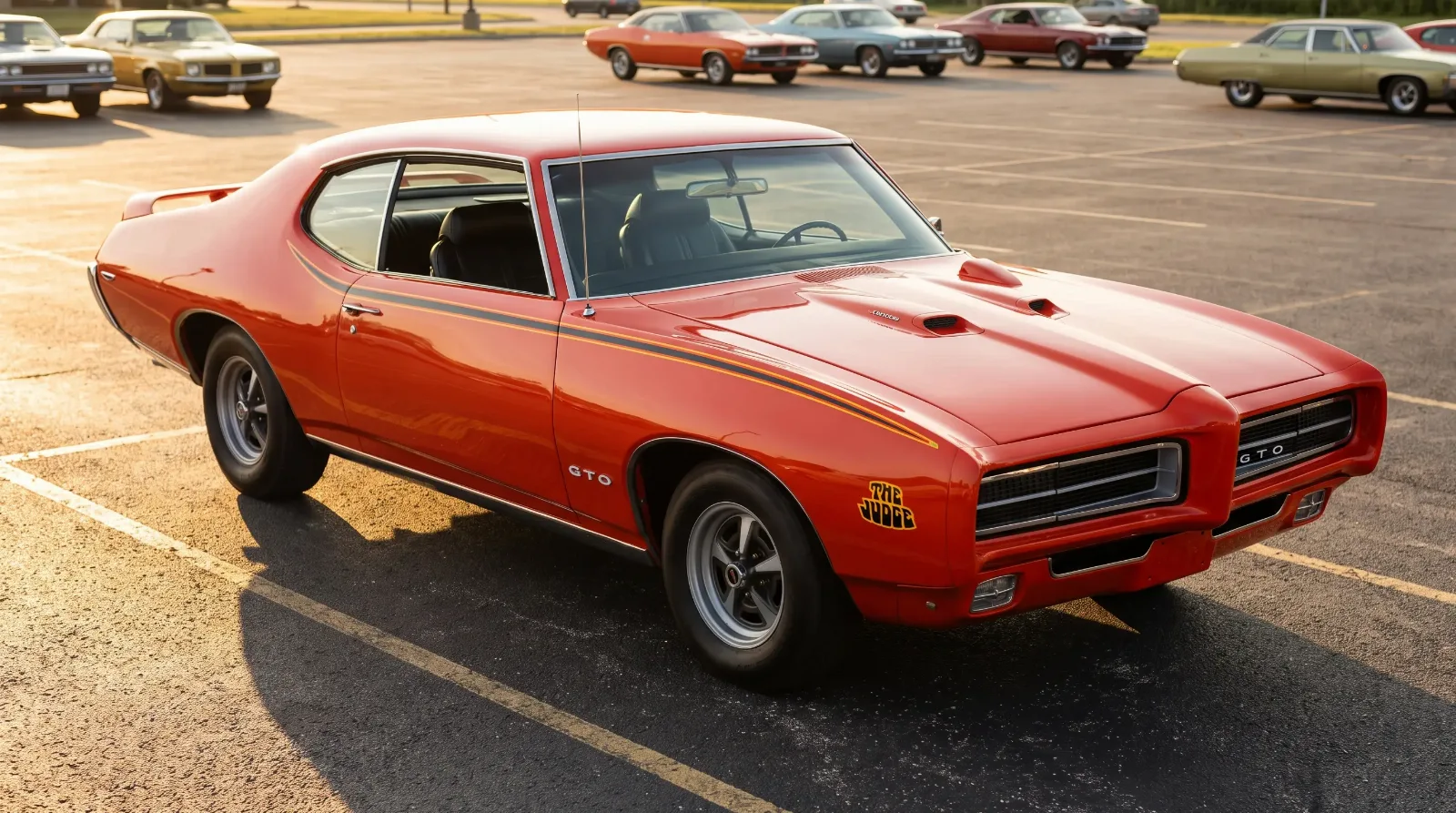
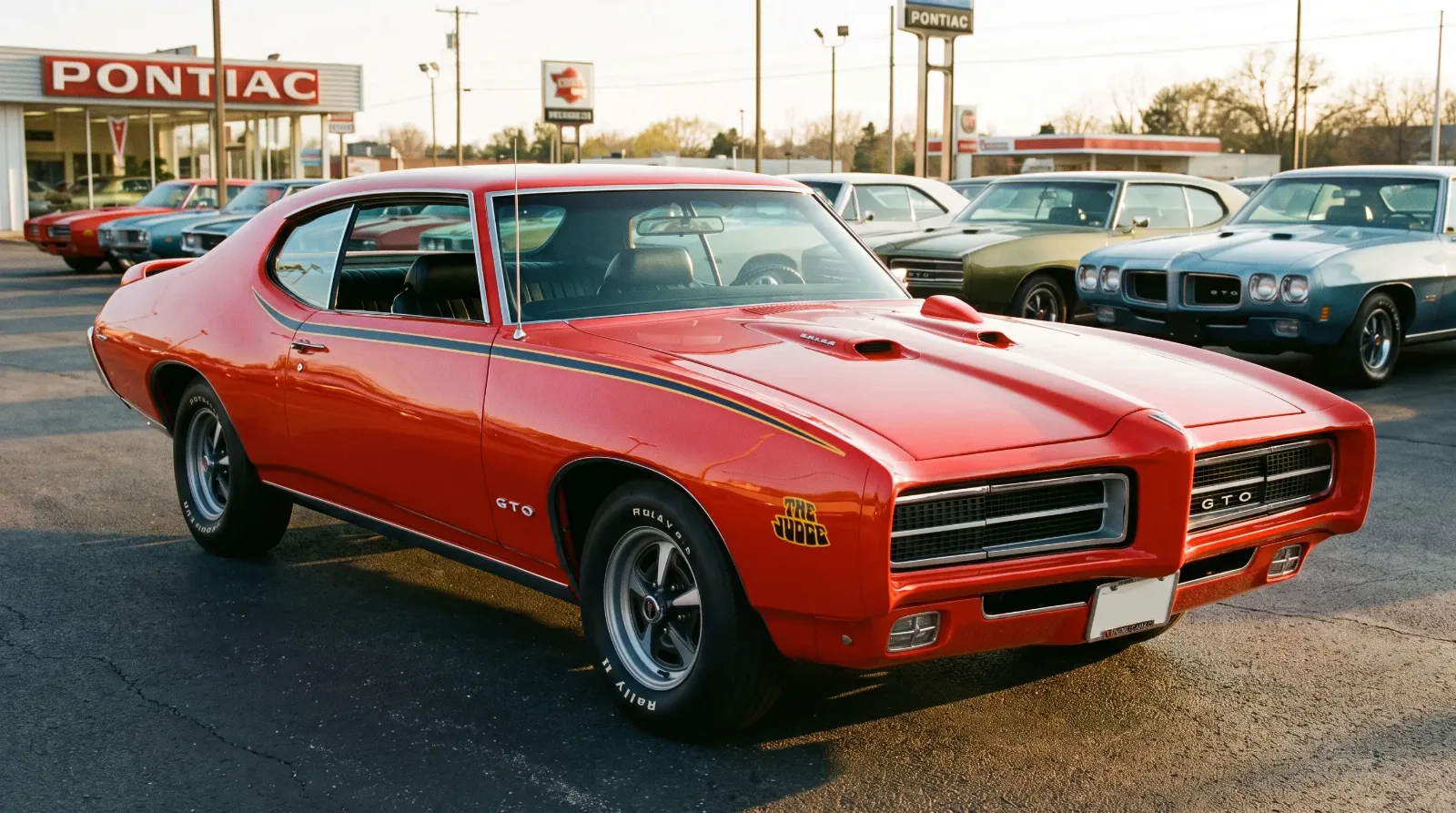
Mid-1969 Pontiac launched The Judge. It started as an idea for a budget muscle car to compete with the cheaper Plymouth Road Runner, then turned into the opposite: a loud, striped, spoilered halo version with the Ram Air setup standard. The name came from a comedy show catchphrase, "Here come da judge," which tells you exactly what the marketing department was going for. The Judge became the most collectible GTO of them all, and the story behind it is a marketing case study worth reading on its own in Pontiac's Judge.
"The Judge is the one everybody wants and the one most likely to be faked. There were real ones and there are a lot of tribute cars wearing the stripes. If the paperwork does not back up the badges, you are buying a nice GTO, not a Judge, and the price should say so."
Mike Sullivan
Peak power, then the squeeze
1970 brought the 455 cubic inch V8 to the GTO and a restyle with exposed headlights again. On paper this is the peak: the biggest engines, the Ram Air IV, and the highest gross power ratings of the run. The 1970 to 1972 cars are where the muscle car hit its ceiling and then started sliding, because the forces that killed the whole segment were already lining up. Rising insurance costs for young buyers, tightening emissions rules, and a switch to lower-compression engines all hit at once. The detail on that turn is in the early-70s GTO.
By 1971 GM dropped compression across the board to run on lower-octane unleaded fuel, and power fell. The industry also switched from gross to net horsepower ratings around 1972, which made the drop look even worse on paper than it was. A 1972 GTO reads much weaker than a 1969 partly because of how the number was measured, not only because of what was lost.
Insurance, emissions, and the end of the line
The last classic GTOs, 1973 and 1974, are the cars nobody talks about at the show and the ones I find most interesting to explain. The 1973 was a "Colonnade" body, heavier and softer, and the GTO was fading into just another option. For 1974 Pontiac moved the GTO badge onto the compact Ventura, a smaller car with a 350 V8. It was the end of the classic run. The reasons it died, insurance surcharges on high-power cars, emissions law, and a changed market, are the same reasons the whole muscle car field collapsed. The honest accounting is in the end of the GTO.
I do not write off the 1974 Ventura-based car the way some people do. It is not a 1969 Judge and it never will be, but it is a real, drivable piece of the story, and it is one of the more affordable ways into GTO ownership if you care about the badge and not the bragging rights.
The engines that made the reputation
Everything about the GTO's reputation comes down to what was under the hood. The 389, the 400, the Ram Air series, and the 455 each had a personality, and the gap between the catalog rating and what the car actually did on the street varied a lot. If you want the drivetrain broken down honestly, engine by engine, that is its own subject and I would send you to Pontiac's GTO engines. The short version: Pontiac used one basic V8 architecture and kept enlarging and tuning it, which is why parts interchange well and why these engines are straightforward to rebuild today.
| Generation | Years | Body | Headline engine |
|---|---|---|---|
| First | 1964-1965 | Stacked headlights, LeMans-based option | 389 with optional Tri-Power |
| Coke-bottle | 1966-1967 | Own model from 1966; 400 arrives 1967 | 389, then 400 |
| Endura | 1968-1969 | Endura nose, hidden headlights optional | 400 and Ram Air; Judge from mid-1969 |
| Peak/squeeze | 1970-1972 | Exposed headlights, restyle | 455 arrives 1970; power falls by 1972 |
| End | 1973-1974 | Colonnade, then Ventura-based | 400/455, then 350 for 1974 |
What a GTO cost when it was new
The engineering trick got the car built, but the price is what made it sell. The GTO started as an option box you ticked on a LeMans, and the package itself added only about $295 to the sticker. That put a decently equipped 1964 car somewhere in the low $3,000s out the door. A young guy with a factory job or a couple of years in the trades could carry that on a payment book. It was not cheap, but it was reachable, and reachable is the whole story.
Compare that to a Corvette, which cost a good deal more and was never going to be the car a 23-year-old drove to a plant every morning. The GTO landed in the gap. It looked and ran like something exotic and it was priced like a regular car with a big options list. Dealers learned fast that a kid who walked in for a plain Tempest could be talked up into the GTO for not much more per month, and the money was in the options. Tri-Power, a four-speed, a limited-slip rear, better wheels, the tach on the hood later on. A loaded car cost real money by the time you were done, but each box on its own felt small. That is exactly how Pontiac wanted it sold.
I mention the money because it explains the survivors. A lot of these cars were bought young, driven hard, wrecked or raced or worn out, and thrown away when they were just used cars worth a few hundred dollars. Nobody was preserving a five-year-old GTO in 1971. That is why clean, honest, unmolested early cars are scarce now and why the ones that survived often did so because somebody parked them, not because somebody babied them.
What these cars are like to drive today
People build the GTO up in their heads and then get surprised the first time they actually drive one. The steering is slow and light and tells you almost nothing about the front tires. The brakes, if the car still wears the factory drums, need a long think before they do much, and they fade if you use them twice in a row coming down a hill. The live rear axle hops under hard throttle on a rough road, and the body-on-frame chassis shudders over expansion joints in a way a modern driver reads as something being broken. None of it is broken. That is just how the car was.
What you get in return is the thing these cars were built to do. Down low, in the meat of the torque, a healthy 389 or 400 shoves the car forward with a lazy, endless pull that no small modern engine reproduces. You do not have to wind it out. You squeeze the throttle in third gear and the whole car leans back on its springs and goes. The exhaust note through the factory manifolds is deep and a little loose, and with a Tri-Power breathing right you can hear the outboard carbs come in as a distinct second shove. That sensation is why people forgive everything else.
Around town they are easy. A GTO with a healthy engine and a sorted carb idles fine, pulls away from a light without drama, and does not overheat if the cooling system is honest. The four-speed cars are more fun and the automatics are more relaxed, and both are fine choices depending on how you plan to use it. Where they get tiring is the interstate. Tall gearing was not the priority, so a lot of these cars turn a lot of engine rpm at 70 mph and get loud and thirsty on a long run. Buyers who plan to drive theirs across a state often add an overdrive later, and that is a fair change that does not hurt the car if it is done reversibly.
"Everybody expects a scary car and gets a friendly one instead. A good GTO is not hard to drive. It is heavy and slow to stop and it does not corner, but it goes when you ask and it will do it all day. Set your expectations to 1968 and you will love it."
Mike Sullivan
What to know before you buy one
The GTO is one of the better first classic muscle cars because it is simple, parts are available, and there is a huge community that knows these cars cold. The traps are the ones you would expect: rust in the floors and frame, faked Judges and Tri-Power cars, and drivetrains that have been swapped so many times the numbers mean nothing. None of that is a reason to stay away. It is a reason to buy the documentation as much as the car.
🔧 Inspection Priorities
- Frame and floor pans. These are body-on-frame cars and the frame can rot at the rear kick-up and around the body mounts. A soft frame is the one repair that can cost more than the car is worth, so put a light under it before anything else.
- Numbers and paperwork. Match the engine block and cylinder head casting codes and the data plate to what the seller claims, especially on a Judge or a Tri-Power car. Badges are cheap to fake and documentation is not.
- The front cap on Endura cars. Check the 1968 and later nose for sag, cracks, and mismatched paint. A correct replacement is expensive and a bad one tells you the car has been hit.
- Carb and linkage on Tri-Power cars. Watch it idle cold and warm and listen for the outboard carbs. A car that runs clean has been sorted by someone who knew the setup, and that says good things about the rest of it.
Why the GTO still matters
The GTO's legacy is not any single spec. It is the idea. Big engine, light-enough body, aggressive name, priced for a working guy. Every Chevelle SS, every Road Runner, every 4-4-2 and Cobra Jet Mustang owes something to that 1964 Pontiac and the engineers who worked around their own company to build it. The car that started the fight did not always win the drag race, but it wrote the rules everyone else played by. That is why, sixty years on, it is still the first name most people say when you ask where the muscle car came from.
Sources and notes
Related Reading
Have a
Pontiac GTO
for Sale?
Reach thousands of serious classic car collectors across the US.
Sell It Here →
Are You a Classic Car Dealer?
List your full inventory and connect with targeted classic car buyers.
Join as a Dealer →

About the author
Mike Sullivan
Detroit-area muscle car enthusiast and restoration specialist with three decades of hands-on experience working on American iron.
Related Listings - Pontiac GTO
Comments
Be the first to comment on this article.