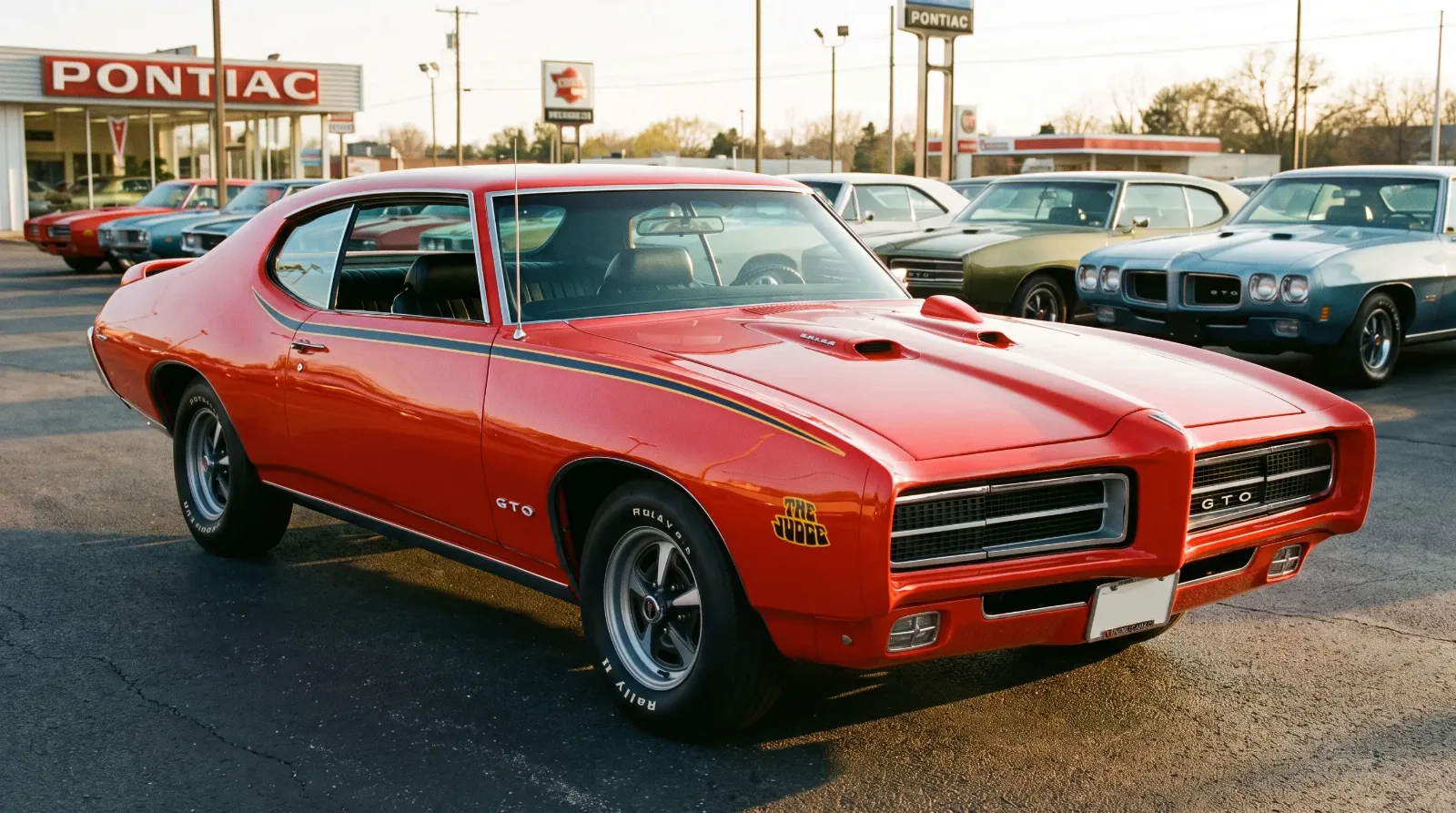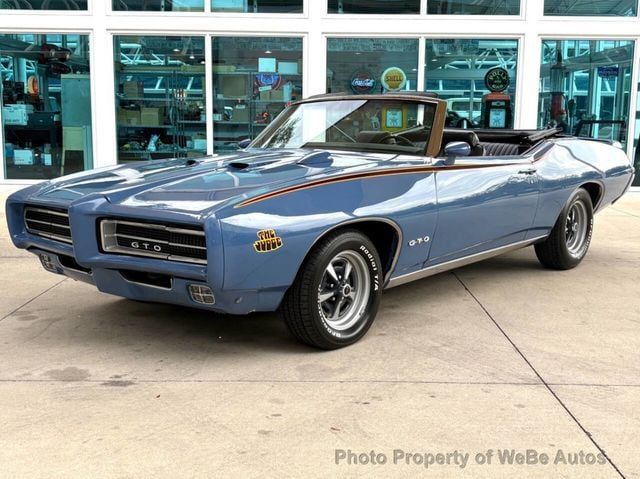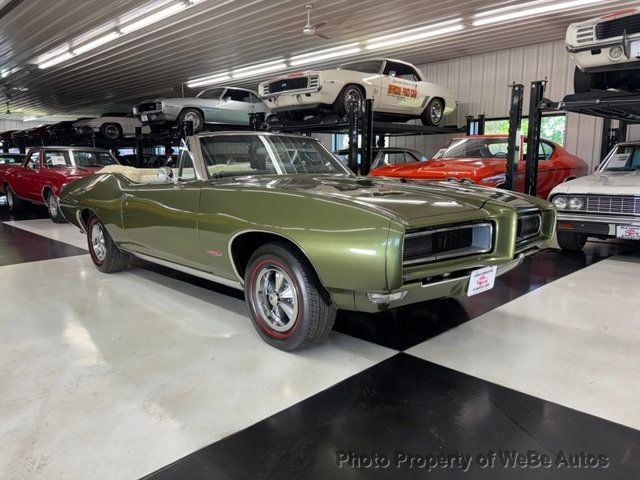
Every collector car market has a handful of numbers that do the talking before anyone opens their mouth about condition or paint. For the 1969-71 Pontiac GTO Judge, that number is 293. That is how many genuine Judge convertibles left the factory across the three model years combined, a figure small enough that most GTO owners will go their whole lives without seeing one in person. Read the GTO Judge story and you get the full arc of the option package, from its 1969 debut to its quiet 1971 exit. This piece is about the rarest slice of that story: the drop-top cars, what makes them worth chasing, and what makes them dangerous to buy on faith.
A production number that changes everything
Pontiac built the Judge as a package on the GTO, not a separate model, which means the convertible count has always been harder to pin down than a simple model-year total. Serious researchers have reconciled the figure at 293 total Judge convertibles across 1969, 1970, and 1971: 108 in 1969 (the package only arrived partway through that model year), 168 in 1970 (the high-water mark), and just 17 in 1971, the final and rarest year before the Judge was dropped. Compare that to total GTO Judge production, which runs into the thousands each year, and the ragtop share works out to a low single-digit percentage of an already low-production option. In a hobby where a "rare" muscle car might mean a few hundred units, 293 convertibles nationwide across three years is a different category of scarce, and the 17 built in 1971 are rarer still.
The reason the number matters so much to value is simple math, not sentiment. Every additional zero a buyer has to search through to find a comparable sale pushes the price further from anything you can call predictable. A hardtop Judge has enough sales history that an appraiser can build a real comp set. A convertible Judge does not. You are often pricing off two or three transactions a decade, and the gap between the last sale and the next one can be wide enough to swallow a house down payment.
Why Pontiac barely built any
Convertibles were already sliding out of favor with Detroit's buying public by the late 1960s. Air conditioning was becoming standard equipment on performance cars, insurance premiums on high-horsepower machines were climbing fast, and a growing share of the muscle car audience wanted a hardtop for the stiffer body and the quieter cabin. Layer the Judge's own price premium on top of an already premium body style, and you get a car that very few original buyers wanted to special-order. A Judge convertible cost more than a Judge hardtop, which itself cost more than a base GTO, and dealers were not exactly begging Pontiac for extra drop-top inventory to sit on the lot.
That combination, shrinking convertible demand meeting the most expensive version of an already expensive option, is why the survivors are so few. It was not a limited-edition marketing play the way some later "collector" packages were designed to be. Pontiac would have built more if more people had ordered them. They didn't, and that accident of 1969-71 consumer taste is the entire reason the convertible commands the premium it does today.
| Body style | Approx. Judge production | Relative scarcity |
|---|---|---|
| Judge hardtop/coupe | Roughly 10,700 across 1969-71 | Baseline |
| Judge convertible | 293 total (108 / 168 / 17 by year) | Extremely rare |
| 1971 Judge convertible | 17 units, smallest single-year total | Rarest of the rare |
What separates a real one from a clone
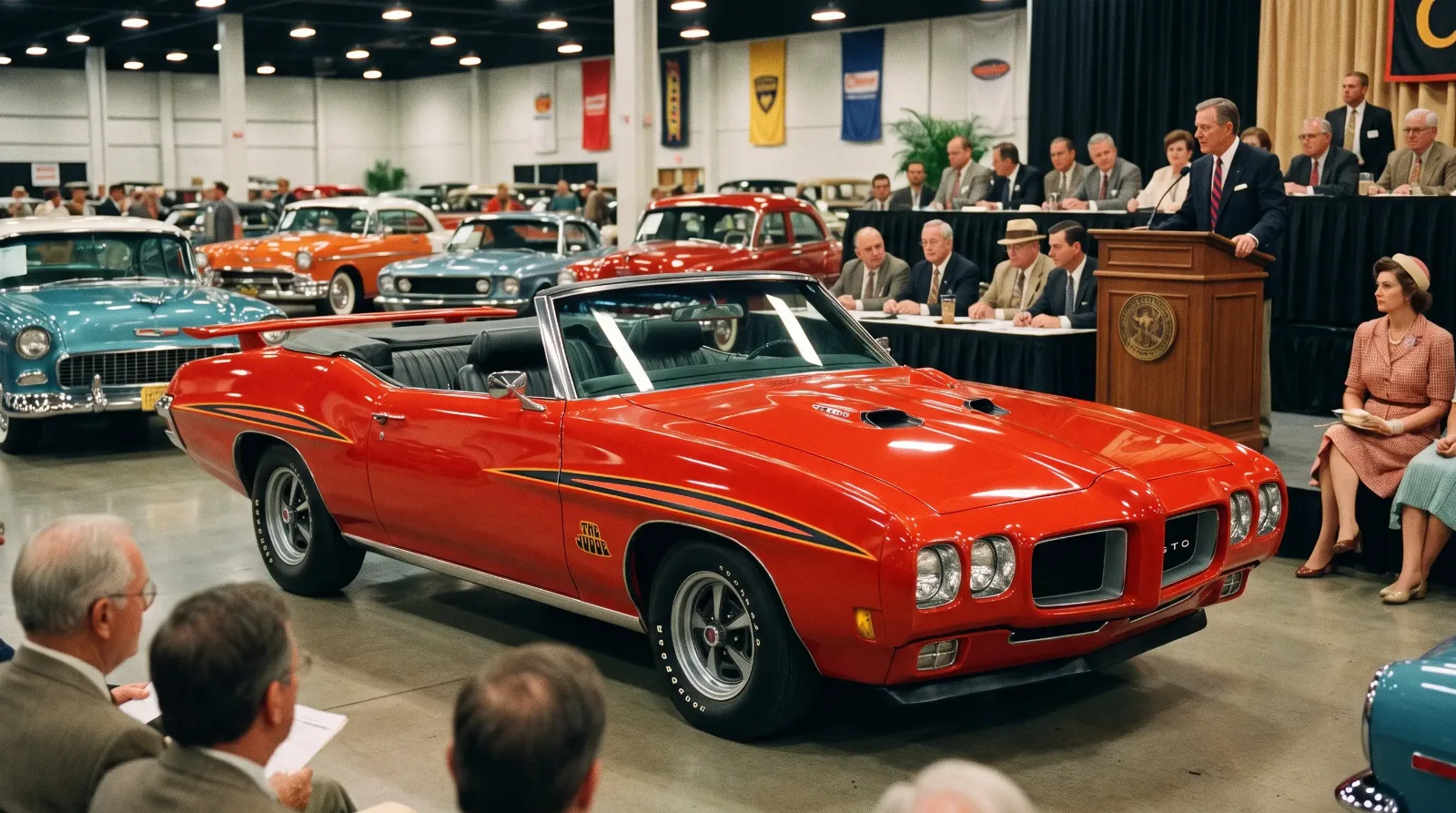
Because the convertible carries such a heavy price premium over a hardtop Judge, and because a base GTO convertible can be dressed up to look nearly identical with the right paint and stripe kit, this is one of the most cloned cars in the entire muscle car hobby. I have appraised cars presented as documented Judge convertibles that turned out to be well-executed tributes built from a plain GTO shell. The visual cues, the Carousel Red paint, the Judge decals, the rear wing, are all reproducible with a parts catalog and a paint gun. None of that proves the car left the factory as a genuine Judge convertible.
What actually proves it is the VIN decode, the body tag, and ideally a factory build sheet or Protect-O-Plate that ties the specific chassis to the Judge RPO code and the convertible body style from day one. Absent that paperwork, you are buying a story, not a car, no matter how convincing the presentation looks in photographs.
The documentation problem
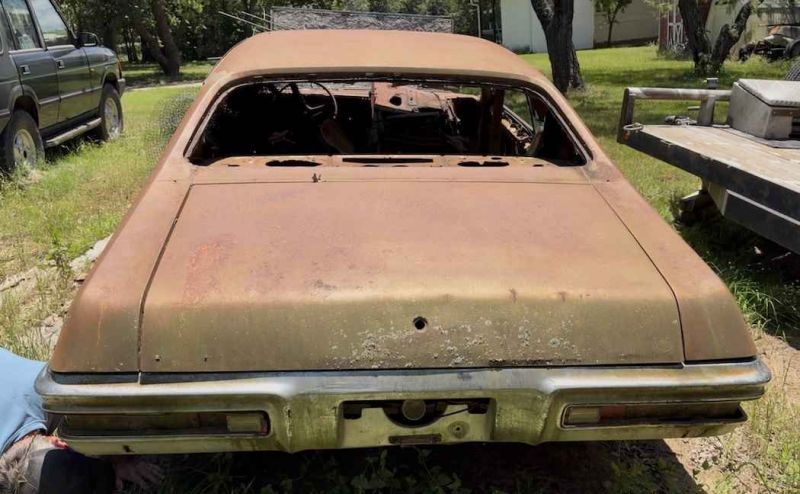
Documentation is where most convertible Judge deals actually fall apart, and it happens for a mundane reason: paperwork from 1969 is fifty-plus years old, and a lot of it simply did not survive. A car can be entirely genuine and still lack the specific piece of paper a cautious buyer wants to see. That puts the burden on the seller to assemble whatever trail does exist, PHS documentation, dealer invoices, early photographs, prior owner affidavits, and on the buyer to weigh an incomplete paper trail against the physical evidence on the car itself.
I tell clients the same thing every time this comes up. A thin paper trail is not automatically a red flag, but it changes what you are allowed to assume. You cannot fill a documentation gap with optimism. You fill it with metallurgy, stamped numbers, date codes on major components, and consistency between what the tag says and what the car actually has. If those things line up and the paper trail is merely incomplete rather than contradictory, that is a very different risk profile than a car with no documentation and inconsistent numbers.
"A rare car with no paper isn't worthless, it's just priced for the buyer who's willing to do the homework the seller didn't. Most buyers aren't willing, and that discount is where the real opportunities live."
— Marcus Feld
What a genuine ragtop actually brings
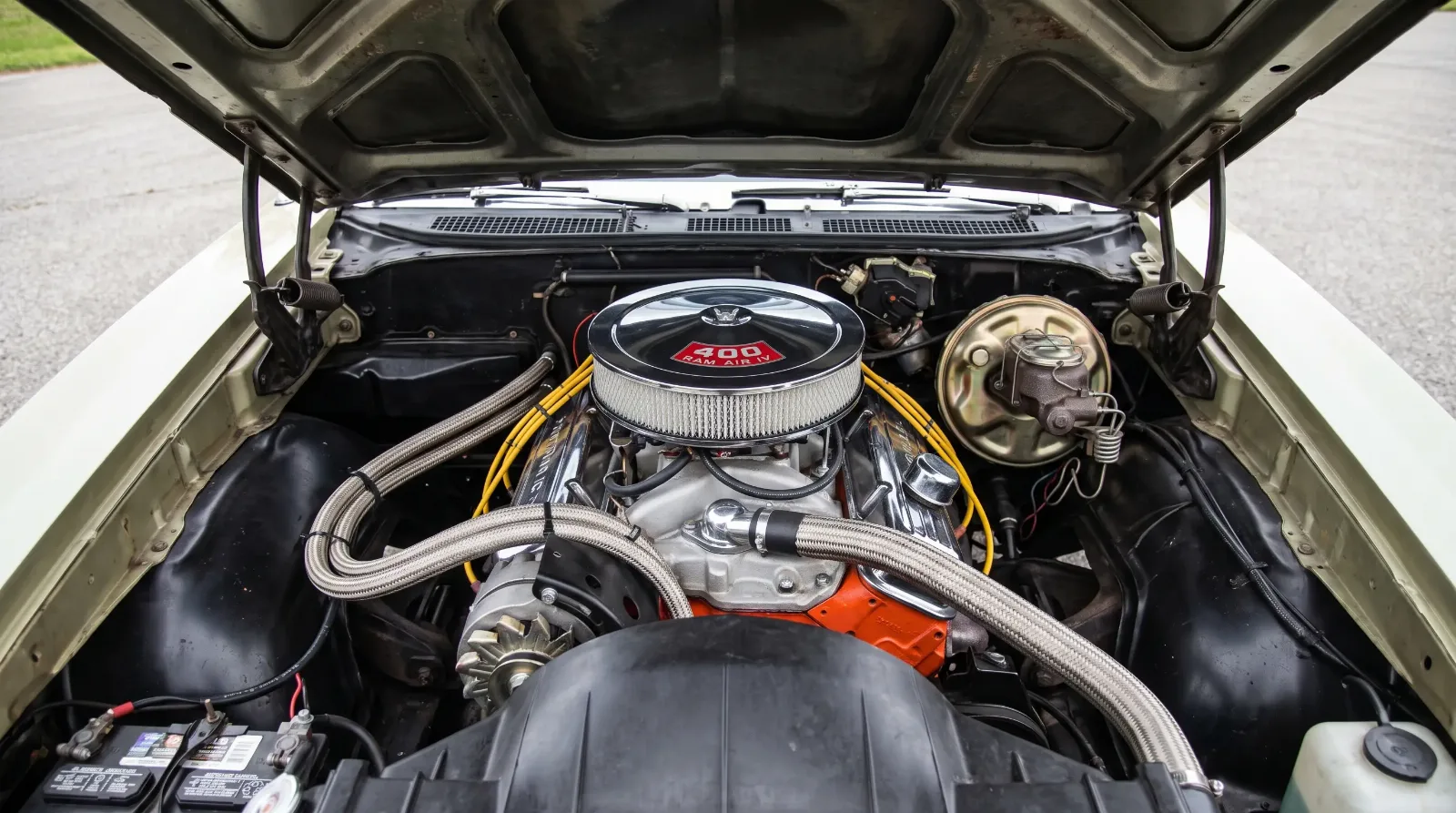
Values on documented Judge convertibles have moved into serious money over the past two decades, with top-condition, fully-verified cars reaching well into six figures at major auctions and the rarest documented examples, such as a numbers-matching 1970 Ram Air IV convertible, pushing past the million-dollar mark. That is a multiple of what an equivalent hardtop Judge brings, and the gap has widened rather than narrowed as the pool of buyers who understand true production numbers has grown. Liquidity is the tradeoff. A hardtop Judge sells in weeks if priced correctly because enough buyers exist at any given moment. A convertible can sit for a year waiting for the specific collector who wants that exact car, because there are only so many people chasing 108 cars worldwide.
That illiquidity cuts both ways for an owner. It means a documented convertible Judge is genuinely hard to replace once sold, which supports long-term value. It also means an owner who needs to exit quickly may have to accept a discount to a rushed buyer, since the patient buyer pool is thin by definition. Anyone considering one of these cars as an investment rather than a driver needs to understand that the asset is real, but the market for it is small and slow by design, not by accident. To see how the standard hardtop compares on nearly every other measure, read on.
Sources and notes
- Motorious: 1970 GTO Judge convertible sells for 1.1 million
- Hagerty Insider: million-dollar GTO Judge at Kissimmee
- MotoGallery: 1969-1971 GTO Judge convertible specs and history
- HotCars: rarest Pontiac muscle car production figures
- Classic.com: 1970 Pontiac GTO Judge market data
- Old Cars Weekly: first-year 1969 GTO Judge history