
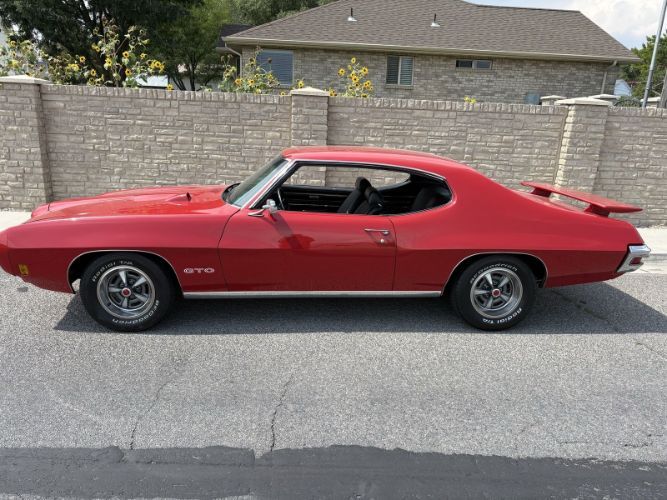
I get asked this one at every show I bring a GTO to. Somebody walks up, points at the wing and the stripes, and asks what actually makes a Judge different from a regular GTO underneath all that graphics package. The honest answer surprises people. A lot of what made the Judge famous was on the outside, not under the hood. That doesn't mean it was a sticker package with nothing behind it, but you need to know exactly where the line sits before you pay a Judge premium for a car.
Car Features
7 min read
Judge vs Standard GTO: What Actually Differed
The Judge was an options package built on the standard GTO platform, not a separate machine. Here's what actually set it apart, and what didn't change at all.
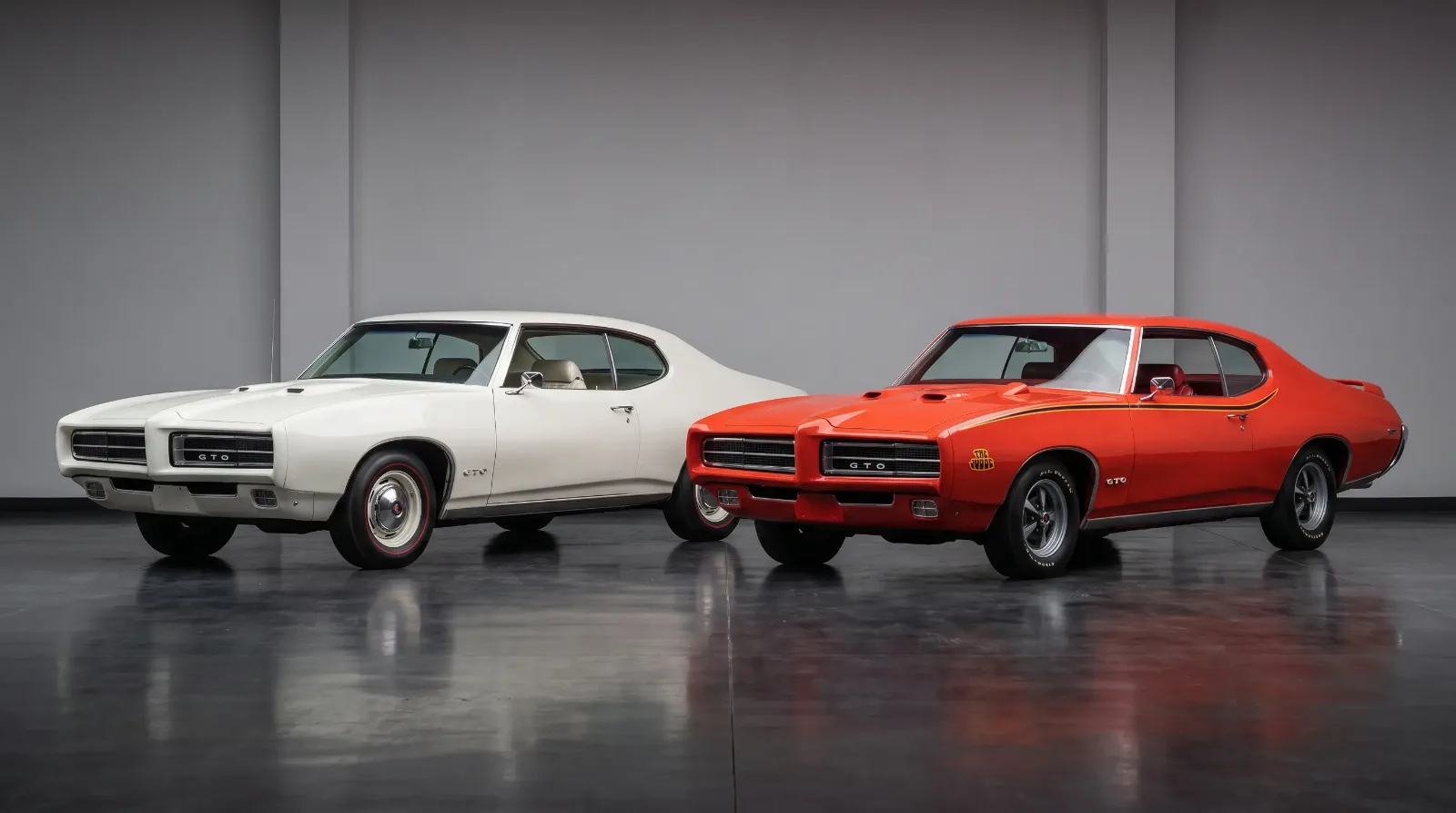
The Judge started life as an appearance and options package
When Pontiac rolled the Judge out for 1969, it was built on the GTO platform as an option code, not a separate car with its own engineering. Underneath the paint, a Judge and a base GTO from the same model year shared the same body, the same frame, and largely the same engine bay layout. What you paid for with the Judge package was a specific combination of visual and functional items bundled together at a set price, cheaper than ordering each piece individually. That is important because it means the Judge's identity comes from the combination, not from any single unique part that only a Judge got and nothing else ever had.
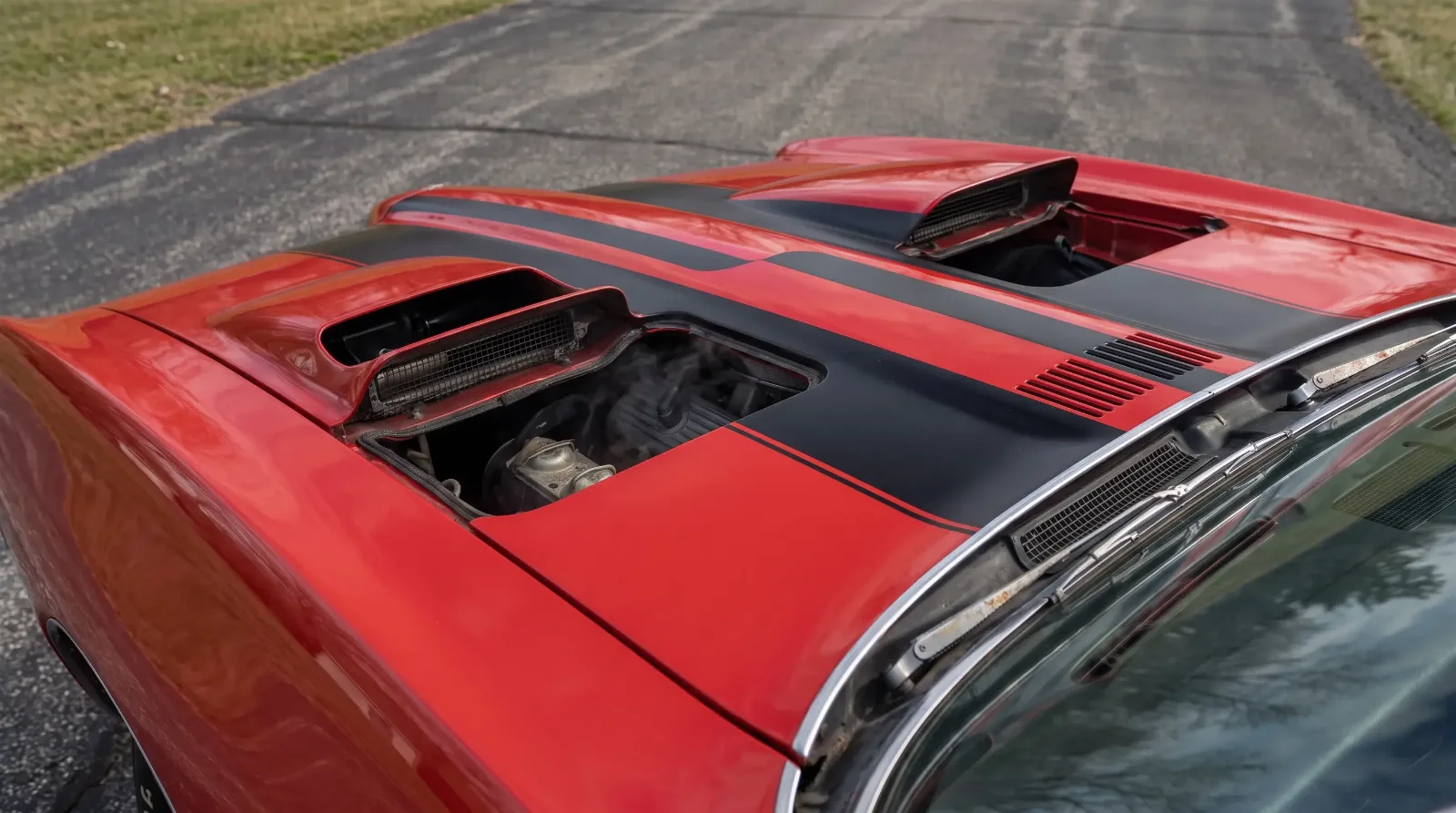
The core bundle included the rear deck wing, the Judge decals and stripe treatment, a specific set of exterior colors led by Carousel Red, and functional Ram Air hood scoops as standard equipment rather than an option box you had to check separately. Underneath, the standard engine was the same 400 cubic inch V8 the rest of the GTO lineup used, though buyers could step up from there. None of that hardware was exclusive to the Judge in the sense of being unavailable on a standard GTO ordered the right way.
Where the drivetrain actually diverged
Here is where a lot of buyers get confused, and where I spend real time under the car before I sign off on a purchase. The Judge's standard engine was the same base 400 that a well-optioned GTO could run. The difference buyers actually paid for was that the Judge came standard with Ram Air induction and the equipment that went with it, where a base GTO buyer had to specifically order that setup. So on paper, a top-spec GTO and a Judge could end up mechanically close to identical, but a Judge guaranteed you got the performance-oriented combination as the baseline rather than an upsell.
The Ram Air III was the standard engine for the Judge package, and the Ram Air IV was available as an upgrade on both the Judge and the standard GTO for buyers willing to pay for it. That is the detail that trips people up at swap meets. A Ram Air IV car is not automatically a Judge, and a Judge is not automatically a Ram Air IV car. Those are two separate decisions on the order form that happened to overlap a lot because the buyers checking one box tended to check the other.
| Feature | Standard GTO | GTO Judge |
|---|---|---|
| Base engine | 400 cid V8 | 400 cid V8, Ram Air III standard |
| Ram Air induction | Optional | Standard equipment |
| Rear deck wing | Optional (later years) | Included in package |
| Judge decals/stripes | Not available | Included in package |
| Ram Air IV upgrade | Available at extra cost | Available at extra cost |
Suspension, brakes, and the parts you don't see in photos
People assume a car wearing wing and stripes must have a stiffer suspension or bigger brakes hiding underneath, and that assumption gets buyers in trouble. The Judge shared its chassis hardware with whatever the GTO options sheet offered that year. If a buyer ordered heavy-duty suspension or the optional front disc brakes on a standard GTO, that car handled and stopped the same as a Judge with the identical boxes checked. The Judge name did not carry its own suspension tune. It carried a marketing bundle built around performance-image items and standardized Ram Air, and it happened to appeal to the same buyer who was also likely to check the suspension and brake options.
This matters at purchase time because I have seen sellers imply a Judge automatically rides and stops better than a standard GTO. It doesn't, not unless the specific options were ordered on that specific car. Pull the build sheet, check the option codes, and verify what is actually bolted to the car rather than trusting the badge.
Inside the cabin, the differences were smaller still
Step inside a Judge and you will find the same instrument cluster, the same door panels, and largely the same seat options a standard GTO buyer could order. There was no unique Judge dashboard or console layout. What changed was the emphasis Pontiac put on the package in its advertising, not the parts bin the interior was pulled from. A buyer could order a base GTO with the Rally gauge cluster, the console-mounted shifter, and every comfort option on the sheet, and end up sitting in a cabin nearly indistinguishable from a Judge's.
That is a detail worth knowing when you are pricing a car by feel rather than by paperwork. If someone tells you a Judge interior is somehow rarer or better appointed than a comparable standard GTO, ask them to point at the specific part that proves it, because in most years there isn't one. The interior story on these cars is about how the original buyer optioned the order form, not which badge ended up on the fender.
What this means for value and what to inspect
Because the mechanical overlap is so real, the Judge premium in today's market is driven almost entirely by documentation, rarity, and the visual package rather than any performance gap you could feel from the driver's seat. A numbers-matching Judge with verified RPO codes brings real money over an equivalent standard GTO with the same drivetrain. A cloned Judge, built from a plain GTO with reproduction decals and a wing bolted on, brings the value of the underlying car plus the cost of the parts, nothing more.
When I'm evaluating one of these for a buyer, I go straight to the cowl tag and the VIN decode before I even look at the wing. I want to see the Judge option code, not just Judge parts sitting on the car. Anyone can buy a wing and a stripe kit from a reproduction catalog. Nobody can retroactively add a factory option code to a 1969 build sheet.
"The wing tells you what someone wants you to believe. The build sheet tells you what actually happened on the assembly line, and that's the only one I trust with my money."
Mike Sullivan
Bottom line, the Judge is a real and desirable variant, but it is a package built on the standard GTO, not a mechanically separate machine. Know that going in and you will negotiate from a position of fact instead of hype. One more myth worth clearing up while you are at it involves that Ram Air badge, since not every Judge got the engine people assume. Read on for the full breakdown.
Sources and notes
Related Reading
Have a
Pontiac GTO
for Sale?
Reach thousands of serious classic car collectors across the US.
Sell It Here →
Are You a Classic Car Dealer?
List your full inventory and connect with targeted classic car buyers.
Join as a Dealer →

About the author
Mike Sullivan
Detroit-area muscle car enthusiast and restoration specialist with three decades of hands-on experience working on American iron.
Related Listings - Pontiac GTO


Comments
Be the first to comment on this article.