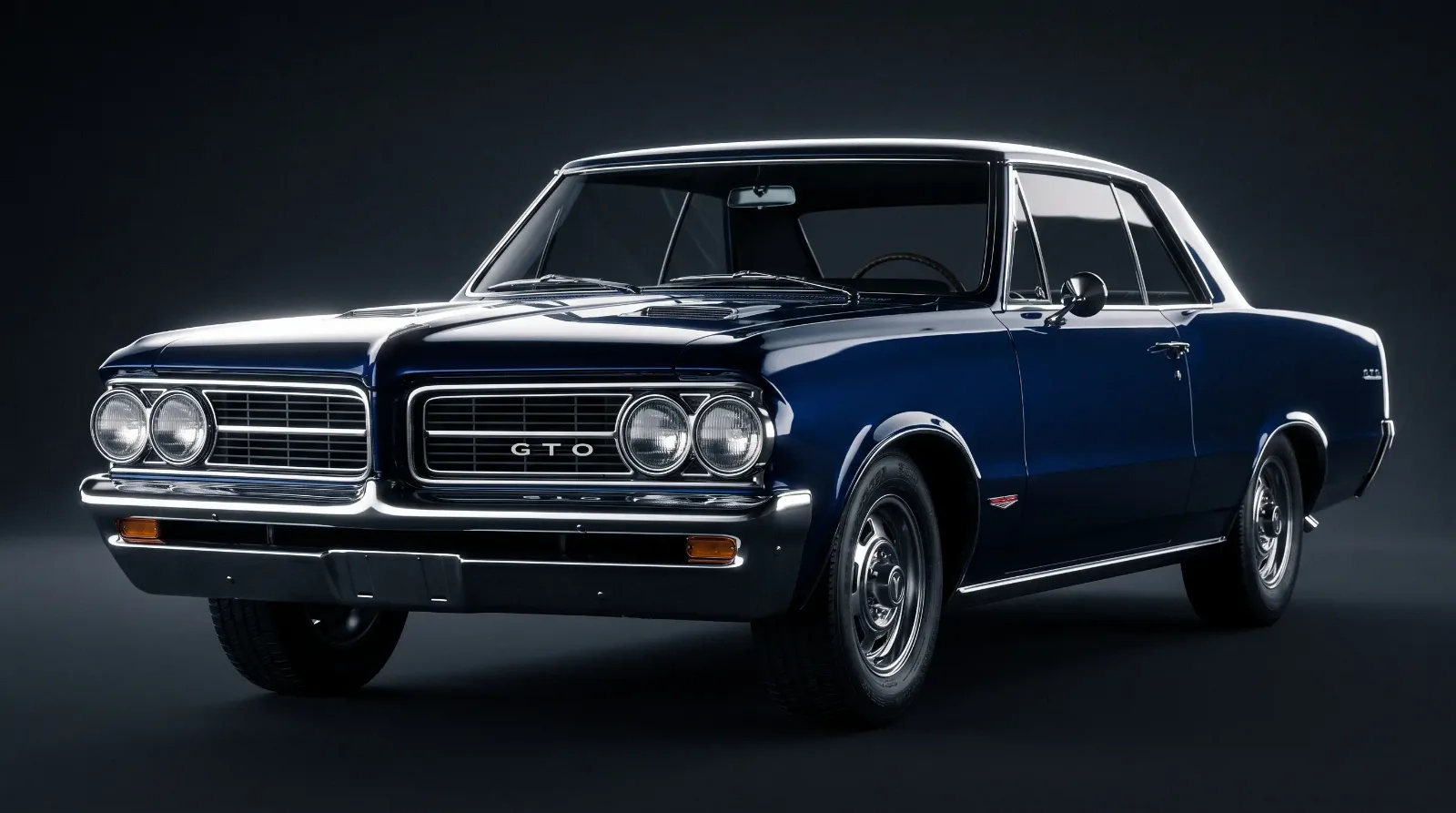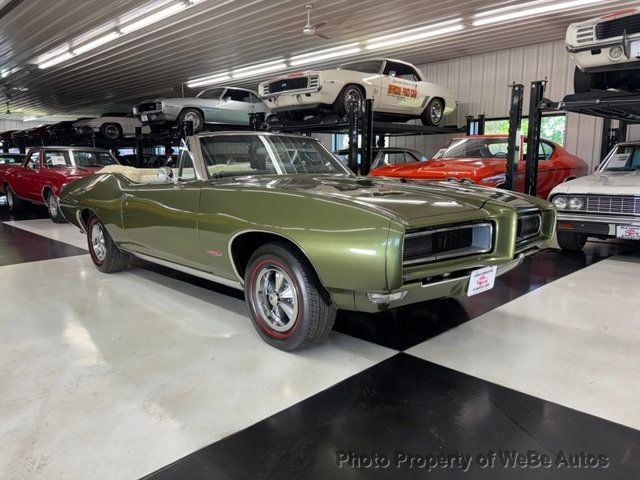
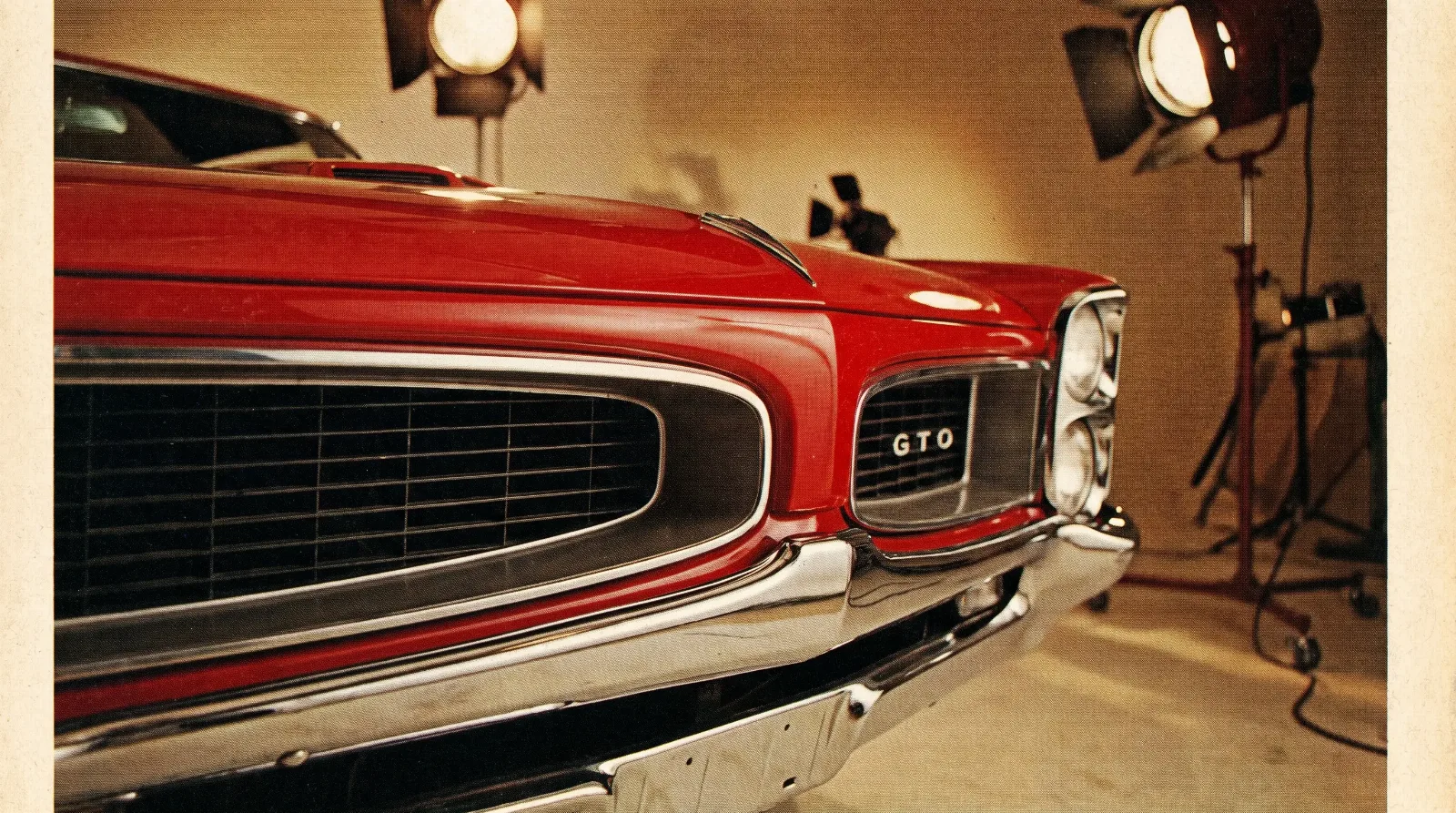
A kid in 1966 flips open a magazine on a porch step, past the cereal ads and the cigarette ads, and lands on a full-page photograph of a red coupe angled just enough to catch the chrome. Under it, in type bigger than the car's own name, three words: The Great One. He does not know yet what a Tempest option package is, or what displacement rules Pontiac had to work around to build the thing. He just knows the page told him this car was the best one, plainly, without hedging, and at fourteen that is close enough to gospel.
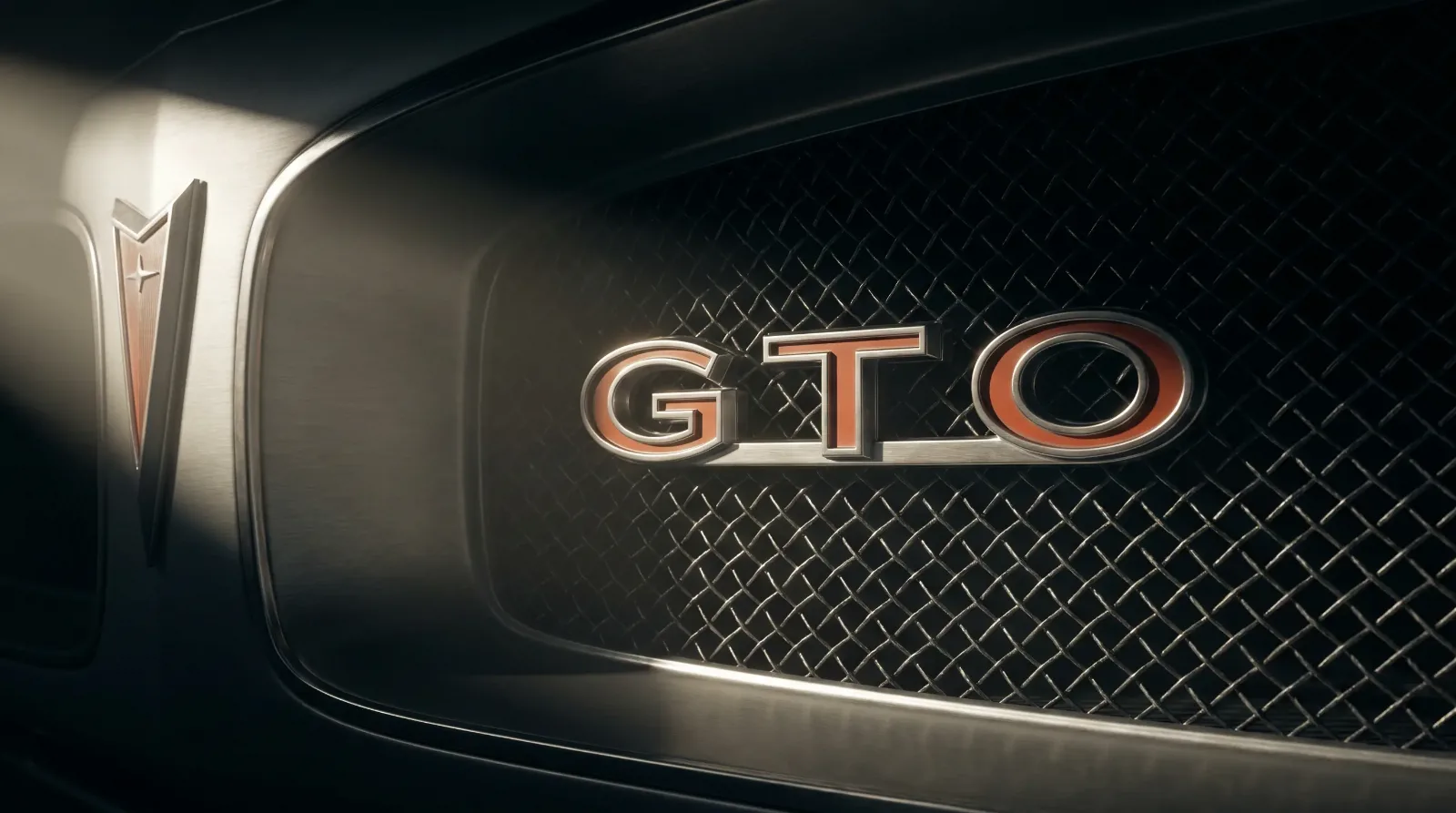
That is the job a slogan does. Not inform, not really, but crown. Pontiac's marketing department in the mid-1960s understood the GTO had already earned a reputation on the street and at the strip before the ad agency ever touched it, and rather than invent a new story, they simply put a title on the one that already existed. The Great One, the exact tagline Pontiac ran across print and television spots starting in 1967 after the earlier Tiger campaign wound down, borrowed the confidence a nickname like "the Goat" had already built organically and turned it into something a copywriter could put in bold type.
A slogan that outran the campaign it came from
Most ad taglines from that decade died with the print run. Nobody remembers what Buick called the Skylark that year, or what adjective Oldsmobile reached for on the 442. The GTO slogan survived because it matched something true about the car rather than inventing a claim the car had to live up to. When a magazine writer took a GTO to a drag strip and it ran the way the ads promised, the slogan stopped being marketing copy and became description. That distinction, between a claim and a fact, is usually where advertising fails. Here it is where the GTO's advertising succeeded, almost by accident.
There is a quieter reason it worked too. Pontiac in the mid-1960s was still climbing out of a stodgier reputation from the previous decade, a division known more for reliable family sedans than performance. The GTO, and the swagger of a slogan like The Great One, gave Pontiac a new identity almost overnight, one built entirely around youth and speed. The car did the heavy lifting. The slogan just made sure nobody missed it.
"A good tagline disappears into the car it describes. You stop noticing it is advertising and start repeating it like it was always the car's real name. That is what happened here. Nobody quotes the ad copy from memory. They just believe the sentiment, decades later, without knowing where it came from."
— Nora Beckett
What the slogan says about the era
The mid-1960s were not a subtle time for car advertising. Every manufacturer reached for superlatives, fastest, boldest, wildest, because the audience buying muscle cars was young, impatient, and unmoved by careful engineering language. Pontiac's choice to call the GTO The Great One fit that register perfectly, a plain declarative claim with no qualifiers attached. It did not say "one of the greatest." It said the great one, definite article included, as if there were no argument left to have.
That confidence mattered because the GTO had genuine competition arriving fast behind it. Oldsmobile's 442, Chevrolet's Chevelle SS, and eventually Plymouth's Road Runner were all chasing the same buyer within a few short years of the GTO's 1964 debut. A slogan that simply asserted superiority, rather than arguing for it point by point, gave Pontiac a psychological edge in showrooms even when the spec sheets between competing cars were close enough to argue about at length.
The photography did as much work as the words
Look back at those period spreads and the copy is almost beside the point. The photography carried the message, cars shot low and close, headlights catching the light just so, a single figure sometimes leaning against the fender like the car needed no further introduction. That visual language, three words and a striking image, was cheaper to produce than a page of technical claims and far more effective at reaching a buyer who was seventeen or twenty-two and thinking about the drive to a drive-in, not a torque curve. The Great One worked as a caption because the picture had already done the persuading.
It is worth remembering how much competition that photography was up against on the same newsstand. A teenager flipping pages in 1966 saw dozens of car ads in a single sitting, most forgettable within a week. The ones that stuck did not win by piling on more information. They won by being confident enough to say less. Pontiac's marketing team seemed to understand that instinctively, trusting the car itself to close the sale once the slogan had done its job of getting a reader to stop turning pages.
Why the phrase still gets used today
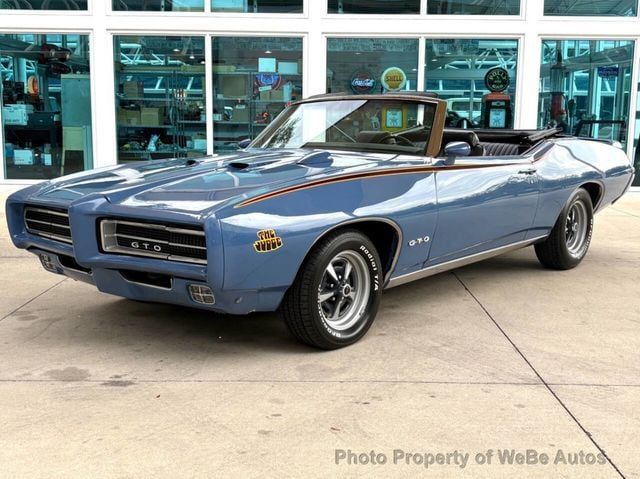
Walk a swap meet now and you will still hear a seller lean on the old line, half joking, half not, when a GTO rolls past on a trailer. The slogan outlived the print campaigns, outlived the dealerships that ran them, and outlived Pontiac itself as a brand. That kind of longevity does not happen for most 1960s ad copy. It happens here because the phrase never really depended on the advertising machine behind it. It depended on the car continuing to earn the claim, decade after decade, at car shows and auctions and long after the last one rolled off a line in 1974.
Slogans age badly when the product stops matching the promise. Cheap materials show through eventually, and the language that once sold the car starts to sound hollow next to the reality sitting in the driveway. The GTO never had that problem. Original examples still run, still turn heads, still draw the kind of crowd at a show that justifies a slogan this bold, which is a rarer outcome than the ad agencies of 1966 probably expected when they first typed those three words onto a layout board.
A slogan tangled up with a bigger legend
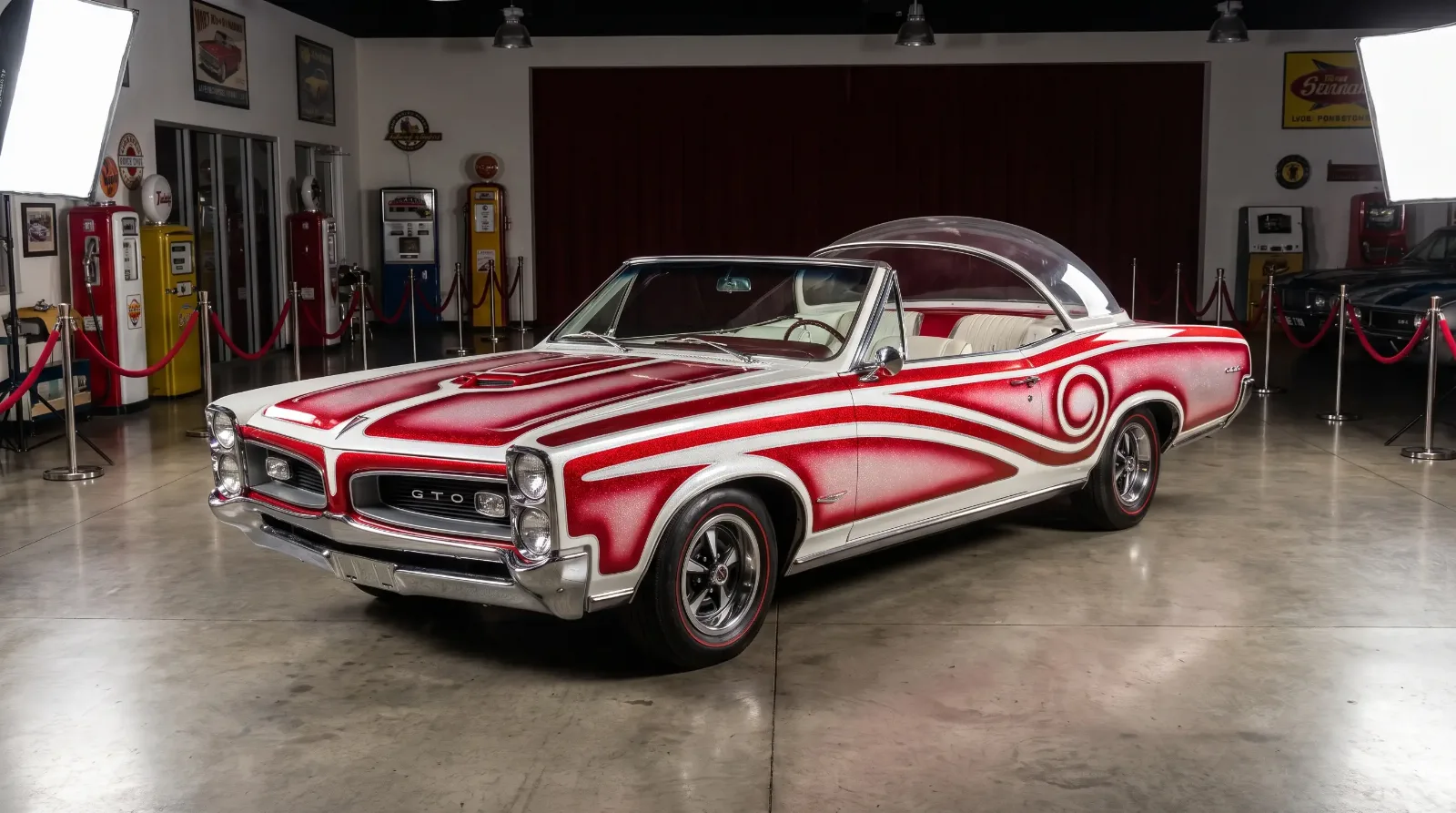
The Great One is only one thread in a longer story about how this car built its own mythology, sitting alongside the nickname, the racing history, and the pop-culture cameos that followed. That larger tangle of half-true stories and genuine history is what makes up the GTO legend, and one of the strangest branches of it involves a customized 1966 example that ended up on television rather than a drag strip, a story worth following if you want read on.
What stays with you, decades removed from the original magazine spreads, is not the copywriting itself but the fact that nobody has ever needed to correct it. A slogan built on a bluff eventually gets called. This one never has. The GTO simply kept being, by most measures that matter to the people who love it, exactly what that porch-step magazine promised it would be.