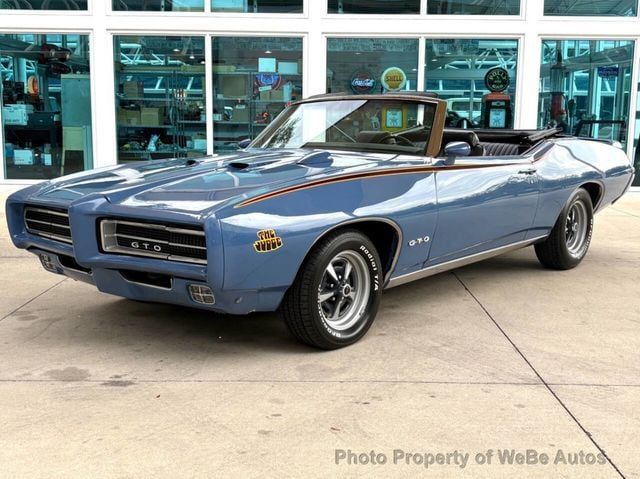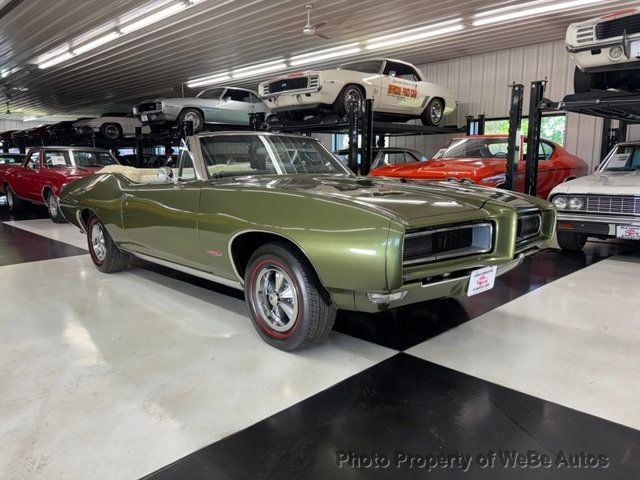
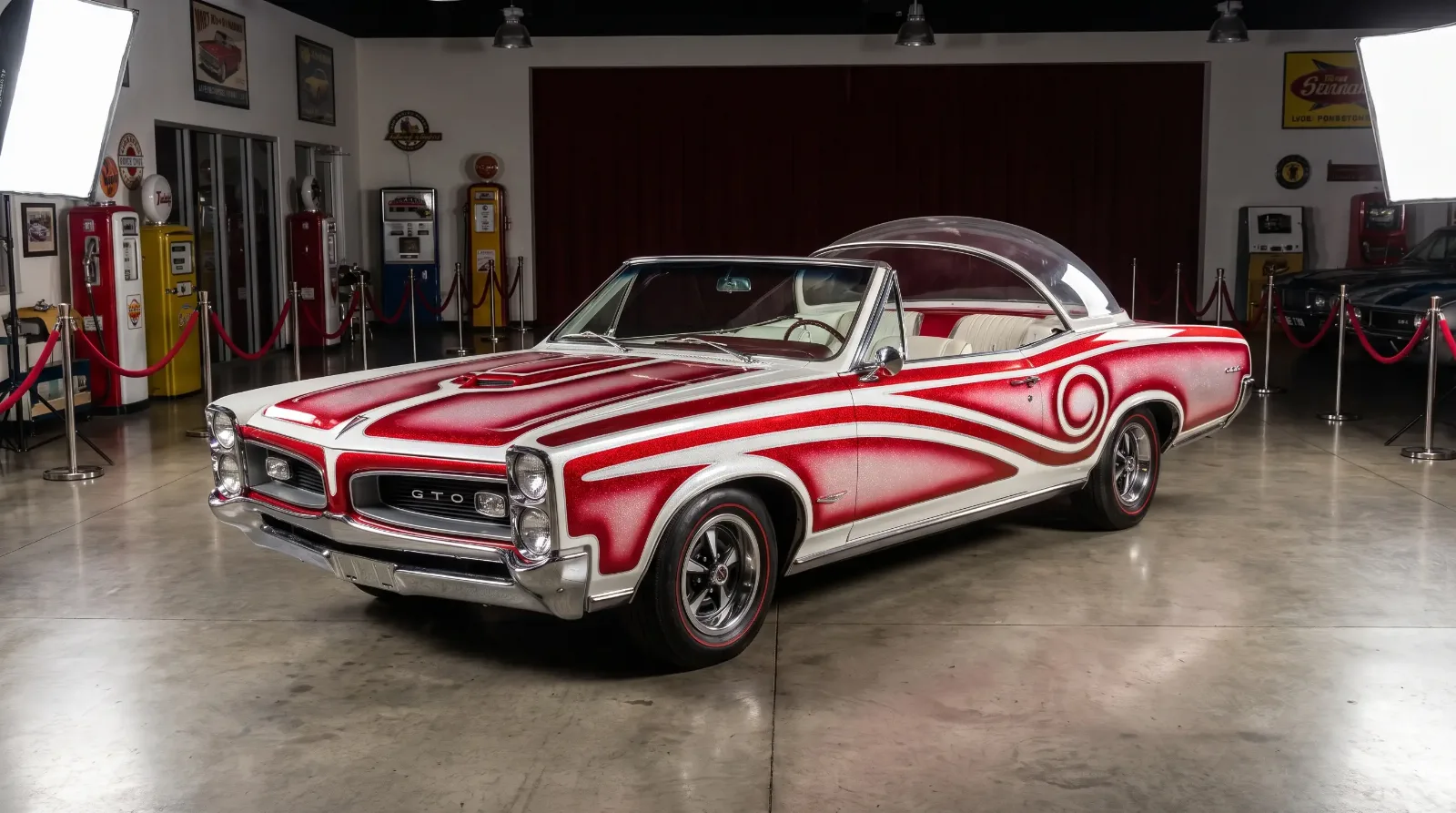
Dean Jeffries had a shop in Hollywood full of half-finished custom builds when the call came in for a television car that needed to be ready fast, look nothing like anything else on the road, and still be drivable enough to chase down a studio backlot every week. He started with a 1966 Pontiac GTO convertible, which tells you something about how good the underlying car already was. Jeffries did not need a special chassis or a purpose-built platform. A production GTO gave him enough structure and enough performance to build something wild on top of it.
What came off his bench became the Monkeemobile, the car driven by the fictional band at the center of NBC's "The Monkees," a show that ran from 1966 into 1968 and turned four young musicians into a genuine pop phenomenon almost overnight. The car needed to match that energy, loud, a little absurd, unmistakably of its moment. Jeffries stretched the GTO's body, added a bubble-topped rear section that looked like something out of a spaceship, and dropped in styling cues that had nothing to do with anything Pontiac had drawn on paper. Underneath all of it, though, sat GTO mechanicals, real 389 power doing real work, not a prop pretending to move.
Why a GTO was the right starting point
Custom builders in the 1960s often started with whatever chassis gave them the most usable structure for the least fuss, and a GTO convertible offered exactly that. The Tempest-based platform was stout enough to handle body modification without falling apart under its own new weight, and the drivetrain was already tuned for performance, which mattered for a show car that occasionally needed to actually move on camera rather than sit still for a photo. Jeffries built two original Monkeemobiles from 1966 GTO convertibles for production use, since television shoots routinely need backup vehicles when stunts, weather, or simple wear take one out of commission.
The choice also said something about where the GTO sat in American culture by 1966. It was not an obscure car a custom shop picked because nobody would notice the donor vehicle. It was the car, the one that had already redefined what a factory performance coupe could be, and building a television icon on top of it only reinforced how far the GTO's reputation had already traveled in just two model years since its 1964 debut.
"You could build the Monkeemobile on almost any convertible platform from that era and it would still turn heads. Building it on a GTO meant it turned heads twice, once for the custom bodywork and once for anybody who recognized the bones underneath. That layering is what made it work."
— Patrick Walsh
A car built for a show that outran its own network run
"The Monkees" only ran two seasons on NBC, a short window by television standards, but the show's afterlife in syndication and reruns kept the Monkeemobile in front of new audiences for decades. Kids who never saw the original broadcast grew up catching it in reruns, and the car became one of those rare pieces of automotive pop culture that outlasted the medium it was built for. That kind of staying power is unusual for a one-off custom build. Most television cars fade once the show they were made for stops airing. The Monkeemobile kept working because the underlying design, and the GTO foundation beneath it, held up as something genuinely interesting rather than just a period curiosity.
What happened to the originals
Surviving Monkeemobiles have changed hands over the decades, occasionally surfacing at auctions where they draw attention well beyond what a standard customized GTO convertible would command, a premium built entirely on provenance rather than mechanical rarity. One original, later re-kustomized by George Barris and restored, sold at Barrett-Jackson's Scottsdale auction in January 2008 for $360,000. Replicas have also been built by other shops and enthusiasts over the years, since the show's cultural footprint never fully faded, and demand for a car this recognizable outpaced the tiny number of originals that actually rolled out of Jeffries' shop in 1966.
That gap between supply and demand is common with famous custom builds. A handful of real cars exist, a much larger number of people want one, and the result is a small ecosystem of tribute builds, some faithful to the original dimensions and details, some looser interpretations built mostly for car shows. None of them carry quite the weight of an original, but all of them keep the GTO connection alive for a new generation who came to the car through a television rerun rather than a showroom brochure.
The details that made it work on camera
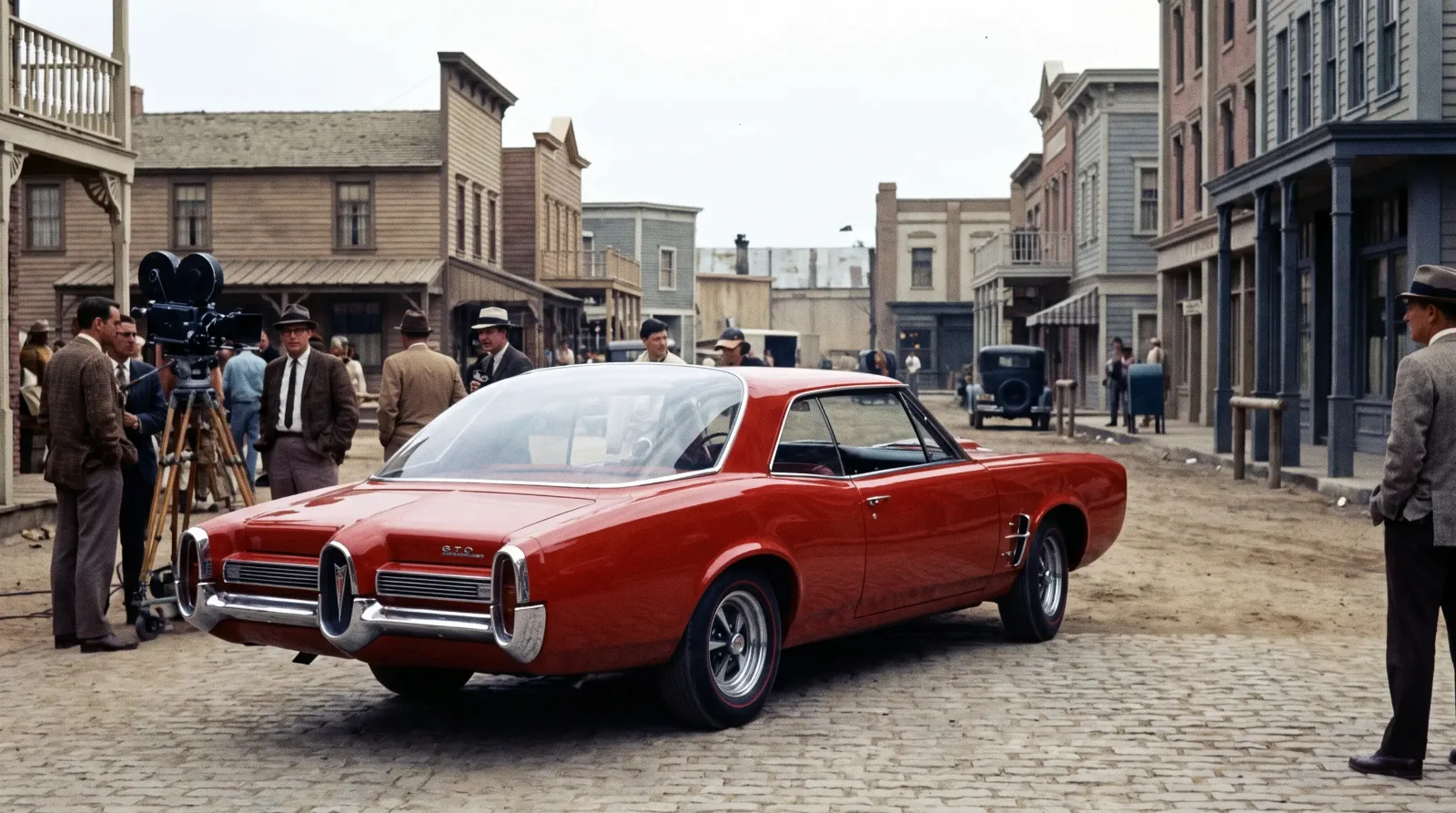
Television cars live or die on how they read through a lens, and Jeffries clearly built the Monkeemobile with that in mind rather than treating it as a static show piece. The bubble canopy over the rear seats gave the car a silhouette that read instantly even in a wide shot, which mattered enormously for a weekly show working on tight production schedules with limited time for elaborate setups. A car that announced itself in a single frame saved the crew time, and that practical consideration shaped the design as much as any purely aesthetic choice did.
The stretched body also solved a real production problem. Fitting four band members plus camera equipment and the occasional guest actor into a stock GTO convertible would have been a tight squeeze at best. Jeffries' modifications gave the show room to work with while keeping the car's silhouette dramatic rather than merely practical, a balance that a lot of custom builds from the era failed to strike. Function and spectacle rarely align that cleanly, and it is part of why the Monkeemobile still gets singled out decades later as one of the better television car builds of its generation.
Part of a longer pattern
The Monkeemobile was an early, particularly loud example of something that kept happening to the GTO for the rest of its production run and long after: filmmakers, television producers, and custom builders kept reaching for this specific car whenever a script or a build sheet called for something that read as fast, young, and a little rebellious. That reputation did not happen by accident, and it connects directly to the broader question of the Goat's mythology, since a car does not end up as the basis for a television icon unless its street reputation already primed audiences to believe it.
The Monkeemobile is really just the loudest entry in a much longer list of GTOs that made it onto film and television across the following decades, some as background cars, some as genuine plot devices in their own right. That fuller list, and what each appearance says about how Hollywood saw the car in different eras, is worth exploring if you want read on, because the GTO's screen career turned out to be a lot longer and stranger than one bubble-topped convertible from 1966.