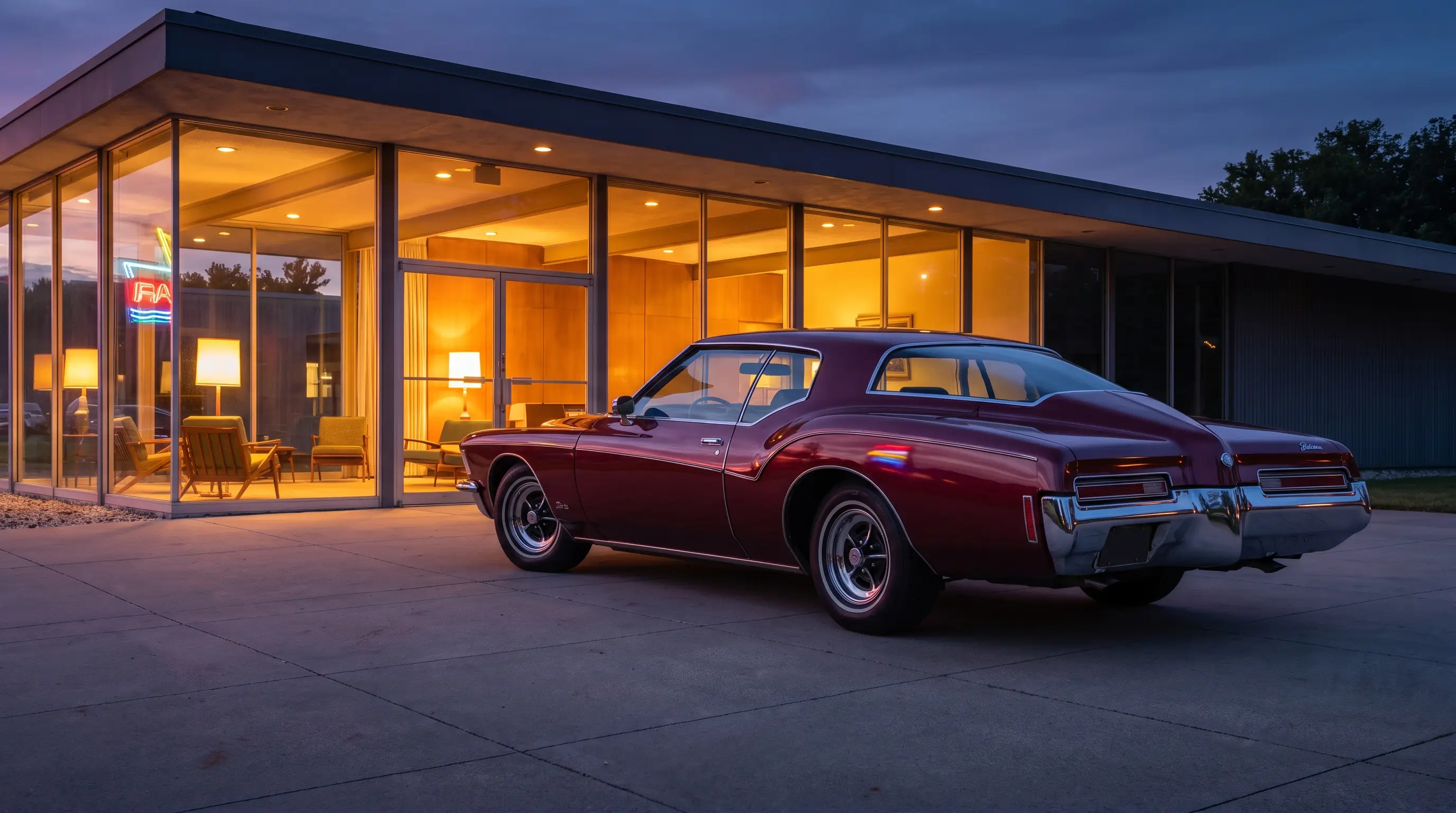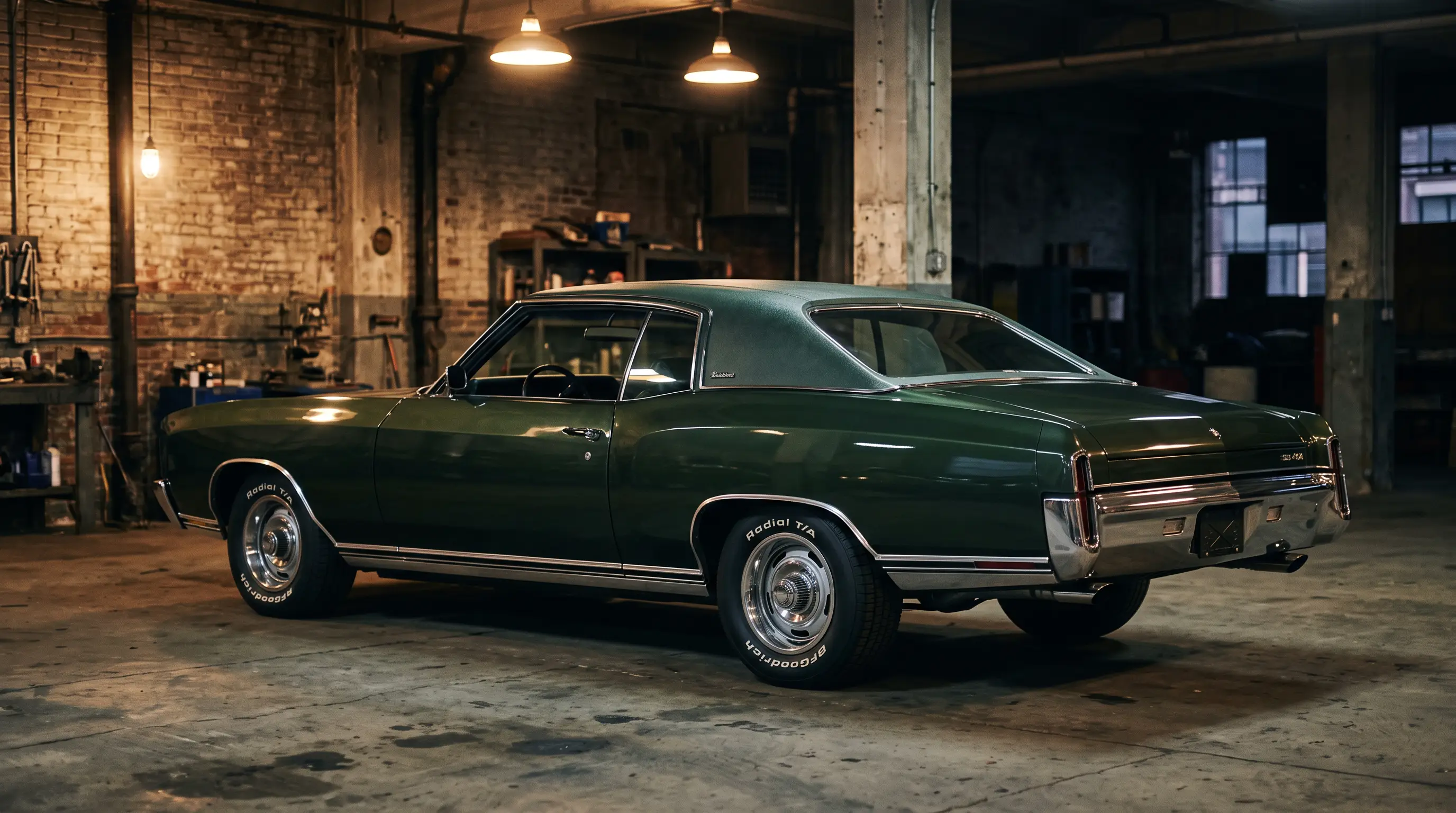
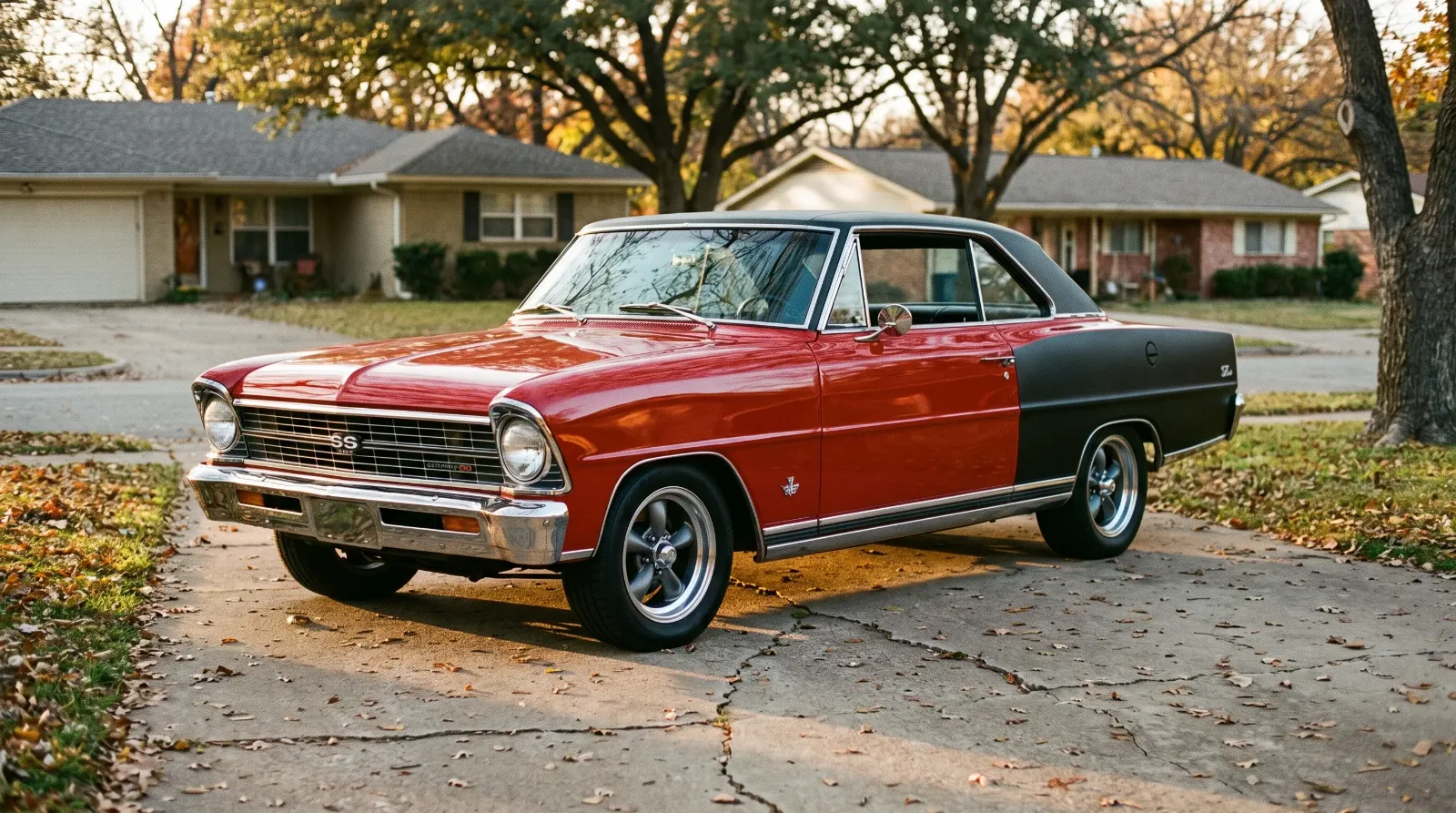
Chevrolet built the redesigned Chevy II Nova in four distinct body styles for 1966 and 1967, and that's still a wider spread than a lot of people expect from what was marketed as a compact. Tank sticker records and factory literature from these two years show a lineup that ranged from plain fleet-spec sedans to a genuine Super Sport hardtop, and knowing which body style you're looking at, and which options each one could actually carry, matters more than most buyers realize when they're pricing a car.
The four body styles Chevrolet actually built
For the redesigned second generation covered in the 1966-67 Nova, Chevrolet offered a two-door sedan, a four-door sedan, a two-door Sport Coupe hardtop, and a four-door station wagon, built off one unibody structure with shared floor pans and a common 110-inch wheelbase across the range. There was no convertible in this generation. Chevrolet dropped the Chevy II convertible after the 1963 model year and never brought the body style back to this nameplate. The sedans handled fleet and family duty, the wagon covered the same ground with cargo space, and the Sport Coupe carried the performance and image models, including the Nova SS package.
Not every trim was available in every body style. The Nova SS package, the one collectors chase hardest today, was built exclusively on the Sport Coupe hardtop for both 1966 and 1967. There was no SS convertible to chase in this generation because there was no convertible at all. Sedans and the wagon stayed in Chevy II 100 and Chevy II Nova trim without the SS package, which is a big part of why hardtop SS cars command the premiums they do now.
The Sport Coupe: the one everybody wants
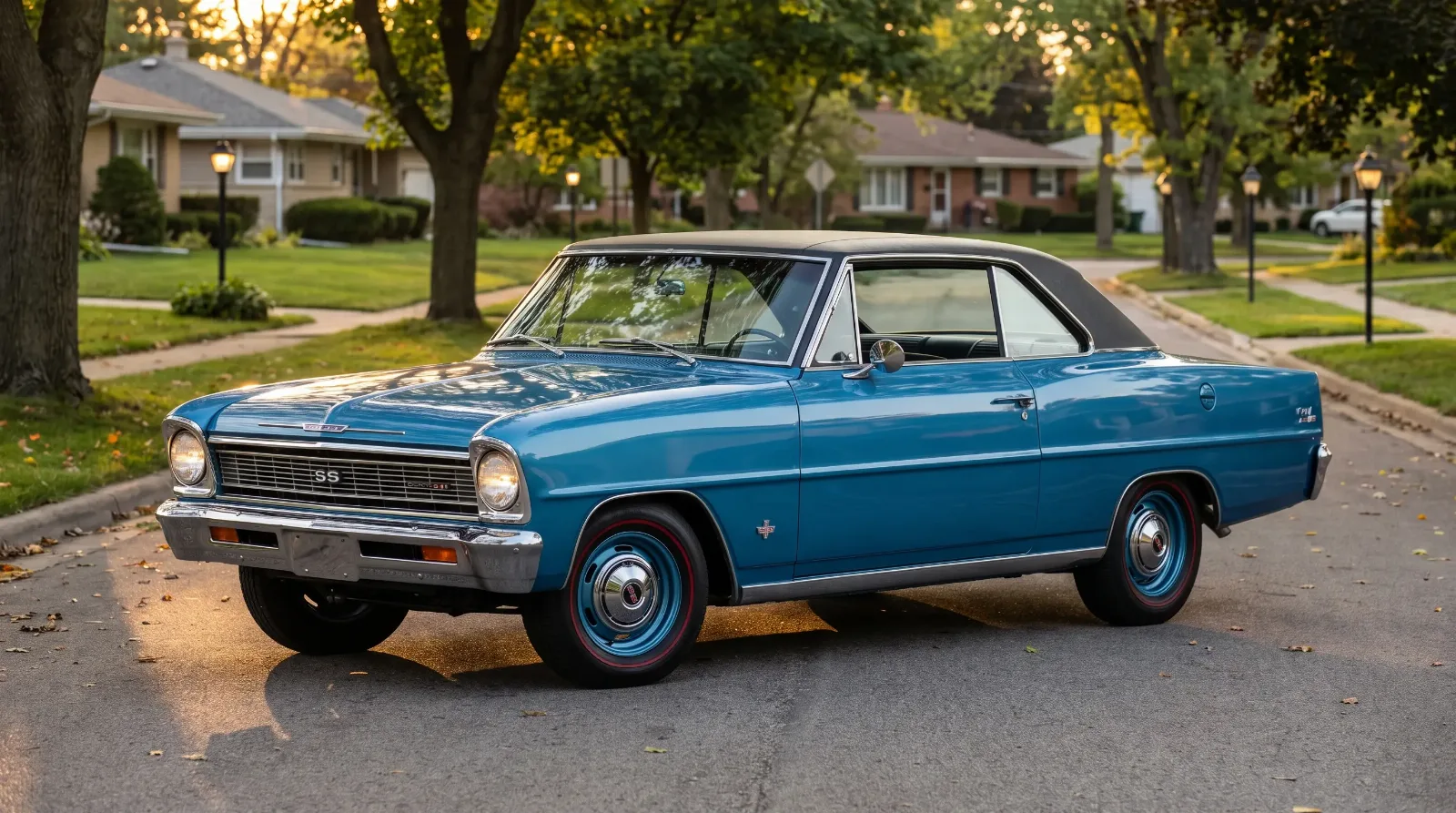
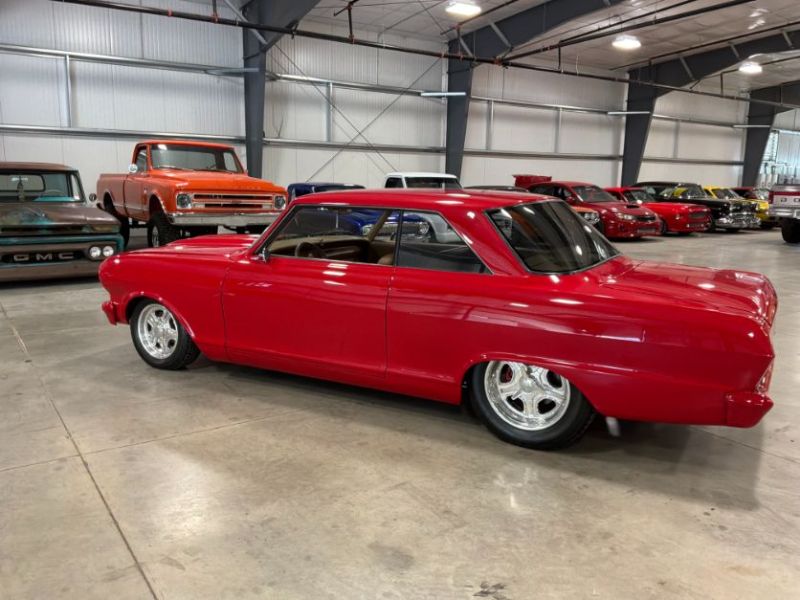
The two-door Sport Coupe hardtop is the body style most associated with this generation, and for good reason. It's the roofline that carried the SS package, the 327 small block when it became available, and the styling cues Chevrolet leaned on hardest in period advertising. The pillarless hardtop design gave it a cleaner side profile than the sedans, with a lower beltline and a faster roofline that made the same basic body shell look considerably sportier than the four-door version parked next to it.
That popularity in period has a downside for buyers now: Sport Coupes were also the cars people modified, raced, and eventually parted out at a higher rate than sedans, so genuine numbers-matching SS hardtops from these two years are thinner on the ground than production totals alone would suggest.
The roofline itself is worth studying before assuming a car is a genuine Sport Coupe. Aftermarket vinyl tops, non-factory trim, and decades of cosmetic changes can make a plain sedan look sportier than it is at a glance, and the reverse happens too, where a straight, unmodified Sport Coupe gets overlooked because it isn't wearing SS badges it never came with in the first place. The B-pillar, or the lack of one, is the fastest visual check: sedans kept a fixed pillar between the front and rear windows, while the Sport Coupe's pillarless design is what gave it the hardtop look in the first place.
| Body style | Doors | SS package available | Typical use |
|---|---|---|---|
| Sedan | 2 or 4 | No | Family, fleet |
| Sport Coupe (hardtop) | 2 | Yes, only SS body | Performance, image |
| Station wagon | 4 | No | Cargo, family |
The wagon: gone for good after 1967
The station wagon is the body style worth understanding on its own, because it disappeared from the lineup entirely when the third-generation Nova arrived for 1968 and never came back to this nameplate. That makes any 1966 or 1967 wagon a closed chapter rather than an early example of something Chevrolet kept refining. A wagon buyer in 1967 wasn't choosing an earlier version of a body style Chevrolet would keep building. They were buying the last one Chevrolet would build under this name, full stop.
Wagons are arguably the rarer good-condition survivor of this generation today, even though they don't carry the performance cachet of a Sport Coupe. Wagons got used hard, then got used harder as cheap secondhand haulers once the novelty wore off, and station wagon survival rates across nearly every 1960s compact are lower than sedan or hardtop rates for exactly that reason.
It's also worth being clear about what this generation never had. Chevrolet built a Chevy II convertible only through the 1963 model year, and the body style did not return for the 1966 redesign or the 1967 model year that followed it. A car advertised as a "1966 Nova SS convertible" or "1967 Nova convertible" is either a modern conversion or a misattribution, not a factory-built car from this generation.
What body style means for a buyer today
Figuring out which body style you're looking at is step one before anything else about a 1966 or 1967 car matters. A Sport Coupe with a trim tag that checks out for SS trim is a different conversation, and a different price bracket, than a sedan wearing SS badges that don't match its build sheet. The wagon carries its own scarcity premium simply for being a one-generation-only body style, independent of whatever drivetrain it left the factory with. If you want to see what happened under the hood of these same cars once you've settled on a body style, the next story in this set covers the small-block years that ran alongside this exact lineup.
"Body style tells you more about what a car actually is than most of the option boxes checked on the build sheet. A Sport Coupe and a sedan off the same assembly line are not the same car once you factor in what survived and what didn't."
— Tom Ramirez
Sources and notes
- Chevrolet Chevy II / Nova - Wikipedia
- NovaResource - Nova Production Numbers
- 1967 Chevrolet Nova Series Specifications & Dimensions - Conceptcarz
- 1966 Chevrolet Chevy II Nova Sedan Full Range Specs - Automobile Catalog
- 1966 Chevrolet Nova SS - Hagerty Valuation Tools
- Differences Between the 1966 & 1967 Chevy II - Northwest Nova