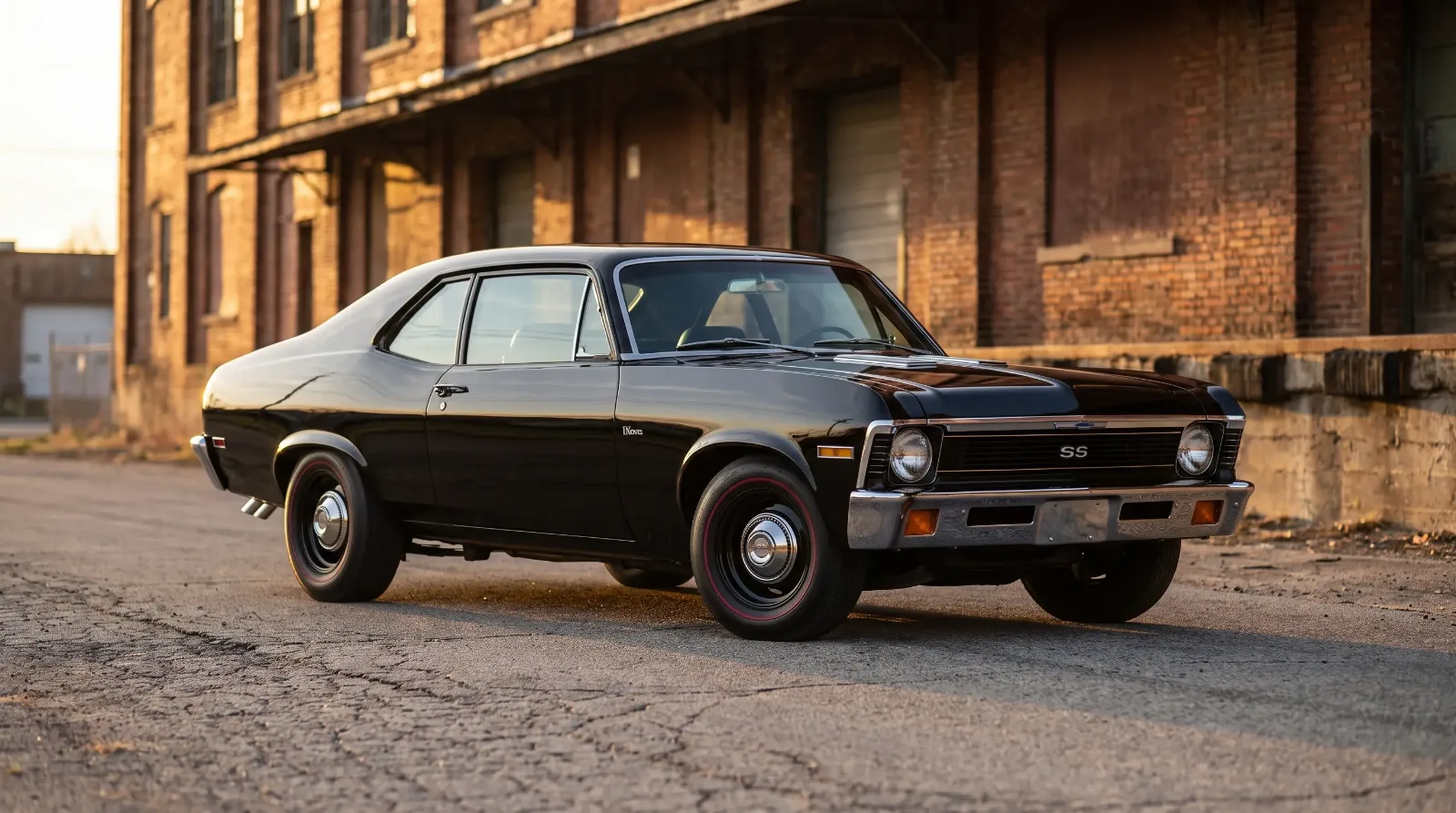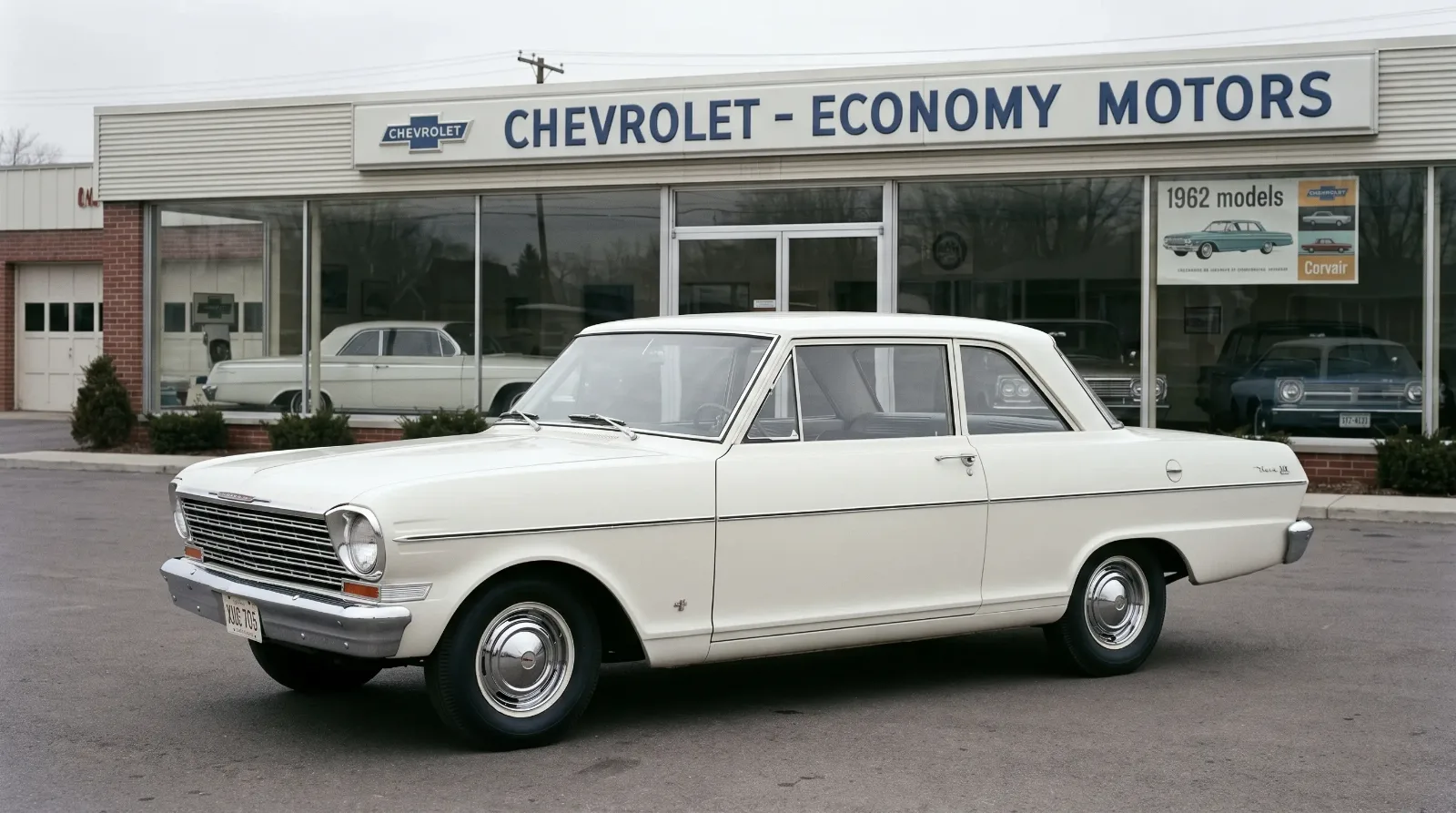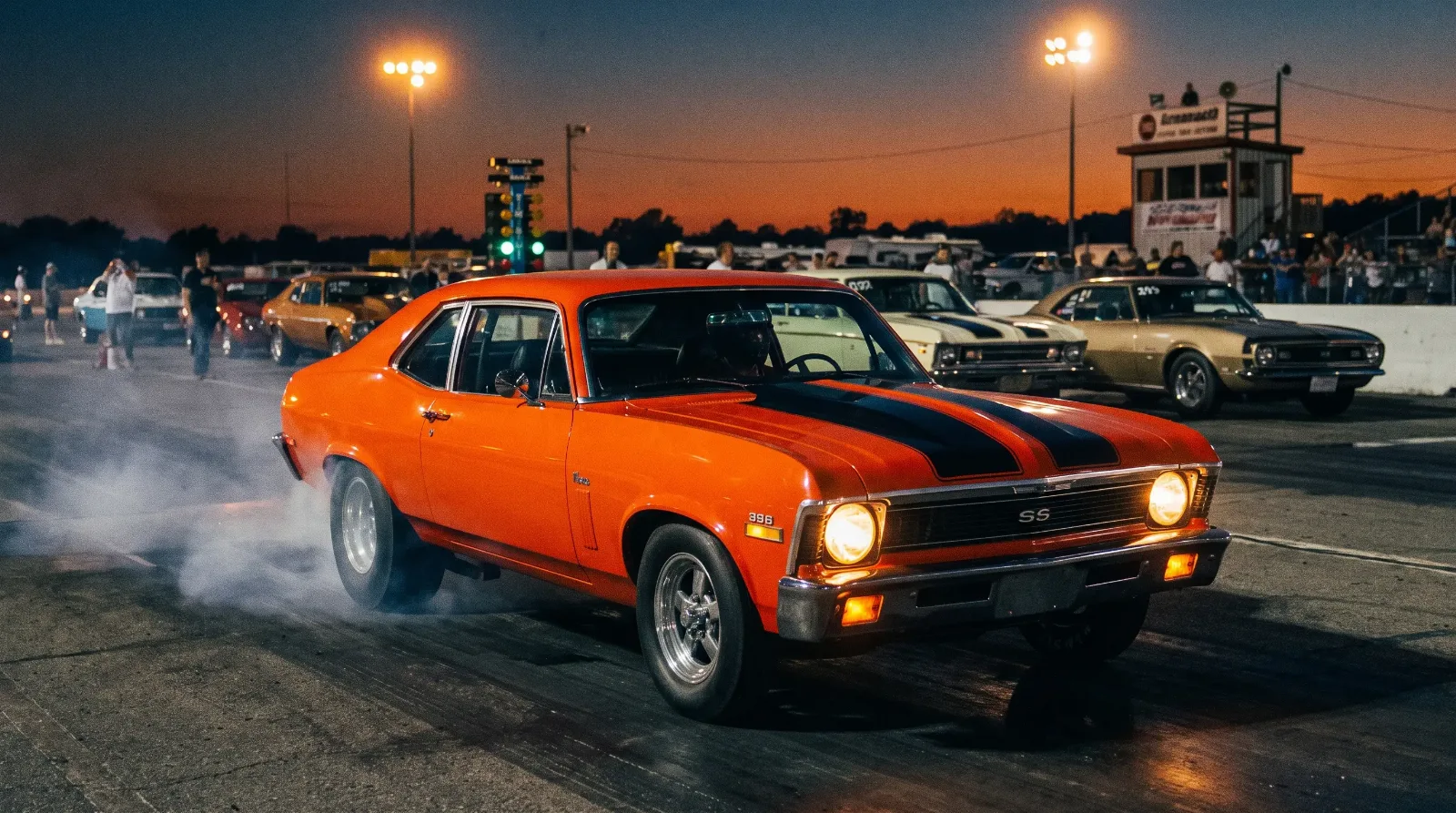
The 1966 chevy nova is easy to walk past at a show. It sits between two louder chapters, the compact that started the line in 1962 and the big-block muscle cars that arrived in 1968, so people tend to give it a glance and keep moving. That is a mistake. For two model years, 1966 and 1967, Chevrolet built a cleaner, tighter version of its compact and slipped one of the best small-block engines of the decade under the hood. If you want to understand how the Nova grew from a thrifty grocery-getter into a car worth chasing, this short run is where the shift happens. It also helps to know how the Nova legend began before you judge what came next.
A cleaner shape for 1966
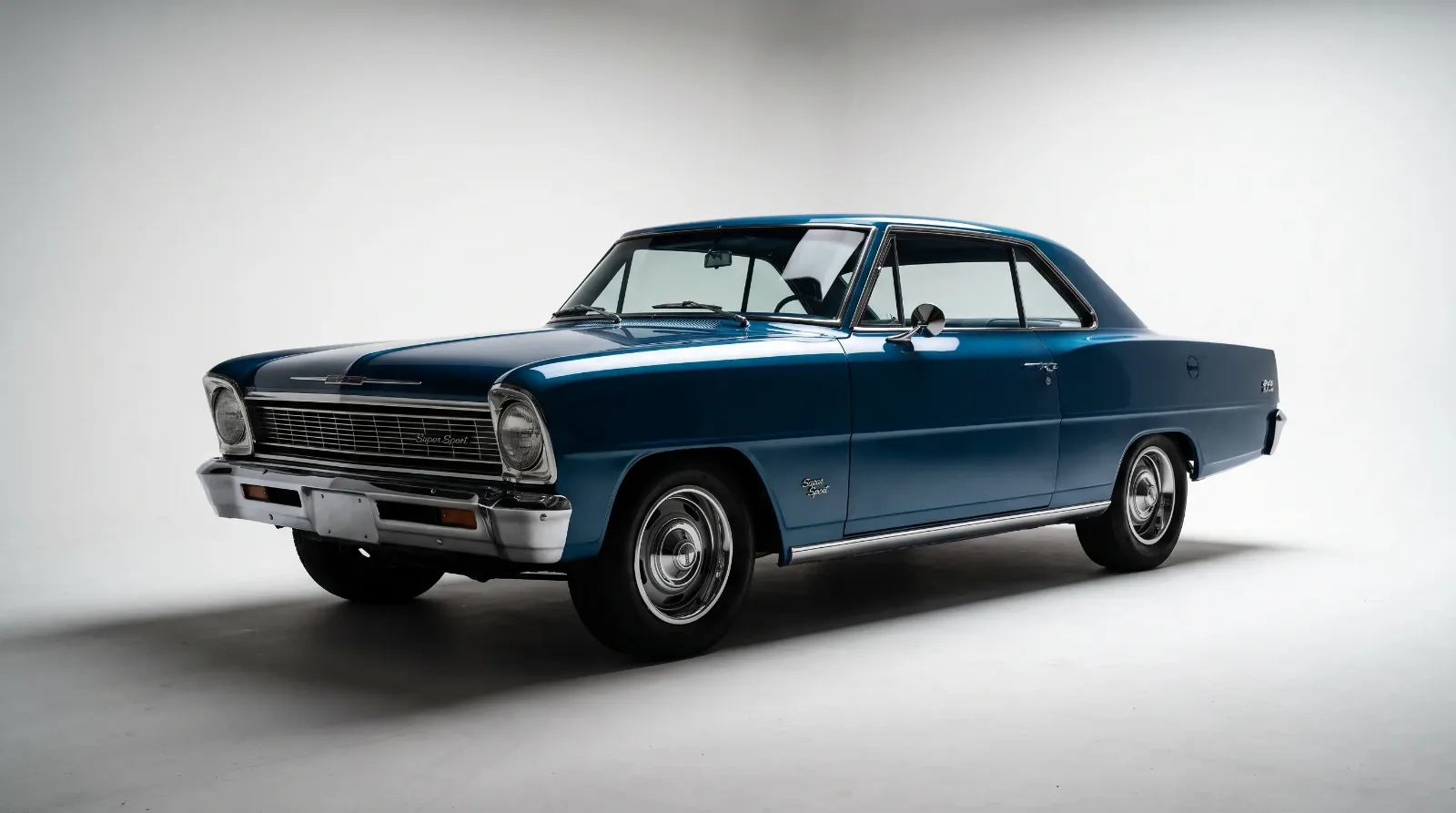
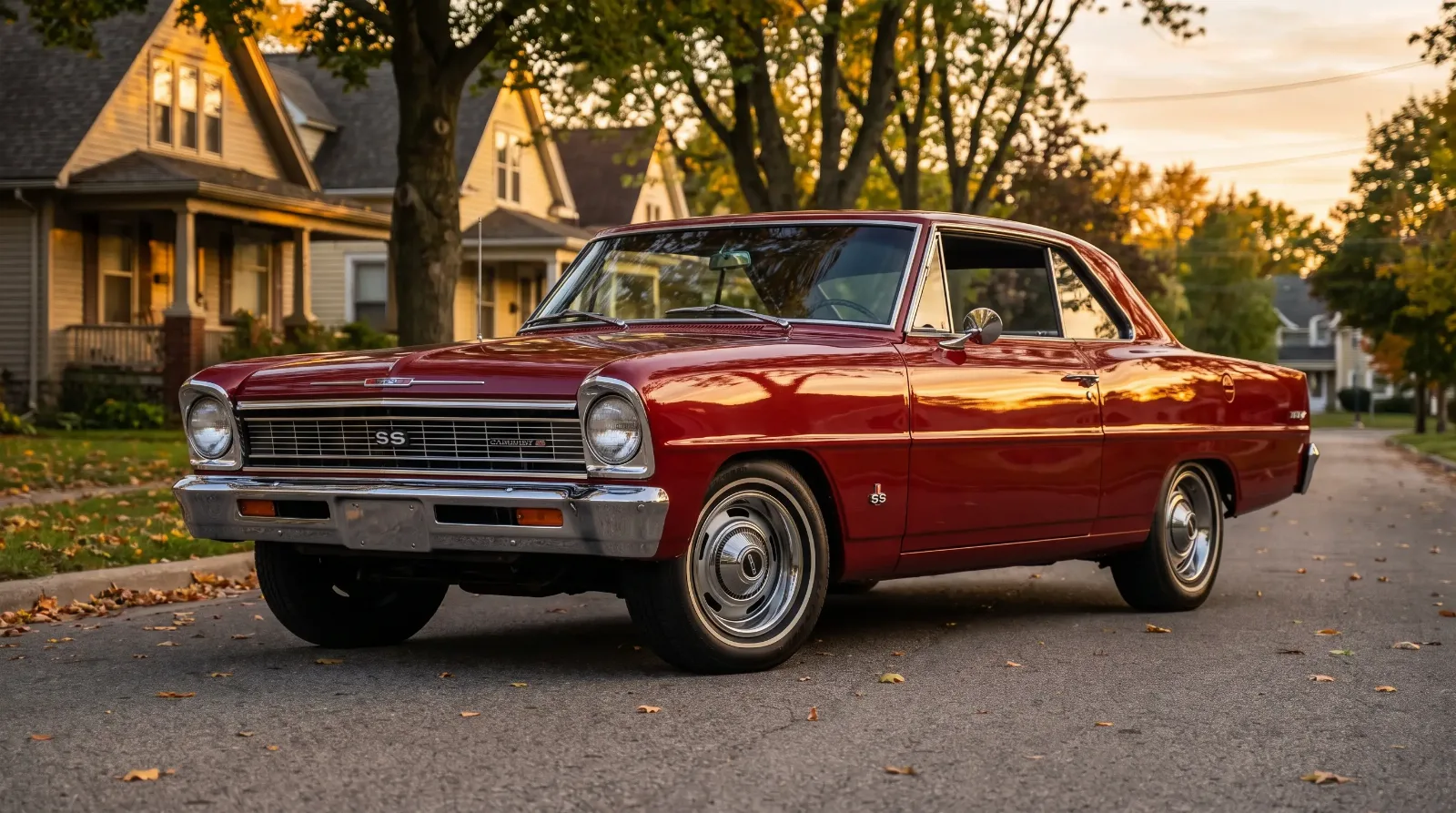
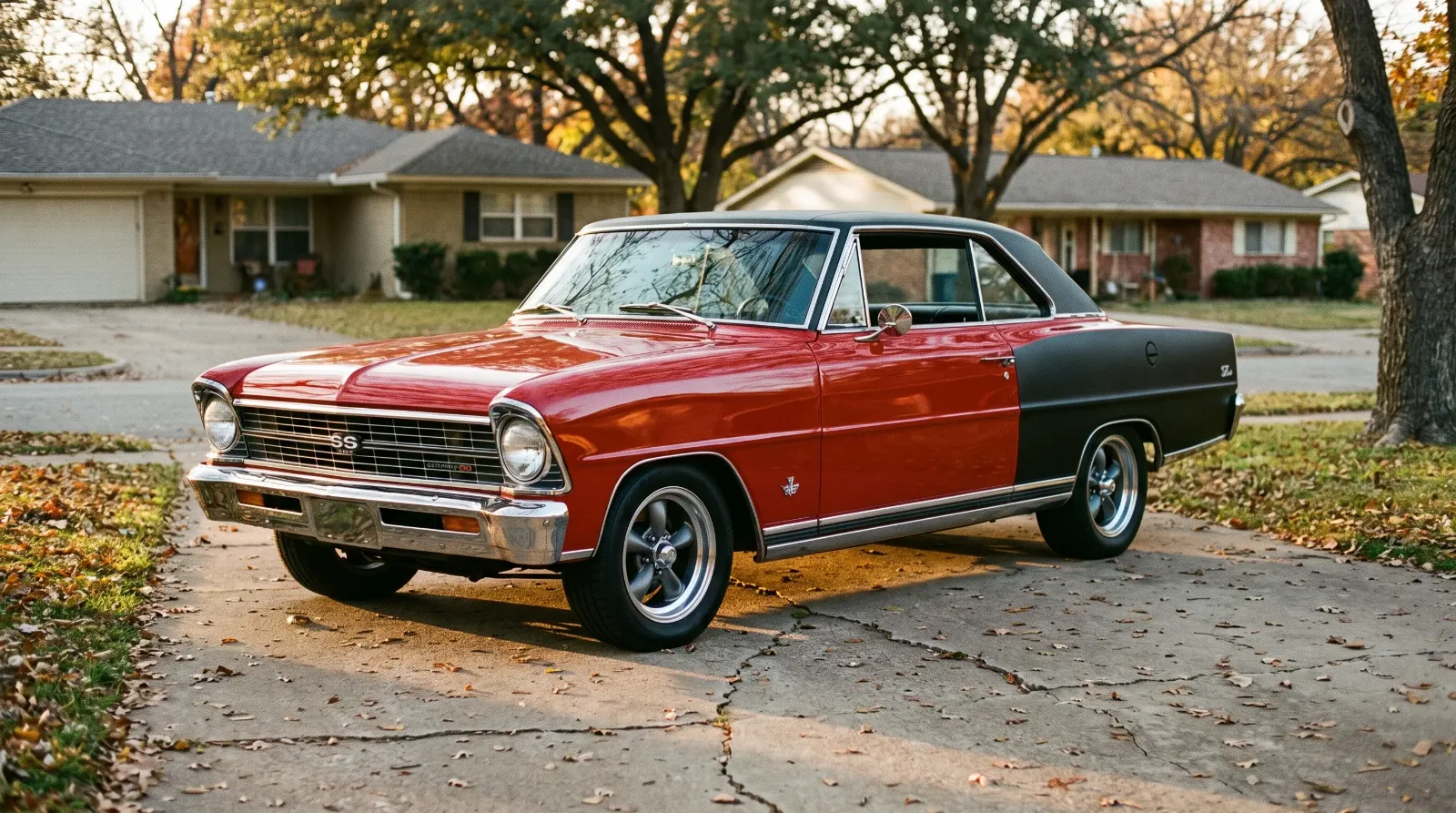
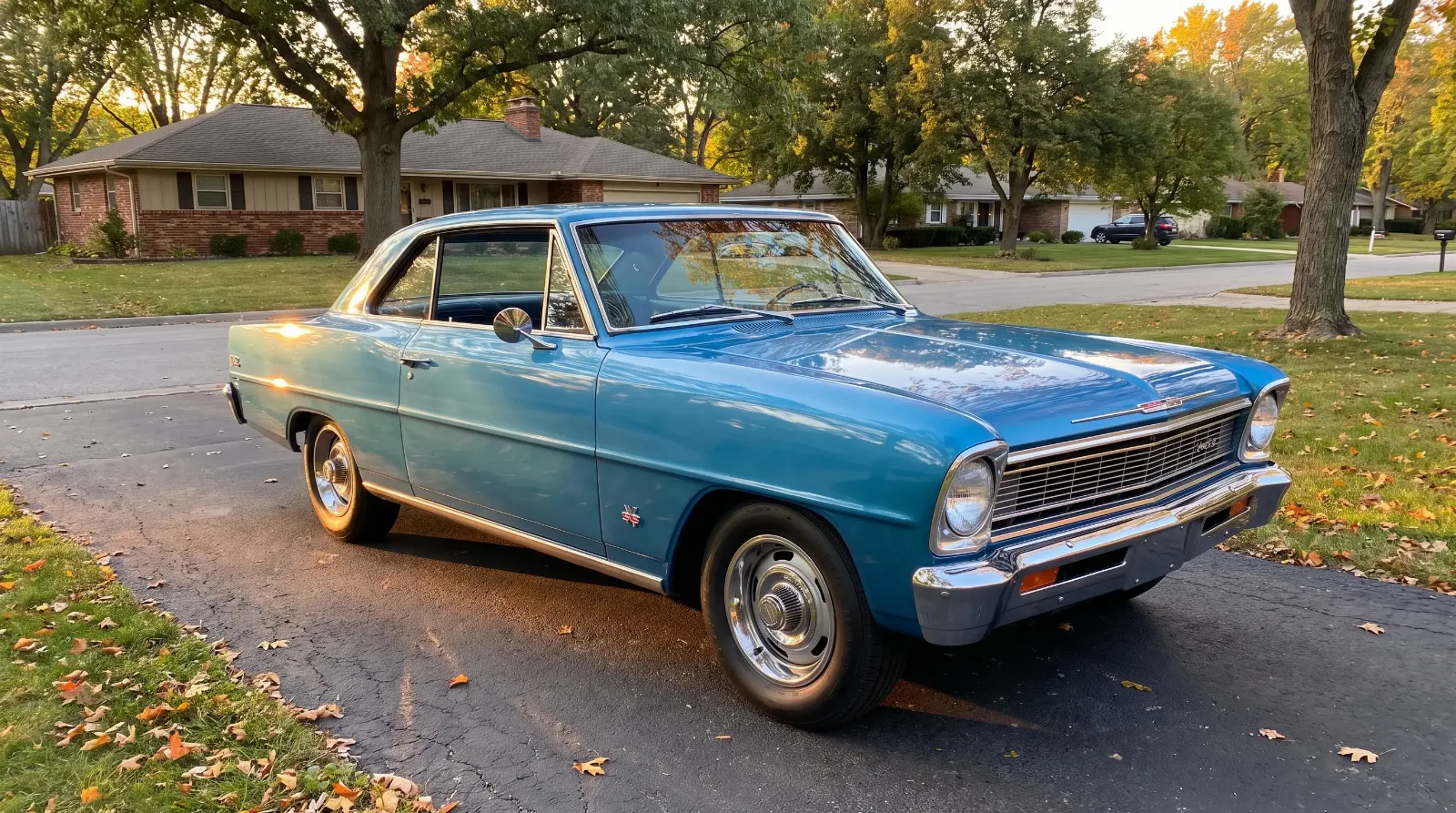
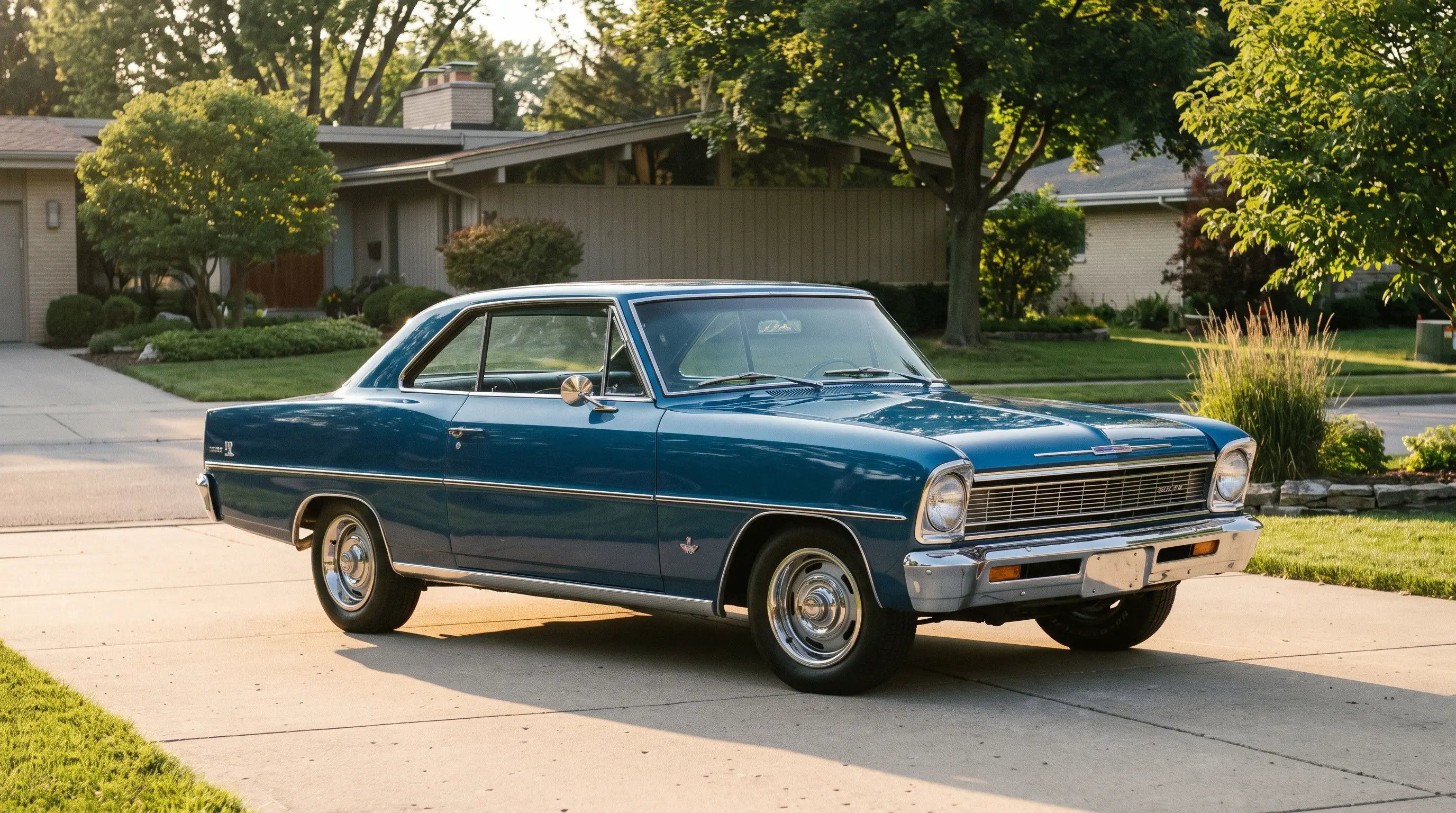
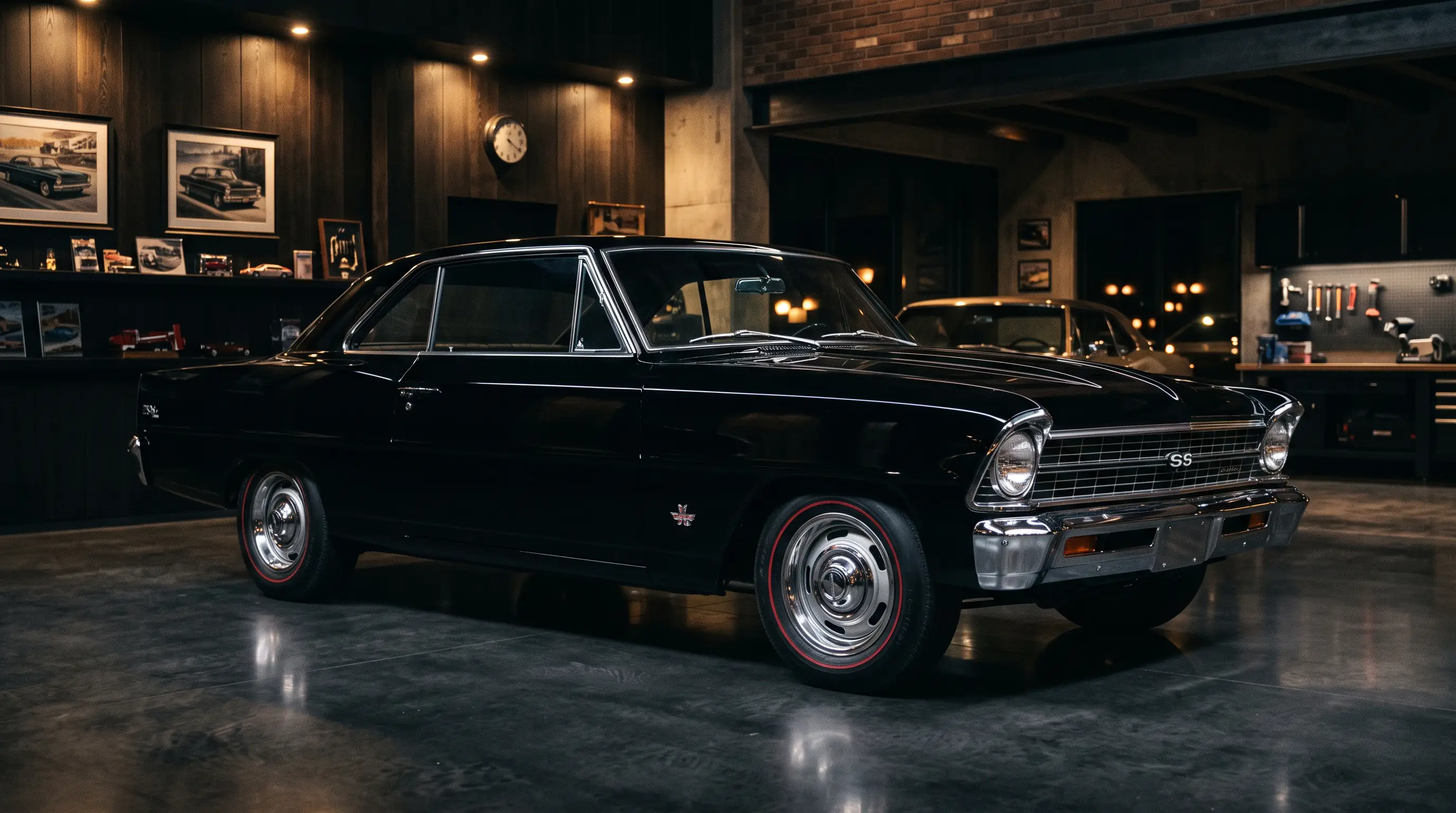
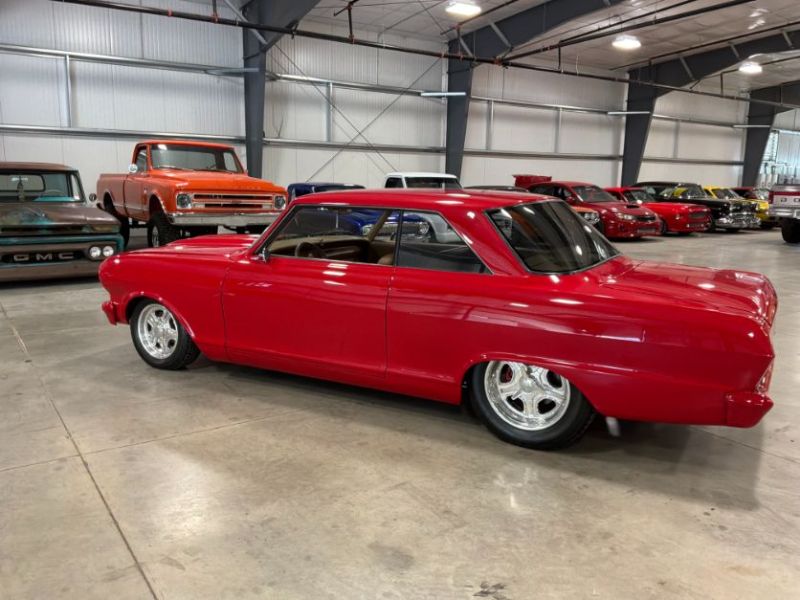
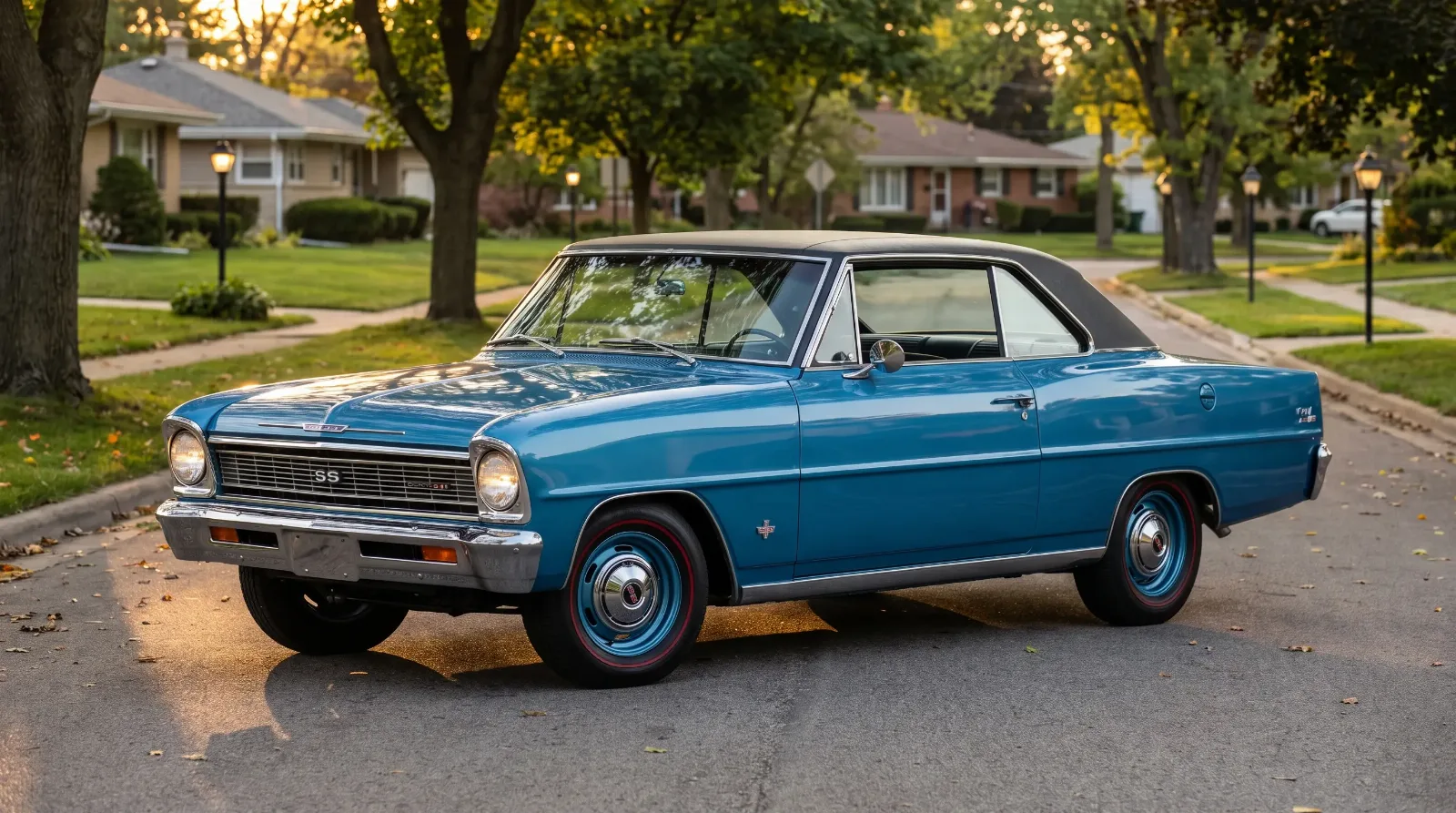
The first Chevy II, sold from 1962 through 1965, had soft, rounded lines and a fussy grille. For 1966 Chevrolet reskinned the car. The body picked up crisper edges, a flatter roofline on the sport coupe, and a squared-off tail that made the whole thing look longer than it was. The wheelbase stayed at 110 inches, so this was a restyle rather than a ground-up new platform, but the effect was strong. Park a 1965 next to a 1966 and the older car suddenly looks like it belongs to another decade.
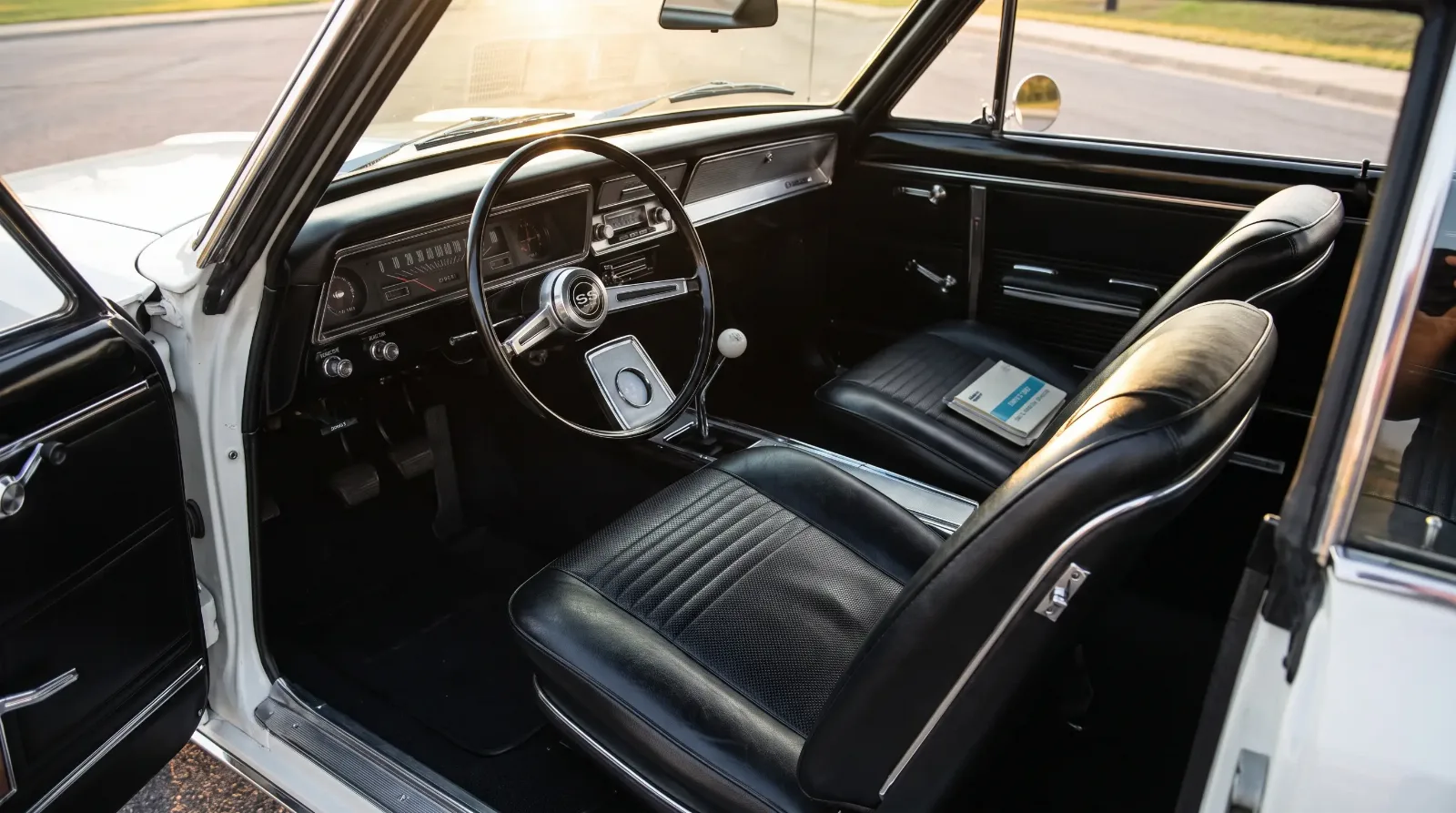
The changes were not only skin deep. The 1966 cars got a wider track and revised suspension tuning that helped the ride and the handling, and the interior was reworked with a cleaner dash layout. Chevrolet knew it had a car that could carry a V8 seriously now, and the sheetmetal was drawn to match that ambition. The two-door hardtop, called the sport coupe, is the shape most collectors want today, and it is the one that reads best from any angle.
When Chevy II became Nova
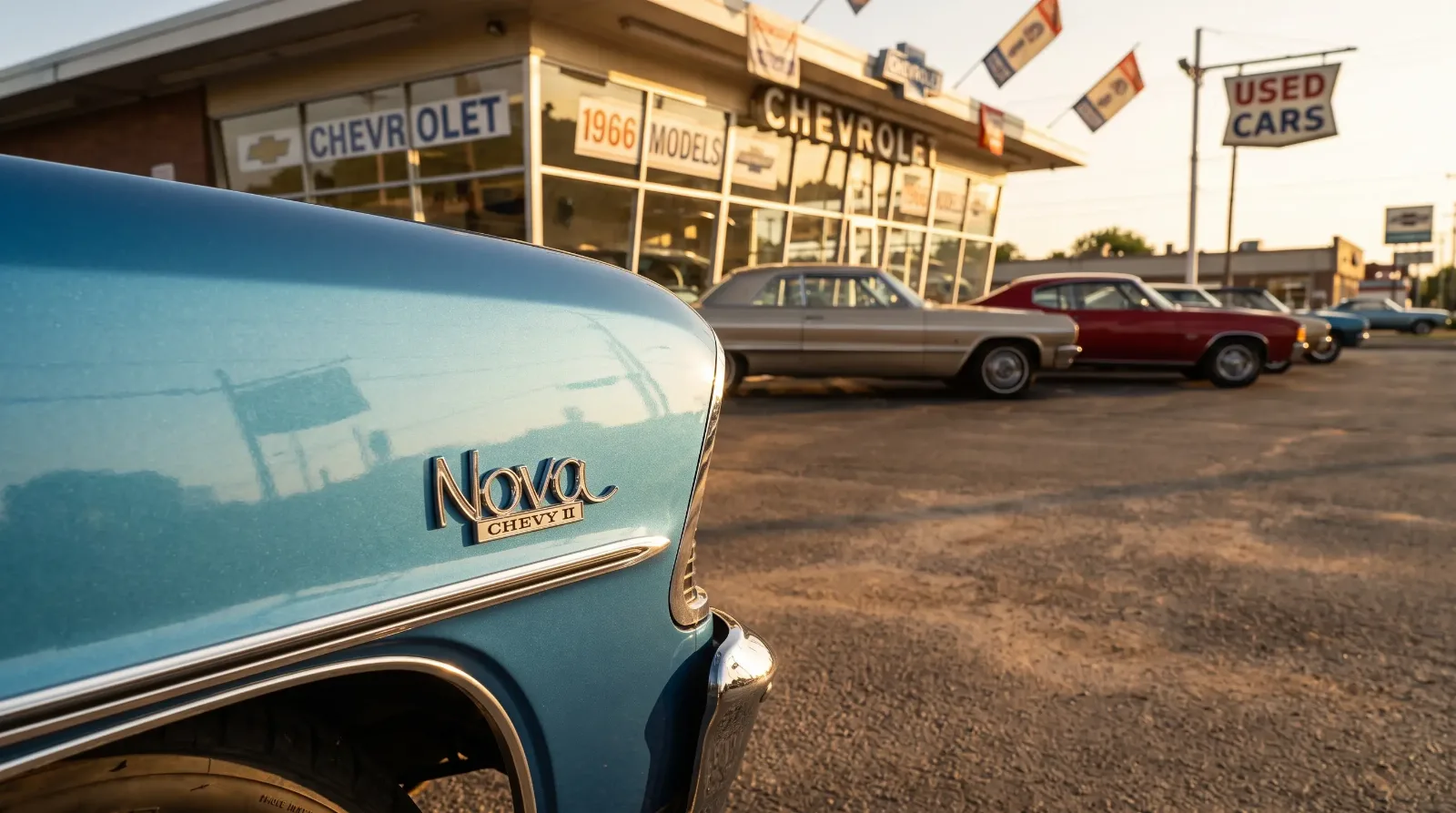
Here is where a lot of casual fans get the story wrong. In 1966 and 1967 the car was still officially a Chevy II. Nova was the name of the top trim level, the way you might order a base 100 series or a mid-range 400. So a loaded 1966 car was a Chevy II Nova, and the sporty version was the Chevy II Nova SS. The word Nova did not fully take over the badge until 1969, when Chevrolet dropped the Chevy II name and let Nova stand on its own.
That naming overlap is part of why the generation feels slippery to newcomers. Ads and brochures from the period used both names, sometimes in the same sentence, and dealers talked about the cars however was easiest. For the buyer at the time it hardly mattered. For the collector today it matters a great deal, because a correct 1966 or 1967 example wears Chevy II script and Nova trim together, and knowing that difference is one of the quickest ways to spot a car that has been rebadged with the wrong parts.
The L79: 350 horsepower in a compact
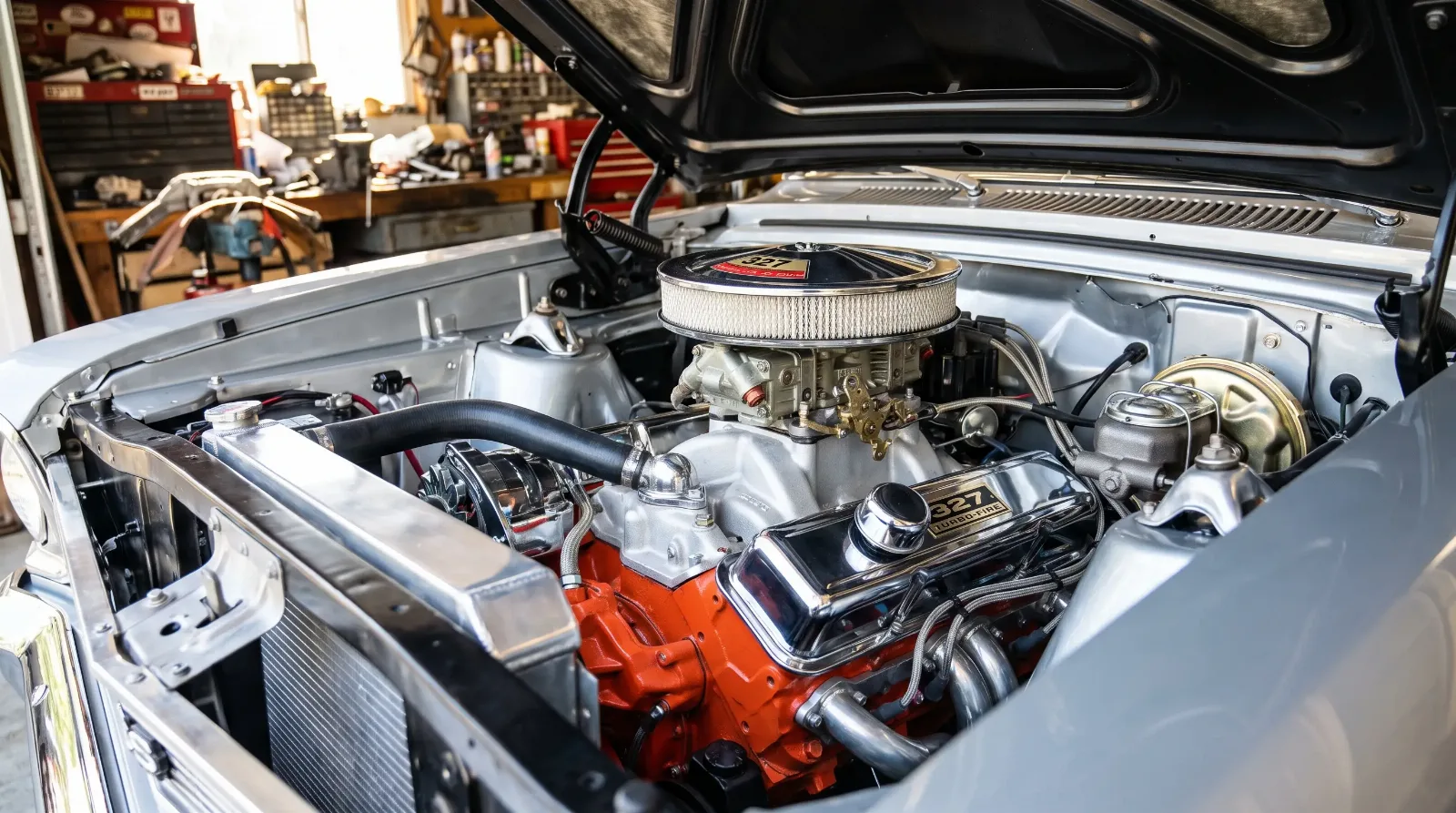
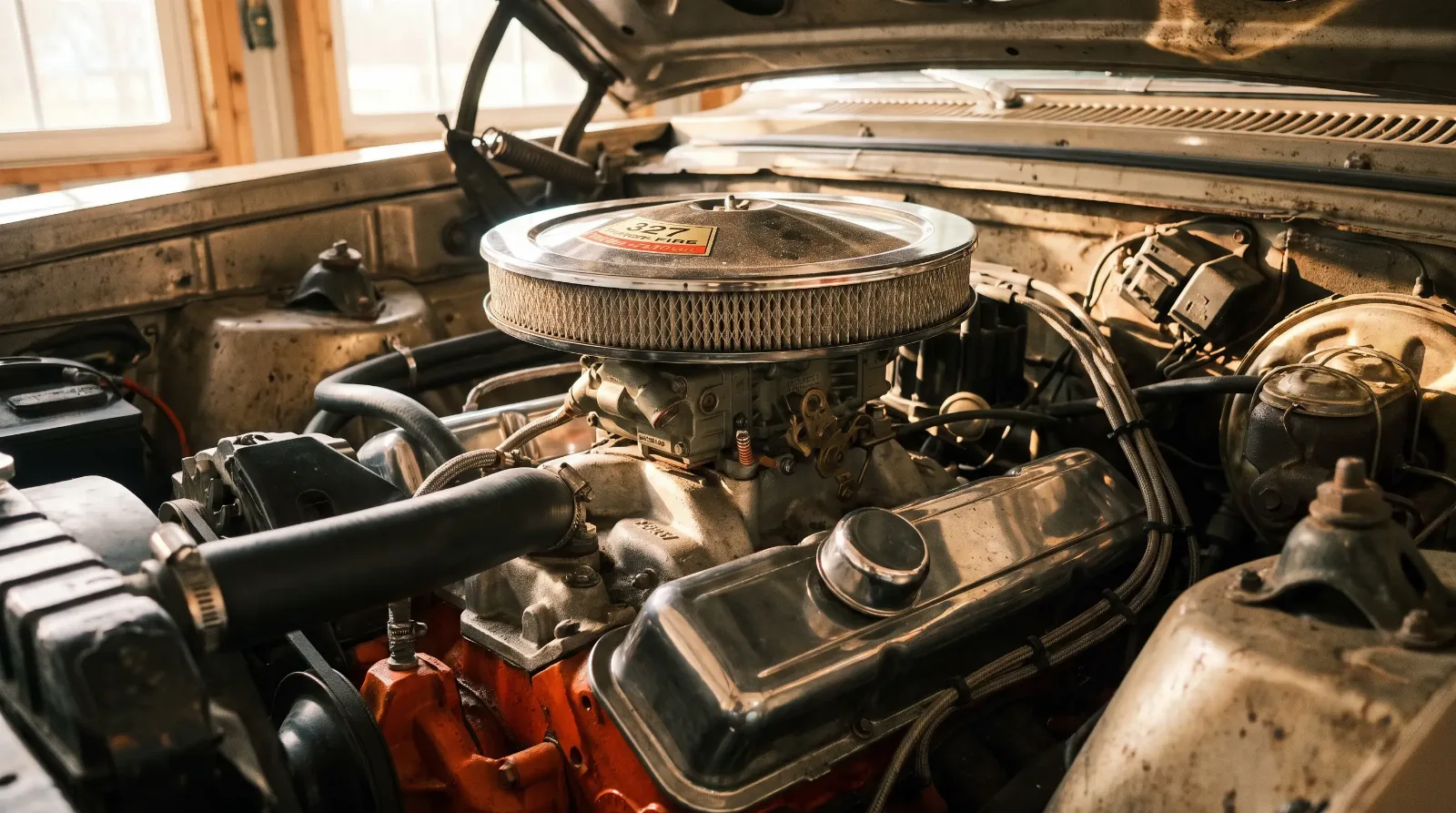
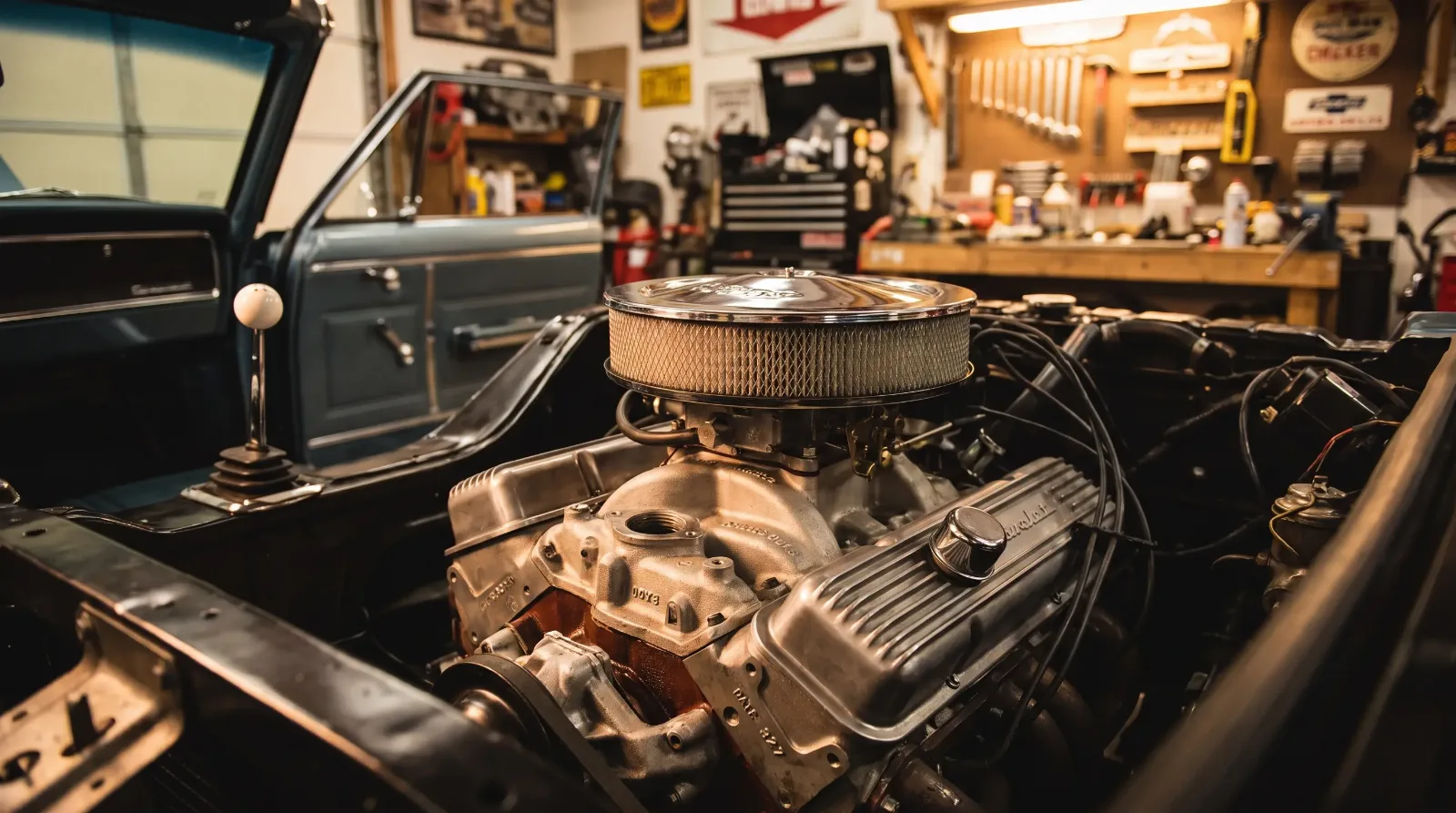
The reason this two-year run deserves attention is a single engine option, the L79. It was a 327 cubic inch small-block rated at 350 horsepower, and Chevrolet offered it in the Nova SS starting in 1966. This was the same high-output 327 that made the Corvette and the Chevelle quick, dropped into a car that weighed a good deal less than either. On paper the power-to-weight math was excellent. In practice the L79 Nova was one of the fastest things Chevrolet would sell you that year without stepping up to a full-size or a Corvette.
The L79 used a hydraulic-lifter cam, high compression, and a large four-barrel carburetor, so it made its power in a way that stayed streetable. It was not a peaky, temperamental race engine. It idled, it drove, and it pulled hard when you asked. Backed by a four-speed manual, it turned a light body into a car that could surprise almost anything at a stoplight, and it did so without the maintenance headaches that came with the solid-lifter racing engines of the era. That combination of civility and speed is exactly why the option earns its reputation.
For 1967 the L79 continued on paper but with a lower 325 horsepower rating, the result of a cast-iron intake and a Quadrajet carburetor in place of the 1966 car's aluminum intake and dual-snorkel air cleaner. Availability all but vanished a few weeks into the model year, when Chevrolet's marketing arm pulled the option from the Nova to keep it from cannibalizing sales of the brand-new Camaro, leaving only a handful of genuine 1967 L79 Novas built. That is why a documented 1966 L79 car is the one enthusiasts point to as the high-water mark of the generation, and why the trim tag and any surviving build paperwork carry so much weight when one changes hands.
"People remember the big-block Novas that came later and forget that the fastest early car was a small-block. The L79 did not need cubic inches to embarrass much heavier machinery, and the paperwork proves it."
— Tom Ramirez
What you could actually order
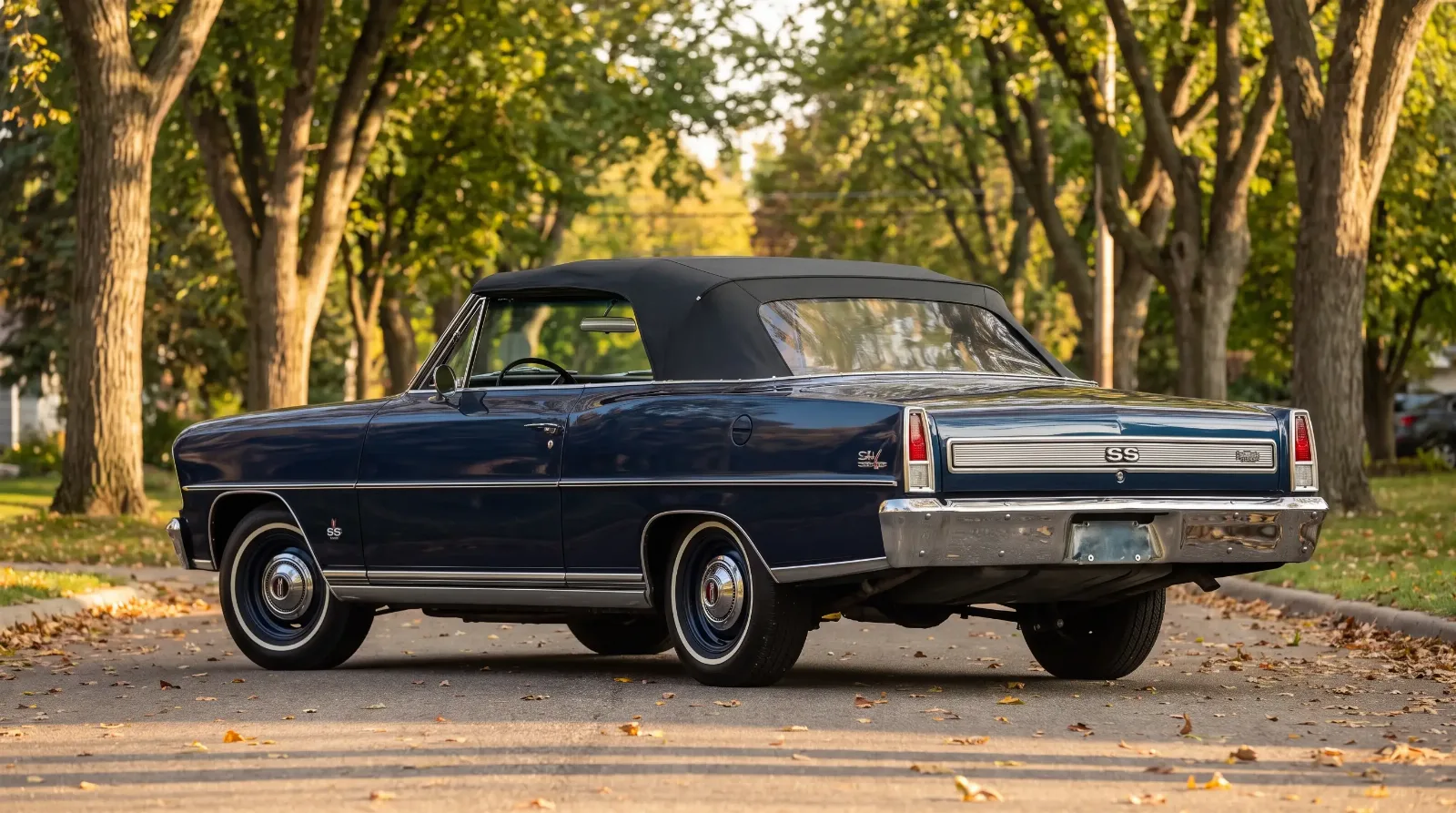
The engine lineup for 1966 and 1967 stretched from thrifty to genuinely quick, which is one reason these cars have such a wide audience now. At the bottom sat the inline-six, still the volume seller for buyers who wanted economy and simple maintenance. In the middle came a mild 283 V8 and the four-barrel 327. At the top sat the L79. Body styles were narrower than the engine chart, because the convertible had already left after the first generation, so a gen2 shopper chose among sedans, the sport coupe, and the wagon.
| Feature | Detail (1966 to 1967) |
|---|---|
| Model line | Chevrolet Chevy II (Nova and Nova SS trims) |
| Wheelbase | 110 inches |
| Body styles | 2-door sport coupe, 2- and 4-door sedan, station wagon |
| Base engine | 194 cu in inline-six |
| Top engine | L79 327 cu in V8, 350 hp (1966) |
| Mid V8 option | L30 327 cu in four-barrel, 275 hp |
| Transmissions | 3- and 4-speed manual, Powerglide automatic |
| Convertible | Not offered (dropped after 1963) |
That spread is the practical charm of the generation. A buyer today can own the same clean 1966 body with a mild six for cruising, or hunt down the SS with the hot 327 and have a genuine period muscle car. The bodies are shared, so the look is the same either way, and the difference is what lives under the hood and what the trim tag says.
Why the two-year run gets overlooked
Every generation of a long-running car has a chapter people skip, and for the Nova it is this one. The 1962 to 1965 cars get credit for starting the line. The 1968 to 1974 cars get the big-block glory and the drag-strip fame. The 1966 and 1967 cars sit in the gap, sold in ordinary numbers to ordinary buyers, most of them with the six. Because so many were plain economy cars, the survivors that come up for sale are often modest, and that shapes how the whole generation is priced and perceived.
The truth is that the sleeper reputation is earned in the best sense. A well-kept L79 sport coupe from this run is quick, handsome, and rarer than the noise around later Novas would suggest. Collectors who know the model treat a documented 1966 or 1967 SS as a smart place to put money, precisely because the market has not fully caught up to what the car is. It is the kind of car that rewards the buyer who reads the trim tag instead of the badge.
Buying a 1966 or 1967 today
Shopping this generation comes down to documentation and honesty about what you want. The bodies are clean and the parts support is good, so a driver-grade six-cylinder car is an easy entry point. The trouble starts when a seller calls a plain coupe an SS, or bolts L79 valve covers onto a mild 327 and hopes you will not check. Verifying the drivetrain against the trim tag and any surviving paperwork is the single most important step. If you are ready to compare real cars side by side, browse the current stock of classic Chevy Novas for sale and note how the honest listings show their tags and numbers plainly.
Understood on its own terms, this short generation is not a footnote. It is the moment the Nova stopped being only a sensible compact and started being a car you might actually want for the way it drives. From here the model would grow louder and heavier, and if you want to follow that thread, read the next part of the story to see how the muscle era reshaped everything the 1966 and 1967 cars quietly set up.
Sources and notes
- Chevrolet Chevy II / Nova - Wikipedia
- Chevy's Giant Killer: The 1966 Chevy II L79 - Mac's Motor City Garage
- Nova Engine Options: 1966 - Chevy Hardcore
- Nova Engine Options: 1967 - Chevy Hardcore
- 1-Of-6: 1967 Chevrolet Nova SS L79 With 325 Horsepower! - Barn Finds
- 1966 Chevrolet Nova SS L79 Sport Coupe - RM Sotheby's