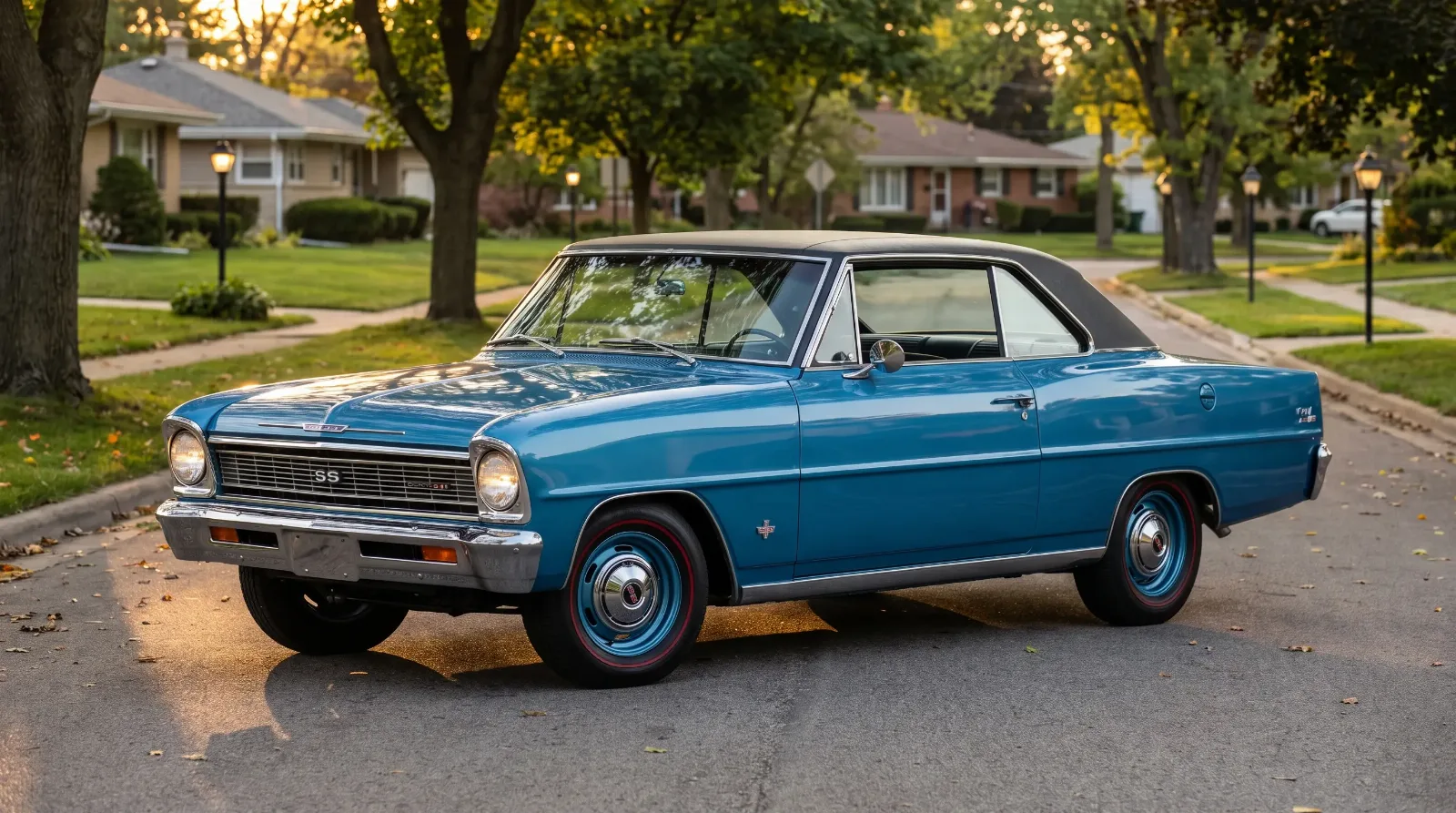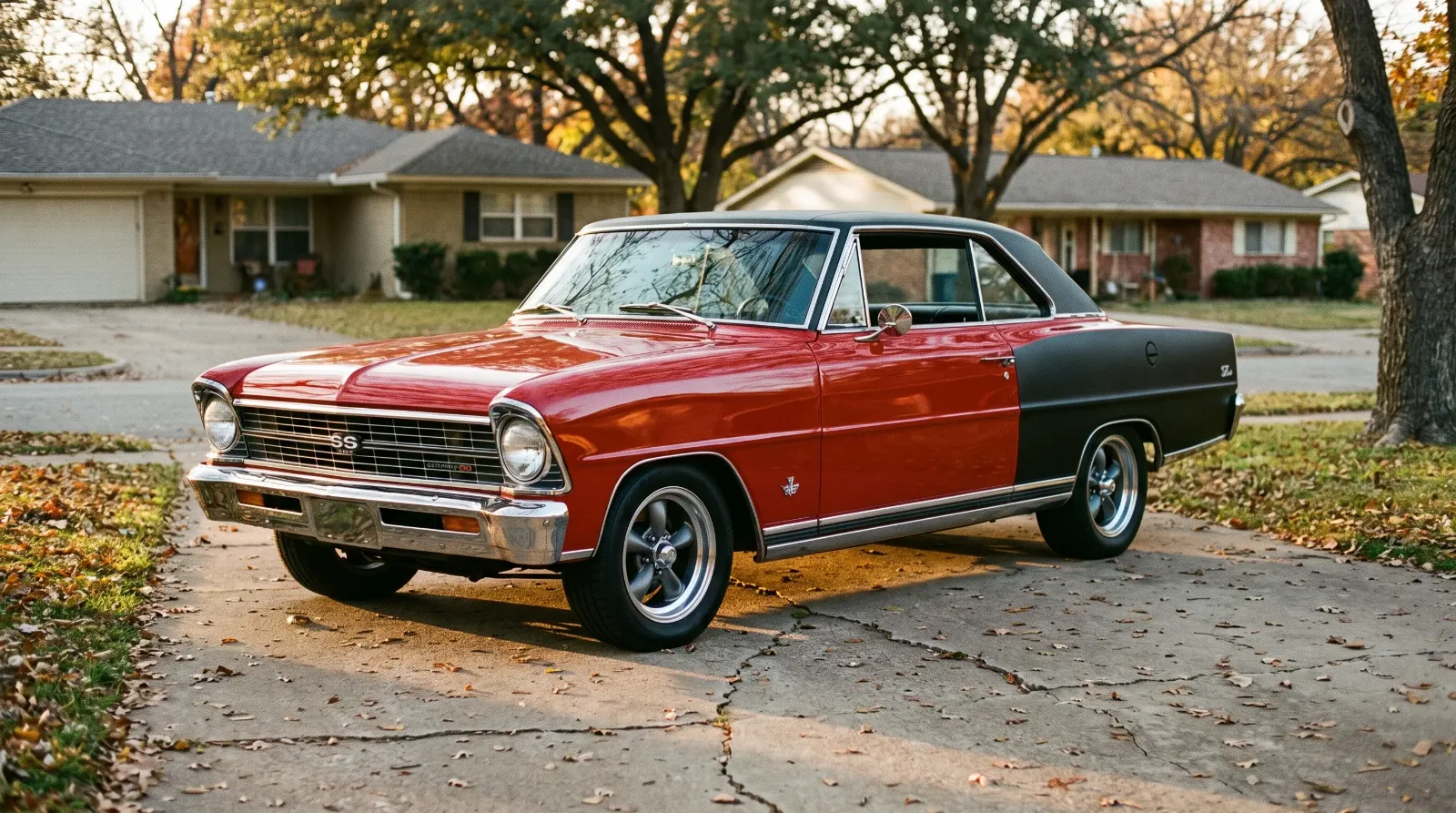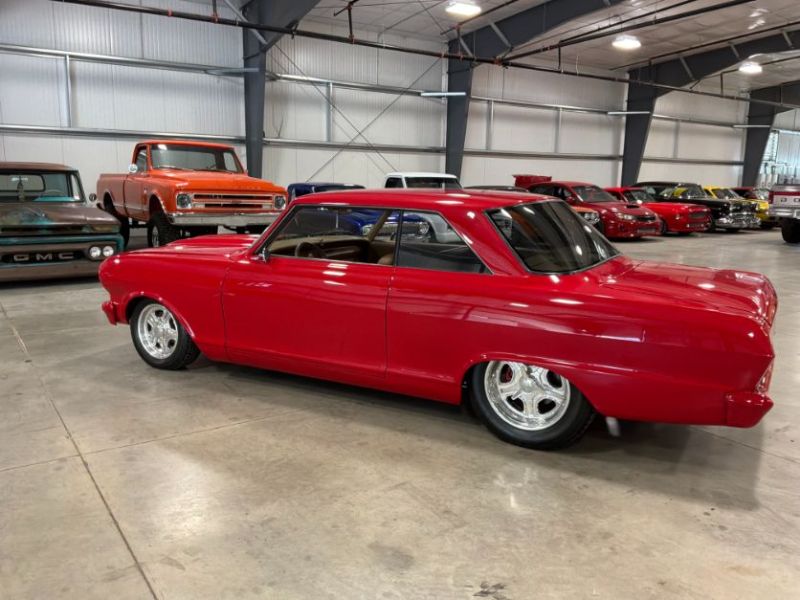
Most Chevy II Novas built for 1966 and 1967 left the factory with a six-cylinder engine and nothing to prove. That's not the story anybody tells at a car show, but it's the truth of the production numbers, and it's worth saying plainly before getting into the small-block years that make this generation matter to collectors. The 283 and 327 V8s are what people chase now. The sixes are what most of these cars actually had.
The six-cylinder base, and why it mattered
Standard power on a base Chevy II 100 or Chevy II Nova in this generation, discussed more broadly in the 1966-67 Nova, was a 194 cubic inch inline six, with a 230 cubic inch six available as a step-up option. The 194 was rated at 120 hp at 4400 rpm, and the step-up 230 at 140 hp at 4400 rpm. These weren't performance engines and nobody bought them expecting performance. They were cheap to run, simple to service, and exactly what a compact car buyer in the mid-1960s wanted if the car was going to be a second family car or a commuter, not a weekend toy.
Both sixes were paired most often with a three-speed manual or the two-speed Powerglide automatic, transmission choices that matched the low-stress mission of the engines themselves. Nobody was ordering a close-ratio four-speed behind a 194 six, and the factory didn't offer one worth having. That combination, a mild six and a simple gearbox, is exactly what most Chevy II buyers wanted and exactly why so few of these driveline combinations survive today next to the V8 cars people kept and restored on purpose.
The six-cylinder cars matter to the story for a practical reason: they were the majority of production, which means most of the parts, most of the trim tags, and most of the surviving cars from these two years are six-cylinder. Anybody restoring a numbers-matching six shouldn't feel like they're settling for a lesser car. They're restoring what Chevrolet actually built more of.
The 283: Chevrolet's proven small block goes compact
The 283 cubic inch V8, already a well-established Chevrolet engine by the mid-1960s, became available in the Chevy II Nova for the redesigned 1966 body and carried into 1967. It gave Chevy II buyers real V8 power in a lighter, smaller package than a full-size Chevrolet, and it was the volume V8 choice across both years, offered in two-barrel and four-barrel carburetor configurations with different compression and output, 195 hp for the two-barrel and 220 hp for the four-barrel, though the 220 hp four-barrel 283 was a 1966-only offering and did not carry into 1967. For a lot of buyers, the 283 was the sensible middle ground: more power than a six, less commitment than the top small block.
The 283 also carried over hardware Chevrolet had already sorted out on bigger cars, which mattered to a first-time V8 buyer more than it sounds. Mechanics up and down the country already knew this engine's quirks, parts were cheap and plentiful at any Chevrolet dealer, and none of that reliability came at the cost of the smaller displacement's fuel economy advantage over the 327. It's a big part of why the 283 outsold the 327 in the Nova line even among buyers who could have stepped up.
The 327 arrives for the SS crowd
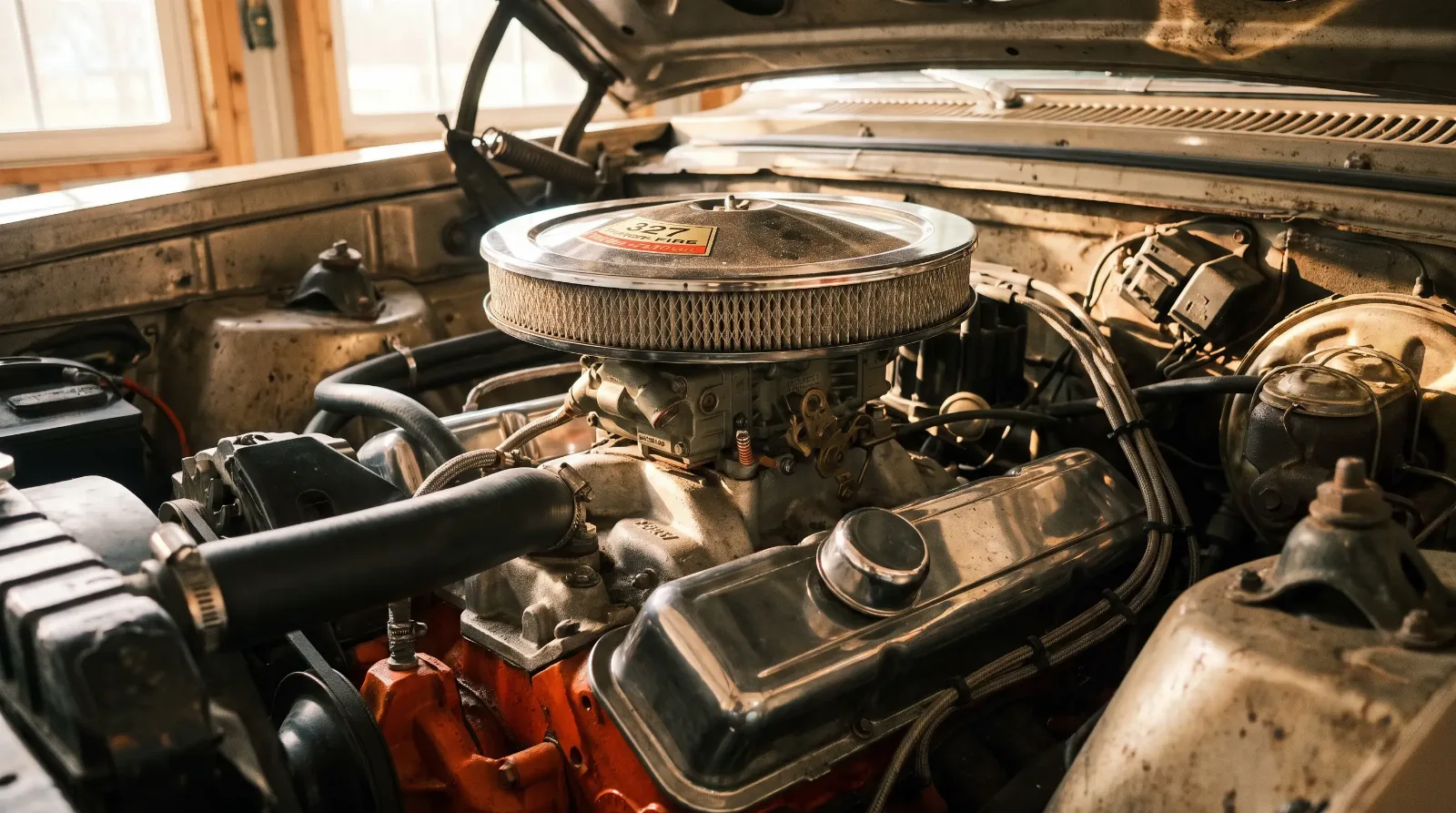
The 327 cubic inch small block is the engine that gives this generation its performance reputation. Available primarily in the Nova SS package on the Sport Coupe hardtop, the 327 came in more than one state of tune, with a base four-barrel version and a higher-output version pitched at buyers who wanted the closest thing to genuine muscle car performance this platform could offer. For 1966, that meant the L30, rated at 275 hp, alongside the L79, a solid-lifter 350 hp version that was the closest thing to a factory hot rod this generation offered. For 1967, the L79 was dropped from the regular lineup and the L30 275 hp version carried on as the sole 327 in the Nova SS, though a small number of L79 cars are known to have slipped through that year. Getting the exact code right on a 327 car matters more than almost any other detail when it comes to valuation, because the difference between the base four-barrel and the high-output version is a real gap in both era-correct performance and what a documented car is worth today.
| Engine | Displacement | Typical trim | Notes |
|---|---|---|---|
| Inline six | 194 cu in | Chevy II 100 / Nova base | Standard power, most common |
| Inline six | 230 cu in | Chevy II Nova | Step-up six option |
| Small-block V8 | 283 cu in | Chevy II Nova / Nova SS | Volume V8, two configurations |
| Small-block V8 | 327 cu in | Nova SS | Performance flagship, multiple states of tune |
Documenting an engine before you trust it
Six decades of ownership changes, budget rebuilds, and straightforward engine swaps mean a lot of 327 Novas on the market today are not wearing the block they left the factory with. That's not automatically a dealbreaker for a driver-quality car, but it's a very real issue for anyone paying SS 327 money. Cross-check the trim tag RPO code, the partial VIN stamped on the block, and any surviving paperwork before treating a car's engine bay as gospel. A numbers-matching 327 SS and a nicely built clone can look identical from three feet away and be worth very different amounts of money.
For the rest of what made this two-year generation distinct, from body styles to production totals, the complete Nova saga covers the full timeline this engine lineup fits into, and there's more to the small-block story if you keep reading the series. If you're shopping rather than just reading, current classic Chevy Novas for sale span the full range from base sixes to documented 327 SS cars.
"The block casting number tells you what the factory made. The trim tag tells you what the factory put in this specific car. You need both before you believe an asking price built around the word 'numbers-matching.'"
— Tom Ramirez
Sources and notes
- Chevrolet Chevy II / Nova - Wikipedia
- Nova Engine Options: 1966 - Chevy Hardcore
- Nova Engine Options: 1967 - Chevy Hardcore
- 1966 Chevy II Nova SS 283 V8 220-hp Specs - Automobile Catalog
- Vintage Motor Trend Review: 1966 Chevy II Nova SS 327 - Curbside Classic
- 1966-1967 Chevrolet Nova SS Guide and Specs - Motogallery