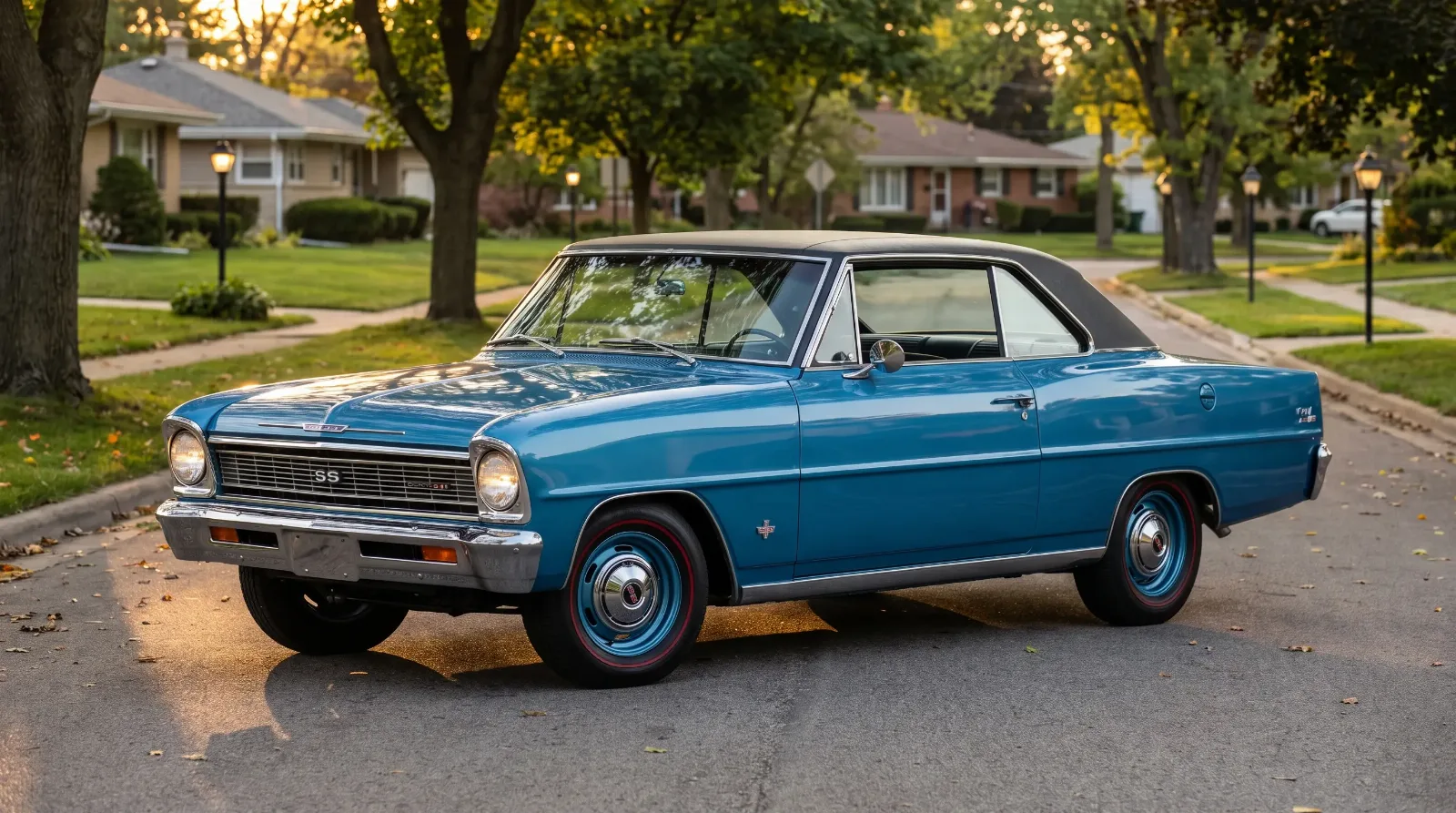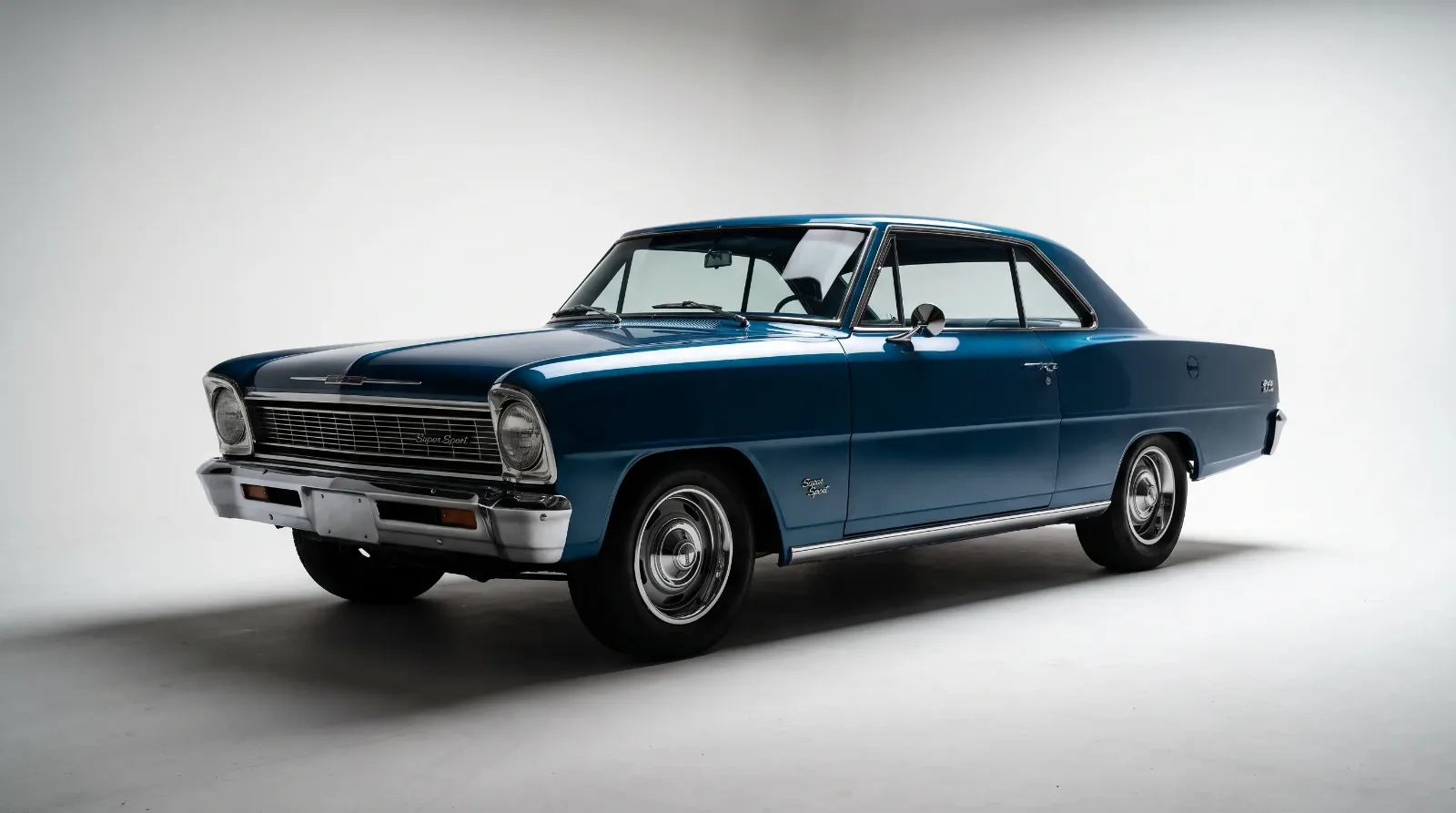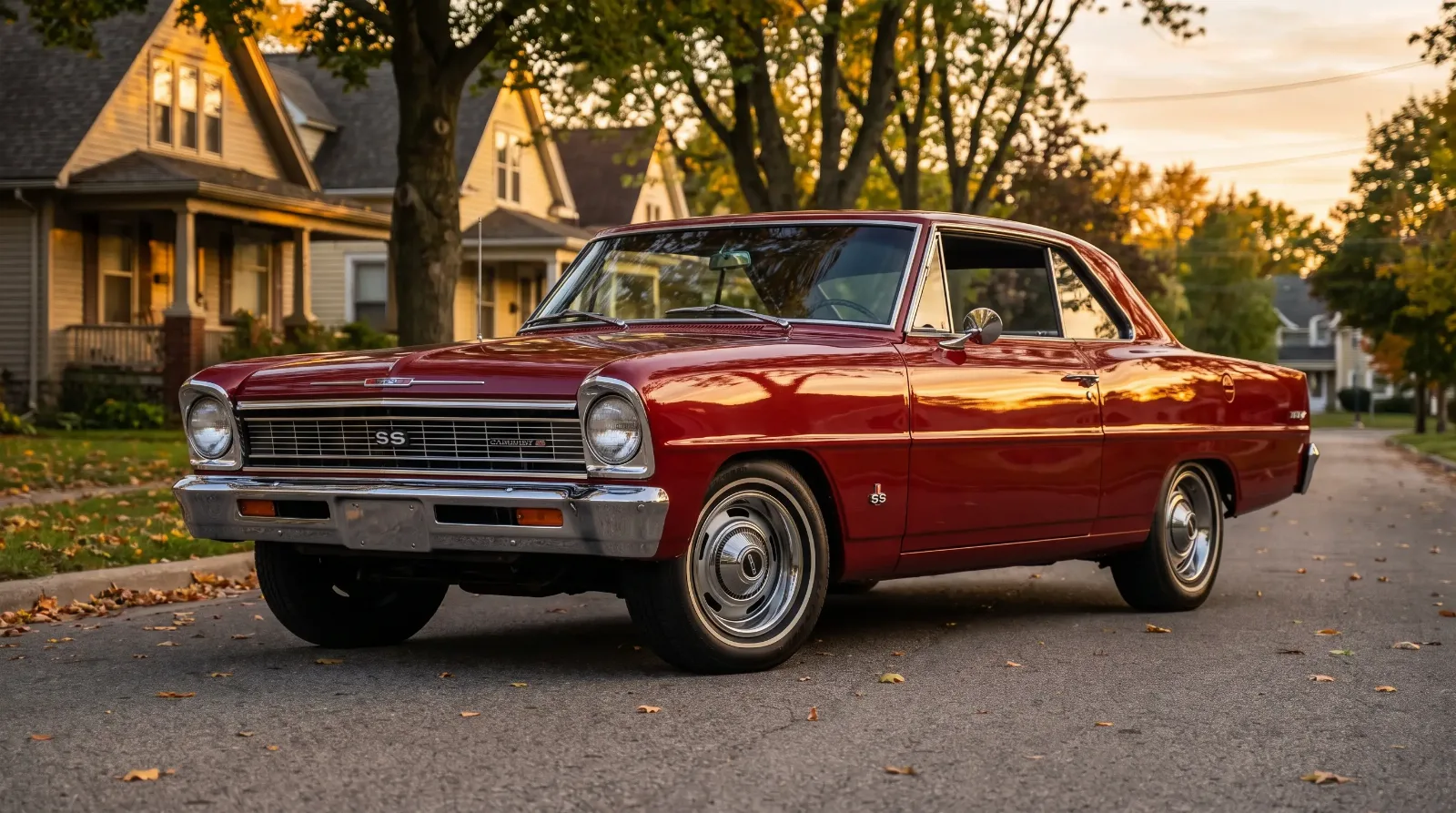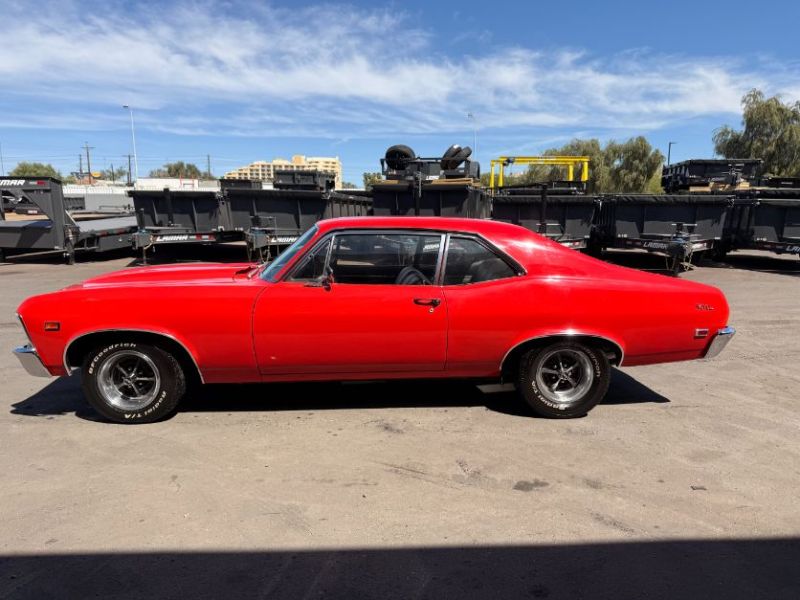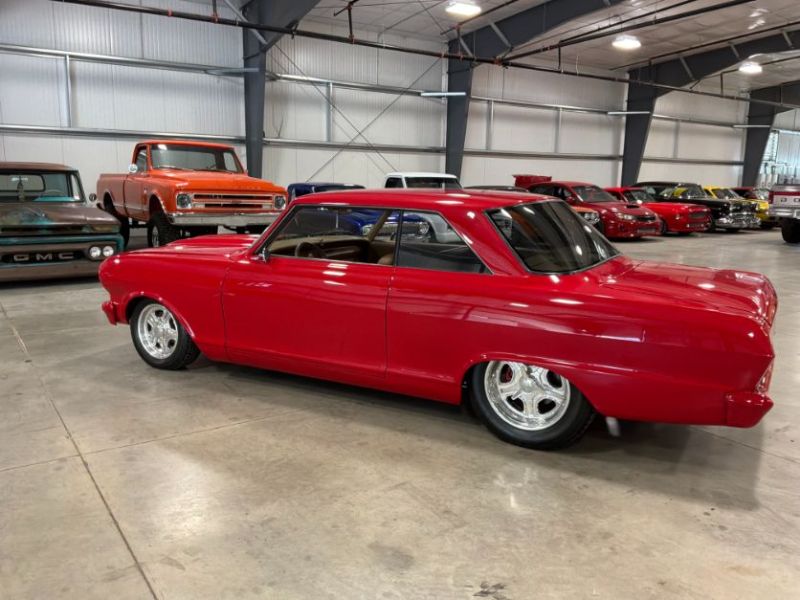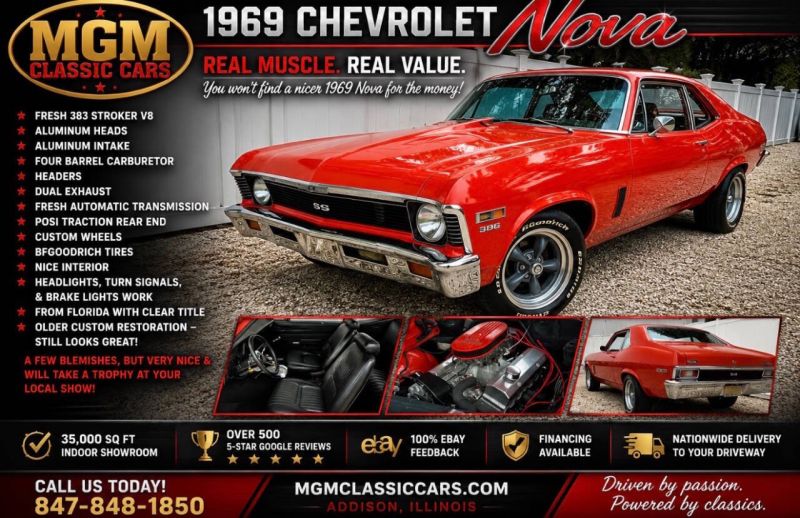
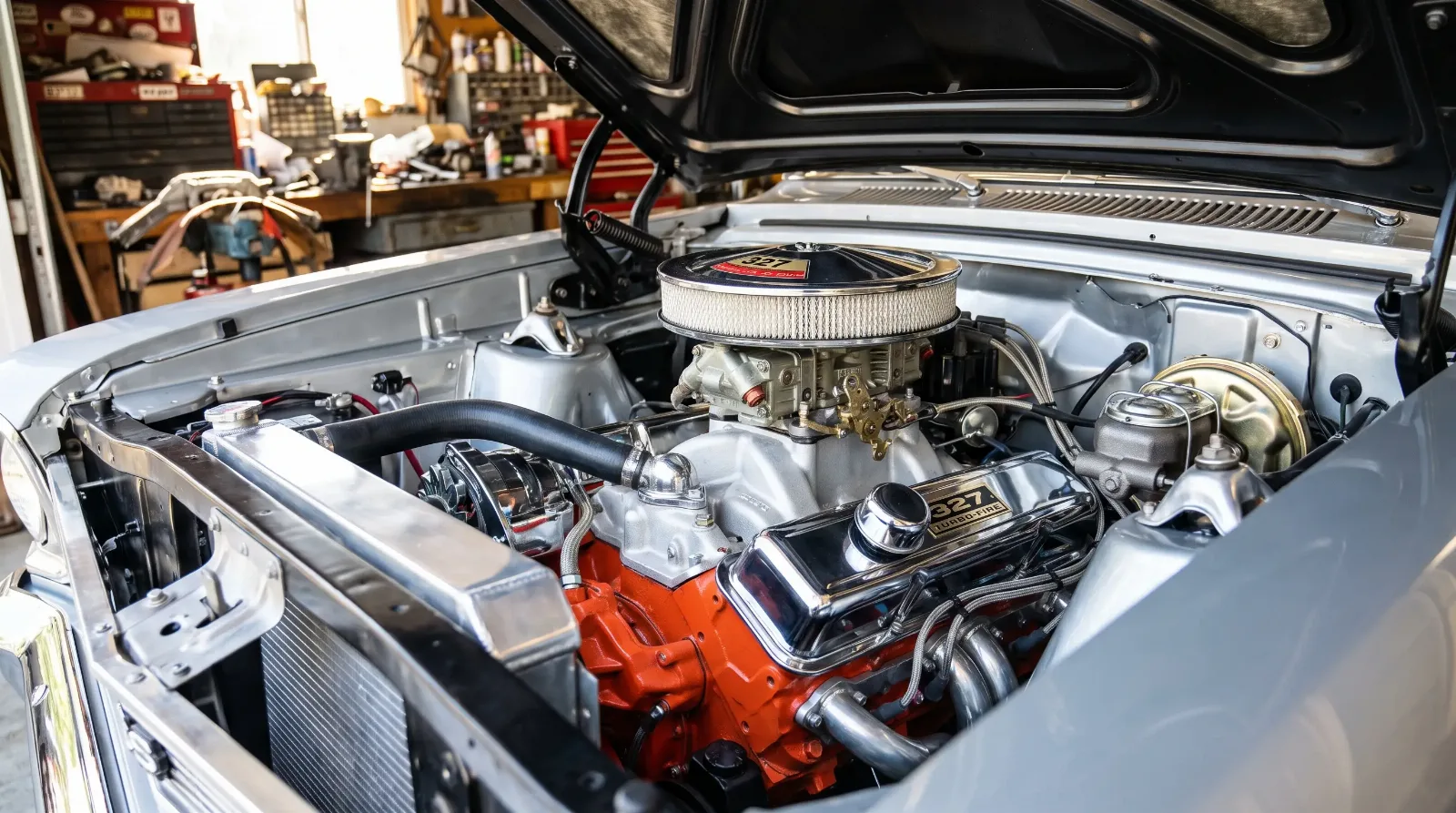
The L79 327/350hp engine is the reason serious Nova collectors get quiet and specific when the conversation turns to 1966 and 1967. It was not the biggest engine Chevrolet built in that era, and it never carried a big-block's reputation, but inside the Chevy II Nova's engine bay it was the ceiling. No big-block option existed for the Nova during this generation, which means the L79 wasn't just a good engine choice. It was the fastest thing Chevrolet would sell you in this body.
What RPO L79 actually was
RPO L79 was a 327 cubic inch small-block rated at 350 horsepower at 5800 rpm and 360 lb-ft of torque at 3600 rpm. It ran higher compression than the base 327, a more aggressive camshaft profile, larger intake and exhaust valves in the cylinder heads, and a single four-barrel Holley carburetor feeding it. This was not a unique Nova engine. The same L79 code showed up in the Chevelle and, in earlier form, the Corvette's optional 327 lineup, which is part of why documentation on it is unusually thorough. Chevrolet built a lot of these blocks across several model lines, and the paper trail on the option code reflects that.
For the chassis context that made this engine possible in a car this size, the 1966-67 Nova covers the platform rework that widened the Chevy II's engine bay enough to accept a proper small-block in the first place.
Where it fit in the Nova lineup
The L79 sat at the top of the Nova SS engine chart for 1966, and it remained the range-topping engine in a much more limited way into 1967. Base SS cars came with a 283 V8, and buyers who wanted more could step up to the L30 327 rated at 275 horsepower before reaching the L79 as the range-topping choice. There was no factory big-block Nova during this generation, so the L79 represented the absolute limit of what Chevrolet would put in a Chevy II from the factory floor. Anyone who wanted more had to look outside the option sheet entirely.
The 1967 story is where this gets more complicated than a simple two-year run. Chevrolet actually pulled the L79 from the official 1967 order sheet, and only a handful of persistent customers kept their orders alive; Chevrolet finally built roughly half a dozen 1967 L79 Novas well into the model year, with the last known example dating to July 1967. Those late cars were also rated lower, at 325 horsepower rather than 350, reflecting a small compression and tuning change from the 1966 version. Anyone shopping a "1967 L79 Nova" is chasing one of the rarest muscle Chevrolets built in this era, not a routine catalog option.
| Engine option | RPO code | Rated horsepower | Position in Nova SS lineup |
|---|---|---|---|
| 283 V8 | Base SS engine | 195 hp | Standard |
| 327 V8 | L30 | 275 hp | Mid-tier option |
| 327 V8 | L79 | 350 hp (1966); 325 hp on the rare 1967 cars | Top factory option |
The hardware under the numbers
What separated the L79 from the milder 327s was not one dramatic change but a stack of smaller ones working together. The compression ratio ran around 11:1, high enough that the engine wanted premium fuel and a careful hand on timing. The cylinder heads carried larger valves than the base 327, which let the engine breathe at higher rpm without the top end falling flat. The camshaft profile was noticeably more aggressive than anything in the standard 327 lineup, which is part of why L79 cars have a distinct idle that Nova owners learn to recognize by ear before they ever look under the hood.
None of this hardware was exotic by big-block standards. What made it work in the Nova specifically was weight. A 327 in a Chevy II body moved a lot less mass than the same engine in a full-size Chevrolet or even a Chevelle, and that power-to-weight advantage is the actual reason the L79 Nova has the reputation it has today, rather than any single spec on the option sheet standing out on its own.
Transmission choices mattered here too. The L79 was a four-speed manual only. The camshaft's long duration and overlap kept the idle too rough to live behind Chevrolet's two-speed Powerglide automatic, so unlike the milder L30 327, no automatic was ever offered with it. A stouter rear axle typically accompanied the engine on order sheets, since the milder six-cylinder and base V8 Novas were not built with the same driveline expectations in mind. None of these supporting pieces show up on a spec sheet the way the horsepower number does, but they are exactly what separates an L79 car from a base Nova with a 327 badge stuck on the fender after the fact.
Rarity and what it means for buyers today
L79-equipped Novas were never common. The engine sat at a price premium over the base SS package, and Chevy II buyers in this era skewed more toward practical family use than the Chevelle or Camaro crowd did. Factory production numbers specifically broken out for L79 Novas versus L30 cars are not something I'd put a firm figure on here without pulling the exact build sheet data, so treat any specific unit count you see quoted elsewhere with some caution. What is documented is the 1967 end of the run: only a small handful of L79 Novas, believed to number around six, were built that year after Chevrolet had already pulled the option from the catalog.
"People bring me a car and tell me it's an L79 because somebody along the way said so. I don't take that on faith. The tank sticker and the trim tag either back up the story or they don't, and with an engine this documented across the whole Chevrolet lineup, there's no excuse for guessing when the paperwork exists to check it."
— Tom Ramirez
What that scarcity means practically is that verification matters more here than with almost any other Nova variant. A genuine, documented L79 car commands a real premium over an L30 or base V8 Nova of the same year, and the gap is wide enough that confirming the numbers before buying is not optional. The engine's own reputation, ironically, is what makes it worth faking, which is exactly why the factory paperwork carries so much weight in this specific corner of the hobby.
The practical advice for anyone shopping one of these cars is straightforward, even if the research behind it isn't. Cross-check the engine block casting number and date code against the trim tag and the build sheet if one survives with the car. A correct L79 will show consistent casting details for the model year, and a mismatched date code or a block casting number that doesn't match known L79 production is the clearest sign that an engine swap happened somewhere in the car's history, whether or not anyone along the way disclosed it.
The story of this engine in the Nova doesn't end with the numbers on a spec sheet. It continues directly into the SS package it powered, which is where the L79's reputation actually got built in period road tests and, later, in the collector market. The next story in this set picks up exactly there.