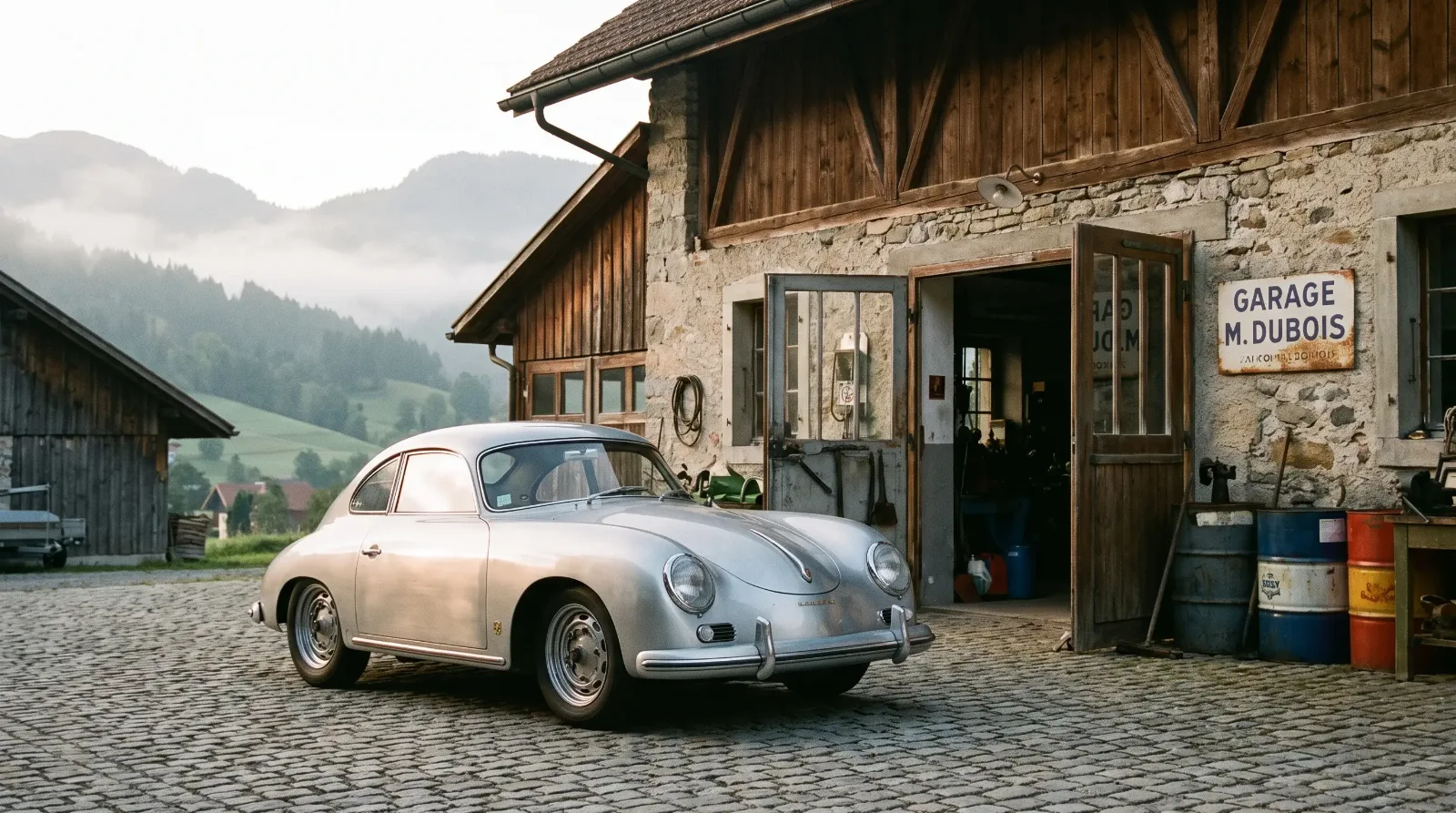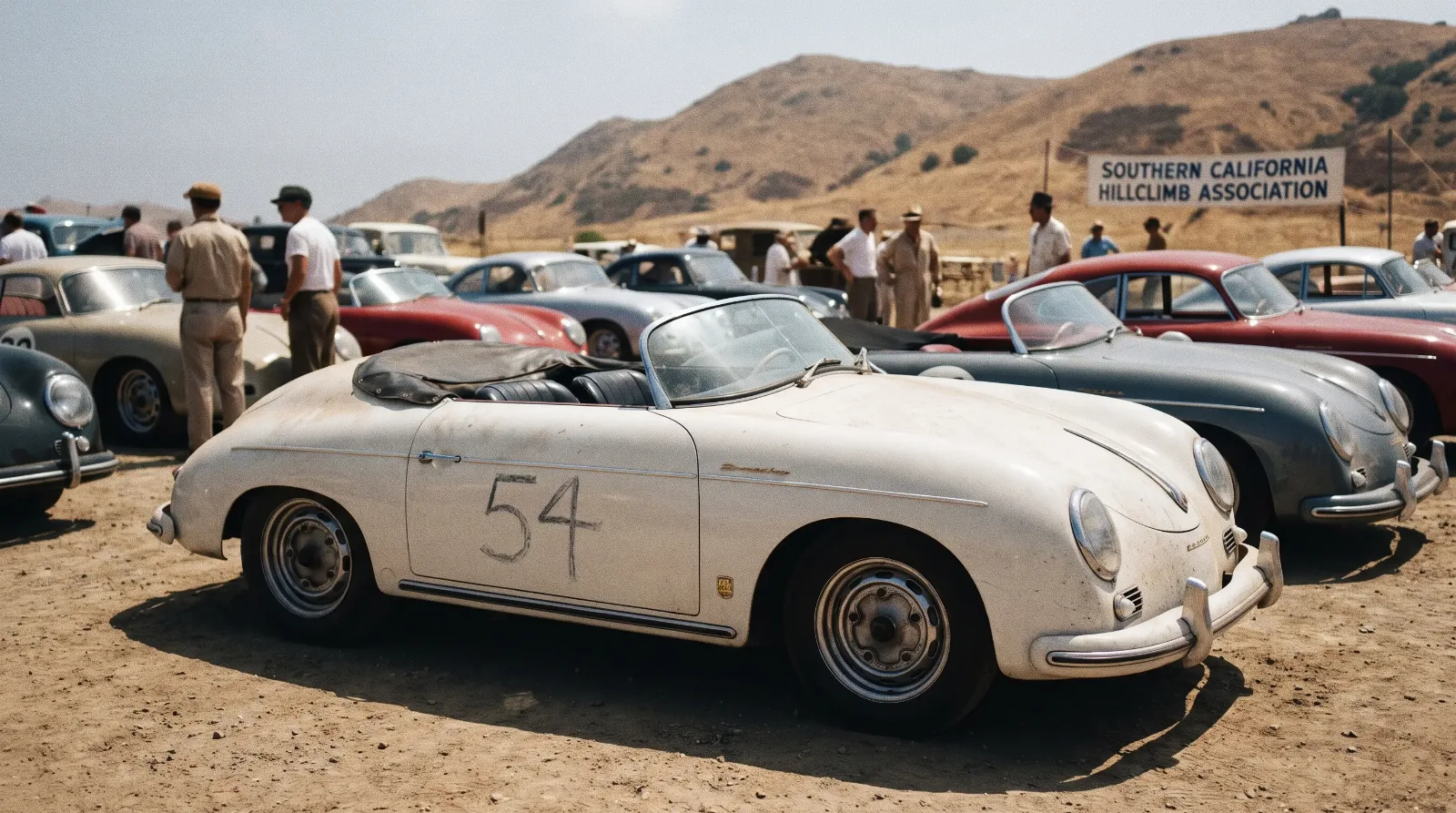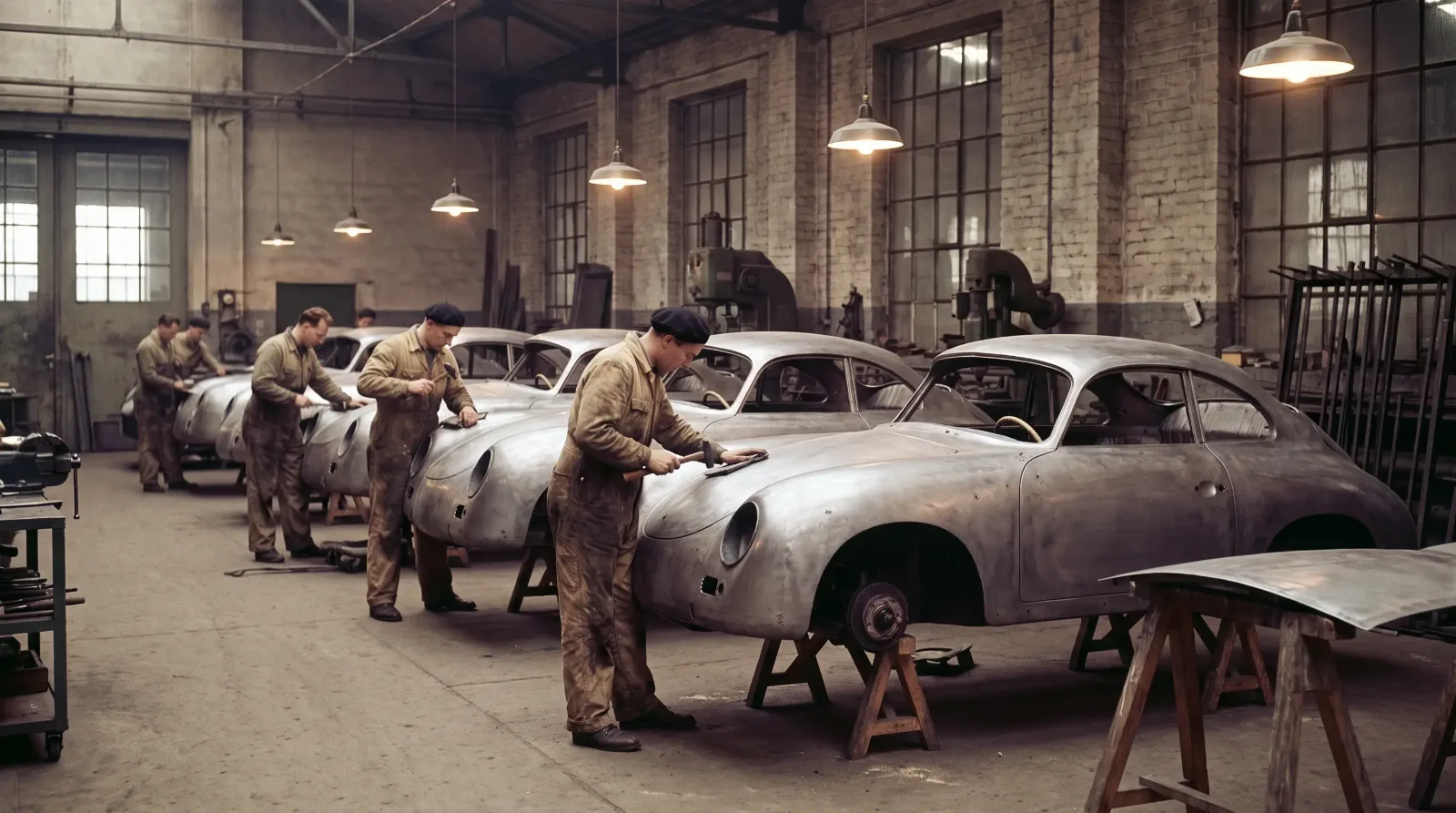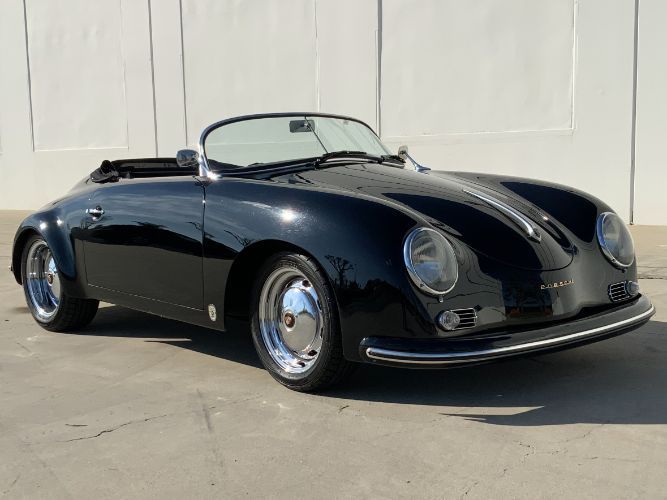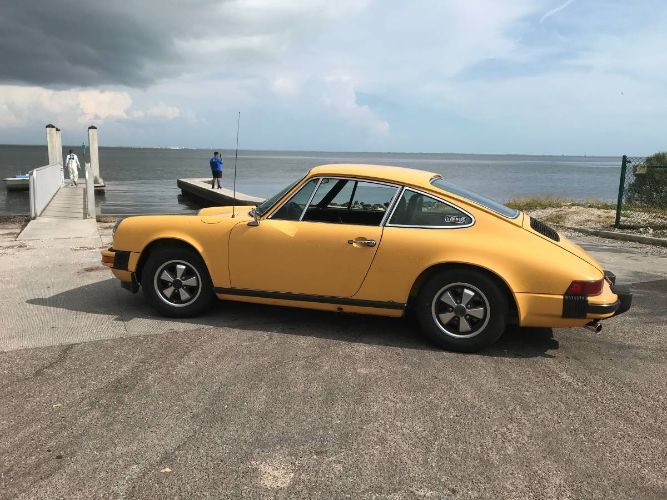
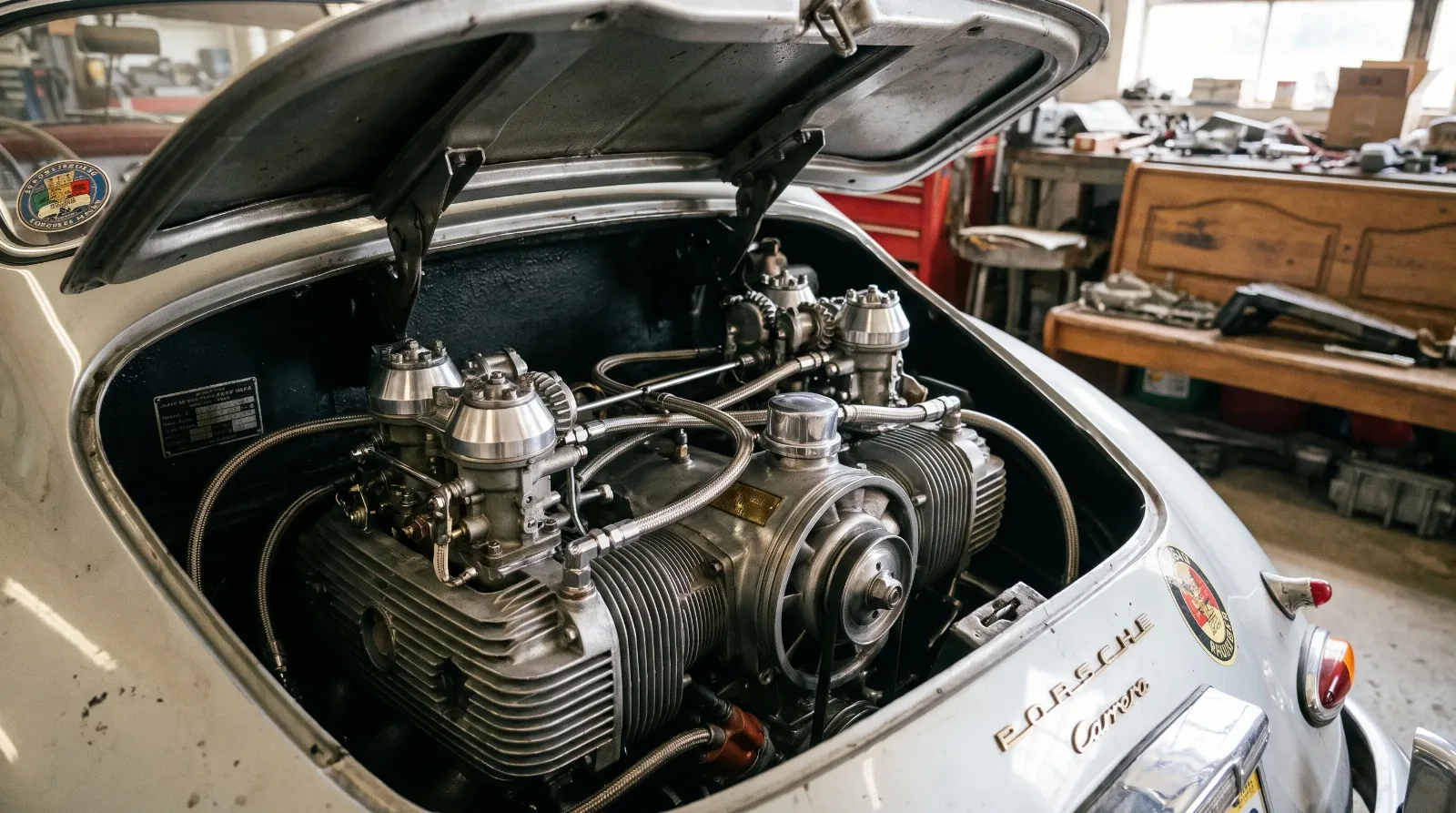
The Porsche 356 Carrera engine is the reason a handful of otherwise ordinary-looking 356s command prices several multiples above a standard pushrod car. Under the decklid sits a four-cam flat-four that shares essentially no major components with the engine fitted to the vast majority of 356s built between 1948 and 1965. It was designed for racing, adapted for the road almost as an afterthought, and it remains one of the more demanding classic engines any owner can choose to live with.
Ernst Fuhrmann and an engine built for the track first
The four-cam design is the work of Ernst Fuhrmann, an engineer who would later run Porsche as its chief executive, and it is frequently referred to among researchers simply as the Fuhrmann engine for that reason. Fuhrmann's brief was straightforward on paper and difficult in practice: build a flat-four capable of far higher sustained engine speeds than the standard pushrod unit could safely manage, for use in the 550 Spyder race car. His solution used bevel gears to drive double overhead camshafts on each bank, roller bearings throughout the bottom end in place of the plain bearings used on production engines, and dry-sump lubrication to keep oil supply consistent under sustained cornering loads.
None of this was designed with a road car's serviceability in mind. The bevel-gear cam drive alone requires a level of disassembly for routine valve adjustment that a standard 356 owner would never encounter, and the roller-bearing crankshaft is unforgiving of the kind of casual maintenance a pushrod owner could get away with. Porsche built this engine to win races, and the fact that it ended up in road-going Carrera models at all reflects the company's willingness to sell what amounted to a detuned competition engine to private buyers.
From race engine to road car: naming it Carrera
Porsche's competition success in the Carrera Panamericana, the grueling Mexican road race held through the early 1950s, gave the company the name it would attach to any 356 fitted with the four-cam engine from 1955 onward. The Carrera badge signaled something specific and consistent: this was not a trim package or a styling variant, it was a genuinely different car mechanically, built around an engine that most contemporary buyers would never see under the decklid of a friend's standard 356.
The earliest road-going Carrera engines displaced 1.5 liters, closely related to the unit already racing in the 550 Spyder, before Porsche grew the design to 1.6 liters for the Carrera GT and GS variants offered alongside the 356 A. Later in the model's life, as the 356 B and C carried the range forward, a 2.0 liter version arrived in the Carrera 2, representing the final and most powerful expression of Fuhrmann's original concept before Porsche moved on to the entirely different engine architecture that would define the 911.
Living with a four-cam: why so few owners chose to
Valve adjustments on the Fuhrmann engine required more frequent attention than the pushrod unit, and the labor involved was substantially more complex given the bevel-gear cam drive's construction. Specialist knowledge was scarce even when the cars were new, and it has grown scarcer since, meaning today's Carrera owners generally rely on a small circle of specialists who understand the engine's specific quirks rather than a general 356 mechanic. Output climbed from around 100 hp in the earliest 1.5 liter form to around 130 hp in the later 2.0 liter Carrera 2, respectable figures for the period but not so dramatic on paper that they fully explain the price gap these cars command today.
That gap comes down to rarity and complexity rather than outright performance. A four-cam Carrera is a fundamentally different ownership proposition from a standard 356, closer in spirit to owning a period race car with license plates than a docile classic sports coupe, and the market has always priced that distinction accordingly.
| Detail | Four-cam Carrera engine |
|---|---|
| Designer | Ernst Fuhrmann |
| Valve train | Bevel-gear driven double overhead cams per bank |
| Bottom end | Roller-bearing crankshaft, dry-sump lubrication |
| Displacement range | 1.5 liter (early) through 1.6 and eventually 2.0 liter (Carrera 2) |
| Origin | Developed for the 550 Spyder racing program |
| Road car introduction | From 1955, badged Carrera |
What a Carrera badge actually confirms
Because the Carrera name was applied consistently and specifically to cars carrying the four-cam engine, a badge alone is a reasonably reliable starting point for identification, though it is not a substitute for verifying the engine number against factory records. Given how many pushrod 356s have been modified, re-badged, or simply misrepresented over the decades since production ended, matching the physical engine to documented Carrera specification remains the only way to confirm what is actually bolted into the car rather than what the seller says is there.
"A Carrera badge tells you what Porsche intended to sell. It does not tell you what is currently under the decklid. I have learned to treat the two questions as entirely separate until the engine number proves otherwise."
— Sarah Whitfield
The four-cam engine's legacy sits slightly apart from the rest of the 356 range for good reason. It represents Porsche bringing genuine racing technology into a road car catalog at a time when most manufacturers kept those two worlds firmly separated, and it did so at a cost, in both money and maintenance demands, that most buyers of the era were simply not prepared to accept. For the broader context of how this fits into the model's full run, the 356 story lays out the earlier chapters, and the Carrera's mechanical distinction is only one lens on a car whose body and construction have their own separate history worth understanding. Another angle on the same car picks up that thread from the coachbuilding side.