
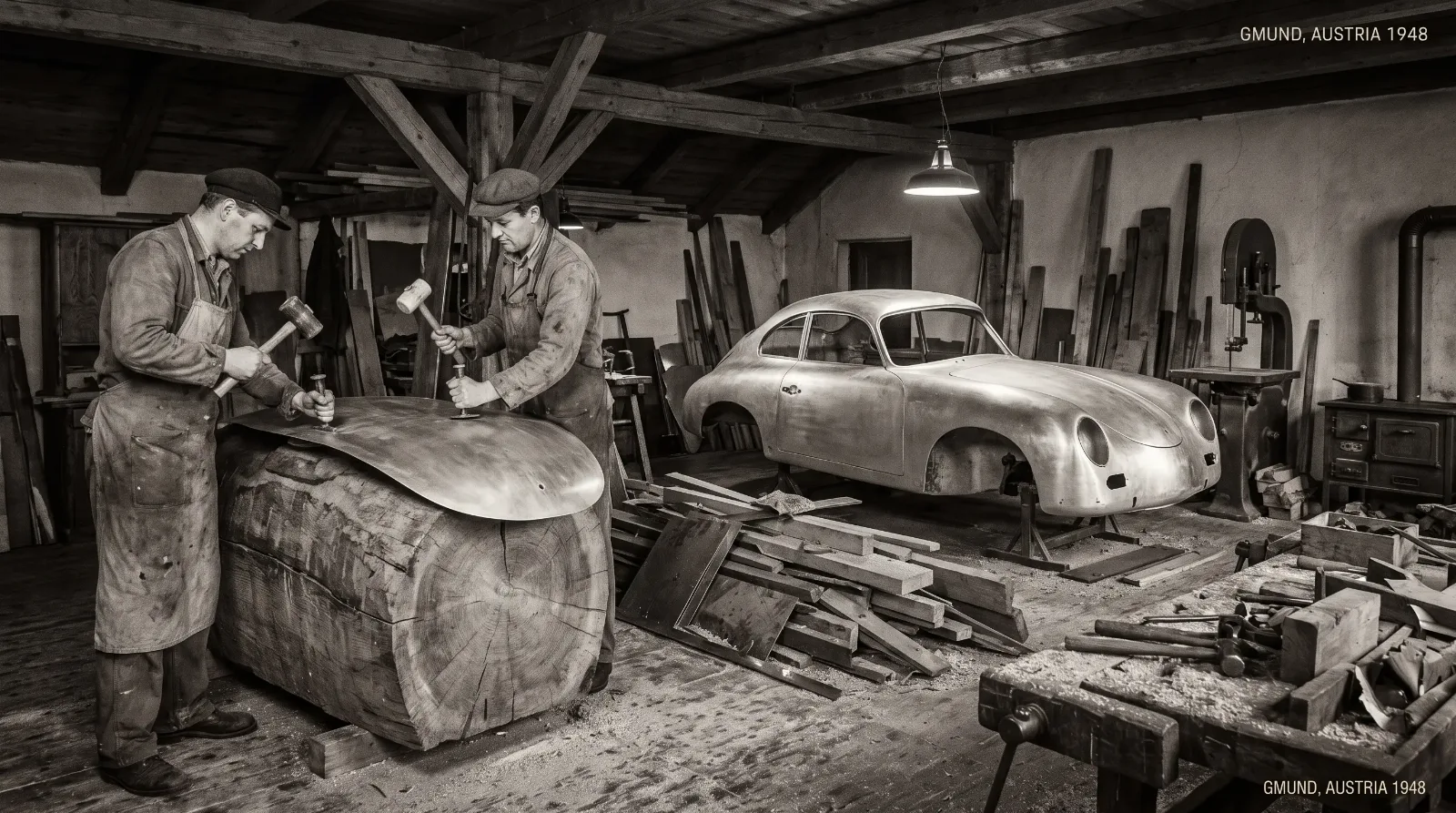
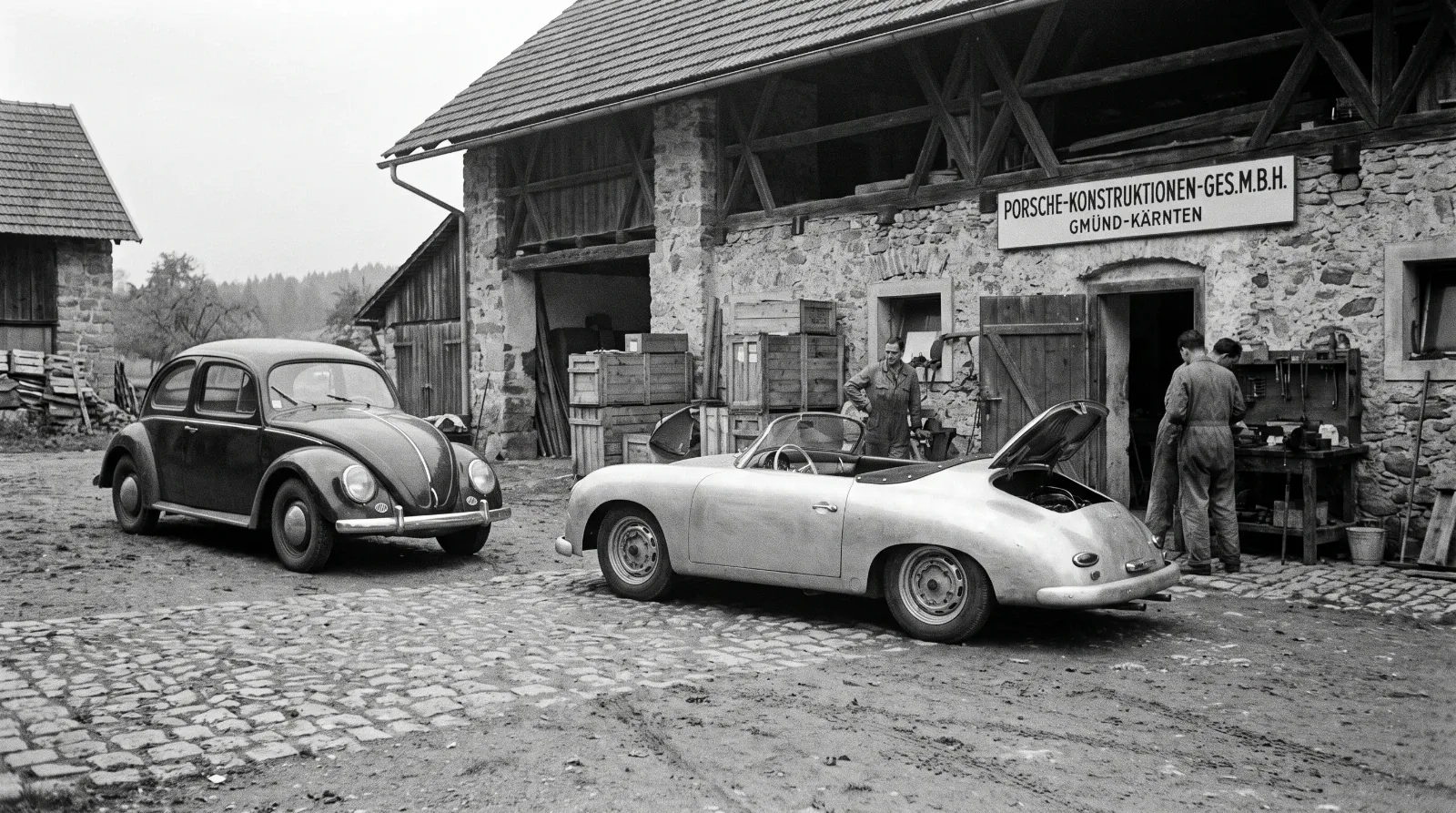
The Porsche 356 is where the whole story begins. Before the 911, before the racing pedigree, before the crest meant anything to anyone outside a small Austrian workshop, there was a light, curved, air-cooled two-seater that Ferry Porsche built because he could not find the car he wanted to drive. Finished in 1948 in a converted sawmill in Gmünd, the 356 carried the first road cars ever to wear the Porsche name. Everything the company became was drawn, in outline, on that first slim aluminum body.
Car Features
9 min read
Porsche 356: The Car That Started Everything
Built by hand in a Gmünd sawmill in 1948, the Porsche 356 was the first car to wear the name and set every priority the marque still lives by.
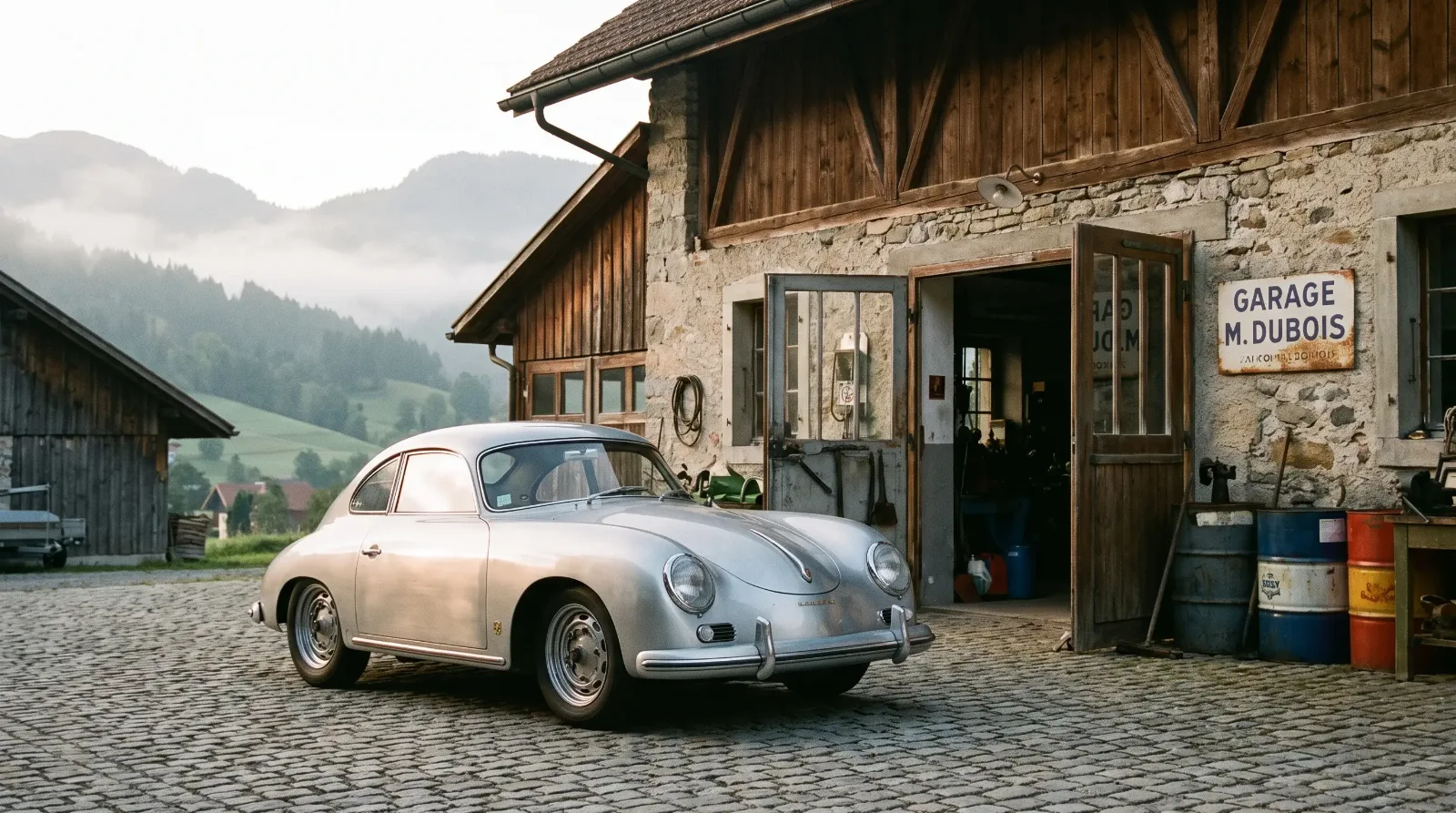
To understand the 356 is to understand a set of decisions made under real constraint. Postwar Austria had little steel, less money, and no factory in the ordinary sense. What the Porsche team had was engineering discipline, a stock of Volkswagen mechanical parts, and a clear idea of what a small sports car should weigh and how it should behave. The result was not a grand statement. It was a careful, honest object, and it rewarded that honesty for seventeen years of production.
Gmünd origins and the first cars
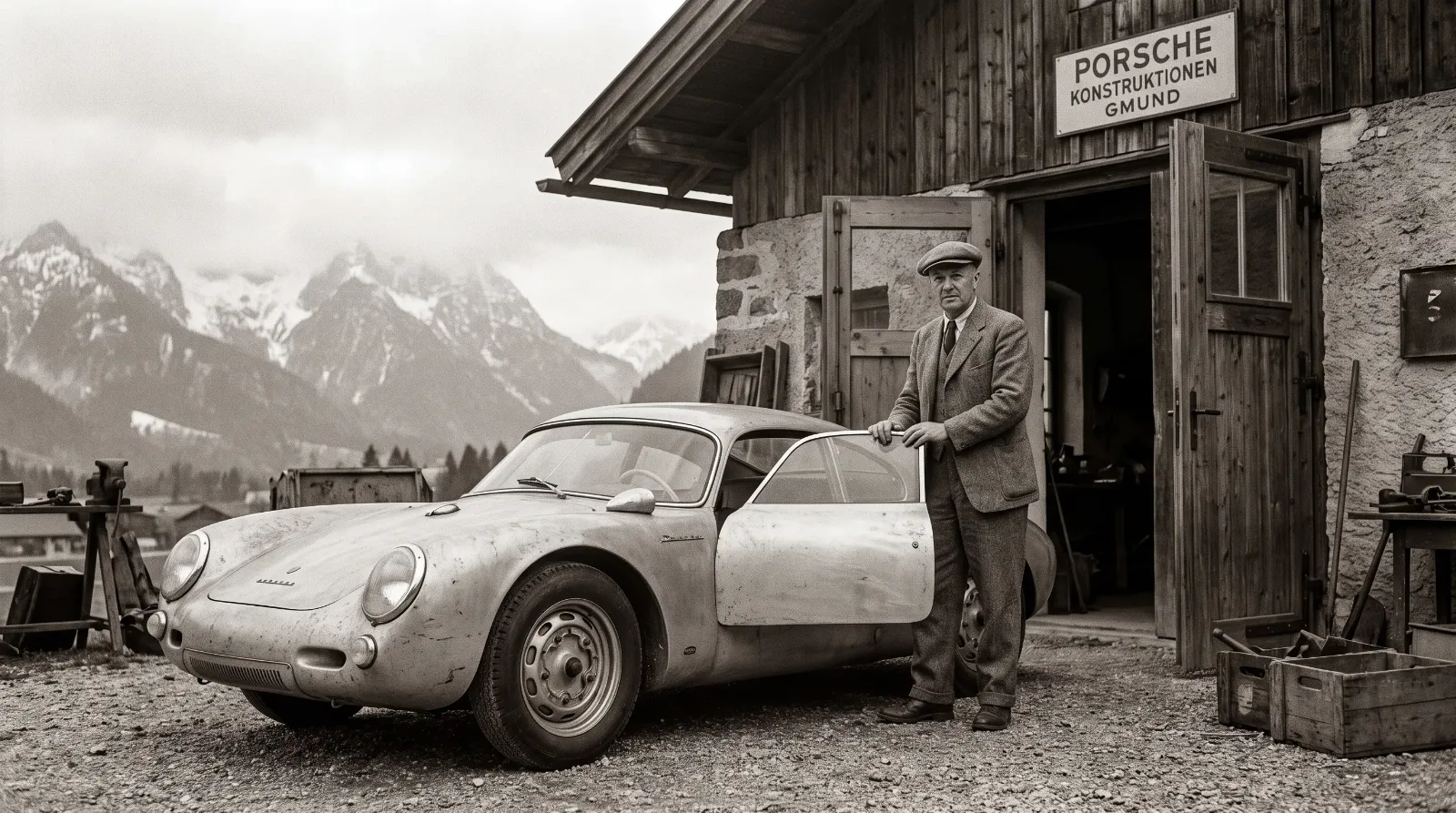
The prototype known as 356/1 was completed on June 8, 1948, a mid-engined roadster with a tubular frame and a hand-formed aluminum body shaped by Erwin Komenda. It was a single car, more sculpture than product line, and it pointed the mechanical layout in a direction Porsche would soon abandon. The engine sat ahead of the rear axle in that first roadster, which gave fine balance but left almost no room for passengers or luggage.
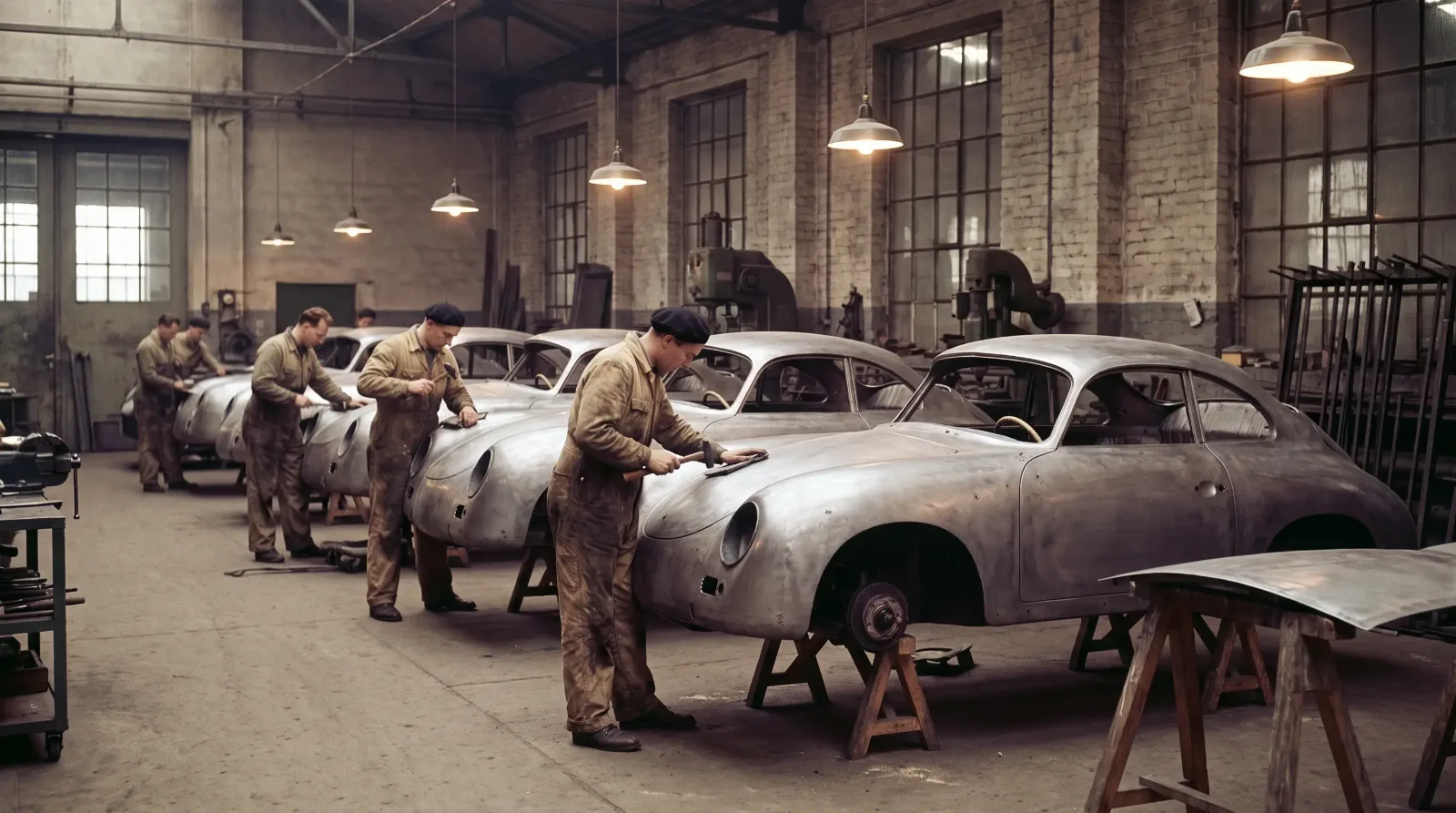
For the cars that would actually be sold, Ferry Porsche moved the flat-four behind the rear axle, the layout that defined every 356 and, later, every classic 911. These early Gmünd cars, roughly 50 examples in total, were built almost entirely by hand. Their bodies were aluminum, beaten over wooden bucks by a small crew, and no two were quite identical. A Gmünd coupe is among the most sought artifacts in the marque's history precisely because so few exist and because each one shows the marks of hand work.
This is the period that explains everything that follows. If you want the fuller context of how Porsche's legend began, the Gmünd chapter is the honest starting point, because it shows a company that solved problems with light weight and clever packaging rather than displacement and cost.
From Gmünd to Zuffenhausen
In 1950 production moved to Stuttgart-Zuffenhausen, and the change was more than geographic. Aluminum bodies gave way to steel, built by the coachbuilder Reutter, whose workshops sat close to the Porsche premises. Steel meant the cars could be produced in volume, repaired conventionally, and priced for a growing export market. The trade was weight for practicality, and it was the right one for a company that needed to sell cars rather than curiosities.
The Zuffenhausen cars of the early 1950s are the true Pre-A models. They carried a split or bent windscreen, modest bumpers set close to the body, and the small displacement flat-fours that Porsche was steadily developing away from their Volkswagen roots. Reutter's craftsmanship set the tone here. Panel gaps were tight, the doors shut with a particular precision, and the interiors were plain but well finished. These are the qualities a concours judge still looks for, because they were present from the beginning.
Pre-A, A, B and C: how the 356 evolved
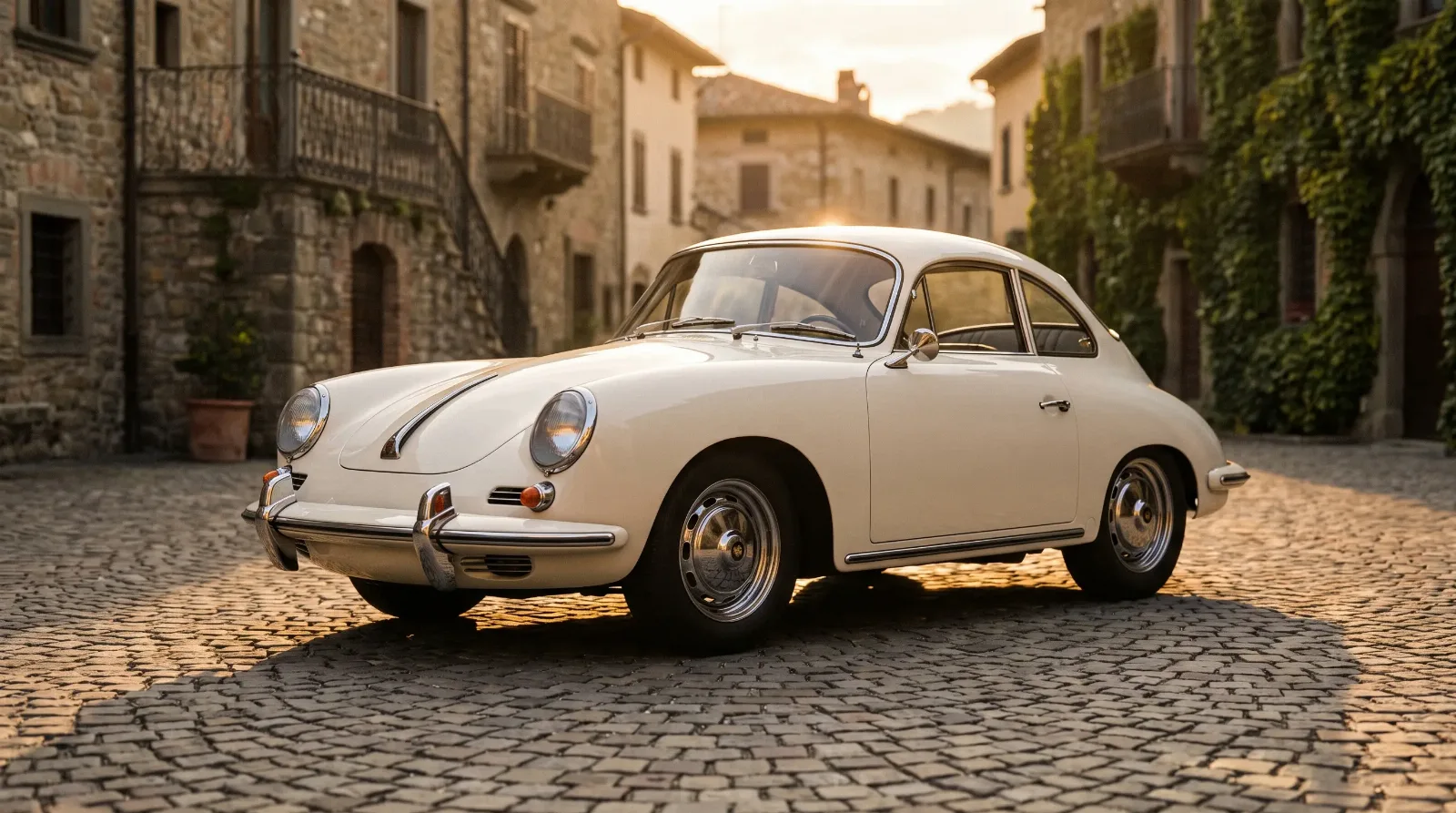
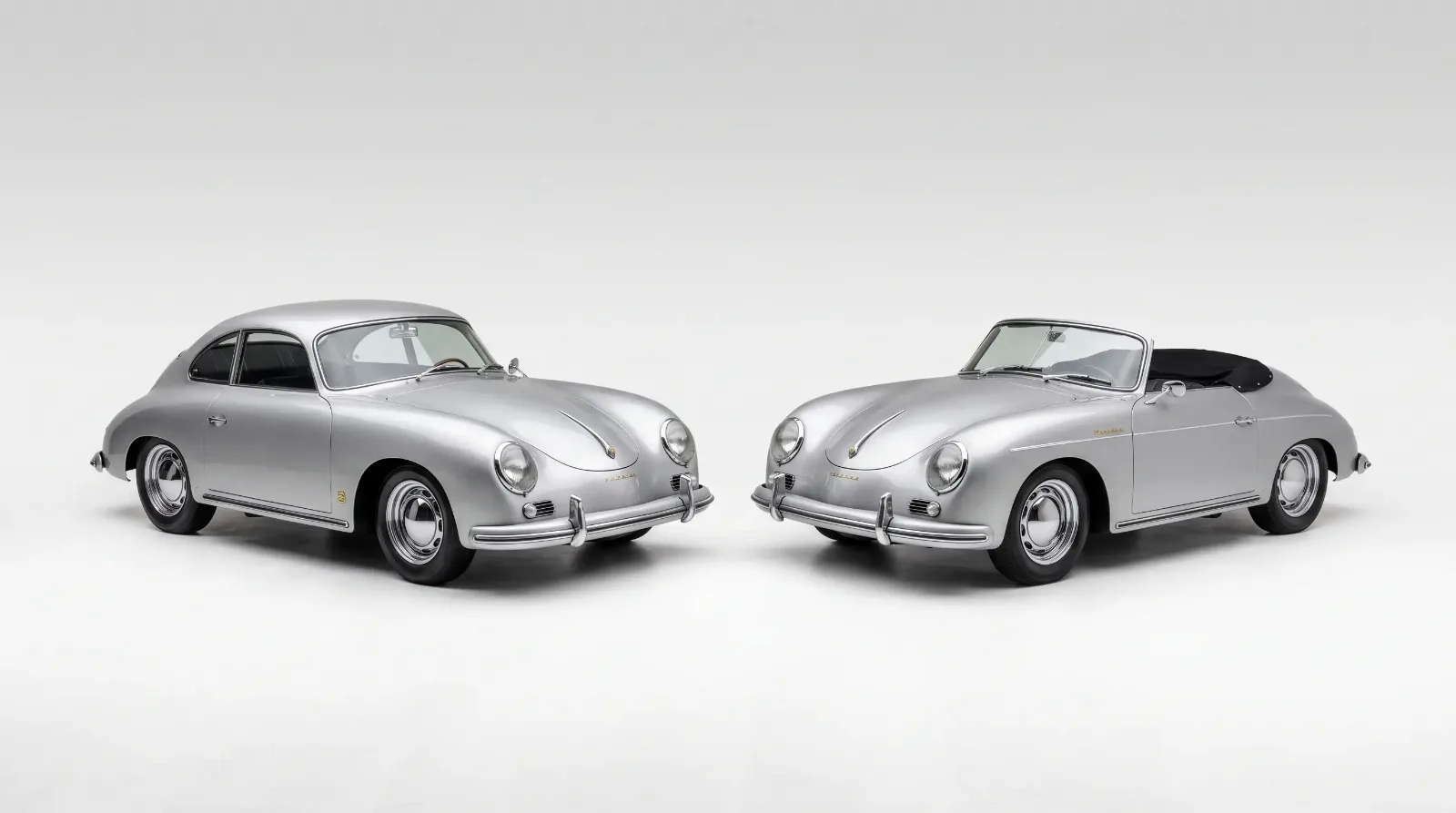
The 356 is often treated as one car, but a collector reads it as four distinct generations, each with its own details and its own following. The Pre-A cars run from 1948 to 1955 and are the rarest and most primitive. The 356 A arrived in late 1955 with a one-piece curved windscreen, revised suspension, and a cleaner dashboard. It is the version many people picture when they think of the model, and it introduced the Carrera name to the range.
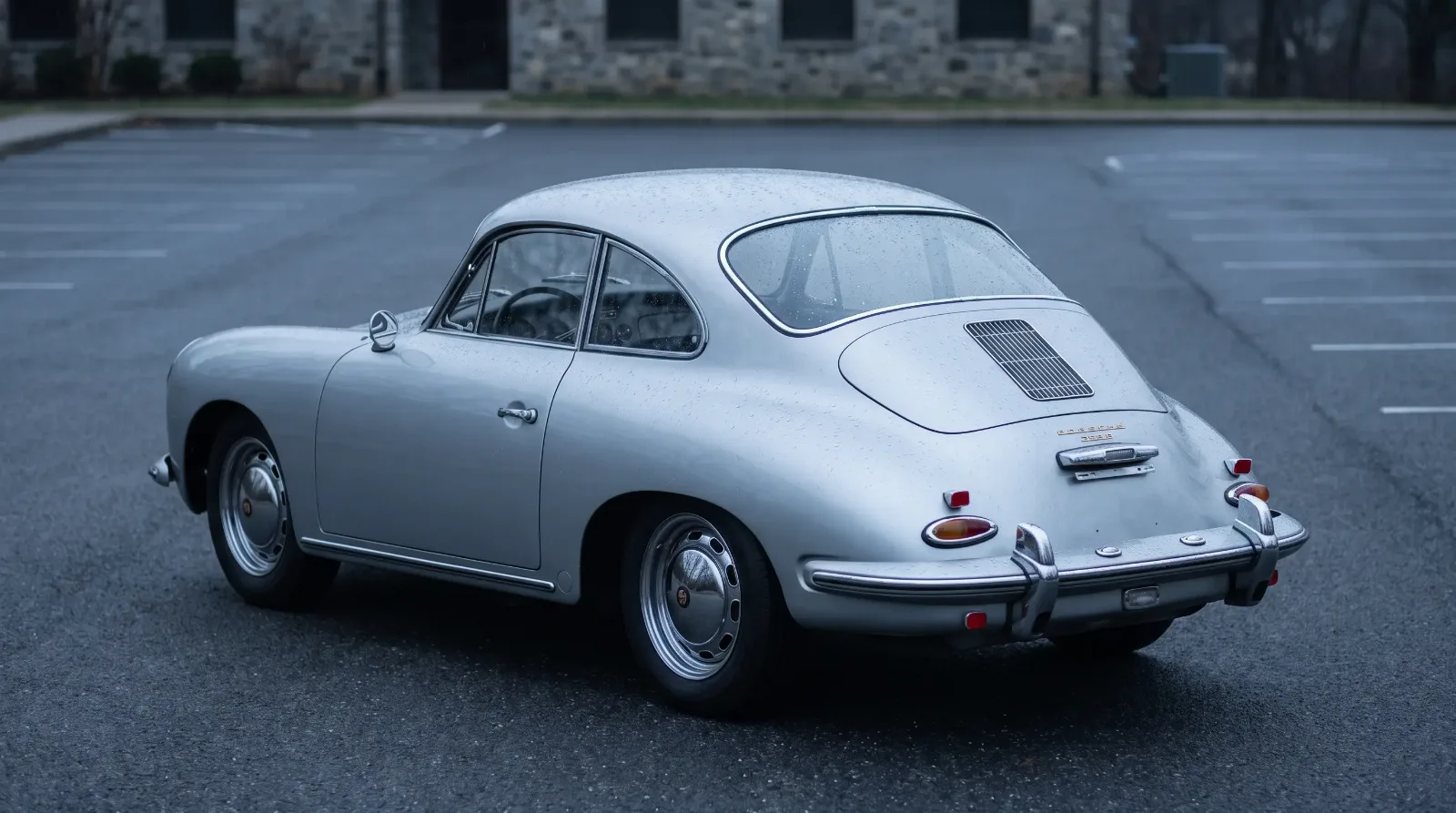
The 356 B followed in 1959 with raised headlights, higher bumpers, and larger over-riders, changes made partly for pedestrian and parking practicality and partly for American taste. The 356 C of 1963 to 1965 brought the most significant mechanical change of all, disc brakes at all four corners, and it closed out production with the model at its most refined. A late 356 C is the easiest of the four to live with and gives up little of the character that makes the early cars special.
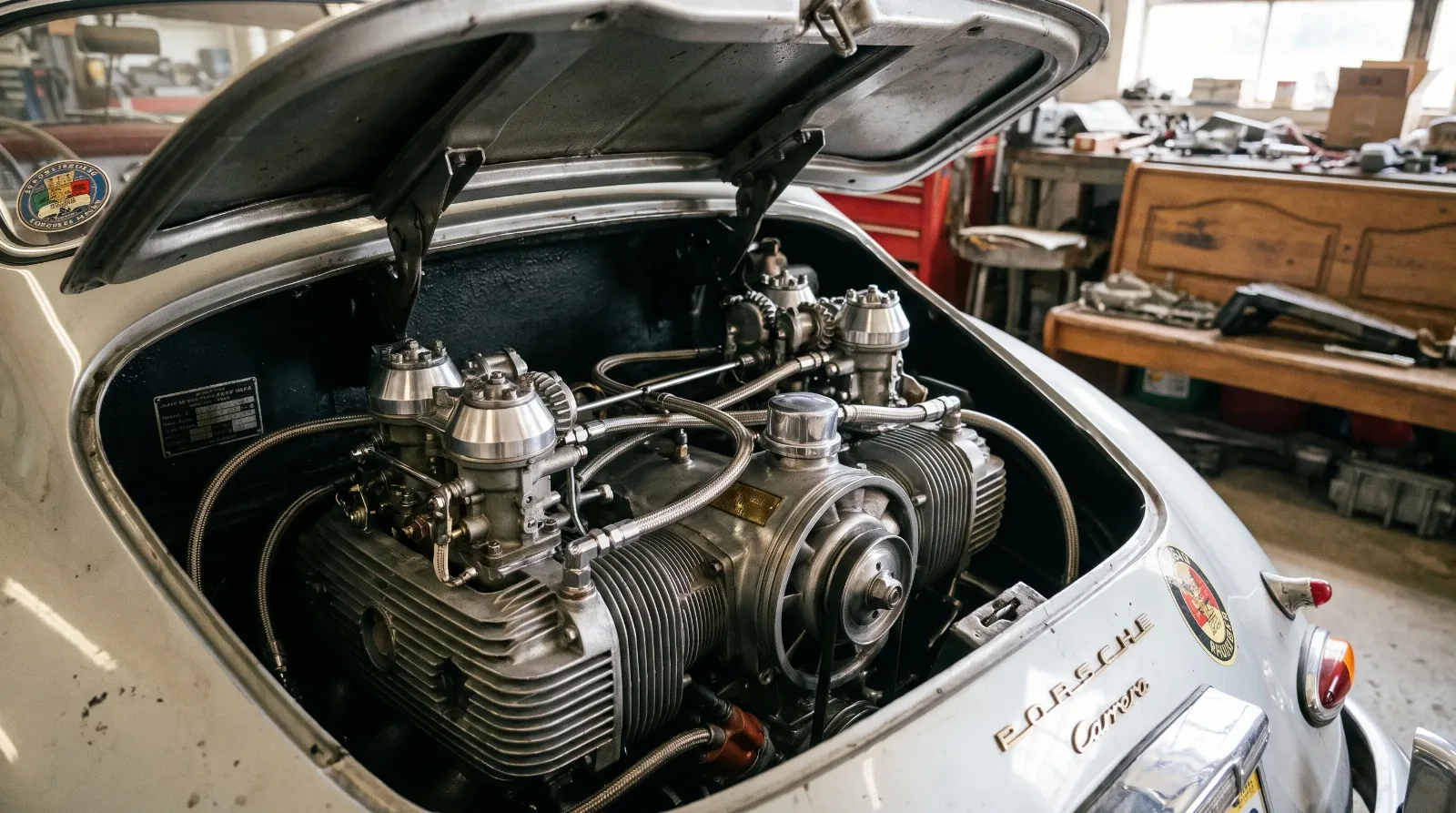
Body styles multiplied across these generations. Alongside the coupe and cabriolet, Porsche offered a notchback hardtop, and Karmann built cabriolet and coupe variants as demand grew. The engines told a parallel story, climbing from just over one liter to 1.6 liters in the mainstream cars, with the four-cam Carrera units standing apart as a separate and far more complex line.
| Generation | Years | Key change | Typical engine |
|---|---|---|---|
| Pre-A | 1948-1955 | Gmünd alloy, then Reutter steel; split/bent screen | 1.1-1.5 L flat-four, around 40-70 hp |
| 356 A | 1955-1959 | One-piece curved windscreen; Carrera name introduced | 1.3-1.6 L; Carrera 1.5 four-cam |
| 356 B | 1959-1963 | Raised headlights and bumpers; T5/T6 bodies | 1.6 L, up to around 90 hp Super 90 |
| 356 C | 1963-1965 | Four-wheel disc brakes; final refinement | 1.6 L SC around 95 hp; Carrera 2 two-liter |
The Speedster and the American connection
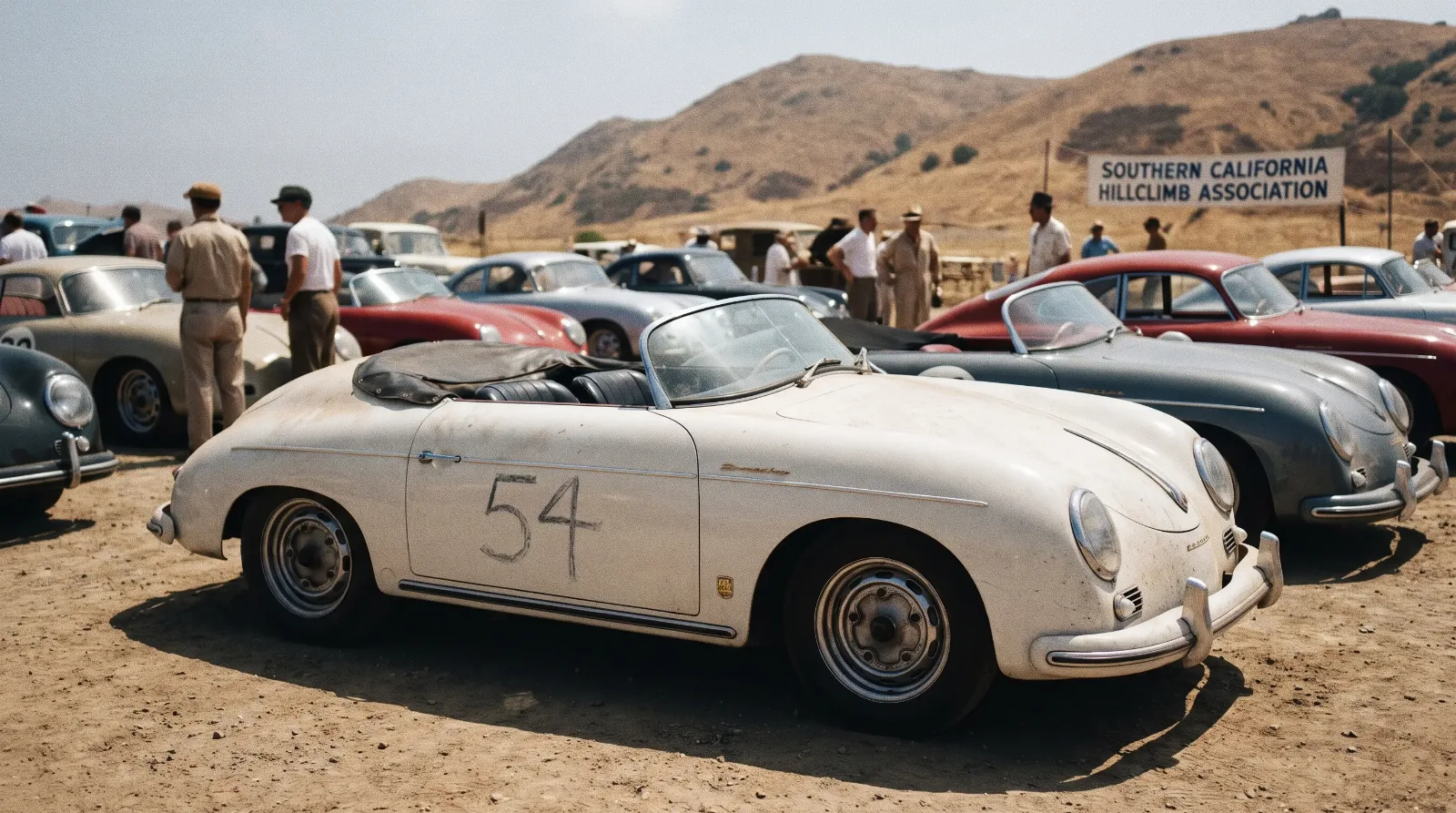
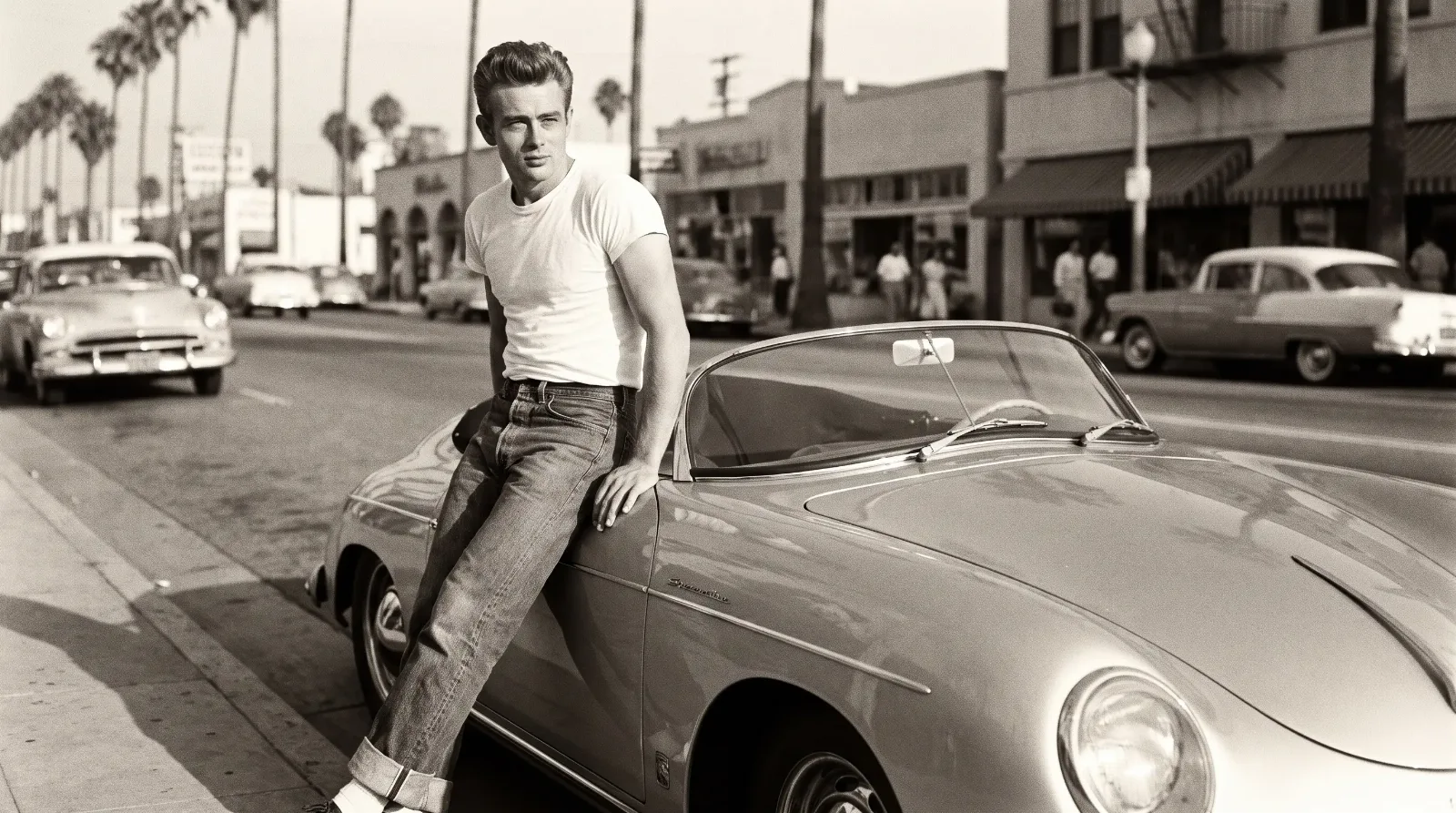
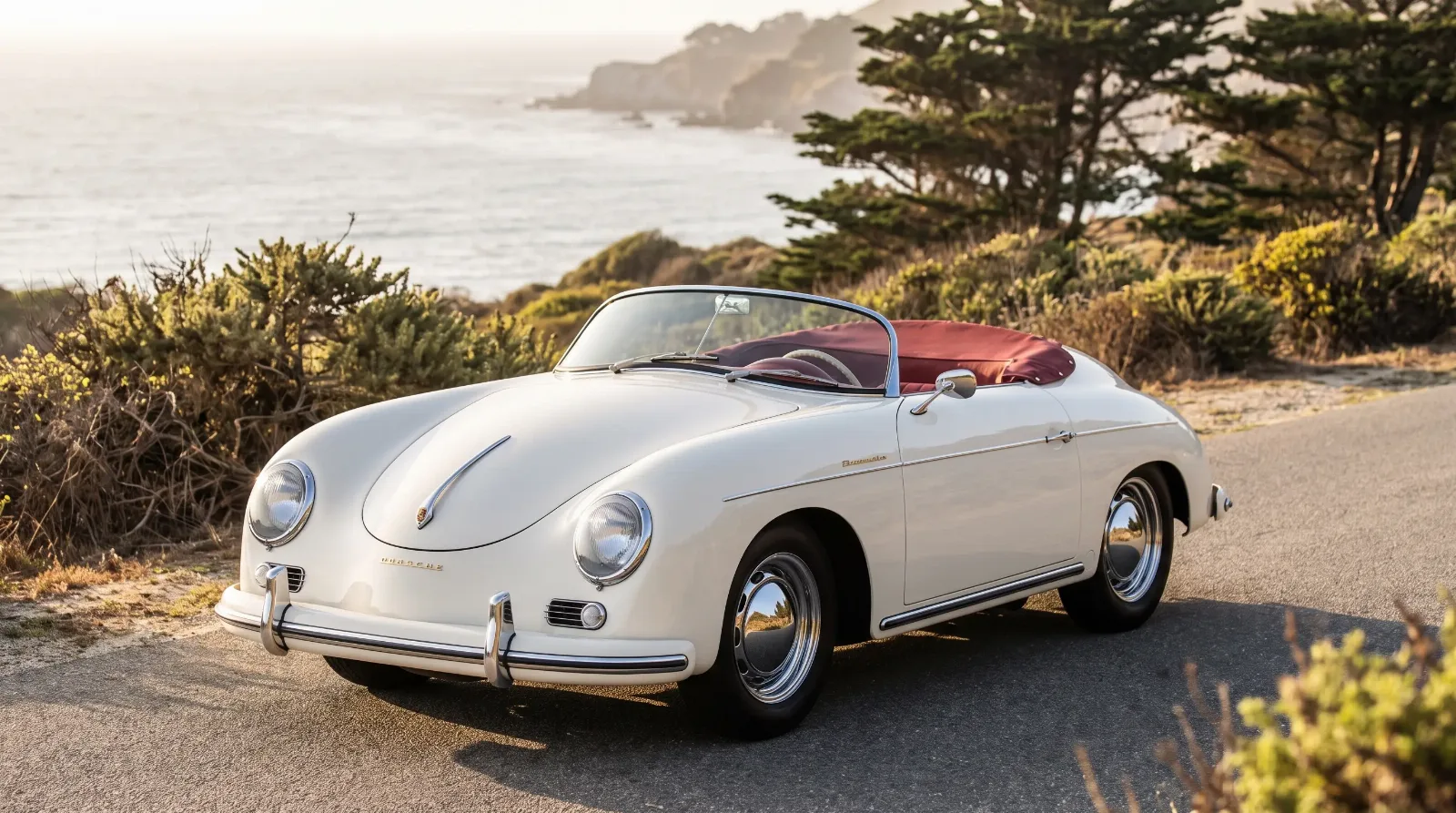
No single 356 variant has shaped the model's image as much as the Speedster, and it exists because of one importer's read on the American market. Max Hoffman, Porsche's distributor in New York, argued for a stripped, cheaper, sunnier version for buyers in California and the Southwest. Porsche answered in 1954 with a car that removed almost everything that added weight or cost.
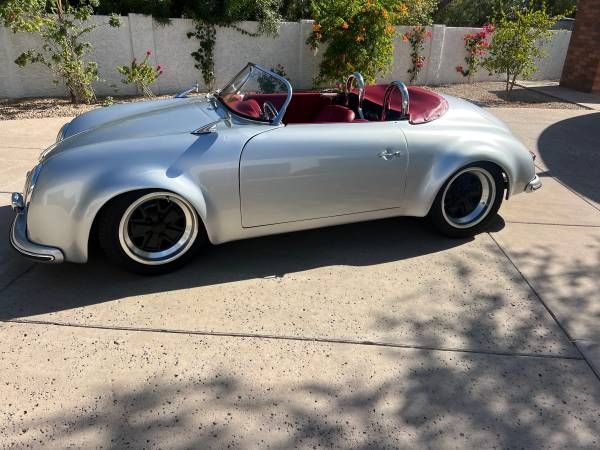
The Speedster had a low, removable windscreen, lightweight bucket seats, a minimal folding top, and side curtains in place of wind-up windows. It was less comfortable than a cabriolet and made no apology for it. On a road or a club circuit it felt quicker and more alert, and it looked unlike anything else on an American street. The low screen line gave it a rakish stance that photographs beautifully and that later variants, the Convertible D and the Roadster, softened for buyers who wanted more weather protection.
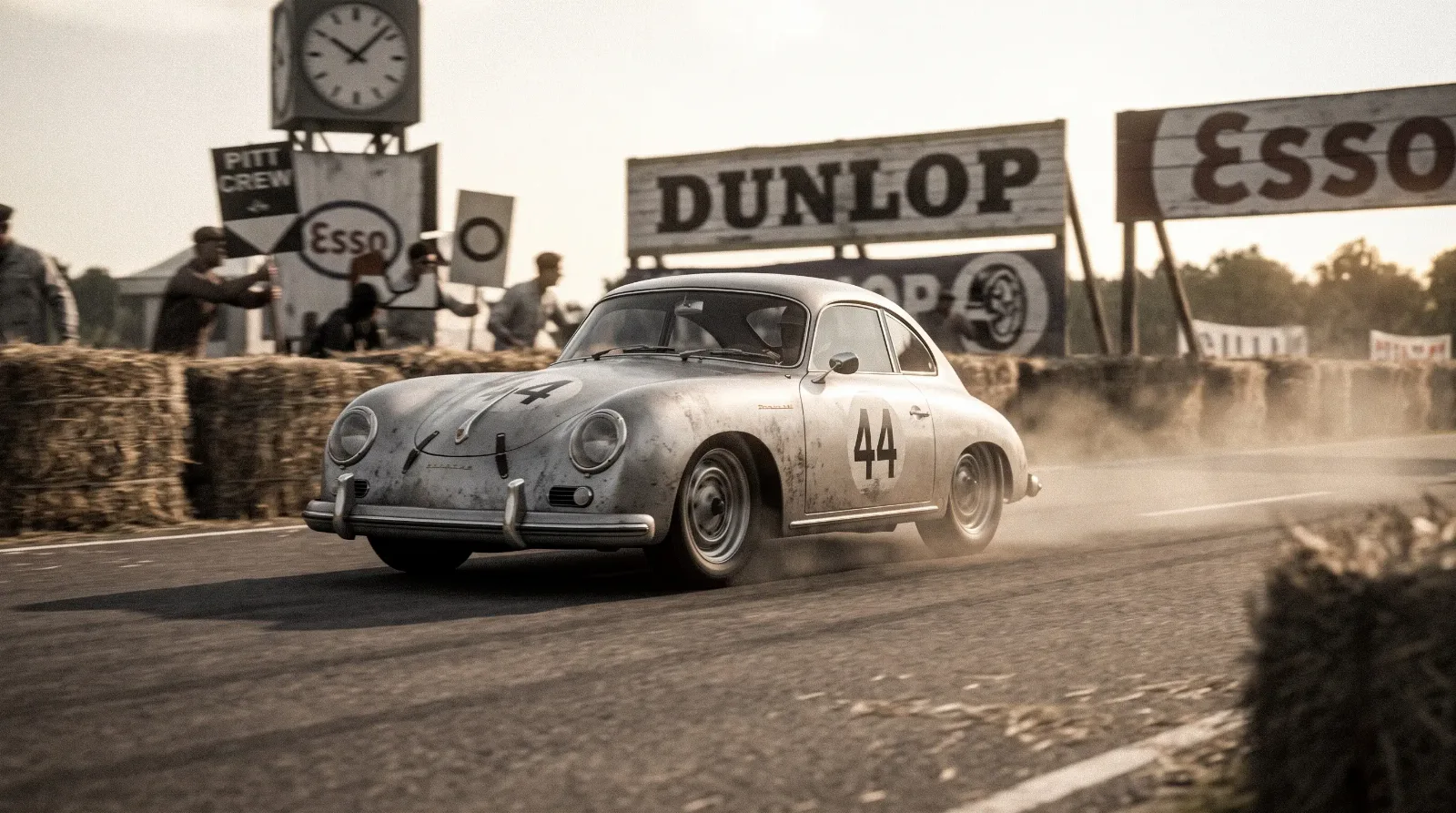
Because the Speedster was built in relatively small numbers and because it became a fixture of period club racing, it now sits at the top of most 356 value guides. That reputation is worth understanding before you shop, since a genuine Speedster and a later open 356 are very different cars in both feel and price.
Craftsmanship and why it holds up
What separates a 356 from other small sports cars of its era is not raw performance. Early cars were modest in power, and even a good Super was no match on paper for larger-engined rivals. The distinction is in how the car was made and how its parts work together. The flat-four sits low, the body is light, and the whole machine was engineered to be balanced rather than fast in a straight line.
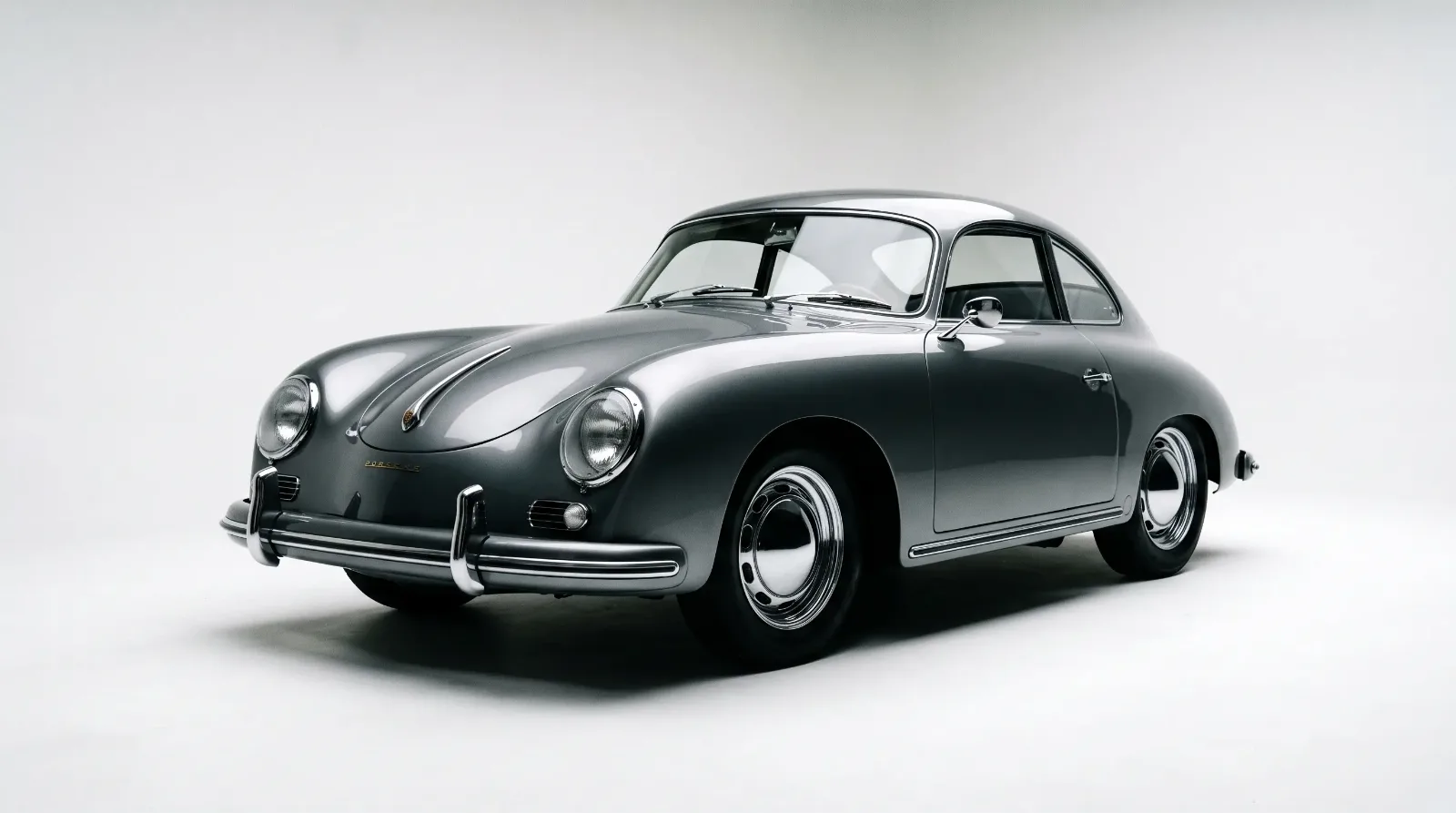
The coachwork rewards close inspection. The curve of the front fenders into the hood, the way the roofline of a coupe flows into the tail, the fit of the small chrome pieces, all of it was resolved by people who cared about the object as a whole. Komenda's shape has almost no wasted line. When collectors talk about a 356 as an artifact, this is what they mean: a car where the engineering and the surface were designed together, and where age has not made the design look dated so much as settled.
"Handle a Gmünd coupe and a 356 C back to back and you see the same idea maturing, not changing. The first car already knew what it wanted to be. The last one simply said it more clearly."
Sarah Whitfield
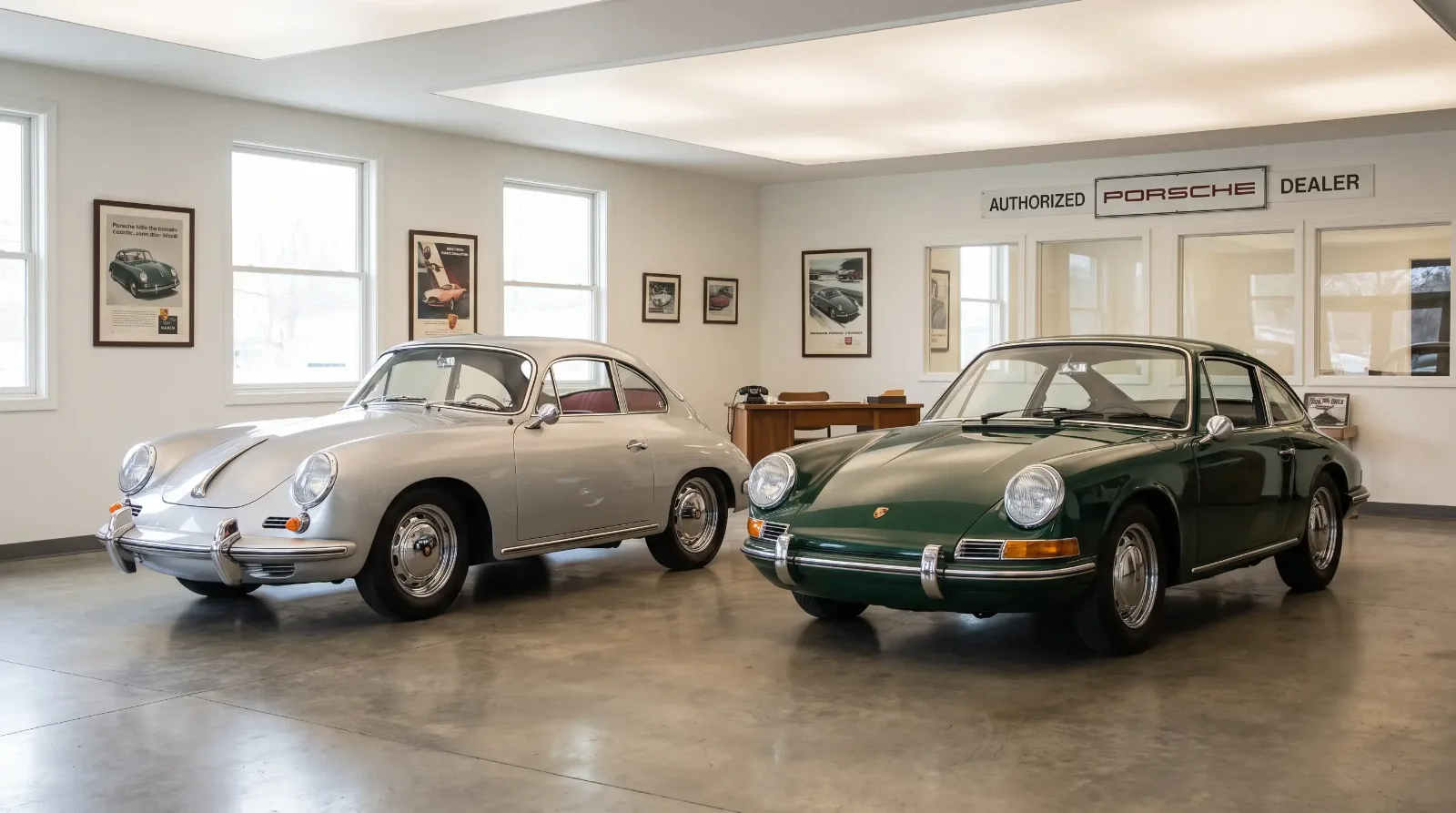
That continuity is why the 356 founded the marque rather than merely preceding it. The 911 that replaced it in 1964 kept the rear-engine layout, the emphasis on balance, and the same refusal to add weight without reason. If you want to keep exploring the range, the models that came after the 356 make more sense once you have seen where their priorities were set.
Buying and appreciating a 356 today
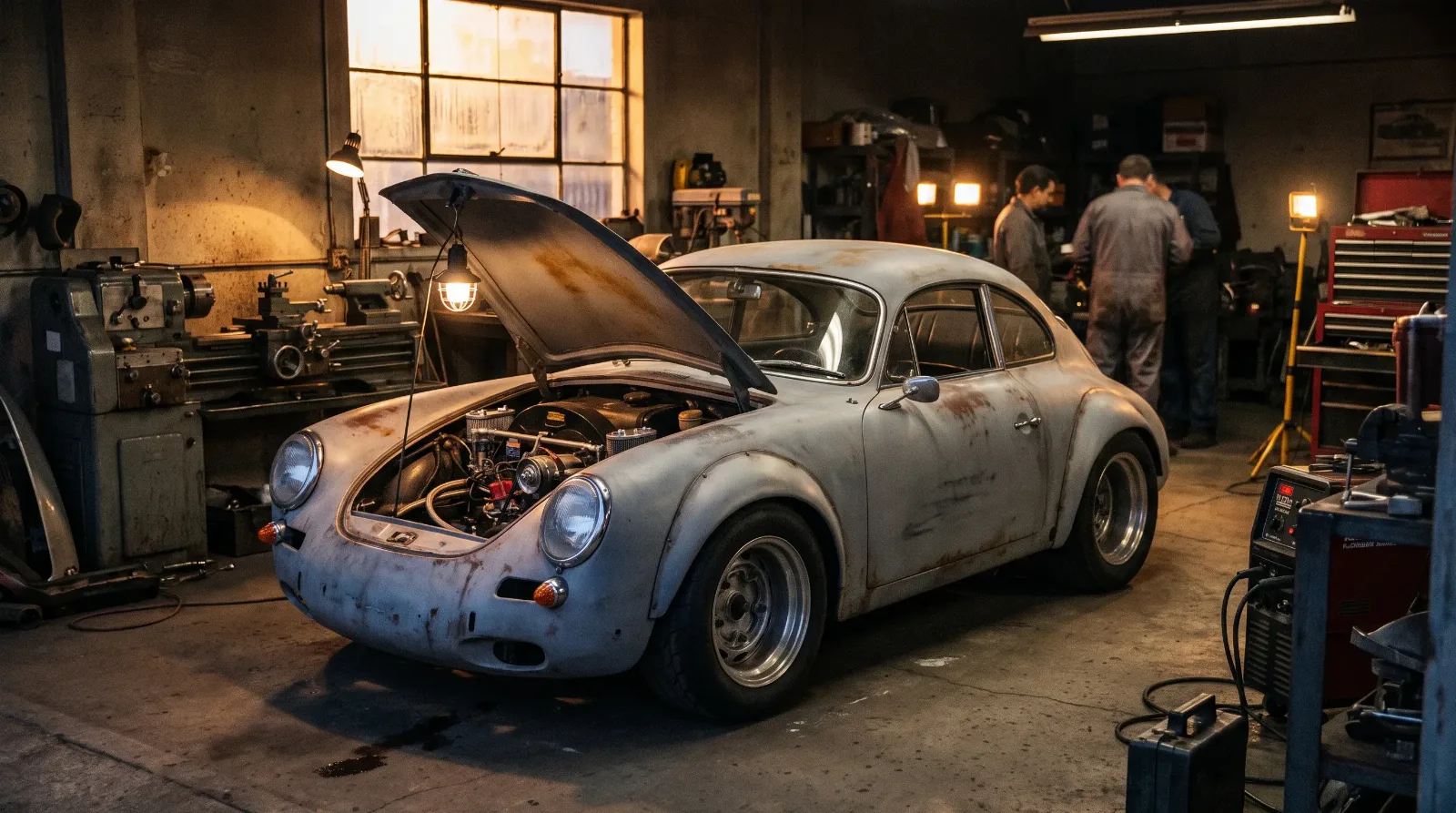
Approach the 356 as you would any hand-built car of the period, which is to say with attention to originality and structure before anything else. Rust is the central concern. The steel cars corrode in the floors, the battery box, the front luggage area, and the lower body seams, and repairs there are expensive and easy to do badly. A car with honest, documented history is worth far more than a shiny example of unknown provenance.
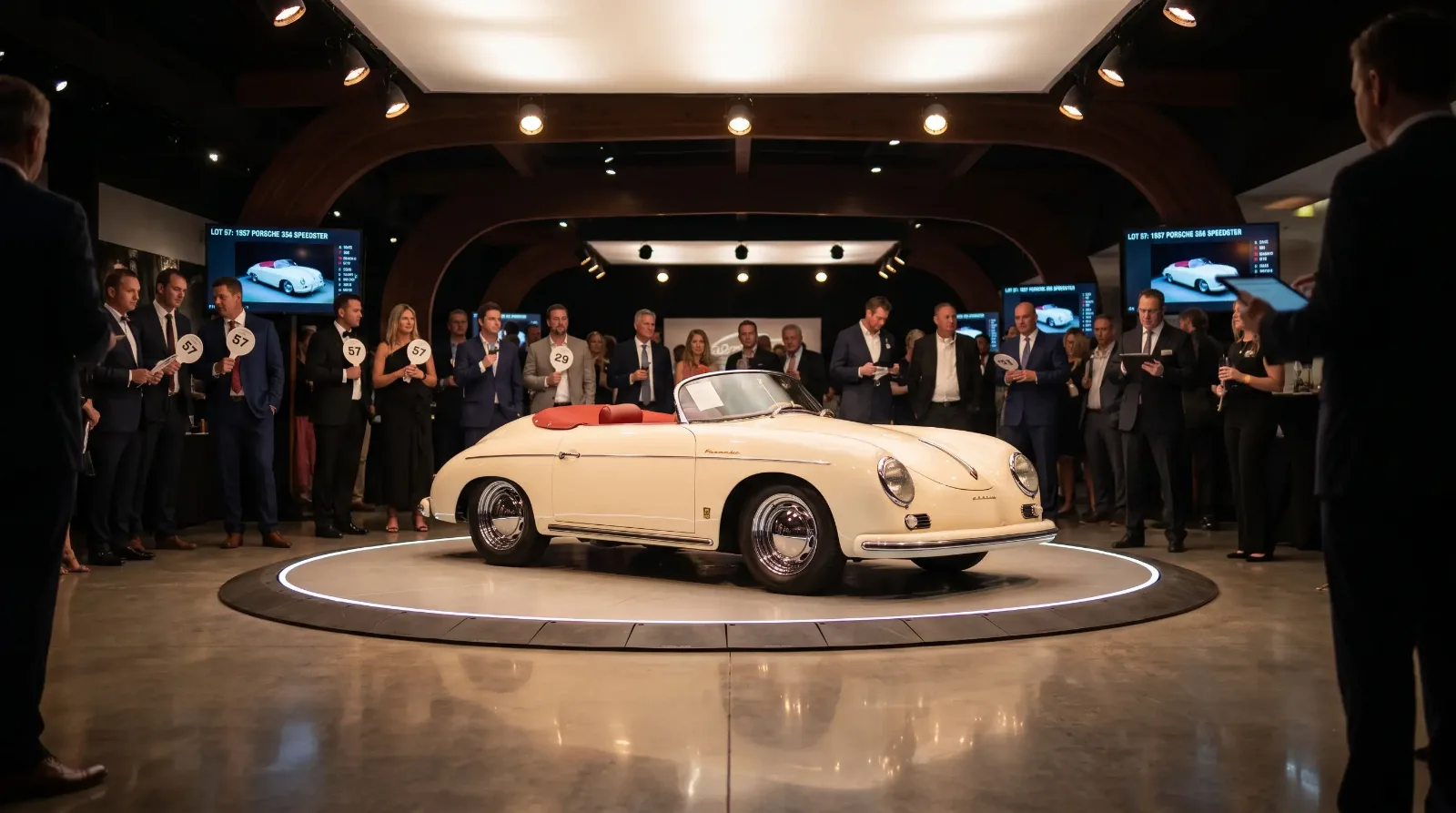
The market has long recognized the 356 as the foundation car, and prices reflect that across every generation, from a driver-grade coupe to a concours Speedster. If you are ready to see what is available, browsing the current classic Porsche 356 for sale is the fastest way to understand how condition, variant, and history separate one asking price from another.
Whatever version you settle on, you are buying the first idea Porsche ever committed to metal. The 356 is not a warm-up act for the cars that followed. It is the statement they were all built to continue.
Sources and notes
Related Reading
Article
The Classic Porsche Story: From 356 to the Air-Cooled Icons
Article
The Porsche 911 Saga: Birth of an Icon (1964–1998)
Article
Porsche 914: The Mid-Engine Outsider VW Nearly Owned
Article
The Gmünd 356: Hand-Built Beginnings in Austria
Article
Pre-A, A, B, C: The 356 Evolution
Article
The 356 Speedster: The Stripped-Down Legend
Article
The 356 Carrera & the Four-Cam Engine
Article
Reutter & Karmann: Who Really Built the 356
Article
How the 356 Grew From the VW Beetle
Article
James Dean & the 356 Super Speedster
Article
The 356 Outlaw Culture Explained
Article
The Convertible D & the Roadster Years
Article
The 356 Notchback: The Rarest Body Style
Article
356 Racing Heritage: Giant-Killer on Track
Article
Why the 356 Became a Six-Figure Collectible
Article
Coupe vs Cabriolet: The 356 Body Styles
Article
The Design Language of the 356 Silhouette
Article
The Last 356s & the Handover to the 911
Article
Ferry Porsche's Vision Behind the 356
Have a
Porsche
for Sale?
Reach thousands of serious classic car collectors across the US.
Sell It Here →
Are You a Classic Car Dealer?
List your full inventory and connect with targeted classic car buyers.
Join as a Dealer →
#classic porsche
#porsche 356
#air-cooled
#Porsche Speedster
#Gmünd
#356 Carrera
#vintage sports cars

About the author
Sarah Whitfield
Third-generation classic car collector specializing in pre-war American and European coachbuilt automobiles. Researcher and concours enthusiast.
Related Listings - Porsche




Comments (1)
C
Chuck Perkins
2 months ago
Market for these has been stable longer than I expected. Thought prices would soften after the last run-up. They've held.