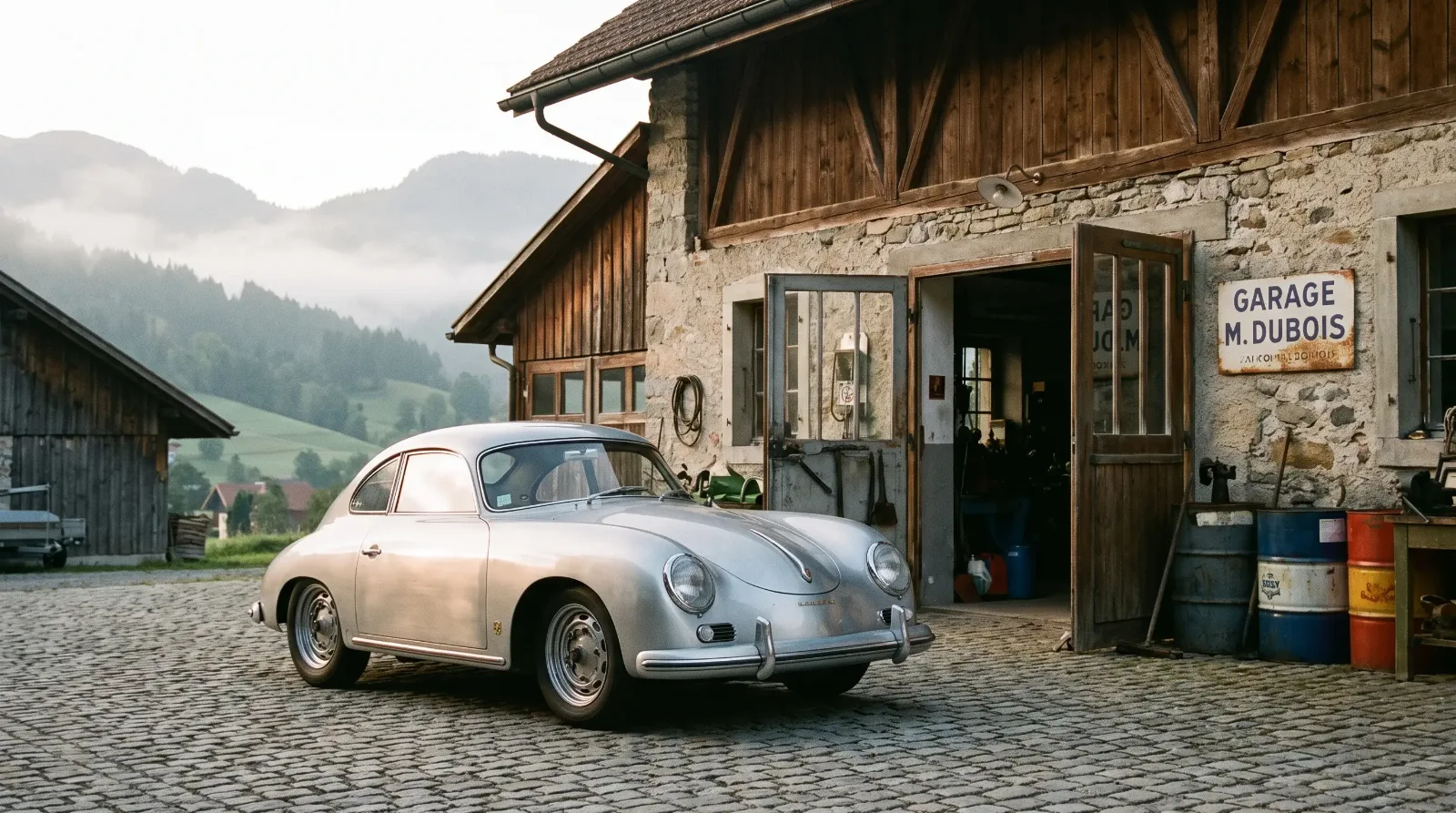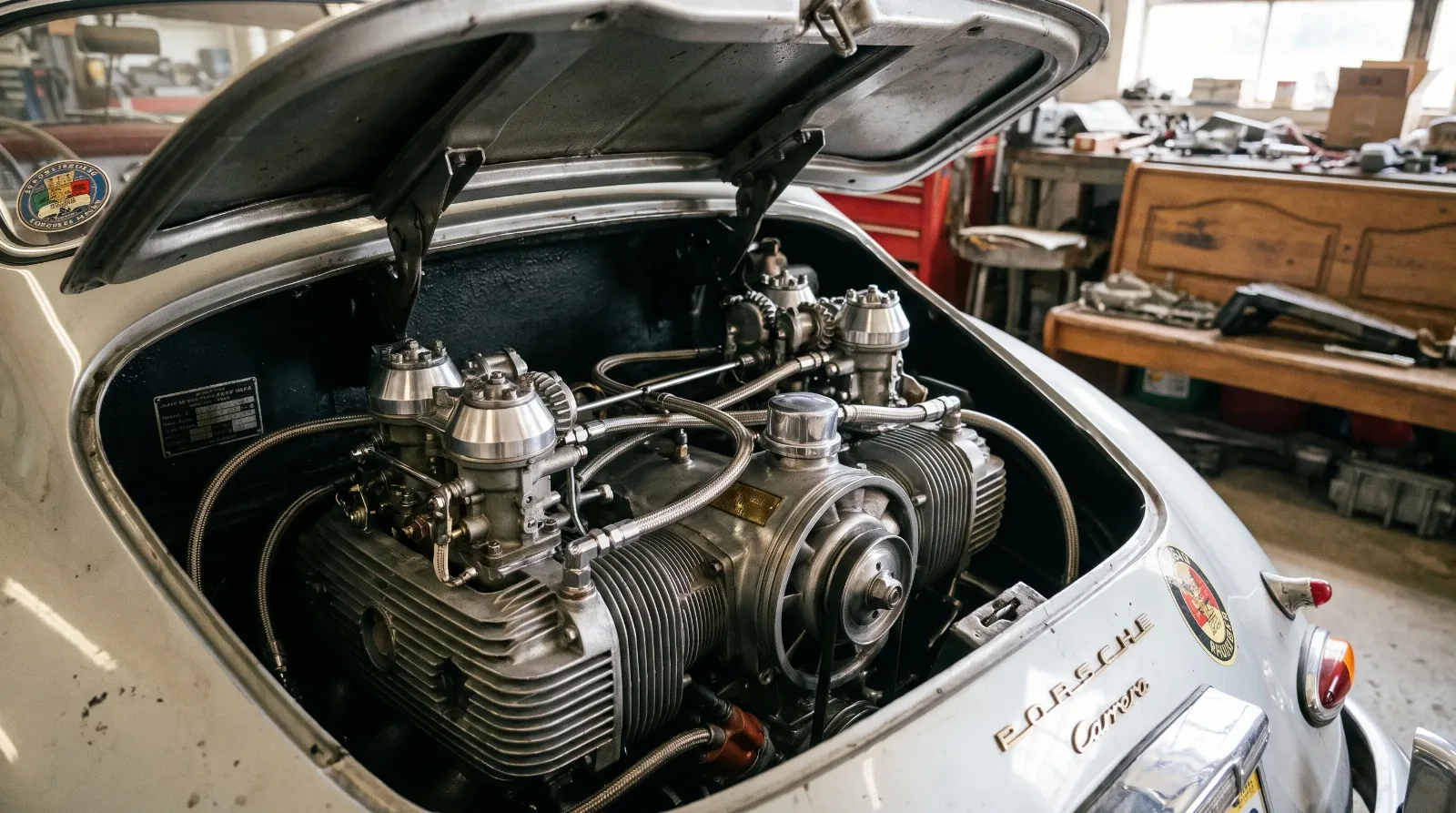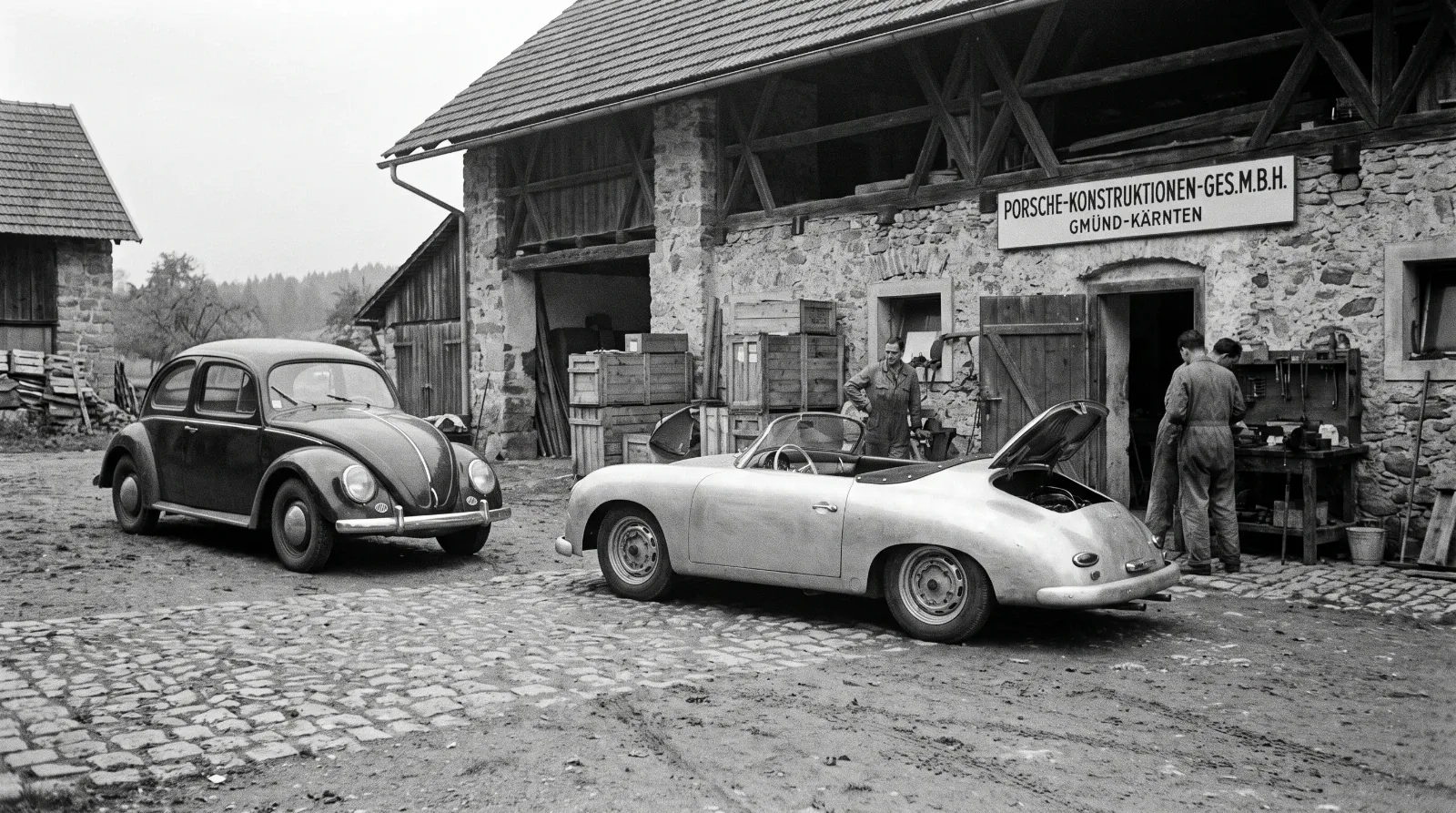
Every Porsche 356 badge says Stuttgart, but the metal underneath that badge came from two very different workshops. The where Porsche began story usually credits Ferdinand and Ferry Porsche with the concept, and rightly so. But the company that bore their name did not have a body plant of its own in 1948, and for years afterward it still didn't build most of its own steel. Reutter of Stuttgart and Karmann of Osnabruck built the bodies for the porsche 356 reutter karmann relationship that made series production possible at all. Understanding who stamped, welded, and finished those panels changes how you read a 356's build plate, and it explains why two cars from the same model year can feel like they came from different factories, because in a real sense they did.
Reutter: the coachbuilder that became part of Porsche
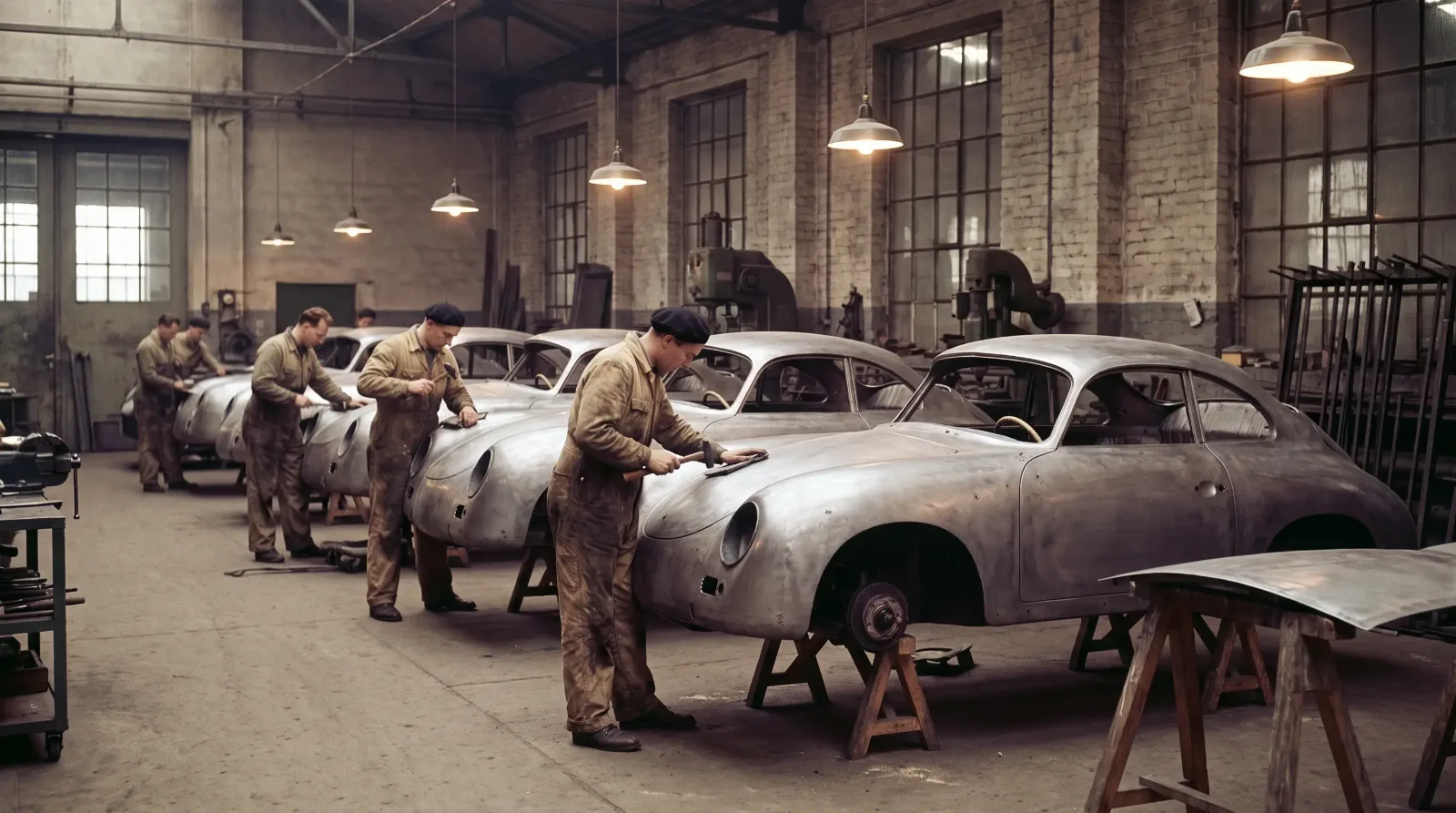
Reutter Karosserie was not a new name in 1948. The firm had built coachwork since the 1900s, and it had a working relationship with Porsche's design office going back to the prewar era, when Reutter built bodies to Porsche-supplied drawings for other clients. When Ferry Porsche needed a partner to turn the 356 prototype into a production car at the Gmund and then Zuffenhausen sites, Reutter was the obvious choice. It had the tooling, the trained panel beaters, and proximity: the Reutter works sat directly across the street from Porsche's own plant on Werkstrasse in Zuffenhausen. Reutter built the vast majority of 356 coupe and cabriolet bodies from the start of Zuffenhausen production in 1950 through the mid-1960s. The arrangement was close enough that Porsche eventually bought a controlling stake in Reutter's body operation in 1963, folding it into what became Porsche's own body-in-white production. The seating side of Reutter's business, interestingly, was spun off separately and became Recaro, a name still recognized today for automotive seats. That split is one of the more overlooked facts in Porsche history: the coachbuilder that built your 356's roof also built the seats you sat in, under a name that outlived the body business itself.
Karmann: the convertible and small-batch specialist
Wilhelm Karmann GmbH of Osnabruck is better known to most enthusiasts for its work with Volkswagen, particularly the Karmann Ghia. But Karmann had a parallel contract with Porsche, building 356 cabriolet bodies and, later, the hardtop coupe variants that Reutter's capacity could not absorb. Karmann's role expanded through the 1950s as demand for the 356 grew faster than Reutter alone could supply. By the late 1950s Karmann was producing notchback coupe bodies as well, giving Porsche a second, geographically distant supplier as insurance against capacity bottlenecks. The two firms did not build identical panels from identical dies passed back and forth. Reutter and Karmann bodies show measurable differences in seam placement, panel gaps, and finishing details that concours judges and restorers still use to identify which coachbuilder produced a given car. Porsche never published a precise year-by-year production split between the two suppliers. A car's chassis number and factory documentation remain the more reliable way to confirm coachbuilder origin, but panel fit is often the first clue a trained eye catches at a show.
Why the split mattered for quality and consistency
Running two coachbuilders is a logistics headache, and Porsche's engineers were not shy about pointing that out internally over the years. Panel tolerances that pass inspection at one plant do not automatically match another plant's habits, even with shared blueprints. Restorers today who source NOS panels or compare door fit between a Reutter-built coupe and a Karmann-built one sometimes find small but real discontinuities: a slightly different curve to a rocker panel, a seam that sits a few millimeters off from where the other supplier placed it. None of this means one coachbuilder built a "better" 356 than the other. Both worked from Porsche specifications and both bodies met the same functional standards. What differs is the fingerprint each shop left behind, and that fingerprint is part of what makes 356 provenance research genuinely interesting rather than a formality. A car's build sheet, when it survives, will usually identify which body plant produced it, and that single data point can settle arguments about originality that panel gaps alone cannot.
| Coachbuilder | Location | Primary 356 body types | Porsche relationship |
|---|---|---|---|
| Reutter Karosserie | Zuffenhausen, Stuttgart | Coupe, cabriolet (majority volume) | Acquired by Porsche in 1963; seat division became Recaro |
| Karmann GmbH | Osnabruck | Cabriolet, hardtop coupe (overflow and specialty runs) | Independent supplier contract through the 356 era |
Reading the clues on a real car
If you are evaluating a 356 and want to understand which shop built it, start with paperwork rather than panels. A Certificate of Authenticity from Porsche's own archive, where available, will typically state the body supplier. Absent that, look for stamped or riveted body tags, which sometimes carried coachbuilder-specific marks depending on year and model. Panel fit is a supporting clue at best: use it to raise questions, not to settle them on its own. Owners restoring a Karmann-built cabriolet should also expect that replacement panels sourced from generic 356 suppliers may need more fettling to match original contours than panels intended for a Reutter body, simply because reproduction tooling was more often reverse-engineered from the more common Reutter-bodied cars. That is a practical, not a philosophical, distinction, but it affects how a restoration budget gets spent.
"People treat coachbuilder origin like trivia, but it is really a supply chain question. Two shops building to one drawing will never produce identical parts, and that variance is measurable if you know where to look."
— Emily Chen
What this means for buyers and restorers today
The practical takeaway is simple: coachbuilder identity affects small dimensional details, sourcing decisions, and occasionally value at the margins for concours-grade cars, but it does not create a hierarchy of "real" versus "less real" 356s. Both Reutter and Karmann built bodies under Porsche's direct specification and quality oversight. What the split does is add a layer of documentation that serious buyers should ask about, the same way they would ask about engine numbers matching a chassis. For anyone going deeper into how the 356 came to exist at all, including the platform decisions made before either coachbuilder was involved, the more from this chapter piece picks up that earlier thread. Between the two stories, the picture of how a 356 actually got built, from concept to stamped steel, comes into much sharper focus than the badge on the deck lid alone ever suggests.