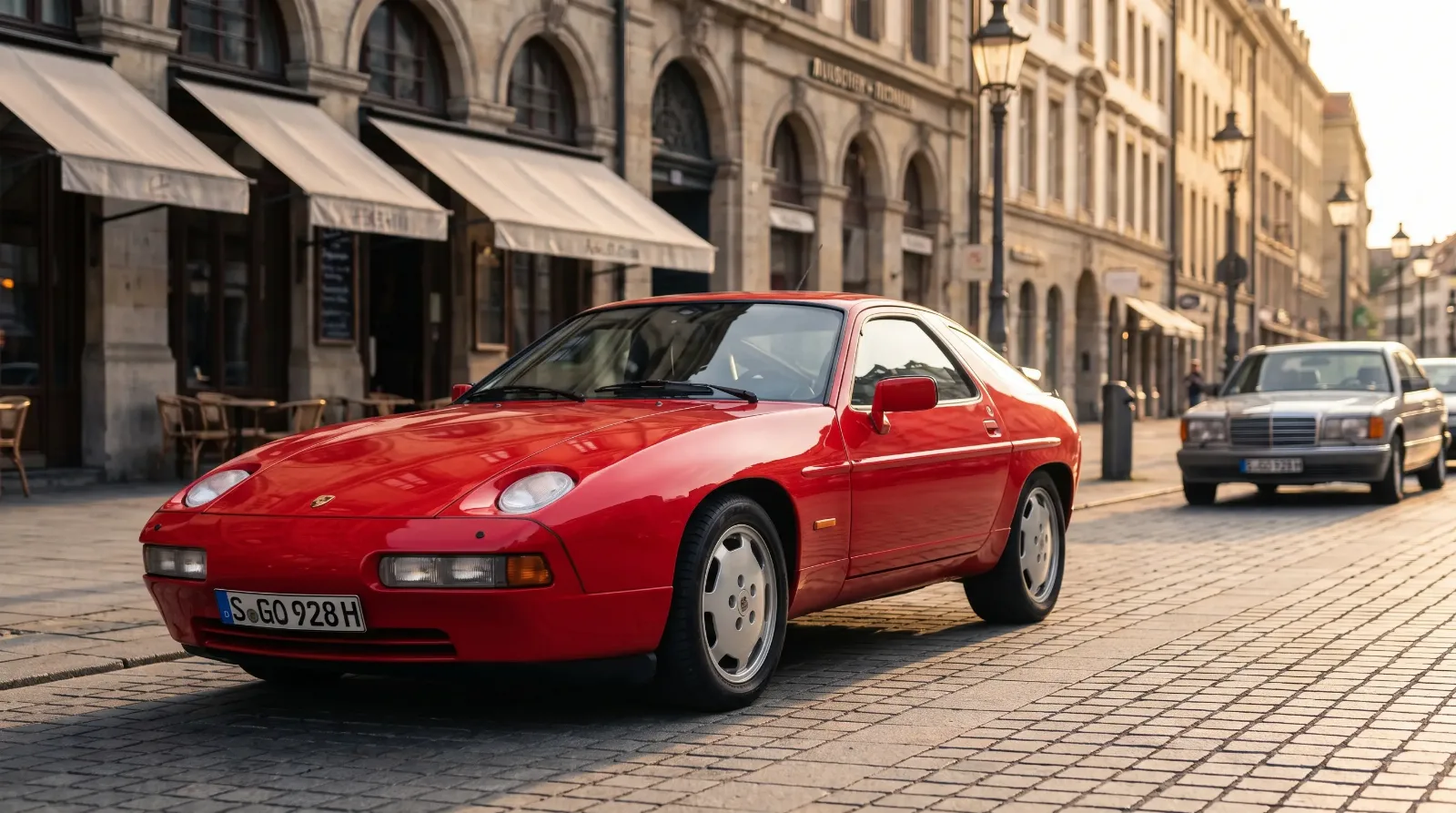
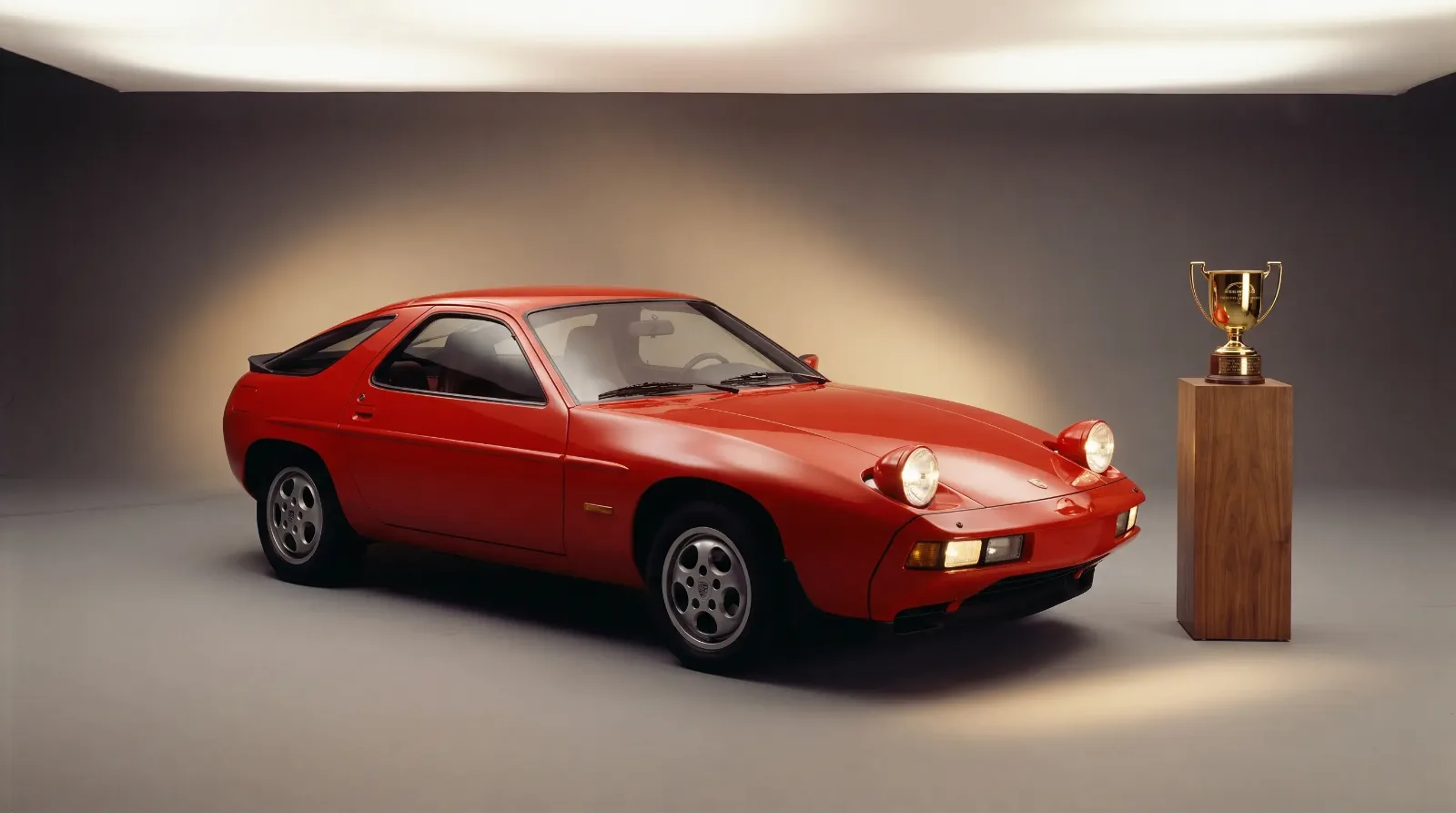
Somebody at the swap meet had a laminated magazine clipping taped to the inside of his parts box lid, the kind of thing you only notice if you lean in to dig through his bin of used Porsche 928 trim pieces. It was the 1978 European Car of the Year results, and he had circled one line in red pen decades ago. A sports car had won it. Not a family sedan, not a hatchback built to sell in volume across a continent, a two-door front-engine Porsche grand tourer had beaten the field outright, and he wanted every customer digging through his bin to know it.
An award that sports cars almost never win
The European Car of the Year award has never been a natural home for sports cars. The panel of European motoring journalists that votes on it has historically rewarded cars built for the mass market, family transport, efficiency, engineering that would touch millions of buyers rather than a few thousand enthusiasts. A low-volume, expensive two-seat grand tourer winning that vote in 1978 was, by the award's own history, an anomaly: the 928 remains the only pure sports car to have won European Car of the Year outright, beating a field that year that included the BMW 7 Series and the Ford Granada.
That is what made the win worth circling in red pen. It was not just a good result for Porsche. It was a genuinely unusual result for the category the 928 belonged to.
Part of what makes the story worth retelling is how little room the award format leaves for sentiment. The panel is not voting on which car enthusiasts love most, or which badge carries the most romance at a concours lawn. It is voting, year after year, on which new car represents the most significant step forward for its class and its era, and most years that vote goes to something practical, efficient, built to move a lot of ordinary people around a continent. A sports car winning outright meant the judges looked past the category entirely and voted on the engineering itself.
Why the judges picked a Porsche
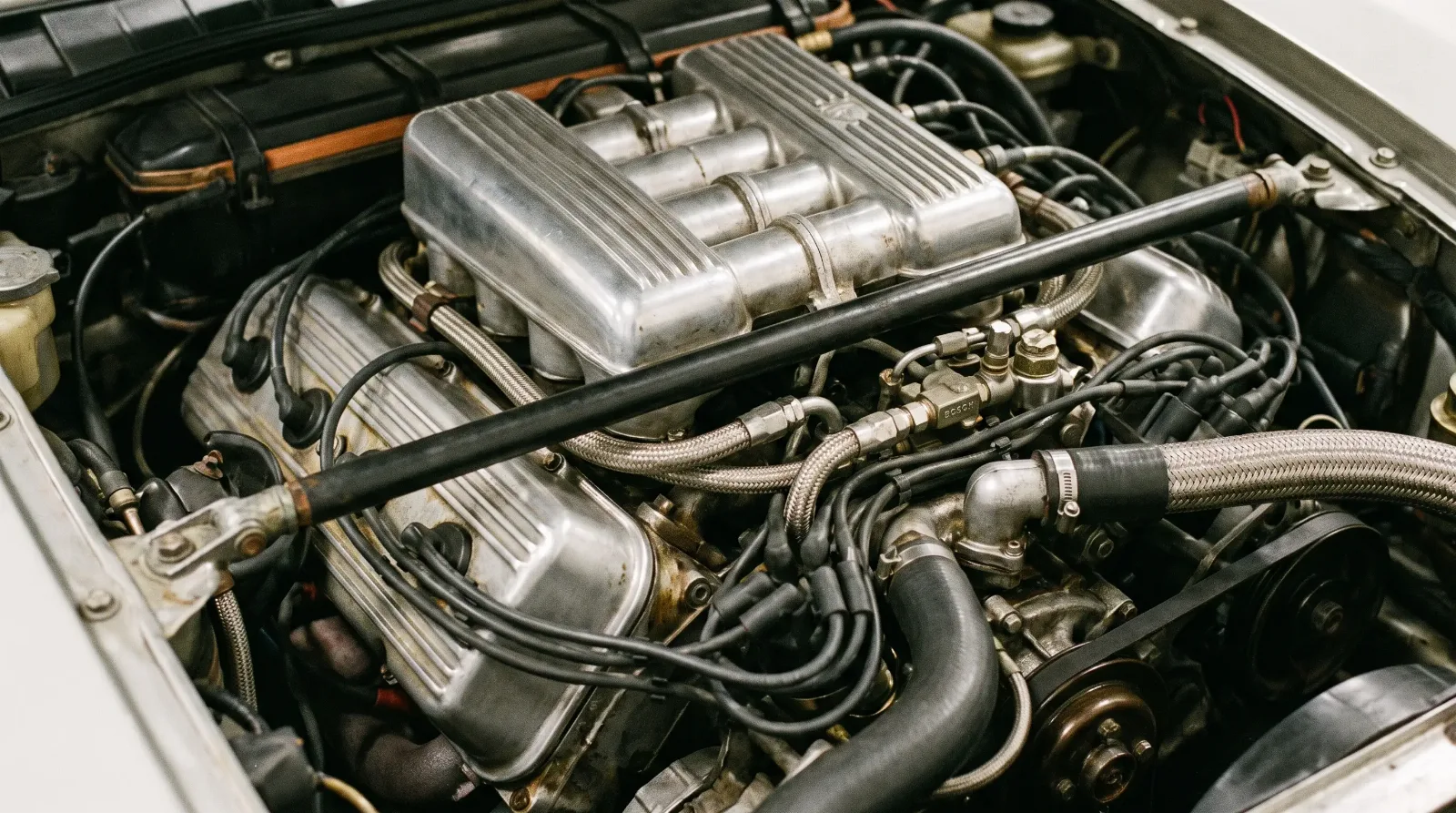
The case for the 928 in 1978 rested on the same things Porsche had been building toward with the car's whole design brief: a water-cooled front-mounted V8, a body engineered around modern crash and safety expectations rather than a decades-old rear-engine layout, and a driving experience that traded raw immediacy for refinement, comfort over long distances, and genuine usability as a daily grand tourer. Judges rewarding engineering advancement over outright speed or tradition found a lot to like in a car that represented, in Porsche's own framing, the future of the marque rather than a continuation of its past.
It helped that the 928 was not just a concept dressed up for a motor show. It was in production, it was being delivered to customers, and it represented the V8 grand tourer Porsche had spent years and a serious tooling budget developing as a genuine successor model, not a side project.
The competing field that year included cars built for volume, efficiency, and everyday practicality, the kind of entrants that typically dominate this award by design. A low-production, expensive grand tourer competing in that field at all was unusual. Winning it outright meant the judges were willing to weigh genuine engineering advancement, crash safety improvements, a new drivetrain layout, a fresh approach to weight distribution, against cars built to satisfy a much larger and more price-sensitive audience. That is not a comparison the 928 was expected to win on paper.
What the win did, and did not, settle
The award did not end the arguments over whether the 928 should have replaced the 911, and it did not convert every skeptical air-cooled loyalist overnight. What it did was give Porsche a documented, third-party answer to critics who dismissed the 928 as a lesser Porsche because it did not sound or drive like the cars that came before it. A panel of independent judges, evaluating the car purely on its engineering and execution, put it ahead of the field in a year with plenty of competition.
What it also did, less visibly at the time, was give Porsche's engineering department internal cover to keep pushing the 928 program forward through the years that followed, adding displacement, adding refinement, eventually adding the 32-valve cylinder heads that showed up on the later S4 and GT variants. An outside vote of confidence this public makes it a lot harder for a company's own accountants to argue a program should be scaled back.
"You can argue with a fan at a swap meet all day. It's a lot harder to argue with a trophy the whole continent voted on."
— Wayne Coburn
Why the record still matters at meets today
Four decades on, the 1978 award still comes up at club gatherings the same way that laminated clipping did, as a settled fact people reach for when the identity debate flares up again. The 928 does not need to win every argument about whether it was true to Porsche's tradition. It already won the one argument that mattered to the judges who mattered that year, and that is a different kind of victory than sales figures or lap times, but it is a real one.
The car's engineering story does not stop with the award. For more on the mechanical breakthroughs that carried the 928's reputation forward through the rest of its production run, more from this chapter covers one of the more genuinely clever pieces of Porsche engineering from this era. And if the trophy on the shelf has you thinking about owning a piece of that history, a search through the current listings of classic Porsche 928 for sale is a reasonable place to start.