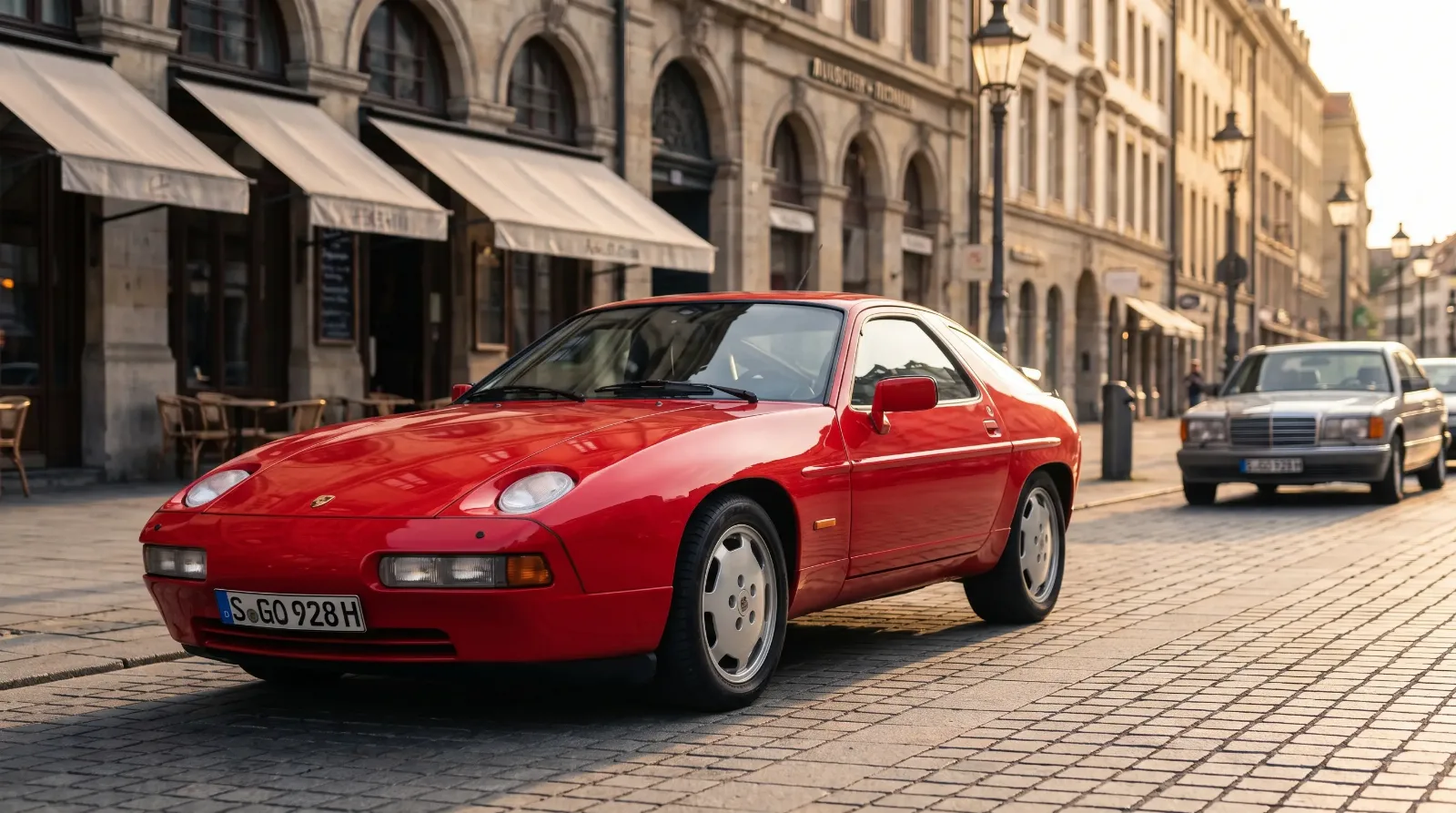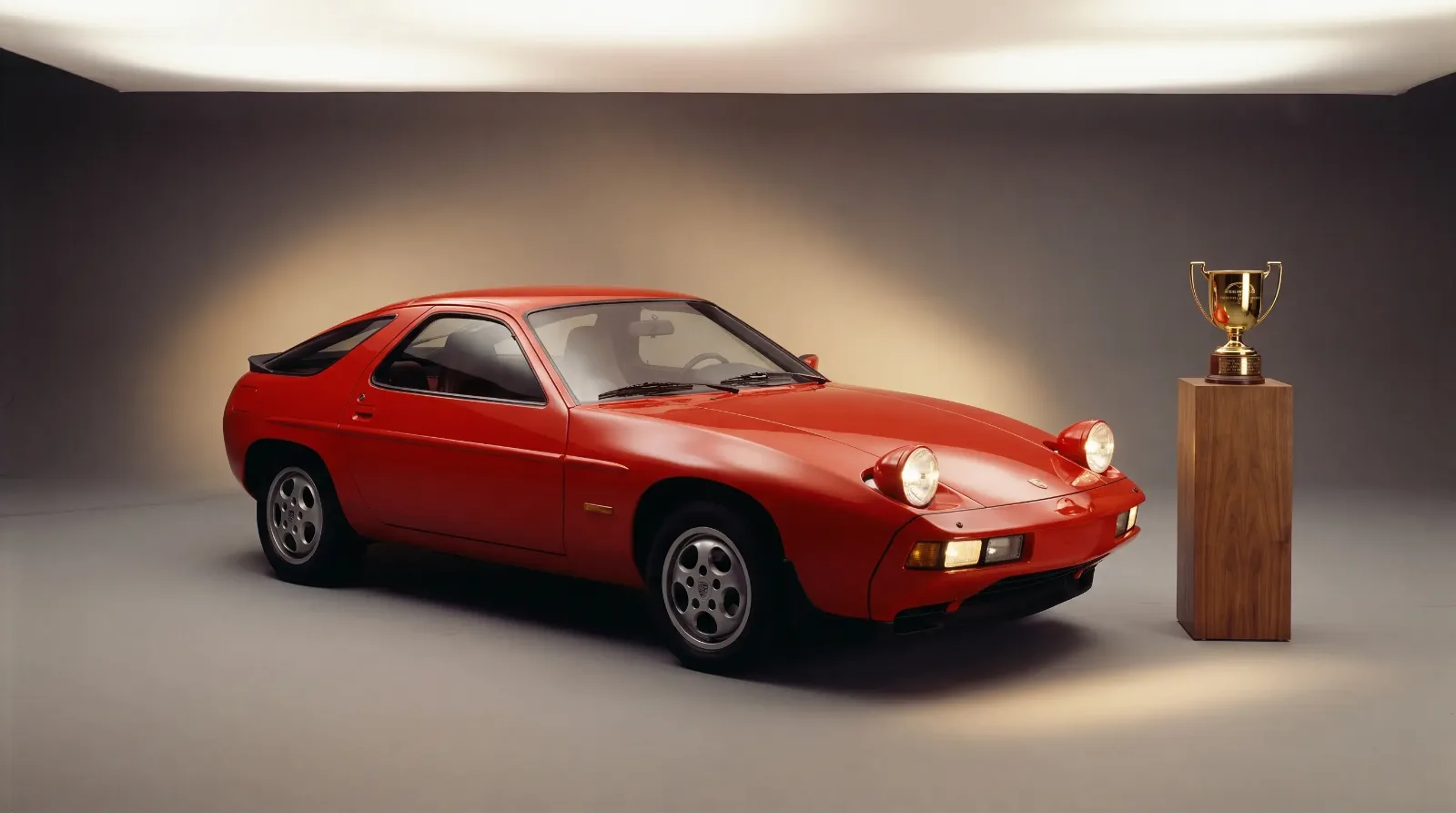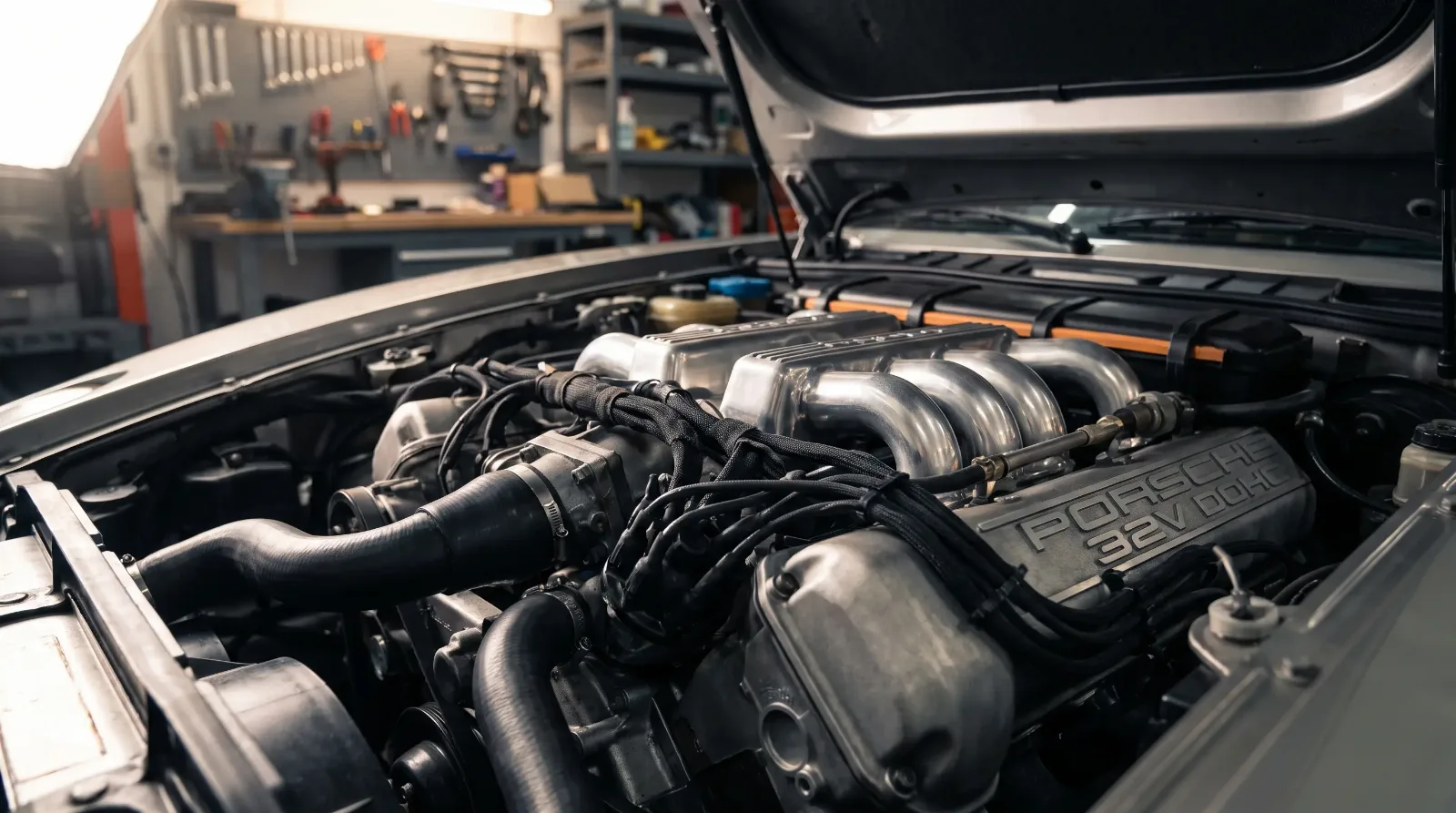
An instructor at a track day once stood at pit wall with a stopwatch and a grin, watching a first-time 928 owner lift off mid-corner the way you would in almost any other rear-drive car of that era, bracing for the tail to swing wide. It never did. The car just tightened its line and carried on. The owner pulled in looking mildly spooked, asking what had just happened to his car. The instructor's answer was two words: Weissach axle.
The problem every rear-drive car had
Lift-off oversteer is one of the oldest, most dangerous habits in rear-wheel-drive cars. Get into a corner too hot, lift off the throttle to scrub speed, and weight transfers forward off the rear axle right as you need that rear axle most, and the back end steps out, sometimes violently, sometimes at the worst possible moment. Generations of drivers learned to manage it by instinct, or they learned it the hard way, in a ditch or a guardrail.
Porsche's engineers at the Weissach research and development center set out to design that failure mode away rather than train drivers around it, and the result, introduced on the front-engine 928, became one of the more genuinely clever pieces of suspension engineering to come out of the era.
Most manufacturers facing the same problem in this period reached for driver education, warning labels in the owner's manual, or simply accepted the trait as a known characteristic of the layout and let experienced owners learn to manage it. Porsche's engineers took a different view. If the geometry itself could be made to resist the mistake instead of amplifying it, there was no need to rely on every driver getting it right under pressure.
How the axle actually worked
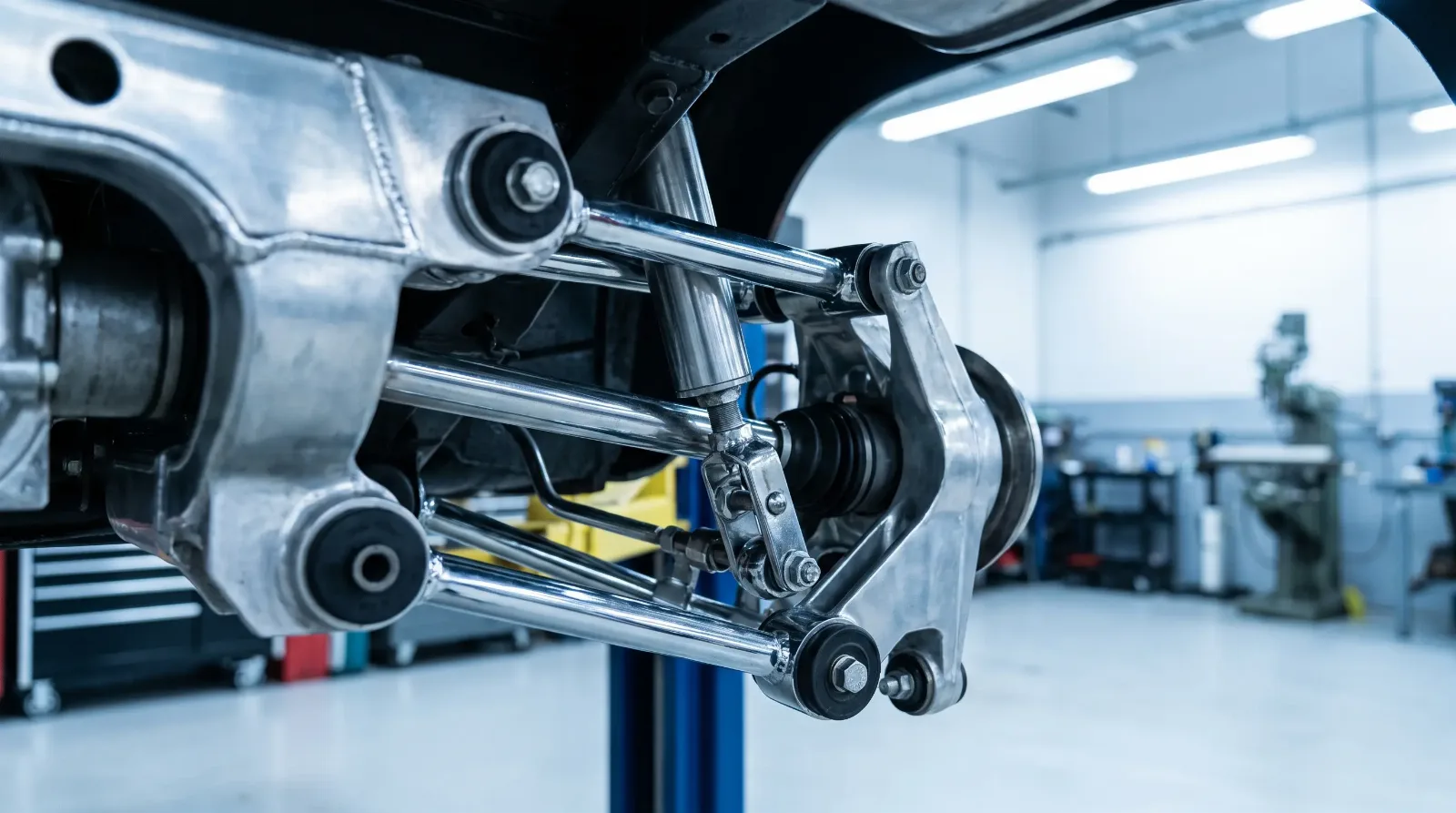
The Weissach axle is a rear semi-trailing arm suspension design with a deliberately engineered compliance built into its geometry. Under normal cornering loads, the rear wheels track in a fairly conventional path. But when a driver lifts off the throttle mid-corner, the sudden change in the forces acting through the suspension bushings causes the rear wheels to toe in slightly rather than toe out, which is the opposite of what a conventional trailing arm setup tends to do under the same conditions. That small, self-correcting toe change actively resists the oversteer that would otherwise start, instead of merely delaying it.
It is worth being precise about what this was and was not. It was not power steering for the rear wheels, and it was not any kind of active or computer-controlled system, this was 1977 to 1978 engineering, arriving with the 928's launch, solved through pure mechanical geometry and bushing compliance, no electronics, no sensors, nothing to fail silently. The elasto-kinematic bushings at the front and rear pivots of each trailing arm are tuned to compress by different amounts under load, and that differential compression, combined with the axle's kinematics, produces the toe-in response in roughly two tenths of a second.
The elegance of the solution is exactly why it still gets discussed at technical sessions decades later. A purely mechanical fix has no firmware to update, no sensor to fail, no wiring harness to corrode with age. A 928 built in the era of the Weissach axle behaves the same way on that front today as it did the day it left the factory, assuming the bushings themselves have been kept in reasonable condition, which is a maintenance detail worth a specialist's attention on any car this age.
Why it mattered beyond the spec sheet
What made the Weissach axle a genuine breakthrough rather than a marketing footnote was how it changed the actual risk profile of driving the car hard. A less experienced driver who lifted off mid-corner in a 928 was measurably safer than the same driver doing the same thing in most other rear-drive cars of the period, because the car's own suspension geometry was working against the mistake rather than amplifying it.
"Most of what gets called an engineering breakthrough is a spec sheet number. This one kept people out of ditches. That's a different kind of impressive."
— Wayne Coburn
Why the fix mattered to Porsche specifically
Porsche had every reason to take lift-off oversteer seriously beyond general safety concerns. The company's existing rear-engine cars carried a well-earned reputation for punishing exactly this kind of mid-corner mistake, given how much of their mass sat behind the rear axle. Solving the problem cleanly on the 928, a car meant to represent Porsche's engineering future, was as much a statement of intent as it was a safety feature.
There is also a quieter point worth making about timing. The Weissach axle arrived years before stability control systems became standard equipment across the industry, at a moment when most manufacturers were still treating handling limits as something drivers needed to learn rather than something engineering could address directly. Porsche solving it mechanically, on a production car customers could actually buy and drive daily, put the company well ahead of where the rest of the industry was heading on this specific problem.
| Aspect | Detail |
|---|---|
| System type | Passive, purely mechanical suspension geometry |
| Suspension layout | Rear semi-trailing arm with engineered bushing compliance |
| Behavior under lift-off | Rear wheels toe in, resisting oversteer instead of inducing it |
| Electronics involved | None. Geometry and bushing compliance only |
What club members still get wrong about it
The most common misconception at meets is that the Weissach axle is some form of rear steering system, implying computers or actuators that simply were not part of the car. It is worth correcting gently and often, because the actual story, that Porsche solved a dangerous handling trait with pure mechanical design a full generation before electronic stability systems existed, is more impressive than the exaggerated version, not less.
The instructor at that track day never did explain the whole geometry lesson to the spooked first-time owner, not right there at pit wall anyway. He just told him to trust the car the next lap and try the same corner again a little harder. That is usually how the Weissach axle gets introduced to a new owner, not through a diagram, but through a moment where the car does something a lifetime of driving other rear-drive machines did not prepare them for.
For more on how this generation of the 928 continued to evolve mechanically through the rest of its production run, a companion piece picks up the story from here.