
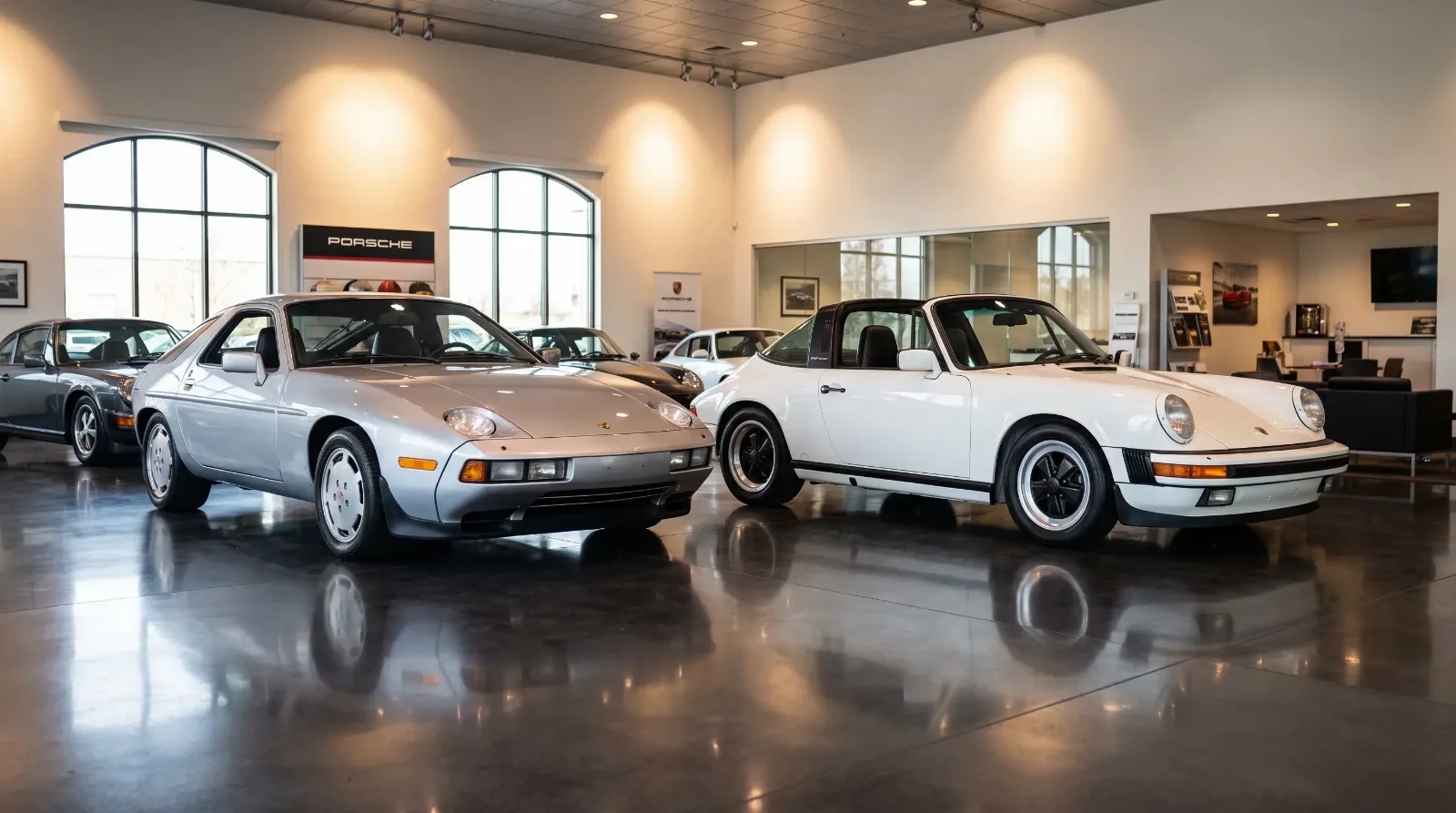
The first time I sat in a Porsche 928, a club member older than my father leaned in the open door and said, "This is the one they thought would bury the 911." He said it the way you talk about a bet that went sideways in the best possible way. He was right on both counts. The Porsche 928 was engineered to end the 911's run, and instead it spent eighteen years becoming a legend of a different kind. The rear-engine car it was meant to replace outlived it by decades. That failure, if you want to call it that, is exactly why club people still argue about the 928 at every swap meet where two of them park nose to tail.
Car Features
8 min read
Porsche 928: The V8 GT Built to Kill the 911
The Porsche 928 was engineered to replace the 911, won 1978 Car of the Year, and instead became a cult legend the rear-engine car outlived.
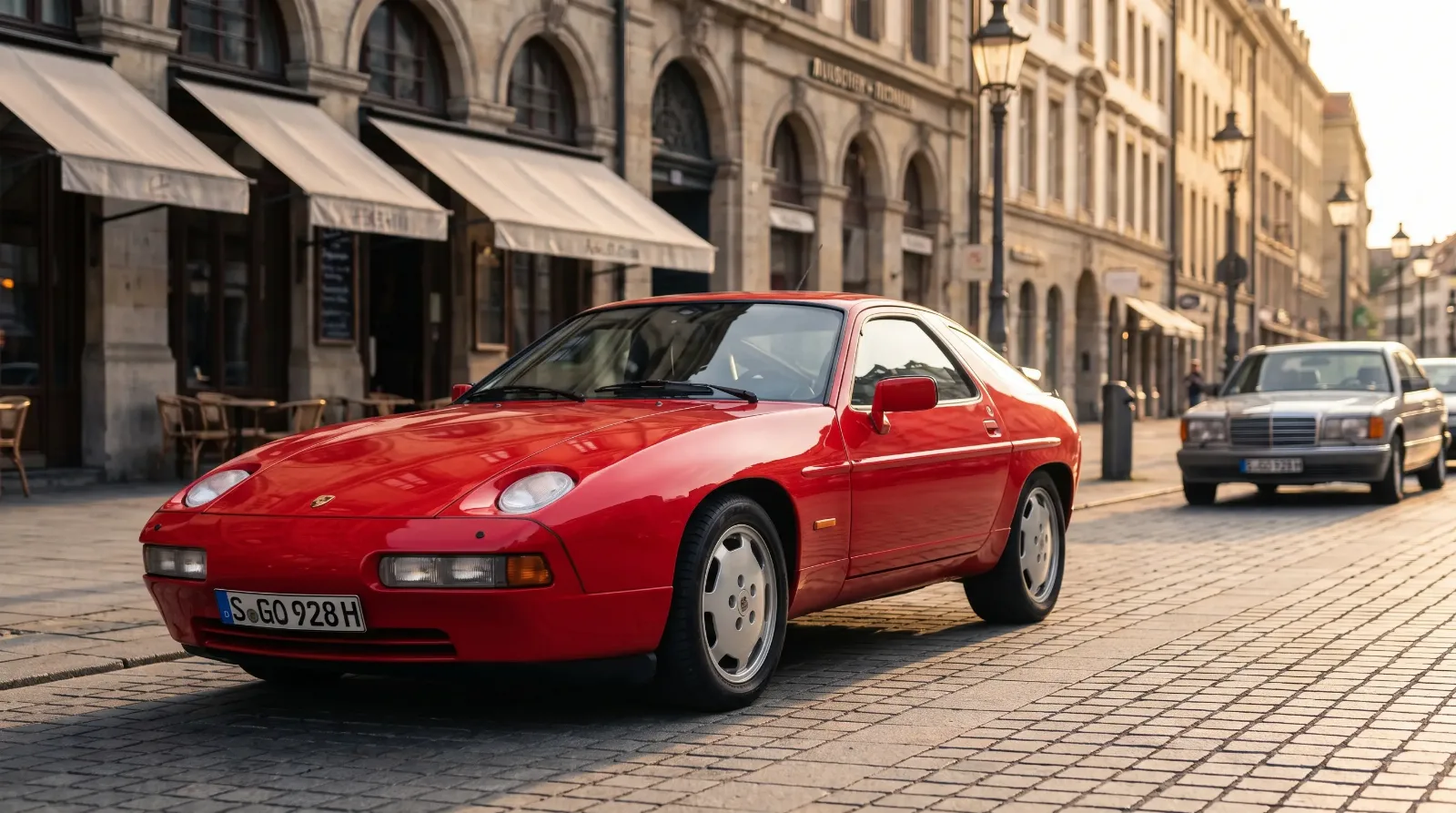
To understand why Porsche built a big front-engine V8 grand tourer in the mid-1970s, you have to remember who was running the place. Ernst Fuhrmann, the engineer behind the old four-cam Carrera motor, took over as chairman in 1972 and looked at the 911 the way an actuary looks at a smoker. He was convinced tightening American safety and emissions rules would kill the rear-engine layout outright. The 928 was his answer: a clean-sheet luxury coupe that owed the 911 nothing.
The car that won an award no sports car had won before
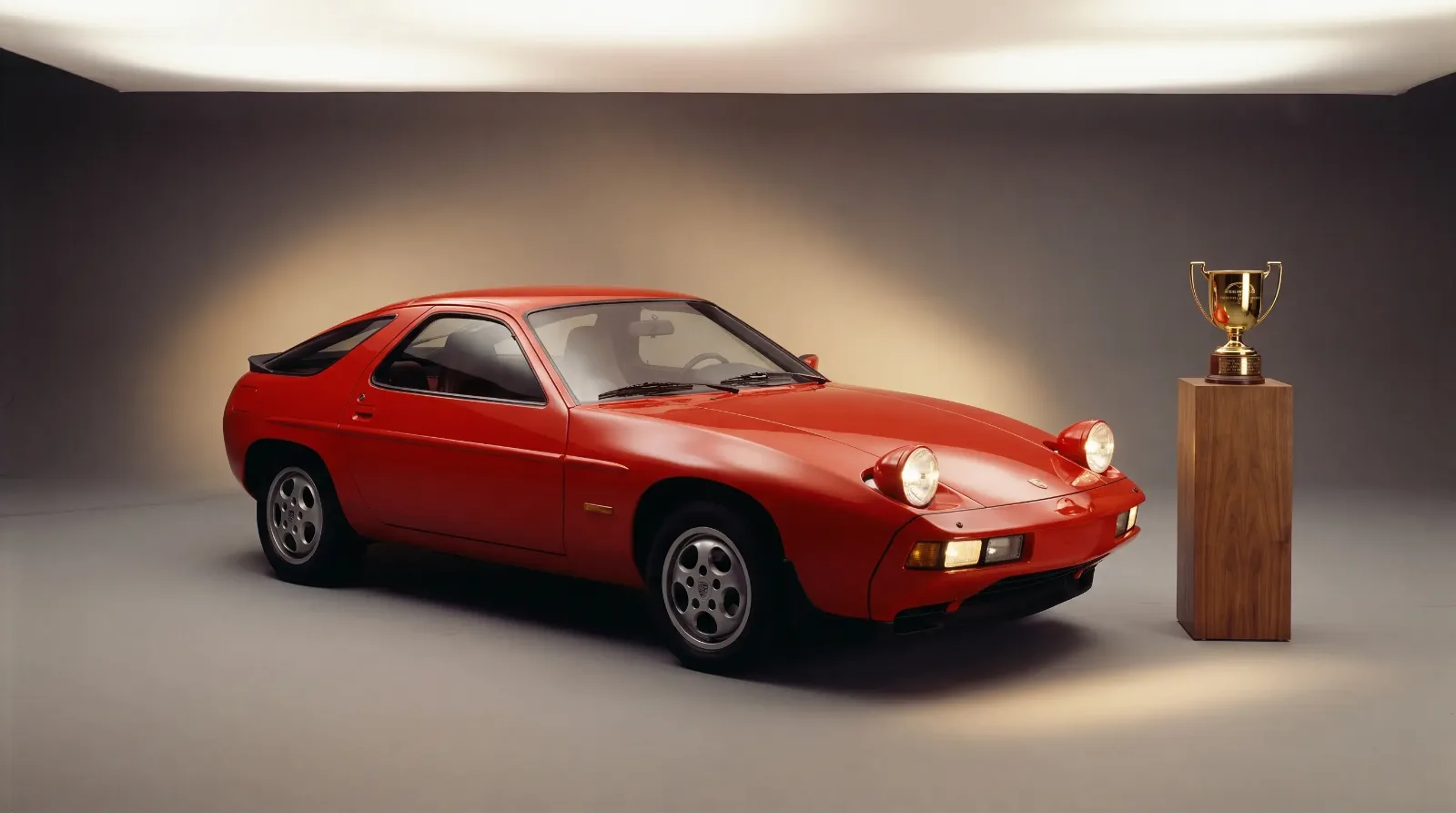
Porsche showed the 928 at the Geneva show in March 1977 and put it on sale as a 1978 model. Then something happened that still gets quoted wrong at shows. The 928 won the European Car of the Year title for 1978. That award normally goes to sensible family hatchbacks and executive saloons, the cars that move in volume. A two-seat, water-cooled, V8 Porsche beating out the practical machinery was unheard of, and to this day the 928 is the only outright sports car to take it. When someone tells you the 928 was a flop from day one, that trophy is the record I put on the table.
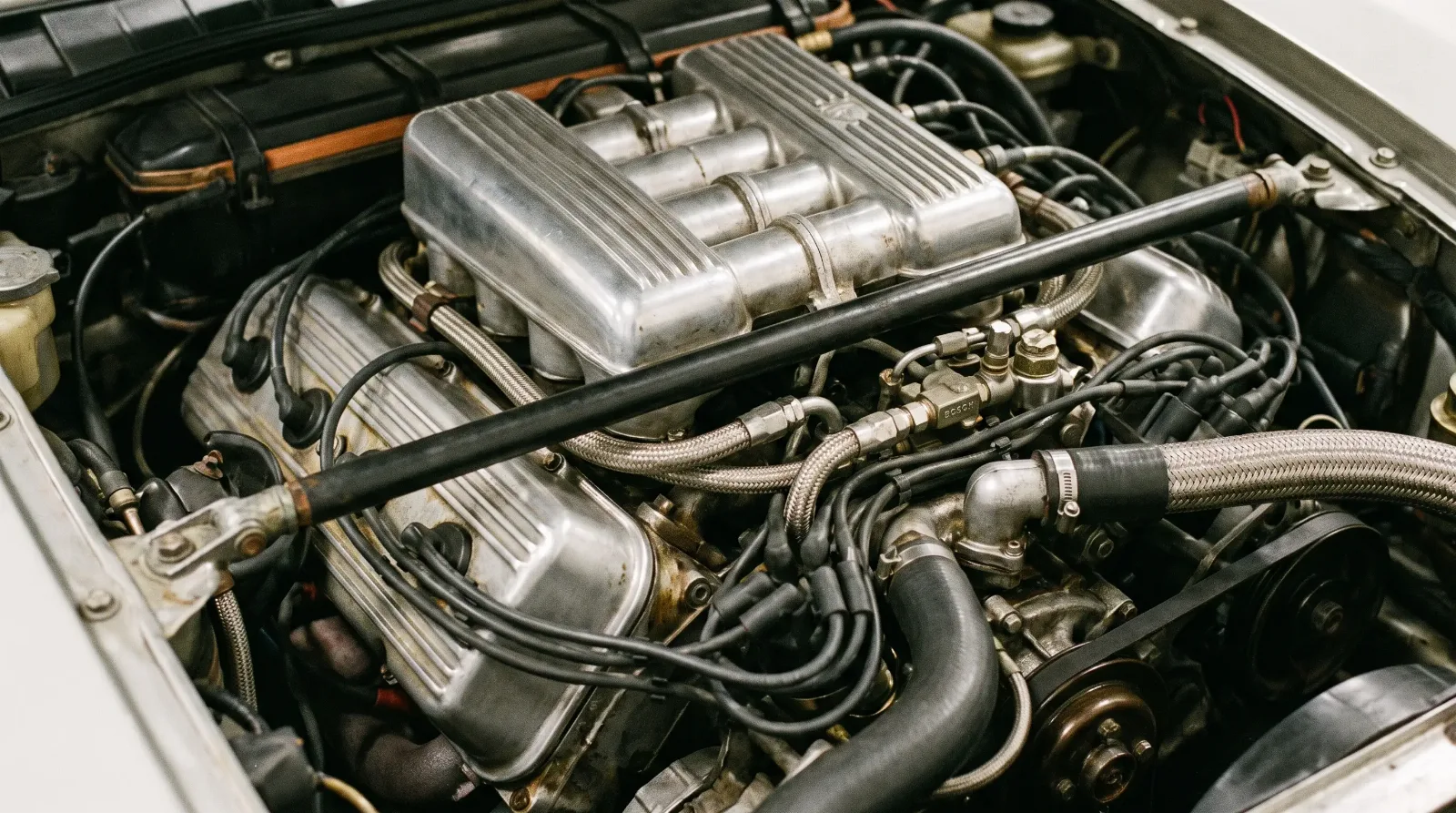
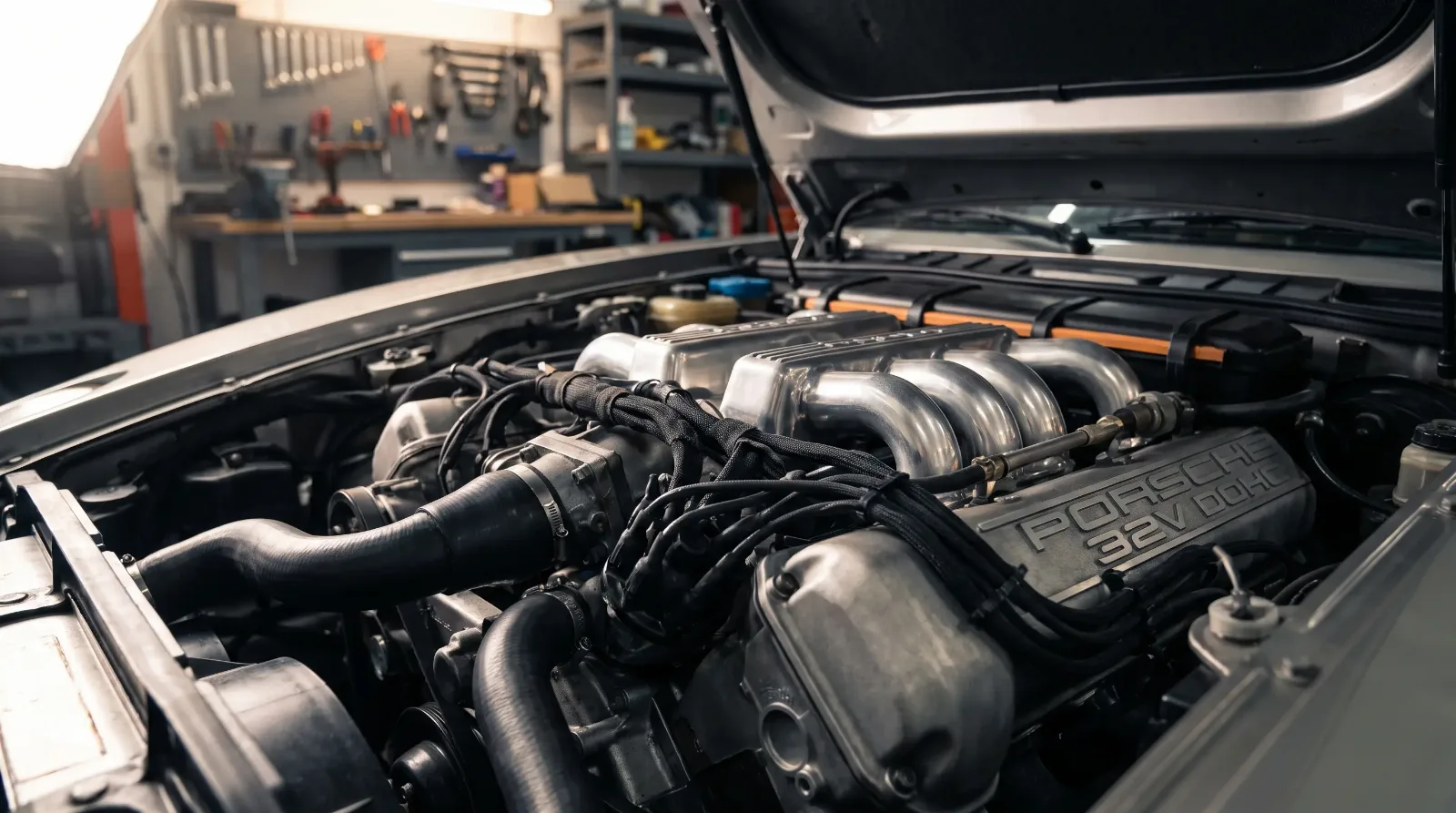
The engine under that long hood was a 4.5-liter aluminum V8, water-cooled, the M28. It made roughly 240 PS in European trim, which came out to about 219 hp in the strangled early US spec. That sounds modest now. In 1977 it was a statement, because Porsche had never built a V8 before and here it was as the heart of the flagship.
Why the whole car was built around balance
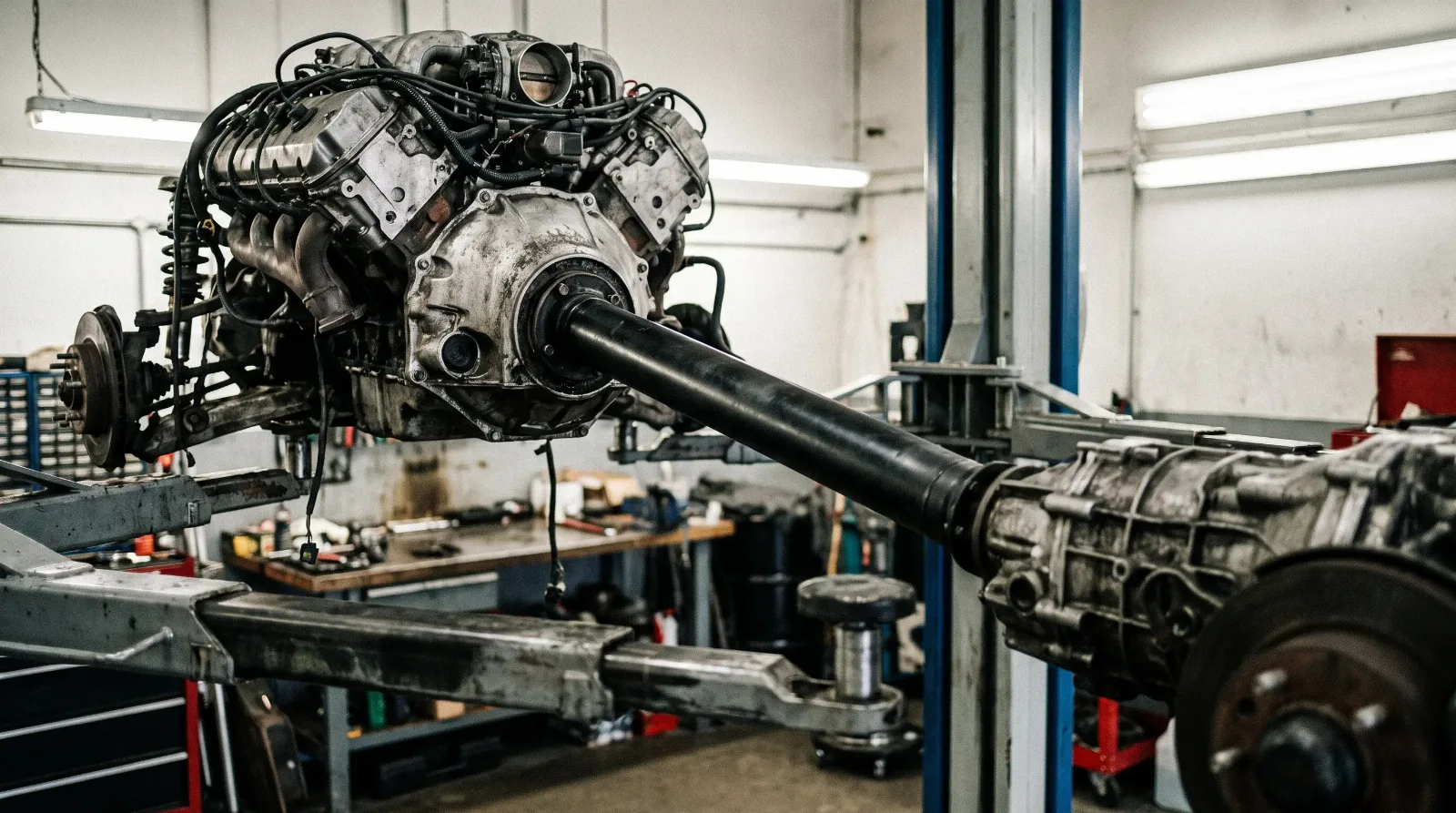
The 928's real cleverness was not the V8 count. It was the layout. Porsche mounted the engine up front and the gearbox back at the rear axle, joined by a rigid tube carrying a driveshaft that spun at engine speed. This transaxle arrangement put roughly half the weight over each end of the car, close to a 50/50 split, and it is the same thinking that later defined the four-cylinder cars. If you want to see how far Porsche pushed that idea across a whole family of models, the 944 is another Porsche worth knowing, built on the same front-engine, rear-transaxle logic.
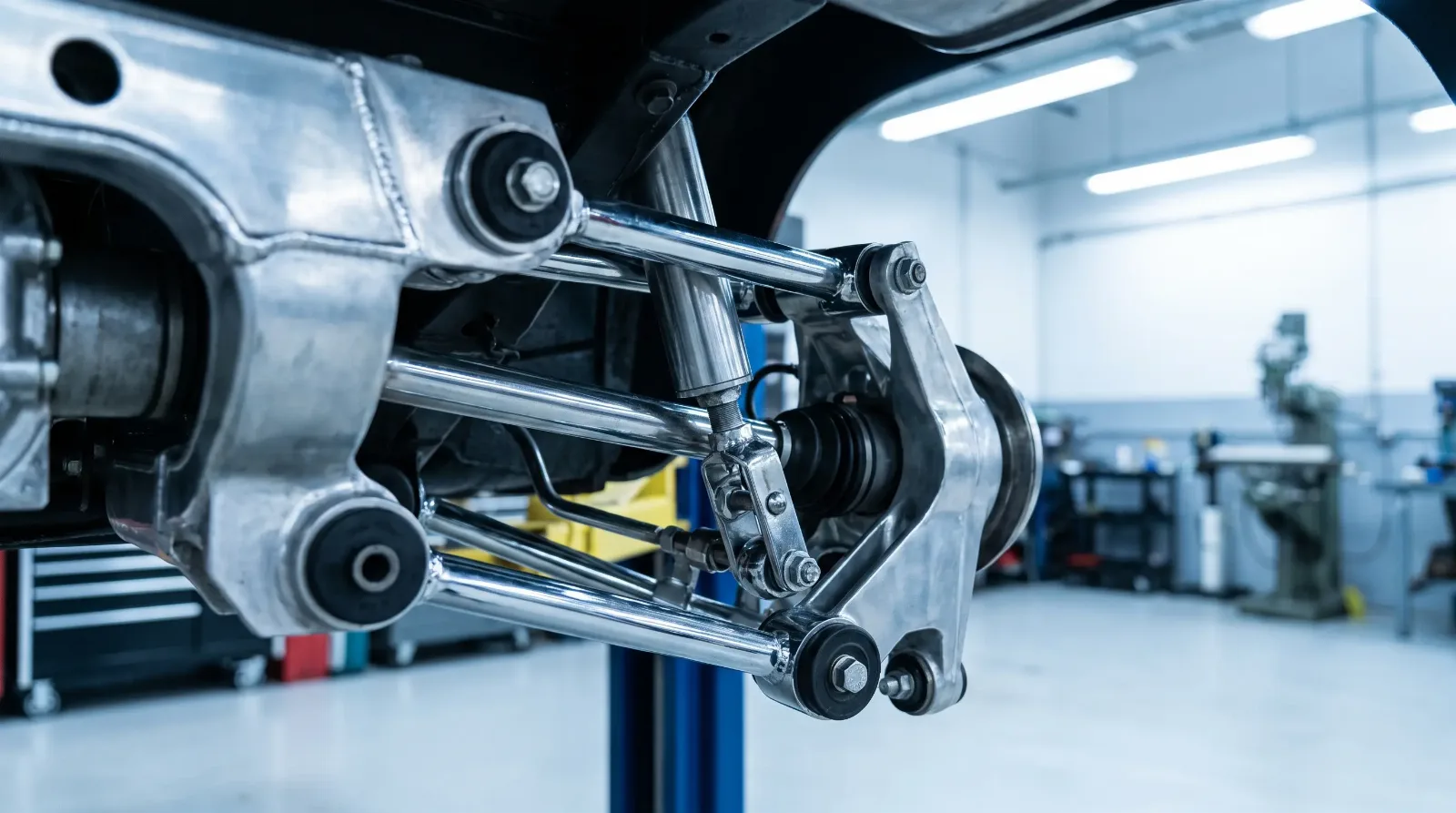
Then there was the piece that engineers still name-drop with a little reverence: the Weissach axle. Named for Porsche's research campus, it was a passive rear suspension geometry that used the forces of lifting off the throttle to nudge the rear wheels into a touch of toe-in. In plain club English, when a nervous driver panicked mid-corner and lifted, the old rear-engine cars would try to swap ends. The 928's rear axle quietly corrected itself instead. It was one of the first production applications of that kind of self-stabilizing geometry, and it is the sort of detail the documentation people love because you can point to the patent and settle the argument.
From S to S4: how the 928 grew up
The base car was quick but not ferocious, so Porsche did what Porsche always does and started turning the dial. The 928 S arrived at the end of the 1970s with a larger 4.7-liter version of the V8 and around 300 PS, plus front and rear spoilers that told you it meant business. American buyers waited until 1983 to get the S officially.
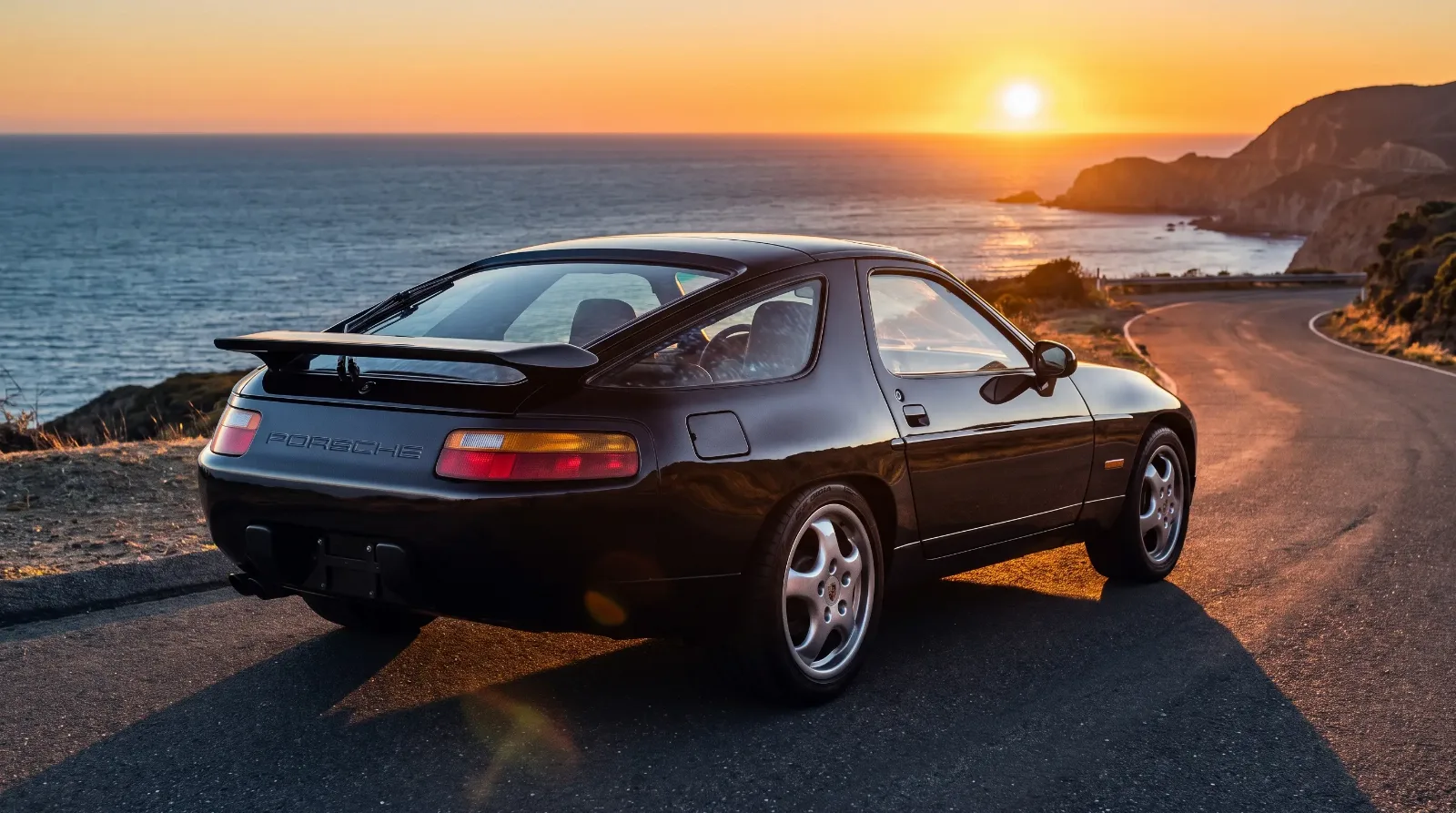
The big leap came in 1987 with the 928 S4. This was the version most people picture when they close their eyes: a smoother, more integrated nose and tail, a cleaner shape that dropped the drag coefficient to around 0.34, and a new 5.0-liter, 32-valve V8 making roughly 320 PS. The S4 turned the 928 from a fast tourer into a genuine 240-plus-km/h autobahn weapon that could still swallow two people and their luggage for a weekend.
Porsche kept sharpening it. The 928 GT of 1989 was the enthusiast's pick, offered with the five-speed manual and a bit more power, stiffer settings, and less of the boulevard softness. It is the variant club purists tend to hunt for, because it drives like the engineers finally stopped apologizing for the automatic-buying customers.
The GTS and the long goodbye
The final and finest chapter was the 928 GTS, sold from 1992 to 1995. Porsche bored the V8 out to 5.4 liters, lifted output to about 350 PS, widened the rear arches so the car finally looked as muscular as it drove, and fitted big brakes to match. It was the most complete 928 ever built, and also the most expensive, which turned out to be the problem. By the mid-1990s a GTS cost close to what a 911 did, buyers who wanted a Porsche coupe kept choosing the rear-engine car, and the 928's numbers dried up.
Production ended in 1995 after eighteen model years. Roughly 61,056 cars were built across the entire run, a small figure for something that stayed on sale that long. The car built to kill the 911 was quietly retired while the 911 carried on, and it has done so ever since.
| Variant | Years | Engine | Approx. output |
|---|---|---|---|
| 928 | 1977-1982 | 4.5L V8 | 240 PS |
| 928 S | 1979-1986 | 4.7L V8 | 300 PS |
| 928 S4 | 1986-1991 | 5.0L 32v V8 | 320 PS |
| 928 GT | 1989-1991 | 5.0L 32v V8 | 330 PS |
| 928 GTS | 1992-1995 | 5.4L 32v V8 | 350 PS |
Why it never killed the 911, and why that matters
Here is the part club people actually argue about. The 928 was, by most objective measures, the more advanced car. Better weight distribution, a modern water-cooled V8, a self-correcting rear axle, a cabin with an instrument binnacle that moved with the adjustable steering column so the gauges never disappeared behind the wheel. It should have won. It didn't, and the reasons are human, not technical.
The 911 had something the 928 never bought at any price: a racing record and a shape people already loved. Buyers did not want the clever grand tourer. They wanted the difficult, characterful, rear-engine car their heroes drove at Le Mans. Fuhrmann underestimated loyalty, and loyalty won. That whole tension between what Porsche's engineers thought was best and what customers actually wanted is the spine of the classic Porsche story, and the 928 sits right at the center of it.
The upside for enthusiasts today is that the 928 spent decades as the affordable, misunderstood Porsche. That is finally changing as people recognize what the car always was. If you have caught the bug, it is worth watching what a good, documented classic Porsche 928 for sale actually asks now, because the GTS and clean manual cars have stopped being cheap.
"The 928 lost the sales fight and won the argument. Every time a club member tells me it should have replaced the 911, I just point at the balance sheet of history: the underdog became the cult car, and the cult car is the one we can't stop talking about."
Wayne Coburn
Every classic Porsche gathering has that one 928 owner who has heard the flop story a thousand times and just smiles. He knows the car was too good and too soon, an engineer's idea of the future that arrived before the buyers were ready for it. The 911 got the glory. The 928 got the last laugh, and a growing crowd of people who finally understand the joke.
Sources and notes
Related Reading
Article
The Classic Porsche Story: From 356 to the Air-Cooled Icons
Article
Porsche 914: The Mid-Engine Outsider VW Nearly Owned
Article
Porsche 944 & the Transaxle Heretics (924·944·968)
Article
The Car Meant to Replace the 911
Article
The 928's V8: Water-Cooled Heresy
Article
1978 Car of the Year: The Only Sports Car to Win
Article
The Weissach Axle: An Engineering Breakthrough
Article
928 S to S4: The Evolution
Article
The 928 GTS: The Last & Best
Article
The 928 in Risky Business & Pop Culture
Article
The Transaxle Layout: Why the 928 Handles
Article
Once the Cheapest Way Into a Porsche
Article
The 928 GT & the Manual Purist's Choice
Article
The Shark: Tony Lapine's Design Vision
Article
Pop-Up Headlights & the Space-Age Interior
Article
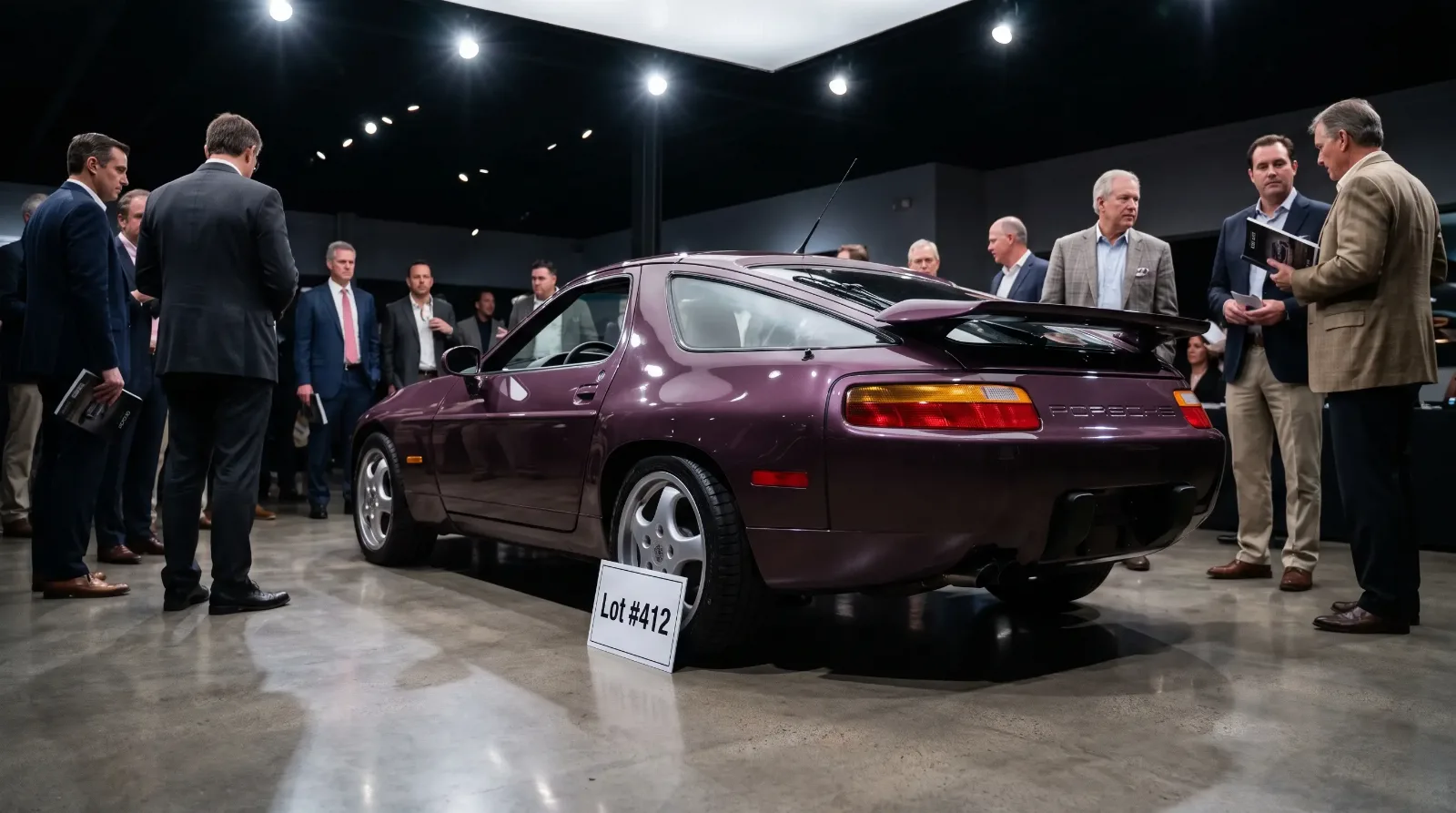
The 928's Long Climb to Collectibility
Article
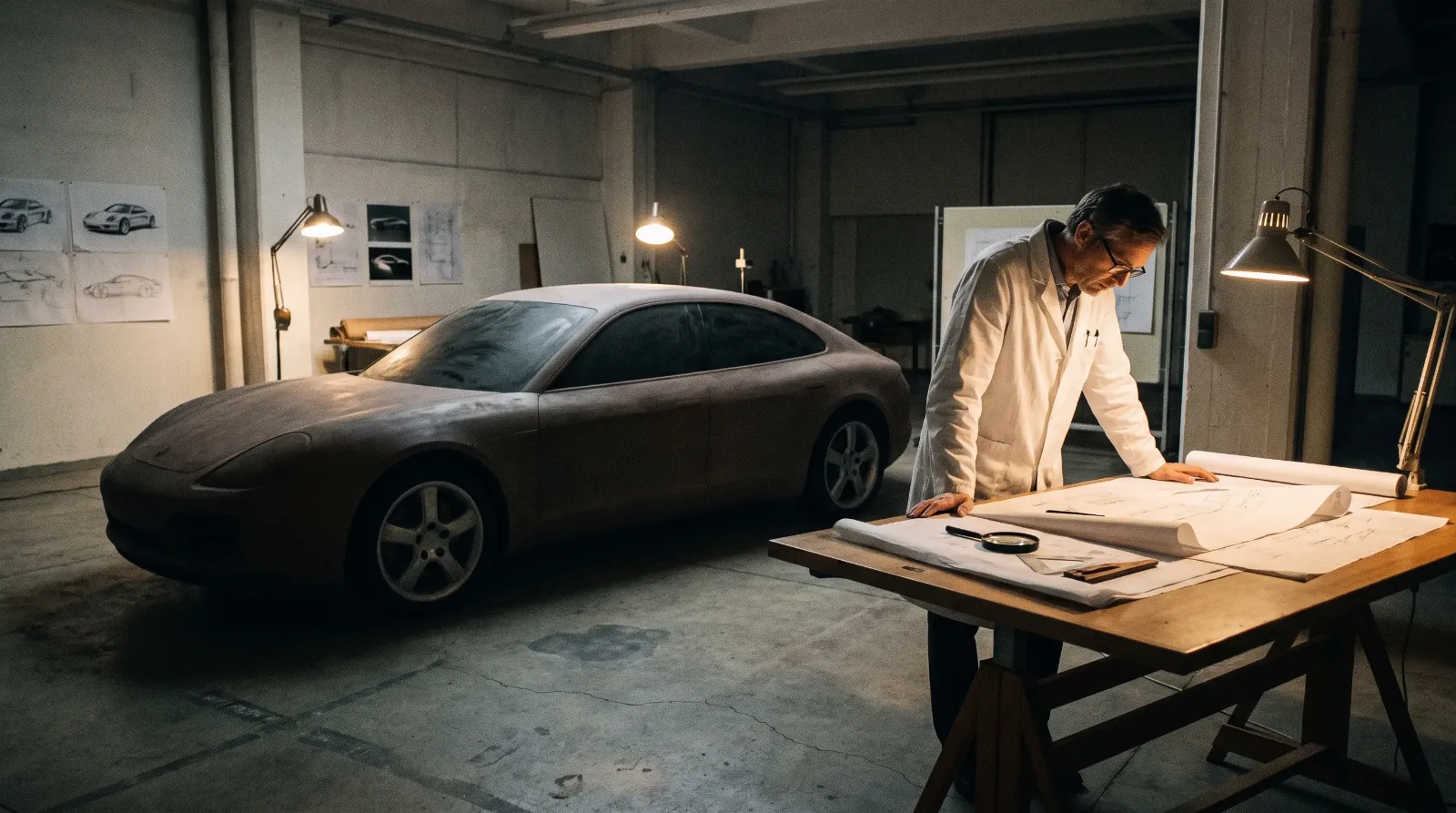
The Aborted 928 Successors
Article
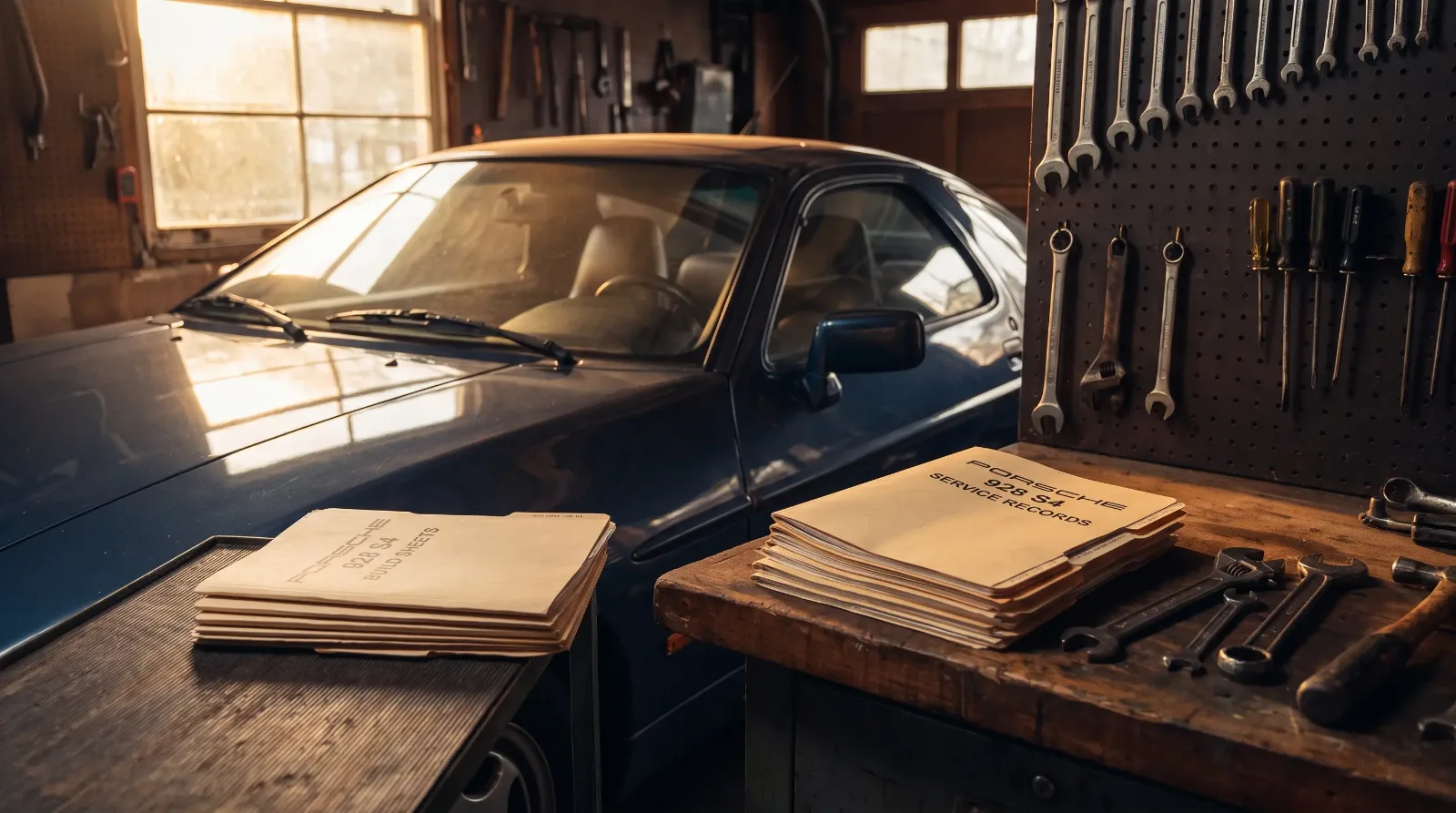
Why Owners Love & Fear the 928
Have a
Porsche
for Sale?
Reach thousands of serious classic car collectors across the US.
Sell It Here →
Are You a Classic Car Dealer?
List your full inventory and connect with targeted classic car buyers.
Join as a Dealer →

About the author
Wayne Coburn
Longtime Corvette owner, judge and club figure who knows the cars, the records and the people behind them.
Related Listings - Porsche




Comments
Be the first to comment on this article.