Porsche homologation cars exist because racing rulebooks, not marketing departments, decided what Porsche would sell to the public. Every homologation special carries the same blunt logic: build enough road cars to satisfy a sanctioning body's minimum production requirement, then go racing with a version that barely resembles what a customer drives home. Understanding that trade is the fastest way to understand why some of Porsche's strangest, most expensive cars exist at all.
What "homologation" actually requires
Racing categories set minimum production numbers so that a "production car" class does not quietly become a one-off prototype class. The FIA's Group 4 rules in the early 1970s required 500 identical units within a set period. Group B rally regulations in the 1980s dropped that number to 200. GT1 rules in the 1990s were looser still, sometimes satisfied by a single documented road car built after the racer, not before it. Porsche read every one of these thresholds as a target to hit exactly, not a floor to exceed, and built precisely as many street cars as the rule demanded, no more.
That arithmetic explains why homologation Porsches are rare almost by design. The company was not trying to build a profitable product line, it was manufacturing regulatory compliance, and 200 or 400 units of an expensive, difficult car was already a stretch for the sales network of the era.
It also explains a pattern buyers notice once they know to look for it. Homologation-era Porsches tend to strip weight and add capability at the same time, wider fenders, thinner glass, deleted sound insulation, larger brakes, because the road car had to be close enough to the racer that the sanctioning body accepted it as the same basic vehicle. A homologation special that felt too civilized risked scrutiny from rival teams eager to protest a competitor's paperwork.
The Carrera RS 2.7 and the Group 4 minimum
The 911 Carrera RS 2.7 is the clearest early example. Porsche needed 500 units built to qualify a lightened, larger-engined 911 for Group 4 competition. The road car that resulted, thin steel body panels, a ducktail spoiler, a 2.7-liter flat-six making around 210 horsepower, was never meant to be a volume seller. It was meant to exist in exactly the quantity the rulebook demanded so the racing version could compete legally. Buyers who wanted the lightest, most focused 911 of the era ended up with what the racing department needed built anyway.
Porsche reportedly underestimated demand once the car reached dealers, and the initial run sold out faster than the sales team expected, forcing a second production batch simply to satisfy customers who had nothing to do with racing at all. That is the odd irony of homologation specials done well: a car built reluctantly to satisfy a minimum quota can end up being the version enthusiasts want most, decades after the racing program it justified is long forgotten.
Group B and the 959's real purpose
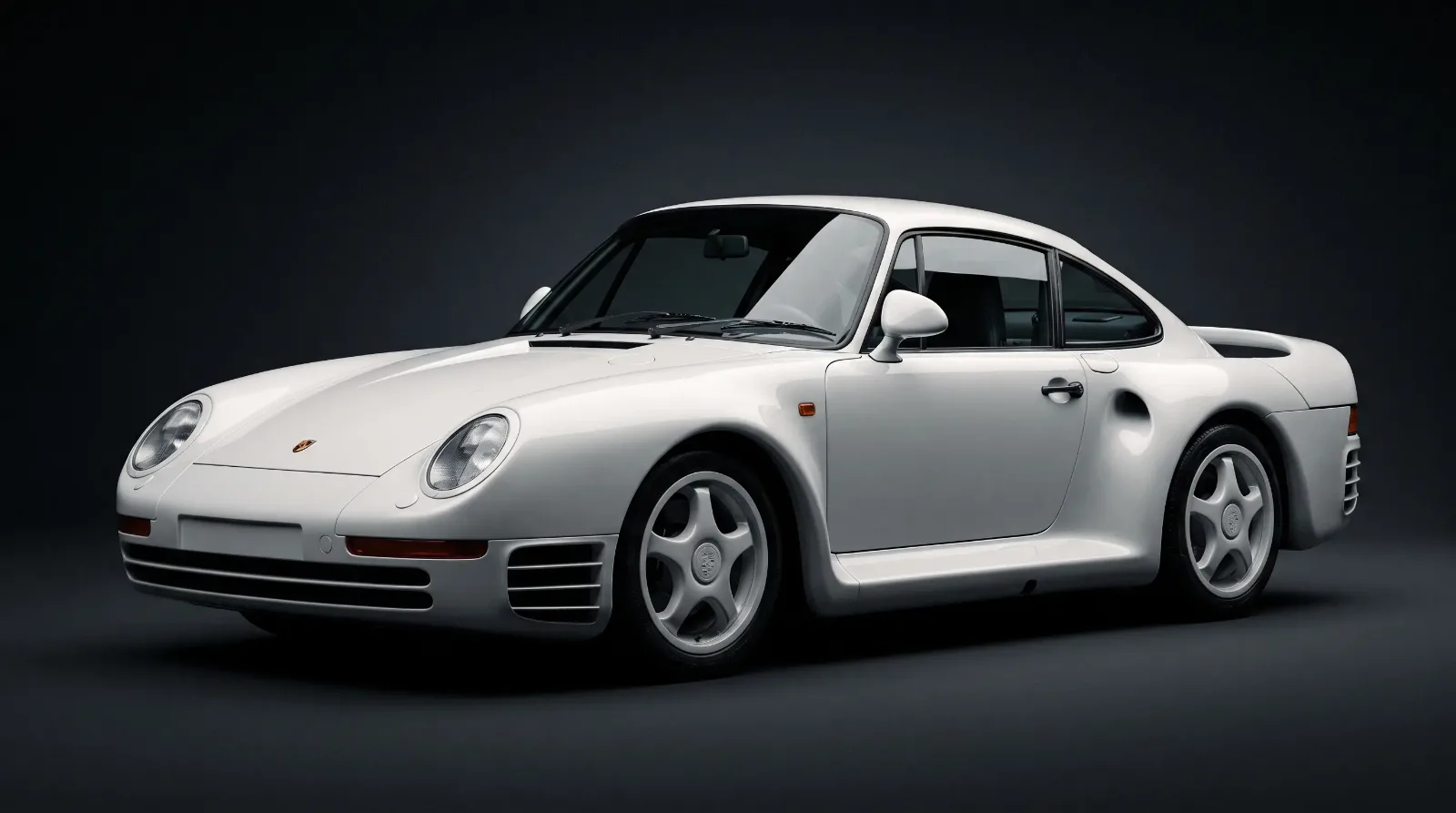
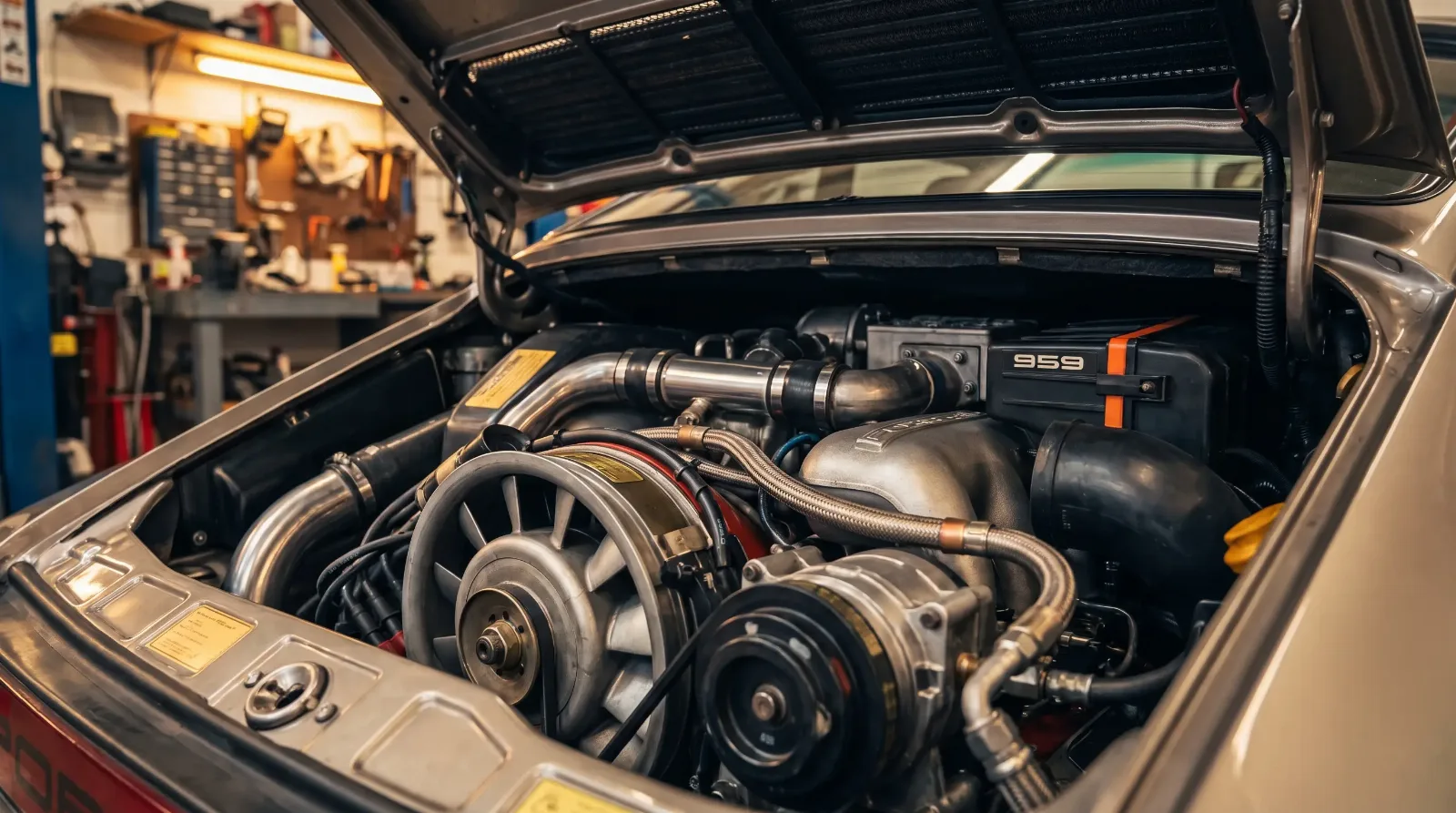
By the mid-1980s the calculation shifted again. Group B rally regulations required 200 road-going units, and Porsche's answer was the 959, a car so far beyond anything else on sale that the road version arguably overshadowed the rally program it was built to support. All-wheel drive with variable torque split, sequential twin-turbocharging, and a magnesium wheel and run-flat tire package developed specifically for the car went into a "homologation special" that ended up defining Porsche engineering for the next two decades. Group B itself was banned before the 959 could prove itself in top-level rallying the way it was designed to, which makes the road car's legacy almost entirely disconnected from the racing program that justified building it.
That disconnect is worth sitting with. Porsche spent enormous engineering resources chasing a rally category that governing bodies shut down after a string of fatal accidents involving other manufacturers' Group B cars. The 959 never got to prove its rally credentials on the stages it was designed for, yet the road car survived that cancellation entirely intact as a commercial and engineering achievement in its own right, arguably more famous today than any Group B result would have made it.
| Homologation special | Rule satisfied | Minimum units |
|---|---|---|
| 911 Carrera RS 2.7 | FIA Group 4 | 500 |
| 959 | FIA Group B rally | 200 |
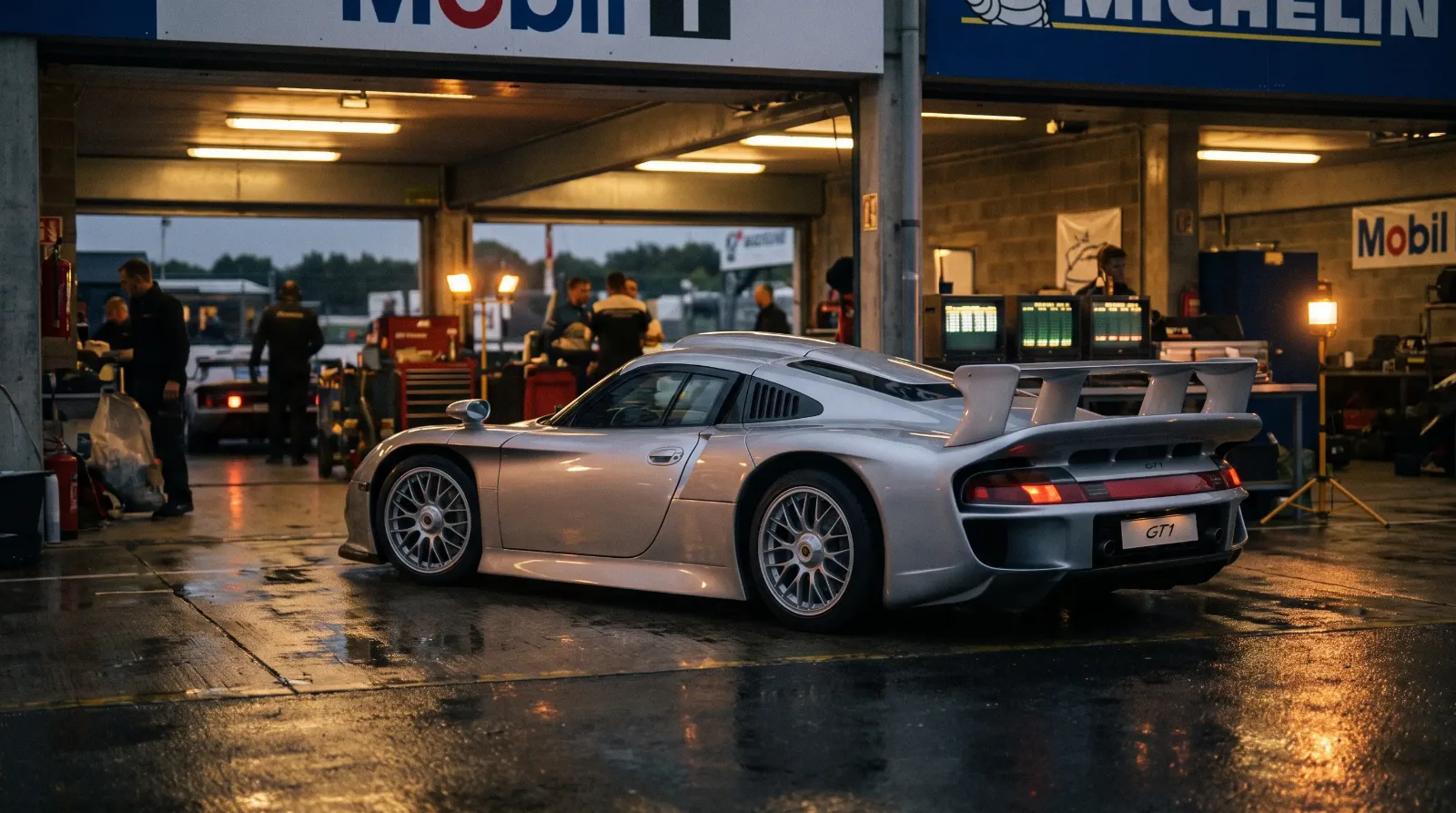
| 911 GT1 Strassenversion | GT1 class road-car rule | around 21 built |
GT1 and the loophole years
By the 1990s the homologation requirement had loosened so far that Porsche could build a race car first, the mid-engine 911 GT1, and reverse-engineer a tiny number of street versions afterward purely to satisfy the letter of the rule. This is the opposite order of the Carrera RS and 959 stories, where the road car came first and racing followed. It is also why GT1-era homologation specials are the rarest and most extreme of the three eras, since the sanctioning bodies had stopped forcing any real production volume at all.
Rival manufacturers exploited the same loosened language in their own ways during the same period, which is part of why the GT1 class eventually collapsed under its own contradictions. When the road-car requirement becomes a formality rather than a genuine production constraint, the category stops meaning what it was originally designed to mean, and regulators eventually rewrite the rules again. Porsche's GT1 program is remembered as much for exposing that weakness as for winning races with it.
"Every homologation Porsche is really a compliance document that happens to have four wheels. The number built is not a marketing decision, it is the minimum the rulebook allowed, and that is exactly why they are worth what they are worth today."
— Marcus Feld
What this means for collectors today
Understanding the regulatory origin of these cars changes how a buyer should think about value. A homologation special was never priced or built as a normal product, so comparing it to a standard production 911 on any conventional metric misses the point entirely. Scarcity here is not artificial marketing scarcity, it is scarcity mandated by a sanctioning body decades ago, and that distinction matters when a seller tries to justify a price on rarity alone.
The three eras covered here connect directly to the halo-car chapter of Porsche's history, where regulatory pressure and engineering ambition kept colliding to produce increasingly extreme road cars. Readers who want to see where the 959's specific engineering solutions ended up afterward should read a related deep-dive on that subject. For the full arc of Porsche's classic era, from the earliest 356 through the homologation years and beyond, our Porsche retrospective lays out the sequence in full.
None of this is trivia. A buyer who understands why a car exists in exactly the quantity it does is better positioned to judge whether an asking price reflects genuine scarcity or just a seller's optimism about a word, homologation, that has more history behind it than most listings bother to explain.