
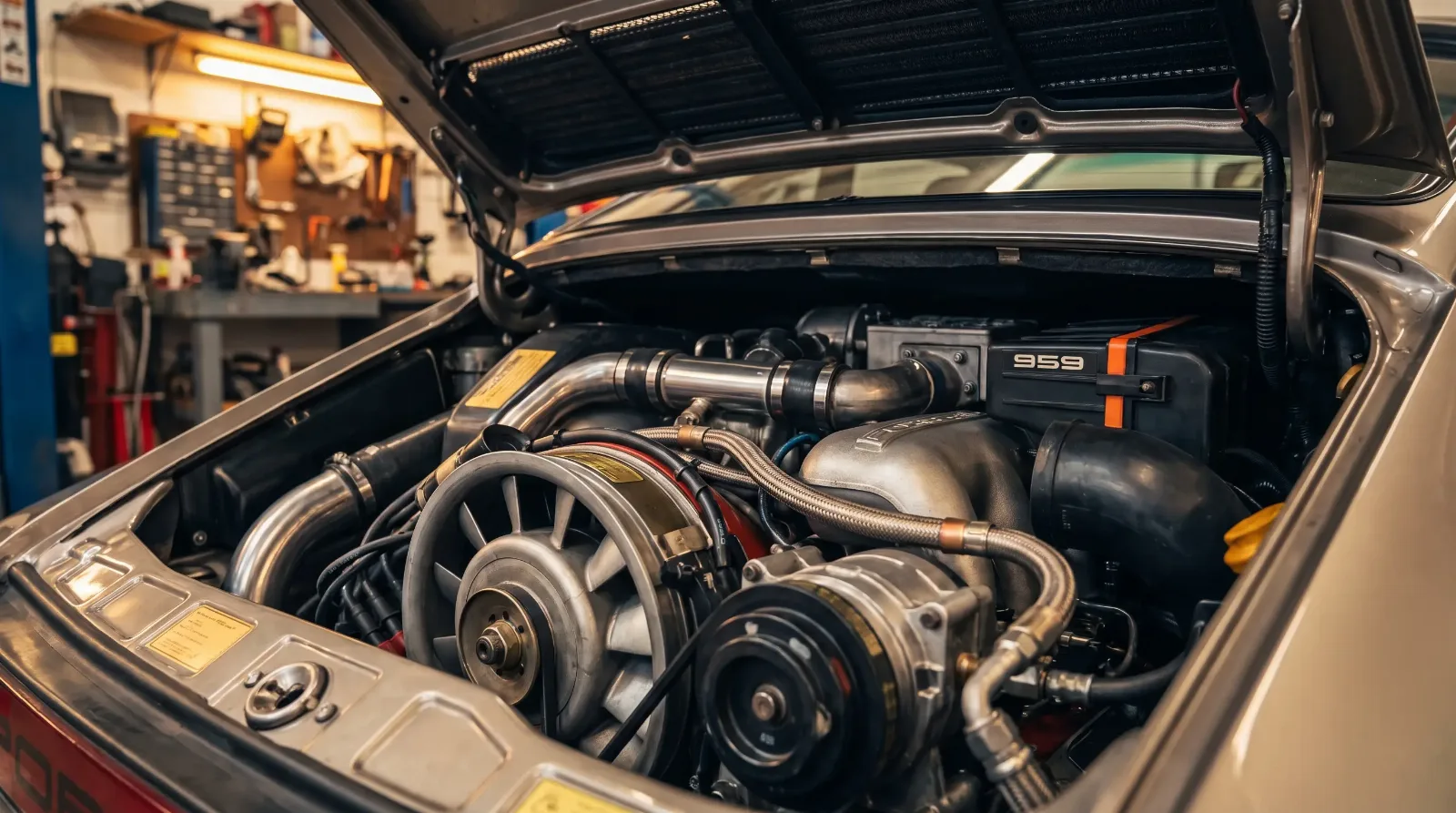
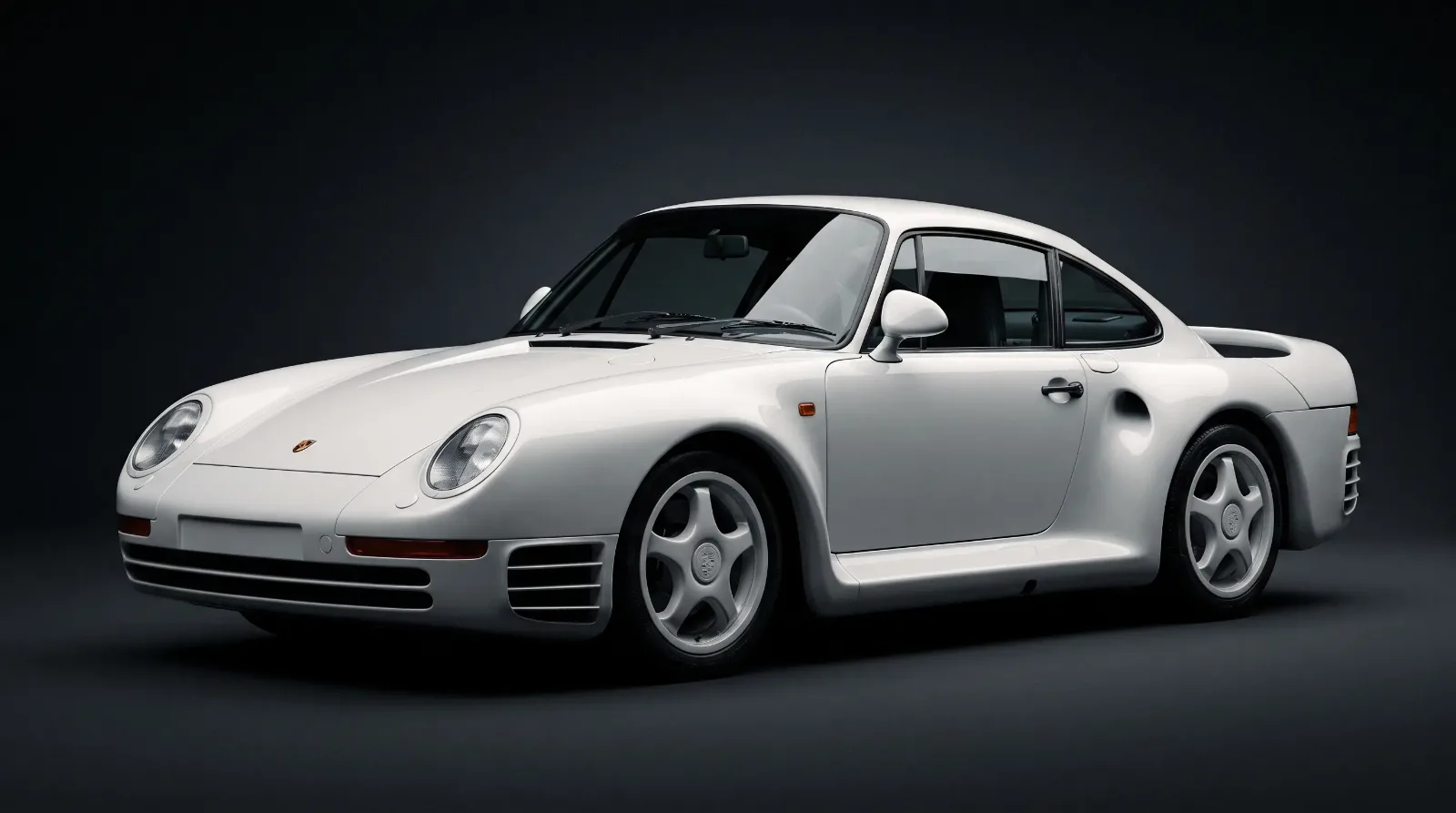
Porsche 959 technology did not stay locked inside the roughly 292 customer cars built between 1986 and 1988 (337 total including prototypes). Almost every system that made the 959 remarkable on paper eventually showed up, in some modified form, on a 911 you could actually buy new. That trickle-down path is the real reason the 959 matters more than its tiny production number suggests, and it is worth tracing system by system rather than treating the car as a museum piece.
Car Features
6 min read
The 959's Tech That Trickled Down
Porsche 959 technology, from adjustable all-wheel drive to tire pressure monitoring, did not stay locked inside 292 cars. Here is where it resurfaced.
All-wheel drive that became the Carrera 4
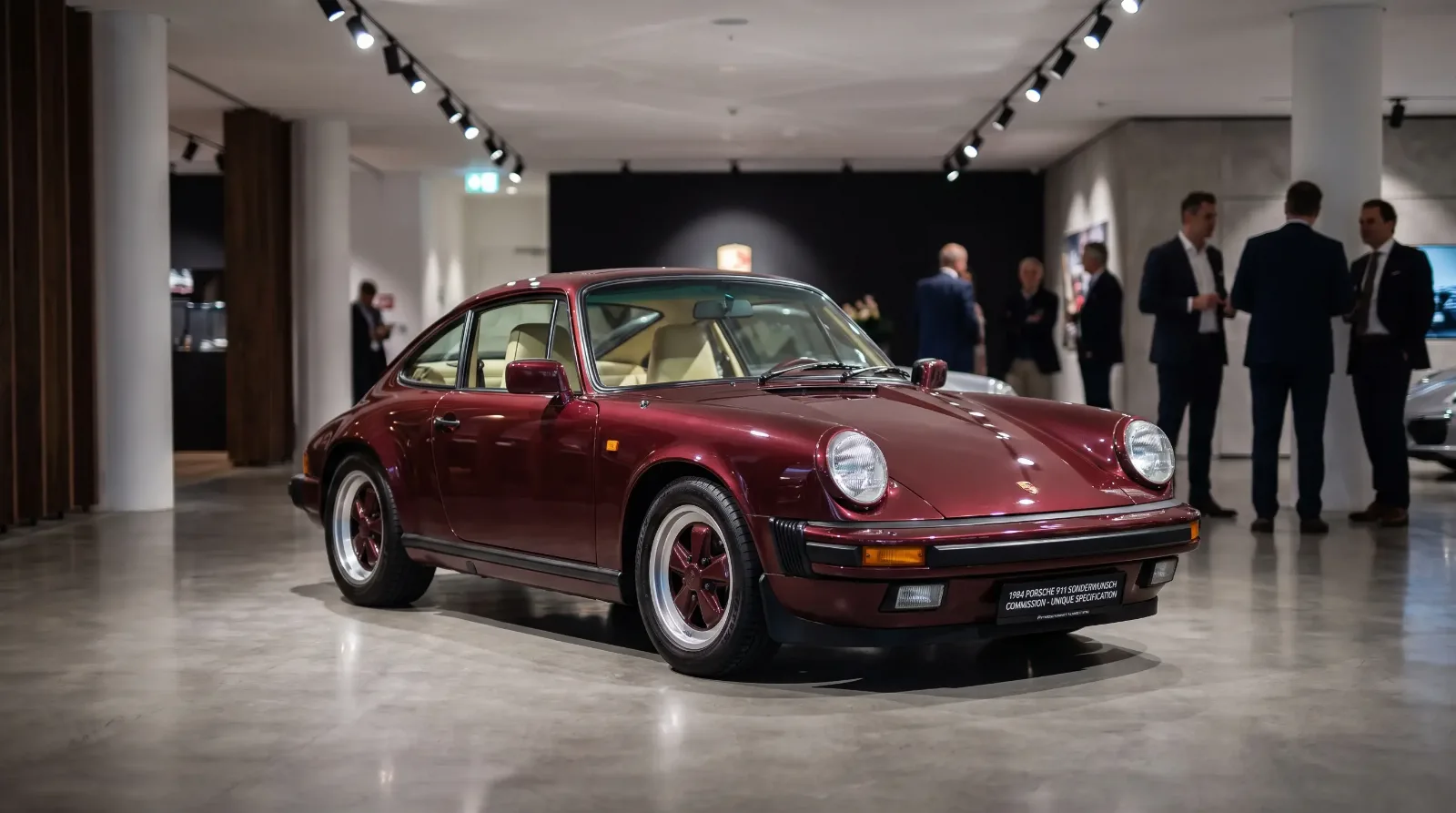
The 959's most consequential system was PSK, Porsche's electronically managed all-wheel-drive setup that varied torque split between front and rear axles based on wheel slip, throttle position, and road speed. It was adjustable by the driver between dry, wet, and ice settings, a level of driver-facing control that was unusual for 1986. Two years after the 959 ended production, Porsche launched the 911 Carrera 4 for the 1989 model year with a simplified, more affordable all-wheel-drive system directly descended from that work. The Carrera 4 was not a coincidence sitting next to the 959 on the timeline, it was the commercial payoff of the 959's engineering investment.
The engineering team responsible for PSK reportedly treated the 959 program as a proving ground specifically because a low-volume halo car could absorb the cost of getting a genuinely new system wrong in ways a mainstream production line could not. That is the practical argument for building expensive, unprofitable flagship cars at all: they let a manufacturer make expensive mistakes on a few hundred units instead of tens of thousands.
Tire pressure monitoring before anyone else had it
The 959 is credited as the first production car with a functioning tire pressure monitoring system, feeding data to the driver about pressure in real time. That feature sat dormant as a Porsche-only trick for years before tire pressure monitoring became first an option and eventually a regulatory requirement across the entire industry. Few drivers glancing at a dashboard warning light today know the feature traces back to a 1980s homologation special built in low three-digit numbers.
The 959 rode on Bridgestone-developed run-flat tires, and the reason the monitoring system existed at all traces back to those run-flats themselves. A driver relying on a run-flat at speed needs to know immediately when pressure has dropped, since the tire's structure can mask the handling symptoms that would normally warn a driver on a conventional tire. Porsche solved that problem with sensors rather than asking the driver to guess, and the logic of that solution outlived the specific tire technology it was built to support.
Sequential turbocharging and adjustable ride height
Where most turbocharged cars of the era used a single large turbo with real lag off boost, the 959 used two sequentially operating turbochargers, a smaller one spooling first for low-end response and a second joining at higher engine speeds to maintain output without the flat spot. That sequential approach influenced turbocharger strategy on later Porsche models built for a broader customer base, where smoothing out lag mattered as much as peak output.
The 959 also offered electronically adjustable ride height and damping, letting the driver raise the car for rough roads and lower it for high-speed stability. That idea of software-managed suspension response, rather than a fixed mechanical compromise, became a standard expectation on later performance Porsches, long after the 959's specific hardware was retired.
This mattered because the 959 was explicitly designed to do two contradictory jobs, win a punishing rally like the Paris-Dakar and also function as a usable road car for a wealthy private buyer. A fixed suspension tune could not do both well. Letting the driver, or the car's own electronics, choose the right compromise for the moment was the only way to actually satisfy both requirements, and that same logic underpins every adjustable damping system Porsche has sold since.
| 959 technology | Where it resurfaced |
|---|---|
| PSK variable all-wheel drive | 911 Carrera 4, 1989 |
| Tire pressure monitoring | Later Porsche options, eventual industry standard |
| Sequential twin-turbocharging | Later turbo Porsche engine strategy |
| Adjustable ride height and damping | Later active suspension systems |
| Magnesium wheels, run-flat tires | Specialist high-performance wheel and tire packages |
Why the trickle-down took years, not months
None of this transferred instantly. Porsche was a small manufacturer with limited engineering budget in the late 1980s, and the 959 had already consumed a disproportionate share of it. Systems developed for a few-hundred-unit halo car had to be simplified, cost-reduced, and made durable for a customer base that would put far more miles on far more cars than any 959 owner ever would. The Carrera 4's all-wheel-drive system, for example, was noticeably less elaborate than the 959's driver-adjustable setup, trading some capability for reliability and manufacturing sense.
"People treat the 959 as a museum piece, a car too rare to matter. That undersells it. The real return on that car showed up years later in systems buyers never connected back to it, which is usually how the best engineering actually pays off."
Marcus Feld
The legacy in context
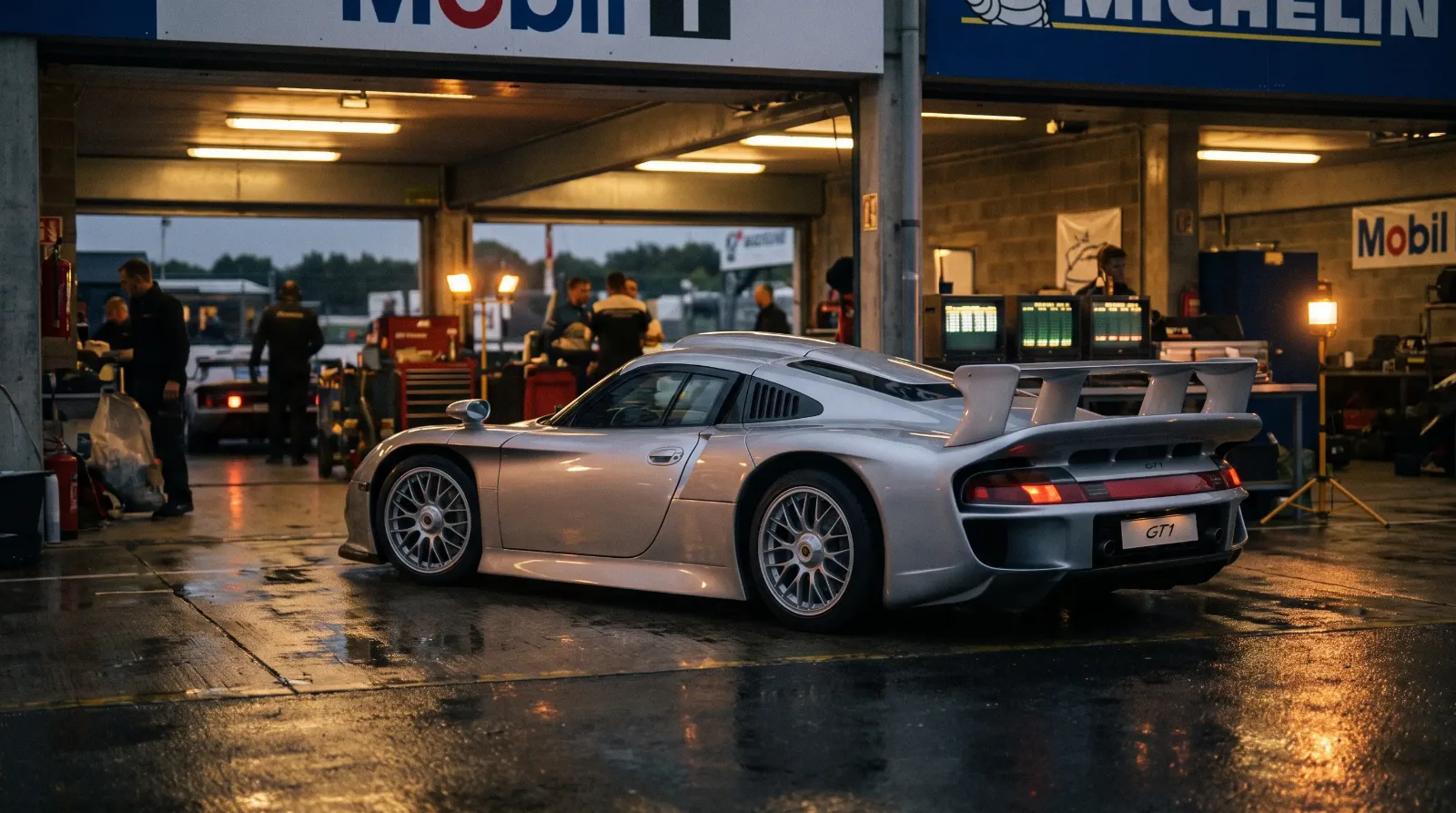
This technology story only makes sense alongside the broader account of the 959 and the halo cars Porsche built under similar pressure to push past what the regulations and the market expected. The 959 was never really about the small number of units it produced, it was a rolling engineering test bed that happened to be sold to customers. For readers following this set of stories in order, the next story in this set continues from here.
Judged purely on trickle-down impact, the 959 outperforms cars that sold in far greater numbers. A halo car's real job is not to be profitable on its own, it is to justify engineering work that eventually reaches everyone else, and by that measure the 959 did exactly what it was built to do.
Sources and notes
Related Reading
Have a
Porsche
for Sale?
Reach thousands of serious classic car collectors across the US.
Sell It Here →
Are You a Classic Car Dealer?
List your full inventory and connect with targeted classic car buyers.
Join as a Dealer →
#Porsche 959 technology
#959 all-wheel drive
#PSK system
#tire pressure monitoring
#911 Carrera 4
#classic Porsche engineering

About the author
Marcus Feld
Accredited collector-car appraiser who reads the market through hammer prices, condition tiers and risk.
Related Listings - Porsche
Comments (2)
S
Steve Macaluso
1 month ago
Color combinations matter more than most buyers think. Original paint codes add real value; wrong-era repaints subtract from it.
R
Ray Staubach
1 month ago
The point about project cars hiding real costs needs to be said louder. I've seen people 'save' $5k on purchase price and spend $40k on what they didn't know about.