
A classic Porsche is easy to romanticize and hard to explain, so let me try the engineering route instead. Strip away the auction hype and what you find is one stubborn idea, refined over five decades: put a flat engine behind the rear axle, keep the mass low, keep the frontal area small, and let aerodynamics and weight distribution do the work that a bigger engine would otherwise have to. That idea started in a small Austrian sawmill workshop in the 1940s and it carried a company from a single aluminum-bodied roadster to the most recognizable sports car silhouette on the planet. The story is not one of sudden genius. It is one of iteration, and iteration is something I trust.
Car Features
13 min read
The Classic Porsche Story: From 356 to the Air-Cooled Icons
One stubborn idea, refined over five decades: the rear engine, the flat six, and the fifty-year iteration that turned an engineering compromise into an icon.
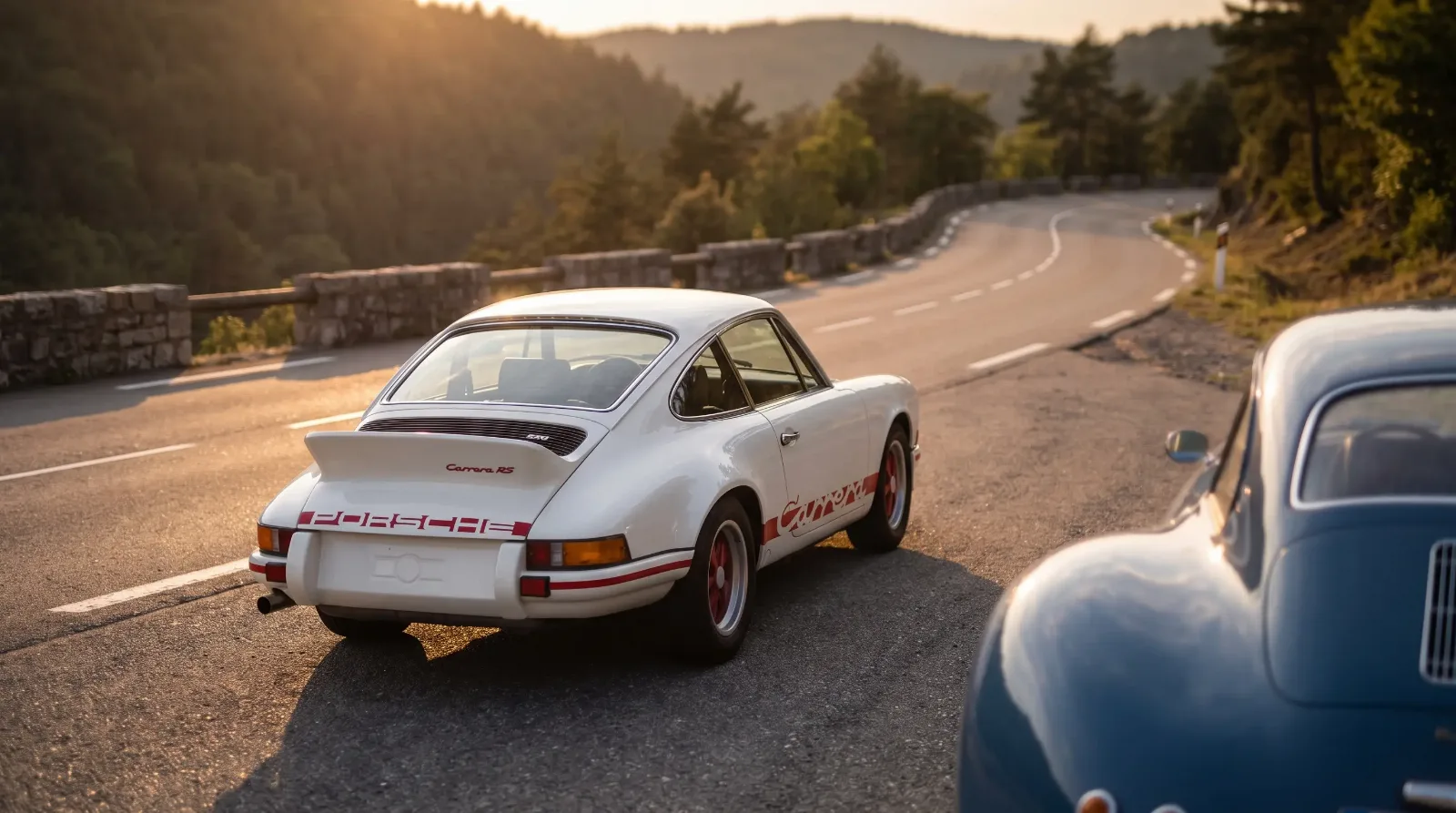
Ferdinand "Ferry" Porsche did not set out to reinvent the car. He wanted one he liked and could not buy, so he built it. The 356 that resulted in 1948 borrowed heavily from the Volkswagen Beetle his father's design office had created before the war: the same air-cooled flat-four layout, the same torsion-bar suspension logic, the same commitment to doing a lot with very little. That inheritance matters. Every classic Porsche that followed is an argument about how far you can push a fundamentally compromised layout before the compromise becomes an advantage.
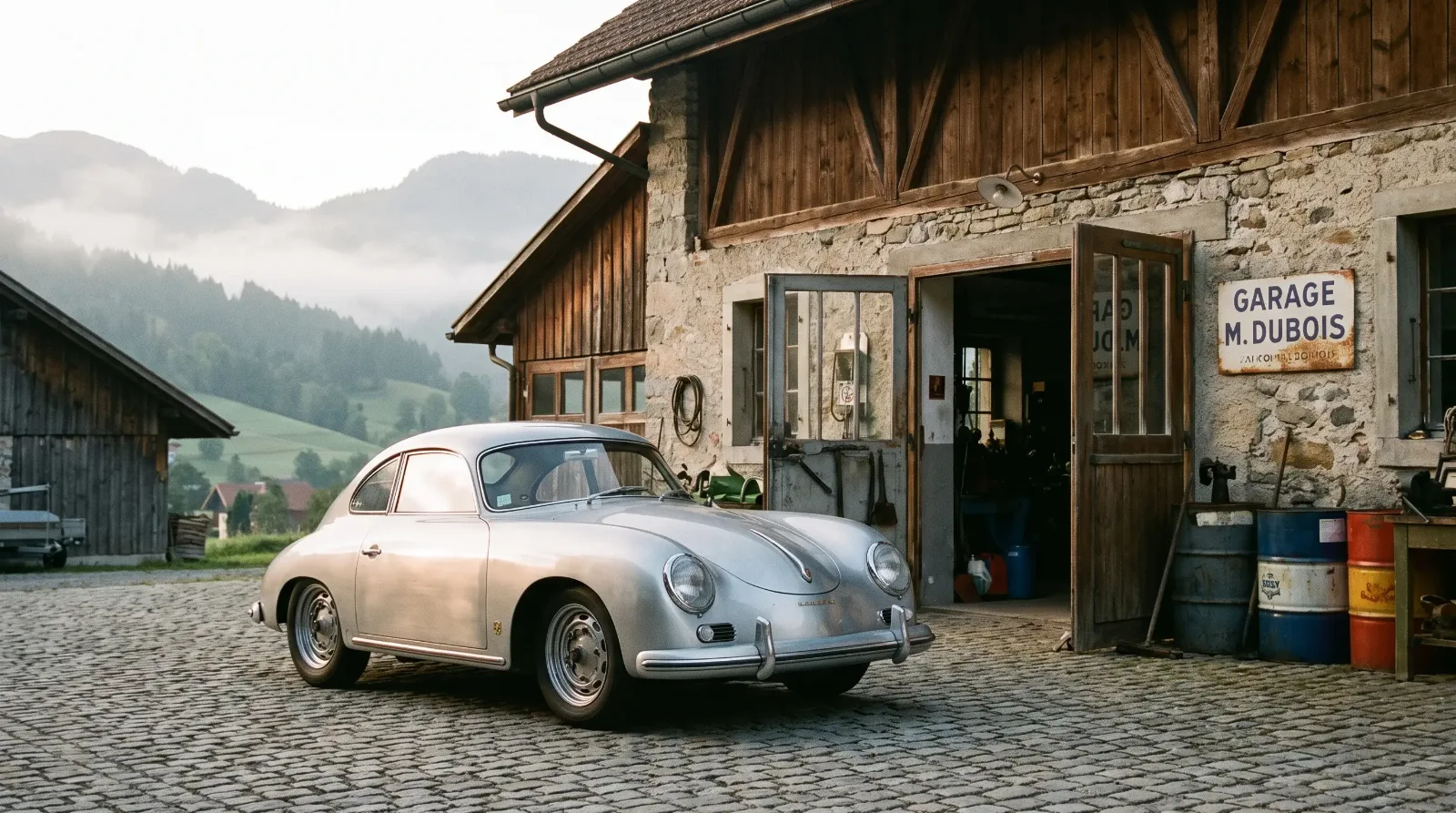
The 356 and the discipline of doing more with less
The first 356, the Gmünd car, was hand-formed in aluminum and mid-engined. Porsche quickly moved the engine behind the rear axle for production and never looked back, which tells you something about priorities. A rear engine gives you traction, a compact package, and cabin room out of proportion to the car's footprint. It also gives you a pendulum hanging off the back axle, and the entire engineering history that follows is, in large part, the story of managing that pendulum.
Early 356 engines were small. The 1948 cars ran a 1,131 cc flat-four and made about 40 hp, numbers that sound absurd until you weigh the car. At well under 1,700 pounds, a 356 does not need much power to feel quick, and Porsche understood power-to-weight before the phrase was fashionable. Over the production run the 356 grew from the pre-A cars through the 356A, 356B, and 356C, gaining disc brakes on the C in 1963 and, in the Carrera versions, the extraordinary four-cam engine designed by Ernst Fuhrmann.
That four-cam, the Type 547, is worth pausing on. It used shaft-and-bevel gear drive for its camshafts instead of a chain, a solution that was expensive to build and maddening to time correctly. A competent mechanic could spend the better part of a day setting one up. But it let the engine rev, and it turned the 356 Carrera into a genuine competition weapon. This is the pattern that repeats across every classic Porsche worth owning: a hard engineering choice, made deliberately, that costs money and effort and pays it back in capability.
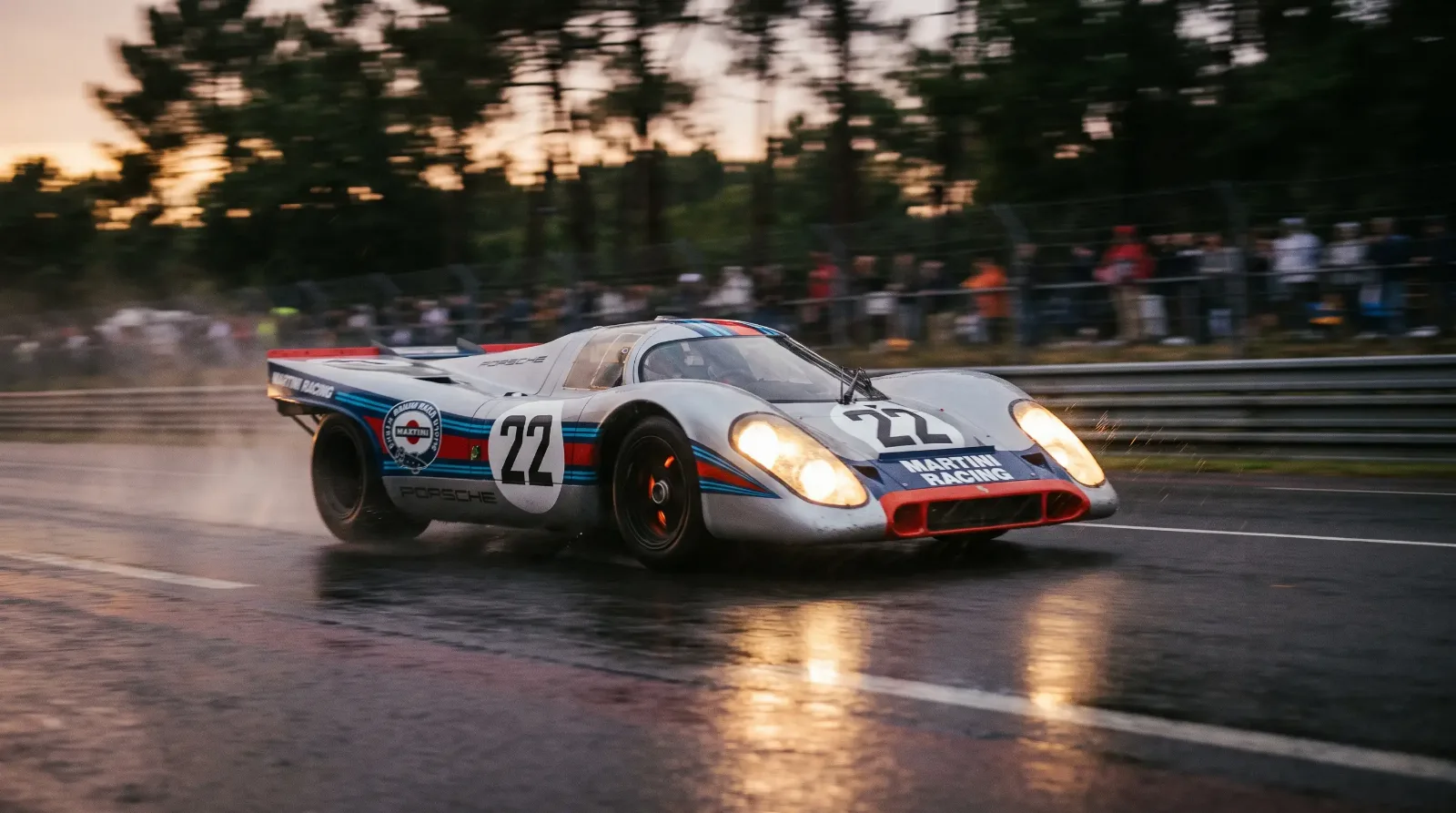
The 356 also established the company's competition habit early, and that habit shaped everything after it. Porsche did not go racing to sell cars so much as to test them, and the lessons fed straight back into the road models. Drum-braked cars that overheated their brakes at Le Mans got the disc brakes that arrived on the road-going 356C. Engines that grenaded on the Mille Miglia got the metallurgy fixes that made the next batch of customer cars last longer. By the time the 356 bowed out in 1965, roughly 76,000 had been built, a large number for a small, expensive car, and proof that the concept had commercial legs and not just engineering charm.
1963 and the shape that refused to age
The 356 was a hard act to replace, and Porsche nearly got the replacement wrong. The car shown at the 1963 Frankfurt show was called the 901. Peugeot held the rights to three-digit model names with a zero in the middle, so Porsche changed the middle digit to a 1, and the 911 was born. That naming accident produced the most durable badge in the business.
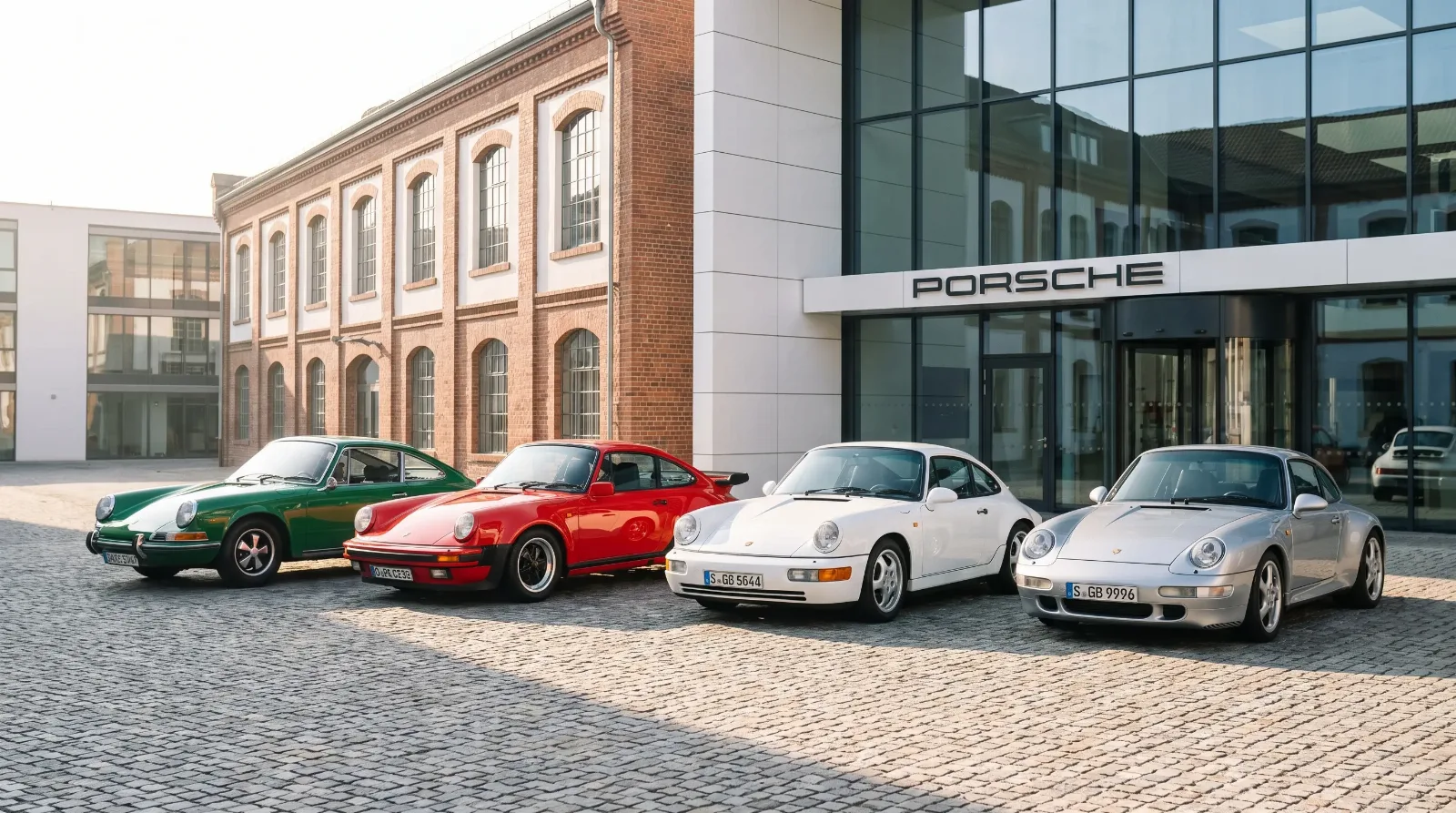
What made the 911 was not the name. It was the combination of Ferdinand Alexander "Butzi" Porsche's body, one of the cleanest shapes ever drawn, and a new air-cooled flat-six that replaced the flat-four. The six was smoother, revvier, and had far more development headroom. Early 911s displaced 2.0 liters and made around 130 hp, again modest on paper, again more than enough in a car that weighed roughly 2,380 pounds (1,080 kg).
The early cars were not easy. A short wheelbase plus a heavy tail plus period tires produced snap oversteer that punished the careless. Porsche's first fix was almost comic: they bolted cast-iron weights into the front bumper ends to calm the handling, then lengthened the wheelbase for 1969. That honesty about a flaw, and the willingness to correct it in stages, is the engineering culture that kept the 911 alive while rivals came and went. The people buying and restoring these cars today, and browsing the classic Porsches for sale that come to market each season, are buying into that continuity as much as any single model.
Air-cooled iterations: how the 911 grew up
The 911 did not stay still, and understanding its eras is the difference between a good purchase and an expensive lesson. The pre-1974 cars, the "long-hood" 911s, are the purest expression of Butzi's shape, with slim chrome bumpers and displacement growing from 2.0 to 2.2 to 2.4 liters. Values here are driven by originality and by the 911S variants with their higher-compression, sportier engines.
Then came 1974 and the impact bumpers, a response to United States crash regulations. Purists grumbled, but the G-series cars that ran from 1974 to 1989 are where a lot of the real engineering happened. Displacement climbed to 2.7 liters, then to 3.0 and 3.2. The Carrera 3.2 of 1984 to 1989 introduced the Bosch Motronic engine management that finally made a 911 reliable enough to daily, and it is still the entry point many people recommend for a first air-cooled car. In 1987 the notchy 915 gearbox gave way to the excellent Getrag G50, and that single change transformed the driving experience.
The last of the truly old-school cars was the 964 of 1989 to 1994, which hid a substantially new car under a familiar skin: coil springs instead of torsion bars, power steering, ABS, and all-wheel drive on the Carrera 4. Porsche claimed the 964 was around 85 percent new despite looking almost identical to the outgoing car, which is the most Porsche statistic imaginable. Then the 993 of 1994 to 1998, the final air-cooled 911, added a multi-link rear suspension that finally tamed the pendulum for good. When people talk about the end of an era, they mean the 993. It is the last classic Porsche to breathe air over its cylinder fins before water-cooling arrived with the 996.
The practical takeaway from all this iteration is that "911" describes a family, not a car. A long-hood 2.0 and a 993 share a silhouette and almost nothing else mechanically, and they ask completely different things of an owner. Knowing which era you actually want, and why, is the single most useful piece of knowledge a first-time buyer can carry into a viewing.
The 2.7 RS and the honest lightweight
No overview earns its keep without the 1973 Carrera RS 2.7, because it is the car every later hero Porsche measures itself against. The formula was pure and, by the standards of the era, almost reckless in its simplicity. Take a 911, enlarge the engine to 2.7 liters and 210 hp, thin the steel, delete the sound deadening, add a ducktail spoiler to keep the rear planted at speed, and sell it light.
The ducktail was not styling. It was the first production application of aerodynamic downforce on a road-going Porsche, developed to reduce rear lift that had been measured on the autobahn. That is the kind of decision I respect: a visible feature that exists because a wind tunnel and a test driver said it had to. Porsche needed to build 500 to homologate the car for racing and ended up selling 1,580, which is the market quietly voting for lightness and honesty over luxury.
"I have always trusted the RS 2.7 more than the cars that came after it, because nothing on it is decorative. The spoiler earns its place in the airflow, the thin glass earns its place on the scale, and the numbers tell you exactly what you are getting."
Emily Chen
Turbo: forced induction and the widowmaker myth
In 1975 Porsche put a turbocharger on the 911 and created the 930, badged simply Turbo. The engineering brief was to homologate turbocharging for racing, but the road car became a legend for reasons that were half performance and half terror. Early 930s ran a single large turbo with significant lag, which meant boost arrived late, hard, and often right when you had already committed to a corner with the throttle open. Combine that delivery with the rear-engine layout and old tire technology and you get the "widowmaker" reputation.
The reputation is exaggerated but not invented. A 930 rewards a smooth driver who thinks a corner ahead and punishes anyone who lifts mid-bend. The engineering answer arrived in stages: a larger 3.3-liter engine with an intercooler in 1978, and finally, late in the run for 1989, the G50 five-speed gearbox in place of the earlier four-speed. The whale-tail spoiler, like the RS ducktail, was function first, housing the intercooler and managing rear lift. The 930 is where classic Porsche stops being a light, delicate thing and becomes a heavyweight puncher, and both identities are legitimate.
The transaxle heretics: 924, 944, and 928
Here is the part of the story the rear-engine faithful prefer to skip, and I think they are wrong to. Through the 1970s Porsche genuinely believed the rear-engine 911 was a dead end, too compromised to survive tightening regulations. So they engineered an alternative: front-engine, water-cooled cars with the transmission mounted at the rear axle as a transaxle, giving near-perfect weight distribution.
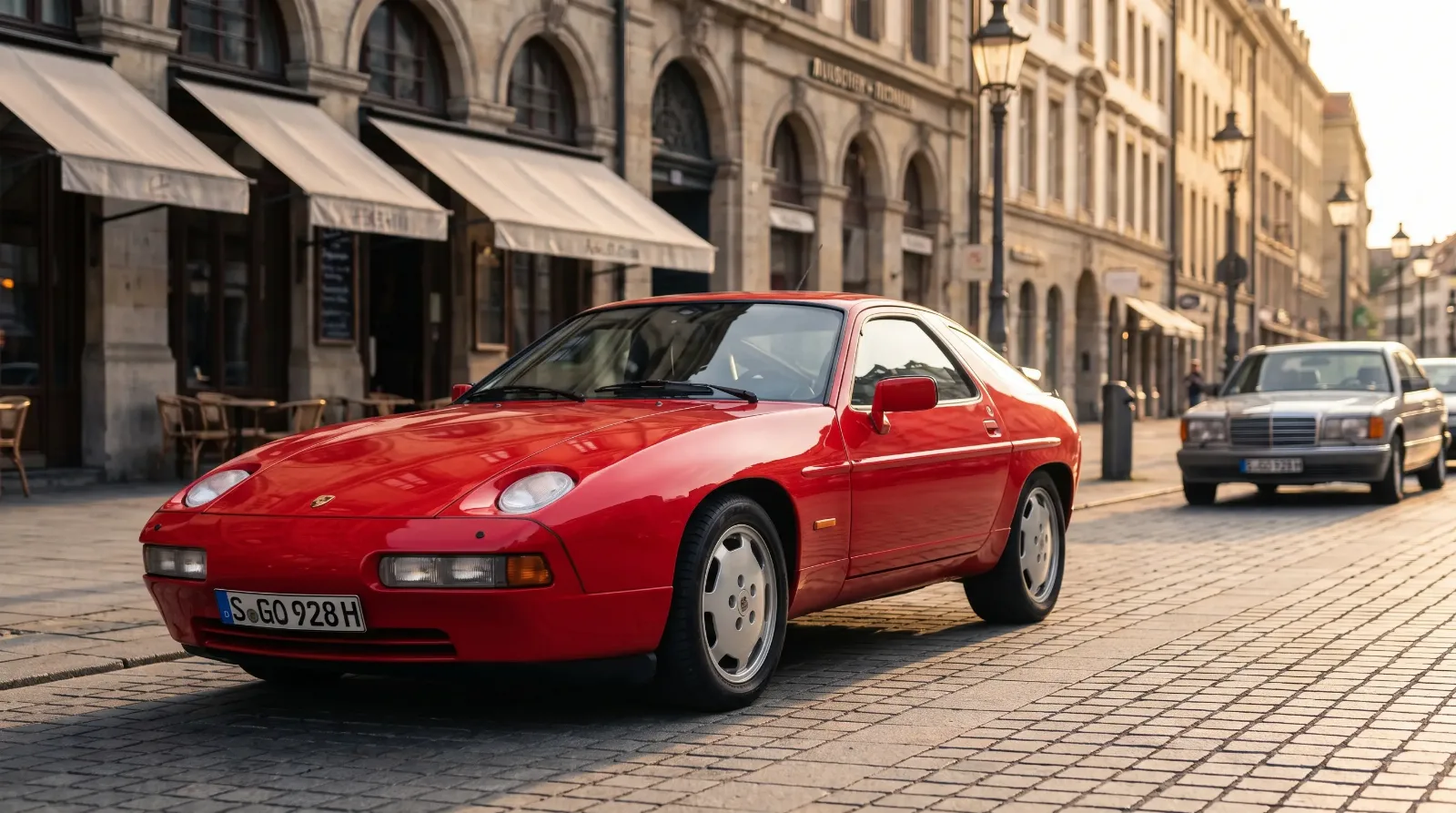
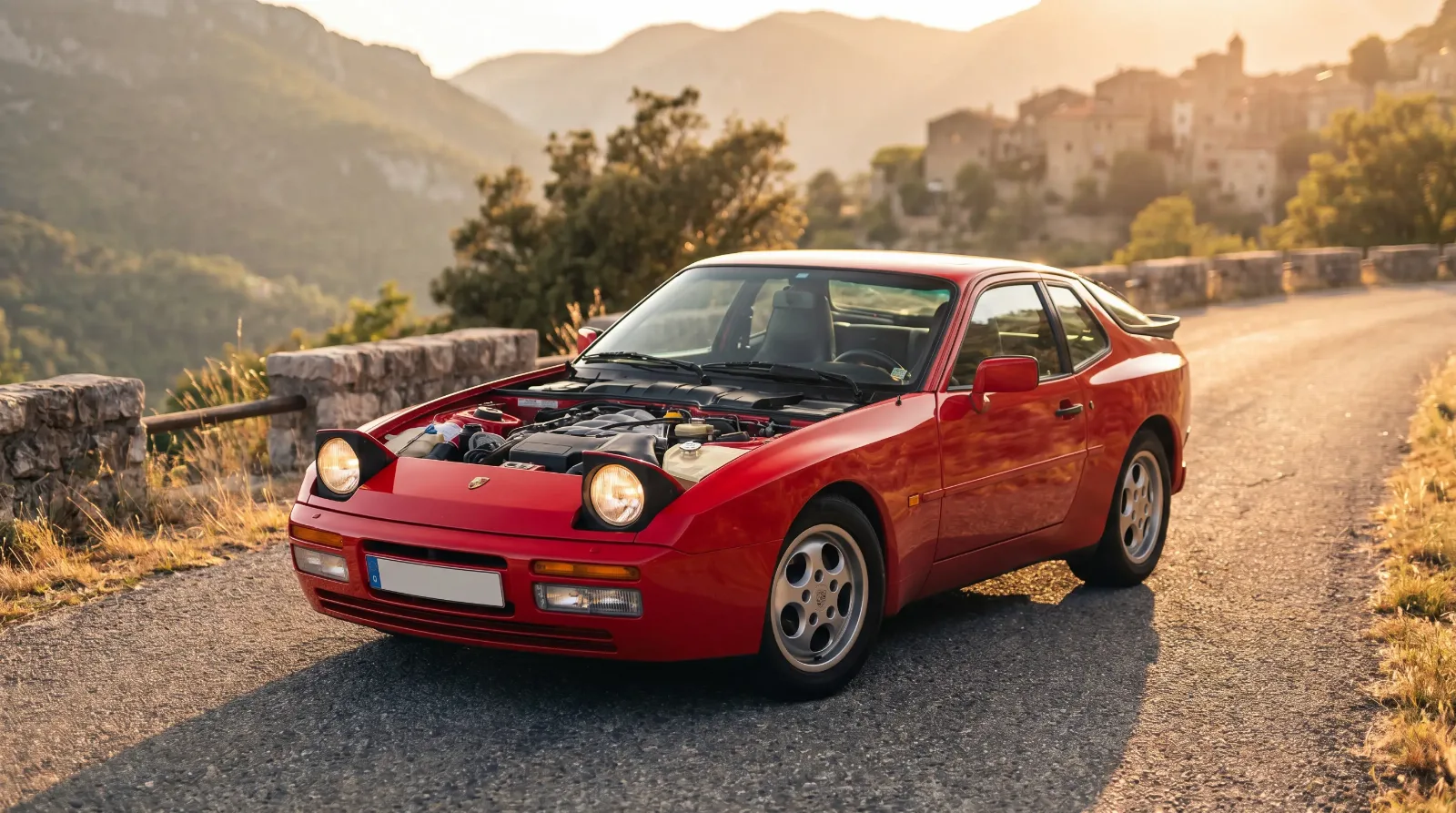
The 928 of 1977 was meant to replace the 911 outright. It had a water-cooled V8, a luxurious grand-touring character, and genuinely advanced engineering, including the "Weissach axle" rear suspension that used compliance to counter lift-off oversteer, the exact vice that plagued the 911. It won European Car of the Year for 1978, the only sports car ever to do so. The 924 and its far better successor, the 944, brought the transaxle idea to a lower price. The 944, especially the 944 Turbo and the later 3.0-liter S2, is one of the best-handling cars Porsche built in the era, and it did it with the engine in the "wrong" place for a Porsche.
These cars were called heretics, and for years the market treated them as second-class. That is finally changing, partly because a clean 944 or an early 928 offers a huge amount of classic Porsche engineering for a fraction of a 911's cost. As an engineer I find the transaxle cars more rational than the 911. As an enthusiast I understand completely why the 911 won anyway.
"The 928 is the car that proves Porsche could build anything it wanted. That it chose to keep the flawed, brilliant 911 alive instead tells you the company understood something engineering alone cannot measure: a car has to mean something, not just work."
Emily Chen
Reading the specs: a classic Porsche cheat sheet
Numbers cut through nostalgia faster than prose, so here is a compact reference for the core classic-era models. Treat the figures as representative of a given generation rather than a single trim, and always verify against a specific car's paperwork before you buy.
| Model | Years | Layout | Approx. power | Note |
|---|---|---|---|---|
| 356 (pre-A to C) | 1948-1965 | Rear flat-4, air-cooled | 40-95 hp | The foundation; Carrera four-cam is the prize |
| 911 2.0 (long-hood) | 1964-1973 | Rear flat-6, air-cooled | 130-190 hp | Purest shape; S is the sought variant |
| Carrera RS 2.7 | 1973 | Rear flat-6, air-cooled | 210 hp | Lightweight benchmark; ducktail aero |
| 930 Turbo | 1975-1989 | Rear flat-6 turbo, air-cooled | 260-300 hp | Laggy, fast, demanding; whale-tail |
| Carrera 3.2 | 1984-1989 | Rear flat-6, air-cooled | 207-231 hp | Best first air-cooled buy; G50 from '87 |
| 928 | 1977-1995 | Front V8, water-cooled | 240-345 hp | The 911 that never replaced the 911 |
| 944 Turbo | 1985-1991 | Front inline-4 turbo, water-cooled | 217-250 hp | Transaxle balance; underrated value |
| 993 (last air-cooled) | 1994-1998 | Rear flat-6, air-cooled | 272-300 hp | Multi-link rear; end of an era |
Buying into the story: what actually matters
If you are moving from reading about these cars to owning one, the engineering history is not trivia, it is a buying guide. The failure modes are as characteristic as the strengths, and every model has its own list. Air-cooled flat-sixes hate overheating and hate neglect more than mileage. The transaxle cars live or die on their timing belts and the condition of that long torque tube. Rust is the universal enemy on anything from before galvanized bodies became standard in the mid-1970s.
What ties the whole classic Porsche story together is not a single model or a single decade. It is a method. Start with a layout most engineers would call a mistake, refuse to abandon it, and instead spend fifty years machining away its flaws one revision at a time until the mistake becomes an icon. The 356 proved the concept. The 911 refined it past the point where anyone could argue with the results. The RS and the Turbo showed how far it could be pushed, and the transaxle cars showed the road not taken. You can love any one of them on its own terms. Understanding how they connect is what turns an expensive hobby into something closer to respect.
Sources and notes
Related Reading
Article
The Porsche 911 Saga: Birth of an Icon (1964–1998)
Article
Porsche 356: The Car That Started Everything
Article
Porsche 914: The Mid-Engine Outsider VW Nearly Owned
Article
Porsche 928: The V8 GT Built to Kill the 911
Article
Porsche 944 & the Transaxle Heretics (924·944·968)
Article
Porsche's Racing Legend: 917, 935 & the Le Mans Years
Article
Porsche 959 & the Homologation Halo Cars
Article
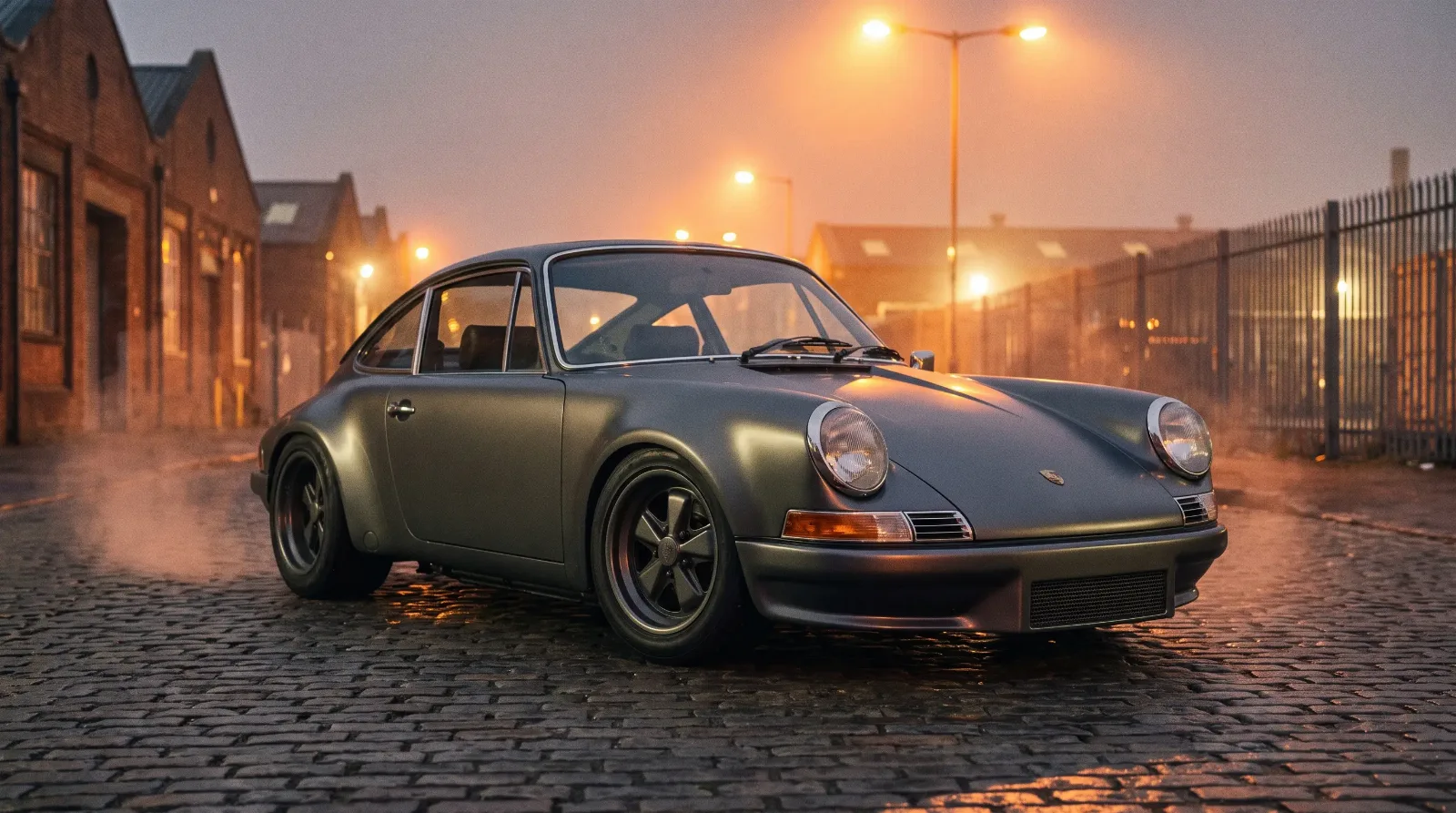
The Outlaw Movement: Rebels Who Reinvented the Classic Porsche
Have a
Porsche
for Sale?
Reach thousands of serious classic car collectors across the US.
Sell It Here →
Are You a Classic Car Dealer?
List your full inventory and connect with targeted classic car buyers.
Join as a Dealer →
#classic porsche
#porsche 911
#porsche 356
#air-cooled
#carrera rs 2.7
#porsche 930 turbo
#porsche 928

About the author
Emily Chen
Bay Area engineer with a deep focus on vintage Japanese and European performance cars. Approaches classic car research and restoration with an analytical eye.
Related Listings - Porsche
Comments
Be the first to comment on this article.