
The Porsche 959 arrived in 1986 looking like a car someone had smuggled back from the next decade. It had all-wheel drive that thought for itself, twin turbochargers that handed off to each other, tires that reported their own pressure, and a top speed that embarrassed every supercar then on sale. Most cars from the mid-1980s have aged into period pieces. The 959 mostly aged into being right. And from an appraiser's chair, that combination of genuine engineering significance and very low production is exactly what has kept its value stubborn while flashier contemporaries slid.
Car Features
10 min read
Porsche 959 & the Homologation Halo Cars
The Porsche 959 was the 1986 supercar from the future, built to satisfy a Group B rule and, in the process, to redraw what a road car could do.
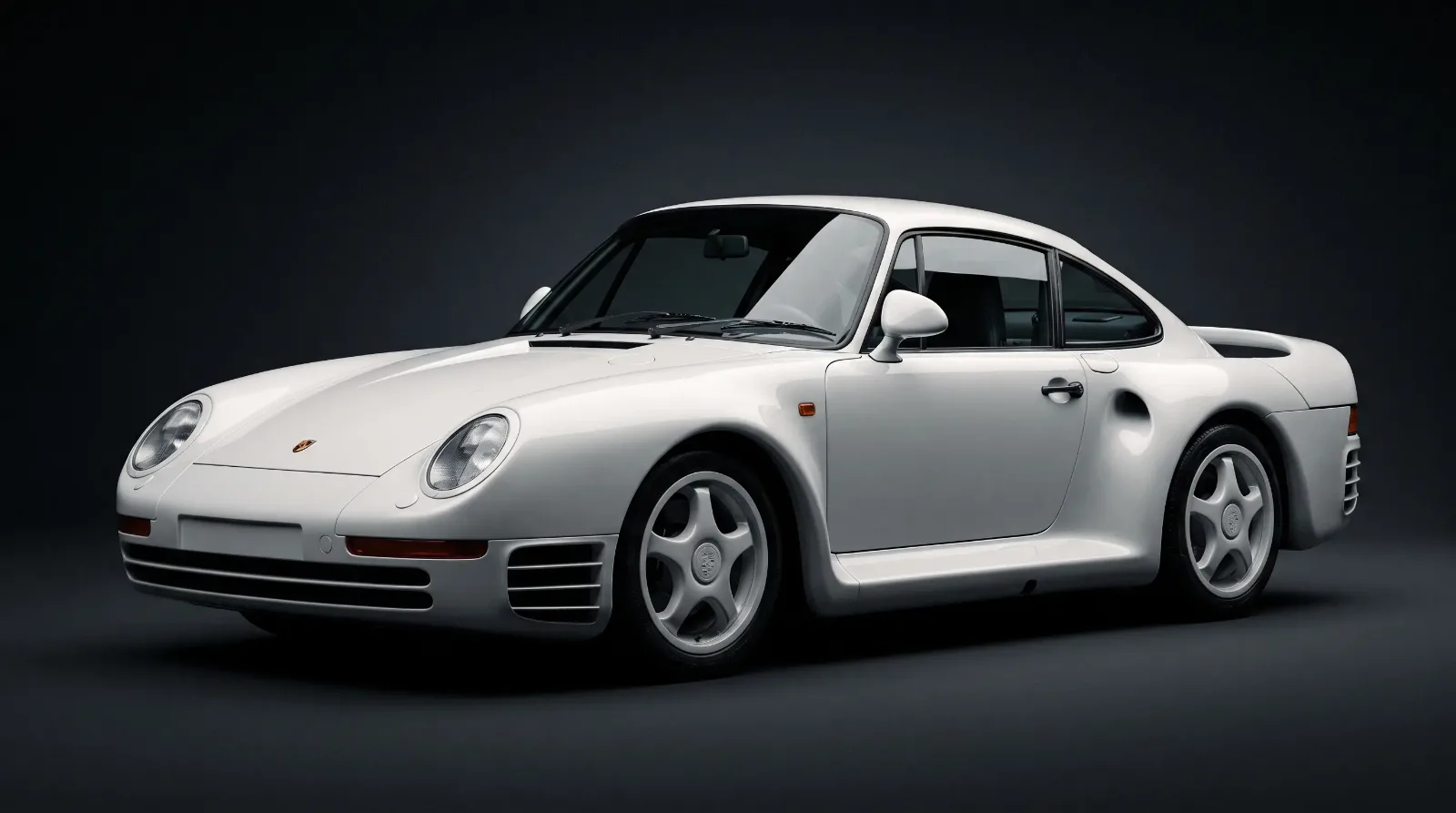
What people forget is why it existed at all. The 959 was not built because Porsche wanted a halo car. It was built because a rulebook demanded that a race car have a road-going twin. That single requirement produced one of the most important Porsches ever made, and it fits a pattern the company had been repeating since the 1950s.
The car from 1986 that read like science fiction
Porsche first showed the concept, badged Gruppe B, at the Frankfurt show in 1983. The production 959 followed in 1986, with the bulk of customer cars delivered across 1987 and 1988. The list price was about DM 431,550 (roughly $225,000 at the time), and Porsche is widely reported to have lost money on every one, because the car cost more to build than it sold for.
The numbers still hold up. A twin-turbocharged 2.85-liter flat-six produced 444 hp, enough for a top speed of 197 mph, which made the 959 the fastest street-legal production car in the world when it launched. Zero to 60 mph took about 3.6 seconds, a figure that would stay competitive for another fifteen years. For context, the contemporary 911 Turbo of the same era made a bit over 300 hp and felt, next to the 959, like a different generation of thing. It was.
Group B and why 200 cars had to exist
The 959 is a homologation special. Group B was the FIA category that governed both rallying and a planned circuit series in the mid-1980s, and it was famous for letting manufacturers build almost anything. The catch was the road-car rule. To be eligible, a manufacturer had to produce a minimum number of road-legal examples, 200 in Group B's case, so that the competition machine could claim to be based on something a customer could theoretically buy.
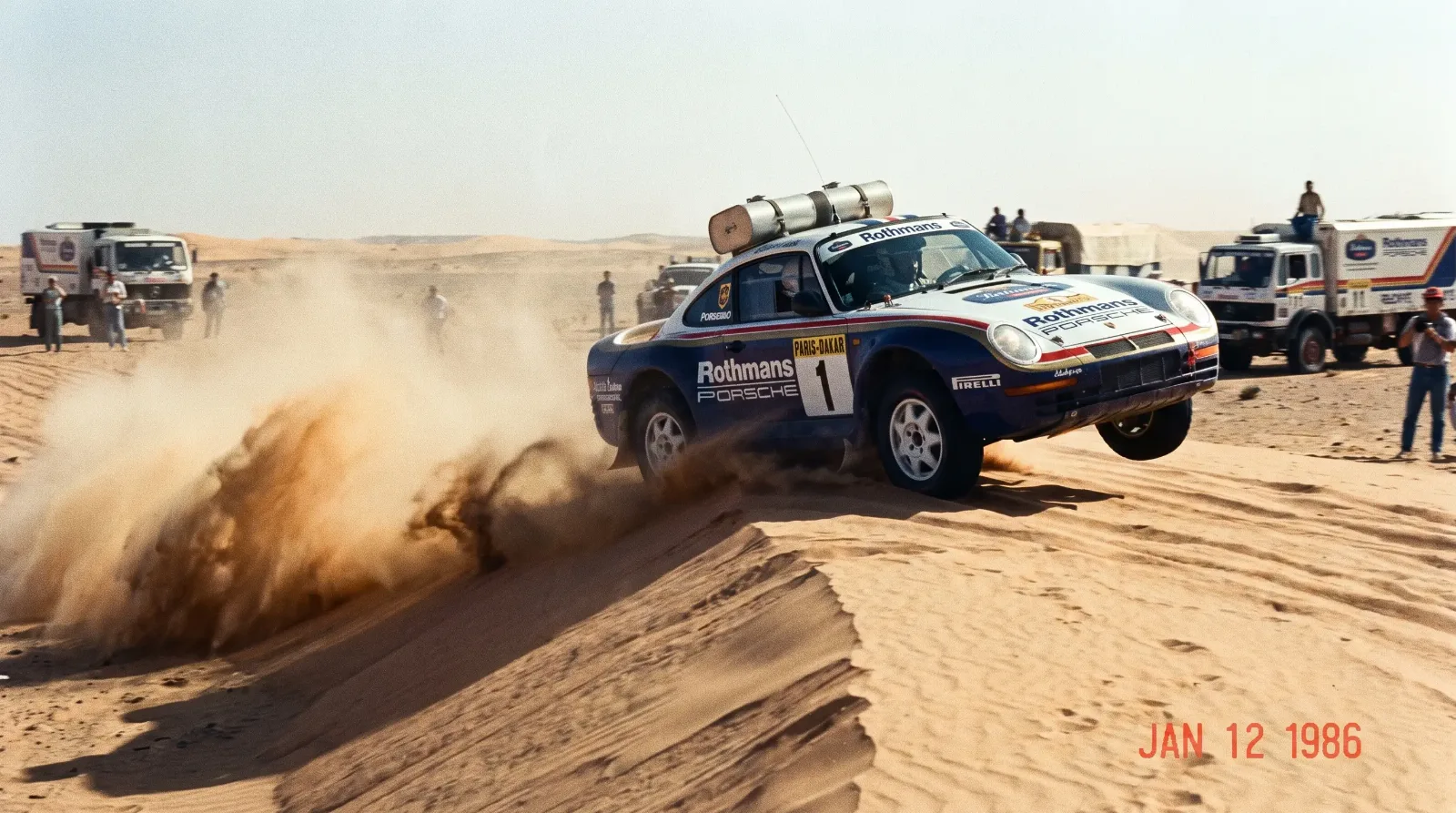
Porsche built the 959 to satisfy that rule and to develop its all-wheel-drive ideas at the same time. The competition version, run as the 961, and the earlier 953 rally car, went to the Paris-Dakar. Porsche won the 1986 Paris-Dakar rally outright with a 959-derived car, driven by Rene Metge and Dominique Lemoine, with a second 959 finishing right behind them, which did more for the road car's reputation than any brochure could. Group B itself was cancelled for rallying after a string of fatal accidents in 1986, so the circuit series the 959 was partly aimed at never really materialized. The road car survived the category that created it.
What made the 959 work
The headline technology was the all-wheel-drive system, marketed as Porsche-Steuer Kupplung. Rather than a fixed torque split, it used an electronically controlled clutch pack that could send power front to rear on a sliding scale, adjusting for grip and load. A driver could even select programs for different surfaces. In 1986 that was close to unheard of on a road car.
The engine was just as unusual. The flat-six used sequential turbocharging, where a smaller turbo spools first at low revs and a larger one joins higher up, smoothing out the on-off lag that plagued big single-turbo cars of the day. The block was air-cooled in the traditional Porsche manner but the cylinder heads were water-cooled, a hybrid approach that pointed straight at where the company would go a decade later. Add tire-pressure monitoring, adjustable ride height on the Comfort cars, and hollow-spoke magnesium wheels, and the specification reads like a list of features that took the rest of the industry twenty years to adopt.
| Specification | Porsche 959 (1986-1988) |
|---|---|
| Engine | 2.85 L twin-turbo flat-six, air-cooled block, water-cooled heads |
| Power | 444 hp |
| Drivetrain | Electronically controlled all-wheel drive (PSK), 6-speed manual |
| Top speed | 197 mph |
| 0-60 mph | ~3.6 sec |
| Production run | 1986-1988 (plus 8 built in 1992-1993 from remaining parts) |
| Total built | 337 including prototypes and preproduction |
| Variants | 959 Komfort, 959 Sport |
| List price (new) | ~DM 431,550 |
Two flavors were offered. The Komfort had the adjustable suspension, air conditioning, and the softer touches expected of a car at that price. The Sport dropped the electronic ride-height system and some comfort equipment in exchange for less weight and a firmer character. Total production is usually put at 337 cars including prototypes and preproduction examples, with 292 customer cars completed by the end of the original 1988 run (plus a further eight assembled in 1992-1993 from leftover parts). Those figures move depending on how you count, so any specific number attached to a specific car deserves paperwork behind it. For the wider context of where the 959 sits in the marque's history, this fits into Porsche's full origin story as the point where the company's racing obligations produced its most advanced road car.
The technology that trickled down
The 959 was not a dead end. Its all-wheel-drive thinking reached showrooms in diluted form with the 964-generation Carrera 4 in 1989, the first series-production 911 with drive to all four wheels. The water-cooled-head experiment previewed the full water-cooling that arrived with the 996 in the late 1990s. Sequential turbocharging, tire-pressure monitoring, and electronically managed drivetrains all became ordinary over the following two decades, and the 959 got to most of them first in a production Porsche.
That is the argument for the car's importance, and it is a real one. A halo car earns its keep when the ideas it proves show up in cars people actually buy. The 959 did that repeatedly, which is part of why it has held collector interest that many limited-run specials never manage.
"I appraise the 959 as a blue-chip asset, not a mood purchase. The value sits on three legs: genuine engineering firsts, a production run small enough to matter, and a documented competition purpose. Take any one leg away and you have an expensive curiosity. Leave all three standing and you have a car that holds its number even when the market gets nervous."
Marcus Feld
Porsche's tradition of road-legal race cars
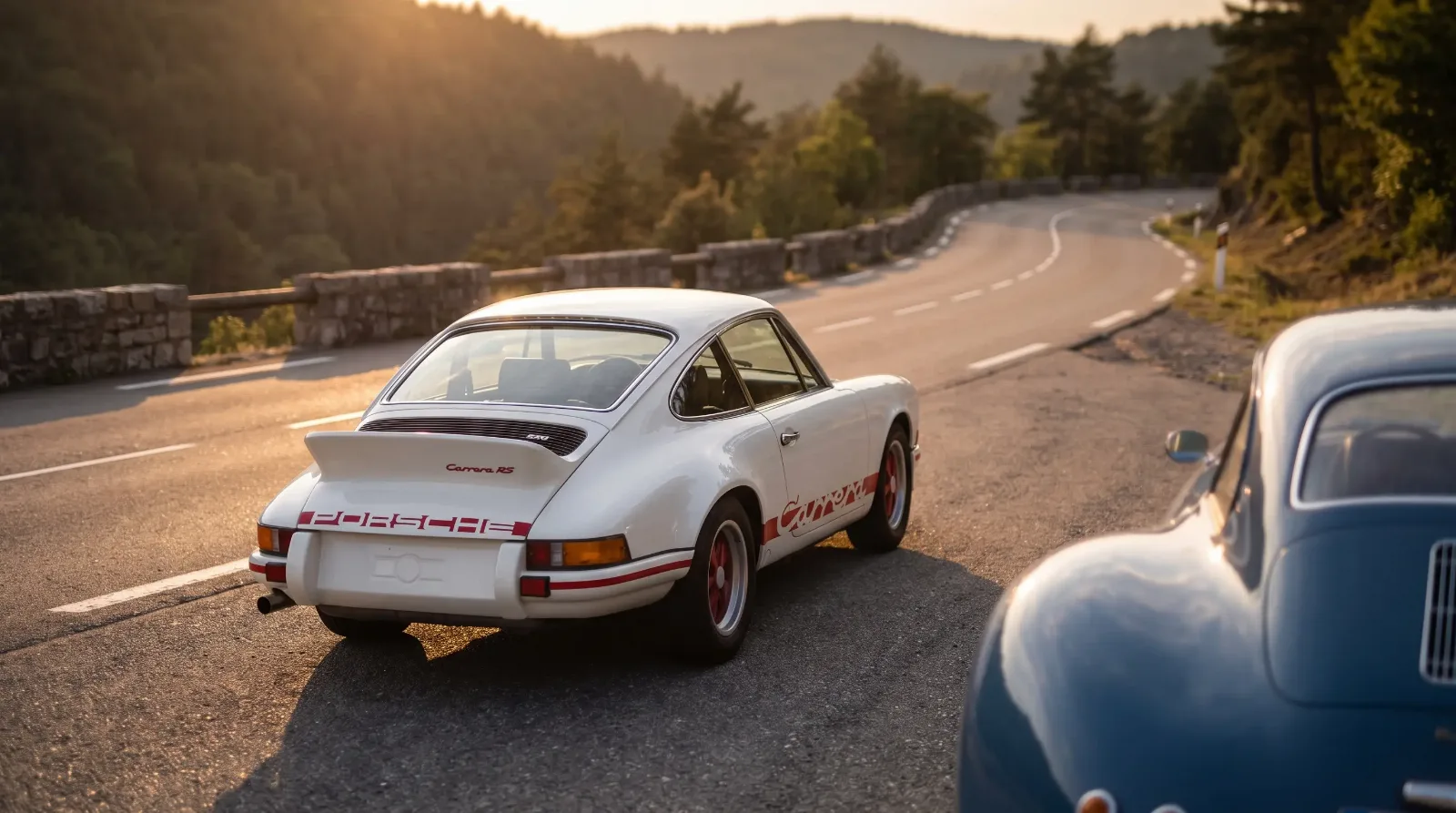
The 959 did not invent the Porsche homologation special. It sat at the end of a long line of them. The 356 Carrera of the 1950s put a race-bred four-cam engine into a road body. The 550 Spyder and the 904 Carrera GTS were built to go racing with just enough road manners to qualify. Most directly relevant, the 1973 Carrera RS 2.7 was produced to homologate the 911 for Group 4, and the rule that year required 500 road cars, a number Porsche blew past because demand was higher than expected.
The pattern is consistent. A racing category sets a minimum production figure, Porsche builds road cars to clear it, and those road cars become some of the most collectible objects the company ever made. The 959 is the most technically ambitious entry in that sequence, but it belongs to the same family as the RS and the GT cars that came after it. If you want to keep exploring the range and how these threads connect across the lineup, the story runs from the earliest Carreras straight through to the modern GT department. Collectors who track this thread often keep exploring the range to see how the homologation instinct shaped even the cars Porsche never meant to sell in volume.
What the 959 is worth now
From a valuation standpoint, the 959 behaves like a serious collector asset rather than a speculative one. Values sit well into seven figures for good cars, with the strongest Sport examples pushing past the $5 million mark at auction, and with Sport examples and low-mileage, fully documented Komfort cars leading the field. The market rewards originality and paperwork here more than almost anywhere else, because the car's complexity makes provenance a genuine risk factor.
The downside cases are worth naming. The hollow-spoke magnesium wheels, the hydraulic suspension on Komfort cars, and the twin-turbo system are all expensive to service correctly, and specialists who know them are few. A 959 with lapsed maintenance is not a bargain, it is a liability with a famous badge. Cars that have been modified away from factory specification, or that carry gaps in their history, sell at real discounts and can be slow to move. When these cars fail to sell at auction, it is usually condition or documentation, not the model's desirability, that stalls them.
Liquidity is the other quiet factor. The buyer pool for a car at this level is small, so a sale can take time even when the price is right. That is not a flaw in the car, it is the nature of the segment, and it should be priced into any purchase as a holding cost rather than a surprise.
Buying one: what actually matters
If you are shopping at this level, the car matters less than the file that comes with it. I would rather have a higher-mileage 959 with a complete, honest history and a specialist relationship attached than a lower-mileage car with question marks. Complexity is the whole appeal of this machine and also its main risk.
The 959 remains one of the clearest examples of why homologation cars became collector cornerstones. It was built to satisfy a rule, it advanced the whole company's engineering, and it survived the category that spawned it to become a benchmark. For buyers who want to see where these cars sit in the wider market, you can browse exotic classic Porsches for sale and compare how the 959 holds its ground against the rest of the marque's halo output. On the evidence, it holds it well.
Sources and notes
- Porsche 959 - Wikipedia
- Everything you need to know about the Porsche 959 supercar - Porsche Newsroom
- Remembering the triumph and tragedy of the 1986 Paris-Dakar rally - Hagerty Media
- 1987 Porsche 959 'Komfort' - RM Sotheby's, Monterey 2025
- Fifty years of the Porsche 911 Carrera RS 2.7 - Porsche Newsroom
- Group B - Wikipedia
Related Reading
Article
The Classic Porsche Story: From 356 to the Air-Cooled Icons
Article
Porsche's Racing Legend: 917, 935 & the Le Mans Years
Article
The Outlaw Movement: Rebels Who Reinvented the Classic Porsche
Article
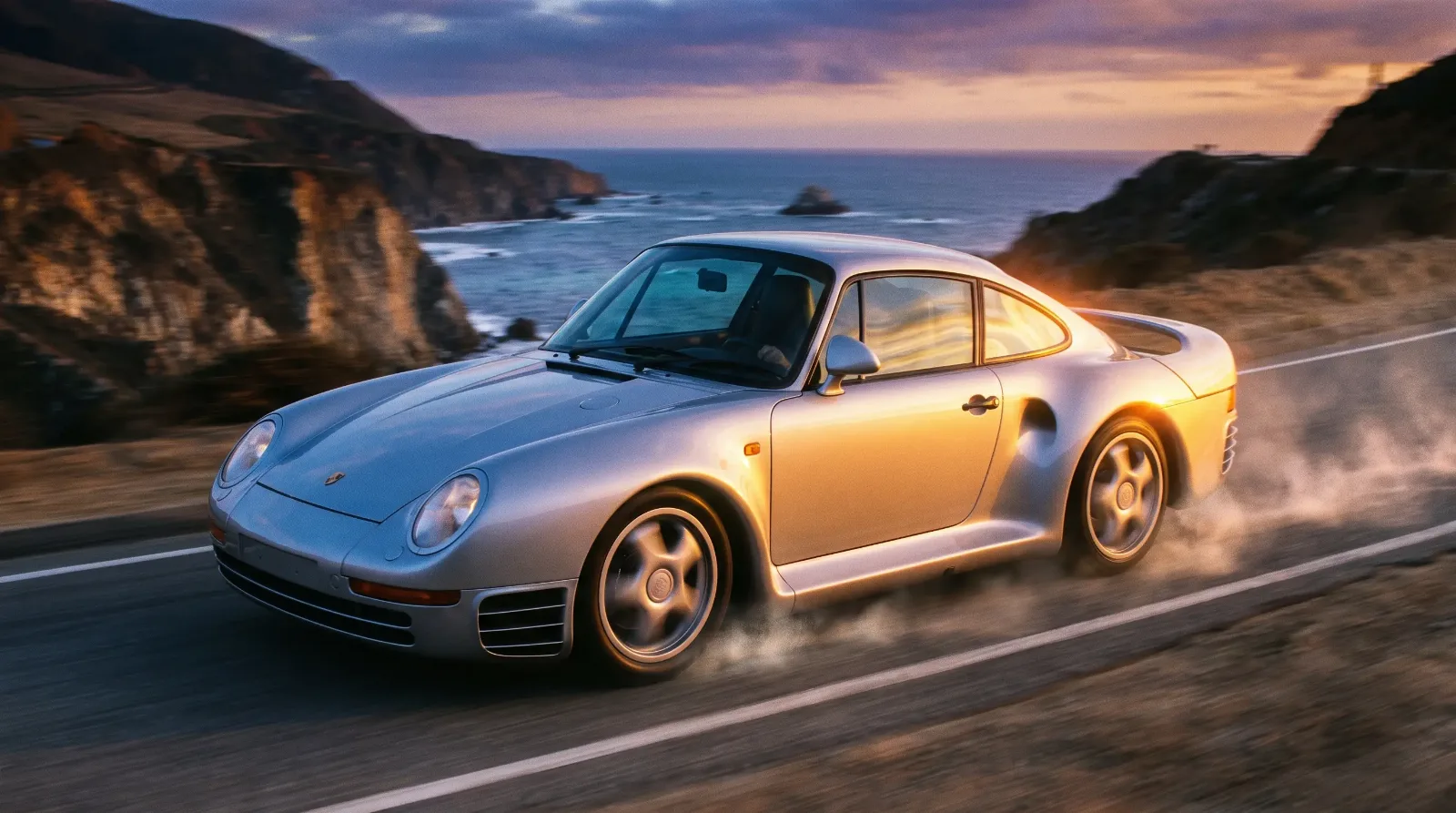
The 959: The Supercar From the Future
Article
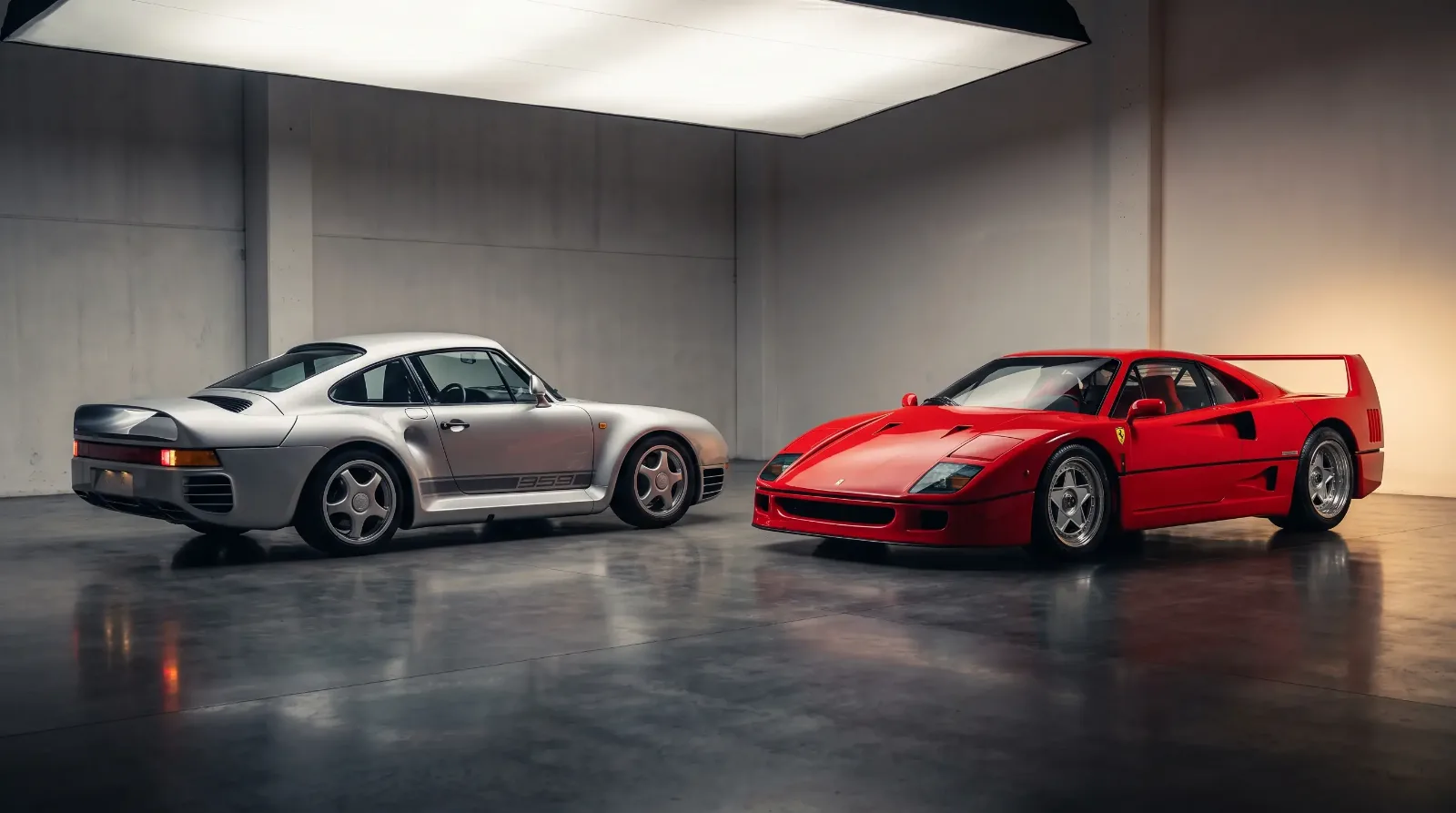
959 vs Ferrari F40: The Rivalry
Article
The 959 Dakar: Rally-Raid Halo
Article
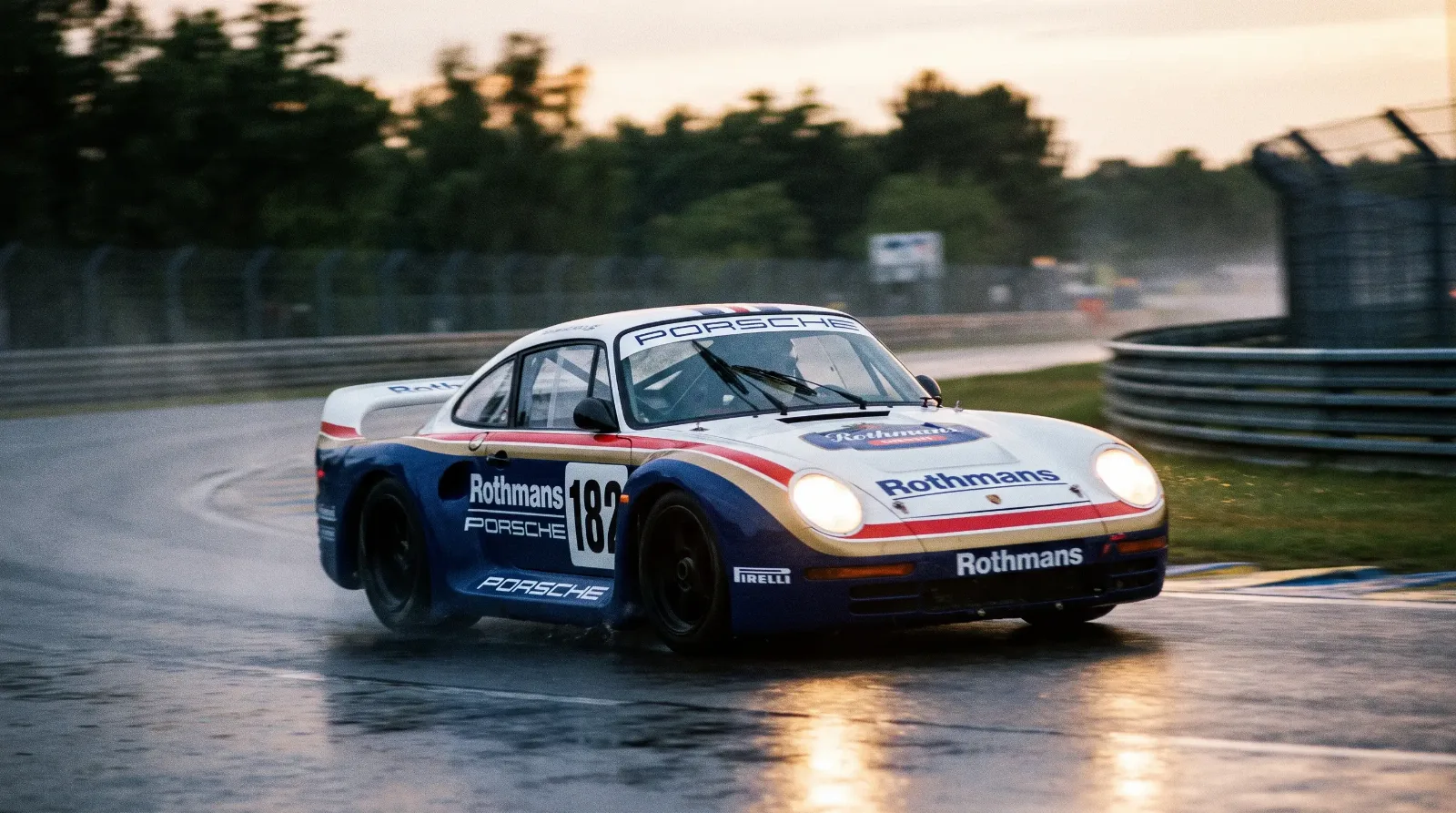
The 961: The 959's Le Mans Twin
Article
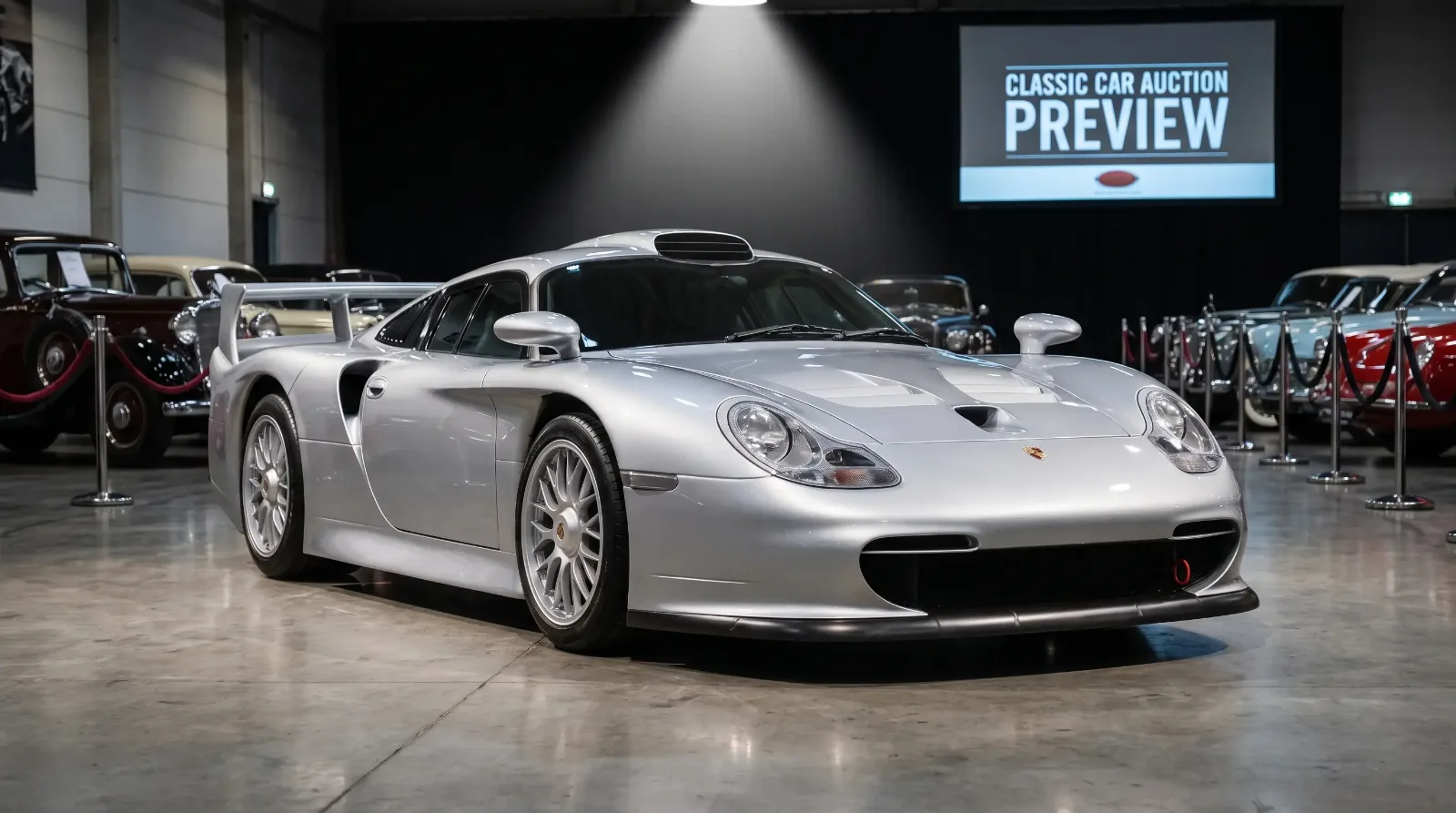
The 911 GT1 Strassenversion: Race Car for the Road
Article
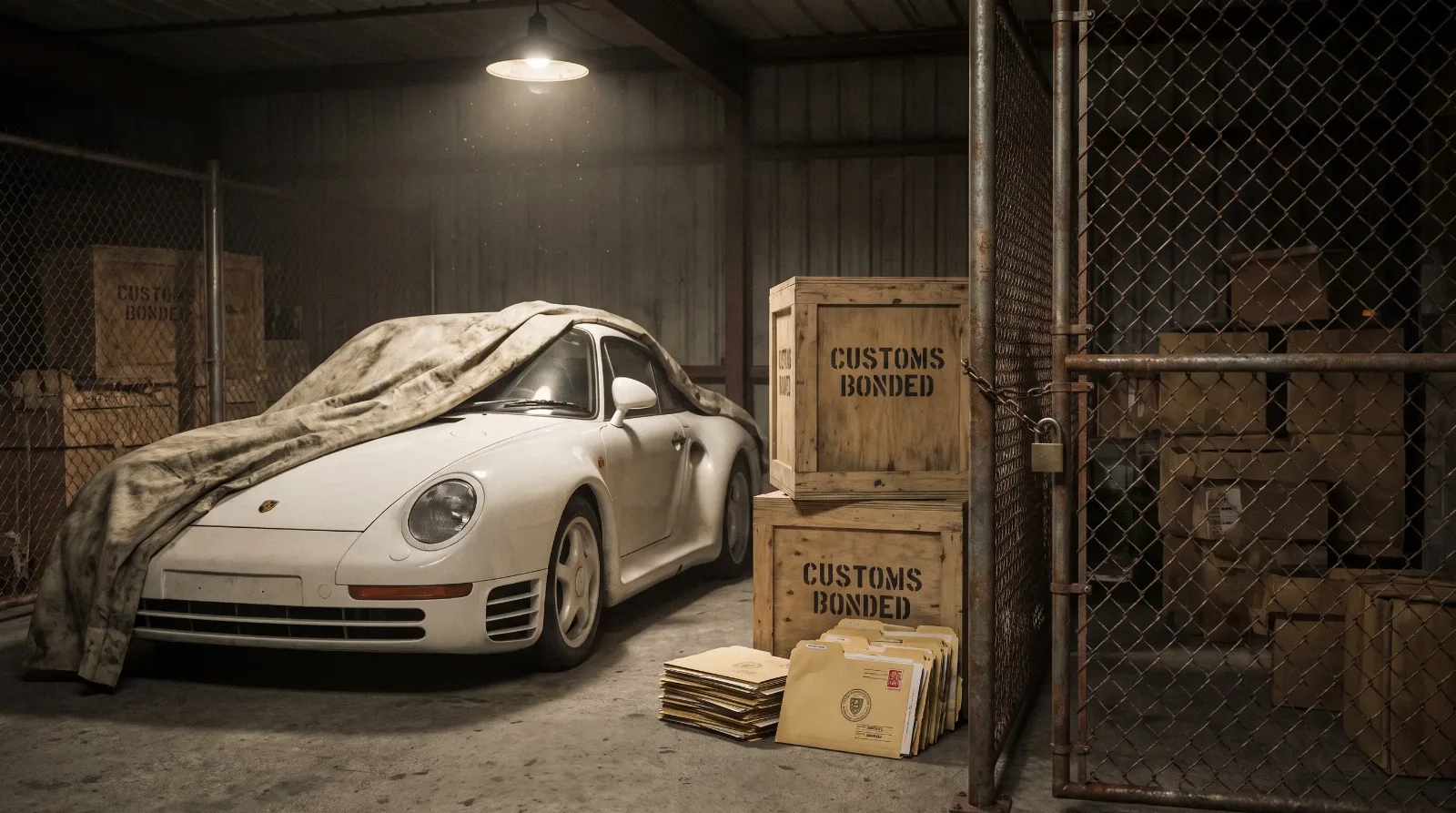
Bill Gates, the 959 & the "Show or Display" Law
Article
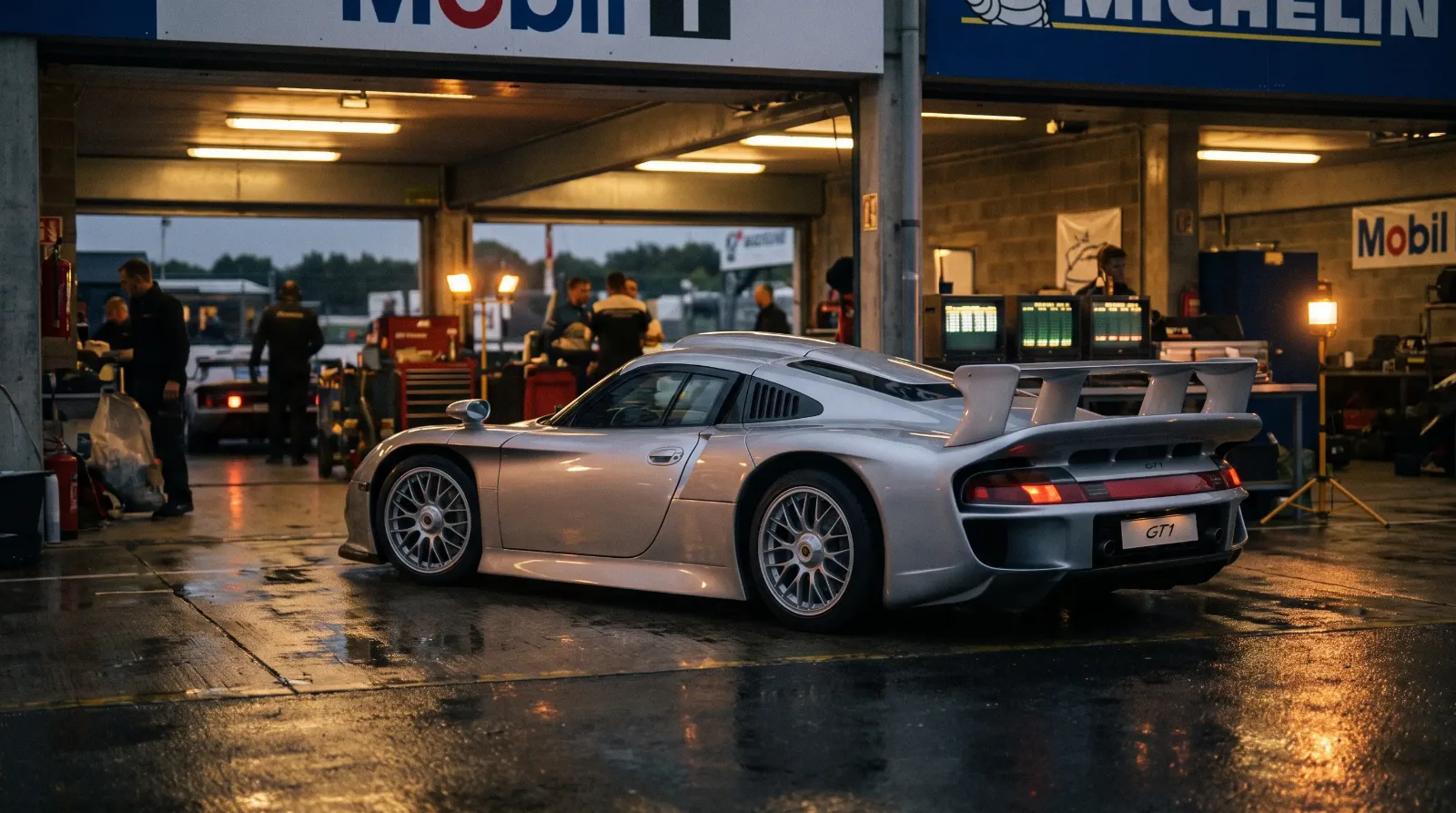
Homologation Specials: Why Porsche Built Road Racers
Article
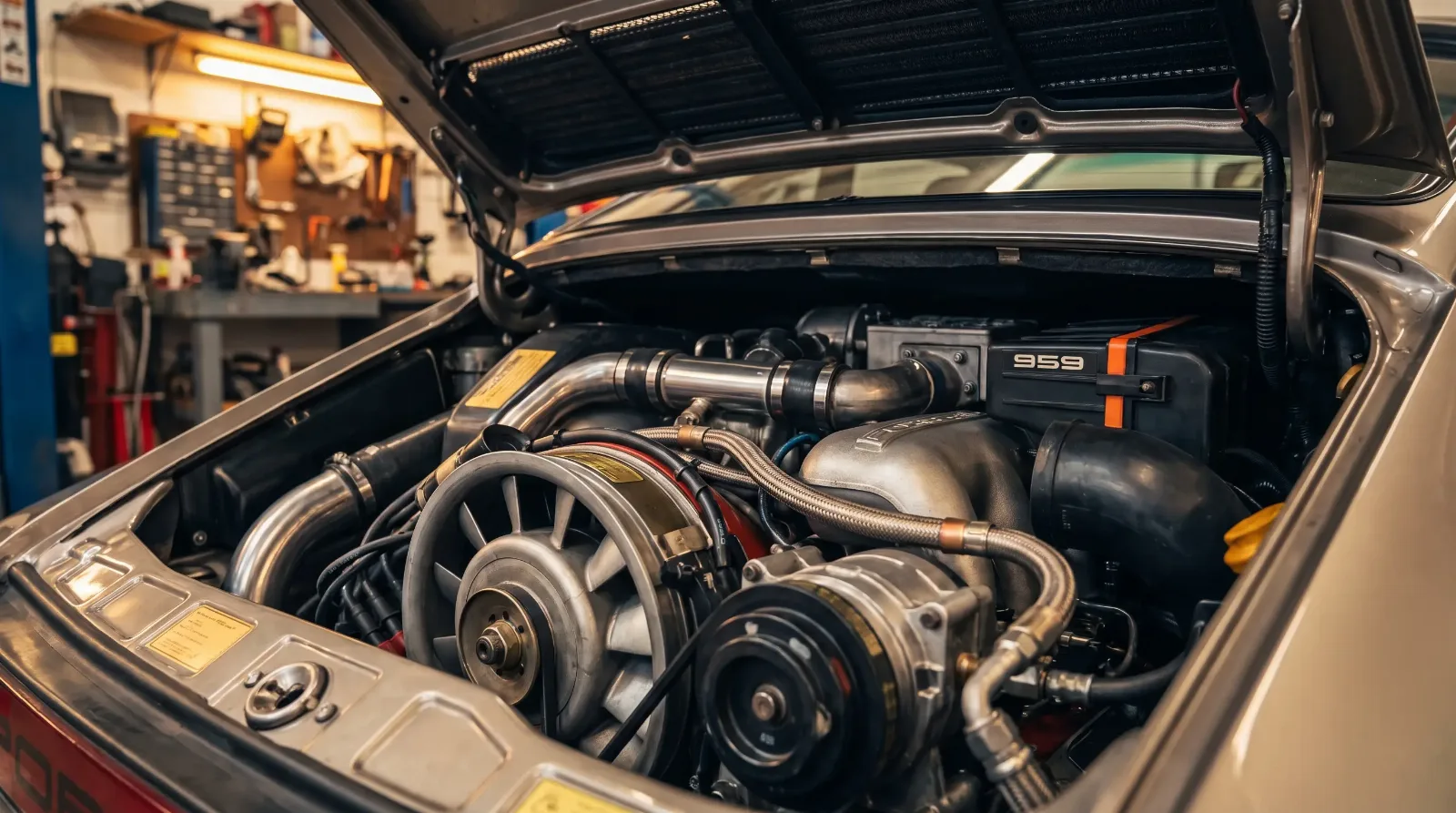
The 959's Tech That Trickled Down
Article
Porsche One-Offs & Special Wishes Legends
Article
Record-Breaking Porsches at Auction
Article
The Rarest Air-Cooled 911s Ever Built
Article
The 964 Turbo S Leichtbau: Featherweight Legend
Article
The 993 GT2: The Homologation Monster
Article
Paint-to-Sample: The Art of Rare Porsche Colors
Article
How Homologation Rules Shaped the Best Porsches
Have a
Porsche
for Sale?
Reach thousands of serious classic car collectors across the US.
Sell It Here →
Are You a Classic Car Dealer?
List your full inventory and connect with targeted classic car buyers.
Join as a Dealer →

About the author
Marcus Feld
Accredited collector-car appraiser who reads the market through hammer prices, condition tiers and risk.
Related Listings - Porsche




Comments (1)
T
Tony Marchetti
2 months ago
Curious whether values have held since this was written. The market moves fast right now.