Ask anybody who was around Detroit's performance scene in the mid-1960s about Royal Pontiac and you'll get the same answer: that's the place you took your car to make it faster than the guy at the dealership two towns over could ever explain to you. Royal Pontiac sat on Woodward Avenue in Royal Oak, Michigan, and it was, on paper, just another Pontiac dealership. In practice, it became something closer to a factory skunkworks operating out of a retail showroom, and its fingerprints ended up all over the GTO's early reputation.
A dealership that raced its own inventory
Royal Pontiac's owner, Ace Wilson, built a relationship with Pontiac's engineering staff that went well past the usual dealer-to-manufacturer arrangement. Royal ran its own drag racing team, campaigning Pontiacs at strips around Michigan and beyond, and the dealership's mechanics developed a reputation for extracting real performance out of cars that came off the assembly line already fast. When the GTO arrived for 1964, Royal Pontiac had both the relationships and the technical know-how to turn a strong factory car into something sharper still.
The Bobcat kit
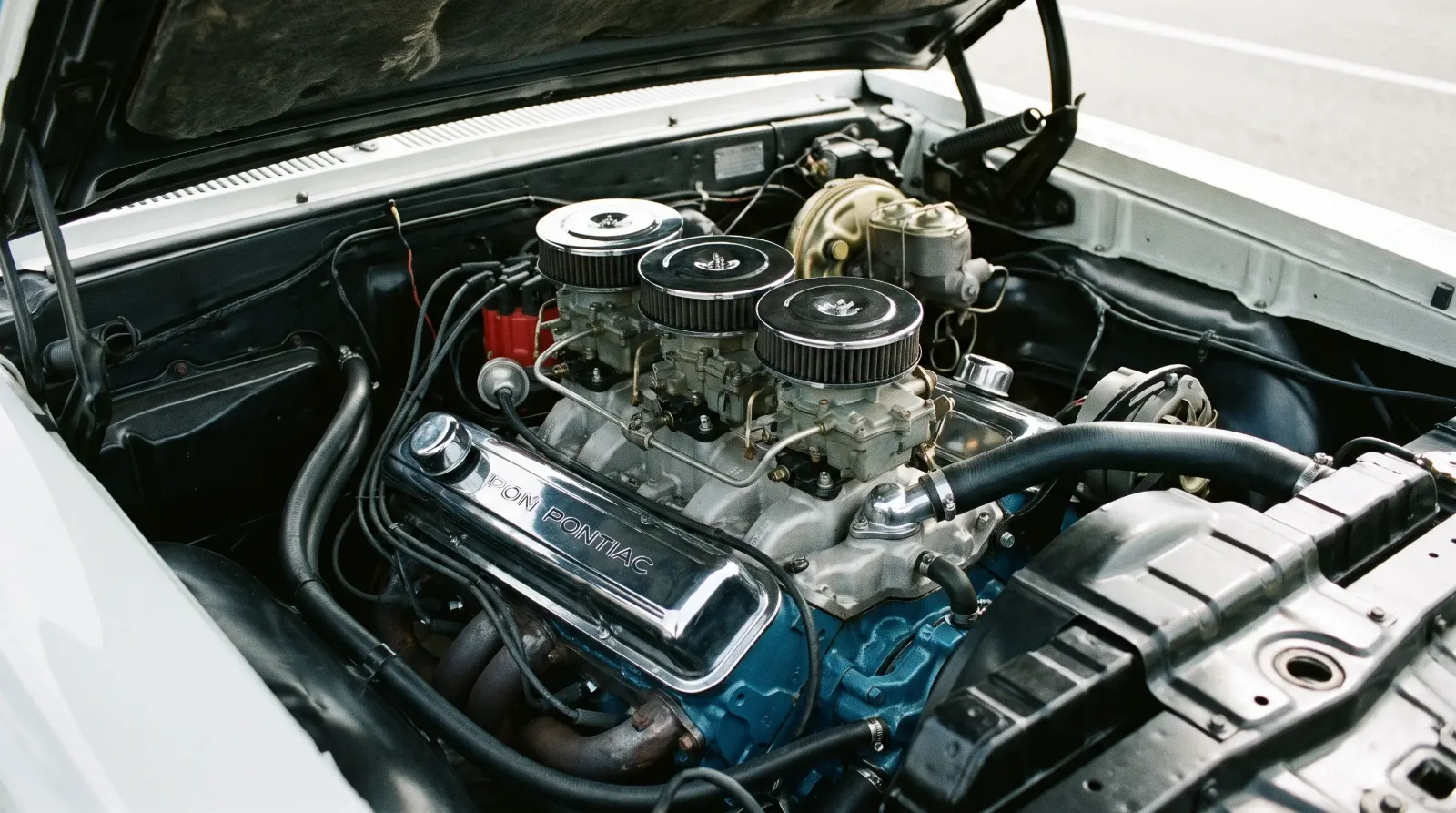
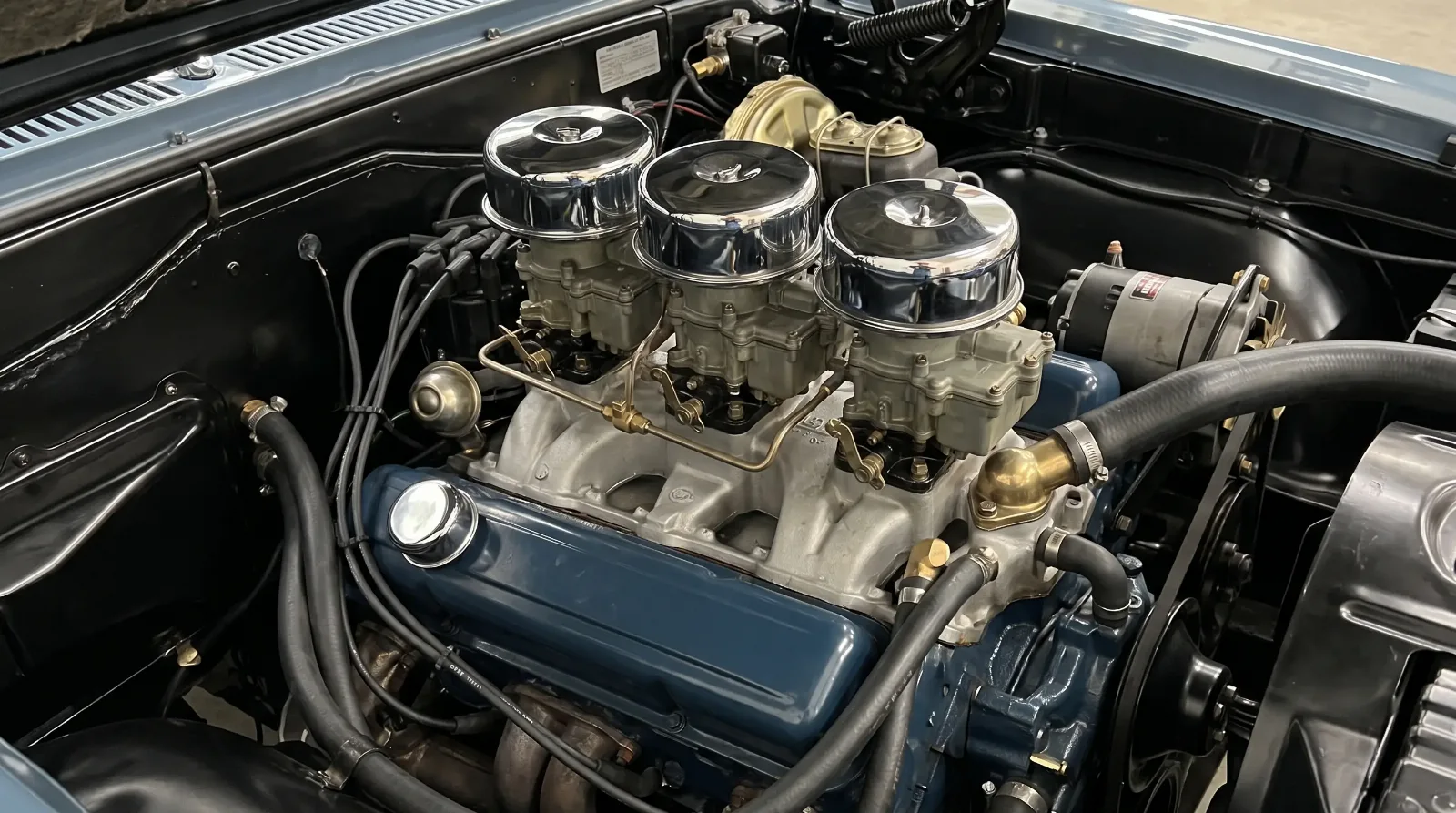
Royal's signature offering was the "Royal Bobcat" package, a set of tuning modifications available through the dealership that went beyond what a stock GTO carried off the factory line. The kit typically involved recalibrating the carburetor jetting, adjusting ignition timing more aggressively than the factory setting, and in some configurations swapping in different distributor components, all aimed at pulling more usable power out of the same 389 block most GTO buyers were already driving. A properly installed Bobcat kit was generally credited with adding somewhere in the range of 30 to 50 horsepower, though the exact figure varied by engine and how far a given car had been dialed in. That gain came from a specific list of tweaks, thinner head gaskets to bump compression, blocked heat-riser passages, re-jetted carburetion, and a distributor recurve kit with lighter advance springs, all of which meant the car needed genuine high-octane fuel to avoid spark knock.
What made the Bobcat package matter wasn't just the tuning itself. It was that a regular customer could walk into a Pontiac dealership, order a GTO, and drive out with a car that had been through a program with genuine ties back to Pontiac's own engineering staff, all without the factory ever putting its name directly on the modifications.
What actually happened on the shop floor
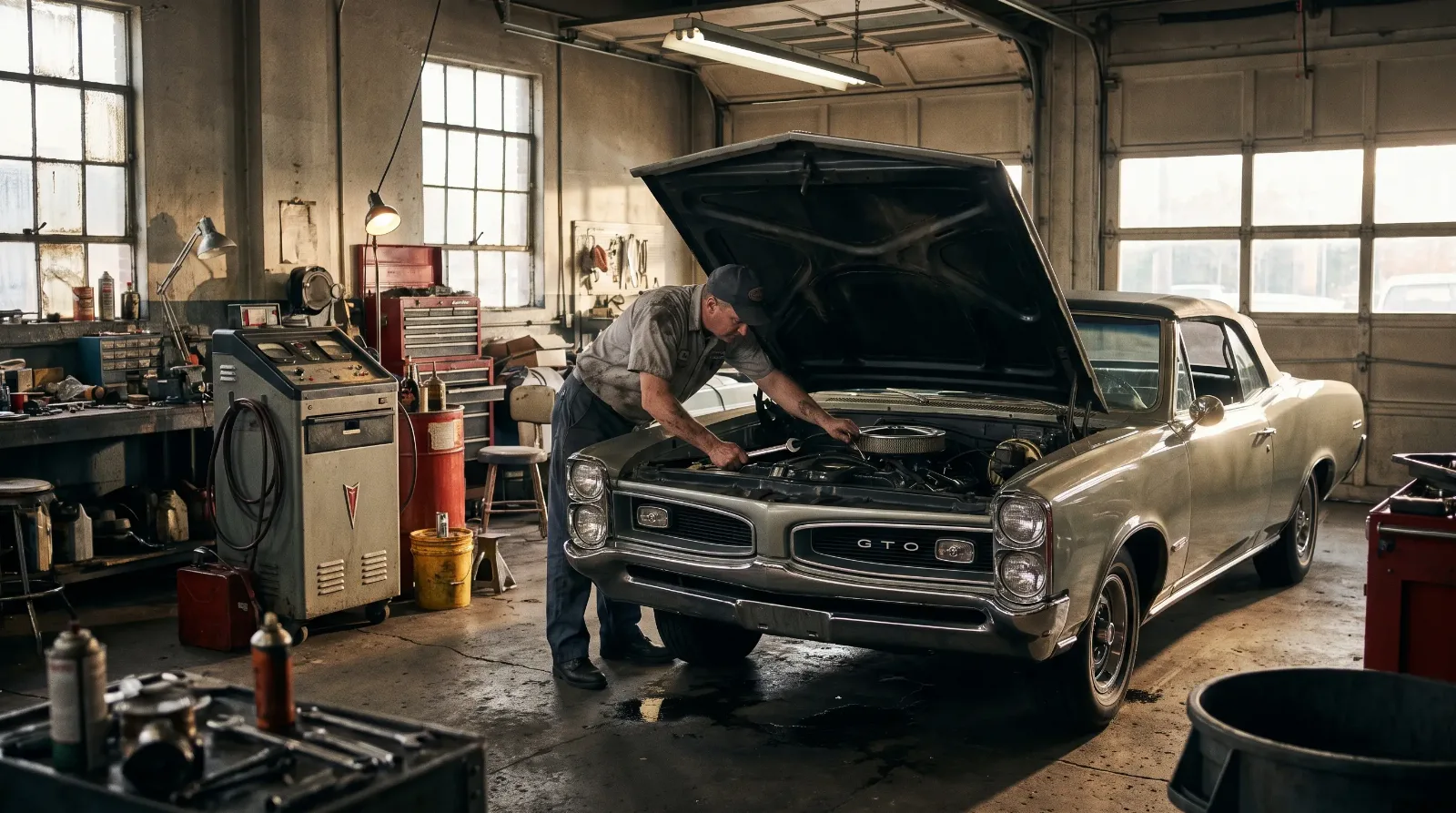
Guys who watched it happen describe the process as more art than checklist, at least in the early years before Royal had it down to a routine. A mechanic who'd spent time with Pontiac's own engineers knew which adjustments actually moved the needle and which ones were just theater, and that knowledge didn't come from a factory service manual. It came from time spent on the strip, watching a timing slip come out of the booth and comparing it against whatever had just been changed under the hood. Carburetor jetting got dialed in against the specific combination of gears, tires, and driving style a customer described, not applied as a blanket formula. Ignition timing got pushed until the engine told the mechanic it had reached its limit, usually through pinging under load that a trained ear caught before it became a real problem.
That hands-on, car-by-car approach is part of why no two Bobcat-tuned GTOs necessarily performed identically, even leaving the same shop in the same month. It was a service built around a specific car and a specific customer's intentions for it, not a kit bolted on the same way every time.
Magazine tests and a reputation that outran the dealership
Automotive magazines of the period took notice of Royal's work, and several road tests from 1964 through the mid-1960s were run on Royal Bobcat-prepped cars rather than bone-stock examples off a random dealer lot. That practice, common enough at the time across the industry, meant some of the most-quoted performance figures for the early GTO actually reflect a car that had been through Royal's shop, not the car a typical buyer drove home. Gary Nowak grew up near enough to this scene to remember what that reputation felt like from the ground.
"You'd hear guys talk about their GTO like it came from Royal even if it didn't, because that name carried weight. Everybody wanted to say their car had been through Royal's shop, whether it actually had or not. That's how you know a place has become part of the legend and not just a business anymore."
— Gary Nowak
What that legacy means for the collector market now
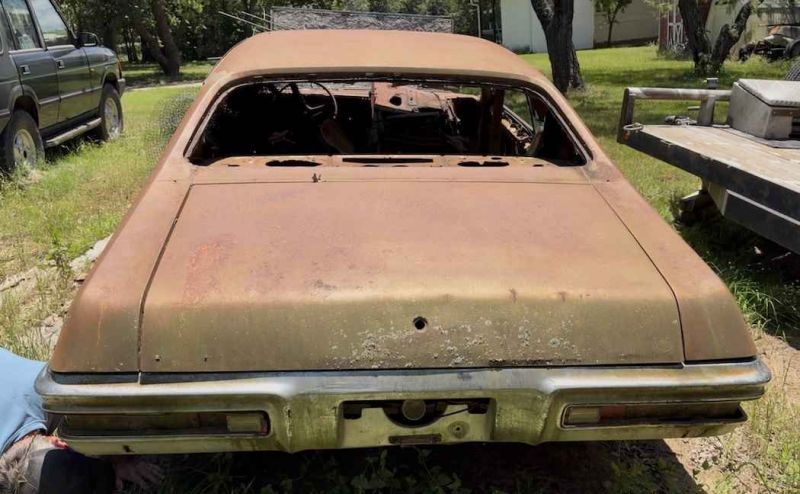
A documented Royal Bobcat-tuned GTO, one with paperwork tying it back to Royal Pontiac specifically rather than just a period-correct tune-up done somewhere else, carries a real premium among serious collectors today. The trouble is that documentation from a dealership that closed decades ago is thin on the ground, and the Royal name has been claimed on plenty of cars that never actually saw the inside of that shop. Buyers chasing genuine Royal Bobcat provenance should expect to lean on period photographs, factory correspondence, or verified ownership history rather than a seller's word alone, because the incentive to claim the connection has only grown as the values have climbed.
Beyond the GTO, a Pontiac performance shop generally
It's worth remembering Royal Pontiac's reputation wasn't built on the GTO alone, even though the GTO is the car that carried that reputation furthest into the collector era. The dealership tuned other Pontiacs too, full-size cars with big-block power, Firebirds once that model arrived later in the decade, anything a customer brought in wanting more performance than the factory setup delivered. The GTO became the flagship story because it was the car most closely associated with the muscle car boom itself, but Royal's shop floor treated it as one strong customer relationship among several, not a singular obsession. That broader shop culture, mechanics who understood tuning as a craft applicable across a whole model lineup, is part of why the Bobcat name carried the credibility it did. It wasn't a marketing gimmick invented for one car. It was a genuine specialty that happened to find its most famous application in the GTO.
A dealer-tuning template that outlasted the GTO
Royal Pontiac's model, a dealership close enough to the factory to offer performance upgrades with real engineering credibility behind them, became a template other dealers around the country tried to copy through the rest of the muscle car era, with varying degrees of authenticity and success. Few matched Royal's actual ties to Pontiac's engineering staff, which is part of why the Royal Bobcat name still carries weight among collectors today, decades after the dealership itself closed. It's a piece of the GTO story that sits just outside the official factory narrative covered in how the muscle car was born, but it shaped how the car was experienced and marketed on the ground in a way factory press releases never could.
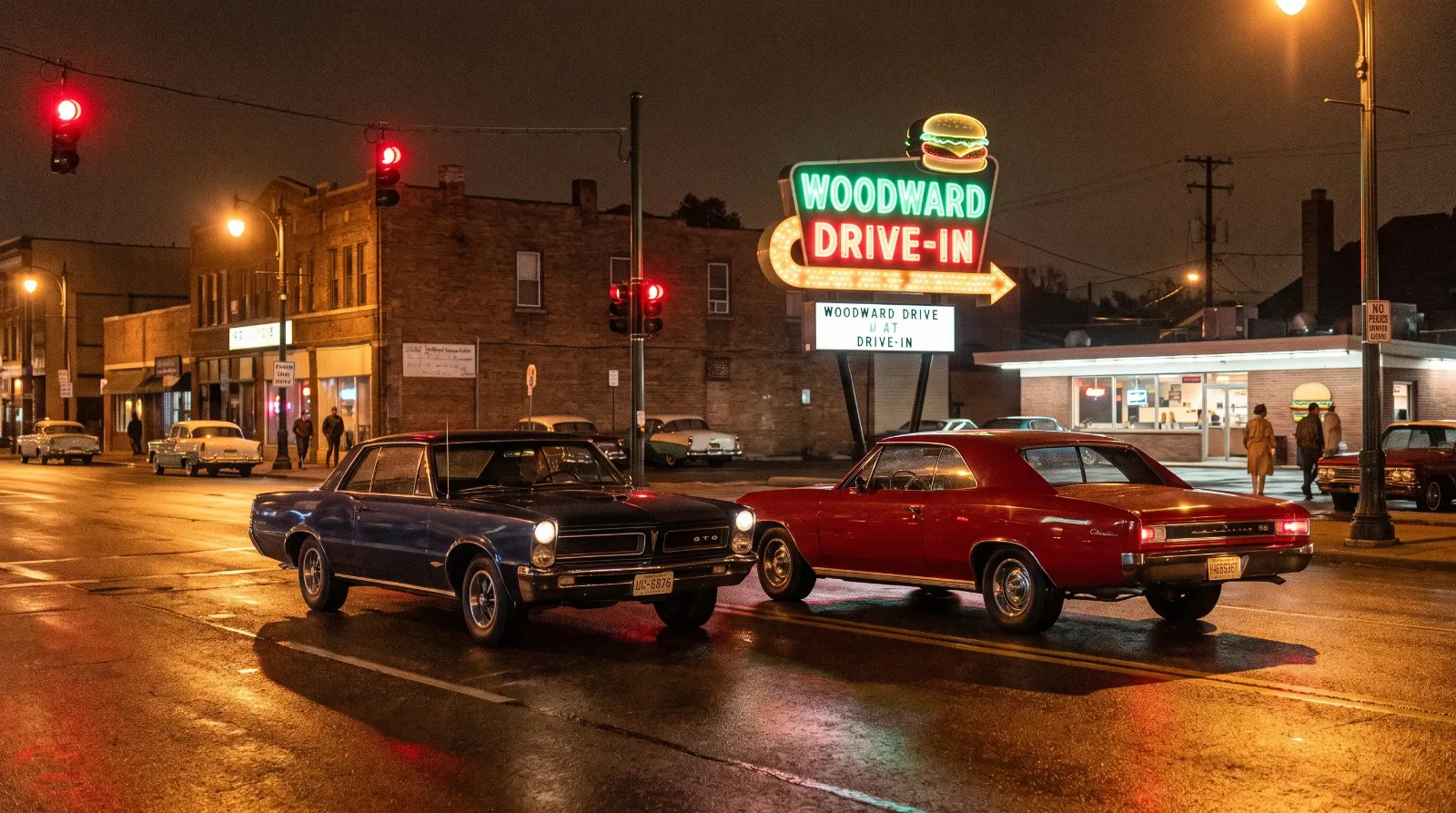
Royal wasn't the only place a GTO earned its reputation outside the dealership doors. Read on for how Woodward Avenue itself, the street Royal Pontiac sat on, became the proving ground where these cars actually settled their arguments.
Sources and notes
- Hagerty: Royal Pontiac - the original GM performance parts dealer
- Curbside Classic: Pontiac Royal Bobcat kit - the screwdriver tune-up
- Pontiac Preservation Association: Ace Wilson's Royal Pontiac bio
- Mac's Motor City Garage: Market watch - 1964 Pontiac GTO Royal Bobcat
- Hagerty: Building a rare Pontiac Catalina Royal Bobcat